




The best ice machine descaling solution is a nickel-safe, food-safe acid cleaner that your machine's manual allows. For commercial machines, choose a commercial nickel-safe cleaner such as Eco Safeway's. For freestanding units, Affresh is the easy retail pick. For countertop makers, citric acid tablets work well. Diluted vinegar is the budget fallback, and it carries real caveats.
Scale is the problem you are really buying against. Mineral deposits coat the evaporator, slow freezing, cloud the ice and make the machine work harder. The wrong acid can strip nickel plating or damage seals, so the cheapest bottle is not always the safe one. Price matters, but compatibility matters more.
This article ranks five options by machine type, with prices, cautions and who each one suits. Eco Safeway sells a nickel-safe ice machine cleaner, so it comes first. It is judged by the same checklist as the rest. A comparison table and a safe-use routine follow the list.
1. Eco Safeway nickel-safe ice machine cleaner
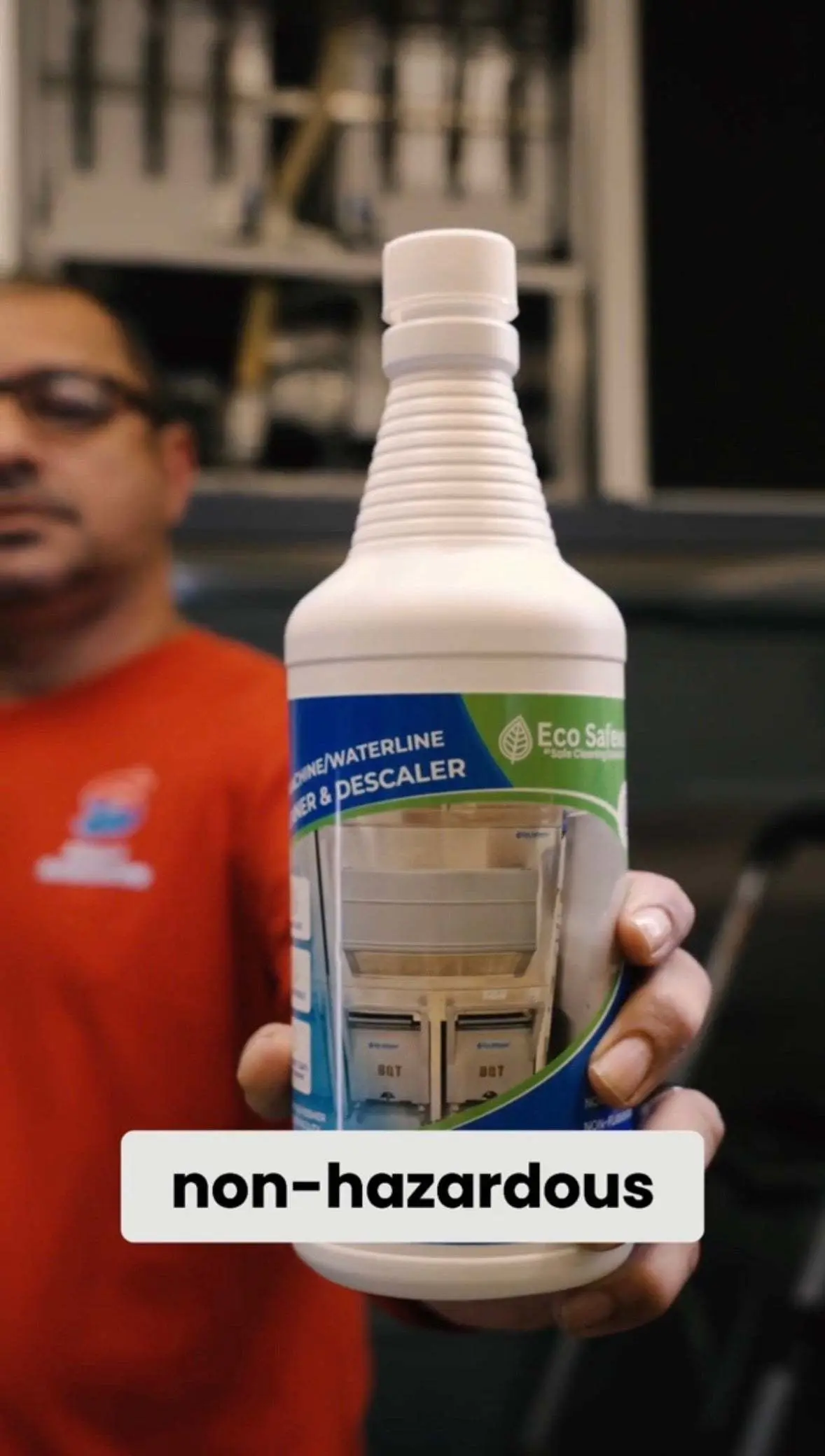
Eco Safeway's Universal Non-Corrosive & Nickel-Safe Ice Machine Cleaner is a commercial-grade descaler for restaurant, hotel and healthcare machines. It is the pick when a facility needs one product across several machines.
What it is and how it works
The formula removes calcium, limescale, mineral scale and organic buildup from commercial ice-making equipment. It is intended for compatible nickel-plated and other food-contact surfaces. It aims to be a lower-corrosion alternative to aggressive acid descalers.
The listing shows a true HMIS 0-0-0 safety rating, and the product page links a safety sheet. It ships by standard shipping, so no hazmat handling is needed on delivery.
Who it suits, cost and cautions
It suits restaurants, hotels, healthcare facilities and service contractors. Sizes run from 32 oz and a case of 12 quarts up to 1 gal, 2.5 gal, 5 gal kits, drums and a 275 gal tote. Prices run from $38.99 to $399.99 depending on size.
For one home countertop maker, this is more product than you need. Whatever you buy, confirm material compatibility for your model in its manual. No cleaner is approved for every machine.
For commercial machines, choose the descaler by documented material compatibility, not by the lowest price per bottle.
2. Affresh liquid ice machine cleaner
Affresh's 16 oz unscented liquid is the easiest retail ice machine descaling solution for a freestanding or attached household unit. It is sold through big-box stores and carries a nickel-safe label.
What it is and how it works
The retailer listing describes a nickel-safe formula that removes hard water and mineral buildup. It is meant for freestanding and attached ice machines, including the bin, evaporator and other parts. The listing also says Whirlpool and KitchenAid brands recommend it.
You run the liquid through a cleaning cycle, then flush it out. Follow the label for dose and cycle steps.
Who it suits, cost and cautions
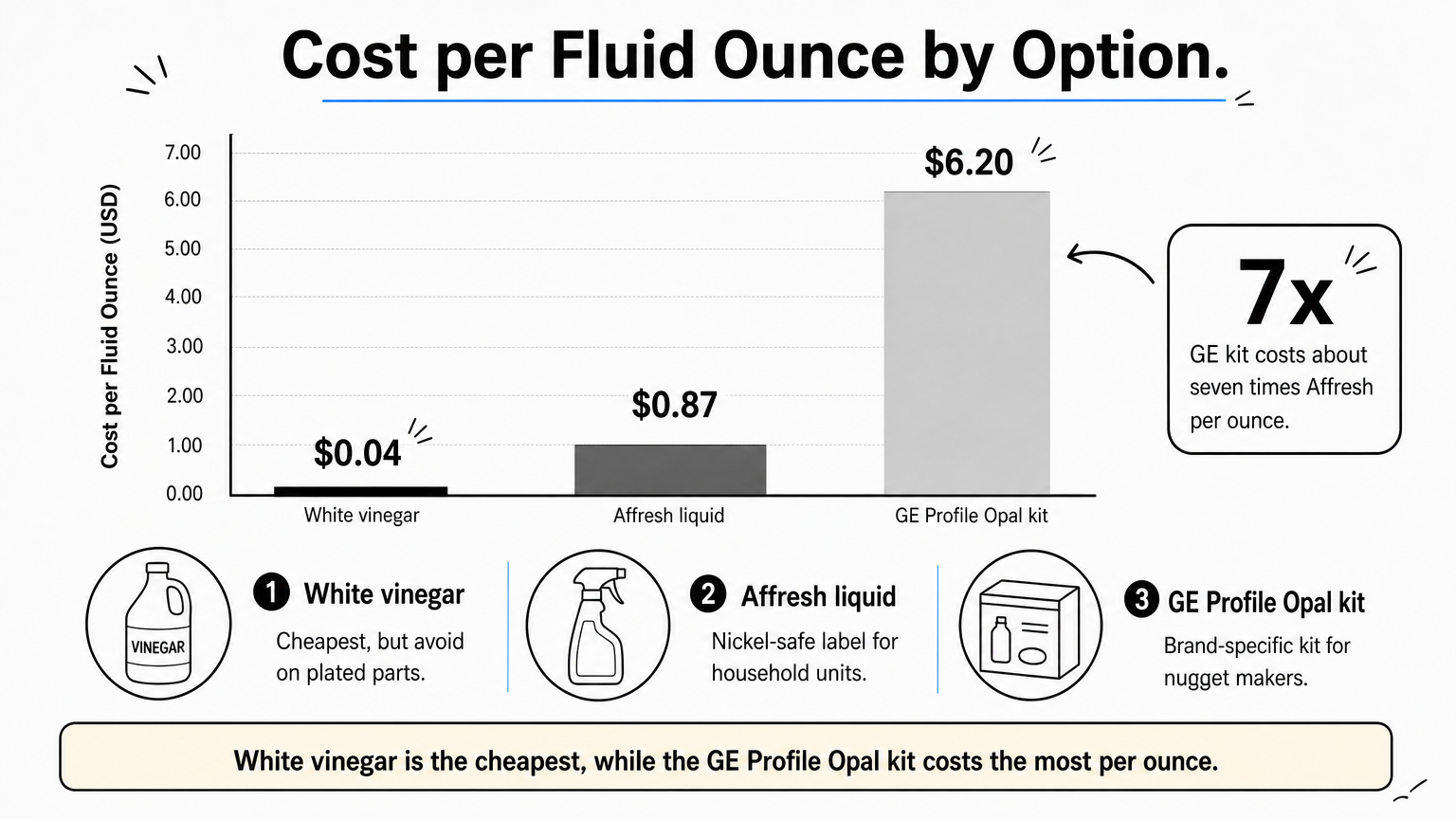
It suits households, offices and small cafés with a standalone machine. One major retailer lists it at $13.98 for 16 oz with a 4.7 out of 5 rating, which works out to about $0.87 per fluid ounce.
The catch is volume. A single 16 oz bottle covers only a limited number of cleanings, so a busy machine in hard water will need repeat purchases. Check that your brand's manual does not require a specific cleaner.
If your machine is a standard freestanding unit, a labeled nickel-safe liquid like this one removes the guesswork.
3. Manufacturer-branded cleaning kits
Brand-specific kits are the safest ice machine descaling solution for nugget and compact makers with narrow water paths. The best-known example is the GE Profile Opal cleaning kit.
What it is and how it works
These kits pair a cleaner formulated for that maker with matching instructions. Target lists the GE Profile Opal Nugget Ice Appliance Cleaning Kit at 5 fl oz, rated 4.4 out of 5. Nugget makers have small tubes and side tanks where scale causes clogs fast.
Using the maker's own solution also keeps you inside the manual. That helps if you ever need a service call.
Who it suits, cost and cautions
It suits owners of premium countertop nugget machines who want zero ambiguity. At $30.99 for 5 fl oz, it costs roughly $6.20 per fluid ounce. That is about seven times Affresh per ounce.
The trade-off is lock-in. The kit serves one brand's line, and you pay for convenience. If your manual lists generic citric acid cleaners as acceptable, a cheaper option does the same job.
Pay the premium only when your manual names a specific cleaner.
4. Citric acid tablets and liquids
Citric acid descalers are the best ice machine descaling solution for portable countertop makers that make bullet or nugget ice. They are odor-light and easy to dose.
What it is and how it works
Citric acid is a milder organic acid that dissolves calcium scale well. Products come as tablets or liquids. You drop a tablet into the reservoir or pour the liquid in, then run a clean cycle as the label directs.
Retail examples include ACTiVE Ice Maker Descaler, a nickel-safe tablet pack for countertop machines. Euhomy sells a citric acid liquid and a separate 24-tablet pack.
Who it suits, cost and cautions
It suits home users and small offices with portable machines. Listed prices include $9.98 for 12 ACTiVE tablets (about $0.83 per tablet), $13.99 for the Euhomy liquid and $19.99 for the 24-tablet Euhomy pack.
Follow the tablet-per-cycle instructions exactly. Over-dosing does not clean better, and it leaves more to rinse. Some listings pitch these products as universal, but check your own manual first.
For countertop makers, labeled citric acid tablets are the best balance of price, safety and convenience.
5. Homemade vinegar or citric acid solution
A homemade solution is the cheapest ice machine descaling solution, and it fits small portable makers best. It is a poor fit for commercial machines and plated evaporators.
What it is and how it works
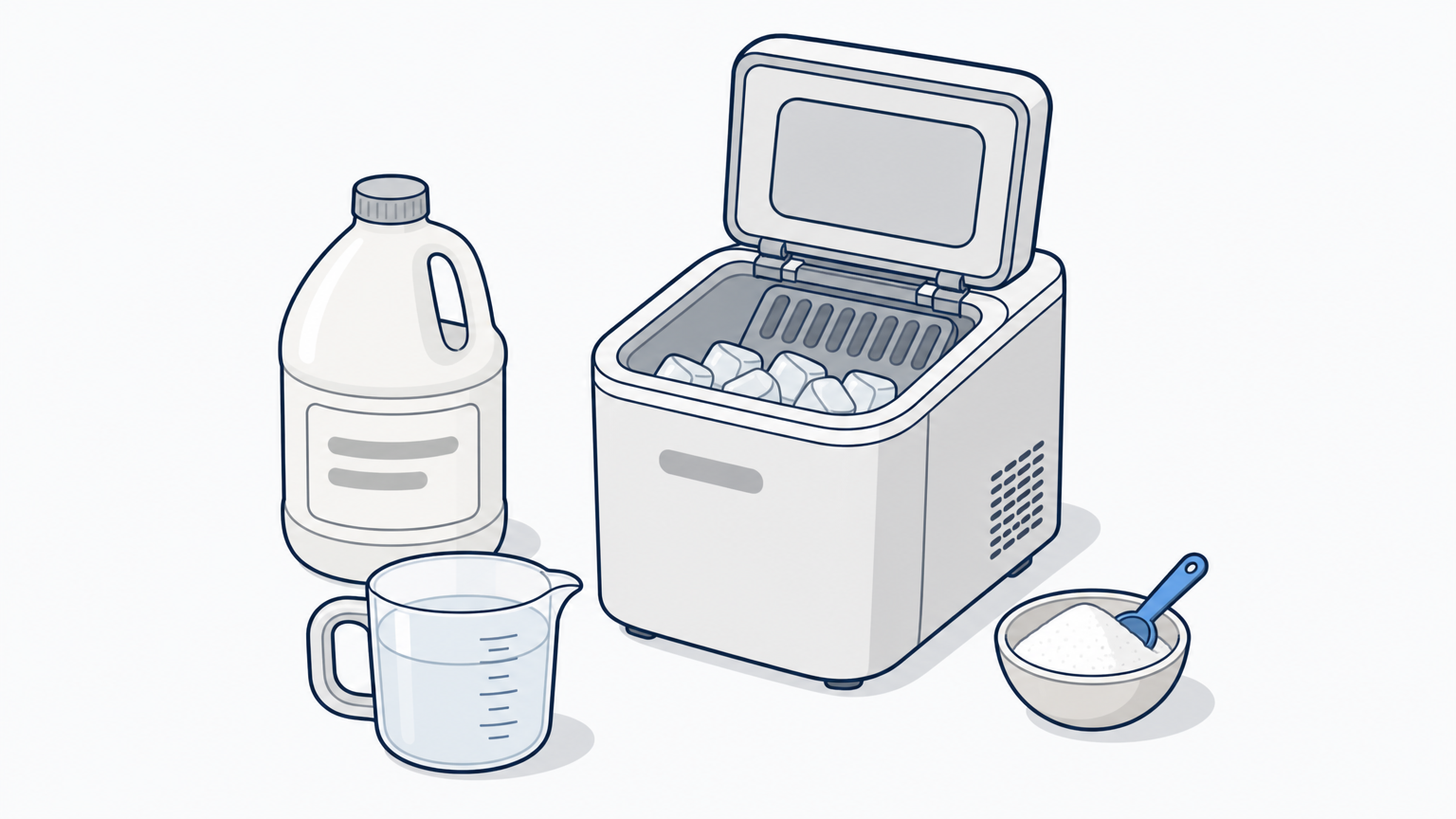
Distilled white vinegar is the usual pick. A 128 oz jug lists at $4.59 at Target, about $0.04 per fluid ounce. Countertop maker manuals often call for a diluted mix with water, commonly about half and half, so check yours for the exact ratio. Plain citric acid powder dissolved in warm water works the same way.
Run the solution through a cleaning cycle, then flush the machine several times with fresh water.
Who it suits, cost and cautions
It suits occasional descaling of a portable unit whose manual allows vinegar. The cautions are real. Vinegar odor lingers, so extra rinse cycles are needed. Acid can attack nickel plating and rubber seals on commercial equipment.
Never use 30% cleaning vinegar concentrate in an ice maker. And never mix vinegar with bleach or any other cleaner, because that releases toxic gas.
Homemade works for a portable maker in a pinch, but it is not a substitute for a nickel-safe commercial product.
Choosing and using a descaling solution safely
Match the solution to your machine type first, then to your budget. Commercial and plated machines need a nickel-safe, documented product. Portable makers can use citric acid or, carefully, vinegar.
Comparison at a glance
| Option | Best for | Listed price | Approx. cost per fl oz | Nickel note |
|---|---|---|---|---|
| Eco Safeway nickel-safe cleaner | Commercial machines | $38.99 to $399.99 by size | See product page | Nickel-safe formulation |
| Affresh liquid, 16 oz | Freestanding household units | $13.98 | $0.87 | Nickel-safe label |
| GE Profile Opal kit, 5 fl oz | Brand-specific nugget makers | $30.99 | $6.20 | Follow brand manual |
| Citric acid tablets | Portable countertop makers | $9.98 for 12 tablets | Per tablet, about $0.83 | Check the label |
| White vinegar, 128 oz | Occasional portable cleaning | $4.59 | $0.04 | Avoid on plated parts |
A safe descaling routine
Many commercial manufacturers suggest descaling about every six months. Hard water means more often, and portable makers usually need it more often than that. Follow your manual.
- Turn the machine off and remove all ice from the bin.
- Mix or pour the solution at the label dose.
- Run the cleaning cycle for the time the manual specifies.
- Flush with fresh water until no odor or taste remains, usually several cycles.
- Discard the first batch of ice, then wipe the bin dry.
The rinse matters as much as the descaler, because leftover acid ends up in your ice.
Pick the solution your machine can tolerate
Choose by machine type. Commercial and nickel-plated machines need a documented nickel-safe cleaner. Freestanding household units do well with a labeled retail liquid. Countertop makers can use citric acid, and vinegar is a careful last resort. Always rinse thoroughly and check your manual.
If you run commercial machines, start with the nickel-safe ice machine cleaner from Eco Safeway and match the bottle size to your fleet. A 32 oz bottle fits one machine. A gallon, a kit or a drum fits a maintenance program.


