






To remove limescale buildup, soak the deposit in a mild acid such as white vinegar or citric acid for one to several hours, then rinse and wipe it away. The acid dissolves the calcium carbonate that makes up the scale, so you do not need hard scrubbing or expensive products. To keep it from coming back, dry surfaces after use, descale on a schedule, and deal with the hard water that causes it.
The problem is familiar. A white crust grows around the faucet base, the shower screen turns cloudy, flakes float in your tea, and the shower head sprays sideways. Scrubbing rarely works because limescale is a mineral, not dirt. Pick the wrong cleaner and you can also etch natural stone or strip the finish from a plated faucet.
This guide explains what limescale is, then walks you through four steps: choosing the right acid, treating faucets and showers, descaling kettles and appliances, and handling pipes while preventing a repeat. Eco Safeway makes descalers for commercial, marine and household equipment, and the same chemistry applies at every scale.
Why limescale forms and how to spot it
Limescale is a hard, chalky deposit made mostly of calcium carbonate, left behind when hard water evaporates or heats up. Knowing how it forms tells you where to look and how fast it will return.
What causes limescale buildup
Water picks up calcium and magnesium as it passes through limestone, chalk and gypsum. Those minerals stay dissolved until something changes. When the water evaporates or is heated, dissolved calcium bicarbonate breaks down into solid calcium carbonate, water and carbon dioxide, and the solid sticks to whatever it touches.
That explains where scale shows up first. Kettles, shower heads, water heaters, dishwashers and the dried droplets around faucets scale fastest, because they combine heat and evaporation. Cold lines scale slowly.
Limescale is a mineral crust, so you dissolve it with acid instead of scrubbing it off.
Is limescale harmful, and how hard is your water
Calcium carbonate is not a health risk in drinking water. It is the main ingredient in many antacids. The damage is to equipment: scale insulates heating elements, narrows pipes and clogs spray holes, so appliances work harder and wear out sooner.
How fast it grows depends on your water. Check your utility's water quality report or use a hardness test strip, then compare the result with the USGS hardness scale.
| Classification | Calcium carbonate (mg/L) | Grains per gallon |
|---|---|---|
| Soft | 0 to 60 | 0 to 3.5 |
| Moderately hard | 61 to 120 | 3.6 to 7.0 |
| Hard | 121 to 180 | 7.1 to 10.5 |
| Very hard | Over 180 | Over 10.5 |
Step 1. Choose your acid and test the surface
Use white distilled vinegar for most jobs, citric acid for kettles and heavy scale, and lemon juice only for light deposits. Choosing well protects the surface you are cleaning.
Which acid for which job
Each household acid dissolves limescale at a different speed and suits different surfaces. Distilled white vinegar is the cheapest all-rounder. Do not use malt vinegar, which can stain and leaves a heavy smell.
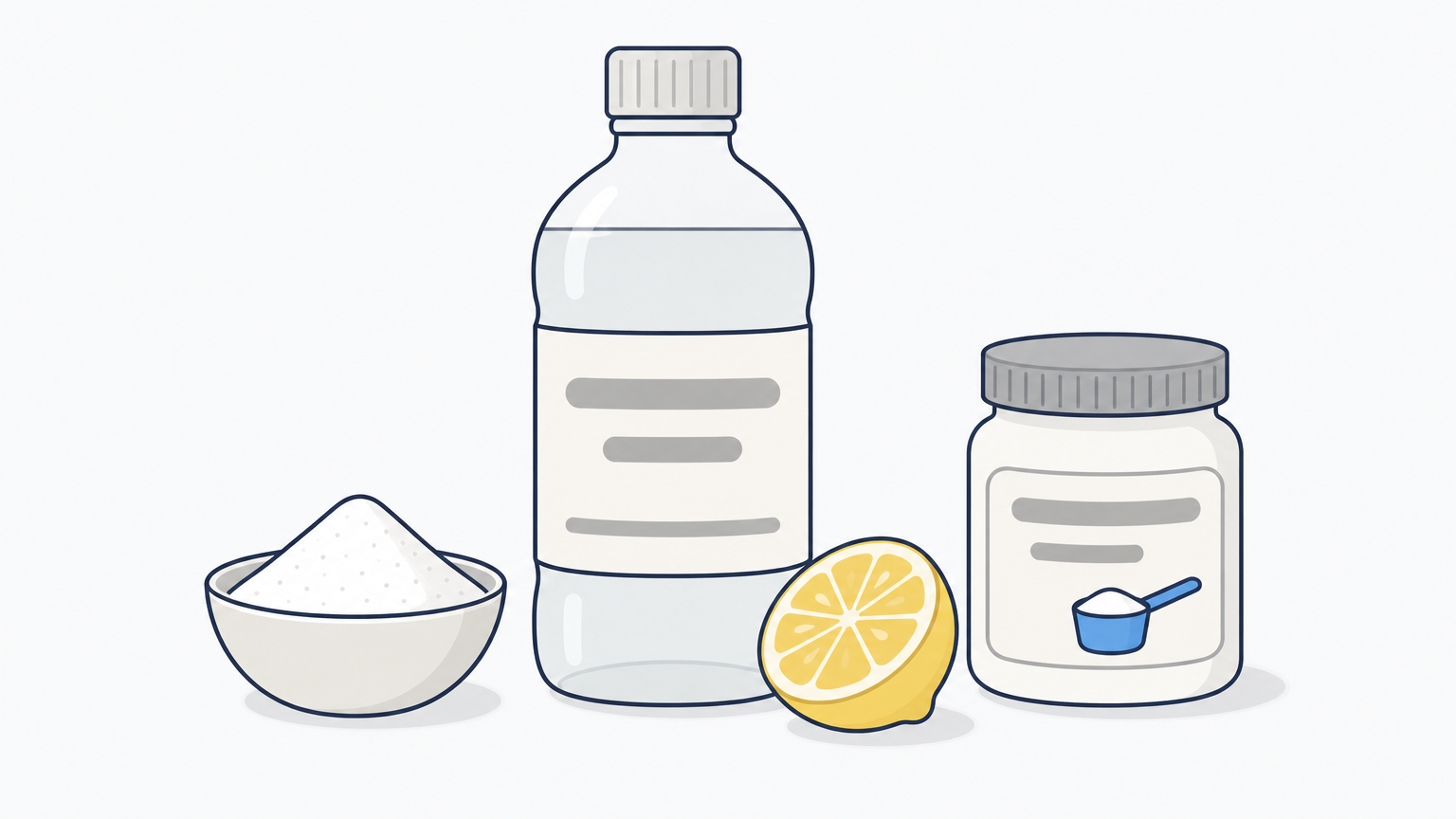
| Cleaner | Mix | Best for | Watch out for |
|---|---|---|---|
| White distilled vinegar | 1 part vinegar to 1 part water | Faucets, shower heads, glass, kettles | Strong smell, harms stone and rubber |
| Citric acid powder | 2½ tablespoons in about 2 cups (500 ml) of lukewarm water | Kettles, dishwashers, sinks | Can leave smears on glass |
| Lemon juice | Straight, or a halved lemon on the spout | Light scale on faucets | Weaker, so repeat |
| Baking soda paste | Baking soda with a little water | Scrubbing off loosened film | Does not dissolve scale |
Surfaces and mixes to avoid
Keep acid off natural stone and wood, because both etch. Skip it on plated or gold-finish faucets and on rubber seals, which degrade on contact. Test any new method on a hidden spot for five minutes before you treat a visible one. Never mix vinegar with bleach, because the combination releases chlorine gas.
A common question is whether WD-40 removes limescale. It does not. It is a lubricant, not an acid, so it cannot dissolve calcium carbonate. At best it helps you wipe off loose residue.
Match the acid to the surface first, because the wrong one costs you more than the scale does.
Step 2. Remove limescale from faucets and showers
Keep the acid in contact with the scale for one to several hours. Contact time does the work, so hard scrubbing is rarely needed.
Faucets and shower heads
For a faucet, follow these steps:
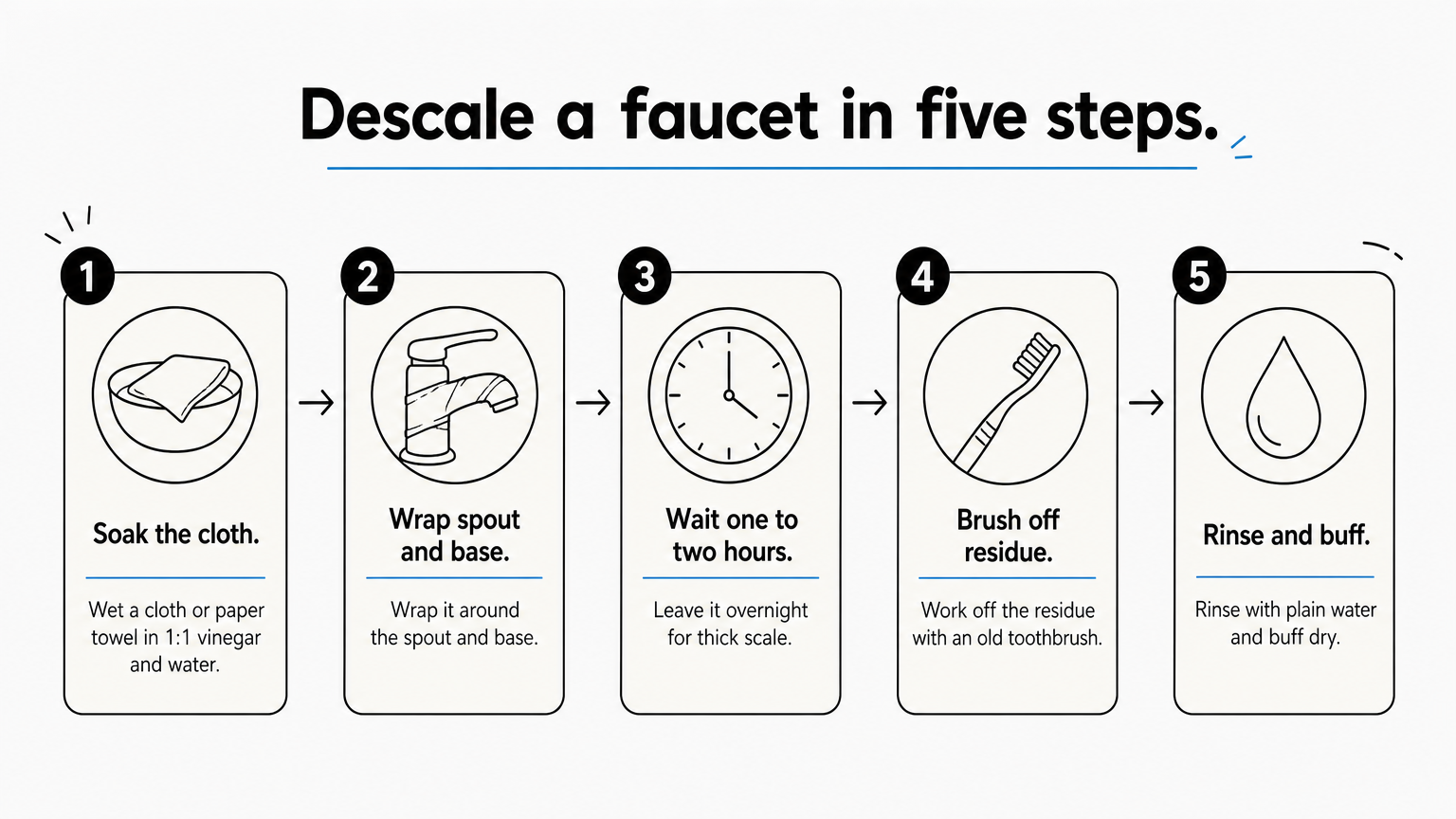
- Soak a cloth or paper towel in 1:1 vinegar and water.
- Wrap it around the spout and base.
- Leave it for one to two hours, or overnight for thick scale.
- Work off the residue with an old toothbrush.
- Rinse with plain water and buff dry.
Unscrew the aerator at the spout tip and soak it separately, since that is where flow problems start.
For a shower head, fill a plastic bag with 1:1 vinegar and water. Fix it over the head with a rubber band so the nozzles are submerged. Leave it one to two hours, or overnight if the spray is badly clogged. Then run hot water for a minute and poke any stubborn jets with a toothpick.
Shower screens, tiles and toilets
On glass and tile, spray the 1:1 mix, wait 10 to 15 minutes, wipe, rinse and squeegee dry. Stick with vinegar on glass, since citric acid can leave smears.
In a ceramic toilet, scrub with an old brush soaked in vinegar. For hard crust below the waterline, rub gently with a pumice stone while the ceramic is wet. Pumice scratches plastic and glazed surfaces, so keep it to ceramic bowls.
Thick limescale
Thick scale needs repeated treatments, not more force. Repeat the soak two or three times, or press a paste of citric acid and water onto the crust and cover it with film overnight. Strong acids such as hydrochloric acid dissolve scale faster, but they are hazardous and can damage fittings. If you buy a commercial remover, follow its label for ventilation and gloves.
Step 3. Descale kettles and appliances
Descale every appliance that heats water, and always check the manual first. Appliances scale fastest and lose efficiency quietly.
Kettles
Fill the kettle halfway with water and bring it to a boil, then unplug it. Add white vinegar until it is about three-quarters full, or dissolve one to two tablespoons of citric acid. Leave a note so nobody uses it.
Let it sit 30 minutes for light scale, or overnight for heavy scale. Pour it out, brush off loose flakes, then rinse and boil fresh water twice, discarding both batches.
Coffee machines and irons
Coffee machines have narrow channels that scale blocks, which slows brewing and can cause bitter coffee. Check the user manual before using vinegar. Some brands specify their own descaler, and ignoring that can affect your warranty.
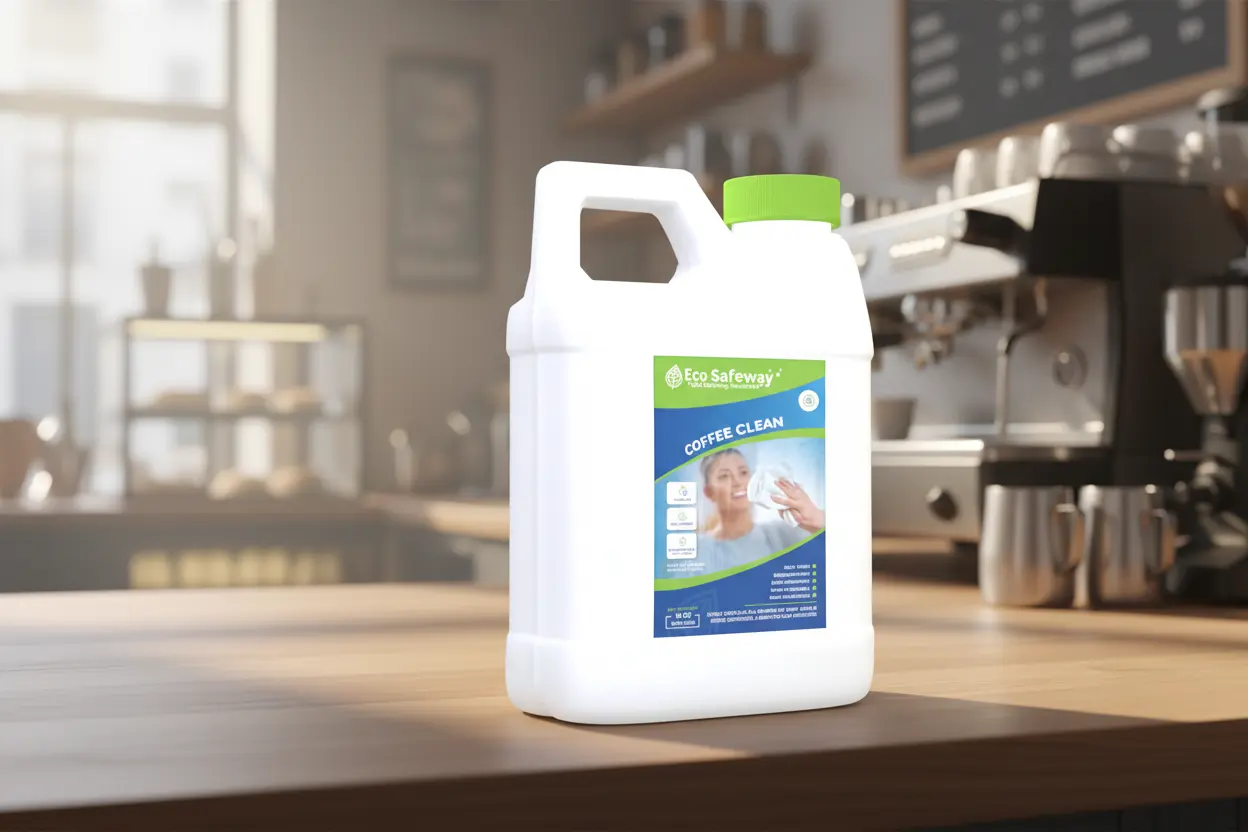
If you prefer a purpose-made product, Eco Safeway's Coffee Espresso Cleaner Descaler comes in 16 oz, 32 oz and 1 gallon sizes, priced from $20.99 to $59.99 depending on size. It is formulated for Keurig, Nespresso and commercial espresso machines. Follow its label.
Most steam irons have a built-in anti-calc function, so use that first. Otherwise run a half vinegar, half water mix through on steam over an old towel, then flush with fresh water.
Dishwashers and washing machines
For a dishwasher, stand a bowl with about 2 cups (500 ml) of white vinegar upright on the top rack and run a normal hot cycle empty. For cloudy glasses, put citric acid in the detergent dispenser and run an empty cycle.
In a washing machine, run an empty hot cycle with a large cup of vinegar or lemon juice in place of detergent. Keep acid away from the door seals, because rubber degrades with repeated contact.
Check the manual before you descale, because the manufacturer's method protects your warranty.
Step 4. Treat pipes and stop limescale returning
Scale inside supply pipes and water heaters needs a plumber or a flush, not a kitchen soak. Prevention comes down to treating the water and keeping a schedule.
Pipes and water heaters
Limescale builds inside hot-water supply lines and tank heaters, not in your drains, so pouring vinegar down a drain will not fix it. Warning signs are weak flow at several hot taps and rumbling or popping from the heater, which points to sediment. Ask a licensed plumber to assess the pipes, and never pour strong acid products into plumbing yourself.
For a tank water heater, most manufacturers recommend flushing it about once a year. Check your manual for the exact method.
Prevent limescale from returning
The most effective fix is a water softener. Its resin beads swap calcium and magnesium for other ions, so scale stops forming throughout the house. Test your hardness first so you size the system correctly. Lowering the water heater temperature slows scale, because heat drives deposits. Be cautious with magnetic or electronic "descalers", because the evidence that they work is weak.
Without a softener, descale on a schedule based on your hardness. This starting point works for most homes, and you can adjust it by how fast scale returns:
| Item | Moderately hard (61 to 120 mg/L) | Hard to very hard (over 120 mg/L) |
|---|---|---|
| Kettle | Every 2 to 3 months | Monthly |
| Shower head | Every 3 months | Monthly |
| Faucet aerators | Every 3 to 6 months | Every 1 to 2 months |
| Dishwasher | Every 3 months | Monthly |
Between treatments, squeegee glass after showers and wipe faucets dry. Removing droplets removes the minerals before they harden.
Keep limescale from coming back
Limescale buildup is calcium carbonate, so a mild acid, enough contact time and the right surface check will clear most of it. Treat faucets and showers with a soak, descale kettles and appliances following their manuals, call a plumber for pipes, and keep it from returning with a softener or a regular schedule.
Household vinegar suits household scale. If the deposits are in commercial equipment such as chillers, boilers or cooling towers, you need a product designed for that scale and volume. Eco Safeway's industrial descaler for HVAC and cooling tower systems is where to start.


