





Ready to Remove Mineral Scale?
For light, moderate and heavy mineral buildup, Eco Safeway offers non-corrosive professional descaling solutions designed to dissolve calcium, limescale and mineral deposits without harsh acid-based chemistry.
"Which Eco Safeway Descaler Do I Need?"
Contact your preferred HVAC contractor and we will supply the product and method to descale your HVAC piping!
Need a contractor or want to be a contractor preferred partner for our clean in place pipe descaling product?
📞561-405-0271,
📧info@ecosafeway.com
| Application | Recommended solution |
|---|---|
| Pipes & plumbing | Professional descaler |
| HVAC systems | HVAC/industrial descaler |
| Cooling towers | Cooling tower descaler |
| Heat exchangers | Heat exchanger descaler |
| Commercial equipment | Industrial descaler |
| Heavy buildup | Recirculation treatment |
If you've noticed reduced water pressure, slow drains, or strange noises from your water heater, there's a good chance mineral deposits are choking your plumbing from the inside out. Knowing how to remove scale buildup in pipes matters because left unchecked, calcium and limescale deposits restrict flow, reduce heating efficiency, and can lead to costly pipe replacements down the road.
Most conventional descaling methods rely on hydrochloric acid, sulfamic acid, or other corrosive chemicals that eat through scale, but also damage pipes, fittings, and fixtures over time. They create fumes, require protective gear, and pose real risks to your plumbing and your health. There's a better path. Non-toxic, non-corrosive descaling solutions, like those we develop here at Eco Safeway, prove you don't have to trade safety for performance. Our HMIS 0-0-0 rated formulas dissolve heavy mineral deposits without damaging metal, rubber seals, or gaskets, and they're biodegradable enough to go straight down the drain.
This guide walks you through practical, step-by-step methods for clearing scale from your pipes using safer alternatives, from natural household solutions to professional-grade non-toxic descalers. You'll learn what causes scale to form, how to identify the severity of your buildup, and which approach makes the most sense for your specific situation.
What scale buildup is and why it cuts flow
Scale buildup is the hard, chalky layer of mineral deposits that forms on the interior walls of your pipes over time. It comes primarily from dissolved calcium and magnesium carbonate in your water supply, which precipitate out of solution when water is heated or when it sits in one place long enough. Hard water areas, which cover the majority of the United States, accelerate this process significantly.
The harder your water supply, the faster scale accumulates, and the sooner you'll feel the effects on water pressure and flow rate.
How minerals become deposits
When water flows through your pipes, it carries dissolved minerals in suspension. As water temperature rises, calcium carbonate becomes less soluble and starts clinging to pipe walls. This is why scale hits water heaters, boiler systems, and hot water lines hardest. Each cycle of heating and cooling adds another microscopic layer, and over months and years those layers become thick, concrete-like scale that physically narrows the interior diameter of your pipe.
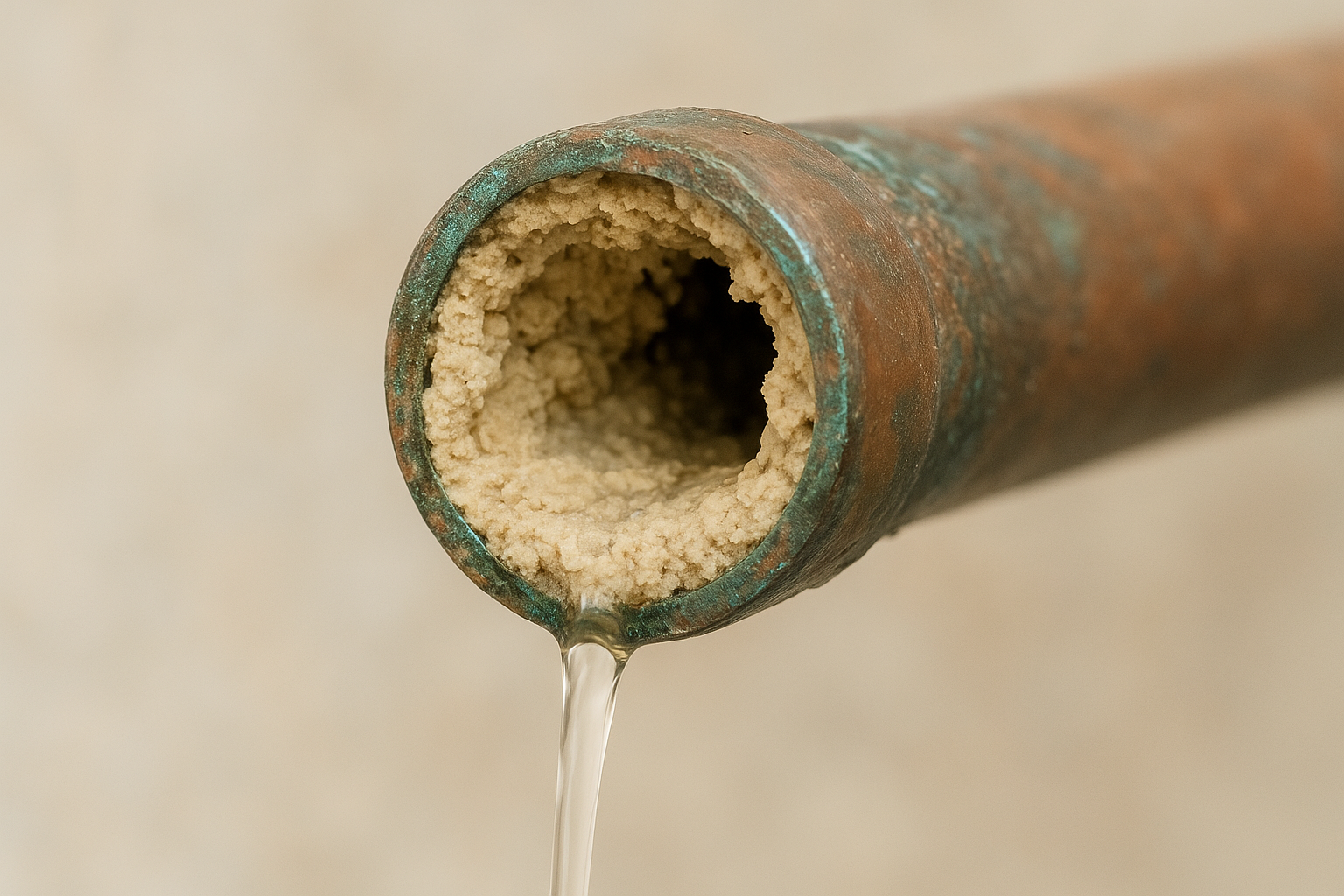
Here's a quick look at the most common scale types and their typical sources:
| Scale Type | Primary Source | Common Location |
|---|---|---|
| Calcium carbonate | Hard water minerals | Water heaters, boilers, pipes |
| Limescale | Magnesium and calcium | Fixtures, showerheads, drains |
| Iron deposits | High iron water | Well water systems, older pipes |
| Silica scale | Dissolved silica | Industrial and geothermal systems |
What happens inside your pipes over time
Understanding how to remove scale buildup in pipes starts with knowing what that buildup is actually doing structurally. As scale thickens, it reduces the pipe's internal diameter, which forces your pump or municipal supply to work harder to move the same volume of water. Your water pressure drops, fixtures underperform, and heating systems lose efficiency because scale acts as an insulator between the water and the heat source.
Corrosion is a secondary risk. Scale creates uneven surfaces that trap moisture and debris, which accelerates pipe degradation from the inside out. Older iron or steel pipes are especially vulnerable to pitting and cracking once scale gets established.
Safety and prep before you descale
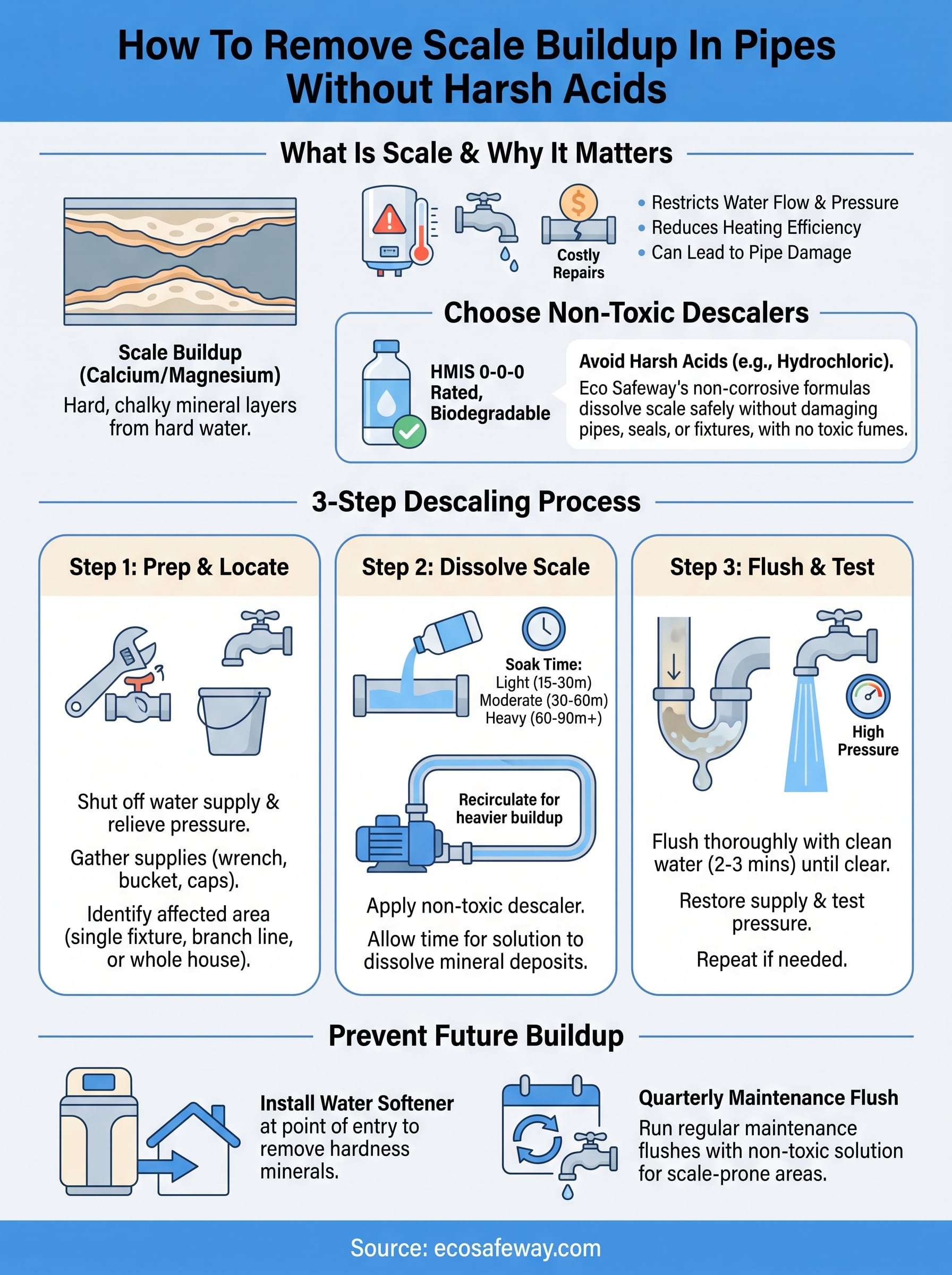
Before you tackle how to remove scale buildup in pipes, 15 minutes of prep protects your plumbing from accidental damage and keeps the process clean. Even non-toxic descalers work best when your system is properly isolated and pressure-free before you start.
Gather your supplies
You'll need a bucket, adjustable wrench, and pipe caps or plugs along with your descaling solution. If you're targeting a water heater or boiler loop, locate the drain valve and shutoff valves first. Check nearby rubber gaskets and seals for cracks, since loosened scale can expose weak points once treatment begins.
Non-toxic descalers skip the need for gloves and respirators, but flush the treated area with clean water after every application.
Shut off water and relieve pressure
Turn off the water supply to the affected section, then open the nearest faucet to release line pressure fully before any solution goes in. Skipping this step pushes loosened scale deeper into your system instead of out. Run through this quick checklist before you proceed:
- Water supply valve: closed
- Nearest faucet: open and draining
- Bucket or drain: positioned below your work area
- Pipe caps: ready to isolate the section
Step 1. Find the restriction and pick a strategy
Before you apply any descaling solution, you need to locate exactly where scale has built up and gauge how severe the restriction is. Targeting the right section saves time and prevents you from over-treating areas that don't need attention.
Identify the affected zone
Start by checking which fixtures or zones show reduced flow. If the problem is isolated to one faucet or showerhead, the restriction is likely local. If multiple fixtures on the same line are underperforming, the scale sits deeper in your main supply line or water heater connections. Run through this quick diagnostic:
- Single fixture: remove and soak the aerator or showerhead directly in descaler
- One branch line: isolate and treat that section alone
- Whole-house pressure drop: start at the water heater and main supply lines
Knowing precisely where scale has formed is the single biggest factor in choosing the right treatment approach for how to remove scale buildup in pipes.
Match your approach to the severity
Light to moderate scale responds well to a soak-and-flush method using a non-toxic descaling solution circulated through the affected pipe run. Heavy, long-term buildup may need repeated treatments or a recirculating pump setup to keep the solution in contact with deposits long enough to break them down fully.
Step 2. Dissolve scale using safer descaling options
Once you've isolated the affected section, pour or circulate your chosen descaling solution and give it time to work. Non-toxic descalers use organic acids or enzyme-based formulations that break calcium carbonate bonds without attacking the pipe material itself, which means no pitting, no corroded fittings, and no toxic fumes to clear.
The longer your solution stays in contact with the deposit, the more thoroughly it dissolves the mineral matrix before you flush.
Use a non-toxic liquid descaler for pipe runs
For isolated pipe sections, close both ends of the run, fill it completely with a non-corrosive descaling solution like Eco Safeway's HMIS 0-0-0 rated formula, and let it soak. Heavy buildup may need a second pass. Here's a quick reference based on deposit severity:
| Buildup Level | Recommended Soak Time |
|---|---|
| Light | 15 to 30 minutes |
| Moderate | 30 to 60 minutes |
| Heavy | 60 to 90 minutes, repeat if needed |
Try a recirculating pump for longer runs
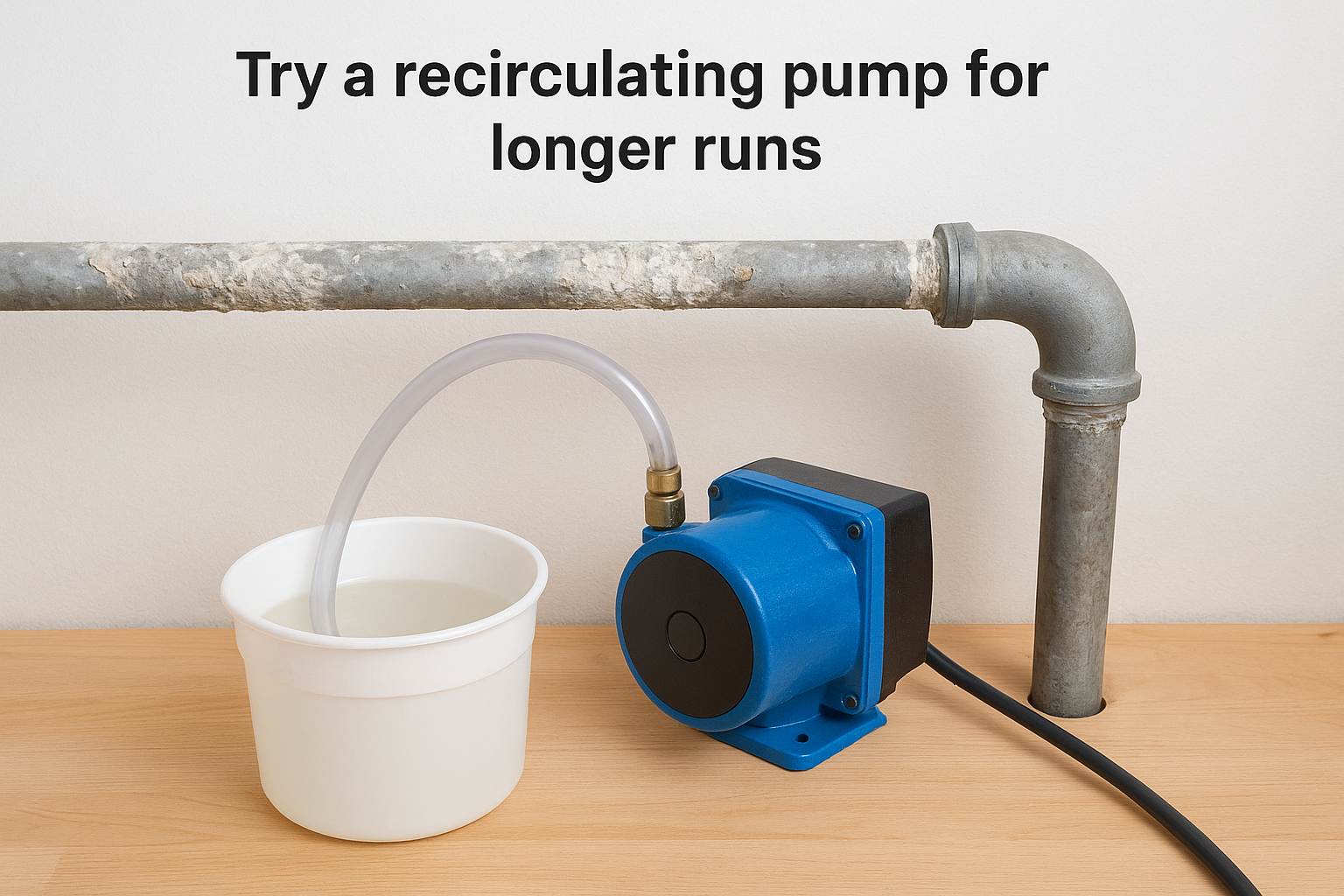
When learning how to remove scale buildup in pipes that span several feet, a small recirculating pump keeps fresh solution moving through the run continuously. Connect the pump to a bucket of descaler, run the outlet hose into one end of the isolated pipe section, and circulate for 60 to 90 minutes before draining the line completely.
Step 3. Flush thoroughly, test flow, and prevent return
After soaking or circulating your descaling solution, flushing the treated section completely is the most critical step you cannot skip. Loose mineral fragments and dissolved scale residue need a full flush path out of your system before you restore water flow.
A weak flush after descaling leaves debris in your pipes that can re-deposit downstream and create new blockages.
Flush the treated section
Open the drain valve or lowest outlet point on the isolated section and run clean water through at full pressure for at least two to three minutes. You should see cloudy or discolored water clearing to clean. If the water stays discolored after three minutes, run a second flush cycle before reconnecting the line.
Once the section runs clear, restore your water supply and test pressure at the furthest fixture on that branch line. Compare it to your baseline before treatment. A successful descale typically shows measurable pressure improvement right away.
Check for lingering restrictions
If pressure improvement is minimal after flushing, your buildup may require a second treatment cycle. Repeat the soak process for knowing how to remove scale buildup in pipes until flow normalizes. Use this post-flush checklist before moving on:
- Pressure restored at far fixtures: confirmed
- Water runs clear with no discoloration: confirmed
- No unusual sounds from the pipe run: confirmed
Keep scale from coming back
Clearing existing scale is only half the job. Preventing new deposits from forming saves you from repeating this process every year. The single most effective long-term solution is water softening at the point of entry, which removes calcium and magnesium before they ever reach your pipes.
Beyond softening, you can protect your system by running a quarterly maintenance flush with a non-toxic descaling solution through your highest-risk lines, such as your water heater loop and any recirculating hot water system. This keeps thin mineral layers from compounding into heavy buildup over time.
Knowing how to remove scale buildup in pipes gets easier when you stay ahead of it with regular maintenance cycles rather than emergency treatments. If your system handles scale-prone water in an industrial or HVAC context, Eco Safeway's Industrial HVAC & Cooling Tower Descaler keeps your equipment running clean without corrosive chemicals or hazmat handling requirements.


