





Dirty condenser coils cost you money every single day they stay caked in grime. A condenser coil cleaner breaks down the dust, grease, and biofilm that build up on your HVAC or refrigeration coils, restricting airflow and forcing the compressor to work harder than it should. If your energy bills keep climbing or your cooling system struggles to hit temperature, coated coils are often the hidden culprit.
So does coil cleaner actually work, or is it just another maintenance product collecting dust on a shelf? Used correctly, a quality cleaner restores heat transfer efficiency and can measurably lower compressor strain, but the results depend heavily on the formula and the application method. Harsh acid-based cleaners can strip protective coatings and corrode aluminum fins over time, which defeats the purpose of cleaning in the first place.
This article breaks down what condenser coil cleaners actually do, how to tell an effective product from a marketing gimmick, and what separates a non-corrosive cleaner from one that quietly damages your equipment. You'll also get a clear picture of proper application steps, so whether you manage a data center, a cooling tower, or a rooftop HVAC unit, you can clean coils with confidence instead of guesswork.
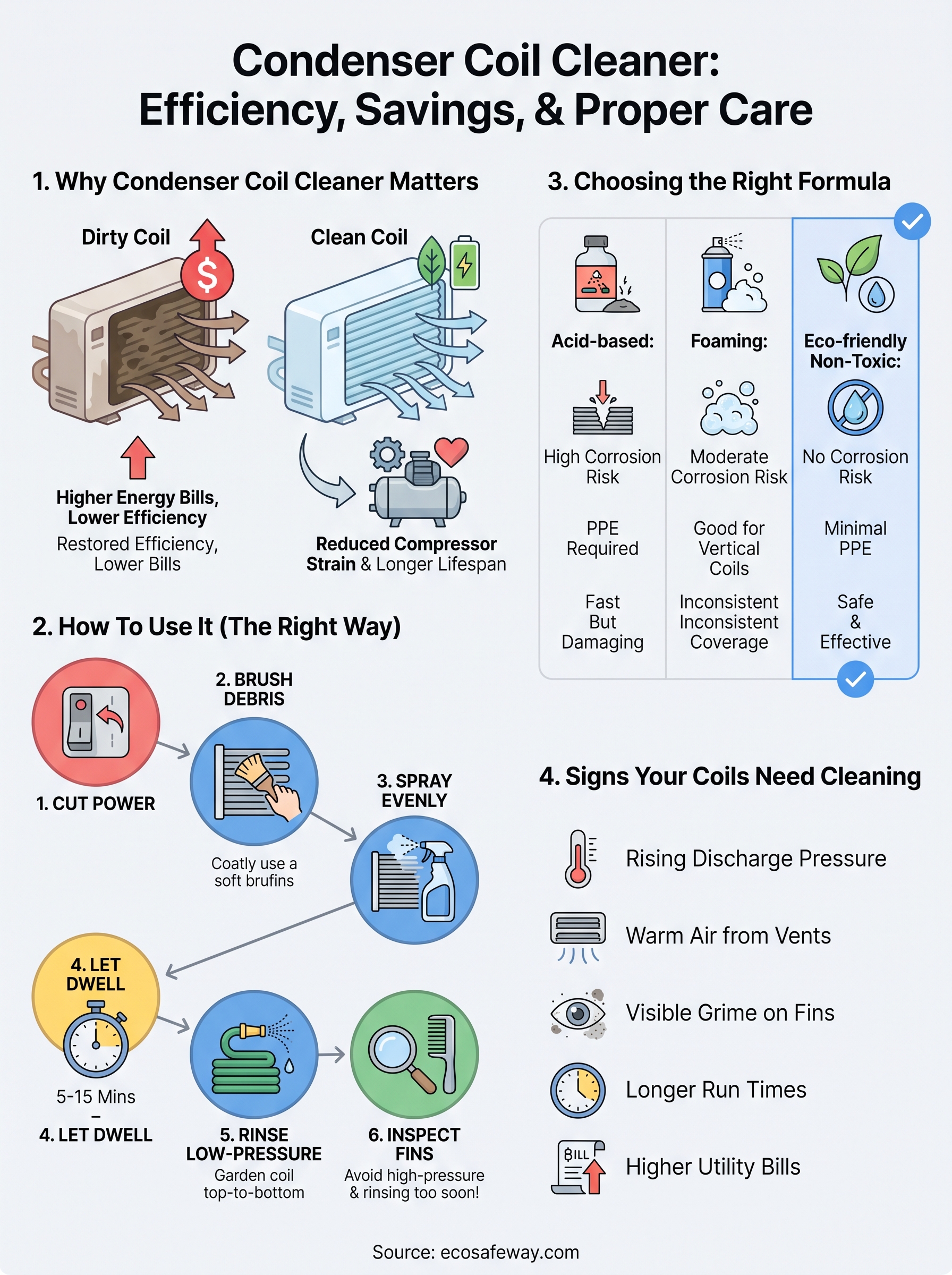
Why condenser coil cleaner matters for your system
Every condenser coil relies on unobstructed airflow to release heat from the refrigerant cycle. When dust, grease, pollen, or biofilm coat the fins, that airflow drops and heat transfer efficiency falls right along with it. Your compressor then runs longer and harder to reach the same setpoint, which drives up electricity use and shortens the life of expensive components. The U.S. Department of Energy has pointed out that neglected HVAC maintenance, including dirty coils, is a leading cause of avoidable energy waste in commercial buildings, turning a routine cleaning task into a real line item on your utility bill.
A coated coil doesn't just look dirty, it quietly taxes your compressor every hour it runs.
The real cost of dirty coils
Facility managers often underestimate how much a thin layer of grime actually costs, because the system still runs, just less efficiently. Comparing a clean coil to a fouled one shows the gap clearly:
| Coil Condition | Airflow | Energy Use | Compressor Load |
|---|---|---|---|
| Clean coil | Full rated flow | Baseline | Normal cycling |
| Lightly soiled | 10-15% reduction | 5-10% higher | Increased runtime |
| Heavily fouled | 30%+ reduction | 20-30% higher | Sustained overload |
Growing numbers on that table translate directly into shorter compressor lifespan and more service calls, which is exactly why a reliable condenser coil cleaner earns its place in a preventive maintenance schedule rather than an emergency repair budget.
Beyond energy bills: compressor strain and equipment life
Higher energy costs are only part of the picture. Sustained overload forces the compressor to run at elevated pressures and temperatures, accelerating wear on bearings, seals, and windings that are expensive to replace. Ignoring coil buildup for months or years often means trading a cheap cleaning routine for a costly compressor swap. Keeping coils clean protects that investment and keeps the entire cooling system operating the way it was engineered to.
How to use condenser coil cleaner the right way
Applying a condenser coil cleaner without prep work wastes product and risks pushing debris deeper into the fins. Start by cutting power to the unit at the disconnect, then remove loose leaves, insects, and dust with a soft brush or low-pressure air before any liquid touches the coil. Skipping this step means you're just turning dry dirt into a muddy paste that clings even harder to the fin surfaces.
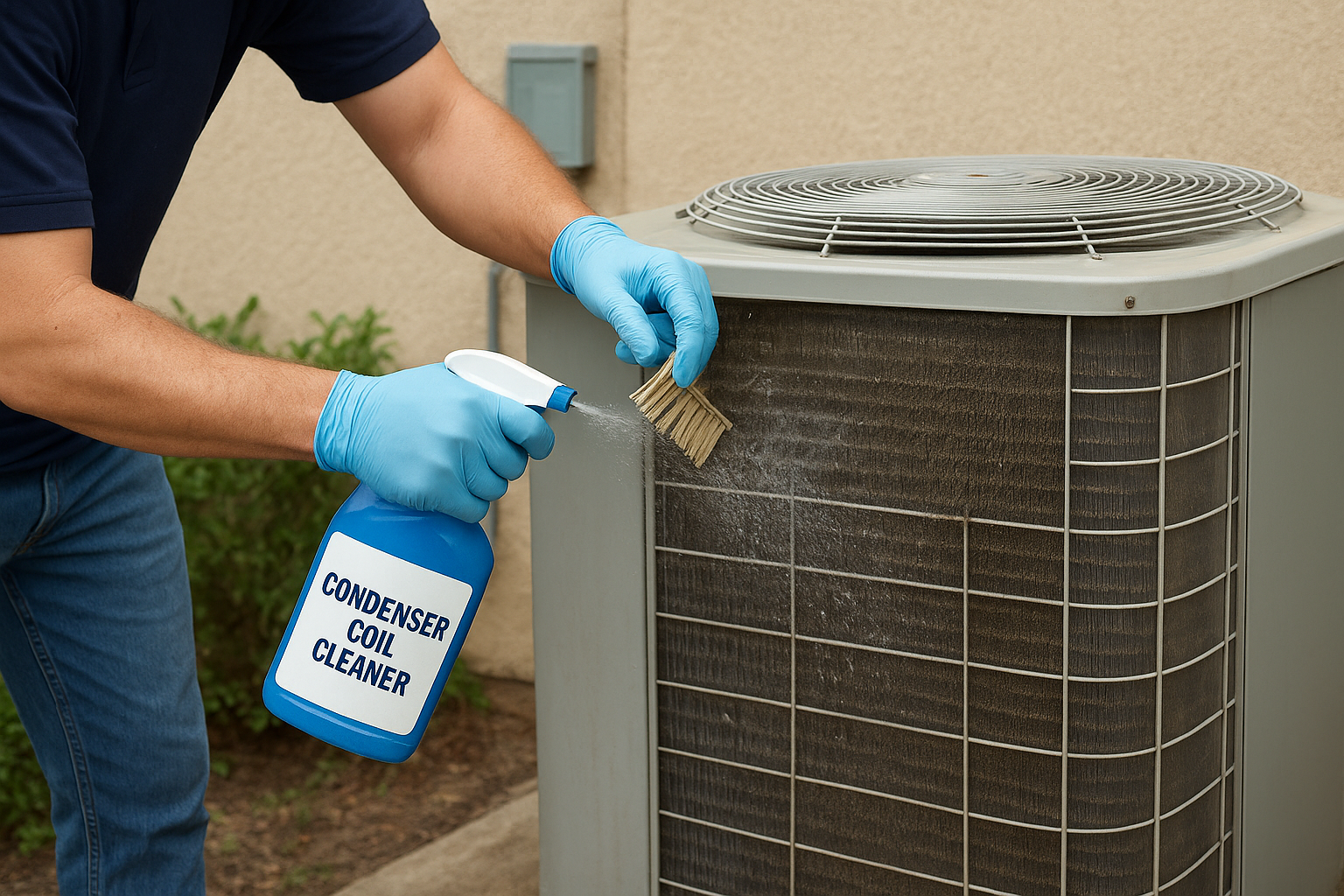
Prep the coil like you mean it, or the cleaner just moves the mess around instead of removing it.
Step-by-step application
Once the coil is prepped, follow a consistent sequence so the chemical actually gets a chance to work before you rinse it away:
- Cut power to the condenser unit and confirm it's locked out.
- Brush off loose debris with a soft-bristle brush, working with the fin direction.
- Spray evenly, coating both sides of the coil if accessible.
- Let it dwell for the time listed on the label, usually 5 to 15 minutes.
- Rinse thoroughly with low-pressure water, working top to bottom.
- Inspect fins for bent sections and straighten them with a fin comb.
Common mistakes that reduce results
Many technicians rinse too soon, cutting the dwell time short before the formula finishes breaking down grease and biofilm. Others use high-pressure washers that bend delicate aluminum fins, which restricts airflow just as much as the dirt did. Overspraying electrical components nearby is another frequent error, so always shield contactors and wiring before you start. Following label instructions on concentration and dwell time consistently outperforms guesswork, no matter how strong the cleaner claims to be.
Choosing between acid, foaming, and eco-friendly formulas
Walk into any supply house and you'll find three broad categories of condenser coil cleaner: acid-based, foaming, and eco-friendly non-toxic formulas. Each one cleans, but they differ sharply in corrosion risk and how much protective gear you need to use them safely.
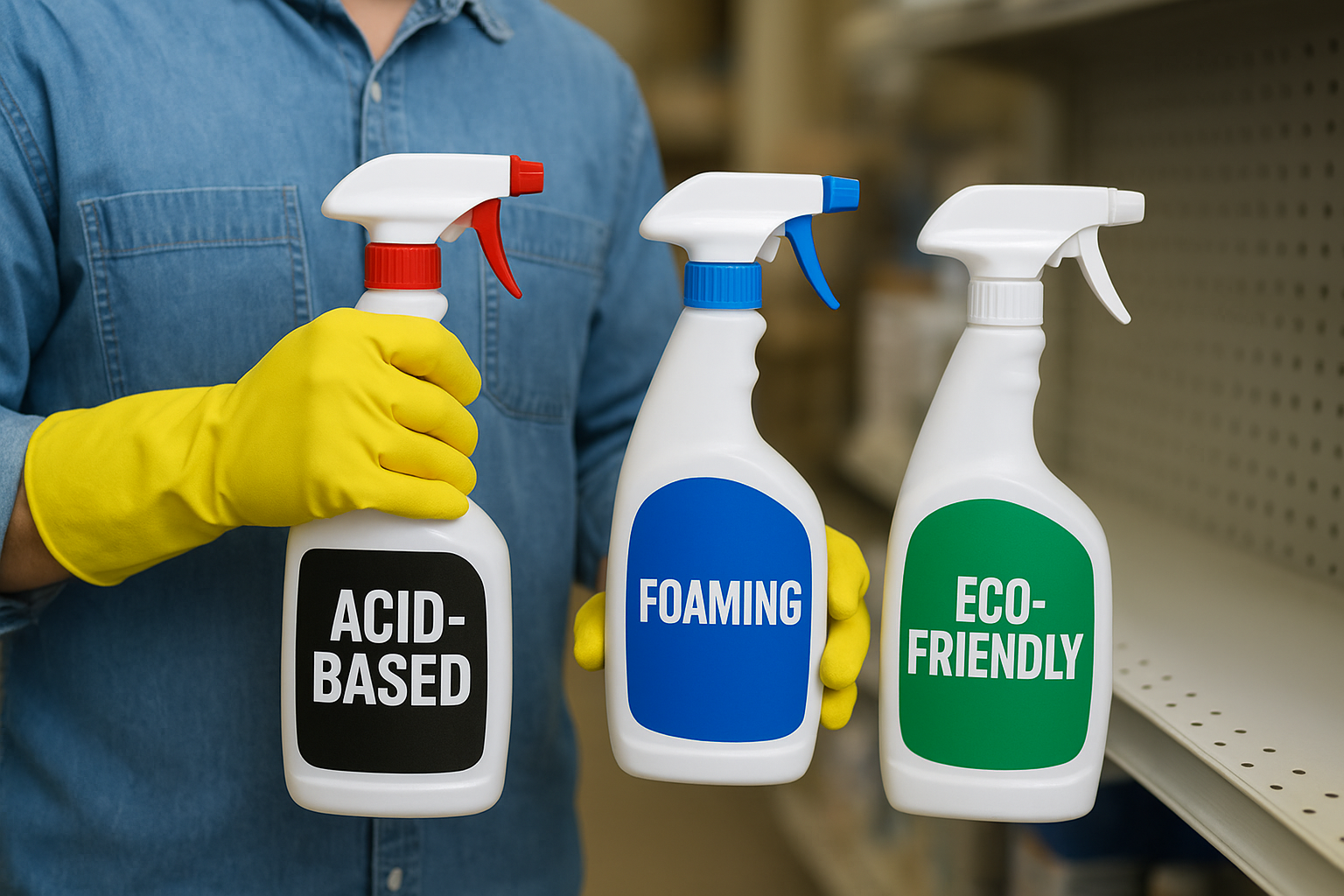
Acid-based cleaners cut fast but corrode faster
Acid formulas dissolve mineral scale and grease quickly, which is why older maintenance guides still recommend them. That speed comes at a cost: repeated acid exposure thins aluminum fins and copper tubing, shortening coil life even as it restores short-term airflow.
Fast cleaning that eats away your fins isn't a win, it's a slower path to coil replacement.
Foaming cleaners work well on vertical or hard-to-reach coils
Foam clings to vertical surfaces longer than a liquid spray, giving it more dwell time on coils mounted upright or tucked behind tight housings. The trade-off is inconsistent concentration control, since foam expands and can dilute the active cleaning agents unevenly across the coil face.
Eco-friendly, non-toxic formulas skip the trade-offs
Non-corrosive cleaners rated HMIS 0-0-0 clean coils without acids or solvents, so there's no coating damage and no hazmat shipping paperwork slowing down your order.
| Formula Type | Corrosion Risk | Hazmat Shipping | PPE Needed |
|---|---|---|---|
| Acid-based | High | Often required | Gloves, goggles |
| Foaming | Moderate | Sometimes | Gloves recommended |
| Eco-friendly | None | Not required | Minimal |
Signs your condenser coils need cleaning now
Catching coil buildup early saves you from the expensive scenarios described above. Most systems give you warning signs long before a compressor fails, but those signs get ignored because the unit still technically runs. Watching for these symptoms tells you exactly when it's time to reach for a condenser coil cleaner instead of waiting for a service call.
Warning signs you can spot without a technician
Several symptoms show up before performance drops enough to trigger an alarm or a failed inspection:
- Rising discharge pressure on the refrigerant gauges compared to baseline readings
- Warm air blowing from vents even though the compressor runs constantly
- Visible grime or dust mats coating the fins when you inspect the unit
- Longer run times to reach the same thermostat setpoint
- Higher utility bills with no change in usage patterns or weather
If your system runs longer to do the same job, the coils are usually the reason.
When visual inspection isn't enough
Sometimes coils look reasonably clean on the surface, but biofilm and oily residue trap fine dust in layers you can't see from a quick glance. Testing airflow with an anemometer or comparing current amp draw against the unit's rated specs often reveals fouling that a visual check misses entirely. Facilities running cooling towers or ice machines should pay close attention here, since mineral scale and microbial growth build up faster in those environments than on a standard rooftop HVAC coil. Scheduling a coil cleaning at the first sign of reduced airflow, rather than after a full breakdown, keeps repair costs predictable and equipment running closer to its original design specs.
Keeping your coils clean for the long run
Clean coils aren't a one-time fix, they're an ongoing habit that pays you back every billing cycle. A quarterly cleaning schedule catches buildup before it turns into a compressor problem, and pairing that routine with a non-corrosive formula means you never trade short-term airflow for long-term fin damage. Skip the acid shortcuts and you skip the coil replacements that follow them.
A condenser coil cleaner works when you match the right formula to your equipment and follow the dwell time instead of rushing the rinse. Get that right, and you'll see lower energy bills, quieter compressors, and fewer emergency service calls within a season or two.
If you're ready to stop guessing and start protecting your equipment, check out Eco Safeway's condenser coil cleaner, built for commercial HVAC systems without the corrosion risk or hazmat shipping headaches.


