





Keeping a data center running takes more than racks of servers and a few backup generators. Data center operations cover every system and process that keeps facilities online: power distribution, cooling, physical security, network monitoring, and the maintenance schedules that prevent small problems from becoming outages. If you manage a facility or you're weighing a career in this field, you need a clear picture of how these pieces fit together.
This guide breaks down what operations teams actually do day to day, from 24/7 monitoring of temperature and power loads to the preventive maintenance routines that protect expensive equipment from downtime. We also cover the skills, certifications, and training paths people use to break into or advance in data center careers.
We wrote this from the maintenance side of the industry, where equipment reliability and cooling system performance directly affect uptime. You'll find practical detail here, including where cleaning and descaling practices fit into a broader operations strategy, so you walk away with a working understanding of how a data center actually stays running.
Why data center operations matter
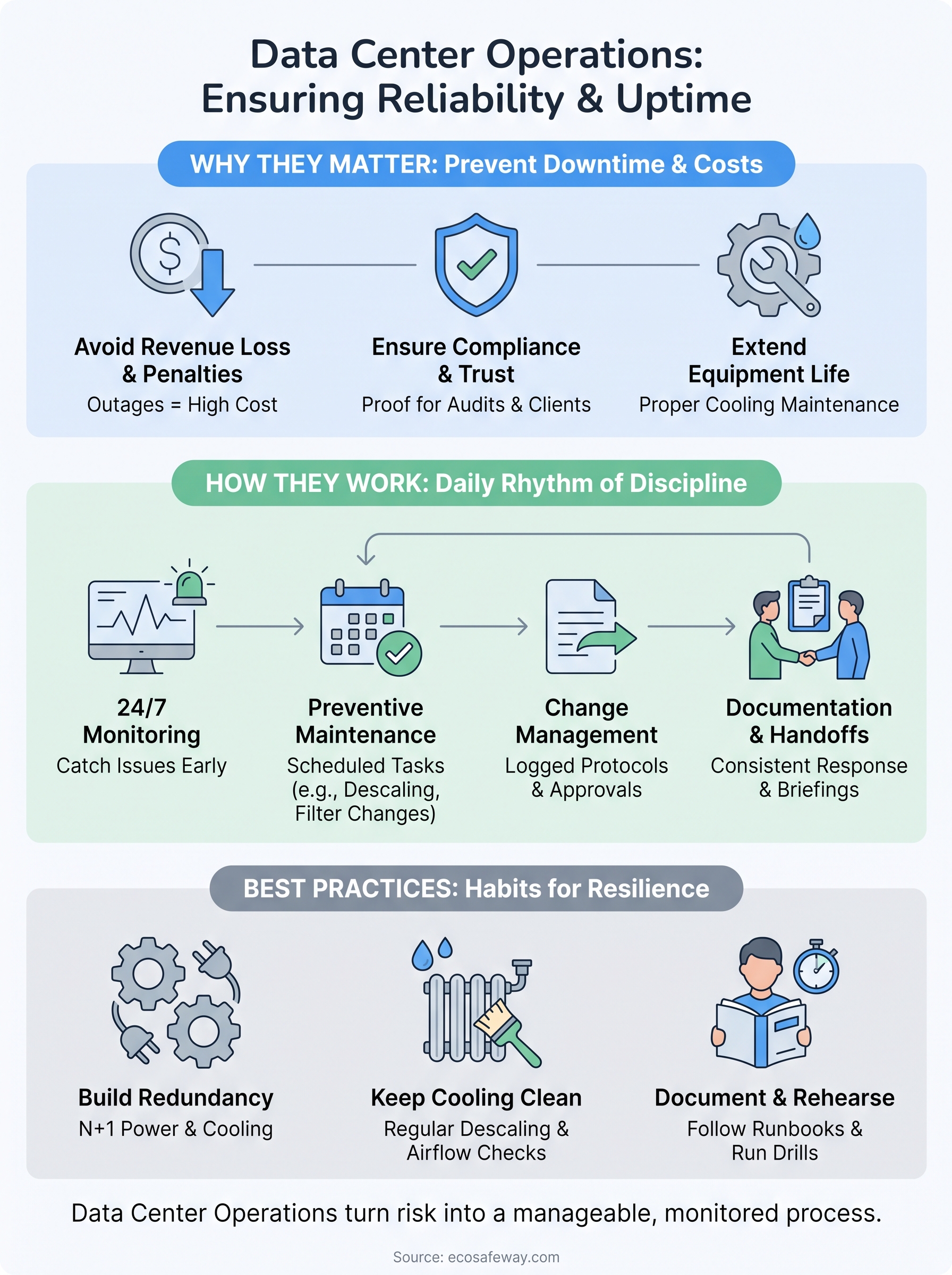
Downtime is the enemy of every data center, and operations exist specifically to keep it from happening. A single hour of unplanned outage can cost a large facility hundreds of thousands of dollars once you factor in lost transactions, service level agreement penalties, and the labor needed to diagnose and fix the problem. Data center operations turn that risk into a manageable, monitored process instead of a constant gamble.
The real cost of downtime
Facility managers who've lived through an outage know the damage goes beyond the invoice. Clients lose trust, internal teams lose productivity, and in regulated industries like healthcare or finance, an outage can trigger compliance violations on top of the technical mess. The table below shows how outage costs scale with duration, based on patterns seen across commercial and enterprise facilities.
| Outage Length | Typical Business Impact |
|---|---|
| Under 5 minutes | Minor service blips, usually absorbed by redundancy |
| 15 to 60 minutes | Noticeable service disruption, customer complaints |
| 1 to 4 hours | Significant revenue loss, SLA penalties triggered |
| 4+ hours | Reputational damage, possible regulatory scrutiny |
Every hour a data center sits offline is an hour operations failed to catch a preventable problem.
Compliance, certification, and trust
Regulators and clients expect proof that a facility can be trusted with sensitive data. Standards bodies and government agencies, including guidance published through the U.S. Department of Energy's data center energy efficiency programs, push operators toward measurable reliability and energy accountability. Strong operations documentation gives facility managers the evidence they need during audits, and it gives clients confidence that uptime commitments aren't just marketing language. Without disciplined operations, none of that trust is possible, no matter how good the hardware looks on paper.
Equipment longevity starts with operations
Hardware failures rarely happen out of nowhere. A compressor that runs hot for months because of scale buildup in a cooling loop, or a server room that drifts a few degrees above spec because a filter wasn't changed, both point back to the same root cause: operations that slipped. Facilities that treat maintenance as a scheduled discipline instead of a reactive scramble get more useful life out of every chiller, CRAC unit, and generator they own. That's why cooling system upkeep sits at the center of so many operations checklists. It's cheaper to descale a condenser coil on a calendar than to replace a compressor after it seizes. Good operations isn't just about avoiding disasters; it's about stretching the value of every piece of equipment the facility already paid for.
How data center operations work day to day
Walk into a network operations center at any hour and you'll find someone watching dashboards. Data center operations run on a rhythm of checks, alerts, and scheduled tasks that repeat around the clock, because servers don't take nights off and neither can the team responsible for them. That constant attention is what separates a facility that catches a failing power supply at 3 a.m. from one that finds out when a rack goes dark.
Monitoring and incident response
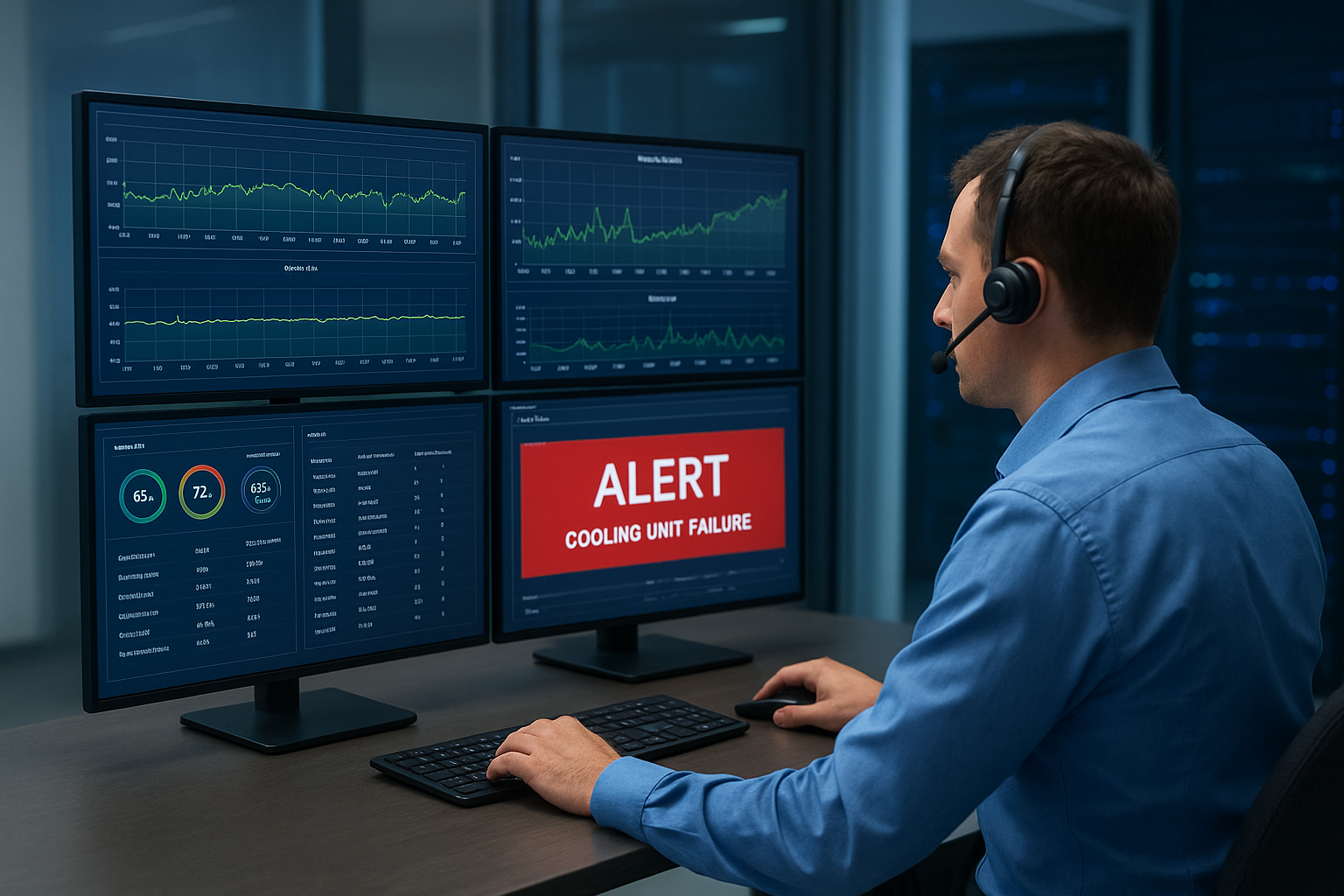
Teams track power draw, rack temperatures, humidity, and network traffic through building management systems that flag anything outside normal range. Real-time monitoring catches the early signs of trouble, like a cooling unit cycling more often than it should, before that trouble becomes an outage. When an alert fires, technicians follow a documented escalation path rather than improvising, which keeps response times consistent no matter who's on shift.
Preventive maintenance routines
Beyond watching screens, staff run maintenance on a fixed calendar instead of waiting for something to break. A typical rotation includes:
- Weekly visual inspections of cooling units and electrical panels
- Monthly filter changes and airflow checks
- Quarterly descaling of condenser coils and cooling towers to prevent scale buildup
- Semiannual generator load testing and battery inspections
- Annual infrastructure audits tied to compliance reporting
Preventive maintenance turns unpredictable failures into predictable, budgeted line items.
Change management and documentation
Adding a server, updating firmware, or swapping a cooling pump all carry risk if done carelessly, so change management protocols require approval and documentation before work happens. Every change gets logged, every outcome gets reviewed, and that paper trail becomes the evidence facilities lean on during audits or client reviews. Shift handoffs follow the same discipline: outgoing staff brief incoming staff on open tickets, pending maintenance, and anything unusual from the last cycle, so nothing slips through the cracks between shifts.
Key roles and career paths in data center operations
Someone has to own every system we just described, and that's where the operations team's org chart comes in. Data center careers range from entry-level technicians who walk the floor checking equipment to senior engineers who design the cooling and power architecture the whole facility depends on. Understanding these roles helps facility managers staff correctly and helps job seekers figure out where they fit.
Core operations roles
Below is a snapshot of the roles you'll typically find running a mid-size to large facility:
- Data center technician: handles hands-on maintenance, cable management, and hardware swaps
- Facilities engineer: manages HVAC, electrical, and cooling systems, including descaling and coil cleaning schedules
- Network operations center (NOC) analyst: monitors dashboards and manages incident escalation
- Data center manager: oversees staffing, budgets, and compliance reporting
- Critical facilities engineer: specializes in power redundancy and generator systems
A well-run facility depends less on any single expert and more on how cleanly these roles hand off responsibility to each other.
Certifications and training paths
Entering this field rarely requires a four-year degree, though many technicians pursue certifications that speed up hiring and pay. Common credentials include CompTIA Server+, Uptime Institute's Accredited Tier Specialist program, and vendor-specific training from equipment manufacturers. Government labor data, including the U.S. Bureau of Labor Statistics' outlook for computer and information systems occupations, shows steady demand growth for facility and systems management roles as data infrastructure expands.
Growth from technician to leadership
Moving up usually means broadening technical knowledge into mechanical, electrical, and network systems rather than mastering just one lane. Technicians who learn preventive maintenance disciplines, like coil descaling schedules and load testing procedures, tend to move into facilities engineer roles faster than those who only handle break-fix tickets. Progression from there often leads to shift supervisor, then data center manager, with some engineers specializing further into critical power or cooling system design roles at larger enterprise or colocation providers.
Best practices for reliable data center operations
Reliability isn't luck, it's the product of habits repeated so consistently that failures become rare instead of routine. Facilities that hold up under pressure share a set of best practices that show up in every audit and every incident report, or more accurately, in the absence of incident reports.
Build redundancy into everything
Single points of failure eventually fail, so mature operations teams design power, cooling, and network paths with backups that kick in automatically. That means dual power feeds, N+1 cooling capacity, and generators tested under real load rather than just started and shut off. Redundant systems buy time when something breaks, turning a potential outage into a non-event that gets fixed on a normal schedule.
Redundancy isn't about avoiding failure, it's about making sure one failure never becomes an outage.
Keep cooling systems clean and scale-free
Cooling failures cause a disproportionate share of data center incidents, and most trace back to neglected maintenance rather than equipment defects. A few habits keep cooling loops running efficiently:
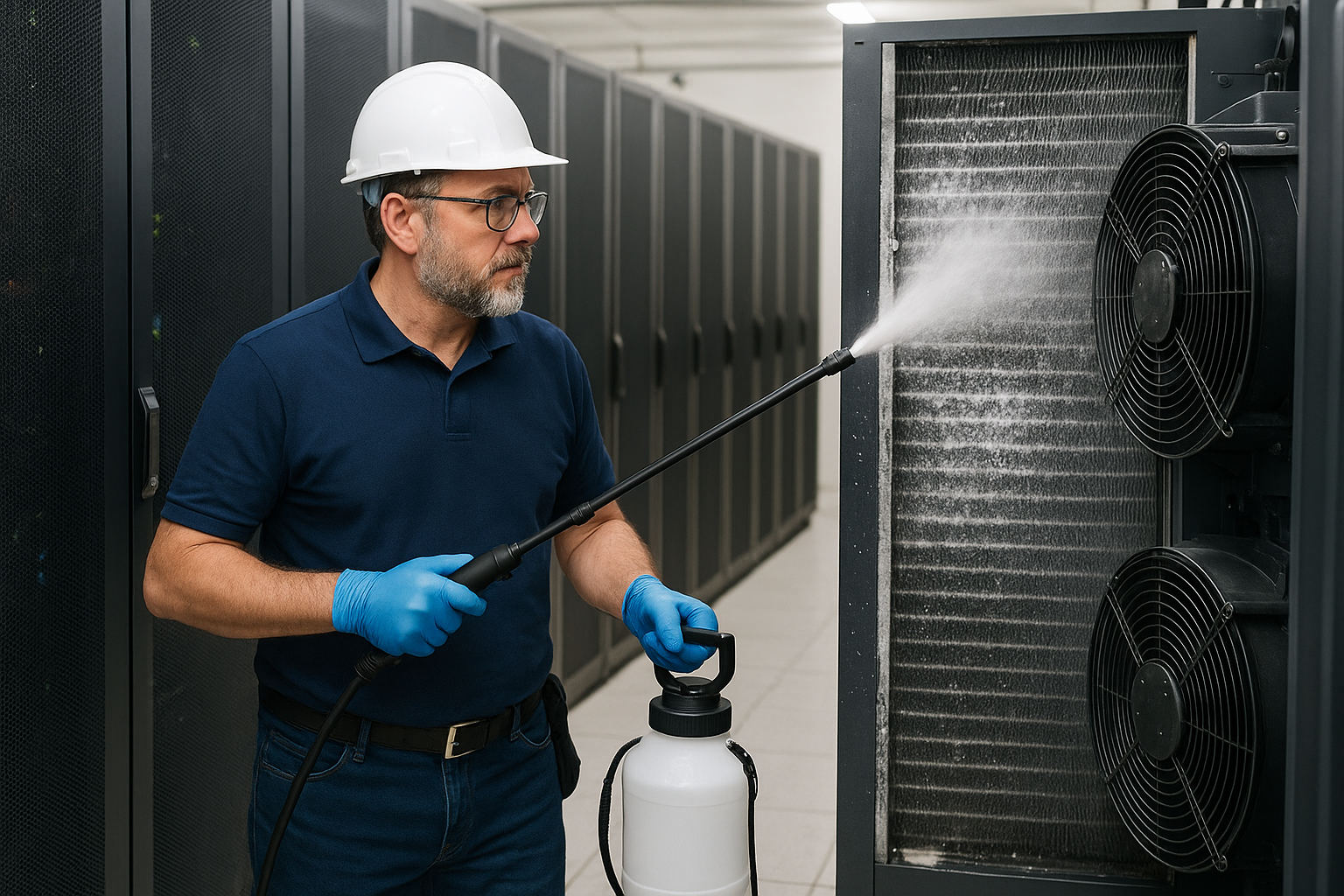
- Schedule condenser coil and cooling tower descaling on a fixed calendar, not a reactive one
- Use non-corrosive, non-hazardous cleaning products so maintenance doesn't introduce new safety risks
- Track water treatment chemistry to catch scale buildup before it restricts flow
- Inspect filters and airflow monthly, since dirty filters force compressors to work harder
Scale buildup in condenser coils quietly raises energy costs and shortens compressor life long before it causes a visible failure, which is exactly why it belongs on a fixed maintenance calendar rather than a someday list.
Document everything and rehearse failure
Written procedures only help if people actually follow them under pressure, so the best-run facilities run regular failover drills and tabletop incident exercises. Documented runbooks turn a 3 a.m. emergency into a checklist instead of a guessing game, and after-action reviews feed lessons back into training so the same mistake doesn't repeat across shifts.
Keeping data centers running smoothly
Data center operations boil down to discipline: watch the systems closely, maintain them on a fixed schedule, and document what happens so nothing repeats by accident. Facilities that treat monitoring, preventive maintenance, and staff training as daily habits rarely end up in the incident reports we described earlier. The ones that skip that discipline eventually pay for it in downtime, compliance headaches, or shortened equipment life.
Cooling still sits at the center of most reliability problems, and scale buildup remains one of the quietest ways a facility bleeds efficiency and risks a compressor failure. If your team is due for a coil cleaning cycle, reach for a product built for this exact job rather than a generic cleaner that risks corroding aluminum fins. Check out the data center HVAC cleaner and coil descaler from Eco Safeway and get scale off your CRAC and CRAH coils before it costs you a compressor.


