





A window AC unit that used to blast cold air but now just hums and drips means one thing: dirty coils. Dust, pollen, and grease build up on the aluminum fins every summer, and that layer acts like insulation, forcing the compressor to work harder while your room stays warm. Finding the right coil cleaner for window AC unit care isn't complicated, but using the wrong product can bend fins, corrode metal, or leave behind a chemical residue you don't want blowing into your bedroom.
This guide gets straight to what actually works. You'll learn how to clean coils without pulling the unit out of the wall, which products are safe for aluminum fins, and how often you should do it to keep the unit running efficiently. We'll also cover the difference between a no-rinse foaming cleaner and one that requires rinsing, since that choice determines whether you can clean the unit in place or need to remove it first.
We'll walk through the exact steps, from unplugging the unit to spraying, dwelling, and rinsing, plus how a non-toxic, biodegradable formula protects your coils and your indoor air compared to acid-based sprays sold at most hardware stores.
Why clean the coils and what you'll need first
Dirty coils don't just cut cooling power, they shorten the life of your compressor. When aluminum fins are coated in dust and grease, heat can't transfer properly, so the compressor runs longer and hotter to hit the same temperature. Over a summer of daily use, that extra strain adds up on your electric bill and on the unit's internal parts.
A window AC that runs constantly but cools poorly almost always has dirty coils, not a broken compressor.
Signs you're overdue for a cleaning include weak airflow, musty smells when the unit kicks on, ice forming on the coils, or water dripping inside instead of outside. If you're searching for a window ac coil cleaner because your unit smells or underperforms, these symptoms confirm it's a coil problem, not a refrigerant leak or electrical fault.
Supplies to gather before you start
Having everything within reach means you won't leave the unit half-disassembled while you hunt for a rag. Here's what to set out:
- Non-toxic, no-rinse foaming coil cleaner (skip acid-based sprays that pit aluminum)
- Soft-bristle brush or old toothbrush
- Microfiber cloths or paper towels
- Small handheld vacuum with brush attachment
- Spray bottle with plain water (only if your cleaner requires rinsing)
- Screwdriver, in case your model needs the front grille unscrewed
- Flashlight to check for debris deep in the fins
Choosing between a rinse-required product and a foaming, no-rinse formula matters more than most people realize. A rinse cleaner works well if you can pull the unit and take it outside. A no-rinse coil cleaner for ac window unit setups lets you clean in place, which is the more realistic option for most apartment dwellers and anyone without a second set of hands to lift a 60-pound unit out of a window frame.
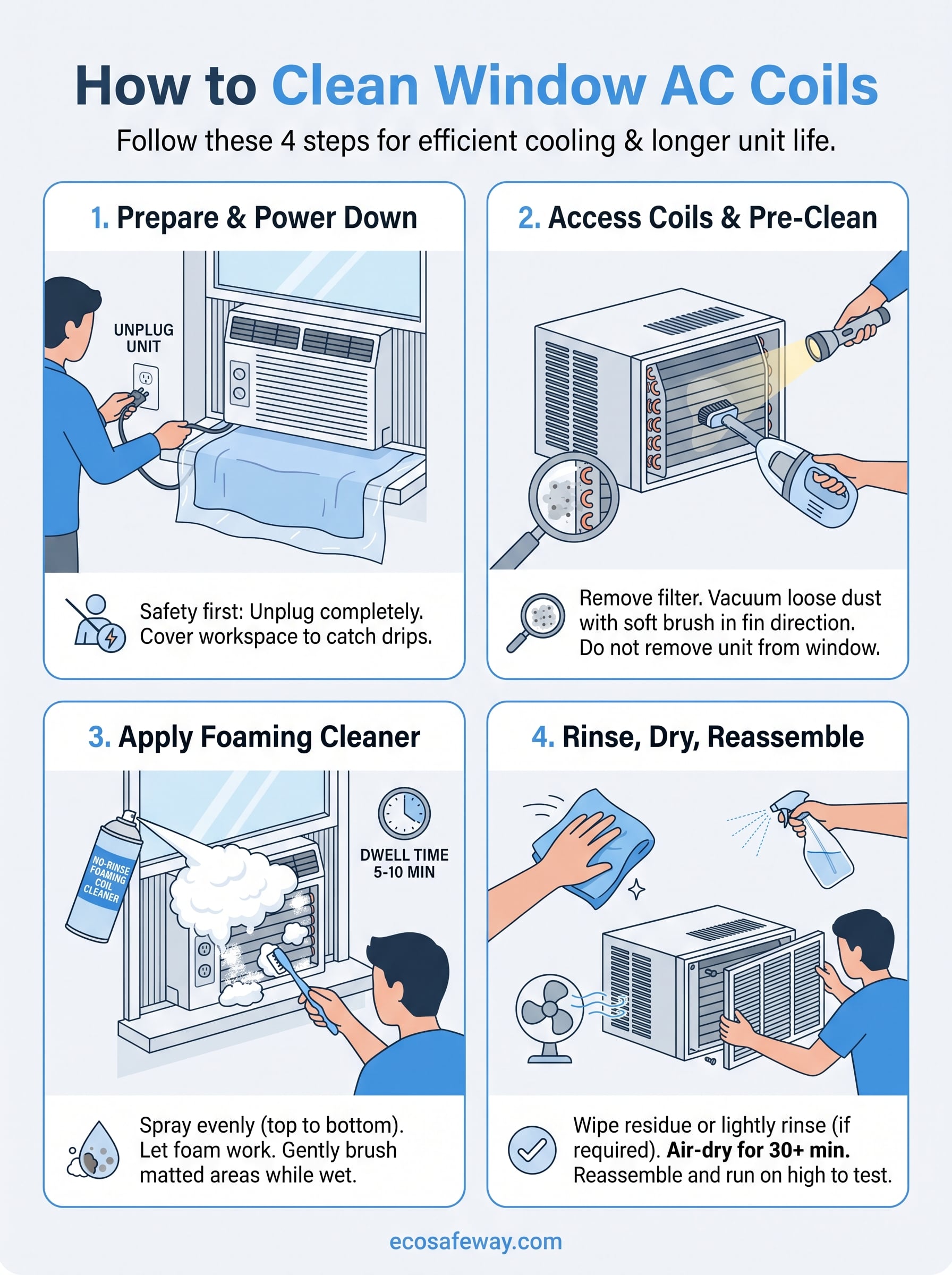
Step 1. Prepare and power down the unit
Safety first, always. Unplug the window AC unit from the wall outlet rather than just switching it off at the control panel. This cuts all power to the compressor and fan motor, so you're not risking a shock while spraying liquid cleaner near electrical components. If the unit runs on a dedicated circuit with a breaker, flip that off too as a second layer of protection.
Cover your workspace before you touch the unit itself. Lay a towel or plastic sheeting on the floor and windowsill below the AC to catch drips, loosened dust, and cleaner runoff. If you're cleaning from indoors, close nearby doors to keep dust from settling on furniture or bedding.
Next, remove the front cover or grille. Most units snap off or have two to four screws holding the panel in place. Set the screws aside in a small dish so they don't roll under furniture. With the cover off, you'll see the air filter first.
Skipping the power-down step is the single most common mistake people make before using a coil cleaner for window ac unit.
Pull the filter and set it aside for a separate wash or replacement.
Step 2. Access the coils without removing the unit
With the filter out, you'll see two sets of aluminum fins: the evaporator coils facing the room and the condenser coils facing outside. Most window units let you reach both without pulling the chassis from the wall, which is exactly why a no-rinse formula matters here. Use your flashlight to check for matted dust, pet hair, or grease buildup between the fins before you spray anything.
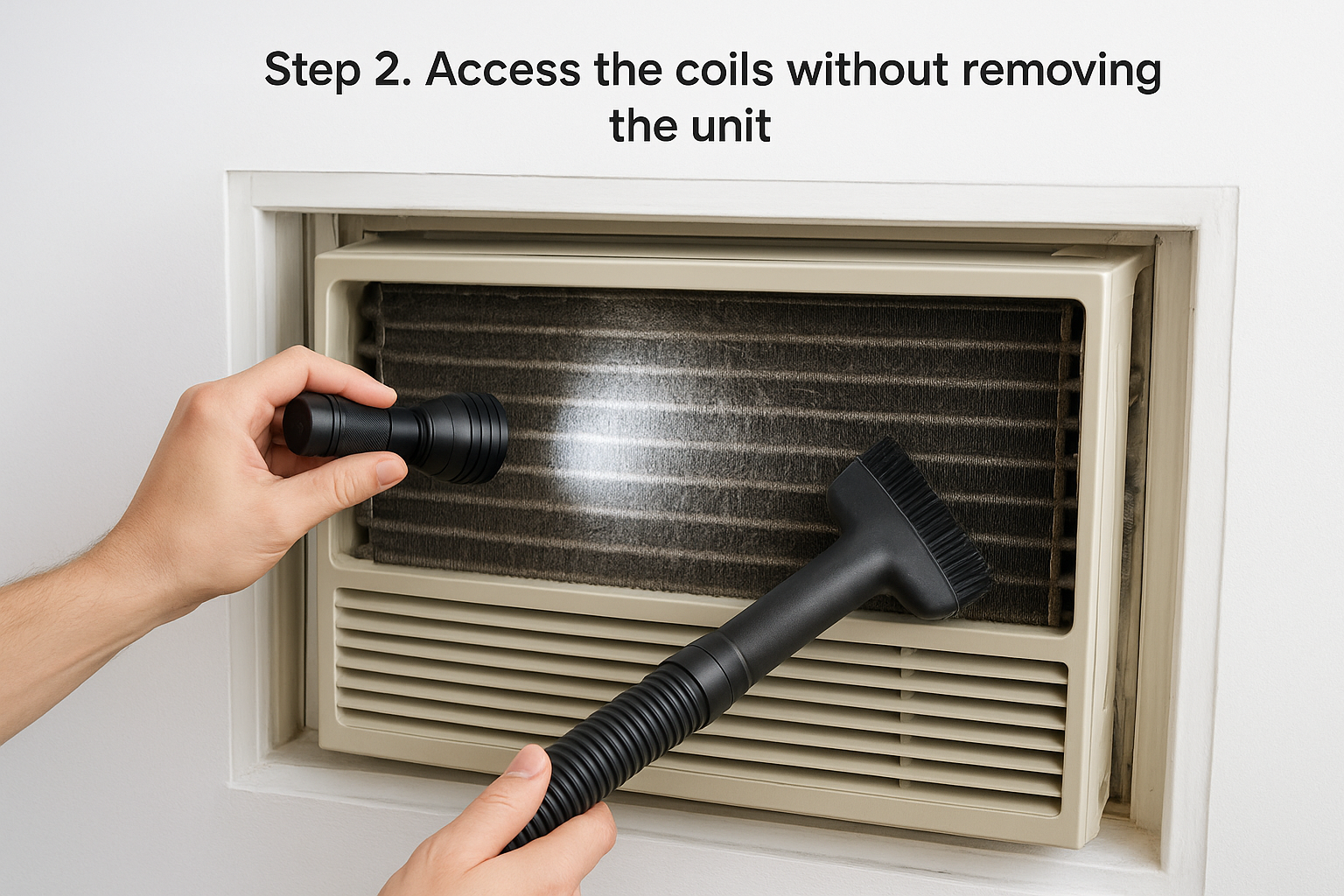
Slide out the chassis slightly if your model allows it, usually by releasing two side clips, so you can angle the flashlight and see the back rows of coils. You don't need to fully remove the unit from the window frame, just create enough gap to get a brush and spray nozzle into the fin channels.
You almost never need to pull a window unit out of the wall to reach its coils properly.
Vacuum loose debris first using the brush attachment, working in the same direction as the fins to avoid bending them. This step alone often removes half the buildup before any ac window unit coil cleaner touches the metal, which means less scrubbing and a faster rinse later.
Step 3. Apply and let the coil cleaner work
Spray the foaming coil cleaner evenly across both sets of fins, holding the can six to eight inches away so the foam has room to expand into the channels. Work top to bottom so gravity pulls the foam down through the fins instead of pooling in one spot. A non-toxic, biodegradable formula means you don't need gloves or a respirator here, unlike the acid-based sprays that warn you to ventilate the room before spraying.
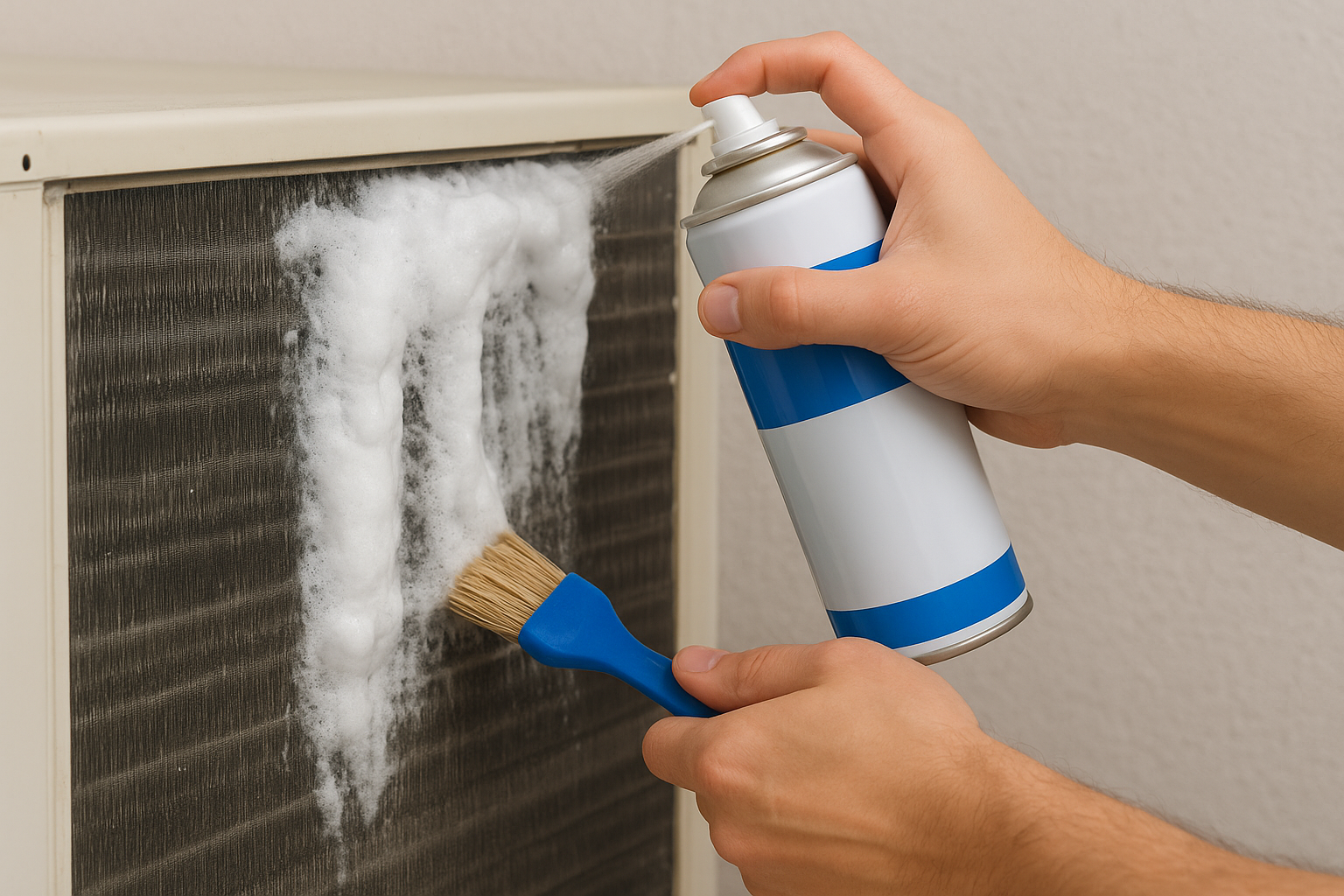
Let the cleaner sit for the time listed on the label, usually five to ten minutes. This dwell time is what breaks down grease and mineral film without scrubbing, which matters since aggressive brushing can bend soft aluminum fins.
The dwell time does the cleaning, not elbow grease, so resist the urge to scrub before the foam has finished working.
While it sits, use the soft-bristle brush on any visibly matted spots, brushing gently in the direction of the fins. This targeted touch-up, combined with a proper coil cleaner for ac window unit application, handles buildup the foam alone can't loosen, especially around corners where dust tends to compact.
Step 4. Rinse, dry, and reassemble the unit
If you used a true no-rinse foaming formula, this step is short: wipe away residue with a microfiber cloth and let any remaining foam finish evaporating on its own. No-rinse products are built to break down completely without leaving film on the fins, which is the whole reason they work for a coil cleaner for window AC unit setups you can't easily move.
Rinse-required cleaners need a light spray of plain water directly on the fins, using just enough pressure to flush foam and loosened grime out the bottom without soaking the electrical housing. Point the spray bottle downward, never sideways into the fan motor or control panel.
Never point a hose or spray bottle sideways into a window AC, water belongs going down through the fins, not into the motor housing.
Once clean, let the unit air-dry for at least thirty minutes before plugging it back in. Wipe down the housing, replace the filter, and reattach the front grille and screws.
Plug the unit in and run it for five minutes on high to confirm airflow feels stronger and any musty smell is gone.
Keeping your window AC running cool
A clean set of coils is the difference between a unit that struggles through August and one that keeps your room cold without running nonstop. Once you've gone through this process, mark your calendar for a repeat cleaning every three to four months during peak season, or at the start and end of summer if you only run the unit seasonally. Regular maintenance beats emergency fixes every time, since a unit that never builds heavy grime never needs aggressive scrubbing that risks bending fins.
The right coil cleaner for window AC unit care makes this a fifteen-minute job instead of a dreaded chore, especially when the formula is non-toxic enough to use indoors without gloves or ventilation. If you're ready to stock up on a foaming, aluminum-safe cleaner that skips the acid and the hazmat warnings, check out the condenser coil cleaner built for exactly this job.


