





If your Scotsman machine is spitting out cloudy, slow-melting, or off-tasting ice, scale buildup is almost always the culprit. Minerals in your water supply coat the evaporator plate and water lines over time, and that residue eventually shows up in every cube you serve. Finding the right scotsman ice machine cleaner matters just as much as how you use it, since the wrong chemistry can pit stainless surfaces or leave behind residue that affects food safety.
This guide answers exactly what you came here for: which cleaner works safely in Scotsman equipment, and the step-by-step process for descaling and sanitizing it correctly. Whether you run a standard cube unit or a scotsman nugget ice machine cleaning solution specifically for chewable-ice models, the fundamentals of a proper clean stay the same, but timing and dilution can differ by machine type.
We'll walk through why acid-based descalers cause long-term damage, what makes a non-corrosive ice machine cleaner scotsman technicians actually recommend, and a full cleaning walkthrough you can follow today. You'll also learn how to build a maintenance schedule that keeps scale from coming back, protecting your equipment and your ice quality for good.
What you need before you start descaling
Grab everything before you shut down the machine, since a half-finished descale leaves your unit offline longer than necessary. You want a non-corrosive descaling solution rated for HFC/HCFC-free food equipment, a soft-bristle brush, warm water, clean towels, and a sanitizing rinse. Skip anything labeled as an acid-based scale remover made for boilers or pipes; those formulas are too aggressive for the thin evaporator plating inside a Scotsman unit.
Supplies and tools checklist
| Item | Purpose |
|---|---|
| Non-corrosive ice machine descaler | Dissolves mineral scale without pitting stainless steel |
| Food-safe sanitizer | Kills bacteria and biofilm after descaling |
| Soft nylon brush | Scrubs bin walls and distribution tubes |
| Clean microfiber towels | Wipes down panels and drains |
| Plastic bucket | Mixes solution at the correct dilution |
| Rubber gloves | Basic hand protection during handling |
Why non-toxic chemistry matters here
Commercial kitchens and hospitals can't risk chemical residue ending up in ice that touches food or drinks, so the cleaner you choose needs to meet real food-safety standards, not just marketing claims. An HMIS 0-0-0 rated cleaner carries zero health, flammability, or physical hazard scores, which means no fumes, no required protective gear beyond gloves, and no hazmat shipping restrictions when you reorder.
A descaler that's both non-corrosive and non-toxic protects the machine and the ice at the same time.
Check your Scotsman manual for the exact scotsman ice machine cleaner dilution ratio for your model, since cube, flake, and nugget units sometimes call for slightly different concentrations. Having that number confirmed now saves you from guessing mid-clean.
Step 1. Shut down and prep the ice machine
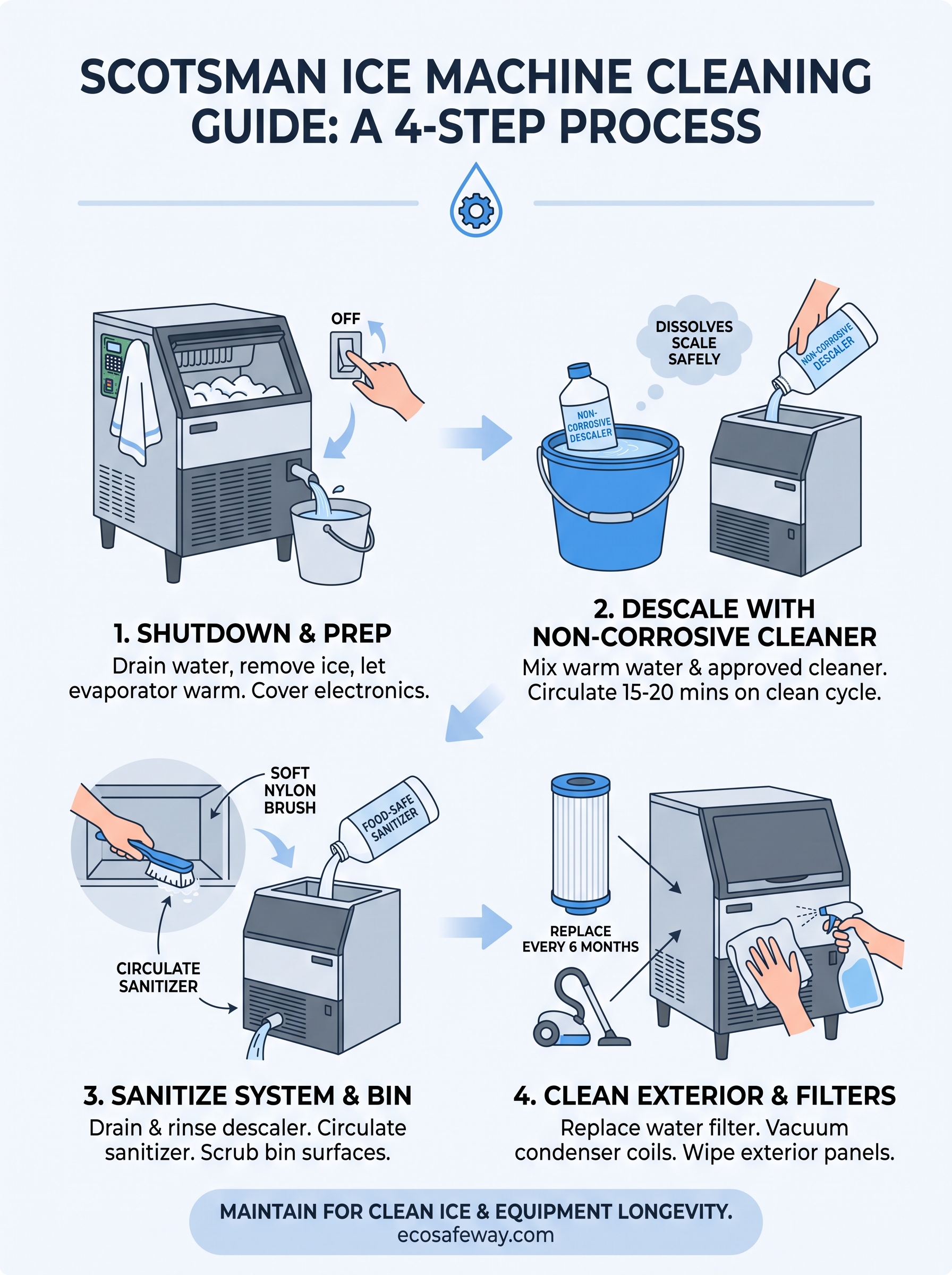
Start by switching the machine to the "clean" or "off" cycle rather than pulling the power directly, since Scotsman units need to complete an internal drain sequence before you open the panel. Pull the bin door and remove any remaining ice, then let the evaporator warm to room temperature for a few minutes. Rushing this step is the most common reason a scotsman ice machine cleaning solution doesn't fully dissolve scale on the first pass.
Clear the bin and lines
Drain the water reservoir completely and disconnect the water supply line at the inlet valve. Wipe down the bin walls with a dry towel to remove loose ice chips and debris before any liquid touches the surface.
A machine that isn't fully drained and cooled won't let the cleaner reach the scale that's actually causing your problem.
Protect surrounding components
Cover nearby electrical connections and the control board with a towel or plastic sheet. Splashed descaler on exposed wiring can cause corrosion even when the ice machine cleaner scotsman technicians recommend is non-toxic. Once the bin is dry and the unit is isolated from its water source, you're ready to mix your solution.
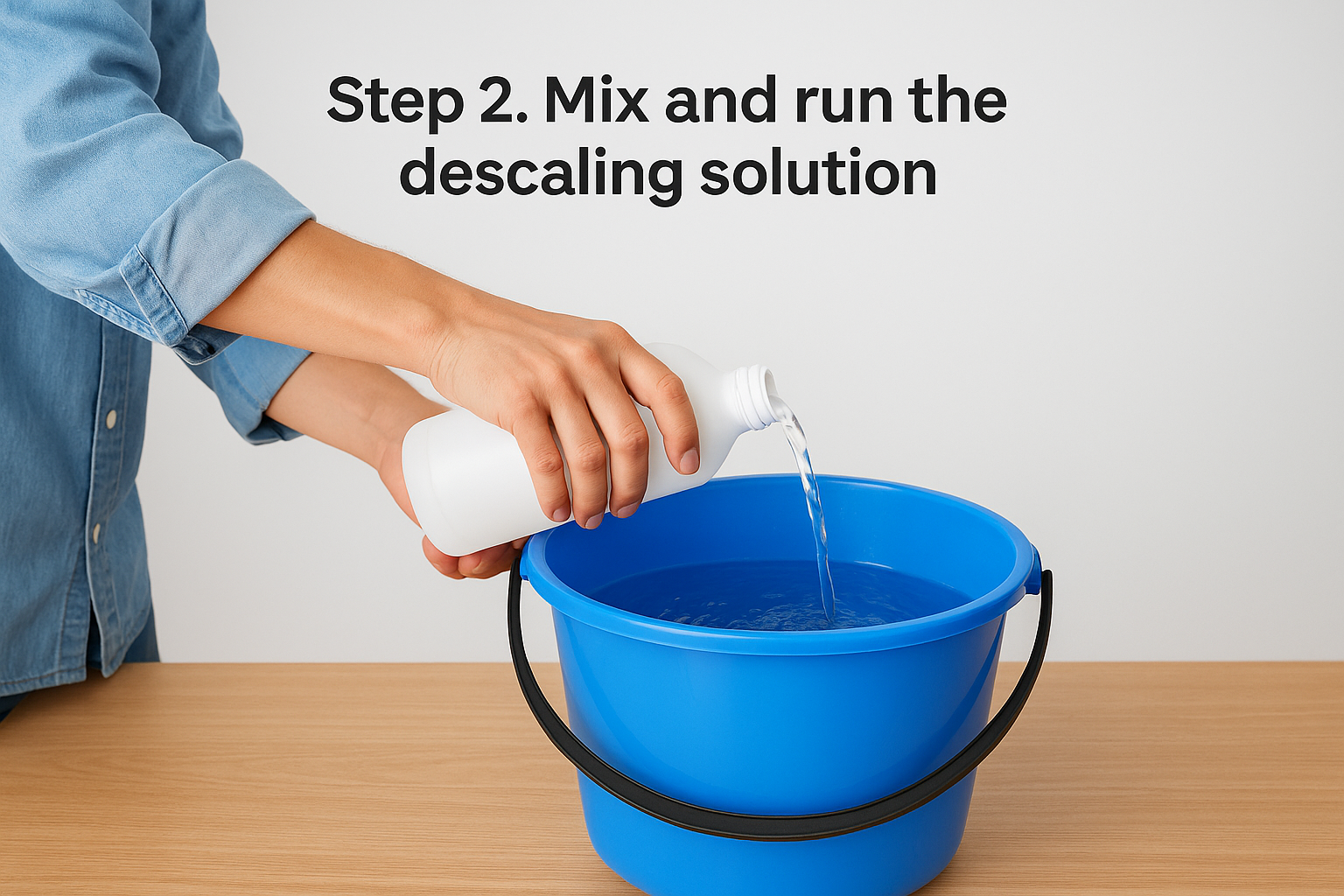
Step 2. Mix and run the descaling solution
Pour warm water into your plastic bucket first, then add the non-corrosive descaling solution at the ratio your Scotsman manual specifies. Mixing water first prevents concentrated cleaner from splashing back at you and helps the solution dissolve evenly instead of pooling at the bottom.
Circulate the solution properly
Pour the mixed solution into the water reservoir and restart the machine on its clean cycle. The pump circulates the descaler through the water lines and over the evaporator plate, where it breaks down mineral scale without stripping the metal underneath. Let a full cycle run, usually 15 to 20 minutes depending on your model, and watch for foaming or discoloration in the bin, which tells you the scale is actively lifting.
A properly diluted, non-corrosive cleaner dissolves scale gradually instead of attacking the plating that protects your evaporator.
Repeat if scale is heavy
If your last descale was months overdue, run a second cycle with fresh solution. Machines with a scotsman nugget ice machine cleaning solution requirement often need this extra pass because nugget evaporators have more surface contact points where scale accumulates faster than in standard cube units.
Step 3. Sanitize the water system and ice bin
Once the descaling cycle finishes, drain the reservoir completely and rinse it twice with clean water to flush out any leftover cleaner before sanitizing. Residual descaler mixing with sanitizer can neutralize both, leaving biofilm behind instead of killing it. Mix your food-safe sanitizer at the labeled ratio and pour it into the reservoir, then run another short cycle so it reaches the same lines the descaler just cleaned.
Scrub the bin by hand
While that cycle runs, scrub the ice bin walls, baffle, and curtain with your soft nylon brush and a diluted sanitizer solution. Biofilm builds up in corners the circulating solution rarely touches directly, so hand contact matters here.
Descaling removes the scale, but sanitizing is what actually stops bacteria and mold from coming back.
Rinse before restart
Drain the sanitizer fully and run one more cycle with plain water to clear any taste or odor. Reconnect the water supply line only after this final rinse, since restoring water pressure too early can push sanitizer residue back into the lines you just cleared.
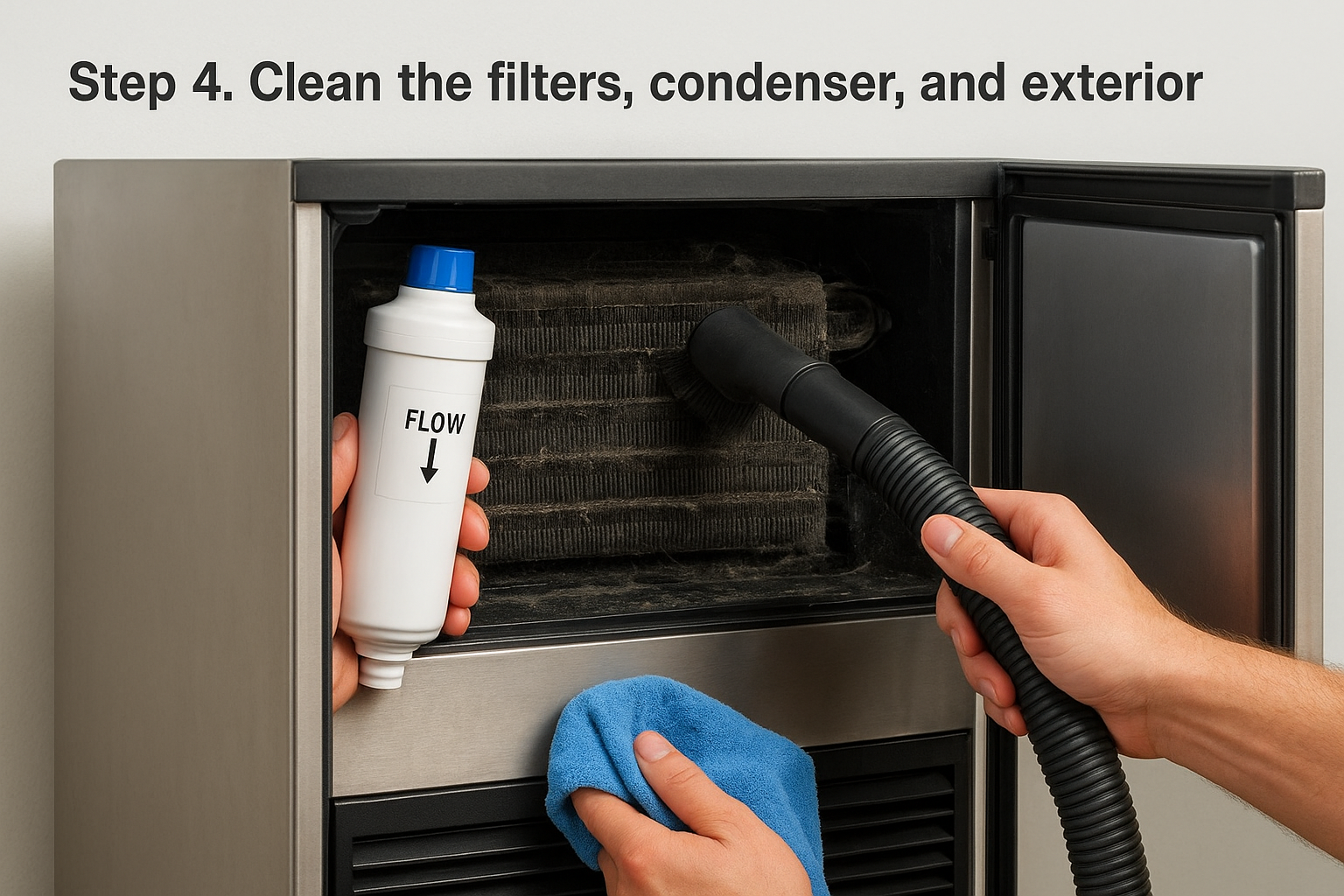
Step 4. Clean the filters, condenser, and exterior
With the internal system rinsed and sanitized, shift your attention to the parts that keep the machine breathing and looking presentable. A clogged water filter or dusty condenser forces the compressor to work harder, which shortens compressor life even when the ice itself is spotless. Pull the inline water filter and check the manufacturer's replacement date; most Scotsman filters need swapping every six months regardless of how clean your water looks.
Clear the condenser coils
Unplug the unit, then vacuum the condenser coils with a soft brush attachment to remove dust and grease buildup. Avoid water on air-cooled condensers unless your model specifically allows it, since trapped moisture invites corrosion.
A clean condenser cools the refrigerant properly, and that alone prevents half the scale-related service calls Scotsman technicians see.
Wipe down exterior panels
Finish with a non-corrosive, food-safe cleaner on the exterior panels, door gasket, and control buttons. Skip ammonia-based glass cleaners near the door seal, since they degrade rubber over time. Reconnect power only after every surface is dry.
Keeping your Scotsman machine running clean
Scale doesn't build up overnight, and it won't disappear with a one-time clean either. Set a recurring reminder every 3 to 6 months depending on your water hardness, and swap filters on schedule instead of waiting for ice quality to tip you off. Consistent descaling keeps your evaporator running efficiently and stops small mineral deposits from turning into the stubborn buildup that shortens compressor life.
Running the right chemistry matters just as much as the schedule. A non-corrosive, food-safe descaler protects the plating inside your machine while meeting the sanitation standards commercial kitchens and hospitals actually need. Skip the acid-based products marketed for boilers and pipes, since they cause the exact pitting and premature wear you're trying to avoid.
If you're ready to stock a cleaner built specifically for this job, check out the ice machine cleaner and descaler from Eco Safeway and keep your Scotsman unit producing clean, clear ice year-round.


