





You open the washer door expecting fresh laundry, and instead you get hit with a musty, sour smell that clings to everything. If you've ever asked yourself why does my washing machine smell, you're far from alone. It's one of the most common appliance complaints, and the causes are simpler, and more fixable, than most people think. Mold, mildew, trapped detergent residue, and stagnant water are almost always behind it.
The good news: you don't need harsh chemicals to solve the problem. In fact, aggressive cleaners can damage rubber gaskets and internal components, creating even bigger issues down the line. That's exactly why we developed Eco Safeway's non-toxic, biodegradable washing machine cleaner, it breaks down buildup and eliminates odor-causing bacteria without corroding seals or leaving behind chemical residue. It carries a perfect HMIS 0-0-0 safety rating, so it's safe around your family and your machine.
This guide walks you through the specific reasons your washing machine stinks, step-by-step cleaning instructions to fix it, and practical habits that keep odors from coming back. Whether you have a front-loader prone to gasket mold or a top-loader with standing water issues, you'll find the answers here.
Why your washing machine smells
Understanding the root causes is the fastest way to fix the problem permanently. Most washing machine odors trace back to just a handful of recurring issues, and once you know what you're dealing with, the fix becomes obvious. The machine isn't broken. It's dirty in ways that routine laundry cycles simply can't clean.
Mold and mildew growth
Mold and mildew are the leading culprits when your washer smells musty or like a wet gym bag. Front-loading machines are especially vulnerable because the rubber door gasket creates a tight seal that traps moisture after every wash. Water pools in the folds of that gasket, and in a dark, warm interior, mold spores thrive.
Top-loaders aren't immune either. The area under the drum lid, around the fabric softener dispenser, and inside the agitator all collect moisture and detergent residue that mold feeds on. If you've been asking yourself why does my washing machine smell even after washing, mold is usually the answer.
Mold inside your washer doesn't just cause odors. It transfers onto your laundry and can trigger respiratory irritation in sensitive individuals.
The main factors that encourage mold growth include:
- Leaving the washer door or lid closed between cycles, which traps humidity inside
- Washing clothes in cold water frequently, since lower temperatures don't kill mold spores
- Pulling laundry out immediately but never wiping down the interior afterward
- Running the machine in a poorly ventilated laundry room with high ambient humidity
Detergent and fabric softener buildup
Using too much detergent is one of the most common and least recognized causes of washing machine odor. Excess soap doesn't fully rinse out. It coats the drum interior, the dispenser tray, and the pump filter with a sticky residue that bacteria break down over time, producing a sour or rotten smell.
High-efficiency (HE) machines require significantly less detergent than standard washers, and many people still pour in the same amount they used with older machines. That excess soap sits in the drum, mixes with lint and skin cells from your laundry, and ferments. Fabric softener compounds this problem because it leaves behind a waxy film that layers on top of soap residue and becomes nearly impossible for a normal wash cycle to remove.
Drain and sewer problems
Sometimes the smell coming from your washer isn't actually from the machine itself but from the drain connection behind it. A dry P-trap in the drain standpipe, a clogged drain hose, or a venting problem in your home's plumbing can push sewer gas back up through the washer's drain and into your laundry room. This produces a distinctly sulfuric or sewage-like smell rather than the musty odor associated with mold.
Checking whether the smell is coming from inside the drum or from the back of the machine helps you tell the difference. If the odor is strongest near the drain hose connection rather than the drum interior, you're likely dealing with a plumbing issue rather than a cleaning problem. In both cases, the fix requires a different approach, which is exactly what the steps in this guide cover.
Step 1. Identify the smell and locate the source
Before you start scrubbing, narrow down what type of odor you're dealing with and where it's actually coming from. Different smells point to different problems, and treating a sewer gas issue the same way you'd treat mold will waste your time and leave the real cause untouched. Spending two minutes diagnosing first makes every cleaning step that follows faster and more effective.
Match the smell to the cause
The type of odor your washer produces is your most reliable diagnostic clue. Each smell has a predictable source, and once you identify which one you're dealing with, you'll stop guessing about why does my washing machine smell and start targeting the actual problem. Matching the odor to its cause before you act saves you from cleaning the wrong part of the machine entirely.
The smell that hits you right when you open the door is the most useful signal. A smell that only appears while the machine runs but not when it sits idle almost always points to the drain or plumbing rather than the drum.
| Smell | Most likely cause |
|---|---|
| Musty or mildew | Mold in the gasket, drum, or dispenser tray |
| Sour or rotten | Excess detergent buildup feeding bacteria |
| Sulfur or sewage | Dry P-trap, blocked drain hose, or plumbing vent problem |
| Burning or chemical | Residue baked onto the heating element |
| Stale or wet fabric | Clothes left sitting in the drum after the cycle ended |
Find where the odor is coming from
Once you've matched the smell to a likely cause, physically trace the odor source before you reach for any cleaner. Open the washer door and move your nose close to the rubber gasket seal, the detergent dispenser drawer, the drum interior, and the drain filter panel at the bottom front of most front-loaders. Checking the back of the machine near the drain hose connection tells you whether the problem lives inside the drum or in your home's plumbing.
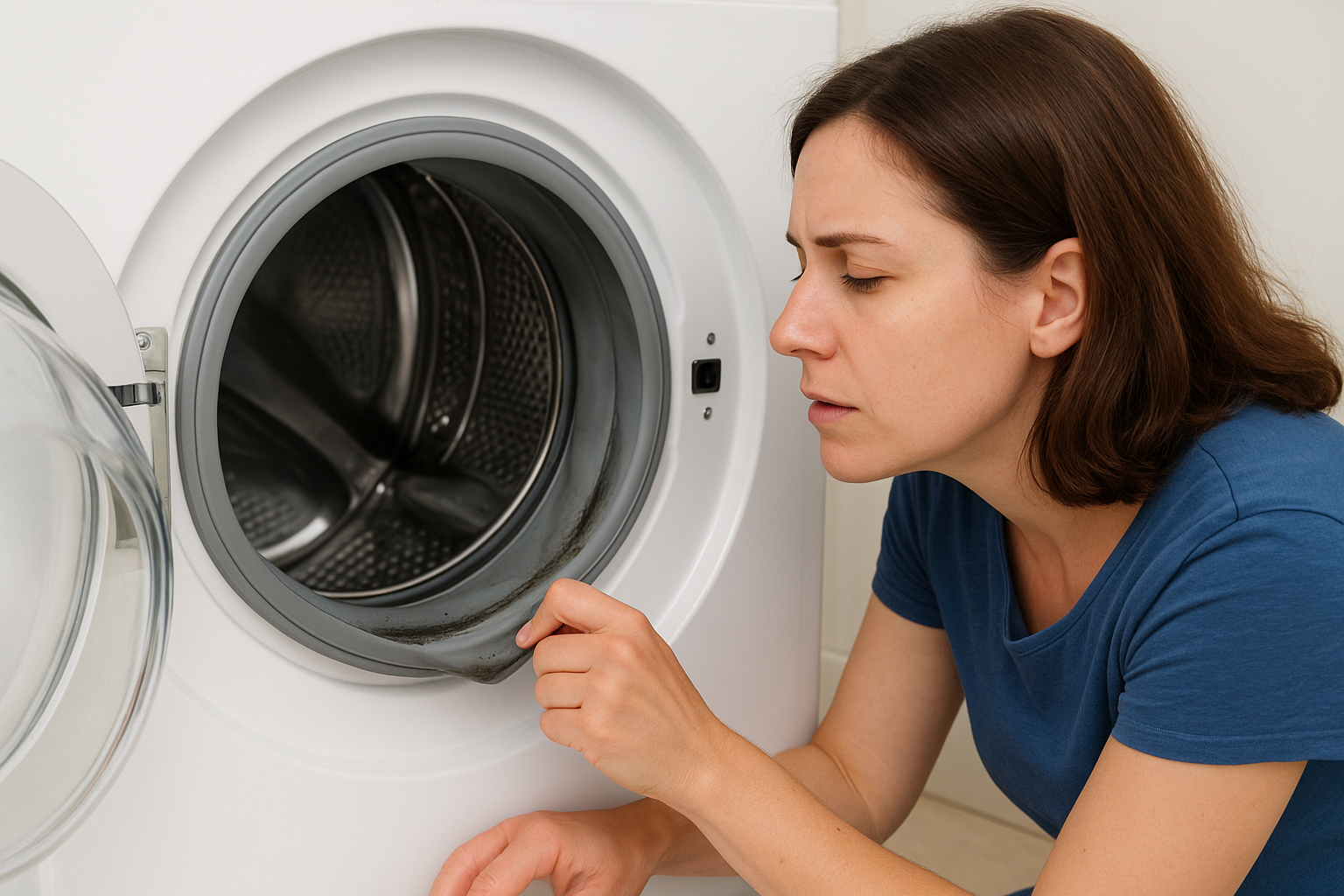
Work through these four checks in order:
- Gasket: Pull back the rubber door seal folds and look for black or gray mold spots and trapped lint.
- Dispenser drawer: Remove the drawer completely and smell the housing behind it for sour detergent residue.
- Drum interior: Run your hand along the drum surface and smell the opening with the door held open for several minutes.
- Drain connection: Smell near the standpipe or drain hose at the back wall to catch sewer-type odors before they reach the drum.
Step 2. Deep clean the washer where odors hide
Once you know where the odor lives, you can clean with purpose rather than running another hot cycle and hoping for the best. This step targets the three areas that trap the most buildup: the gasket and drum, the dispenser drawer, and the drain pump filter. Work through all three in sequence for the best result, especially if you've been asking why does my washing machine smell for weeks or longer without finding a fix.
Clean the gasket and drum
The rubber door gasket on front-loaders holds trapped moisture, lint, and mold in its folds far longer than any other part of the machine. Put on a pair of gloves, pull back the gasket folds completely, and wipe every surface with a damp cloth. For visible mold spots, apply a small amount of Eco Safeway washing machine cleaner directly to the gasket, let it sit for five minutes, then scrub with an old toothbrush and wipe clean.
Skipping the gasket while cleaning everything else is the number one reason odors return within days of a full cleaning session.
After scrubbing the gasket, wipe down the full drum interior with a cloth dampened with your cleaner. Pay extra attention to the back wall of the drum where water collects, and to the underside of the drum lip where detergent residue builds up out of sight.
Scrub the dispenser drawer and filter
Remove the detergent dispenser drawer completely by pressing the release tab inside the center compartment and pulling it straight out. Rinse it under hot water and scrub each compartment with a small brush to clear waxy softener film and caked detergent residue. Rinse the housing cavity behind the drawer the same way using a damp cloth or toothbrush.
Next, locate the drain pump filter at the bottom front of your machine, usually hidden behind a small access panel. Place a shallow tray underneath, unscrew the filter cap slowly, and let the residual water drain before pulling the filter free. Rinse it under running water, remove any trapped lint or debris, and reinstall it firmly before running any cleaning cycle.
- Unscrew the filter cap slowly to avoid splashing
- Rinse the filter under warm running water for at least 30 seconds
- Check the filter housing cavity for debris before inserting the filter back
- Hand-tighten the cap until snug
Step 3. Fix sewer and drain odors at the source
A sulfur or sewage smell is one of the more alarming reasons behind why does my washing machine smell, but it almost never means your machine is broken. Sewer gas enters through the drain connection when there's a problem with your home's plumbing rather than with the washer itself. The fix lives behind the machine, not inside it, so cleaning the drum won't help here. You need to address the drain components directly.
Check and fix the P-trap
The P-trap is a curved section of pipe behind your washer's drain standpipe designed to hold a small amount of water that blocks sewer gas from pushing back up into your laundry room. When a washer sits unused for an extended period, that water evaporates, and the barrier disappears. Gas travels freely up through the drain hose and into the air around your machine.
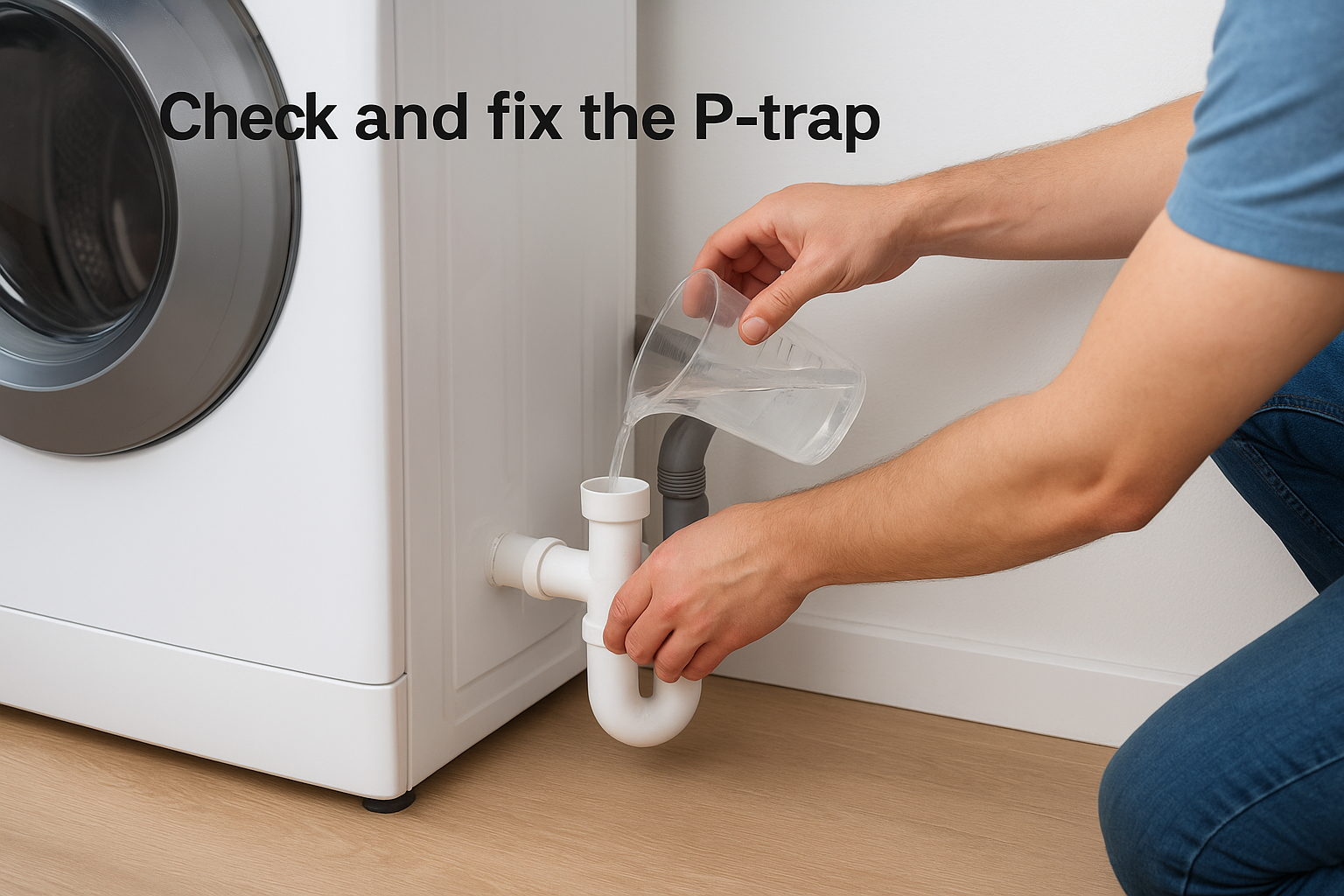
Refilling a dry P-trap takes under a minute and eliminates sewer odor immediately if that's the source.
Fixing a dry P-trap is straightforward:
- Pull the machine slightly away from the wall to access the standpipe
- Pour about two cups of water directly into the standpipe opening to refill the trap
- Run a short rinse cycle so the machine pushes water through the line and confirms the trap is properly seated
- Check back in 24 hours to confirm the smell is gone
If your standpipe doesn't have a P-trap installed, contact a licensed plumber. Running a washer drain without a proper trap violates most local plumbing codes and continuously exposes your home to sewer gas.
Clear a blocked drain hose
A kinked, clogged, or improperly installed drain hose restricts water flow and leaves organic material sitting in the line, which produces a persistent sewage-like smell. Pull the machine out and visually inspect the full length of the drain hose from the washer to the standpipe. A healthy hose runs with no sharp bends or kinks, and the end drops into the standpipe no more than six to eight inches deep.
To flush the hose, disconnect it from the standpipe, hold the open end over a bucket, and run a short spin cycle to push water through. Clear any visible blockage from the hose end with a long bottle brush, then reinstall it with a loose loop to prevent future kinking. A properly routed drain hose should form a gentle arc, not a compressed bend against the wall.
Step 4. Prevent odors with simple habit changes
Cleaning your washer once solves the immediate problem, but without a few basic routine changes, odors come back within weeks. The underlying reasons why does my washing machine smell almost always involve repeated exposure to the same conditions: moisture, excess detergent residue, and neglected surfaces. Changing three simple habits eliminates those conditions permanently and keeps your washer smelling neutral between cleaning sessions.
Build a post-wash routine
The single most effective thing you can do after every load is leave the washer door or lid open for at least two hours. This lets the drum and gasket air out completely rather than trapping humidity inside a sealed chamber where mold spores settle and multiply. Pair that with a quick 30-second wipe of the rubber gasket folds using a dry cloth, and you remove the standing moisture that mold depends on before it has any chance to establish itself.
This two-step habit takes less than a minute and prevents the majority of recurring odors on its own.
Remove your laundry as soon as the cycle finishes. Clothes sitting wet in a closed drum for an hour produce the same musty conditions that mold thrives on, and that smell transfers directly into your laundry and the drum walls.
Use the right amount of detergent
Excess detergent is the second most common reason odors return after a full cleaning, and most people consistently use too much. Check your detergent packaging for the HE dosing line, not the standard dosing line, and fill only to that mark. For lightly soiled loads or soft water, use even less, roughly half the HE-recommended dose. Less soap means less residue coating your drum, dispenser, and pump, which means fewer bacteria producing sour smells over time.
| Load size | HE detergent amount |
|---|---|
| Small or lightly soiled | 1 tablespoon |
| Medium, normal soiling | 1.5 tablespoons |
| Large or heavily soiled | 2 tablespoons |
Avoid fabric softener when possible. A clean drum produces naturally soft results, and liquid softener deposits a waxy film that layers on top of existing residue and feeds odor-causing bacteria.
Run a monthly maintenance cycle
Schedule one dedicated cleaning cycle per month using a washing machine cleaner rated safe for your machine's seals and components. Run it on the hottest cycle your washer allows with an empty drum. This flushes residue from the pump, drum walls, and hose before it accumulates to the point of producing odors you can actually smell.
Follow this monthly checklist to stay consistent:
- Run an empty hot cycle with your cleaner on the first weekend of each month
- Pull and rinse the dispenser drawer after the cleaning cycle completes
- Check the drain pump filter and clear any debris
- Inspect the gasket folds for early mold spots and wipe clean
- Leave the door open for the rest of the day after the maintenance cycle finishes
A quick wrap-up
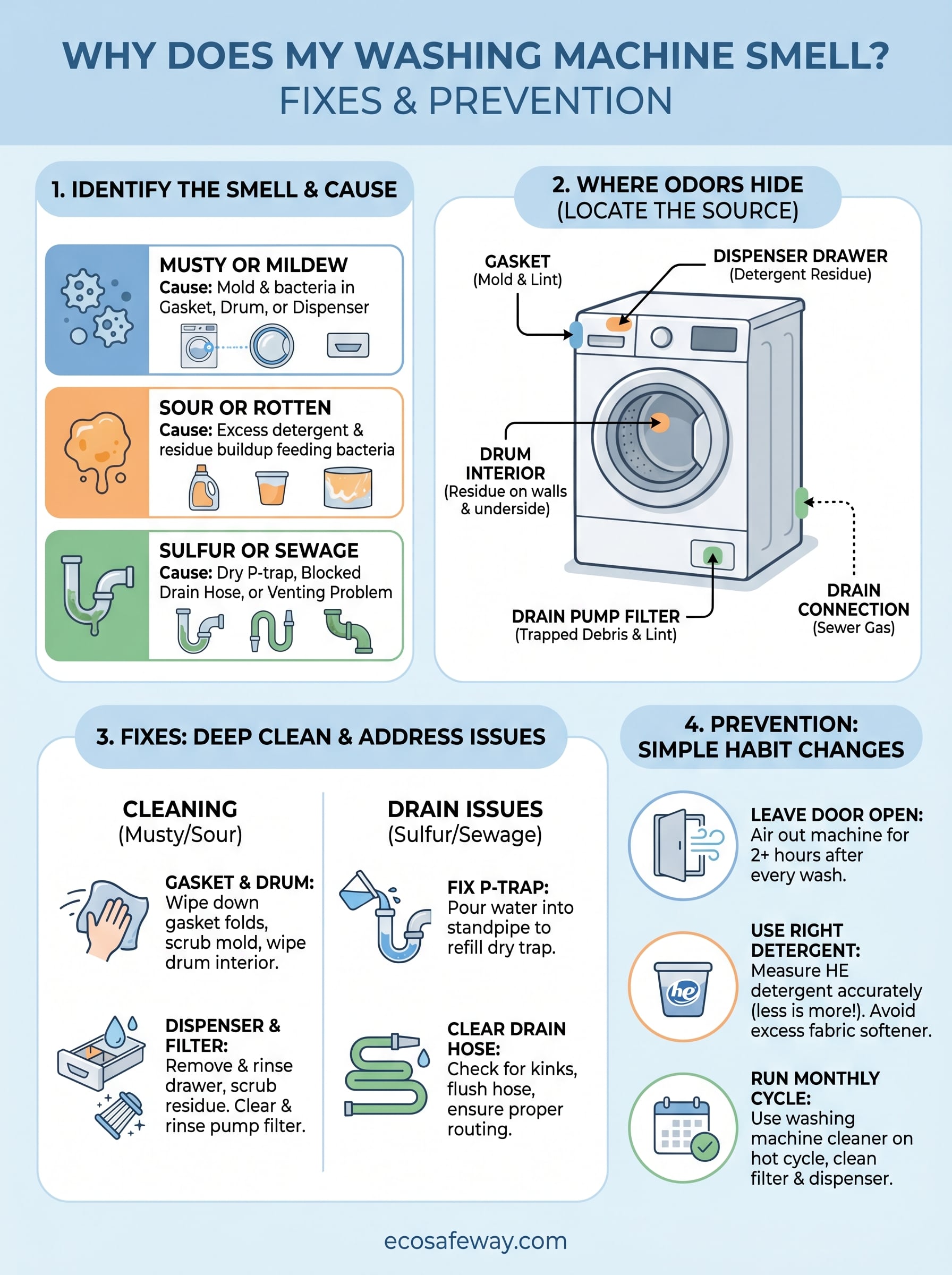
The answer to why does my washing machine smell comes down to moisture, residue, and neglect in specific parts of the machine. Mold in the gasket, excess detergent buildup, and drain problems each produce a different odor and require a targeted fix, which is exactly why matching the smell to its cause before cleaning saves you real time and effort.
Cleaning the gasket, dispenser drawer, and pump filter removes the buildup driving most odors. Fixing drain issues at the plumbing level handles sewer-type smells that scrubbing the drum interior won't resolve. After that, three habits keep your washer smelling neutral: leaving the door open after every load, measuring your detergent accurately for your load size, and running one dedicated maintenance cycle each month.
For that monthly cycle, Eco Safeway's enzyme-powered washing machine cleaner tablets break down residue and odor-causing bacteria without corroding seals, damaging internal components, or leaving chemical traces behind.


