





A neglected grease trap doesn't just smell terrible, it leads to blocked drains, code violations, and expensive emergency pump-outs that can shut down a commercial kitchen mid-service. Finding a reliable commercial grease trap cleaner that actually breaks down fats, oils, and grease (FOG) before they become a problem is one of the smartest maintenance decisions a kitchen manager can make.
But not every product on the shelf delivers what it promises. Some rely on harsh chemicals that corrode pipes and create safety hazards for your staff. Others barely make a dent in heavy FOG buildup. The difference between a cleaner that works and one that wastes your money often comes down to formulation, specifically, whether it uses biological or enzymatic action versus brute-force chemistry.
At Eco Safeway, we manufacture HMIS 0-0-0 rated enzyme-based cleaning solutions designed for exactly these kinds of commercial maintenance challenges, products that perform without toxic trade-offs. In this guide, we'll break down five commercial grease trap cleaner options that genuinely work, covering how each one tackles grease buildup, what makes them effective, and which situations each product handles best.
1. Eco Safeway enzyme-based drain and grease trap treatment
Eco Safeway's enzyme-based treatment gives commercial kitchens a reliable way to manage grease buildup between pump-outs without the safety hazards that come with caustic or acid-based cleaning chemicals.
What it is and what it is designed to do
This product is a concentrated blend of beneficial bacteria and enzymes formulated to digest fats, oils, and grease at the molecular level inside drains and grease interceptors. Unlike a standard degreaser that shifts grease further down the line, this treatment breaks FOG into water and carbon dioxide so it cannot reassemble into blockages.
How it works in a grease trap
The live bacterial cultures colonize the surfaces inside your trap and work continuously between service shifts. This ongoing biological digestion reduces FOG accumulation and extends the time between costly professional pump-outs.
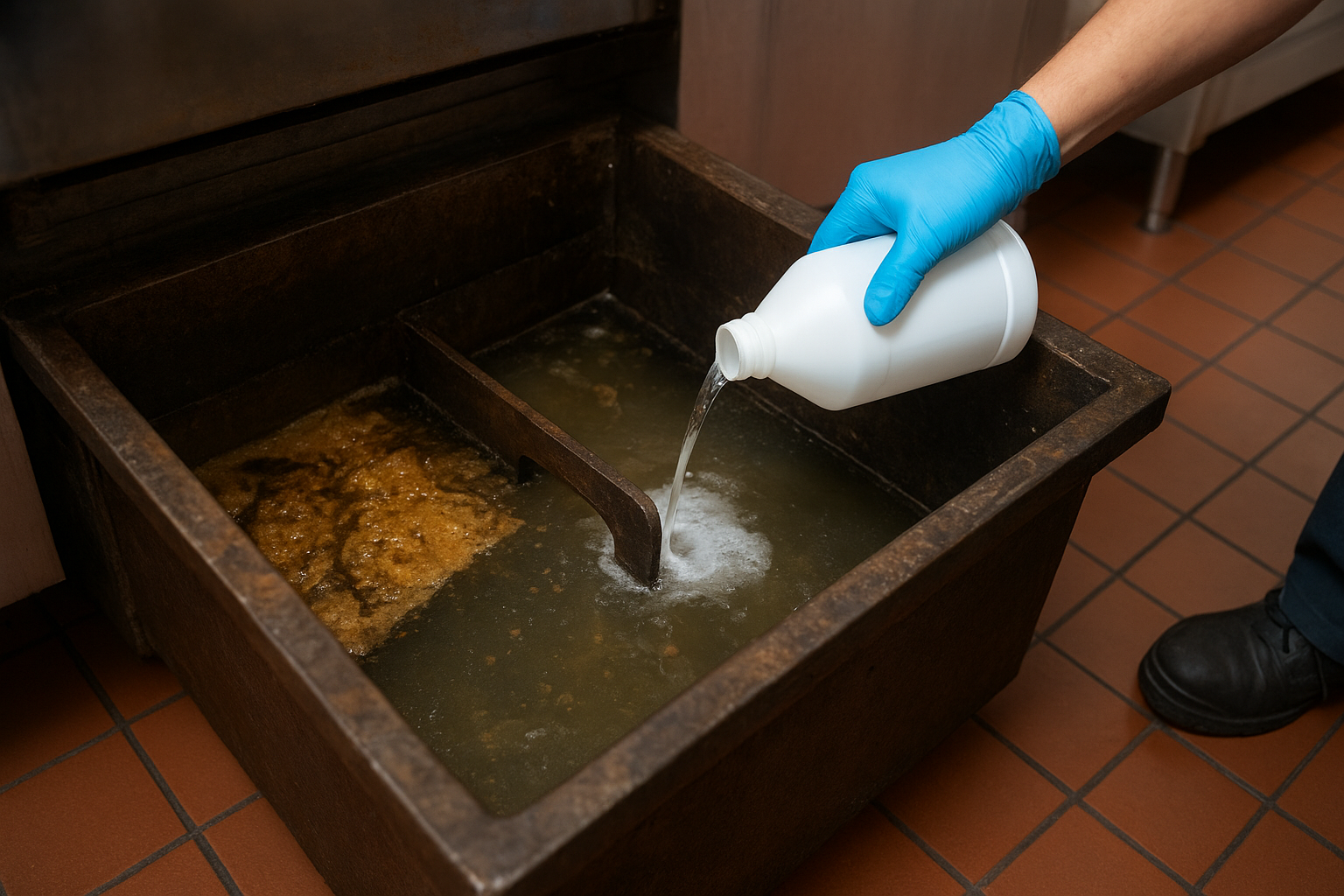
Consistent, lower-dose applications outperform occasional heavy doses because the bacteria need time to establish and sustain active colonies inside the trap.
When it works best and when it will disappoint
This commercial grease trap cleaner fits kitchens with steady, moderate FOG loads maintained on a regular schedule. It performs poorly in these situations:
- Traps already packed with hardened, compacted grease
- Interceptors that have gone several months without any service
- Lines with active backups or blockages already in progress
A pump-out must come first in those cases before biological treatment can produce results.
How to use it as part of a maintenance routine
Apply the recommended dose through the drain closest to your grease trap at the end of your last service shift each day. Overnight low-flow conditions give the bacteria time to work without being flushed away before they establish.
Safety and compliance notes for commercial kitchens
Eco Safeway products carry a perfect HMIS 0-0-0 safety rating, meaning zero health risk, zero flammability, and no special protective equipment required. Your staff handles this product the same way they handle any routine kitchen supply.
Pricing and purchasing notes
Pricing scales with container size and order volume. Visit ecosafeway.com to request bulk pricing for multi-location accounts or set up a recurring supply agreement.
2. Bio-enzymatic liquid digesters for FOG control
Bio-enzymatic liquid digesters are a widely available category of commercial grease trap cleaner sold by restaurant supply distributors. They offer biological FOG breakdown through live microbial cultures but differ significantly in bacterial concentration and strain quality across brands.
What it is and how it differs from a degreaser
A bio-enzymatic digester uses live bacteria and targeted enzymes to consume fats, oils, and grease rather than chemically shifting them. A standard degreaser only emulsifies grease, pushing it further into your plumbing.
How it works and what results to expect
The bacteria colonize interceptor walls and drain surfaces, steadily reducing FOG layer thickness over several weeks. Expect gradual, cumulative improvement, not a single-application fix.
Consistent weekly dosing for 3 to 4 weeks is what separates kitchens that see real results from those that give up too early.
Best fit kitchens and problem situations
These products fit moderate-volume kitchens that maintain a regular pump-out schedule and need ongoing FOG reduction between service visits.
How to dose and maintain performance
Apply the recommended dose at closing so bacteria work overnight without interference from hot water or heavy drain flow during service.
Common mistakes that cause failures
Pouring digesters into actively hot drains kills the cultures before they establish. Running antibacterial drain cleaners in the same lines also destroys the biological activity you paid for.
Pricing and purchasing notes
Expect to spend $30 to $80 per gallon depending on bacterial concentration, with case purchases lowering your per-unit cost meaningfully.
3. Slow-release grease reduction blocks for interceptors
Slow-release grease reduction blocks are solid biological tablets placed directly inside an interceptor to deliver continuous enzymatic and bacterial action over several weeks without requiring daily staff attention.
What it is and why facilities use it
Each block contains compressed live bacterial cultures and enzymes that dissolve gradually as wastewater flows through your interceptor.
Facilities with limited maintenance staff use these blocks because they eliminate the need for nightly dosing and reduce the margin for human error in treatment schedules.
How it works over time
As the block dissolves, it releases active microbial cultures that colonize interceptor walls and digest FOG continuously. You get a steady reduction in grease layer depth over a 30-day cycle.
Sustained low-dose biological activity over several weeks produces better FOG reduction than a single large application.
Best fit use cases for large interceptors
Blocks fit high-volume outdoor interceptors serving cafeterias, hotels, or institutional kitchens with steady, predictable grease loads throughout the week.
What it will not fix and how to set expectations
No slow-release block replaces a commercial grease trap cleaner service when an interceptor is already at capacity.
Heavy compacted FOG requires a pump-out before blocks can produce any measurable results.
Handling, storage, and drain compatibility notes
Store blocks in a cool, dry space away from heat to preserve bacterial viability before installation. They are compatible with standard PVC and cast-iron interceptor plumbing.
Pricing and purchasing notes
Blocks typically cost $15 to $40 per unit. Buying in multi-packs reduces your monthly cost meaningfully.
4. High-alkaline commercial degreasers for manual cleanouts
High-alkaline degreasers give crews a fast-acting option for manual cleanouts, cutting through baked-on FOG that enzyme treatments cannot dissolve on their own.
What it is and what it removes well
These products use high-pH chemistry to saponify fats, converting grease into water-soluble compounds that rinse away cleanly. They work well on carbonized grease, baffle residue, and heavy wall buildup inside interceptors after a pump-out.
Where it fits in the grease trap cleaning process
A high-alkaline degreaser belongs after a pump-out, not before one. Use it as a scrub step in your commercial grease trap cleaner routine to strip residual FOG before rinsing.
Skipping this step leaves a grease film that accelerates FOG buildup between pump-outs.
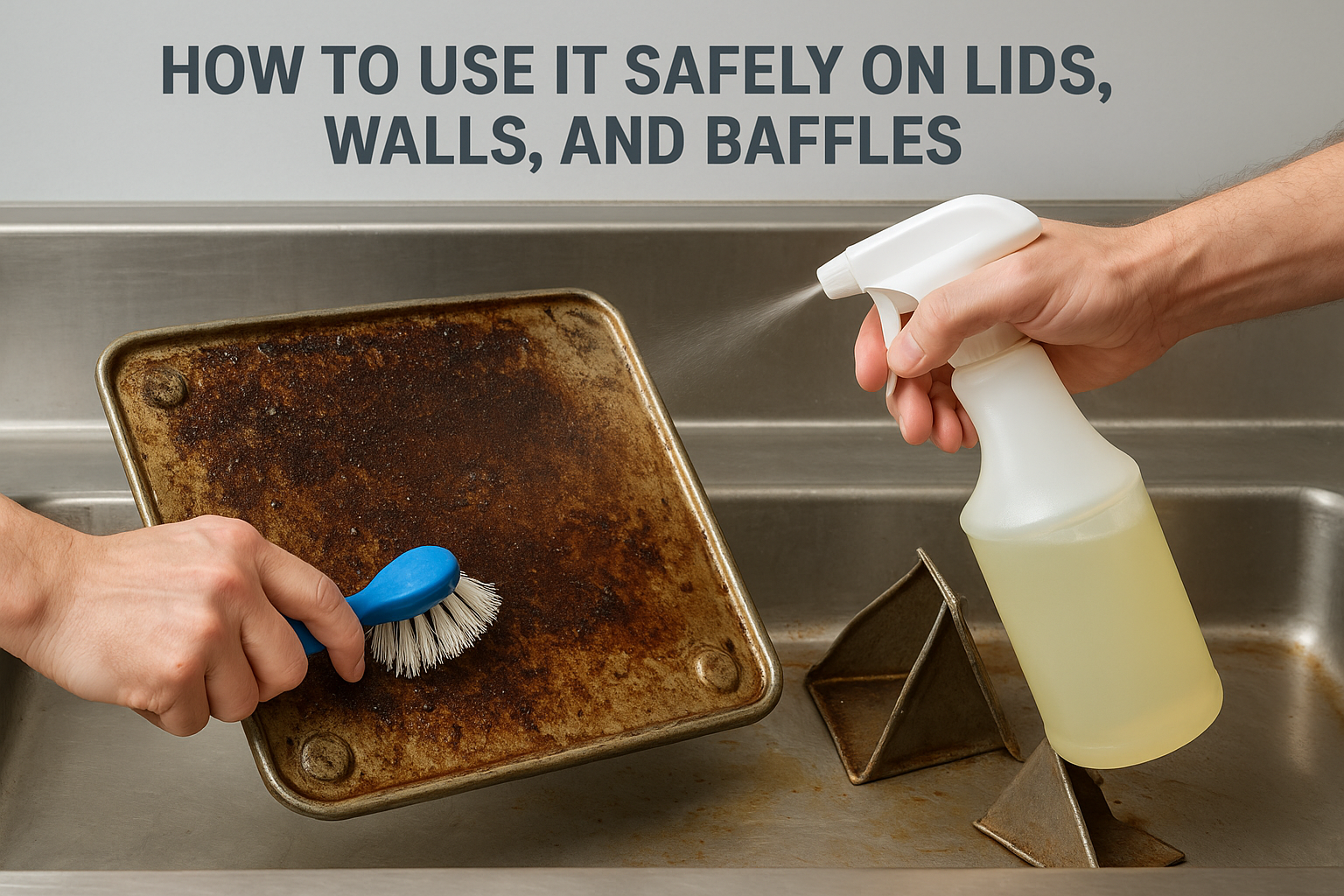
How to use it safely on lids, walls, and baffles
Apply a diluted solution with a stiff brush to lids, walls, and baffles. Let it dwell 5 to 10 minutes, then scrub and rinse every surface completely before reassembly.
What to avoid in foodservice plumbing
Never apply undiluted product directly into active drain lines. It can damage:
- Rubber gaskets and seals
- Older cast-iron fittings
How to prevent odors after a cleanout
Rinse all surfaces thoroughly, then apply a biological drain treatment to restore odor-controlling microbial activity before resuming normal kitchen operations.
Pricing and purchasing notes
Expect to pay $20 to $60 per gallon. Buying commercial concentrates in case quantities reduces your per-cleanout cost meaningfully over time.
5. Professional grease trap pumping and line jetting
When biological treatments and manual scrubbing are not enough, professional pump-out services remain the most reliable commercial grease trap cleaner solution for heavily loaded interceptors.
What the service includes and what "thorough" looks like
A thorough service includes full vacuum removal of FOG and solids, high-pressure line jetting, and a written service report confirming waste disposal compliance.
How it helps you follow the 25% rule and avoid backups
Most local regulators require pump-outs when FOG and solids reach 25% of interceptor capacity. Scheduled service keeps you below that threshold and out of violation.
Tracking service records gives you documentation to present during health inspections.
When you should choose service over chemicals
Choose professional service when grease layers exceed several inches, when you notice slow drains during peak hours, or when a biological treatment has stopped producing results.
What to ask a provider before you schedule
Ask whether they dispose of waste at a licensed facility and whether their report includes before-and-after measurements of FOG depth.
Typical cost drivers and budgeting tips
Interceptor size and FOG volume drive most of the cost. Scheduling during off-peak hours often reduces your service rate.
How to reduce emergency calls between visits
Applying a consistent enzyme treatment between pump-outs slows FOG accumulation and meaningfully extends the time before your next scheduled service visit.
Final takeaways
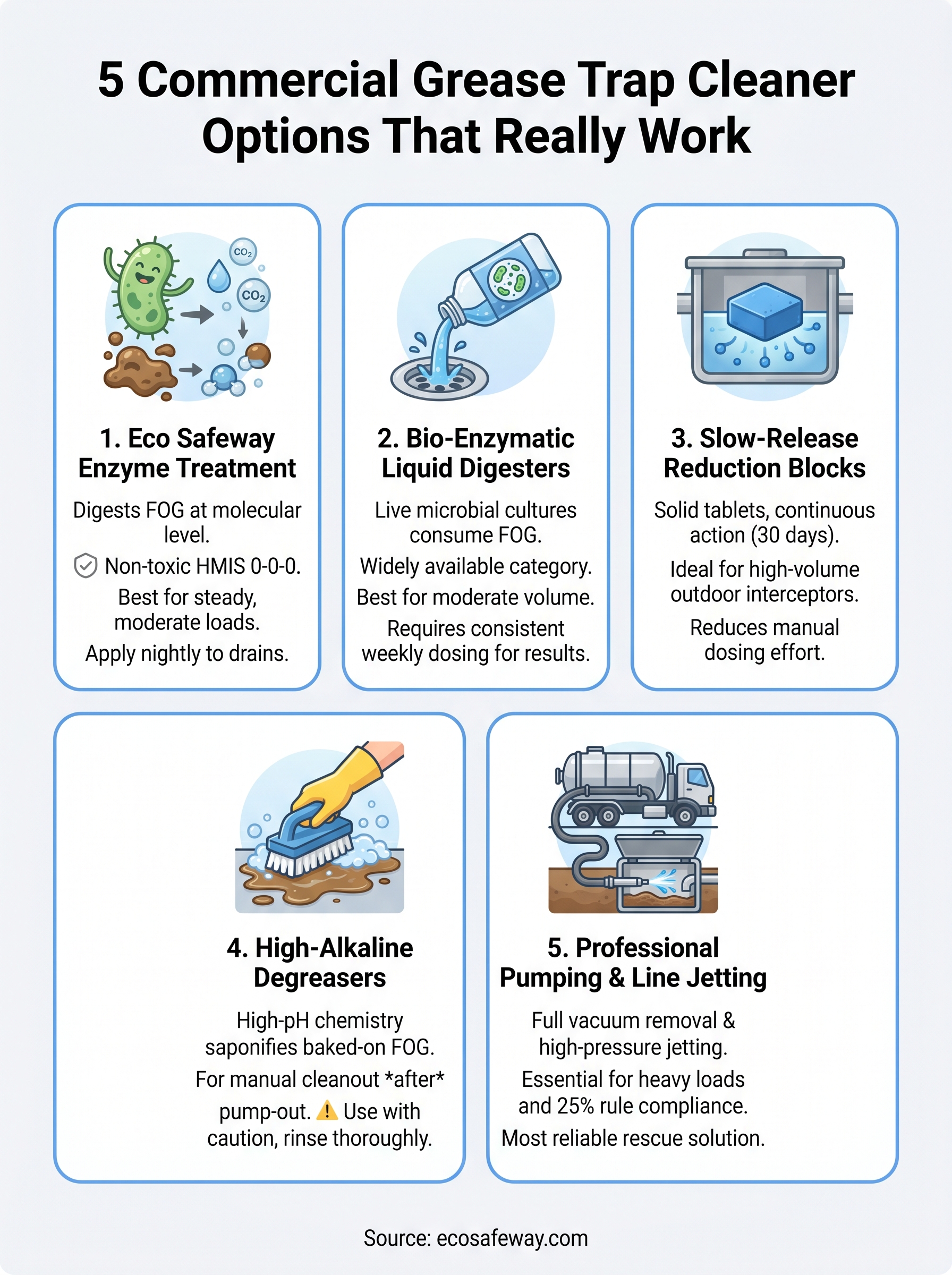
No single commercial grease trap cleaner solves every problem in every kitchen. The right approach depends on how much FOG you generate, how consistently your staff can apply treatments, and how full your interceptor already is. Enzyme-based treatments work best as a prevention tool, not a rescue solution, so start them before buildup gets out of hand.
Your strongest maintenance strategy combines biological dosing between visits with scheduled pump-outs and a manual scrub step after each cleanout. Skip any one of those layers and you will see FOG levels climb faster than expected. High-alkaline degreasers and pump-out services handle the heavy work, while enzymatic products protect you in the weeks between.
If you want an enzyme-powered cleaning solution that is non-toxic, HMIS 0-0-0 rated, and built for commercial maintenance, explore the enzyme-powered cleaner tablets from Eco Safeway and see how they fit your current routine.


