





That black, splotchy buildup inside your washing machine's rubber gasket isn't just ugly, it's active mold, and it's spreading spores onto the clothes you're trying to clean. If you've noticed a musty smell every time you open the door, you're already dealing with a mold problem that won't resolve on its own. Learning how to remove mold from washing machine rubber seals is straightforward, but the method and products you choose matter more than most people realize.
Harsh chemical cleaners can break down rubber gaskets over time, leading to leaks and costly repairs. That's exactly the kind of problem we solve at Eco Safeway, our non-toxic, biodegradable cleaning products are formulated to tackle tough buildup without degrading seals, surfaces, or indoor air quality. You don't have to choose between effective mold removal and equipment safety.
This guide walks you through proven step-by-step methods to eliminate mold from your washing machine's rubber seal, covers both DIY and commercial product options, and shows you how to prevent it from coming back. Whether you manage a laundry facility or just want your home machine to stop smelling like a basement, you'll find what you need here.
What you need before you start
Gathering your supplies before you start saves you from stopping mid-clean with a gasket full of solution and no scrub brush in sight. Mold inside rubber seals is persistent, and the right combination of cleaning agents and tools makes the difference between a surface wipe that looks clean and an actual removal job that eliminates the problem at the root.
Cleaning agents
You have a few solid options depending on what you already have at home. White distilled vinegar works well for light to moderate mold growth because its acidity breaks down mold without degrading rubber over time. For heavier buildup, a diluted bleach solution (one part bleach to four parts water) kills mold spores more aggressively. If you prefer not to use bleach around children, pets, or sensitive materials, a non-toxic enzyme-based cleaner is an effective alternative that protects your gasket while still removing the buildup.
Never mix bleach and vinegar in the same cleaning session. The combination releases chlorine gas, which is harmful when inhaled in an enclosed laundry space.
Tools you'll need
You don't need specialized equipment to learn how to remove mold from washing machine rubber seals effectively, but a few specific items make the job far easier and more thorough.
- Old toothbrush or small scrub brush for scrubbing mold out of the seal's deep folds
- Microfiber cloths (at least 3 to 4) for wiping and drying surfaces after cleaning
- Spray bottle to apply your cleaning solution evenly across the gasket
- Rubber gloves to protect your hands from both mold spores and cleaning agents
- Face mask if you are sensitive to mold or using bleach-based solutions
- Small flashlight to inspect deep inside the gasket fold where mold hides
Step 1. Stay safe and find where the mold is
Before you touch anything, set up your workspace properly. Mold releases airborne spores when disturbed, so working without protection can cause respiratory irritation, especially in a small laundry room with limited airflow. Put on your rubber gloves and face mask now, and open a window or turn on a ventilation fan before you begin.
Protect yourself first
Keep your cleaning supplies within reach and make sure the machine is unplugged or turned off before you open the door. Wiping a live machine is a minor hazard you can avoid easily. If you are using a bleach-based solution, ventilate the room throughout the entire process, not just at the start.
Never start cleaning without gloves on. Mold spores from washing machine seals can trigger skin and respiratory reactions even in people without known mold sensitivities.
Where mold hides in your washer
When learning how to remove mold from washing machine seals, most people miss the deepest folds. Use your flashlight to pull back the gasket and inspect the underside of the fold, where standing water collects after every cycle. Check for black, gray, or pink discoloration in all of these spots:
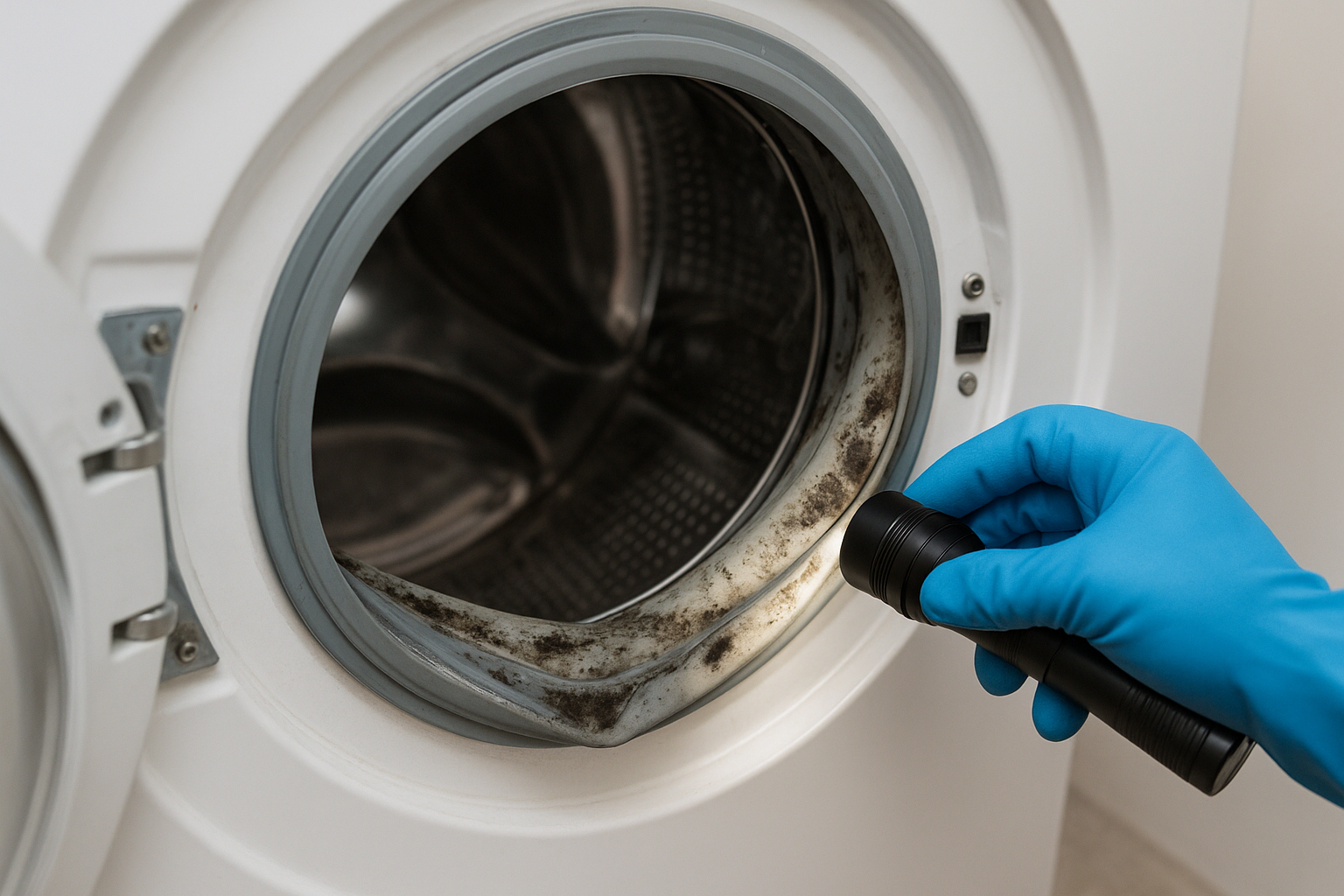
- The inner fold of the rubber seal, front and back
- The area where the seal meets the drum
- Around the door glass edge
Step 2. Remove mold from the rubber seal
Now that you know where the mold is hiding, it's time to tackle it directly. This is where knowing how to remove mold from washing machine gaskets properly pays off, because rushing this step leaves spores behind that regrow within days.
Apply your cleaning solution
Spray your chosen cleaning agent directly onto the moldy areas of the gasket, making sure to saturate the deep fold where the worst buildup typically sits. Let the solution sit for 5 to 10 minutes before scrubbing, this dwell time lets it break down mold at the root rather than just lifting surface discoloration.
Give the solution enough contact time before scrubbing. Wiping immediately after application reduces effectiveness significantly.
Scrub and wipe the gasket clean
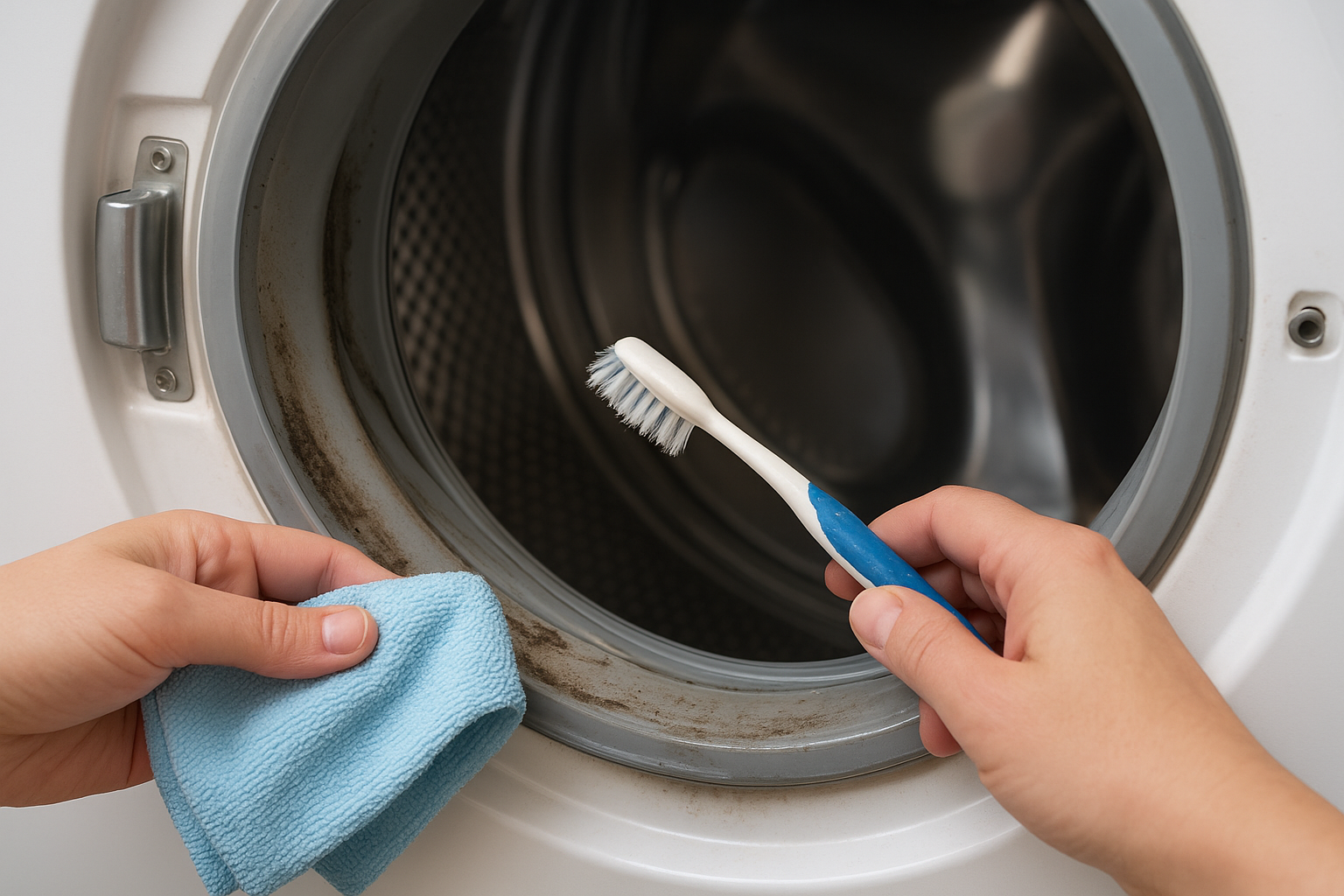
Use your old toothbrush or scrub brush to work the solution into every fold and crevice of the rubber seal. Scrub in small circular motions, pulling the gasket back with one hand so you can reach the hidden underside. Once you've scrubbed the entire seal, wipe it clean with a damp microfiber cloth, then follow up with a dry cloth to remove all remaining moisture. Trapped moisture after cleaning is one of the main reasons mold returns quickly.
Step 3. Clean the dispenser, filter, and hidden areas
The gasket gets most of the attention when people research how to remove mold from washing machine components, but the detergent dispenser and drain filter harbor just as much mold and soap scum. Skipping these areas means you've only solved part of the problem.
The detergent dispenser
Pull the dispenser drawer completely out of its housing if your machine allows it. Soak it in a solution of warm water and white vinegar for 10 minutes, then scrub the compartments with your toothbrush to clear out any built-up residue. While the drawer soaks, use a damp cloth to wipe inside the dispenser cavity where mold often grows unseen behind the drawer itself.
Detergent residue left in the dispenser feeds mold growth, so rinsing the drawer after every few washes is the simplest prevention step you can take.
The drain filter
Locate your machine's drain filter, typically found behind a small panel at the front base of the machine. Place a towel underneath, twist the filter out slowly, and rinse it under warm running water. Use your scrub brush to remove any debris, slime, or discoloration before screwing it back in securely.
Step 4. Deep clean the washer and stop mold returning
With the gasket, dispenser, and filter cleaned, this step flushes residual mold spores and detergent buildup from the drum. Most guides on how to remove mold from washing machine components stop short of this, leaving your drum as a source of recontamination.
Run a hot cleaning cycle
Set your machine to its hottest wash cycle (typically 140°F or the "Sanitize" setting) and run it empty. Add two cups of white vinegar directly into the drum, or drop in a washing machine cleaner tablet. The heat kills remaining spores and flushes them through the drain.
Run a hot empty cycle monthly to stop mold from rebuilding before it becomes visible again.
Repeat this every two weeks if you run high-volume loads or live in a humid climate where moisture stays trapped longer inside the drum.
Keep mold from coming back
After cleaning, your daily habits determine whether mold returns within weeks or stays gone. These three changes keep moisture and residue from accumulating in the areas you just cleaned:
- Leave the door open for at least an hour after each wash so the drum and gasket dry out fully
- Pull the detergent drawer slightly open after every cycle to ventilate the cavity
- Switch to liquid detergent if you use powder, since powder residue feeds mold growth faster
Quick recap and next step
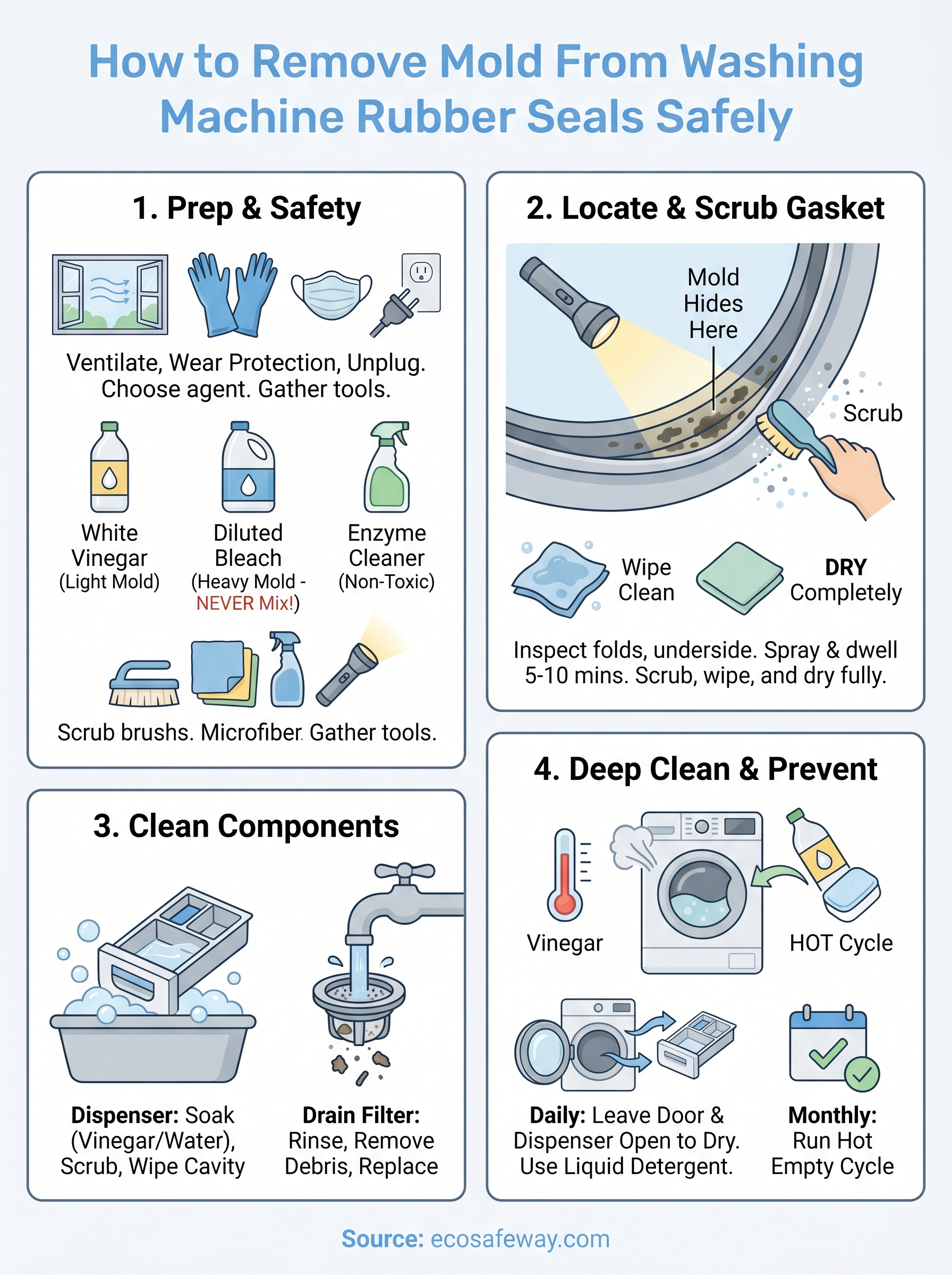
You now have a complete, step-by-step process for how to remove mold from washing machine rubber seals, dispensers, filters, and drums. The core of the job comes down to four actions: protect yourself before you start, saturate and scrub the gasket thoroughly, flush the drum with a hot empty cycle, and change a few daily habits to cut off the moisture that mold needs to grow back.
Keeping up with monthly maintenance cycles matters just as much as the initial deep clean. Mold regrows fast in warm, damp environments, and your washing machine creates exactly those conditions after every load if you close the door and walk away.
For the monthly drum cycle, a dedicated cleaner removes residue far more effectively than vinegar alone. Try Eco Safeway's enzyme-powered washing machine cleaner tablets, a non-toxic, biodegradable option that eliminates odor and buildup without harsh chemicals or hazmat handling concerns.


