





Every walk-in cooler, ice machine, and cooling tower on your site depends on the same basic loop of compression and expansion to move heat where you don't want it. If you're troubleshooting a warm cooling tower, sizing a new unit, or just trying to talk shop with a technician without nodding along blindly, you need to understand what a refrigeration system actually does under the hood.
At its core, a refrigeration system removes heat from one space and dumps it somewhere else, using a refrigerant that cycles between liquid and gas states. That cycle runs through four main parts: the compressor, condenser, expansion device, and evaporator, each doing a specific job to keep the refrigerant moving and heat flowing in the right direction. Once you see how these pieces connect, the whole system stops feeling like a black box.
In this article, we'll walk through each component and the four-stage refrigeration cycle step by step, so you know exactly what's happening inside the unit. We'll also touch on why coil condition and cleaning matter for keeping that cycle efficient, since buildup on condenser and evaporator coils forces the whole system to work harder than it should.
Why understanding your refrigeration system matters
Facility managers who understand their refrigeration system catch problems before they become five-figure repair bills. When you know that a warm evaporator coil combined with a hot condenser usually points to low refrigerant charge or a failing compressor, you can direct a technician to the right fix instead of paying for a diagnostic fishing expedition. That knowledge translates directly into fewer emergency service calls and shorter downtime for cooling towers, ice machines, and walk-in coolers that your operation can't run without.
Cost is the other half of the equation. A refrigeration system that's losing efficiency doesn't announce itself with a warning light. It just quietly pulls more amperage, runs longer cycles, and drives up your utility bill month after month. The U.S. Department of Energy notes that even modest efficiency losses in commercial refrigeration and HVAC equipment compound over a system's lifespan, turning small maintenance gaps into real operating expense (see the Department of Energy's guidance on commercial building efficiency). Knowing where heat transfer happens in your system tells you exactly where to look when performance starts slipping.
A refrigeration system that's losing efficiency won't announce itself with an alarm, it just quietly drives up your energy bill until you know what to check.
Equipment lifespan is on the line too. Compressors are the most expensive component to replace, and they fail early when a system runs dirty or undercharged for months. If you understand that scale buildup on a condenser coil raises head pressure and forces the compressor to work harder on every single cycle, you have a concrete reason to schedule coil cleaning on a calendar instead of waiting for a breakdown. That's the difference between planned maintenance and a surprise service call during your busiest week.
Safety and compliance matter here as well. Facilities managing ammonia or other refrigerants under strict handling rules need staff who understand pressure, temperature, and phase changes well enough to spot abnormal readings immediately. A confused response to an alarm costs time you don't have in a refrigeration emergency. Whether you're managing a hospital's cold storage, a data center's cooling loop, or a marina's ice machines, the fundamentals covered in this article give you the vocabulary and mental model to make faster, better-informed decisions.
How the refrigeration cycle works step by step
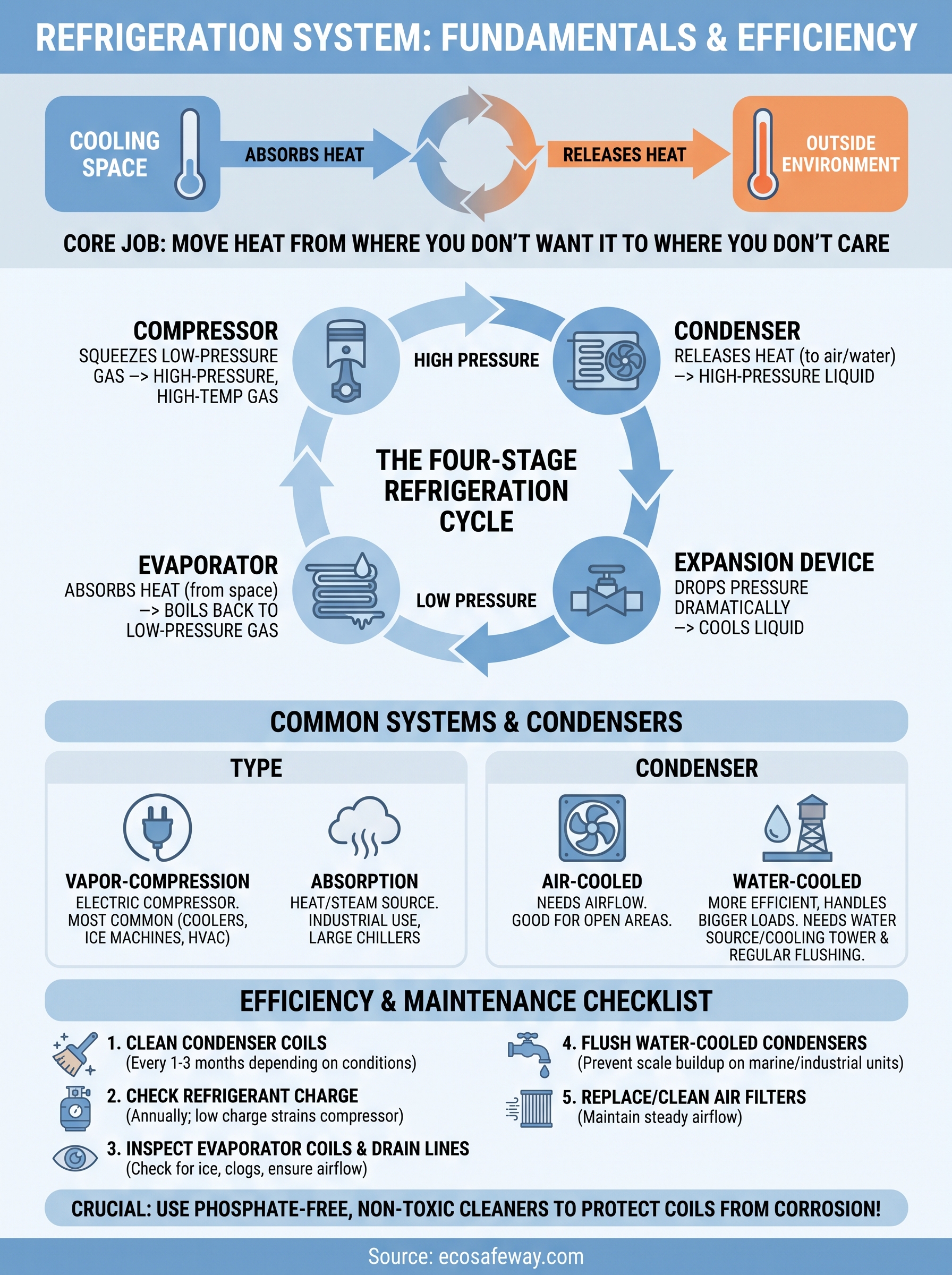
The refrigeration cycle repeats the same four stages over and over, moving refrigerant through changes in pressure and state to carry heat out of your space. Picture the loop as a closed racetrack: refrigerant never leaves the system, it just changes form as it passes through each component.
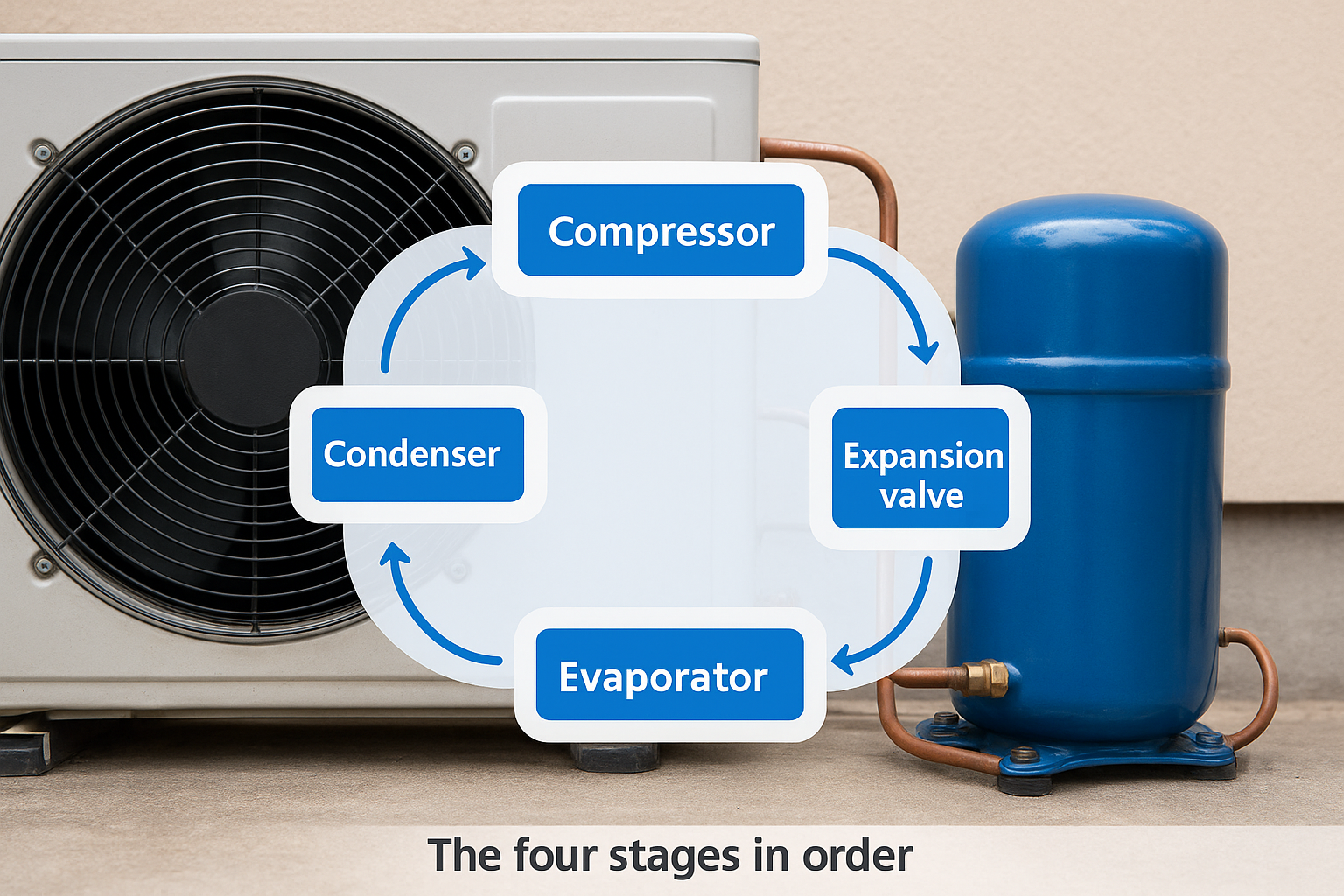
The four stages in order
Start with the compressor, which pulls in low-pressure refrigerant gas and squeezes it into a high-pressure, high-temperature gas. That hot gas moves to the condenser, where a fan or water flow pulls heat out of it until it condenses into a high-pressure liquid, dumping that heat outside the space you're cooling.
The entire refrigeration cycle boils down to one job: force the refrigerant to absorb heat where you don't want it and release that heat somewhere you don't care about.
Next, the liquid hits the expansion device (a valve or capillary tube), which drops its pressure sharply. That pressure drop causes the liquid to cool dramatically before it enters the evaporator coil, where it absorbs heat from the air or water around it and boils back into a low-pressure gas. That gas returns to the compressor, and the loop starts again.
Compressor (compress) -> Condenser (release heat) -> Expansion valve (drop pressure) -> Evaporator (absorb heat) -> back to Compressor
Every malfunction in a refrigeration system traces back to one of these four stages failing to do its job, which is exactly why technicians check pressures and temperatures at each point first.
Common types of refrigeration systems
Not every refrigeration system moves heat the same way. The two big buckets are vapor-compression, which is what runs in almost every cooler, ice machine, and cooling tower on a commercial site, and absorption, which uses heat instead of a compressor to drive the cycle. Marine and industrial operations also split systems by how they reject heat, either through air-cooled condensers with fans or water-cooled condensers that rely on a raw water or cooling tower loop.
Vapor-compression vs absorption
Vapor-compression dominates because it's efficient and mechanically simple to maintain. Absorption systems show up where waste heat or steam is cheap and electricity isn't, think large industrial plants or certain chiller applications.
| Type | Heat Source | Common Use |
|---|---|---|
| Vapor-compression | Electric compressor | Coolers, ice machines, HVAC |
| Absorption | Heat/steam | Industrial plants, large chillers |
Most equipment you'll ever service, from a walk-in cooler to a marina ice machine, runs on vapor-compression, so master that cycle first.
Air-cooled vs water-cooled condensers
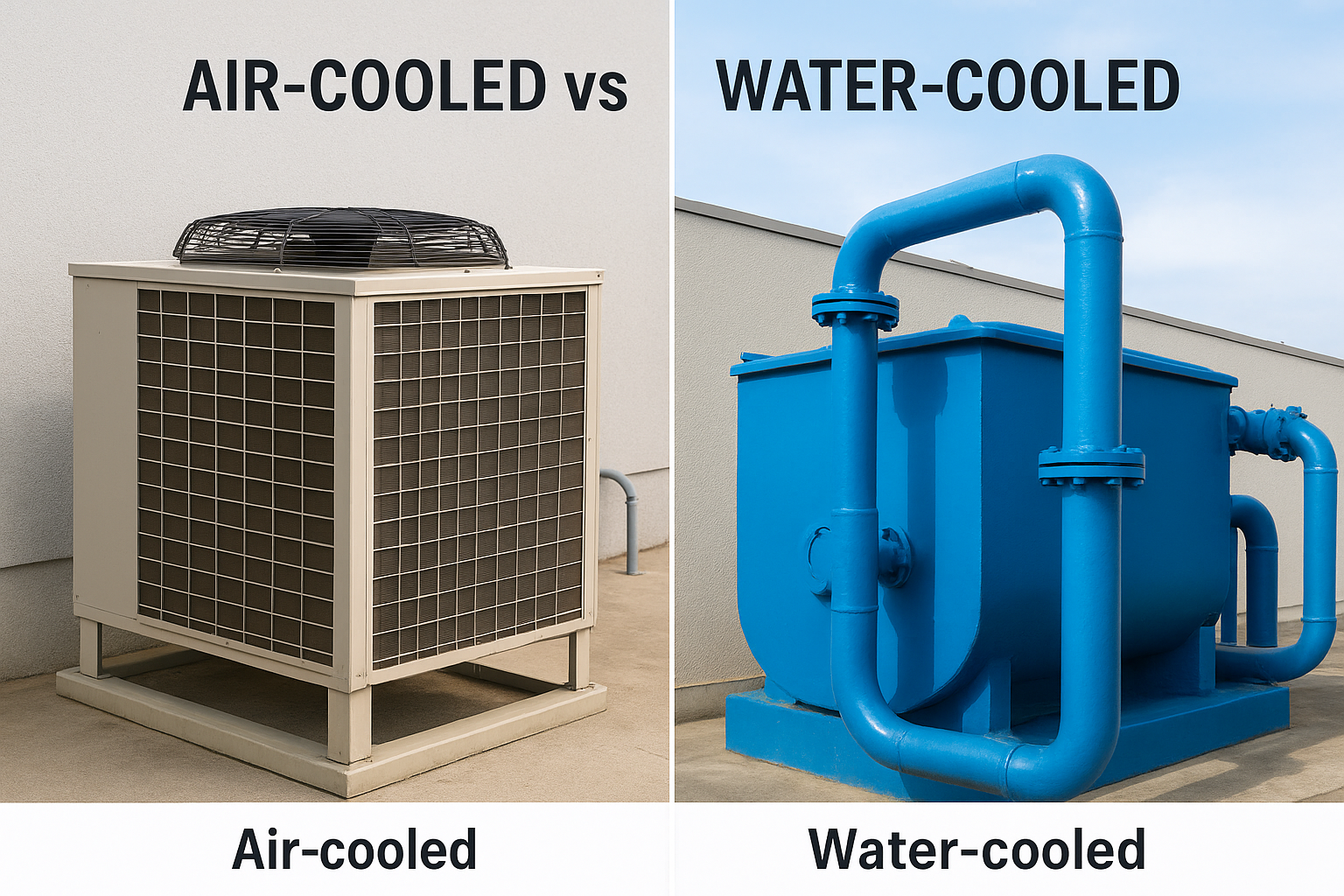
Sizing and location usually decide which condenser type you get. Air-cooled units work well anywhere with open airflow and no water source nearby, while water-cooled systems handle bigger heat loads more efficiently but need a raw water flush or cooling tower to stay scale-free. Marine engines and shipboard refrigeration almost always lean water-cooled, which is exactly why raw water flush maintenance matters so much for keeping that side of the refrigeration system clean.
Tips for keeping a refrigeration system running efficiently
Most refrigeration failures trace back to neglected maintenance, not bad luck. A refrigeration system loses efficiency gradually, so you have to build habits that catch scale, dirt, and worn parts before they cost you a compressor. The good news is that the highest-impact tasks are also the simplest ones on your checklist.
A practical maintenance checklist
Run through these basics on a fixed schedule instead of waiting for a problem to force your hand:
- Clean condenser coils every one to three months depending on dust and airflow conditions.
- Check refrigerant charge annually, since low charge starves the evaporator and raises compressor strain.
- Inspect evaporator coils and drain lines for ice buildup or clogs that block airflow and water flow.
- Flush water-cooled condensers on marine and industrial units to prevent scale from raising head pressure.
- Replace or clean air filters on air-cooled units so airflow across the coil stays steady.
Coil cleaning is the single highest-return maintenance task on any refrigeration system, because scale and dust directly raise the pressure your compressor has to fight.
Non-corrosive cleaning matters just as much as frequency. Harsh acid-based descalers strip protective coatings off condenser and evaporator coils, which shortens the exact equipment life you're trying to protect. Phosphate-free, non-toxic formulas clear scale and biofilm without eating into copper or aluminum surfaces, and they skip the hazmat handling and shipping headaches that come with traditional acid cleaners. Over a multi-year maintenance schedule, that difference between corrosive and non-corrosive products adds up to real dollars saved on coil replacement alone.
Keeping your system cool and efficient
A refrigeration system only works as well as its dirtiest coil. Once you understand the compressor, condenser, expansion device, and evaporator working together in that closed loop, every strange noise, warm spot, or spike in your utility bill points you toward a specific, checkable cause instead of a guessing game. That's the real payoff of learning the fundamentals: faster diagnosis, fewer emergency calls, and equipment that lasts as long as it's designed to.
Maintenance is where that knowledge actually pays off. Scale and biofilm on a condenser coil raise head pressure on every cycle, and that strain adds up fast if you're using corrosive acid cleaners that eat away at copper and aluminum while you're trying to fix the problem. A non-corrosive, non-toxic descaler protects the same coils you're trying to keep clean. If your condenser coils are running warm, check out Eco Safeway's condenser coil cleaner and get ahead of the next breakdown.


