




Evaporative cooling systems use a simple principle, water absorbing heat as it evaporates, to cool air without the energy-intensive refrigerant cycles that traditional AC relies on. For facilities looking to cut cooling costs by 50% or more, these systems offer a compelling alternative, especially in dry climates where the physics work in your favor.
But evaporative coolers aren't a universal fit. They perform differently depending on humidity levels, building type, and how well they're maintained. Scale buildup, mineral deposits, and biological growth inside water reservoirs and pads can degrade performance fast if left unchecked, which is exactly why proper cleaning matters. At Eco Safeway, we manufacture non-toxic, biodegradable descalers and cleaning solutions specifically designed to keep cooling equipment running efficiently without introducing harsh chemicals into your water systems or facility environment.
This guide breaks down how evaporative cooling systems work, where they excel, where they fall short, and what to consider before choosing one for residential, commercial, or industrial use. We'll also cover the maintenance realities that most buyers don't think about until it's too late.
What evaporative cooling systems are
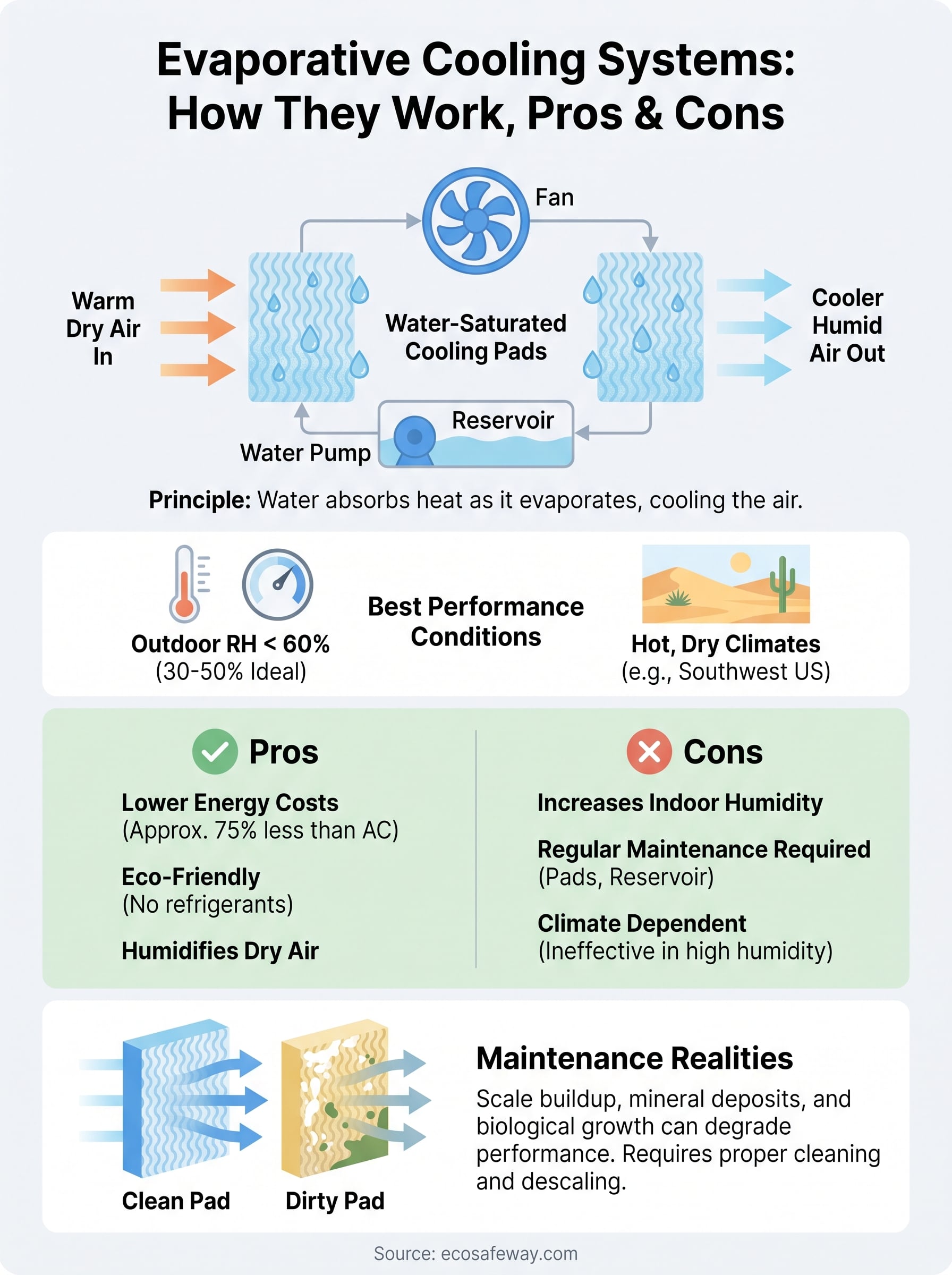
Evaporative cooling systems are mechanical cooling devices that lower air temperature by passing warm air across water-saturated media, which causes the water to evaporate and absorb heat from the airstream. The result is cooler, humidified air delivered into a space without the compressors, refrigerants, or energy-heavy cycles that conventional air conditioners depend on. These systems go by several names, including swamp coolers, desert coolers, and wet-air coolers, but the core technology is the same across all of them.
Evaporative coolers typically consume 75% less electricity than refrigerant-based air conditioners of comparable cooling capacity, making them one of the most energy-efficient options available for dry climates.
How evaporative coolers compare to traditional AC
Traditional air conditioners use refrigerant compression cycles to remove heat from indoor air and exhaust it outside, keeping humidity levels relatively stable in the process. Evaporative coolers work in the opposite direction: they pull hot, dry outdoor air through wet pads, cool it through evaporation, and push it inside. Because they add moisture to the air while cooling it, they increase indoor humidity rather than reduce it.
This distinction directly affects where each system works. Refrigerant-based AC performs reliably in nearly any climate, humid or dry, but it costs more to run and requires more complex maintenance. Evaporative cooling systems thrive in low-humidity environments where the air has enough capacity to absorb additional moisture, and in those conditions the efficiency advantage is real and significant.
The main components you need to know
An evaporative cooler has four primary parts: a water reservoir or supply line, a pump that circulates water onto cooling pads, the pads themselves (usually made from cellulose, wood fiber, or synthetic materials), and a fan that draws air through the wet pads and into the space. Some units also include distribution ducts for whole-building coverage, while smaller portable models discharge cooled air directly into a room. Knowing these components helps you evaluate which system size and configuration fits your application.
How evaporative cooling works
Evaporative cooling relies on one of the most basic principles in physics: when liquid water changes state into vapor, it pulls thermal energy from its surroundings. In a structured system, this process is engineered to move that heat away from air you're trying to cool. Evaporative cooling systems force warm air through water-saturated pads at a controlled rate, which maximizes surface contact and drives consistent heat transfer.
The evaporation process step by step
The sequence inside a cooler is straightforward. A pump draws water from the reservoir and distributes it evenly across the cooling pads. As warm outdoor air moves through those wet pads, water molecules absorb heat energy and escape into the airstream as vapor. The air leaving the pads is cooler and carries more moisture than when it entered.
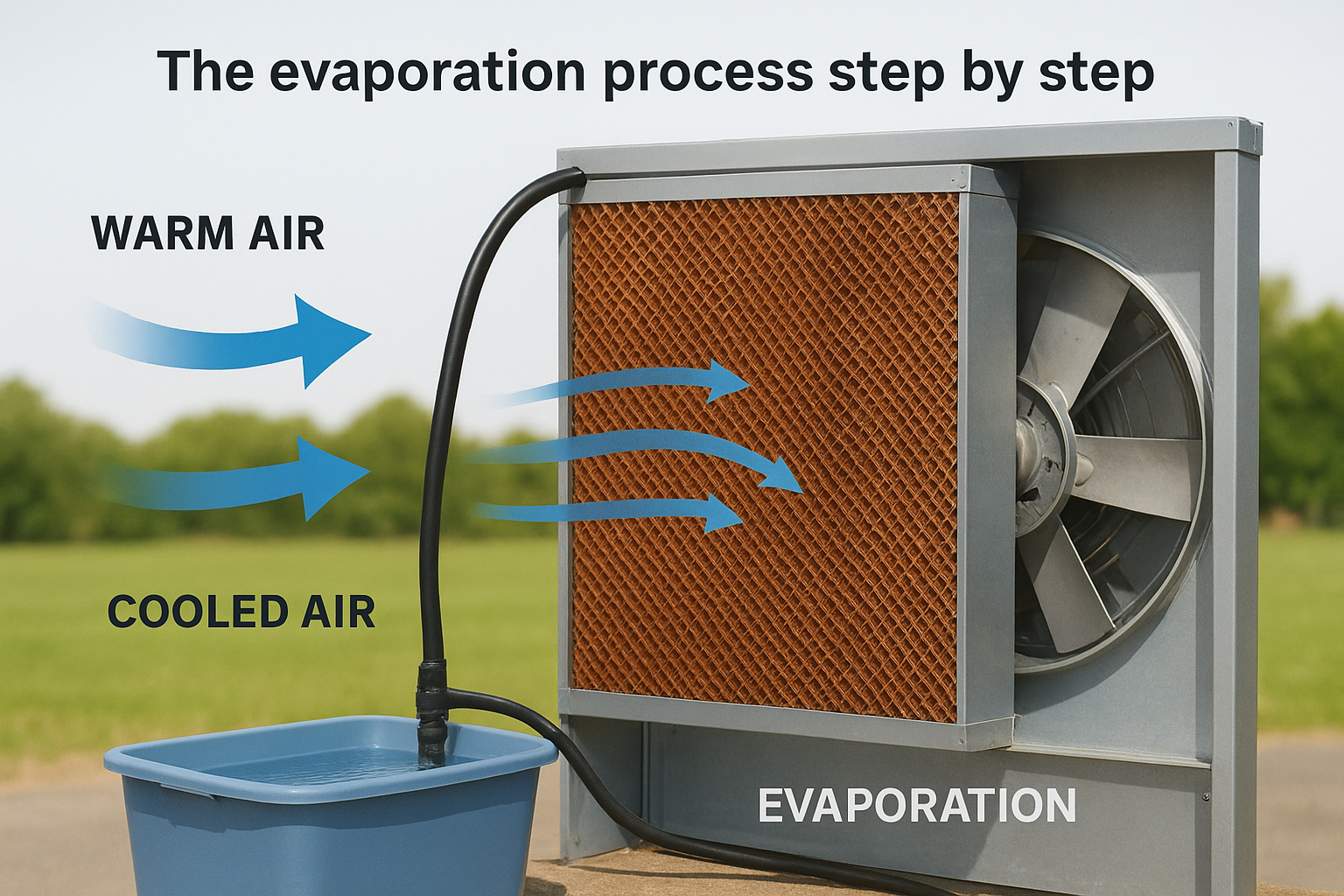
The efficiency of this process depends directly on how dry the incoming air is. Drier air holds more capacity for water vapor, which means more heat gets absorbed with each pass.
What the fan and pad media actually do
The fan does more than move air. It controls how quickly air passes through the pads, which affects both the volume of air cooled and how much temperature drop you get. Slower airflow gives water more contact time and produces a larger temperature drop; faster airflow delivers more volume but less cooling per cubic foot. Pad material also matters: thicker cellulose pads with more surface area outperform thinner synthetic options in most commercial applications.
Where they work best and where they don't
Evaporative cooling systems perform at their best when the outside air is hot and dry. Climate is the single biggest factor in whether one of these systems will meet your cooling needs, and understanding the humidity thresholds before you commit saves you from a costly mistake.
When conditions work in your favor
The ideal operating range is outdoor relative humidity below 60%, with 30% to 50% being the consistent sweet spot. Regions like the American Southwest, including Arizona, Nevada, and parts of California, offer summer conditions where evaporative cooling delivers genuine comfort and measurable energy savings compared to traditional AC.
In dry climates, evaporative coolers can drop incoming air temperature by 15 to 40 degrees Fahrenheit, depending on humidity levels and airflow rate.
Strong use cases beyond residential also include:
- Open warehouses and loading docks
- Industrial facilities with high heat loads
- Garages, machine shops, and agricultural buildings
When evaporative cooling falls short
High humidity stops the evaporation process from working efficiently. If you operate in the Southeast, Gulf Coast, or Pacific Northwest, ambient moisture already saturates the air, leaving little room for additional water vapor. Pushing more humidity into an already humid space makes occupants feel hotter, not cooler.
Your building also needs adequate ventilation for the system to function at all. Cooled air must exit through open windows or exhaust vents to allow fresh air to keep flowing through the pads. Without that clear airflow path, the cooling effect disappears quickly and you lose the efficiency advantage entirely.
Types, sizing, and installation basics
Evaporative cooling systems come in several configurations, and picking the wrong one for your application wastes money before you ever plug it in. Understanding the basic categories and what drives sizing decisions gives you a clearer path to a system that actually delivers.
Choosing the right type for your application
The three main options are portable/spot coolers, window-mounted units, and central ducted systems. Portable units handle single rooms or targeted areas like machine bays and work stations without any installation. Window units mount into a standard opening and cool one zone effectively. Central ducted systems distribute cooled air through your existing ductwork and cover whole buildings, making them the right choice for homes, offices, or larger commercial spaces.
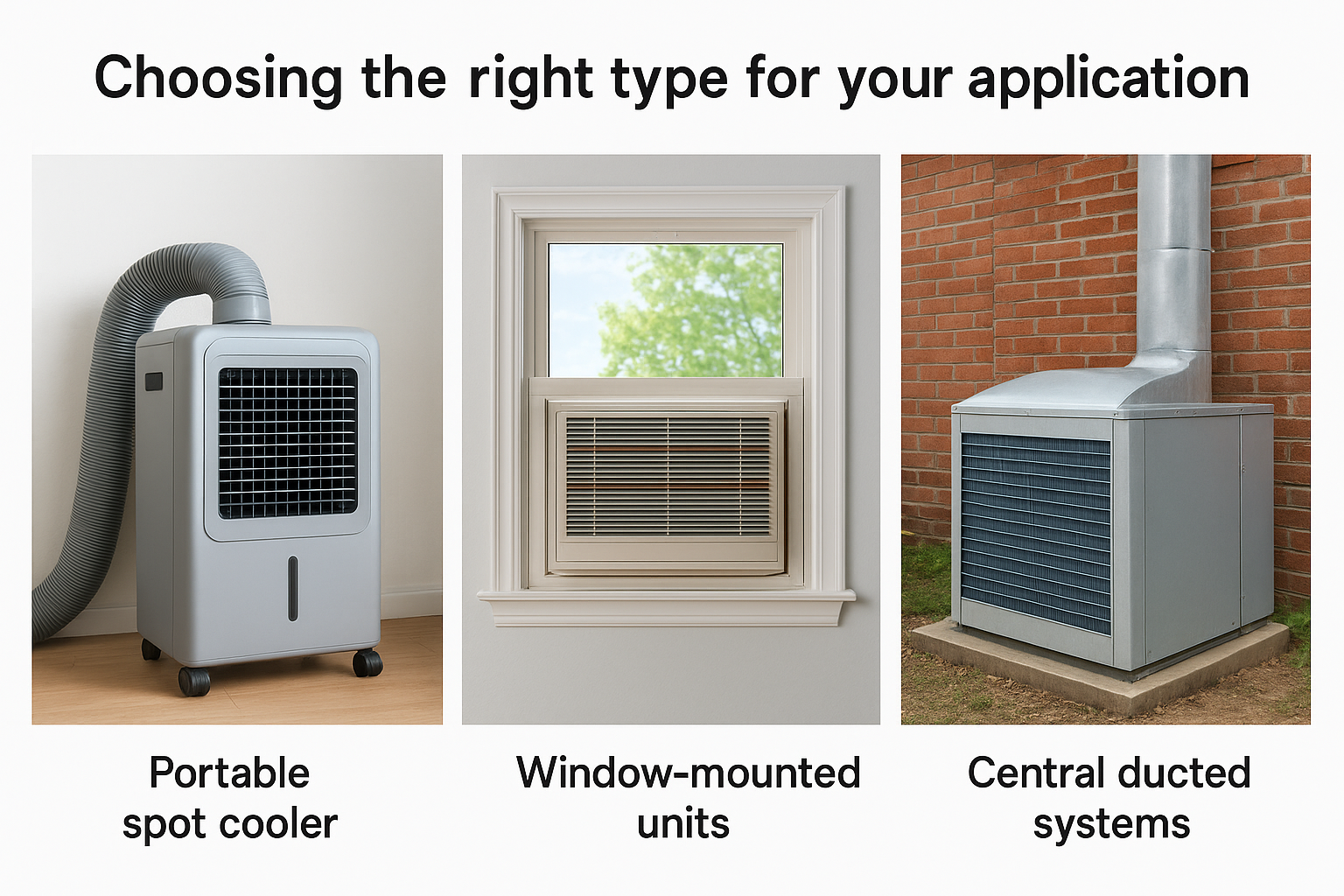
Ducted evaporative systems work best when you can also control where air exits the building, since airflow management directly determines how well the system performs.
Sizing and installation considerations
Sizing relies on two numbers: the cubic footage of your space and your target air changes per hour, which typically runs between 20 and 40 for residential use and higher for industrial settings. Undersizing means inadequate cooling; oversizing drives up purchase costs without proportional benefit. Most manufacturers publish CFM (cubic feet per minute) calculators to help you match unit output to space volume.
Installation requires a water supply connection, a drain line for blowdown water, and proper electrical service. Ducted systems also need return air pathways and exhaust vents to maintain continuous airflow through the pads.
Maintenance, water quality, and safety
Evaporative cooling systems require consistent upkeep to perform at the level they're designed for. Neglecting maintenance doesn't just reduce cooling output; it shortens equipment life and can introduce health hazards into the air your building occupants breathe.
Scale buildup and pad cleaning
Minerals in your water supply deposit on pads and reservoir surfaces every time water evaporates. Over time, calcium and magnesium scale restricts airflow through the pads and blocks water distribution lines, cutting efficiency noticeably. You should inspect pads at the start of each cooling season and replace them when buildup is heavy or the media shows visible deterioration.
Using a non-toxic, biodegradable descaler like those manufactured by Eco Safeway removes mineral deposits without corroding pad frames, distribution lines, or reservoir surfaces.
Water quality and biological growth
Standing water in the reservoir creates ideal conditions for bacteria, algae, and mold if you don't manage it actively. Stagnant water combined with warm temperatures accelerates biological growth, which can push contaminants directly into your cooled airstream. You need to flush and drain the reservoir regularly, especially during extended shutdowns, and use non-corrosive, equipment-safe treatment products to prevent biofilm formation without damaging internal components.
Check your water supply's mineral content and hardness levels before selecting a treatment approach. Hard water areas require more frequent descaling cycles to maintain consistent airflow and performance throughout the cooling season.
Key takeaways
Evaporative cooling systems deliver real energy savings and effective comfort in dry climates, but they come with trade-offs that matter. Climate is the deciding factor: if your outdoor humidity regularly exceeds 60%, these systems won't cool effectively regardless of how well you maintain them. In the right environment, they cut electricity costs significantly and handle large spaces that traditional AC can't serve as efficiently.
Maintenance is where most operators fall short. Scale buildup and biological growth inside pads and reservoirs directly undermine the performance gains you're investing in. Treating your system with non-toxic, equipment-safe descalers keeps mineral deposits from restricting airflow and protects internal components from unnecessary wear.
If you manage HVAC or cooling equipment and want a cleaner approach to descaling that won't introduce harsh chemicals into your systems or facility, explore Eco Safeway's industrial HVAC and cooling tower descaler for a non-toxic, biodegradable solution built for commercial and industrial use.


