





If you've ever wondered who actually installs the HVAC system in a new hospital wing or repipes and descales a cooling tower at an industrial plant, the answer is a mechanical contractor. These are the licensed professionals who design, install, and maintain the systems that keep buildings and vessels running: heating, cooling, plumbing, and refrigeration. On any commercial project, they're one of the most critical trades on site, working alongside electricians and general contractors to bring mechanical systems to life.
This article breaks down exactly what a mechanical contractor does, the systems they specialize in, and where they fit into a construction project from bid to final inspection. You'll get a clear, practical answer rather than a vague industry definition.
We'll also touch on how this work overlaps with marine and facility maintenance, since many of the same principles apply to yacht mechanical systems and commercial equipment upkeep. Whether you're hiring a contractor, working in the trade, or just trying to understand a project scope of work, you'll walk away knowing exactly what this role covers and why it matters for project success.
Why mechanical contractors matter on every project
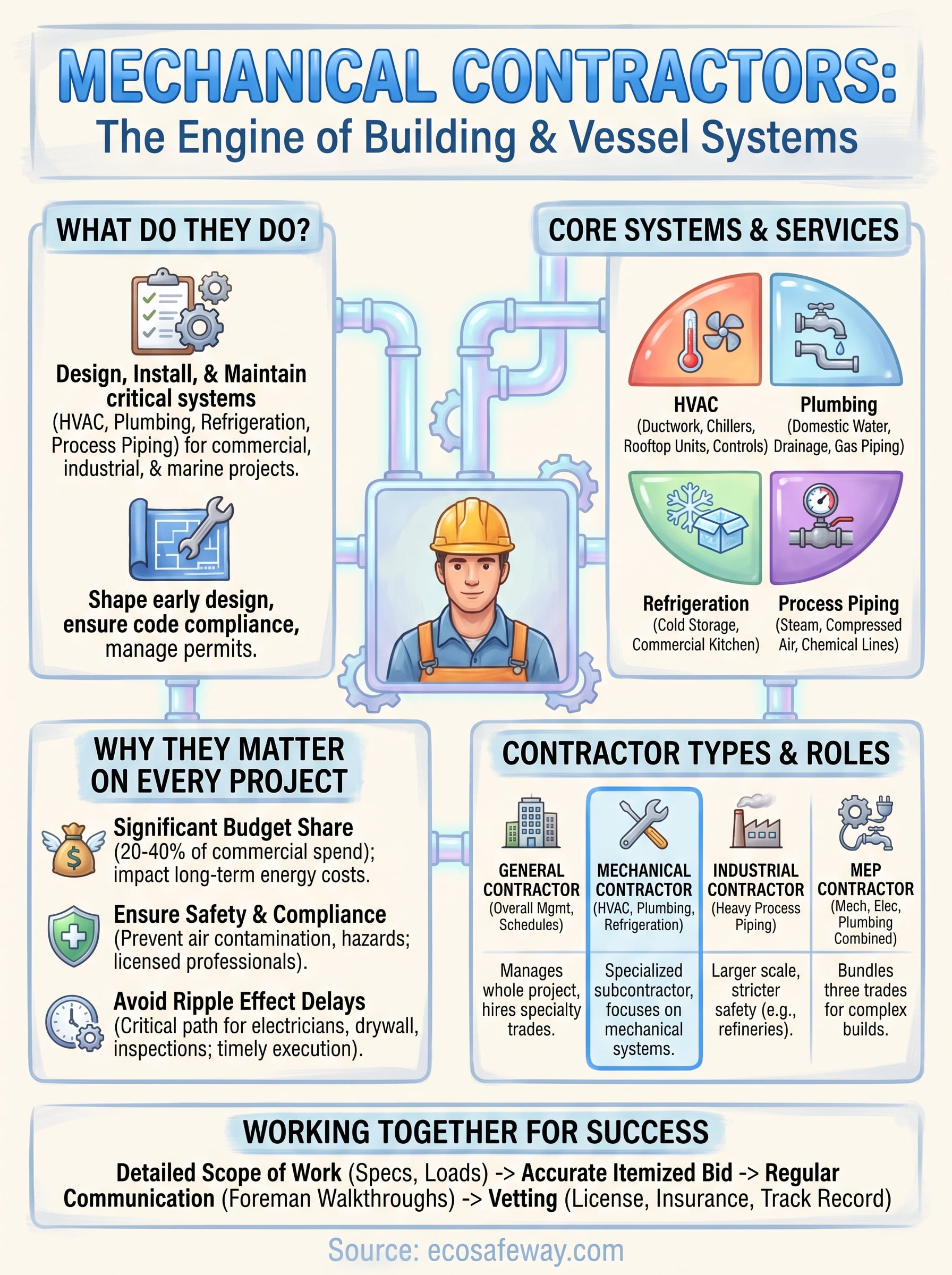
A building's mechanical systems account for a huge share of both its construction budget and its ongoing operating cost. Heating, cooling, plumbing, and refrigeration equipment often represent 20 to 40 percent of total construction spend on commercial jobs, according to industry cost data compiled by the U.S. Department of Energy for building energy systems. That's why mechanical contractors aren't a side trade you bring in at the last minute. They shape early design decisions about ductwork routing, equipment placement, and load calculations that affect everything from ceiling height to energy bills for decades to come.
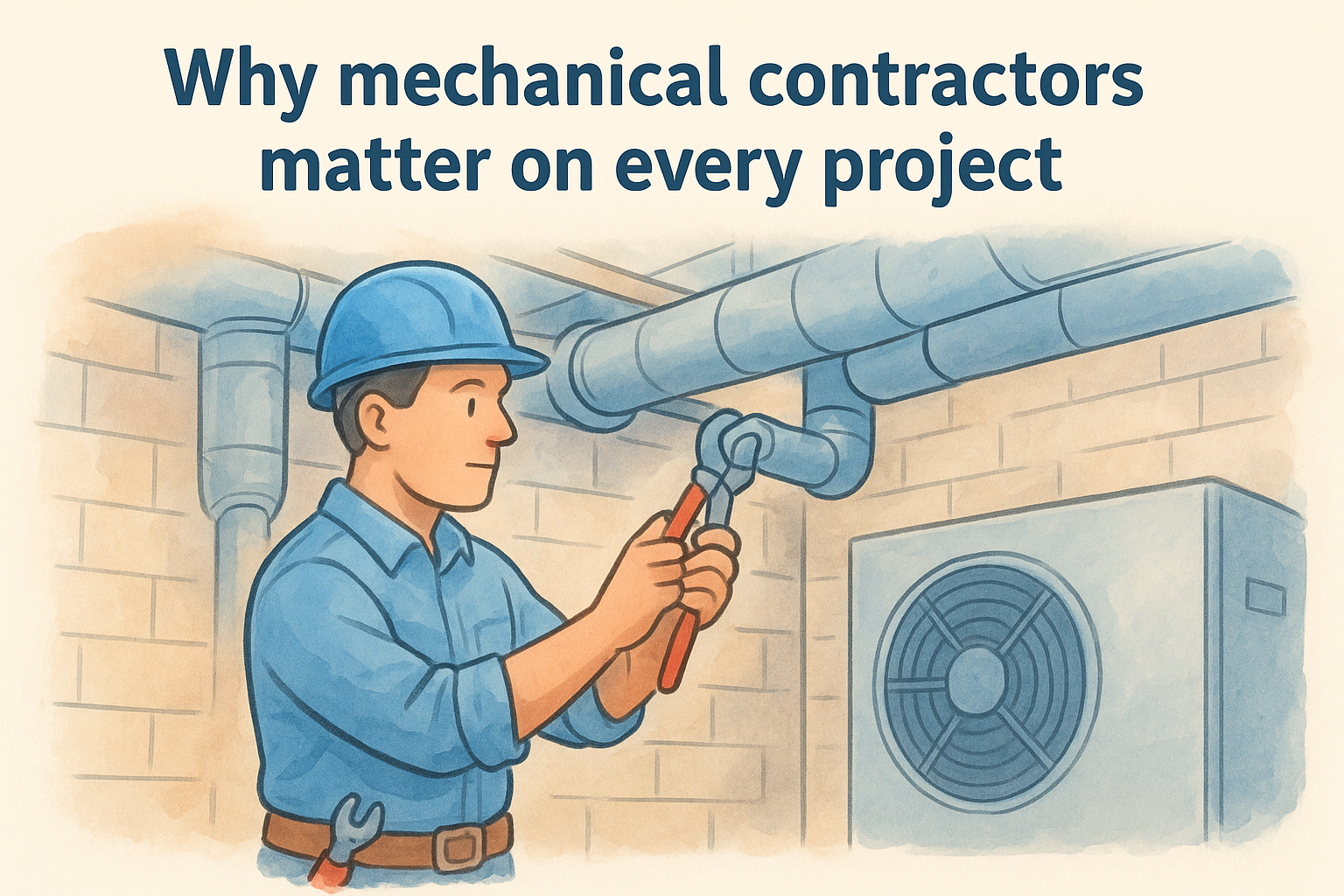
Beyond the dollars, these systems keep people safe. Poorly installed HVAC can spread airborne contaminants in a hospital. A botched refrigeration line in a commercial kitchen can shut down health inspections. A miswired boiler can become a genuine hazard. Mechanical contractors carry the licensing and code knowledge to avoid these outcomes, which is why most jurisdictions require a licensed mechanical contractor to pull permits and sign off on inspections before a building can open its doors.
Get the mechanical scope wrong, and you're not just fixing pipes, you're reopening walls, redoing inspections, and pushing back the entire project timeline.
The ripple effect of mechanical delays
Delays in mechanical work don't stay contained to one trade. Electricians need mechanical rough-in finished before they can run certain circuits. Drywall crews wait on inspection sign-offs. Owners wait on certificates of occupancy. On a typical commercial build, mechanical, electrical, and plumbing work is scheduled as an interlocking sequence, so a two-week slip in ductwork installation can cascade into a month-long delay by the time it hits the finish schedule.
Where the stakes are highest
Some environments have zero tolerance for mechanical failure. Consider a few examples:
- Hospitals and labs: air pressure differentials and filtration must meet strict codes to prevent contamination.
- Data centers: cooling failures can destroy hardware and cost far more than the repair itself, which is why chiller and cooling tower descaling for data centers is treated as critical upkeep.
- Cold storage and food processing: refrigeration downtime means spoiled inventory and lost revenue.
- Marine vessels: engine room cooling, plumbing, and climate systems have to perform reliably in a saltwater environment where corrosion, raw water scale, and access are constant challenges.
Every one of these settings depends on a mechanical contractor who understands both the equipment and the environment it operates in. That last point matters more than people expect. Marine mechanical work shares a lot of DNA with commercial building work: pressure testing, corrosion-resistant materials, and system redundancy all carry over. It's part of why vessel owners researching hull protection systems like Finsulate often end up asking the same due-diligence questions they'd ask a mechanical contractor: what's the material spec, who installs it, and what's the maintenance schedule. If you're comparing options for your own vessel, our guide to Finsulate yacht hull protection walks through those same fundamentals from a marine-specific angle.
How to work with a mechanical contractor
Working with a mechanical contractor starts long before anyone touches a wrench. You need a detailed scope of work that spells out equipment specifications, load calculations, and code requirements before you ever ask for a bid. Skipping this step is the single biggest reason mechanical bids come back wildly different from each other, because contractors are pricing different assumptions rather than the same job.
Getting an accurate bid
Give every bidder the same information so you're comparing apples to apples. A solid request for proposal usually includes:
- Mechanical drawings and load calculations
- Equipment brand preferences or performance specs
- Site access constraints and working hours
- Permit and inspection responsibilities
- Warranty and service expectations after handoff
Requesting itemized pricing rather than a lump sum also helps you spot where contractors differ on labor, materials, or equipment markup.
Communication during the job
Set a regular walkthrough schedule with the contractor's foreman, not just the project manager who won the bid. Foremen catch conflicts with electrical or plumbing rough-in before they become expensive rework. Ask for change order documentation in writing every time, even for small adjustments, since verbal changes are the most common source of billing disputes on mechanical scopes.
Vetting licensing and experience
Verify the contractor's license number directly with your state licensing board rather than trusting a business card. Confirm they carry adequate liability insurance for the size of your project, and ask for references from jobs with similar system complexity, whether that's a hospital HVAC retrofit or a marine engine room overhaul. The same vetting logic applies if you're hiring for vessel work: our team at Eco Safeway fields the same licensing and experience questions from yacht owners evaluating a Finsulate installer, and the answers matter just as much on the water as they do on a job site.
Core systems and services mechanical contractors handle
Most people picture ductwork when they hear "mechanical contractor," but the scope runs much wider than HVAC. Mechanical contractors design, install, and service the systems that move air, water, and refrigerant through a building or vessel, and the specific mix depends on the project type. A hospital job leans heavy on medical gas piping and precise air handling, while a marine refit focuses on engine cooling loops and freshwater plumbing.
The main system categories
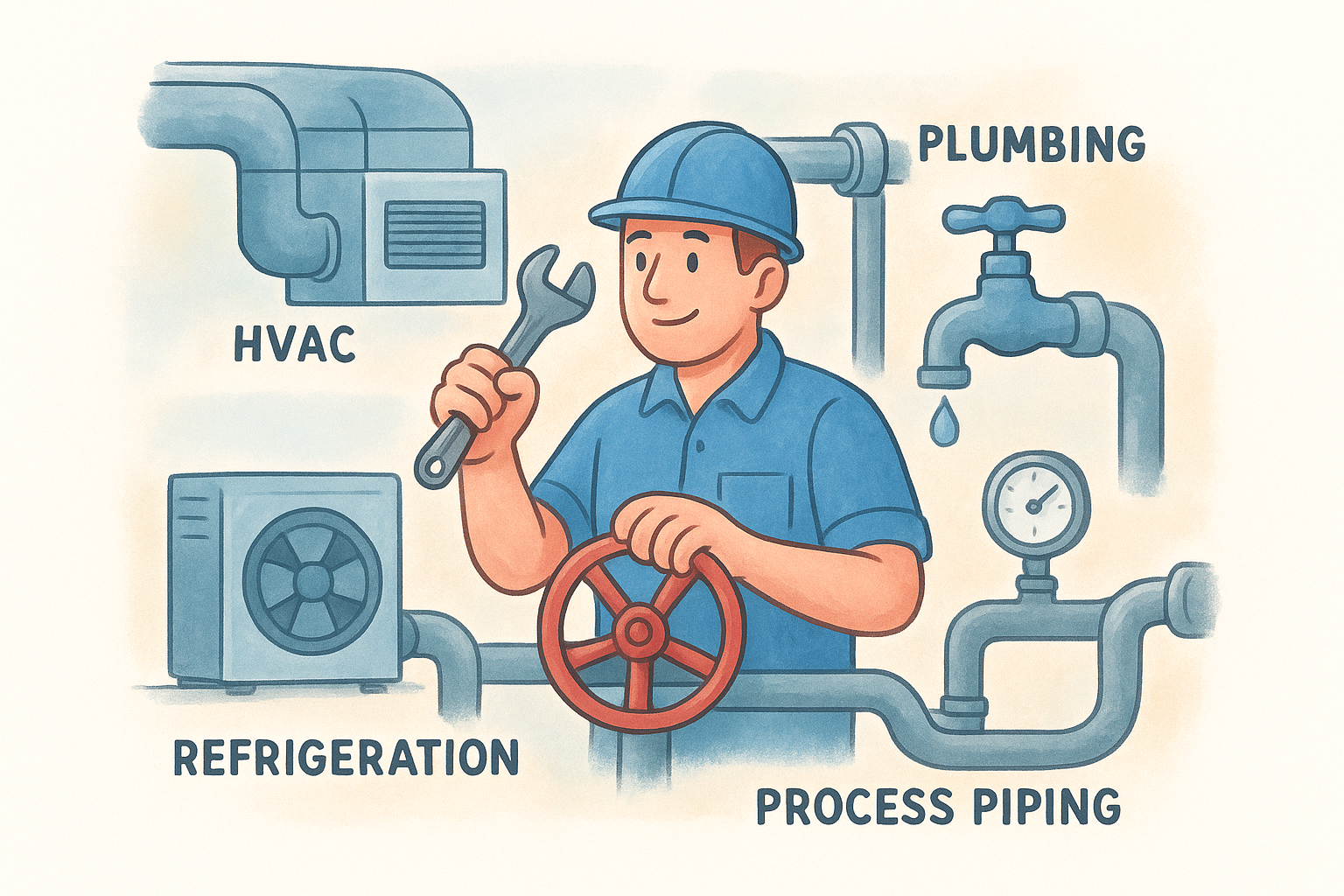
Here's how the core work typically breaks down:
| System | Typical Scope |
|---|---|
| HVAC | Ductwork, air handlers, chillers, rooftop units, controls |
| Plumbing | Domestic water, drainage, gas piping, backflow prevention |
| Refrigeration | Cold storage, commercial kitchen equipment, process cooling |
| Process piping | Steam, compressed air, chemical transfer lines |
A mechanical contractor's real value isn't running pipe, it's making sure every one of these systems works together without fighting for the same ceiling space.
Beyond installation
Installation is only half the job. Most mechanical contracting firms also handle preventive maintenance contracts, emergency repair calls, and system commissioning, where they verify equipment actually performs to spec once it's running under real load. Commissioning matters more than owners realize, since a chiller that passes a quick startup test can still fail under peak summer demand if refrigerant charge wasn't checked properly or airflow was never restored with a proper commercial HVAC condenser coil cleaning.
Retrofits round out the list of common services. Older buildings frequently need mechanical systems replaced without touching the surrounding structure, which takes a different skill set than new construction. Skilled contractors know how to route new ductwork through existing joist bays or swap a boiler without shutting down an entire wing for weeks. Vessels face a similar retrofit challenge below the waterline, where corrosion-resistant materials and tight access replace joist bays as the constraint, another reason marine and building mechanical work draw from the same underlying expertise.
Mechanical contractors vs. general, industrial, and MEP contractors
Confusion between these titles trips up a lot of owners at the bidding stage, and it costs them money when they hire the wrong scope of work. A general contractor manages the whole project, schedules trades, and holds the overall contract with the owner, but rarely touches mechanical systems directly. A mechanical contractor is a specialty subcontractor the general contractor hires specifically for HVAC, plumbing, and refrigeration work. Neither role replaces the other; they're built to work together.
Industrial contractors handle a different scale
Industrial contractors overlap with mechanical work but operate at a heavier scale, think process piping for a refinery, steam systems for a power plant, or conveyor-integrated cooling for a manufacturing line. Their equipment specifications run larger and their safety compliance requirements, like OSHA process safety management, are stricter than a typical commercial mechanical job.
MEP contractors bundle three trades under one roof
An MEP contractor is a firm that self-performs mechanical, electrical, and plumbing work under one contract instead of hiring three separate subcontractors. This setup can simplify coordination on complex builds, since one company owns the schedule across all three trades.
The title on the contract matters less than the license, insurance, and track record backing it up.
| Contractor Type | Primary Focus | Typical Project Fit |
|---|---|---|
| General contractor | Overall project management | Any commercial build |
| Mechanical contractor | HVAC, plumbing, refrigeration | Buildings, vessels, facilities |
| Industrial contractor | Process piping, heavy equipment | Plants, refineries, manufacturing |
| MEP contractor | Mechanical, electrical, plumbing combined | Large builds needing tight trade coordination |
Knowing which category you actually need before you request bids saves you from comparing quotes that were never scoped the same way in the first place.
Choosing the right mechanical expertise for your build
Picking the right mechanical contractor comes down to matching the license, experience, and system knowledge to the actual scope in front of you. A hospital retrofit needs different expertise than a manufacturing line, and a vessel needs a specialist who understands corrosion, tight access, and saltwater performance instead of a generalist borrowing skills from building trades. Verify credentials, request itemized bids, and don't let contract titles substitute for a real conversation about project scope.
Whether you're managing a commercial build or maintaining a vessel, the same due diligence applies: check the work, check the warranty terms, and check the installer's track record before signing anything. If your project includes hull protection or antifouling decisions, that same vetting mindset carries over directly. Take a look at the Finsulate antifouling wrap as an alternative to bottom paint to see how this verified expertise applies below the waterline.


