





Every yacht owner knows the fight against salt, sun, and grime never stops. Pick the wrong yacht cleaning products and you risk stripping wax, dulling gelcoat, or leaving streaks on brightwork that took hours to polish. The right ones cut cleaning time in half while keeping every surface, from teak decks to interior upholstery, looking factory-fresh season after season.
This guide answers the question directly: which five products actually work across a yacht's different surfaces, and why. We tested formulas built for saltwater environments, checked ingredient safety for marine ecosystems, and compared results on fiberglass, stainless, and canvas rather than relying on marketing copy. You'll get straight recommendations, not a generic list of "top boat soaps."
Hull protection and topside maintenance go hand in hand. If you've already invested in a system like Finsulate to eliminate bottom paint and reduce haul-outs, keeping the rest of the vessel in equally good shape matters just as much. We'll cover application tips for each product and note which surfaces need extra care, so your entire yacht, above and below the waterline, stays protected without unnecessary wear.
1. Finsulate-safe hull and underwater cleaner
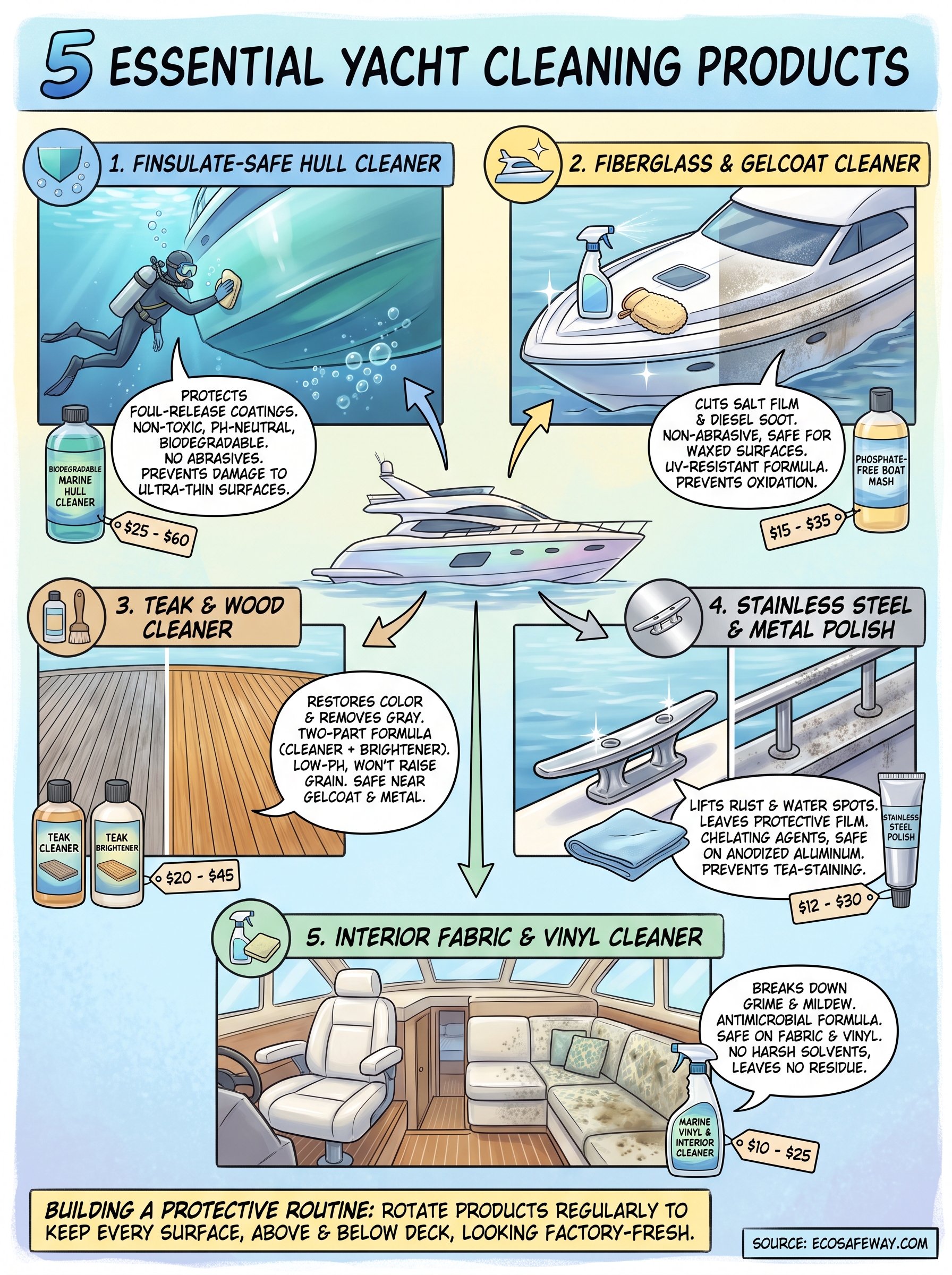
A hull cleaner that works fine on painted bottoms can quietly damage a Finsulate coating, since abrasive pads and solvent-heavy formulas break down the ultra-thin fluoropolymer surface faster than normal wear would. If your yacht runs Finsulate hull protection, you need a biodegradable marine hull cleaner rated for non-toxic, foul-release surfaces, not a generic boat bottom cleaner pulled off a marina shelf.
What it's best for
This category of cleaner is built for underwater hull maintenance on foul-release coatings, keeping slime and light growth off without scrubbing through the coating's smooth top layer. It suits owners who dive their own hull between haul-outs or hire a diver for monthly wipe-downs instead of a full bottom job.
A hull cleaner that's too aggressive for Finsulate costs you more in coating life than it saves in scrubbing time.
Key features
Look for these traits before you buy:
- pH-neutral formula, no bleach or ammonia
- No abrasive grit or solvent carriers
- Biodegradable ingredients safe for saltwater discharge
- Compatible with silicone and fluoropolymer coatings
- Sold as a liquid concentrate, not a paste
How to use it
Dilute the concentrate per the label, usually a capful per gallon of water, and apply with a soft microfiber pad or a diver's hand pad rather than a stiff brush. Work in sections, rinse as you go, and skip pressure washers below the waterline since concentrated jets can lift the coating edge over time. Most owners run this cleaning pass every four to six weeks in warm Florida water, less often up north.
Price range
Expect to pay $25 to $60 for a quart-to-gallon concentrate, depending on brand and dilution ratio. That's a modest add-on next to what you already spend maintaining a Finsulate hull, and it protects the investment you made in skipping traditional bottom paint altogether.
2. Fiberglass and gelcoat all-purpose cleaner
Topsides take a different kind of abuse than the hull. Sun exposure chalks gelcoat, salt spray dulls the shine, and diesel exhaust leaves a film that plain soap won't touch. A dedicated gelcoat cleaner handles all three without the wax-stripping harshness of household degreasers, making a phosphate-free boat wash one of the most-used boat cleaning supplies on any well-kept yacht.
What it's best for
This cleaner works best on fiberglass topsides, hull sides above the waterline, and any painted or gelcoated surface that's lost its shine to oxidation. It's the go-to for a weekly wipe-down rather than a deep restoration job.
Regular gelcoat cleaning prevents the oxidation that eventually forces a full compound-and-wax job.
Key features
- Non-abrasive, safe for waxed surfaces
- Cuts through salt film and diesel soot stains
- UV-resistant formula that won't strip existing wax
- Available as spray-on or concentrate
How to use it
Spray a small section, agitate with a soft wash mitt, and rinse before it dries in the sun. Work bow to stern in the shade whenever possible to avoid streaking.
Price range
Most bottles run $15 to $35 for a 32-ounce spray or gallon concentrate, cheap insurance against a $500 compounding bill later.
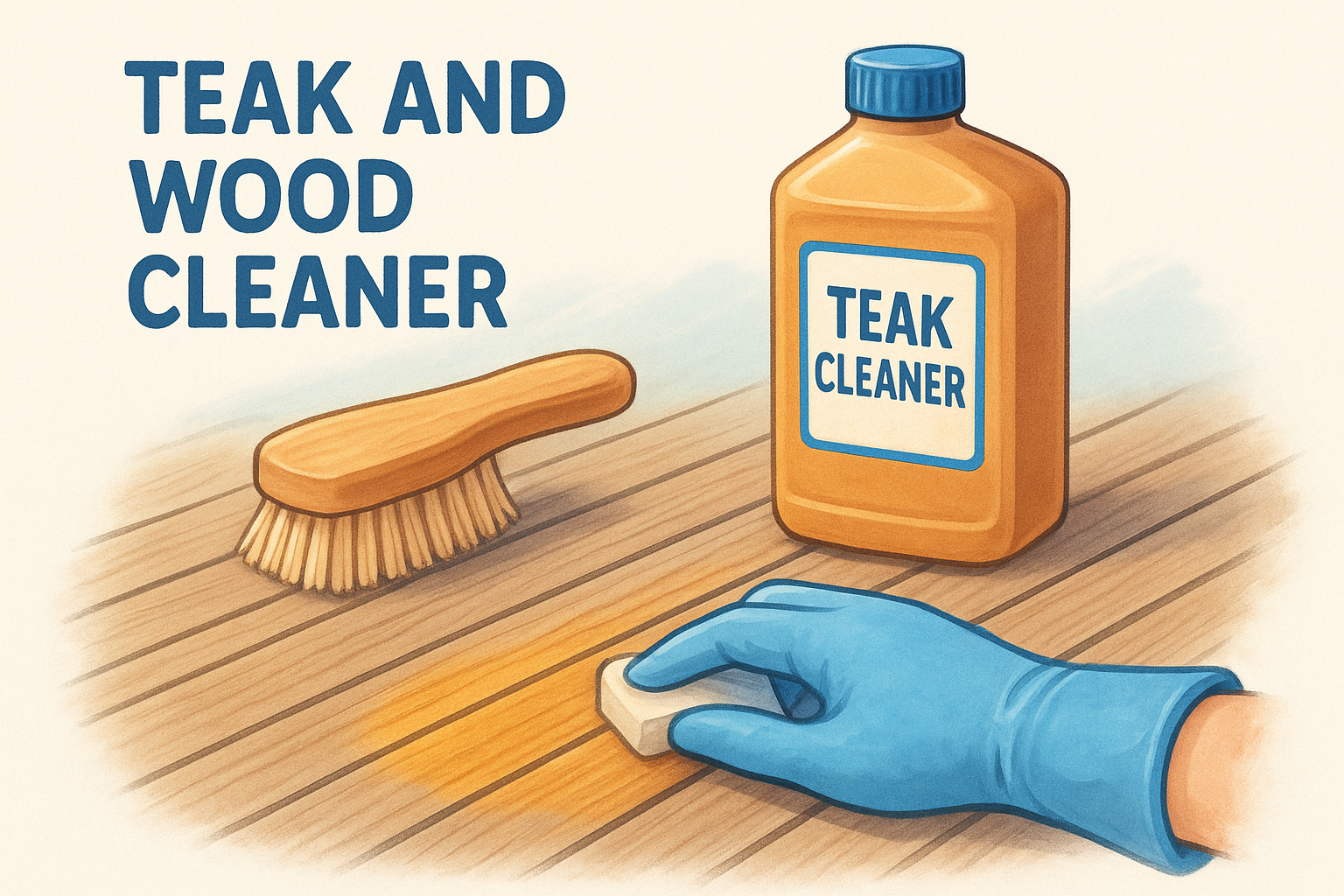
3. Teak and wood cleaner
Teak decks and trim take a beating from UV rays, foot traffic, and constant salt exposure, and they turn gray fast without the right care. A dedicated teak cleaner restores that warm honey color without the fiber damage that comes from scrubbing with generic deck soap or, worse, a pressure washer set too high.
What it's best for
This product category targets teak decking, cockpit tables, swim platforms, and any exterior woodwork that's grayed from sun and salt. It also works on handrails and hatches where wood meets constant weather exposure.
Aggressive scrubbing wears down teak faster than the sun ever will.
Key features
- Two-part formula (cleaner plus brightener) for deep restoration
- Low-pH cleaner stage that won't raise the wood grain, much like a pH neutral deck cleaner made for marine decking
- Brightener stage that neutralizes the cleaner and restores color
- Safe for use near gelcoat and metal fittings without masking
How to use it
Wet the teak, apply the cleaner with a soft-bristle brush moving with the grain, then rinse thoroughly before applying the brightener. Let it sit briefly, rinse again, and avoid scrubbing across the grain, which strips the softer wood between the harder growth rings.
Price range
A two-part teak cleaning kit typically costs $20 to $45 for enough product to cover a mid-size yacht's decking two or three times over.
4. Stainless steel and metal polish
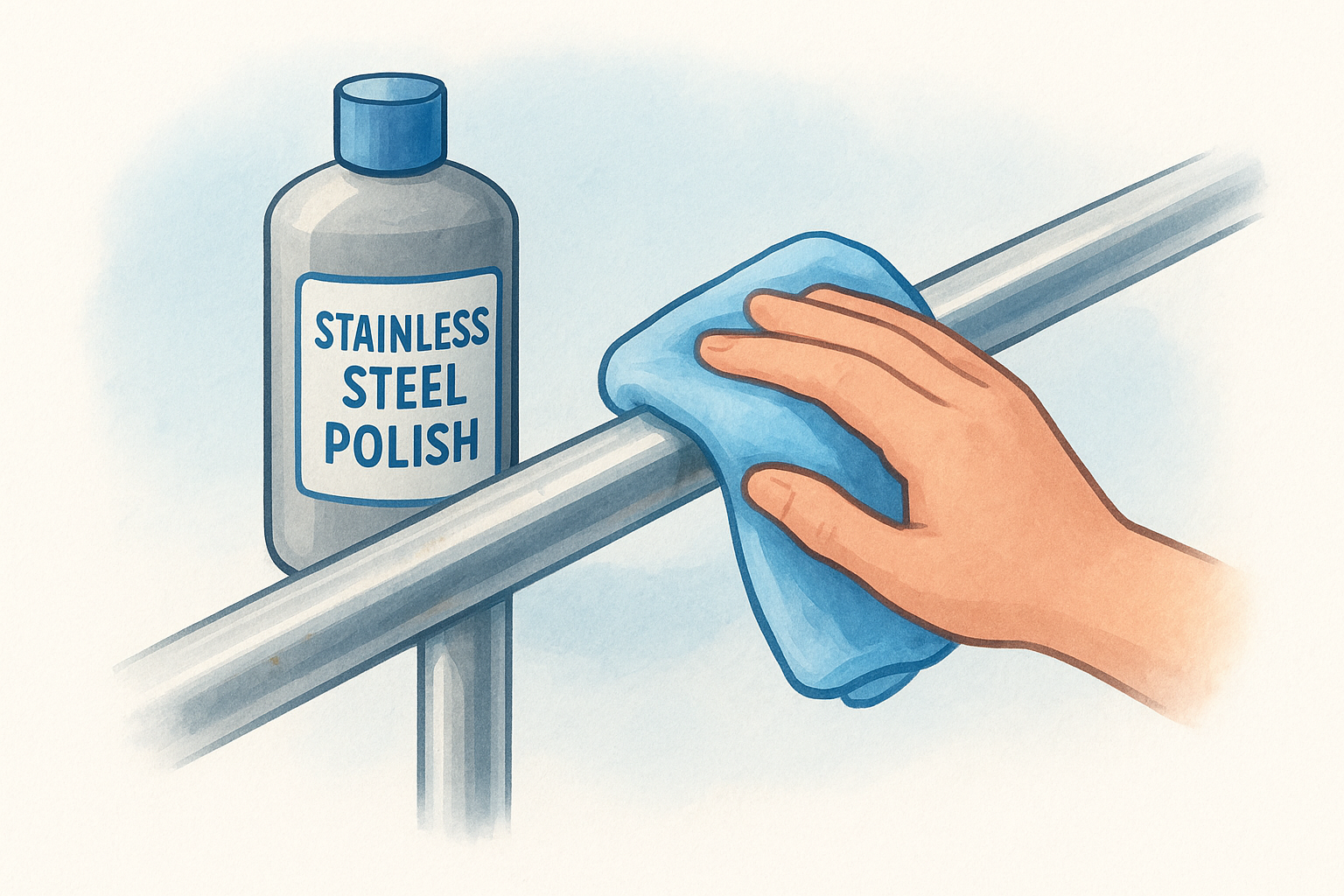
Railings, cleats, and hardware corrode fast in salt air, and once pitting starts, no polish fully reverses it. A dedicated stainless steel polish removes surface rust and water spots while leaving a protective film that slows the next round of oxidation, which matters more on a yacht than almost anywhere else metal gets used.
What it's best for
Use this on exterior stainless fittings like rails, cleats, hinges, and stanchions, plus chrome accents on the helm and swim platform. It also handles aluminum trim, though you'll want an aluminum-safe cleaner and degreaser labeled safe for both metals since some polishes are stainless-only.
Polishing stainless regularly prevents the tea-staining that turns a quick wipe-down into hours of scrubbing.
Key features
- Chelating agents that lift rust without scratching
- Silicone or wax-based sealant left behind after buffing
- Safe on anodized aluminum and powder-coated surfaces
- Sold as liquid, paste, or spray formats
How to use it
Apply with a microfiber cloth in straight lines, never circular motions, since circular buffing shows under direct sun. Buff to a shine once the polish hazes over, then follow with a light coat of protectant every few weeks to keep salt from re-bonding to bare metal.
Price range
Most bottles or tubs run $12 to $30, with premium marine-specific brands reaching $40 for larger containers built for full-length rail systems on bigger yachts.
5. Interior fabric and vinyl cleaner
Below deck, humidity and sun through the windows do just as much damage as salt spray outside. Mildew creeps into cushion seams, sunscreen oils stain vinyl helm seats, and standard household cleaners often leave residue that attracts more dirt. A dedicated marine upholstery cleaner breaks down that grime without soaking into foam padding or breaking down stitching.
What it's best for
This cleaner handles interior seating, vinyl helm chairs, salon cushions, and headliners prone to mildew in humid cabins, while leather berths and settees call for a superyacht leather cleaner and conditioner. It also works on synthetic teak flooring and vinyl-wrapped surfaces that trap moisture below deck.
A cushion ruined by mildew costs far more to replace than a bottle of the right cleaner ever will.
Key features
- Antimicrobial formula that resists mildew regrowth
- Safe on both fabric and vinyl without discoloring dyes
- No harsh solvents that dry out or crack vinyl over time
- Fresh-water rinse formula, no soapy residue left behind
How to use it
Spray directly onto the surface, work in with a soft brush or cloth, and wipe dry rather than rinsing with a hose. For deep mildew stains, let the product sit for a few minutes before wiping.
Price range
Expect $10 to $25 per bottle, with larger cabins needing two or three bottles per full interior detail.
Building a cleaning routine that protects every surface
Great results come down to matching the right product to the right surface, not grabbing whatever bottle is closest. Rotate through these five categories on a regular schedule, hull cleaner every few weeks, gelcoat and teak monthly, metal polish and interior detailing as needed, and you'll spend less time fighting stains and more time enjoying the water.
None of this replaces good judgment about what's actually on your boat. If you're running Finsulate below the waterline, protect that investment with a cleaner made for foul-release coatings, not a generic bottom scrub. And since below-deck damage sneaks up just as fast as topside wear, don't skip the interior. Browse Eco Safeway's non-toxic marine vinyl and interior cleaner built specifically for boat cabins and start building a routine that keeps every surface, above and below deck, looking like it did the day you bought it.


