
Questions? We're Here To Help: 561-405-0271




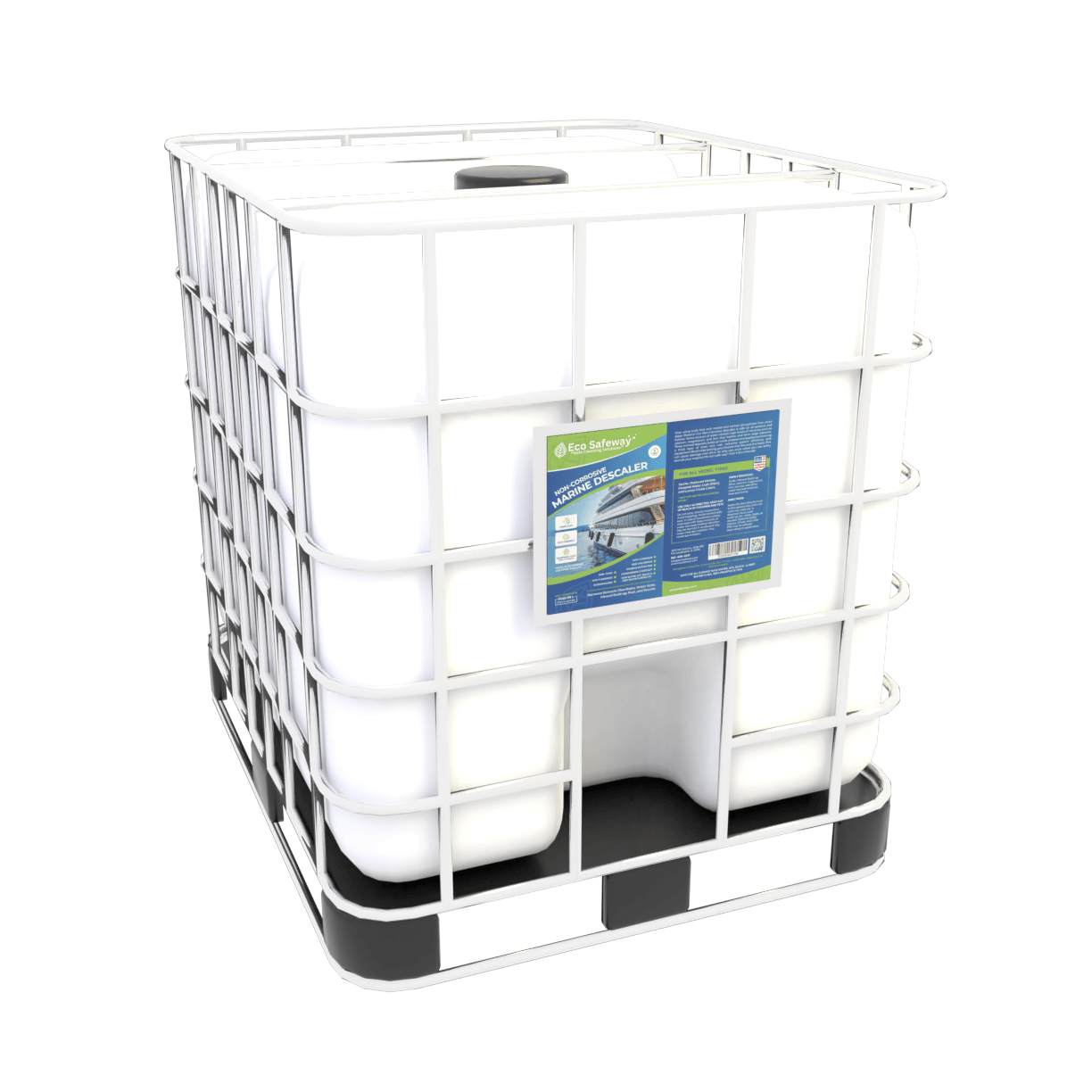
Eco-Friendly Marine Descaler | Barnacle Buster Alternative
Eco-Friendly Marine Descaler | Barnacle Buster Alternative
Couldn't load pickup availability


Description:
Barnacle Buster Alternative Marine Descaler for Boat Engines & Cooling Systems
Professional Marine Descaler for Raw-Water Cooling Systems
Eco Safeway Raw Water Flush helps remove mineral scale, salt deposits and marine buildup from boat cooling systems, heat exchangers, generators, oil coolers, aftercoolers and marine HVAC systems.
Ideal for:
- Boat engines & raw-water systems
- Heat exchangers
- Marine generators
- Oil coolers & aftercoolers
- Marine HVAC & condensers
- Yachts, commercial vessels & marine service operations
Available from 1 gallon to 275 gallons. Bulk discounts available
Looking for a Barnacle Buster alternative? Eco Safeway Raw Water Flush is a professional marine descaler formulated to help remove scale, salt deposits, barnacle residue, mineral buildup, and marine fouling from raw-water cooling systems.
It is designed for applications including boat engines, heat exchangers, oil coolers, aftercoolers, marine generators, condensers, marine HVAC systems, and other cooling circuits where mineral and marine buildup can restrict water flow.
Whether you're maintaining a center-console boat, sport-fishing boat, sailboat, yacht, trawler, workboat, charter vessel, or commercial fishing vessel, regular inspection and appropriate descaling can help maintain cooling-system performance and water circulation. (Eco Safeway)
Why Boat Owners Look for a Barnacle Buster Alternative
Marine cooling systems operate continuously with water passing through relatively small passages and heat-transfer surfaces. Over time, scale, salt deposits, marine residue, and other buildup can accumulate inside the system.
That buildup can contribute to:
Restricted raw-water flow
Reduced heat-transfer performance
Higher operating temperatures
Fouled heat exchangers
Reduced cooling performance
Poor performance under load
Increased maintenance requirements
Eco Safeway Raw Water Flush provides an alternative approach for owners and marine professionals looking for a biodegradable marine descaler for routine cooling-system maintenance.
What Is a Marine Descaler?
A marine descaler is a cleaning solution used to help dissolve and remove deposits from marine cooling systems.
Common deposits can include:
Calcium and mineral scale
Salt accumulation
Barnacle residue
Marine fouling
Sediment
Rust and corrosion byproducts
Other deposits that restrict cooling passages
These deposits can occur in:
Heat exchangers
Oil coolers
Aftercoolers
Raw-water cooling circuits
Marine generators
Air-conditioning condensers
Sea strainers
Pumps
Cooling passages
Marine HVAC systems
The appropriate cleaning method depends on the equipment, materials, degree of buildup, and manufacturer's maintenance requirements.
How Raw Water Flush Helps Maintain Marine Cooling Systems
Raw Water Flush is designed to help remove deposits that can restrict water circulation through marine cooling equipment.
When used as part of an appropriate maintenance procedure, descaling can help:
Restore Water Flow
Deposits can narrow cooling passages and restrict circulation. Removing buildup can help restore water movement through the system.
Maintain Heat Transfer
Scale and mineral deposits can act as an insulating layer on heat-transfer surfaces. Removing buildup can help the system operate more efficiently.
Support Cooling Performance
A restricted cooling circuit can contribute to higher operating temperatures and reduced performance, particularly under load.
Reduce Buildup-Related Maintenance Problems
Regular inspection and cleaning can help identify and address deposits before they become more difficult to remove.
Signs Your Marine Cooling System May Need Descaling
Descaling may be worth investigating when you notice:
Engine temperatures increasing above normal operating conditions
Reduced raw-water discharge
Reduced cooling performance
Frequent overheating alarms
Higher exhaust temperatures
Poor engine performance under load
Fouling visible in cooling components
Restricted water circulation
Scale or mineral deposits on accessible components
Important: Overheating and reduced water flow can have many causes, including clogged strainers, damaged impellers, blocked intake passages, pump problems, or other mechanical issues. Descaling should not be assumed to be the solution without appropriate diagnosis.
Marine Cooling Components That Can Accumulate Scale & Buildup
Raw Water Flush is intended for marine cooling-system maintenance applications involving components such as:
Heat Exchangers
Heat exchangers can accumulate mineral scale, salt deposits, marine residue, and other buildup that interferes with heat transfer.
Oil Coolers & Aftercoolers
Restricted passages can affect cooling performance and should be inspected as part of appropriate maintenance procedures.
Marine Generators
Generator cooling circuits can also experience mineral and marine buildup, particularly in vessels operating in saltwater.
Marine HVAC & Condensers
Marine air-conditioning and refrigeration systems can develop deposits that reduce water circulation and heat-transfer performance.
Raw-Water Cooling Circuits
Raw-water systems are particularly exposed to minerals, salt, sediment, and marine fouling.
Barnacle Buster Alternative: What to Compare
When comparing marine descalers, don't look only at the product name or price.
Consider:
| What to Compare | Why It Matters |
|---|---|
| Scale removal | Mineral deposits can restrict cooling passages |
| Salt-deposit removal | Salt accumulation can affect water flow |
| Marine residue removal | Fouling can contribute to restricted passages |
| Material compatibility | Cooling systems contain multiple materials |
| Heat exchanger use | Heat-transfer surfaces require appropriate cleaning |
| Generator applications | Generator cooling systems may require different procedures |
| Application method | Circulation and flushing procedures vary by equipment |
| Environmental characteristics | Important for marinas, yards and vessels |
| Maintenance requirements | Cleaning frequency should reflect actual system conditions |
Why Eco Safeway Raw Water Flush?
Eco Safeway Raw Water Flush is formulated for marine descaling and raw-water cooling-system maintenance.
Key product benefits include:
Helps dissolve mineral scale
Helps remove salt deposits
Helps remove barnacle residue and marine buildup
Supports water-flow maintenance
Helps maintain heat-transfer surfaces
Suitable for marine cooling-system applications
Suitable for generator and cooling-circuit applications
Biodegradable marine maintenance formula
Available in sizes from 1 gallon through 275 gallons (Eco Safeway)
How to Descale a Marine Cooling System
The exact procedure depends on the engine, cooling system, component materials, and product instructions. Always follow the equipment manufacturer's requirements and the current Raw Water Flush directions.
Step 1: Inspect the System
Before descaling, inspect the relevant cooling components and look for obvious causes of restricted flow such as clogged strainers, damaged impellers, blocked hoses, or other mechanical problems.
Step 2: Isolate the Cooling Circuit
Isolate the raw-water circuit according to the equipment manufacturer's recommended procedure.
Step 3: Prepare the Descaling Solution
Prepare Raw Water Flush according to the current product directions and the requirements of the equipment being serviced.
Step 4: Circulate the Solution
Circulate the solution through the appropriate cooling passages, heat exchangers, coolers, condensers, or other components according to the recommended procedure.
Step 5: Flush the System
After the descaling process is complete, thoroughly flush the system according to the product instructions and equipment requirements.
Step 6: Restore the System
Reconnect the cooling circuit and verify normal operation, water flow, and operating temperatures.
For complex marine systems, yachts, commercial vessels, or equipment with multiple interconnected cooling circuits, consult a qualified marine technician.
How Often Should a Boat Engine Be Descaled?
There is no single descaling interval that applies to every vessel.
The appropriate frequency depends on:
Saltwater, brackish-water, or freshwater operation
Vessel usage
Water quality
Cooling-system design
Operating hours
Existing scale or marine buildup
Cooling performance
Manufacturer recommendations
Results of routine inspections
Instead of relying on a universal annual schedule, inspect the cooling system and monitor its performance. Descale when buildup or declining cooling performance indicates that cleaning is appropriate.
High-hour commercial vessels and boats operating continuously in warm saltwater may require more frequent inspection than lightly used freshwater vessels.
Is Raw Water Flush Right for Your Boat?
Raw Water Flush may be appropriate when you're looking for a marine descaler for:
Recreational boats
Center consoles
Sport-fishing boats
Sailboats
Catamarans
Trawlers
Yachts & commercial vessels
Motor yachts
Superyachts
Charter vessels
Workboats
Commercial fishing vessels
Fleet vessels
Marine equipment
Inboard engines
Diesel engines
Gasoline engines
Marine generators
Heat exchangers
Oil coolers
Aftercoolers
Marine HVAC systems
Application suitability should always be confirmed against the specific equipment, materials, and current product instructions. (Eco Safeway)
Raw Water Flush Sizes
Eco Safeway Raw Water Flush is currently offered in:
1 gallon
2.5 gallons
5-gallon kit
30 gallons
55 gallons
275 gallons (Eco Safeway)
Choose the appropriate quantity based on the cooling-system application, vessel size, cleaning procedure, and amount of buildup.
For yachts, commercial vessels, marinas, shipyards, and fleet maintenance programs, contact Eco Safeway for assistance selecting the appropriate quantity.
Barnacle Buster Alternative for Yacht & Commercial Marine Maintenance
For yacht managers, marine technicians, marinas, shipyards, and commercial operators, cooling-system maintenance is about more than removing visible buildup.
Restricted cooling systems can contribute to:
Reduced operating efficiency
Higher temperatures
Unplanned maintenance
Reduced equipment availability
Increased service requirements
A preventive maintenance program that includes inspection, water-flow monitoring, and appropriate descaling can help identify buildup before it becomes a larger maintenance problem.
Eco Safeway Raw Water Flush is available in larger quantities for yacht management, commercial fishing, marine service facilities, shipyards, marinas, and other professional marine applications. (Eco Safeway)
Eco Safeway Raw Water Flush vs. Traditional Marine Descaling
If you're comparing Raw Water Flush with another marine descaler, evaluate the actual formulation, material compatibility, application instructions, environmental characteristics, and intended use rather than assuming that all descaling products work the same way.
Eco Safeway's positioning is straightforward:
A marine descaler designed specifically around raw-water cooling-system maintenance, with a biodegradable formulation and applications across recreational, yacht, and commercial marine equipment.
Frequently Asked Questions
What is a Barnacle Buster alternative?
A Barnacle Buster alternative is another product used for marine descaling and removal of mineral, salt, and marine buildup from boat cooling systems. Eco Safeway Raw Water Flush is positioned as a marine descaler alternative for raw-water cooling applications.
What is the best marine descaler?
The best marine descaler depends on the deposits present, equipment materials, cooling-system design, application method, and manufacturer's requirements. Look for a product specifically intended for the marine cooling application you are servicing.
Can a marine descaler remove scale from a heat exchanger?
Yes. Marine descaling is commonly used to help remove mineral deposits and other buildup from heat exchangers. The product and procedure should be compatible with the specific heat exchanger materials and manufacturer's requirements.
Can Raw Water Flush be used on marine generators?
Raw Water Flush is intended for marine cooling-system applications that can include generators. Always verify the specific equipment and follow the current product directions before use.
Can descaling help an overheating boat engine?
If scale or other deposits are restricting cooling passages, removing that buildup may help restore water circulation and cooling performance. However, overheating can have many other causes, so the complete cooling system should be inspected.
What causes reduced water flow in a boat engine?
Common causes include clogged sea strainers, damaged impellers, blocked intake passages, fouled heat exchangers, scale buildup, marine residue, restricted hoses, and other cooling-system problems.
How often should I descale my boat engine?
There is no universal interval. Descaling frequency should be based on water conditions, vessel use, cooling-system condition, operating performance, inspection results, and manufacturer recommendations.
Can Raw Water Flush be used on saltwater boats?
Yes, Raw Water Flush is intended for marine cooling-system applications, including vessels operating in saltwater. Follow the current product directions and verify compatibility with the equipment being serviced.
What sizes of Raw Water Flush are available?
Eco Safeway offers Raw Water Flush in 1-gallon, 2.5-gallon, 5-gallon, 30-gallon, 55-gallon, and 275-gallon sizes. (Eco Safeway)
Is Raw Water Flush biodegradable?
Eco Safeway describes Raw Water Flush as a biodegradable marine maintenance formula. (Eco Safeway)
Can I use a marine descaler on any boat engine?
Not automatically. Marine cooling systems differ in materials, construction, access, and cleaning requirements. Always verify compatibility and follow the engine/component manufacturer's instructions and the current product directions.
What is raw-water cooling-system flushing?
Raw-water flushing involves circulating a cleaning solution through appropriate cooling-system passages to help remove deposits and buildup, followed by thorough rinsing and restoration of the system.
Why Choose Eco Safeway?
Eco Safeway develops environmentally focused cleaning and maintenance products for marine, commercial, industrial, and other specialized applications.
For marine operators, Raw Water Flush provides a dedicated solution for descaling raw-water cooling systems, heat exchangers, generators, condensers, and related equipment.
Whether you're maintaining one recreational boat or managing a commercial fleet, the goal is the same:
Maintain water flow. Maintain cooling performance. Reduce buildup before it becomes a bigger maintenance problem.
Order Eco Safeway Raw Water Flush
Looking for a Barnacle Buster alternative for your boat or marine cooling system?
Eco Safeway Raw Water Flush is available in multiple sizes for recreational boats, yachts, commercial vessels, marine technicians, marinas, and fleet maintenance programs.
Select your size and order Raw Water Flush today.
For larger yacht, commercial, marina, or fleet applications, contact Eco Safeway for assistance with product selection and quantity requirements.
Frequently Asked Questions
What makes Eco Safeway Raw Water Flush a better barnacle remover compared to traditional acid-based products?
How safe is the Eco-Friendly Marine Descaler for use on different boat engine materials and components?
What sizes are available for the barnacle Buster alternative, and which one is best for my boat?

HAVE QUESTIONS?
WE CAN HELP!


- Choosing a selection results in a full page refresh.
- Opens in a new window.