





The most reliable corrosion prevention comes from layering two or three methods, not from relying on one product. Protective coatings suit most steel in everyday exposure. Corrosion-resistant alloys suit parts you cannot recoat. Galvanizing and cathodic protection suit large steel in wet or buried service. Inhibitors and dry storage suit closed systems and stored parts. Pick the method that matches your metal, your environment and how easily you can reach the part for upkeep.
Rust rarely looks urgent until it is. It thins steel, seizes fasteners, fouls cooling systems and turns a cheap prevention job into an expensive repair. Most online advice lists methods without saying when each one fails. This article covers eight methods, what each one does, who it suits and where it falls short, then shows you how to choose between them.
Eco Safeway works with yacht owners, marine operators and industrial facilities where salt, moisture and scale attack metal every day, so many examples come from those settings. The methods apply to any metal structure, from a dock handrail to a heat exchanger.
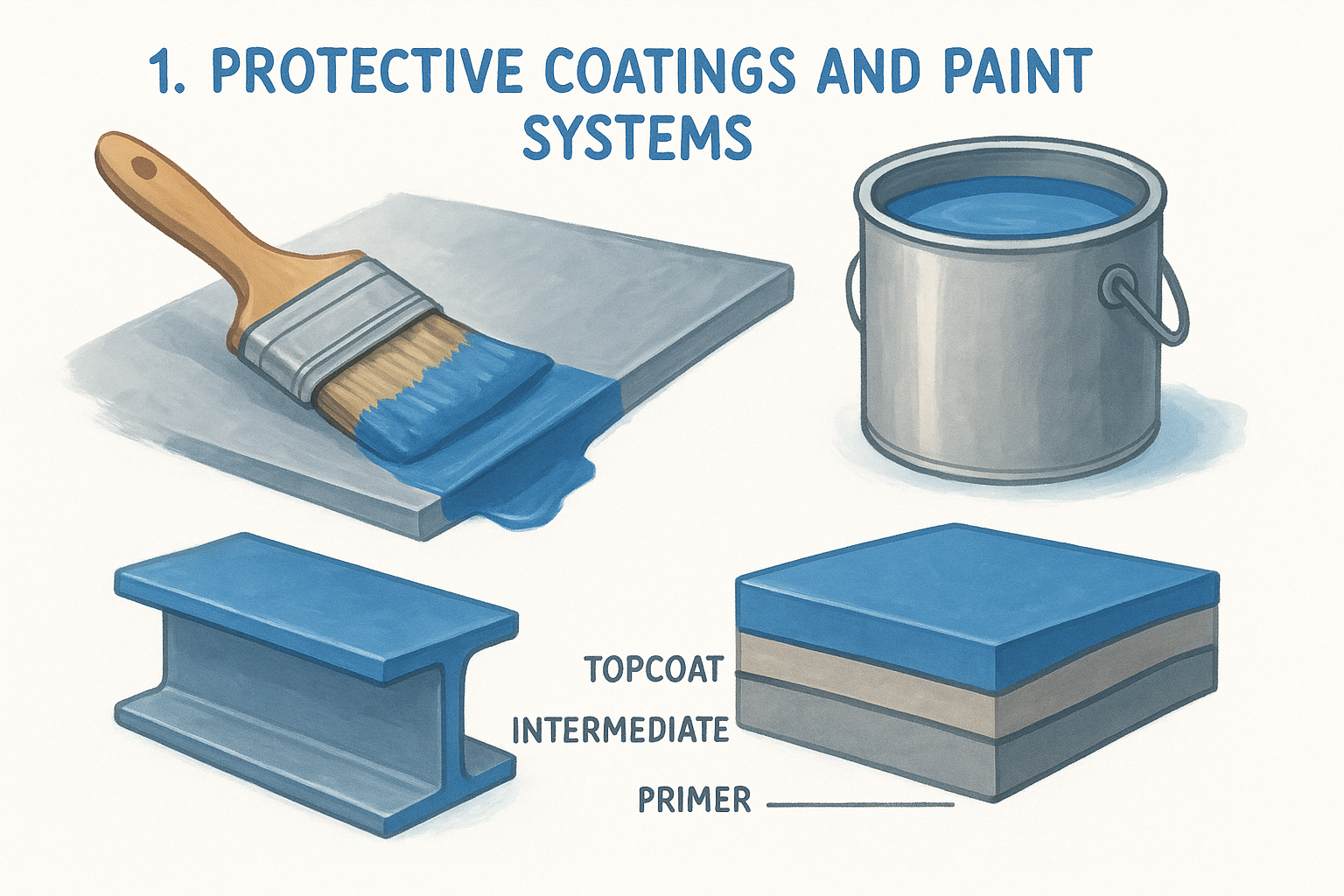
1. Protective coatings and paint systems
Protective coatings are the default method for steel because they are cheap, widely available and easy to apply on site. A coating keeps water, oxygen and salts away from the metal. While the film stays intact and bonded, the metal under it cannot corrode.
How it works
A good coating is a system, not a single can. A typical paint system has a primer that bonds to the metal and often carries inhibitors, an intermediate coat that builds thickness, and a topcoat that handles sun, abrasion and chemicals. Each layer has a job, and skipping one shortens the life of the others.
A coating only protects while it stays unbroken and bonded, so surface preparation matters more than the brand of paint.
The main coating types are:
- Liquid paint systems, such as epoxy, polyurethane and alkyd, applied by brush, roller or spray
- Powder coatings, such as epoxy, polyester and urethane, baked on in a shop for a tough, even film
- Zinc-rich primers, which add a sacrificial layer under the topcoat
- Waxes and oil films, which give temporary protection for stored or lightly exposed parts
Where it fits and where it fails
Coatings suit almost any steel structure, equipment housing or tank that you can reach again. Most coating failures start with poor surface preparation, not poor paint. Mill scale, old rust, oil and invisible salt residue stop the primer from bonding, and the film blisters within a season or two. Edges, welds and bolt heads get thin coverage, so inspect them first.
The weak point is damage. A scratch exposes bare metal, and moisture can creep under the surrounding film and lift it. Plan on touch-ups and a recoat schedule. Some solvent-based products also contain volatile organic compounds, so read the label and the ventilation rules. Coatings cost the least upfront, but the labor repeats.
2. Corrosion-resistant metals and alloys
Choosing a metal that resists your environment is the most effective method when you cannot recoat the part. Stainless steel, aluminum, copper alloys and titanium all form stable surface layers that slow corrosion.
How it works
Stainless steel contains chromium, which forms a thin passive oxide film that heals itself in the presence of oxygen. Aluminum does the same with its own oxide layer. The film is the protection, so anything that breaks it down, such as chlorides, stagnant water or crevices, lets corrosion in.
Resistant alloys are not corrosion-proof. They resist one environment and can fail fast in another.
What to know about each:
- 304 stainless steel: good for general use and indoor or freshwater service.
- 316 stainless steel: adds molybdenum for better chloride resistance, which is why it is the usual marine fastener and fitting grade.
- Aluminum: light and strong, and marine-grade alloys do well in seawater when isolated from other metals.
- Weathering steel: builds a stable rust patina, but only where it can wet and dry and drain freely.
- Titanium: excellent in seawater, but expensive.
Where it fits and where it fails
Use resistant alloys for fasteners, shafts, fittings, heat exchanger tubes and anything buried inside an assembly. NASA's corrosion engineers note that switching from carbon steel to a more resistant alloy normally doubles or more the material cost, so they consider other controls first. That cost is why most large structures stay carbon steel and rely on coatings or cathodic protection.
The failure modes are local. Stainless steel pits and crevice-corrodes in stagnant seawater under gaskets and washers. Brass can lose its zinc and weaken. And any resistant metal can suffer galvanic attack when it touches a more active metal. Section 6 covers that problem.
3. Hot-dip galvanizing and metallic coatings
Galvanizing coats steel with zinc, which protects in two ways. It works as a barrier, and it corrodes in preference to the steel underneath. That combination makes it a strong choice for structural steel outdoors.
How it works
In hot-dip galvanizing, cleaned steel is dipped in molten zinc at roughly 840°F (450°C). The zinc reacts with the steel to form bonded zinc-iron alloy layers under a pure zinc outer layer. If a scratch exposes a small area, the nearby zinc corrodes first and protects the exposed steel.
Galvanizing protects the steel even where the coating is scratched, which paint alone cannot do.
Related metallic coatings include:
- Hot-dip galvanizing for fabricated steel such as railings, stairs, frames and fasteners
- Thermal-sprayed zinc or aluminum, applied by spray gun, which can be done in the field or on parts too big for a kettle
- Electroplated zinc, a thinner finish suited to indoor or lightly exposed hardware
Where it fits and where it fails
Galvanizing suits structural steel, guardrails, grating, trailers and fabricated frames that face weather for decades. For critical zones, duplex systems that add paint over zinc are common, because the paint slows zinc loss and the zinc backs up the paint.
The limits are practical. Hot-dip galvanizing is a shop process, so equipment must leave service and fit the kettle. Thin sections can distort from the heat. High-strength bolts raise hydrogen embrittlement concerns, so galvanizing them calls for engineering guidance. Zinc also wears faster in highly acidic or salt-heavy exposure, which shortens the maintenance interval there.
4. Cathodic protection
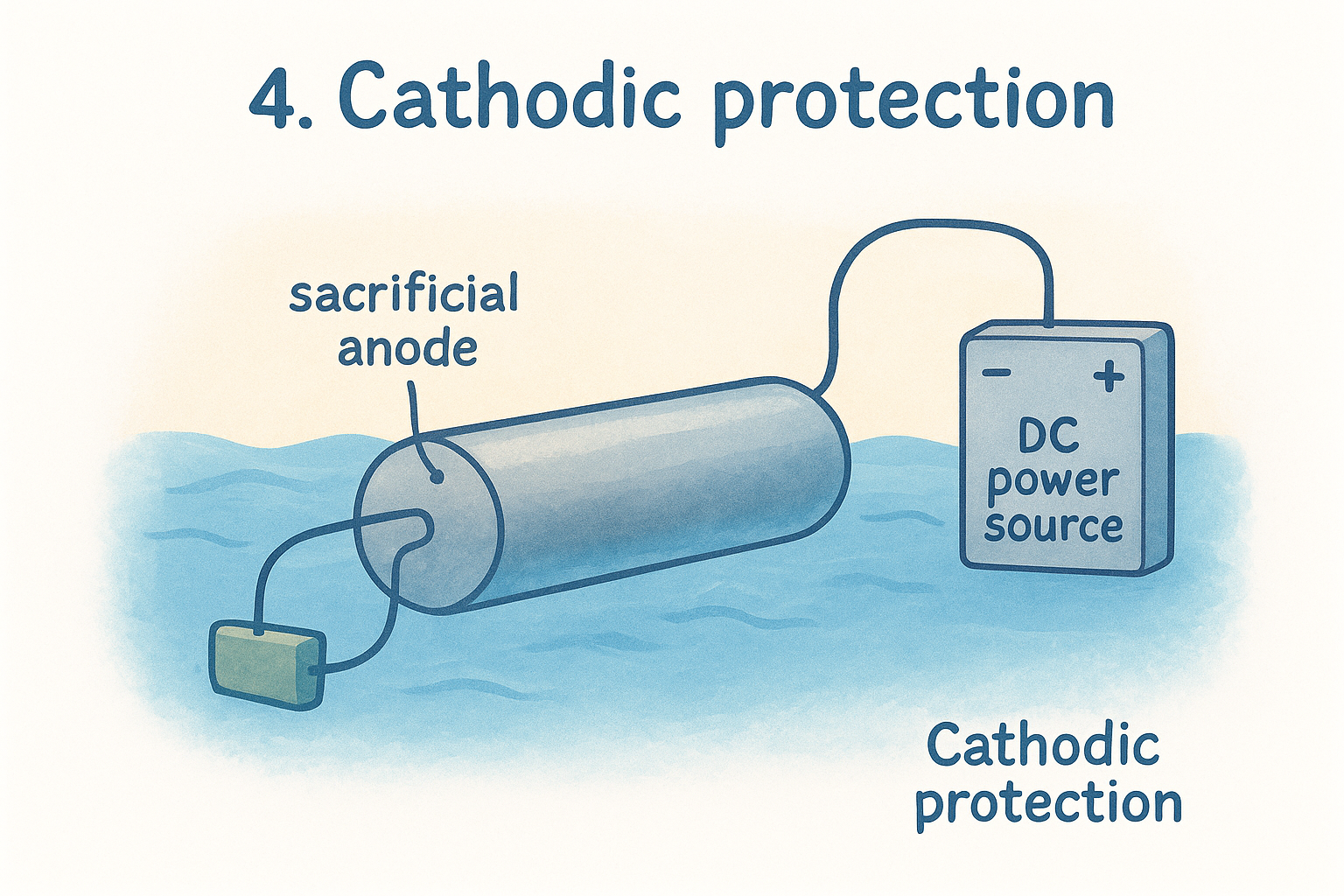
Cathodic protection stops corrosion by turning the whole metal structure into the protected side of an electrochemical cell. You do it with sacrificial anodes or with an impressed current system. It is the standard method for hulls, buried pipelines, tanks and piers.
How it works
Sacrificial anodes are made of a more active metal than steel, so they corrode instead and supply electrons to the structure. An impressed current system uses a DC power source and long-life inert anodes, often mixed metal oxide on titanium, to push protective current onto the metal. Both need the structure and anode to be electrically connected and sitting in the same electrolyte, such as seawater or damp soil.
Sacrificial anodes work by being used up, so protection ends the day the anode does.
Match the anode metal to the water:
- Zinc: seawater
- Aluminum: seawater and brackish water
- Magnesium: freshwater and soil
Where it fits and where it fails
Cathodic protection fits anything permanently immersed or buried, including yacht hulls, shafts, rudders, sheet piling and storage tank bottoms. A common rule of thumb is to replace sacrificial anodes at about half consumed. Check them at every haul-out, and more often in marinas, where stray current from faulty shore power or neighboring vessels can eat them quickly.
Limits matter here. It does nothing above the waterline or in a dry environment. Too much protection can damage coatings and some metals, such as aluminum, so impressed current systems need proper design and monitoring. Bacterial biofilms can also reduce its effectiveness in some environments. Treat it as a partner to coatings, not a replacement.
5. Corrosion inhibitors and protective sprays
Corrosion inhibitors are chemicals that make an environment less corrosive or lay a protective film on the metal. They work best in closed or controlled systems where you can keep the chemical at the right concentration.
How it works
Some inhibitors dissolve in the fluid and adsorb onto the metal surface, which blocks the corrosion reaction. Others are vapor phase products that release molecules inside a sealed space. Oil and wax films simply coat the surface and displace moisture. The type you need depends on whether the metal sits in a liquid, in an enclosure or in open air.
An inhibitor only works at the right concentration, in the system it was chosen for.
Common forms include:
- Coolant and water-treatment inhibitors for engines, closed loops and boilers
- Vapor corrosion inhibitor (VCI) paper, film and emitters for packaging and enclosures
- Oil-, wax- or lanolin-based preventive sprays for exposed hardware
- Concrete admixtures, such as calcium nitrite, to protect embedded rebar
Where it fits and where it fails
Inhibitors suit cooling loops, hydronic systems, stored spare parts, tool cabinets and electrical enclosures. People often ask whether WD-40 counts. It displaces water and leaves a light film for short-term protection, but it is not built for months of outdoor or marine exposure. For that, use a dedicated rust-preventive film and reapply it on a schedule.
The failure mode is neglect. Inhibitors get diluted, depleted or flushed out of open systems, and the wrong chemistry can attack mixed metals. Older chromate inhibitors are largely phased out because of toxicity, so check the safety sheet and the discharge rules for any product you use in a wash-down or drain system.
6. Smart design and material pairing
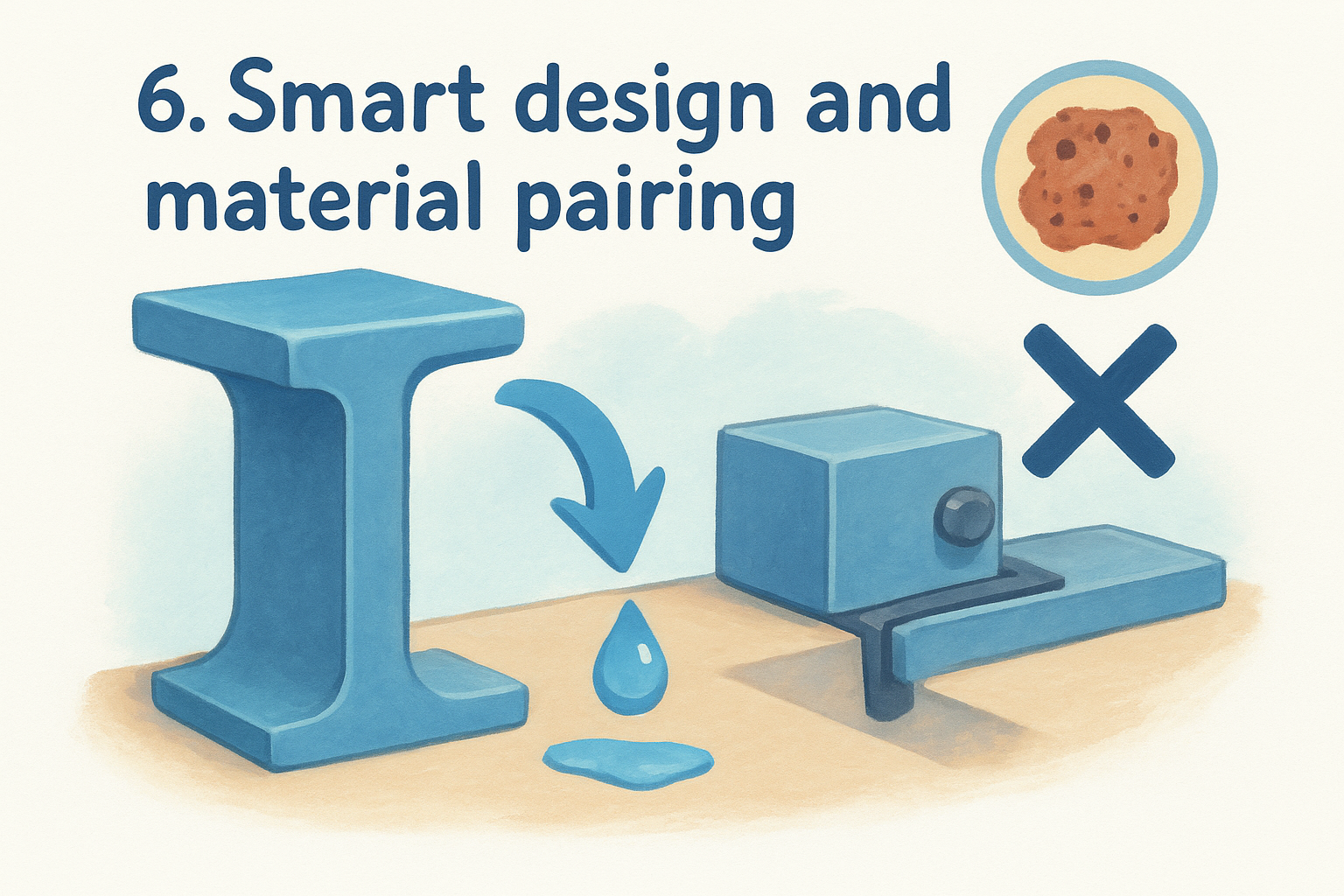
Good design prevents corrosion before any product is applied. Shape, drainage and the metals you put in contact decide how fast a structure corrodes, and the fix is cheapest on paper.
How it works
Corrosion needs water and an electrolyte, so design to shed water and avoid traps. NASA's engineers point out that a missing drain path lets water and debris sit on a surface and corrode it from the far side. The same logic applies to crevices, overlapping plates and blind pockets where moisture lingers.
The cheapest corrosion fix is the one made before the steel is cut.
Design checks that pay off:
- Slope surfaces and add drain holes so water leaves
- Seal or continuously weld joints instead of leaving crevices
- Isolate dissimilar metals with gaskets, sleeves or washers
- Avoid a small active metal next to a large noble one, because the small part corrodes fast
- Add a corrosion allowance, which means extra metal thickness that can be lost safely over the service life
Where it fits and where it fails
Design suits new builds, refits and repairs, where you still control geometry and material choices. A classic marine case is copper-based bottom paint on an aluminum hull or outdrive, which sets up galvanic corrosion. Copper-free antifouling avoids that pairing, such as the Finsulate fiber wrap we sell as the official US dealer. Your antifouling choice does not replace anodes or proper bonding, though.
The limit is timing. Once a structure is built, redesign is costly, so you fall back on coatings, anodes and inspection. Design also only reduces corrosion. It never removes the need for the other methods.
7. Environment control: keep metal dry and clean
Since corrosion needs moisture and usually salt, controlling the environment is among the cheapest forms of corrosion prevention. Keep metal clean and dry, and remove chlorides before they sit on it.
How it works
Salt deposits attract moisture from the air and hold it against the metal, which keeps the surface wet even on dry days. Rinsing with fresh water removes that salt. For stored items, lowering humidity slows rust, and a common target for stored steel is relative humidity below about 50 percent.
Moisture plus salt is the recipe for rust, so removing either one slows corrosion sharply.
Practical measures include:
- Rinse equipment with fresh water after salt spray or immersion
- Run dehumidifiers or ventilation in storerooms and engine spaces
- Store parts with desiccant packs or VCI bags
- Use dry nitrogen to purge and blanket sealed vessels
- Avoid packaging that holds moisture, such as damp wood or cardboard
Where it fits and where it fails
This approach suits spare parts, tools, machinery in lay-up, electrical enclosures and vessels out of the water. Take a spare-parts shelf in a humid storeroom. A dehumidifier, sealed bins and desiccant packs can keep bearings and shafts rust-free without any coating at all.
It cannot protect large outdoor structures that stay wet, and it demands routine. A rinse skipped for a month, a failed seal or a wet desiccant pack undoes the effort. Use it to support the other methods, not to replace them when the metal lives outside.
8. Cleaning, inspection and rust removal
Regular cleaning and inspection catch corrosion while it is still cosmetic. Scale, salt and grime hold moisture against metal and start corrosion under the deposit, so keeping surfaces and fluid paths clean is part of prevention.
How it works
Inspection finds blistered paint, rust streaks, weeping welds and pitted fasteners early. Cleaning removes salts and deposits. Removing rust back to sound metal lets you recoat or protect it properly, since paint over live rust keeps rusting. The sequence is simple:
- Inspect on a set schedule, and photograph problem areas so you can track changes.
- Rinse off salt and dirt with fresh water.
- Remove rust and scale down to bare, sound metal.
- Rinse and dry the surface fully.
- Recoat or apply a protective film the same day, before flash rust forms.
Removing rust is only half the job. Protecting the cleaned metal quickly is what stops it coming back.
Where it fits and where it fails
Every other method on this list depends on this one. For rust removal, Eco Safeway sells a Rust Remover Gel for marine and industrial metal in 16 oz and 1 gal sizes, priced from $15.99 to $44.99. For larger jobs, the Industrial Rust Remover runs from 1 gal up to a 275 gallon tote, priced from $59.99 to $259.99. Read the safety sheet, and test a small area first on any metal you are unsure about.
Cleaning has limits. A remover cannot restore metal that has already thinned, and deep pitting or section loss in structural parts needs an engineer's assessment, not another coat of paint. Treat cleaning as maintenance that keeps protection working.
How to choose the right corrosion prevention method
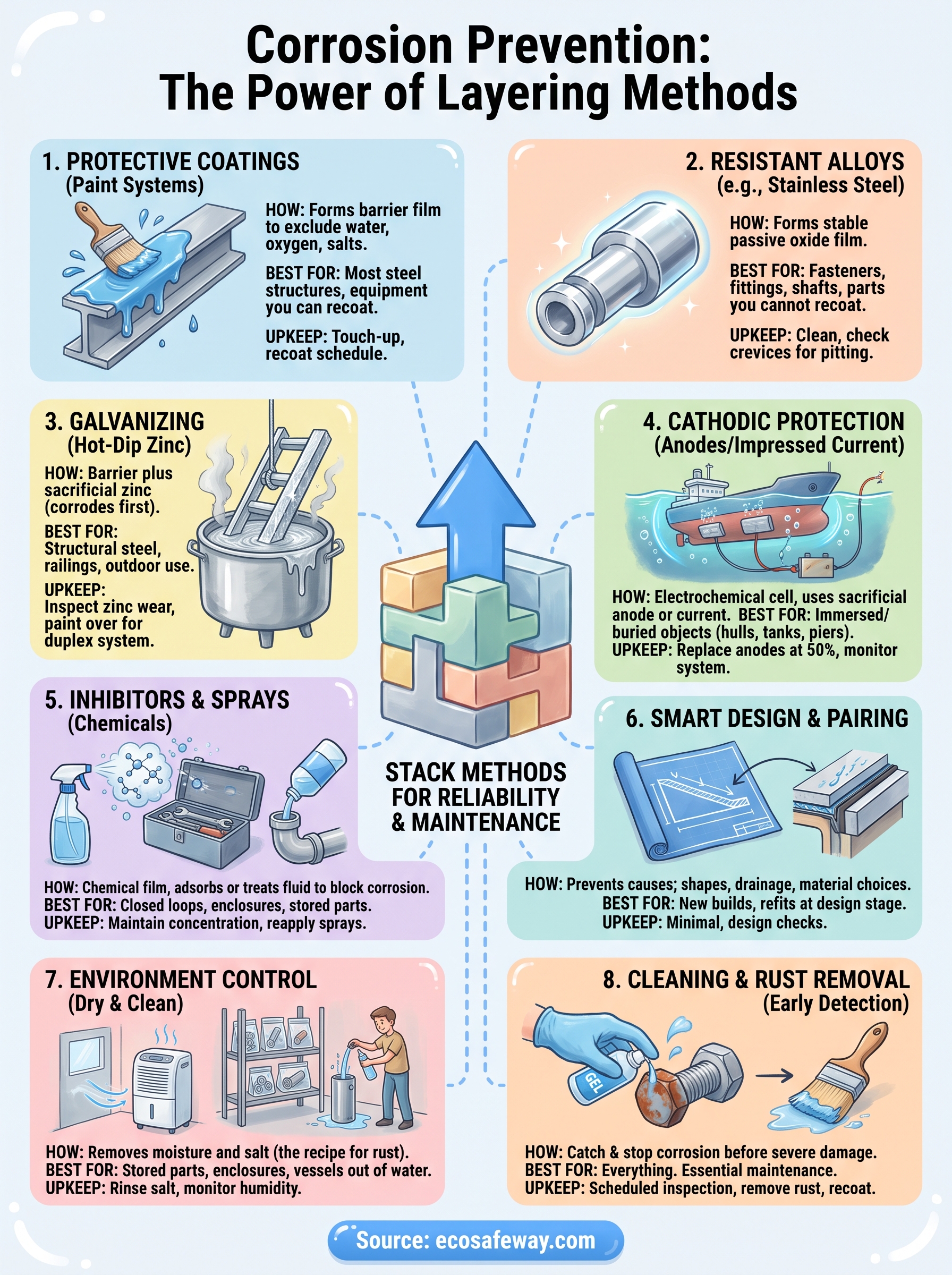
Choose by matching three things: the metal, the environment and how easily you can reach the part later. The table puts the eight methods side by side so you can see where each one fits.
Compare the methods
| Method | How it protects | Best for | Applied | Upkeep |
|---|---|---|---|---|
| Protective coatings | Barrier film | Most steel structures and equipment | Site or shop | Touch up, recoat |
| Resistant alloys | Passive oxide film | Fasteners, fittings, shafts | Chosen at purchase | Clean, check crevices |
| Galvanizing | Barrier plus sacrificial zinc | Structural steel, railings | Shop, or thermal spray in field | Inspect, add paint |
| Cathodic protection | Electrochemical | Hulls, tanks, pipelines, piers | Installed | Replace anodes, monitor |
| Inhibitors | Chemical film or treated fluid | Closed loops, enclosures, storage | Added or sprayed | Maintain concentration |
| Smart design | Removes causes | New builds, refits | At design stage | Minimal |
| Environment control | Removes moisture and salt | Storage, enclosures | Ongoing | Rinse, dehumidify |
| Cleaning and rust removal | Stops early damage | Everything | Ongoing | Scheduled |
Textbooks often name three main ways to prevent corrosion: barrier protection such as paint, sacrificial protection such as zinc, and alloying to make a resistant metal. Galvanizing combines the first two. Inhibitors, design and upkeep support them.
Match the method to your situation
Take a steel stairway on a coastal dock. Galvanize it for the base protection, paint over the zinc for a duplex system, use 316 stainless fasteners isolated from the steel, and rinse it with fresh water regularly. Each method covers a weakness in another.
Ask these questions in order:
- Is the metal submerged or buried? If so, add cathodic protection.
- Can you reach it to recoat? If not, choose a resistant alloy or galvanizing.
- Is it a closed system or stored part? Use inhibitors and dry storage.
- Is it still in design? Fix drainage, crevices and metal pairings first.
- Can you keep up a schedule? If not, favor the lower-maintenance option.
Start with the method you can maintain
Corrosion prevention works when you stack methods and keep them up. Choose a coating or alloy as the base, add galvanizing or anodes where the structure is wet or buried, use inhibitors and dry storage for closed systems, and let design and cleaning cover the gaps. The best method is the one you can actually inspect and maintain.
If scale and deposits in cooling loops, heat exchangers or raw water systems are part of your corrosion problem, our raw water system and heat exchanger descaler is the next step. For rust that has already started, check the rust remover options above and recoat the cleaned metal promptly.


