





The best vinyl seat cleaner for boats is the mildest product that still lifts your dirt, with no bleach, ammonia or alcohol, followed by a UV protectant. For routine upkeep and light mildew, a marine vinyl cleaner like Eco Safeway's Marine Vinyl and Interior Cleaner or Star brite's vinyl cleaner is the right pick. For seats that have weathered for months, Meguiar's Marine All-Purpose Cleaner is stronger. If you are on a budget, Simple Green or Mean Green gets most jobs done.
The problem is that marine vinyl is porous, a bit like leather. It soaks up sunscreen, body oils, salt, food and mildew, especially in the seams. The wrong cleaner dries the surface, cracks it, rots the stitching or strips the protective coating. Store shelves make it worse, with cleaners, restorers and protectants all sold side by side.
This article ranks four cleaners, says what each costs and who it suits, and then gives you a step-by-step method that works with any of them. It also answers the dish soap and homemade cleaner questions. Eco Safeway supplies marine cleaning products to boat and yacht owners, so its vinyl cleaner comes first. The other three earn their place on how they perform.
1. Eco Safeway Marine Vinyl and Interior Cleaner
This is a non-toxic, VOC-free cleaner for marine vinyl, upholstery, leather and plastic. It suits owners who want one product for seats, cushions and interior panels without harsh solvents.
How it works and what it costs
Eco Safeway describes the formula as biodegradable and free of bleach and heavy solvents. It targets dirt, sunscreen residue, body oils, salt buildup, food and drink stains, and mildew. The listing also names built-in UV protectants and conditioning agents meant to slow fading, drying and cracking.
Prices run from $29.99 to $349.99, depending on size. Sizes are a 32 oz spray, 1 gallon, 2.5 gallon, a 5 gallon kit and a case of 12 quarts. The 32 oz spray suits one boat, and the larger sizes suit yacht managers and detailers who clean many seats.
A single cleaner that handles seats, leather and plastic trim keeps your cleaning routine simple.
Who it suits and how to use it
It fits owners who clean often, since a gentle formula is the best choice for regular upkeep. It also fits yacht interiors, where vinyl, leather and plastic sit side by side. Because it carries UV protectants, it works well for boats that sit in direct sun.
Wet the seat, spray the cleaner, work it in with a soft brush, then wipe or rinse and dry. For heavy mildew, let it sit a few minutes and repeat rather than scrubbing hard. Check the label for dwell times.
2. Meguiar's Marine All-Purpose Cleaner
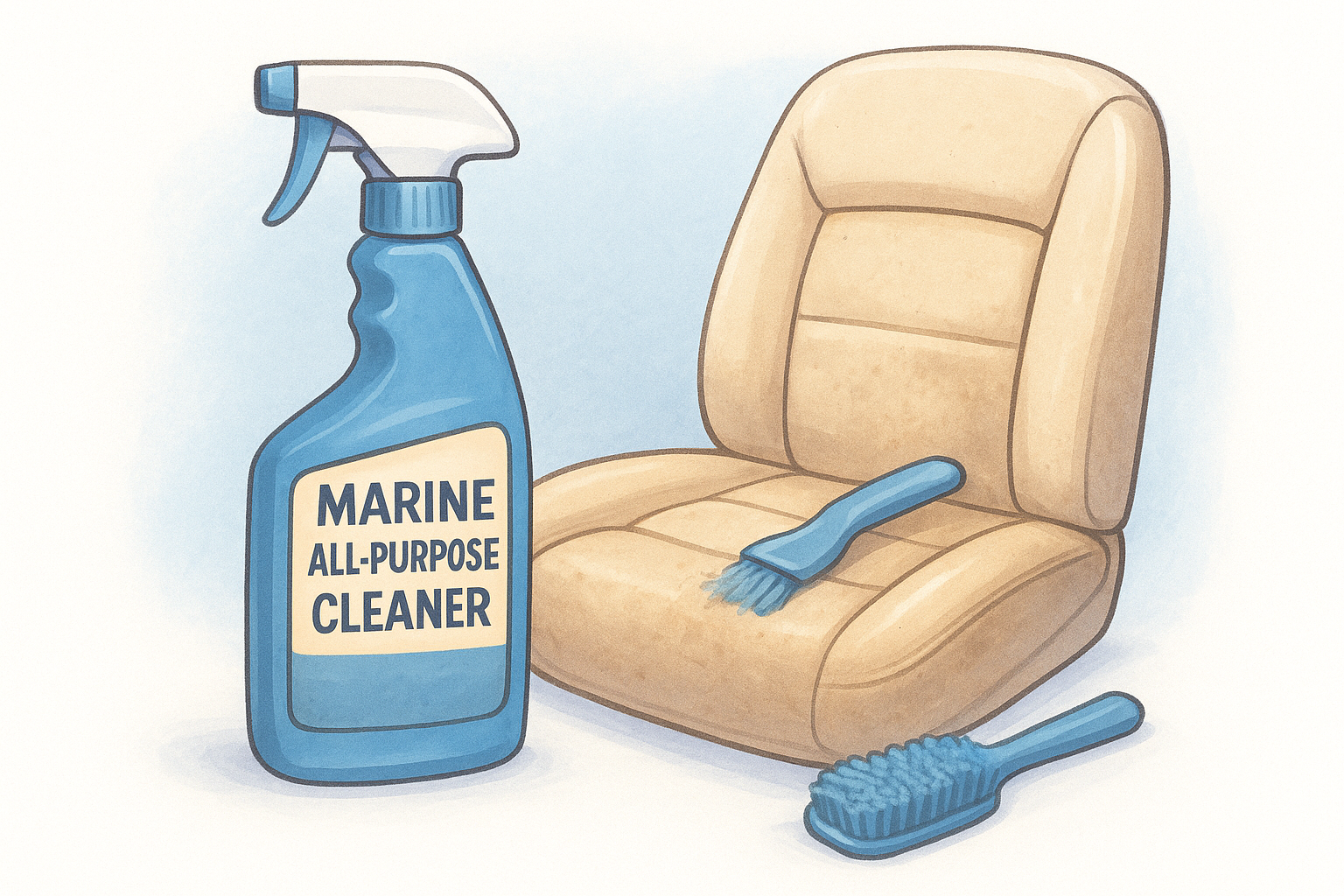
Meguiar's Marine APC is a stronger cleaner for badly soiled vinyl. It is the one to reach for when seats have weathered for weeks or months and a gentle cleaner has failed.
How it works and what it costs
Meguiar's calls it safe for fiberglass and vinyl, and it contains no chemicals harmful to vinyl. It is more robust than cleaners made only for vinyl. Spray it on, brush it in lightly with a medium-bristle brush, wait a few minutes and wipe it off.
In published marine testing it removed grease spots and ground-in dirt. It did not remove black spider stains and only nearly removed ballpoint ink. It costs about $15 per pint, though prices vary by retailer.
Use the strongest cleaner second, not first, because it also strips any protectant already on the vinyl.
Who it suits and how to use it
It suits neglected seats, used boats you have just bought, and boats that sat uncovered all season. It is also handy for hatch seals and other rubber or fiberglass surfaces. For well-kept seats it is more than you need.
Rinse the seat first, spray, brush lightly, wait, then rinse and dry. Always follow it with a vinyl protectant, because this cleaner takes the vinyl back to its bare surface.
3. Star brite vinyl cleaner
Star brite's vinyl cleaner is a dependable middle option. It cleans well without the strength of an all-purpose cleaner, and you can use it for most routine jobs.
How it works and what it costs
Star brite is one of the largest names in marine maintenance chemicals, and it labels products for specific jobs. This cleaner is made for vinyl but is also labeled for leather, plastic and rubber, so it works on hatch seals and windshield moldings too. It has a soapy scent and wipes off with a dry rag.
In published testing it cleared stubborn dirt completely and all but the toughest grease stains, which makes it a fit for about nine jobs in ten. A bottle costs about $20.
For most boats, a vinyl-specific cleaner like this one is enough, and you need nothing harsher.
Who it suits and how to use it
It suits owners who want a proven, no-surprises cleaner they can buy at most marine stores. It handles sunscreen, dirt and light grime after a weekend on the water.
Brush it in gently, wipe off, and rinse and dry. Star brite recommends following with its Ultimate Vinyl Guard with PTEF, a protectant covered in the method section below.
4. Simple Green or Mean Green all-purpose cleaner
Household all-purpose cleaners without ammonia or bleach are the budget pick. Simple Green and Mean Green both qualify, and they work on dirt, grease and light stains.
How it works and what it costs
Simple Green's own instructions are simple. Wet the seat, spray, scrub with a soft-bristle brush, rinse, then let it dry fully. It warns against bleach, which can damage marine vinyl stitching, and against alcohol-based cleaners, which dry and crack vinyl.
In published testing, Mean Green and Star brite's Super Orange lifted grease with one gentle pass and did well on ink without fully erasing it. Prices run from $6 to $20.
A cheap cleaner works fine as long as it has no ammonia, bleach or alcohol.
Who it suits and how to use it
It suits owners on a budget and anyone who cleans a dinghy, a trailer boat or a utility boat where a premium formula is overkill. A routine of this cleaner plus a protectant of about $30 comes to $36 to $50 in total.
Never mix it with other cleaning chemicals. Rinse the seat before spraying so you do not react with leftover residue. Because it strips protectant, reapply one afterward.
How to clean vinyl boat seats step by step
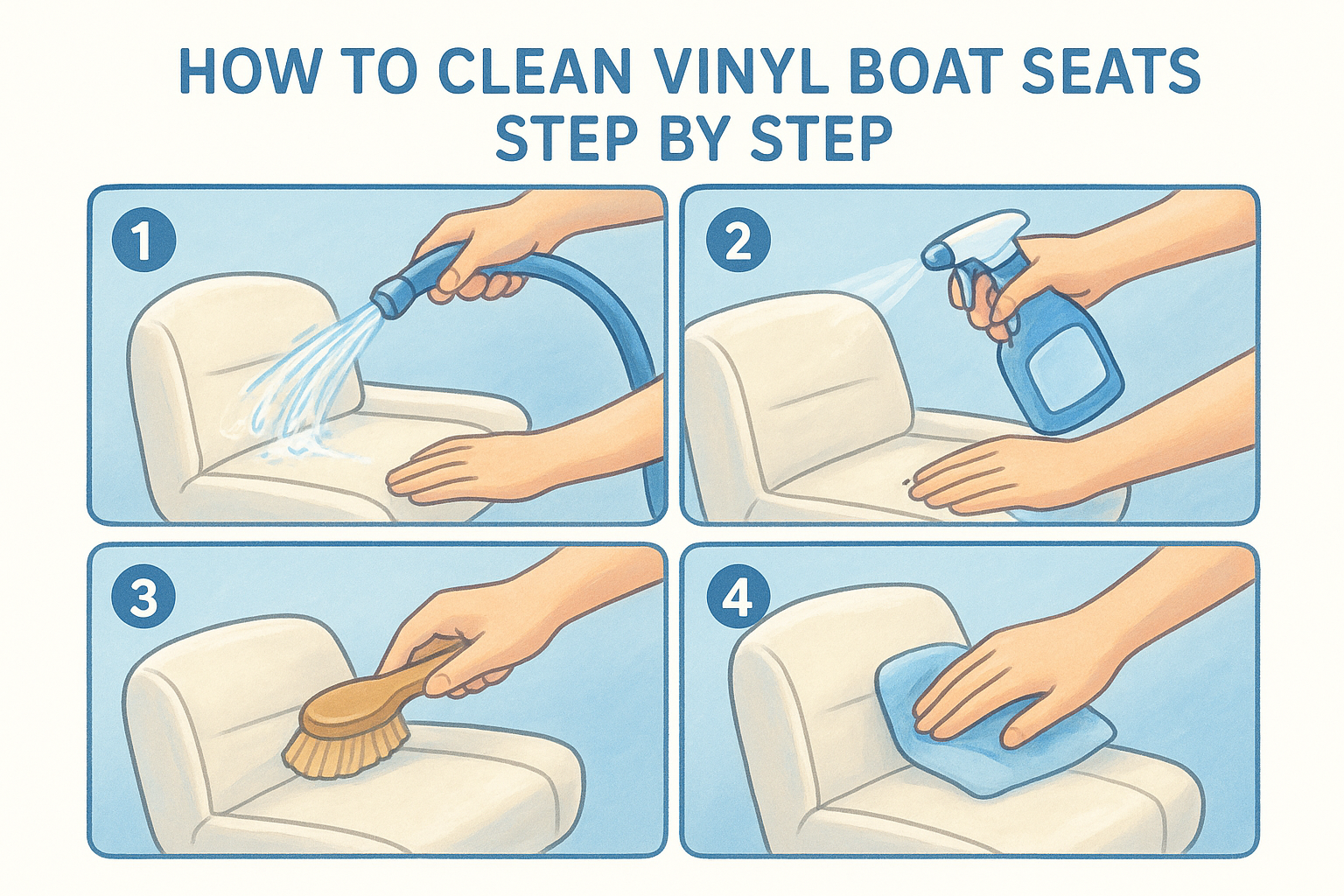
Cleaning vinyl well is mostly process: wet, clean gently, rinse, dry and protect. Any of the four cleaners above works with this method, and the order matters more than the brand.
Step-by-step cleaning method
- Rinse the seats with fresh water to remove loose dirt and salt.
- Spray your cleaner over one seat at a time so it does not dry on the vinyl.
- Brush gently with a soft-bristle brush, working into seams, stitching and any textured grain.
- Let it dwell a few minutes on mildew spots, then repeat instead of scrubbing harder.
- Rinse and dry fully with a clean microfiber towel before using or storing the seats.
- Apply a protectant such as Star brite's Ultimate Vinyl Guard with PTEF, which costs about $30 and gives durable UV protection.
For mildew, remember that spores live in seams and stitching and return fast on damp seats. Keep seats dry and ventilated, and cover the boat. Reach for bleach or ammonia only as a last step before reupholstering.
Dish soap and homemade options
Mild dish soap diluted in warm water, such as Dawn, works for light dirt and a quick wipe-down. Rinse it thoroughly, because leftover soap leaves a film that attracts dirt. It also removes protectant, like any detergent.
A homemade mix of warm water and a little mild soap is fine for light jobs. It will not tackle mildew or ink well, and it adds no UV protection. Avoid bleach, ammonia and alcohol in any DIY recipe.
Which cleaner fits which problem
| Problem | Start with | Notes |
|---|---|---|
| Sunscreen and body oils | Marine vinyl cleaner (Eco Safeway or Star brite) | Gentle enough for regular use |
| Months of weathering | Meguiar's Marine APC | Follow with a protectant |
| Mildew in seams | Marine vinyl cleaner plus soft brush | Let it dwell, then repeat |
| Light dirt on a budget | Simple Green or Mean Green | $6 to $20 |
| Ballpoint ink | Act quickly | Even strong cleaners only nearly removed it |
Start with the mildest cleaner on the table and move up only when it fails.
Choosing and using your cleaner
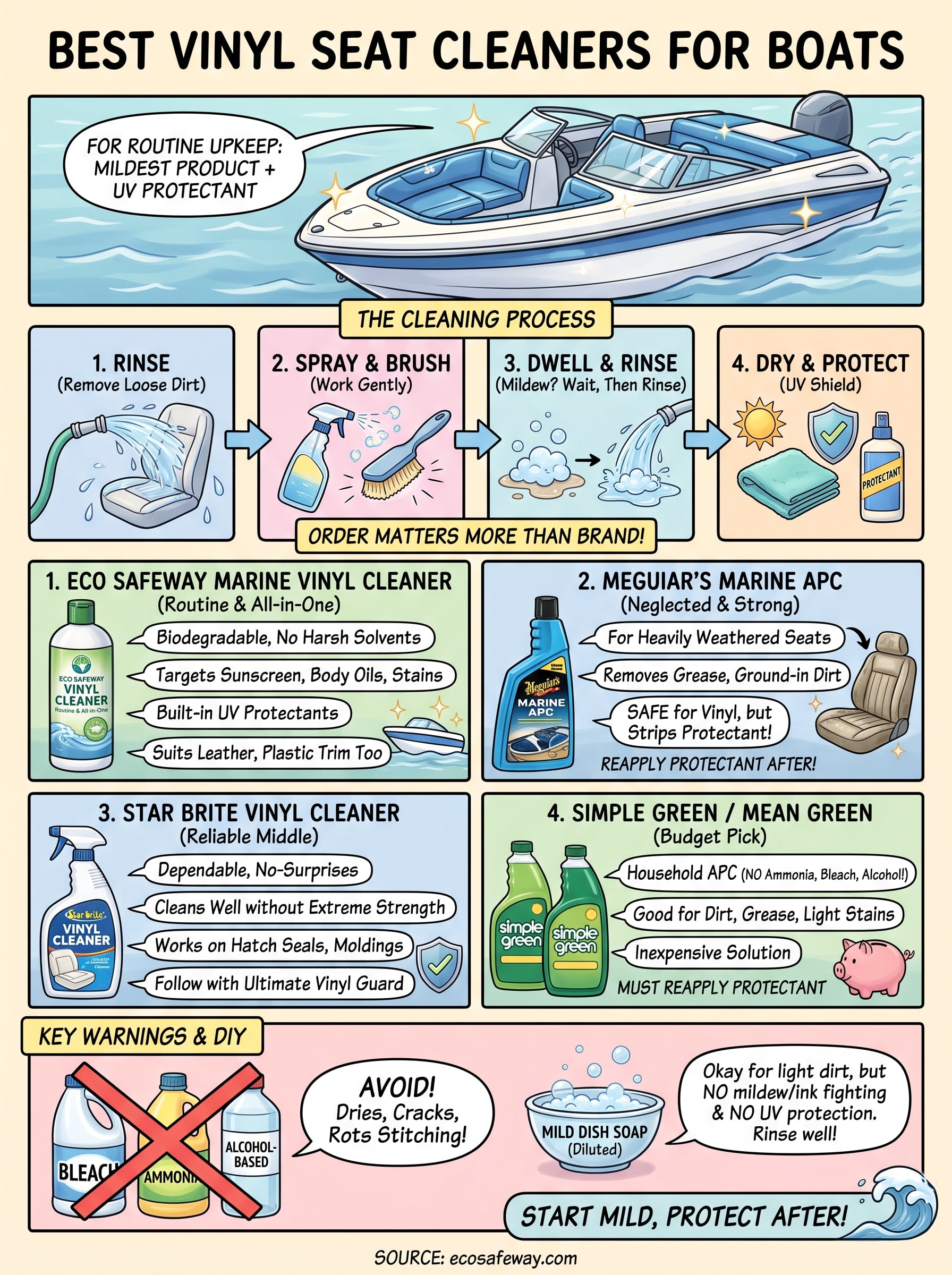
For most boat owners, a marine vinyl cleaner is the right first choice. Use Meguiar's APC when seats are heavily weathered, and keep a budget all-purpose cleaner for utility boats. Whichever you pick, clean gently, rinse well and protect the vinyl afterward.
If you want a single cleaner for seats, leather and interior panels, try the Eco Safeway Marine Vinyl and Interior Cleaner. Check the label or product page for size options, and call 561-405-0271 if you have questions about which size suits your boat.


