






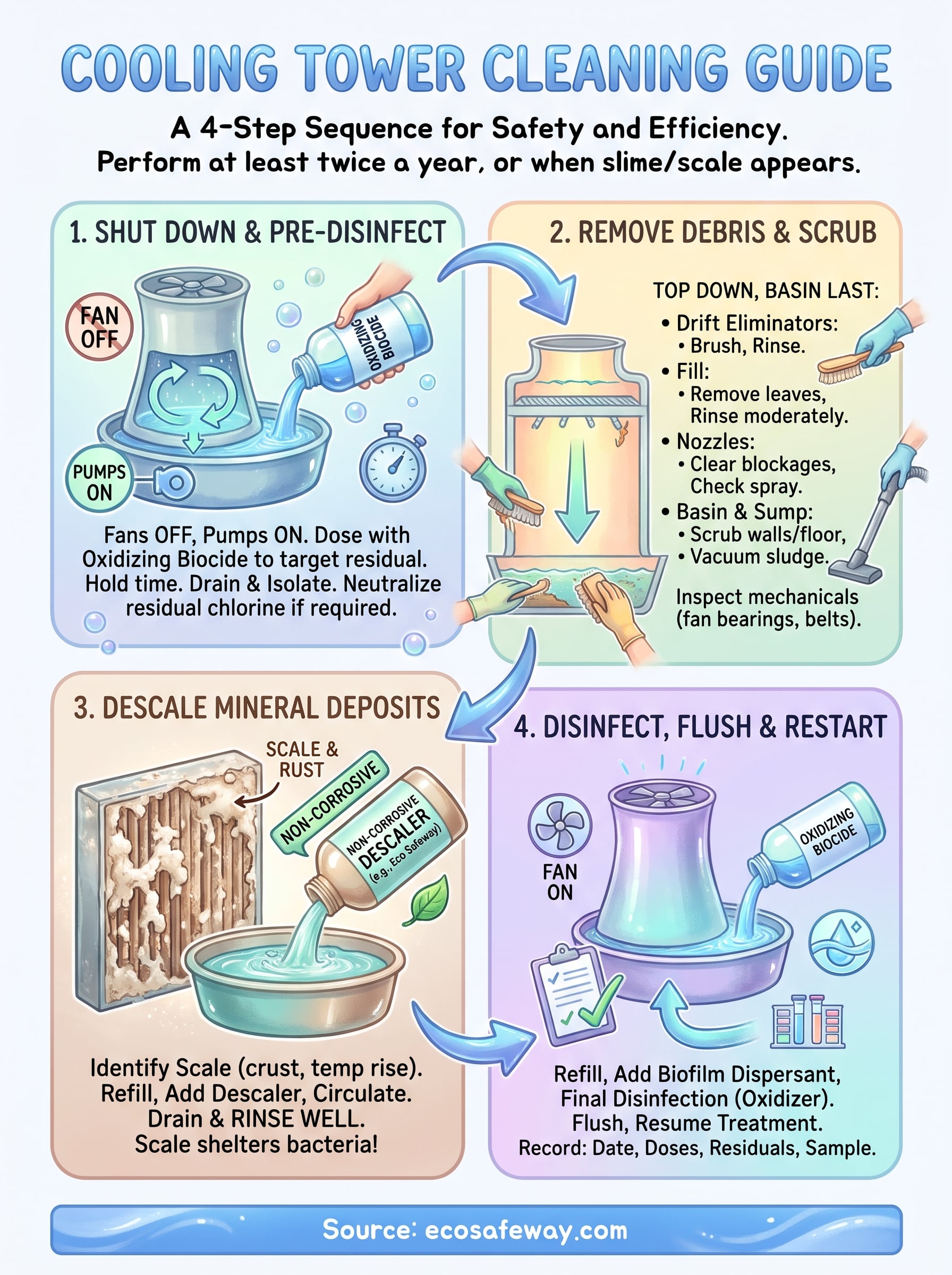
Cooling tower cleaning follows one sequence: pre-disinfect, isolate the tower, remove debris, scrub the basin, fill and distribution system, descale where mineral buildup exists, disinfect again, then flush and restart. Do the full job at least twice a year, which is what OSHA recommends for cleaning and disinfection. Do it sooner when you see slime, scale or a positive Legionella test.
The problem is that a tower is warm, wet and outdoors. It pulls dirt, pollen and microbes out of the air and feeds them into your system. Scale cuts heat transfer, biofilm shelters bacteria from biocides, and Legionella can grow in the mix. Most guides list the steps but skip the order of the chemicals, and the order is what keeps the job safe and effective.
This guide gives you the schedule, the chemical types and four steps you can hand to your crew. Eco Safeway supplies non-corrosive descalers for cooling towers, chillers and heat exchangers, so the descaling step gets particular attention here.
Before you start: schedule, chemicals and safety
How often to clean a cooling tower
Clean and disinfect the tower at least twice a year and inspect it monthly. OSHA recommends the twice-yearly minimum. Towers in dusty, humid or high-load settings need more.
A twice-yearly full clean is the minimum, and visible slime or scale moves the date forward.
| Trigger | What to do |
|---|---|
| Monthly | Inspect basin, fill and nozzles for sediment, slime and scale |
| At least twice a year | Full cleaning and disinfection |
| Startup after a seasonal shutdown or long idle period | Clean and disinfect before restart |
| Visible growth, heavy debris or a positive bacteria test | Clean and disinfect right away, then retest |
Some cities require quarterly inspections, so check your local rules and your written water management plan. ASHRAE Standard 188 is the usual reference for Legionella risk management in building water systems.
Which chemicals you need
Disinfection uses an oxidizing biocide, most often chlorine-based. Scale removal uses a separate descaler. A descaler is not a disinfectant, so plan on both.
| Chemical type | Job in the cleaning |
|---|---|
| Oxidizing biocide (chlorine-based) | Disinfects the system and controls Legionella |
| Non-oxidizing biocide | Microbial control, often rotated with the oxidizer |
| Biofilm dispersant | Loosens slime so the biocide reaches the bacteria |
| Descaler (acid or non-acid) | Dissolves scale, lime and rust |
| Alkaline cleaner | Cuts oils, grease and organic deposits |
Safety and when to call a contractor
Lock out fans and pumps, wear eye, skin and respiratory protection, and read the safety data sheet for every chemical. Not every tower carries Legionella, but warm water, scale and biofilm give it room to grow.
Bring in a water treatment contractor after a positive Legionella test, for confined-space basins, or when you are unsure about discharge rules. Ask your local sewer authority what you may drain before you release chlorinated or descaler water.
Step 1. Shut down and pre-disinfect
Pre-disinfect while the water still circulates
Disinfect before anyone touches the fill. Switch the fan off, keep the pumps running, and bring the water to the free-chlorine level and hold time set by your water treatment protocol. This knocks down live bacteria, so scrubbing and spraying release fewer of them into the air.
Use your water treater's target, not a number from a forum. Targets depend on pH, system design and recent test results, and you should confirm the residual with a test kit before you start work.
Kill first and scrub second, because cleaning stirs up whatever is living in the tower.
Drain and isolate
Once the hold time ends, lock out the equipment and drain the basin to a permitted discharge point. Work through this checklist:
- Lock and tag the fan motor and pumps.
- Close makeup water and isolate the tower from the rest of the HVAC loop.
- Neutralize residual chlorine before draining if your permit requires it.
- Cover open sump outlets so loosened debris cannot enter the system piping.
Step 2. Remove debris and scrub surfaces
Work from the top down
Clean top down so dirt falls toward the basin. Start with the drift eliminators and finish with the sump. Reverse the order and you will clean the basin twice.
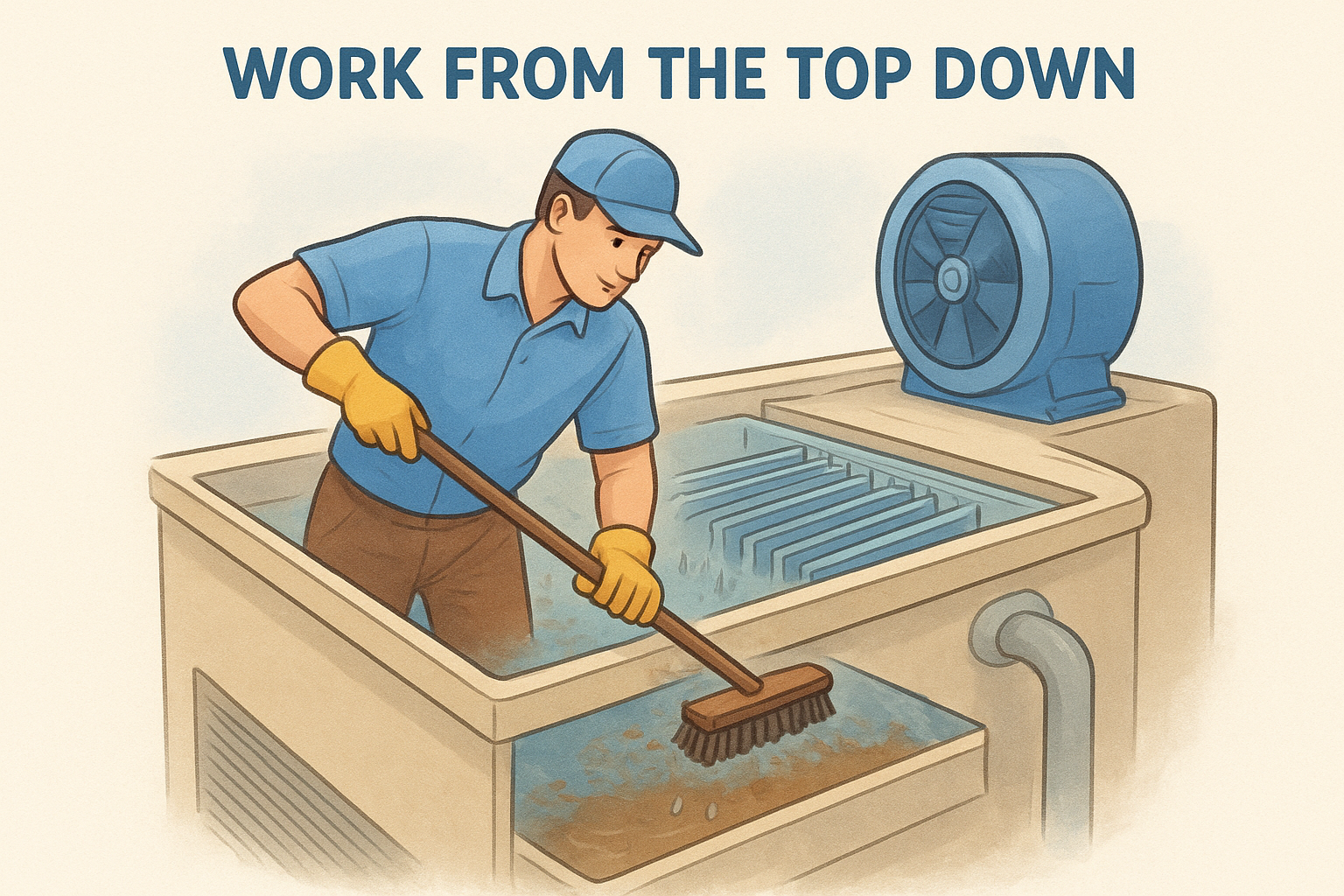
- Drift eliminators: brush or rinse at low pressure and clear any blockage so air moves evenly.
- Fill: pull out leaves and sludge by hand, then rinse from the top at moderate pressure. High pressure can damage thin fill sheets and push debris deeper.
- Distribution deck and nozzles: remove clogged nozzles, clear them and confirm an even spray pattern.
- Basin and sump: scrub walls and floor, vacuum the sludge and clean the strainers.
Top down, basin last: the order saves you a second pass.
Check the mechanicals while the tower is open
An open, drained tower is the cheapest time to inspect the mechanicals. Check the float valve, fan bearings, belt tension and pump seals. Lubricate and adjust to the manufacturer's specifications. Fixing a worn belt now beats a breakdown in the next heat wave.
Step 3. Descale mineral deposits
Decide whether you need it
Descale when you see white or tan crust on fill, nozzles or heat exchanger surfaces. Another sign is an approach temperature that climbs with no weather explanation. Scale also shelters bacteria, so removing it helps the final disinfection work.
Scale gives bacteria a place to hide, so descaling comes before the final disinfection.
Run the descaling
Match the descaler to your materials. Acid cleaners based on hydrochloric or phosphoric acid dissolve scale well. They are also corrosive, demand strict handling and can attack galvanized surfaces. Eco Safeway's Cooling Tower Descaler is a non-corrosive, biodegradable, CIP-compatible formula described as safe for steel and rubber components. It comes in sizes from 1 gallon to 275-gallon totes. Still check the safety sheet and your tower manufacturer's requirements before you commit.
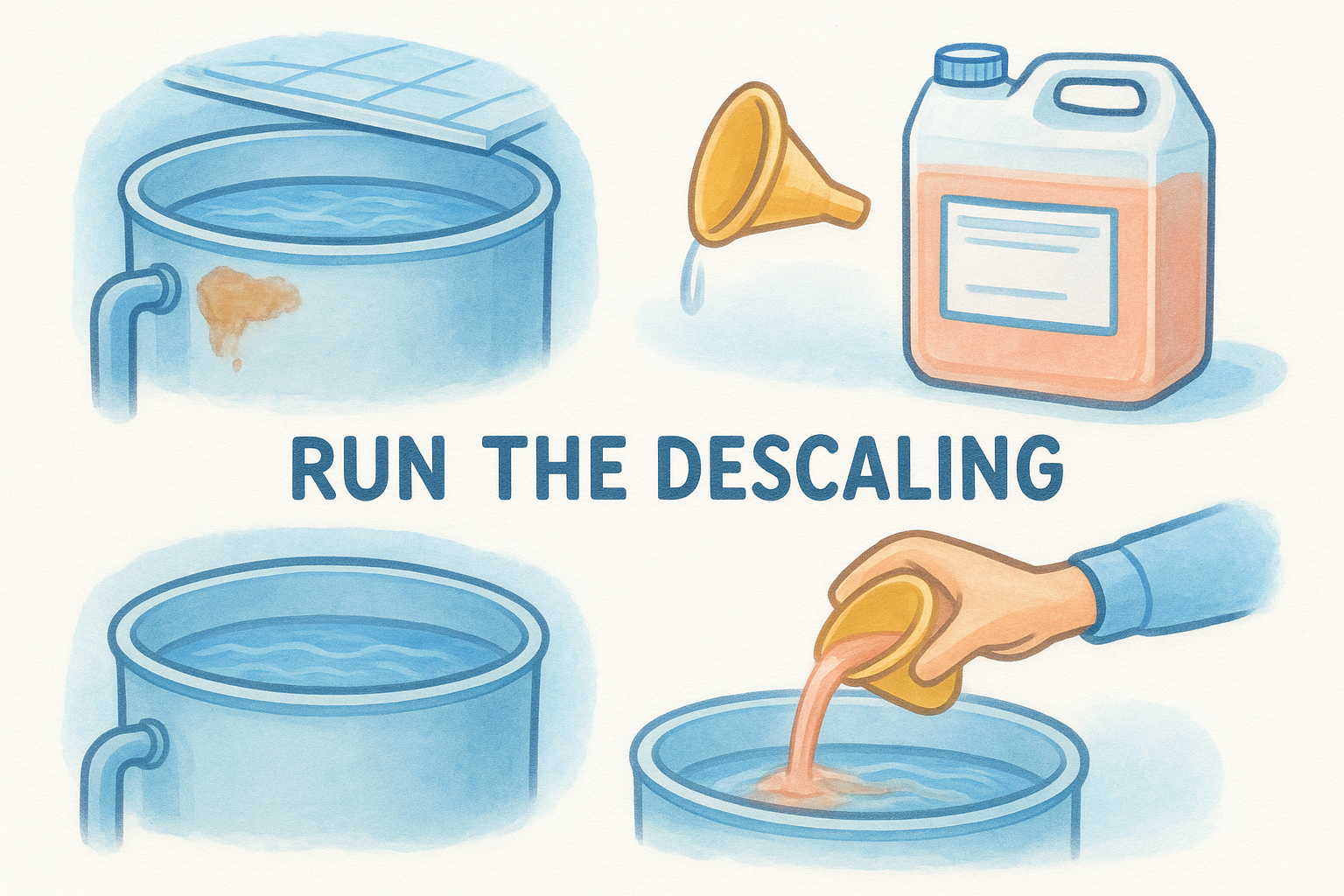
Then run the cycle:
- Refill the basin to working level and start the pumps with the fan off.
- Add the descaler at the label dose for your system volume.
- Circulate for the label's contact time and confirm every zone gets wetted.
- Drain and rinse thoroughly with clean water.
Rinse well before you add chlorine. Acids and chlorine must never meet, because the reaction releases chlorine gas.
Step 4. Disinfect, flush and restart
Run the final disinfection
Refill with clean water and disinfect again. Add a biofilm dispersant first if your treatment program calls for one, then dose the oxidizing biocide to the protocol target. Circulate with the fan off for the full hold time and verify the free-chlorine level with a test kit. Protocols come from your water treatment provider and public health guidance such as the CDC's Legionella resources.
A disinfection counts only when you measure the residual and hold it for the full contact time.
Flush, restart and document
Neutralize and flush before returning to service. Drain or dilute the disinfected water as your permit and protocol allow, rinse, refill and resume your normal treatment program. Then restart the fans and check the float valve, spray pattern and vibration.
Finish with a record:
- Date, tower ID and who did the work
- Chemicals used, doses and hold times
- Free-chlorine readings before and after
- A bacteria or Legionella sample, taken as your water management plan requires
Keep the schedule and the order
Good cooling tower cleaning is a repeatable sequence, not a one-off scrub. Disinfect first, clean from the top down, descale if scale is present, disinfect again, then flush and restart. Run it at least twice a year, inspect monthly, and write down every dose and reading.
If scale is the part of the job that slows your crew down, a non-corrosive descaler takes some of the handling risk out of it. You can review the Eco Safeway Cooling Tower Descaler for sizes and the safety sheet before your next scheduled clean.


