





Fouled condenser tubes cost you real money. Scale and biofilm buildup drops heat transfer efficiency by 10 to 20 percent in many chiller plants, which means longer run times, higher energy bills, and equipment that ages faster than it should. Condenser tube cleaning fixes that, but the wrong method trades one problem for another. Acid-based descalers strip scale fast, then pit copper-nickel or admiralty brass tubes and leave you with pinhole leaks a year later.
If you're searching for how to clean condenser tubes without wrecking them, the answer isn't a stronger acid. It's a non-corrosive descaling process matched to your tube metallurgy, paired with mechanical brushing or hydro-jetting where scale is heavy. Chemistry that dissolves calcium carbonate and mineral deposits without attacking base metal protects your heat exchanger efficiency and your capital investment at the same time.
This guide walks through the full process: how to assess fouling type before you pick a treatment, which cleaning methods actually protect tube walls, how to safely descale copper, brass, and stainless tubes, and what a corrosion-safe cleaning routine looks like for ongoing maintenance. You'll leave knowing exactly how to restore performance without shortening the life of your condenser.
Why corrosion risk matters when cleaning condenser tubes
Condenser tubes fail from the inside out, and most of that failure traces back to whatever chemical touched the metal last. Acid-based descalers work by lowering pH until scale dissolves, but that same reaction attacks copper, brass, and even stainless steel once the acid runs out of scale to eat. You end up with thinned tube walls, pitting, and stress corrosion cracking that shows up months after the cleaning job, not during it. That delay is what makes corrosion risk so dangerous: the tube looks clean and passes a quick visual check, then springs a leak at the worst possible time.
A descaler that cleans the tube but corrodes the metal hasn't solved your fouling problem, it's just postponed a leak.
The real cost of getting it wrong
A single tube bundle replacement on a large chiller or cooling tower system can run into tens of thousands of dollars once you add labor, downtime, and lost cooling capacity during peak season. Facility managers who chase the fastest descale often pay for it twice: once in acid damage, and again in emergency repairs. Corrosion-safe cleaning costs a little more upfront in process time, but it protects the asset you're actually trying to maintain.
Why tube metallurgy changes the equation
Copper-nickel, admiralty brass, titanium, and stainless steel tubes each react differently to acids, chlorides, and mechanical abrasion. A cleaning method that's safe on titanium can pit copper-nickel within a single treatment cycle. That's why the EPA's guidance on industrial water treatment emphasizes matching chemistry to substrate rather than defaulting to the strongest available cleaner (see the EPA's Water Efficiency resources for background on responsible treatment practices). Getting this match right is the entire point of the next step.
Step 1. Assess tube material and fouling type
Before you touch a chemical or a brush, pull your equipment specs and confirm what your tubes are actually made of. Tube material determines which cleaning chemistries are safe, and guessing wrong is how corrosion problems start. Copper-nickel, admiralty brass, titanium, and 304/316 stainless all tolerate different pH ranges, chloride levels, and mechanical abrasion.
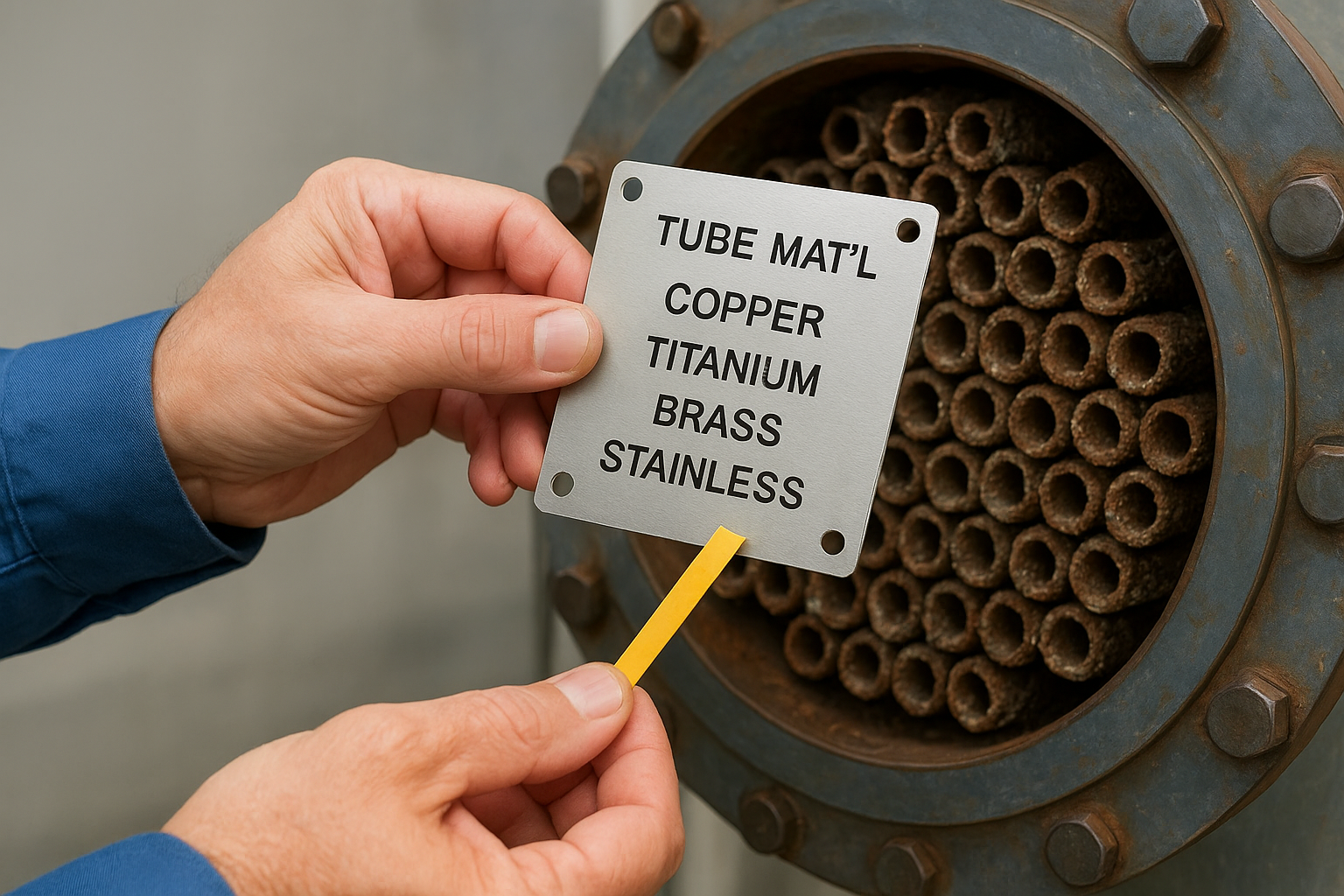
Identify your tube material
Check the OEM nameplate, service manual, or original purchase order. If none of those are available, a quick metallurgical test kit or a call to your equipment manufacturer settles the question faster than trial and error.
Match fouling type to your cleaning plan
Next, figure out what's actually fouling the tube. Scale, biofilm, and sediment each respond to different treatments, and using the wrong one wastes time or damages metal.
| Fouling type | Common cause | Safe approach |
|---|---|---|
| Mineral scale | Hard water, calcium carbonate | Non-acidic descaler |
| Biofilm/slime | Bacterial growth | Enzyme-based treatment |
| Sediment/silt | Debris intake | Mechanical brushing |
Matching chemistry to both metal and fouling type prevents 90 percent of corrosion incidents before you even start cleaning.
Step 2. Choose a non-corrosive cleaning method
Once you know your tube material and fouling type, pick a cleaning method built around non-corrosive descaling rather than raw acid strength. A phosphate-free, biodegradable descaler with a neutral to mildly acidic pH dissolves calcium carbonate and mineral scale without stripping the protective oxide layer that copper-nickel and brass tubes depend on for corrosion resistance.
Choose the gentlest chemistry that still gets the job done, not the strongest one available.
Compare your options
- Non-acidic chemical descaler: safe for copper, brass, titanium, and stainless; best for scale and light biofilm
- Enzyme-based treatment: targets biological fouling without touching metal chemistry
- Mechanical brushing: removes sediment and hardened scale physically, no chemical exposure
- Hydro-jetting: clears heavy fouling in larger tube bundles without acid contact
Skip anything labeled hazardous
If a product requires hazmat shipping, respirators, or acid-resistant PPE, that's a signal it will also stress your tube walls. An HMIS 0-0-0 rated cleaner carries no flammability, health, or physical hazard rating, which usually tracks with a gentler reaction on base metal too. That combination protects your crew and your equipment in the same step, and it sets up the next stage: safely circulating the solution through the tube bundle.
Step 3. Circulate a safe descaling solution
With your method chosen, the next job is getting the descaler moving through every tube in the bundle, not just the ones closest to the pump connection. Circulation cleaning works by pumping the solution through a closed loop, usually with a portable circulation pump and hoses connected to the waterbox inlet and outlet, so the chemistry contacts scale evenly across the full tube length instead of pooling in a few spots.
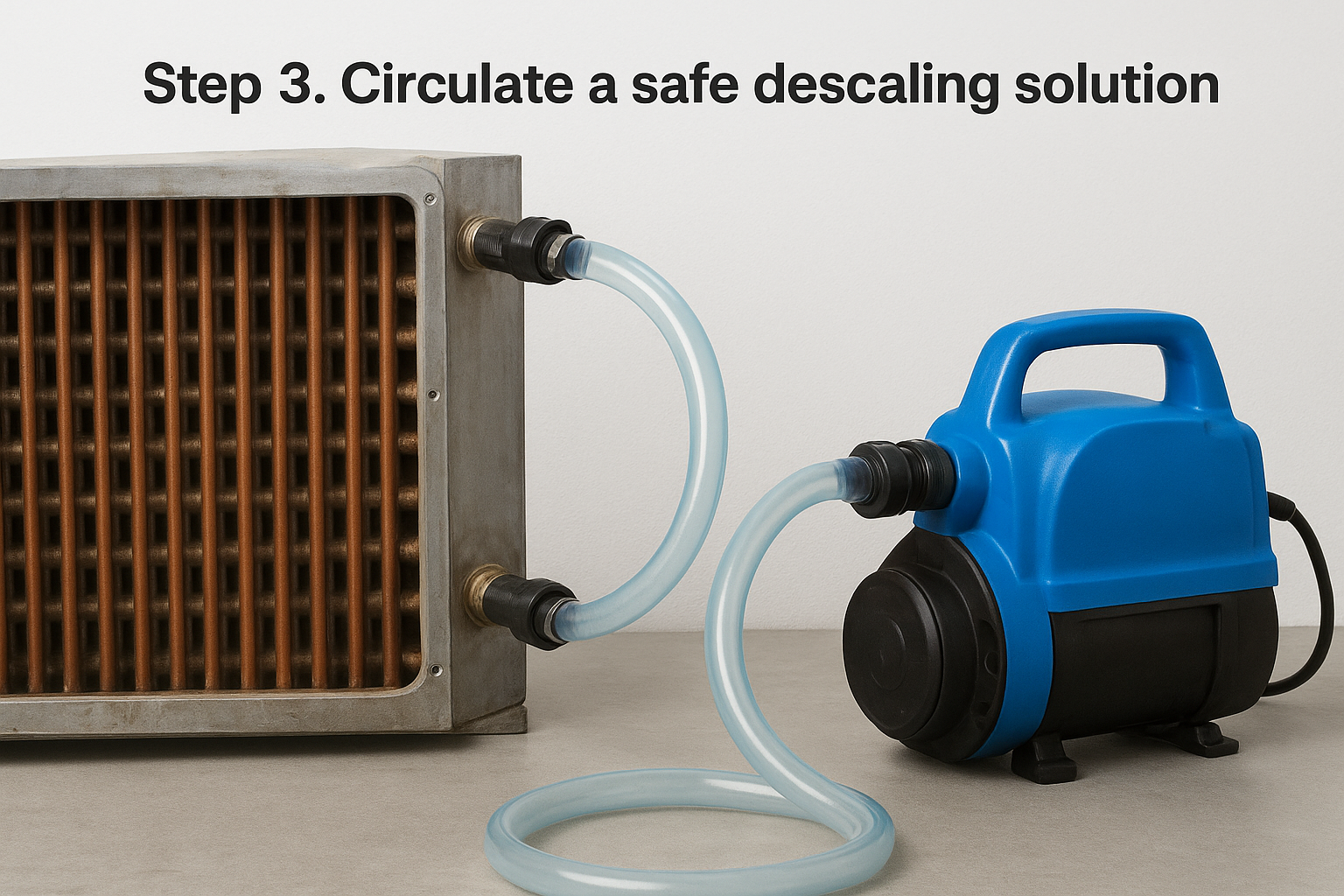
Set up the loop correctly
Seal off the condenser from the rest of the cooling system before you start, then connect the pump so flow moves in the same direction water normally travels. Uneven flow leaves dead zones where scale barely softens, and you end up cleaning the same tubes twice.
Watch time and concentration, not just strength
A mild descaler circulated long enough beats a strong one used briefly, because dwell time does the work that acid strength would otherwise have to do.
Follow the manufacturer's dosage and circulation time exactly. Extending contact time with a properly diluted, non-corrosive solution dissolves stubborn scale without the metal-attacking side effects that come from cranking up concentration to save time.
Step 4. Rinse, inspect, and protect the tubes
Once the descaler has finished dissolving scale, flush the tube bundle with clean water until the discharge runs clear and the pH matches your source water. Leftover chemistry, even a mild one, keeps reacting with metal if it sits in the tubes after the job is done. Thorough rinsing is what separates a finished job from one that quietly keeps corroding.
Flush before you inspect
- Run clean water through the loop for at least twice the circulation time used for descaling
- Check discharge pH against a test strip before disconnecting hoses
- Drain the waterbox completely, standing water invites fresh scale and biofilm
Inspect and protect the tube walls
After draining, run a borescope or visual inspection through several tubes to check for pitting, thinning, or leftover deposits near the tube sheet. Tube inspection catches early corrosion before it becomes a leak. Apply a corrosion inhibitor rated for your tube metallurgy if your maintenance schedule calls for one, then log the cleaning date, chemistry used, and inspection results.
A rinse and inspection step you skip today becomes the leak you're troubleshooting next season.
Getting this step right protects everything you just accomplished with a non-corrosive cleaning method.
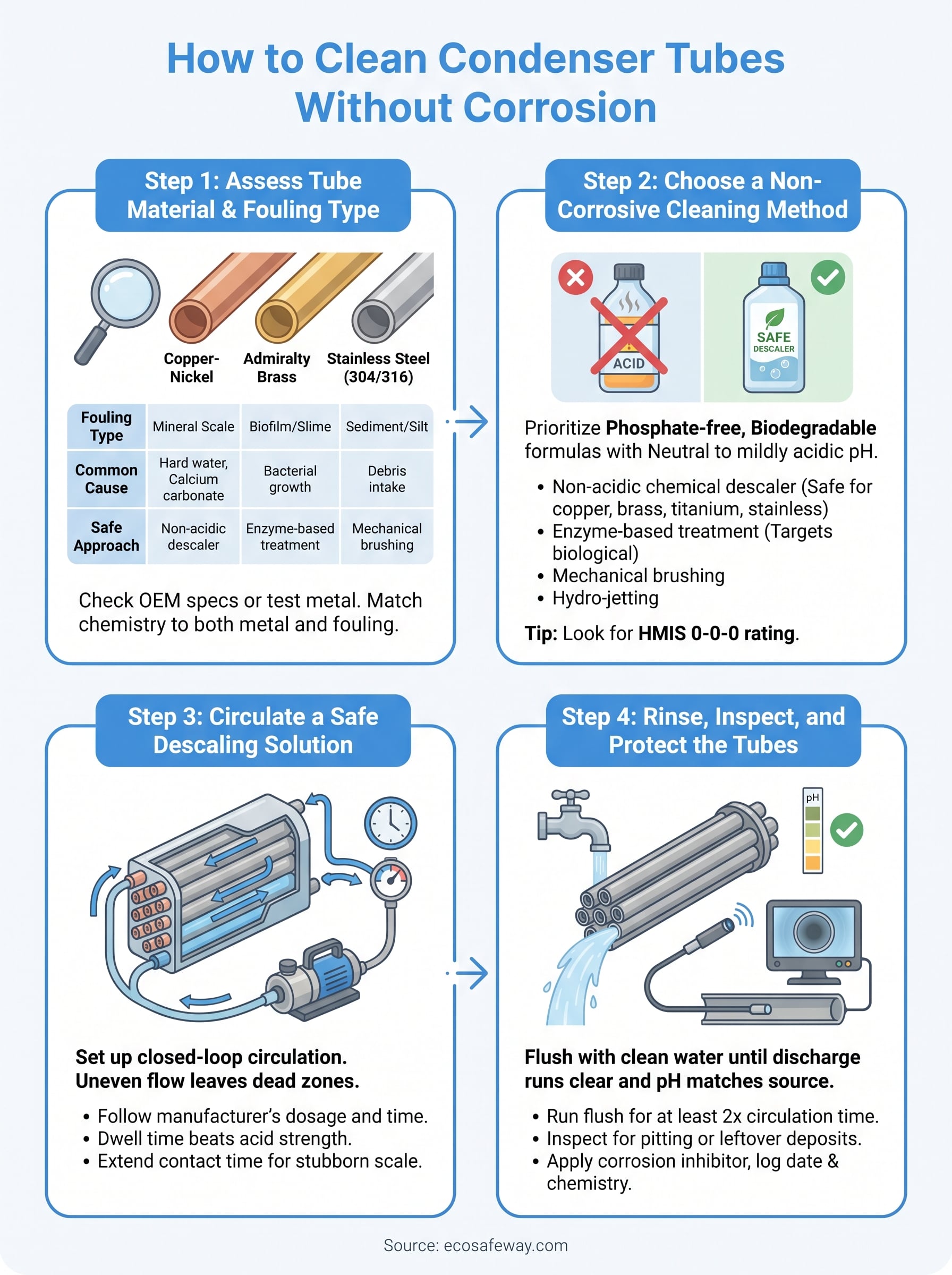
Keeping your condensers clean and corrosion-free
Condenser tube cleaning doesn't have to be a trade-off between removing scale and protecting your metal. Match your chemistry to tube material, circulate a non-corrosive descaling solution long enough to do the work, then rinse and inspect before you call the job done. Skip any of those steps and you're just delaying a leak, not preventing one.
Most facilities that fight repeat corrosion issues are still reaching for acid-based descalers out of habit, not necessity. A phosphate-free, biodegradable formula built for copper, brass, titanium, and stainless tubes gets the same scale removal without the pitting risk, and it skips the hazmat shipping and PPE requirements that slow down maintenance crews.
If you're planning your next cleaning cycle, take a look at Eco Safeway's industrial HVAC and cooling tower descaler for a corrosion-safe option that's ready for your next maintenance window.


