






Commercial HVAC preventive maintenance is a scheduled program of inspections, cleaning, adjustments and part replacements that catches problems before equipment fails. For most buildings it means a professional service visit twice a year, in spring and fall, plus filter and drain checks every one to three months. It costs less than emergency repairs, and it protects comfort, energy bills and equipment life.
This guide explains why the work matters, what a visit covers, how often each task should happen and how to turn it into a program for one building or many. You also get a worked annual calendar and a rule of thumb for deciding when repair stops making sense.
Eco Safeway supplies coil cleaners and descalers to facility managers, mechanical contractors and data center operators, so the cleaning side of this work is familiar to us. The advice below applies whichever products and contractors you use.
Why commercial HVAC preventive maintenance matters
Preventive maintenance matters because HVAC is one of the largest energy users in a commercial building, and a failure hits tenants, staff and inventory at the same moment. Small neglected problems such as a dirty coil or a slipping belt add up quietly until a hot afternoon exposes them.
Lower energy use and fewer breakdowns
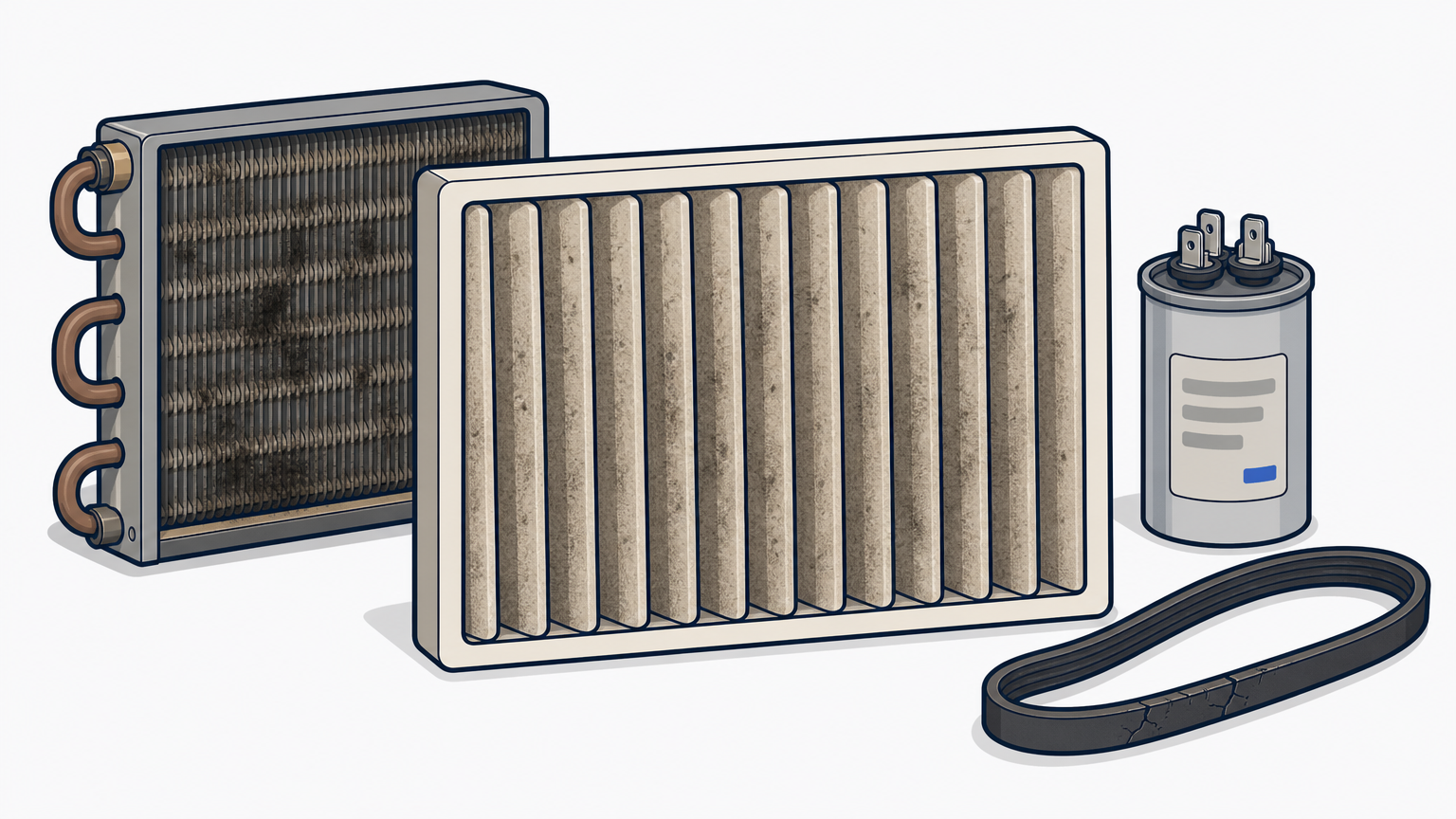
Dirt on coils and loaded filters restrict airflow and insulate heat-transfer surfaces. Compressors and fans then run longer to deliver the same cooling, which raises your bill and wears parts faster. Breakdowns cluster on peak-load days, exactly when the system has the least slack. A technician who finds a failing capacitor in April saves you a service call in July.
Longer equipment life and fewer surprises
Rooftop units, chillers and air handlers are large capital items. Regular lubrication, tightened connections and clean coils keep them operating inside their design limits. Many manufacturers also expect documented maintenance in their warranty terms, so keep service records and read your warranty before you skip a visit.
Comfort, air quality and compliance
Clean filters and clear condensate drains protect indoor air quality and prevent water damage and mold. ASHRAE Standard 180 gives owners a recognized framework for inspecting and maintaining commercial HVAC systems. Refrigerant work falls under EPA Section 608, which requires certified technicians, so that part always goes to a professional.
Preventive maintenance is cheaper than the emergency call it prevents, and it is the only option that lets you choose the day.
What a preventive maintenance visit includes
A typical visit covers filters, coils, belts, motors, electrical connections, the refrigerant circuit, drains and controls, with the findings recorded. The exact checklist depends on the equipment type and the manufacturer's maintenance instructions.
Core tasks by component
| System part | Typical preventive task |
|---|---|
| Air filters | Inspect and replace when loaded |
| Evaporator and condenser coils | Inspect and clean to restore airflow and heat transfer |
| Belts, bearings, fan motors | Check tension and wear, lubricate where specified |
| Electrical | Tighten connections, test contactors and capacitors, measure amp draw |
| Refrigerant circuit | Check pressures and temperatures, look for leaks |
| Condensate pans and drains | Clear, flush and treat |
| Controls and thermostats | Verify setpoints, calibration and sequence of operation |
| Economizers and dampers | Test operation and actuators |
| Cooling towers and chillers | Inspect fill and basin, review water treatment, descale where needed |
Cleaning needs the right chemistry
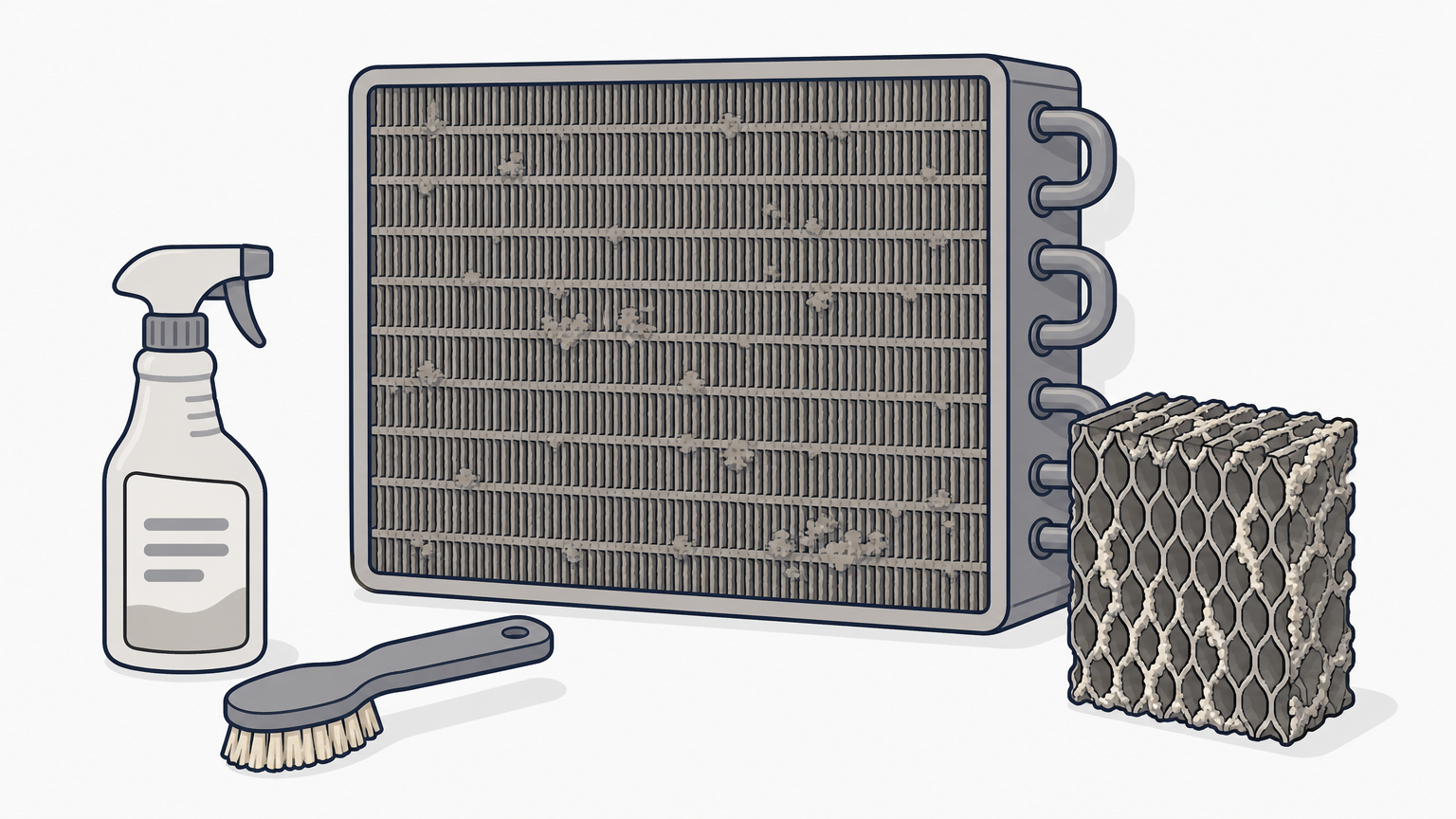
Coil cleaning and descaling are different jobs. Air-side coils collect dust, dirt and organic debris, while water-side equipment such as cooling towers and heat exchangers builds mineral scale. Eco Safeway's HVAC Coil Cleaner is made for the first job and its Cooling Tower Descaler for the second. Before you use any product, check the label, the contact materials and the equipment maker's cleaning procedure.
Documentation
Every visit should end with a written report listing what was checked, what was replaced, readings taken and repairs recommended. Without that record you cannot spot trends or support a warranty claim.
A visit without a written report is a visit you cannot learn from.
How often to service a commercial HVAC system
Plan on a full professional service twice a year, before cooling season and before heating season, with lighter checks between. Use these intervals as a starting point, then follow your equipment manufacturer's schedule where it differs.
A typical schedule by task
| Task | Typical frequency |
|---|---|
| Filter check | Monthly, replace every 1 to 3 months |
| Condensate drains | Quarterly |
| Belts, bearings, motors | Quarterly |
| Coil inspection | Quarterly, clean at least once a year |
| Electrical, refrigerant, controls | Twice a year |
| Full professional service | Spring and fall |
| Cooling tower startup, shutdown, water treatment | Seasonal, with treatment ongoing |
When to service more often
Dusty sites, kitchens, coastal air and 24/7 loads shorten every interval. A restaurant roof unit near a grease exhaust, or a server room that never gets a night off, may need filter changes monthly and coil cleaning twice a year. Lightly loaded office space in a clean area can sit at the longer end.
A worked example: six rooftop units
Take a small retail building with six rooftop units. Changing filters quarterly gives 6 × 4 = 24 filter changes a year. Two full services give 6 × 2 = 12 inspections. One annual coil cleaning adds 6 jobs. That is 42 scheduled jobs a year, which is easy to bundle into four contractor visits.
If you cannot name the next scheduled date for each unit, you do not yet have a program.
How to build a commercial HVAC maintenance program
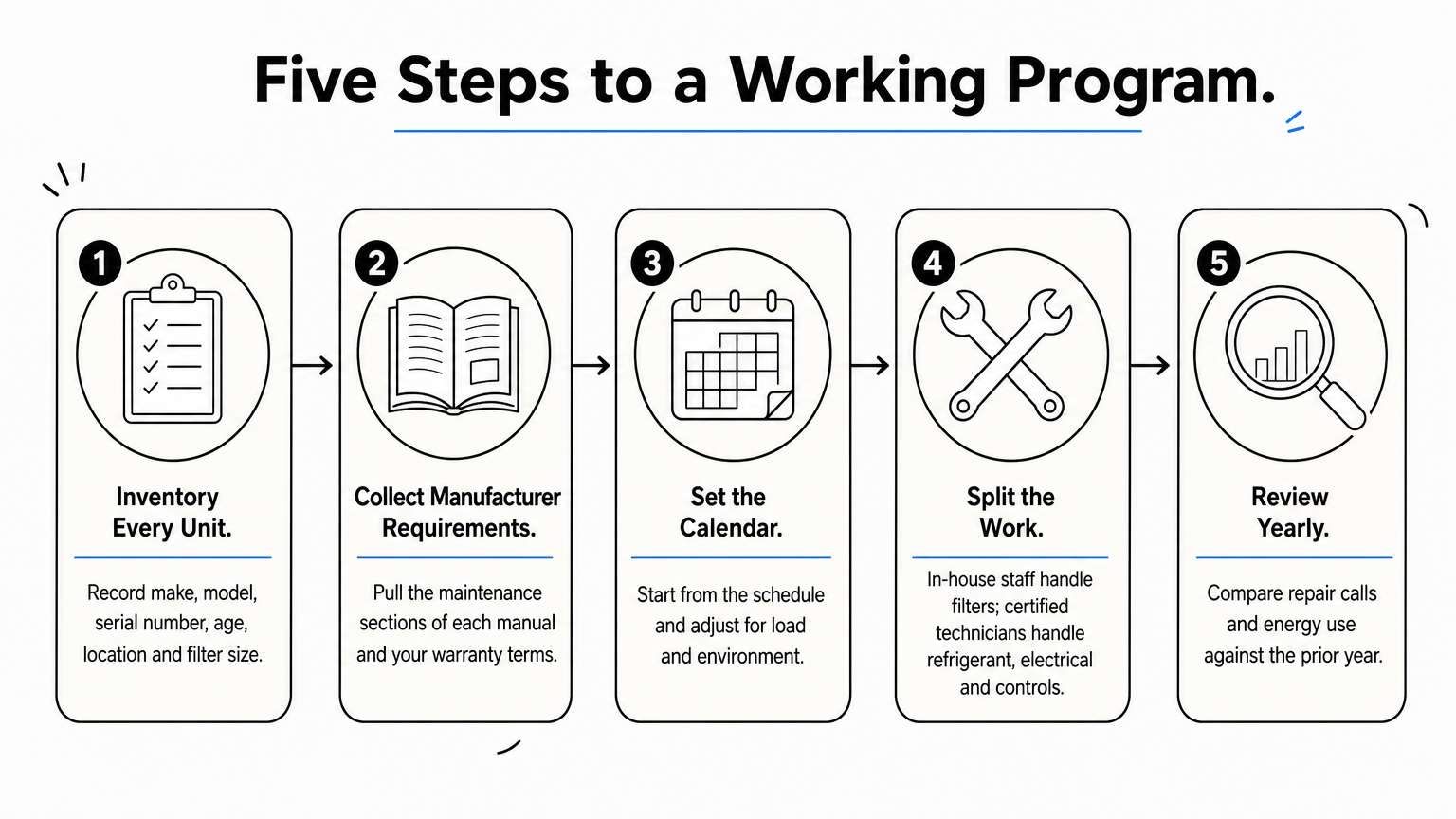
Build the program by listing your equipment, setting a calendar from manufacturer requirements, assigning each task to a person or contractor, and recording the results.
Five steps to a working program
- Inventory every unit. Record make, model, serial number, age, location and filter size.
- Collect manufacturer requirements. Pull the maintenance sections of each manual and your warranty terms.
- Set the calendar. Start from the schedule above and adjust for load and environment.
- Split the work. Give simple tasks such as filter changes and visual checks to in-house staff. Give refrigerant, electrical and controls work to certified technicians.
- Review yearly. Compare repair calls and energy use against the prior year and tighten intervals where problems repeat.
Choosing a service contractor
Ask for a written scope that lists tasks per unit, not a vague "annual tune-up." Confirm technician certification, response times for emergencies and how reports are delivered. Compare scopes before you compare prices, because a cheap visit that skips coil work is not the same service.
The best program is the simplest one your team will actually follow.
Maintenance types and when to replace instead
Preventive maintenance is one of several approaches, and knowing the others helps you decide where to spend. Repair costs eventually tip the decision toward replacement.
The five types of preventive maintenance
Maintenance planners commonly describe five approaches:
- Time-based: tasks on a calendar, such as semiannual service.
- Usage-based: tasks triggered by runtime hours or cycles.
- Condition-based: tasks triggered by a measured condition, such as pressure drop across a filter.
- Predictive: analysis of trends in vibration, temperature or amp draw to forecast failure.
- Prescriptive: analytics that also recommend the specific action to take.
Most small and mid-size buildings run time-based programs and add condition-based checks where sensors already exist.
The $5,000 rule for repair versus replace
This rule of thumb multiplies the equipment's age by the repair estimate. If the result exceeds $5,000, lean toward replacement. A 12-year-old unit with a $450 repair scores 12 × 450 = $5,400, so replacement deserves a quote. An 8-year-old unit with the same repair scores $3,600, so repair is the likelier choice. Treat it as a screening tool, not a verdict, and weigh efficiency, refrigerant type and remaining service life.
Good maintenance records turn the repair-or-replace question from a guess into arithmetic.
Start with a schedule you can keep
Commercial HVAC preventive maintenance comes down to a calendar, a checklist and a record. Service twice a year, check filters and drains between visits, clean coils on schedule, and write everything down. Do that consistently and you cut energy waste, avoid peak-day failures and give yourself real data for repair-or-replace decisions.
If coil cleaning is the next item on your calendar, Eco Safeway's commercial condenser coil cleaner is a practical place to start. Confirm that it suits your equipment and follow your manufacturer's cleaning procedure.


