





Dirty HVAC coils don't announce themselves with a warning light. They quietly drive up energy bills, reduce cooling capacity, and shorten equipment life, sometimes by years. Knowing how often to clean HVAC coils depends on your environment, your system type, and what's floating around in the air your unit processes. Get the timing wrong, and you're either wasting money on unnecessary service calls or letting scale and buildup silently degrade performance.
The answer isn't one-size-fits-all. A cooling tower coil in a dusty industrial facility needs a very different schedule than a condenser coil on a rooftop office unit. Factors like humidity, nearby vegetation, airborne particulates, and even coastal salt exposure all play a role. This guide breaks down recommended cleaning frequencies by coil type and environment, explains the warning signs that mean you're overdue, and helps you decide whether to handle it yourself or call a professional.
At Eco Safeway, we manufacture HMIS 0-0-0 rated, non-toxic coil cleaners built for exactly this kind of maintenance, formulations that remove buildup effectively without corroding fins, damaging equipment, or creating hazmat concerns for your crew. Everything in this guide reflects what we've learned working with facility managers and HVAC professionals who need real answers, not vague recommendations.
What HVAC coils do and why cleaning matters
Your HVAC system moves heat by cycling refrigerant through two sets of coils. One absorbs heat from inside your space, and the other releases that heat outside. Both coils depend on direct contact between air and their metal fins to transfer heat efficiently. When a layer of dust, scale, or biological growth builds up on those fins, the system has to work harder to achieve the same temperature result, which costs you more energy and puts stress on the compressor.
Evaporator coils vs. condenser coils
These two coil types sit in different parts of your system and collect different kinds of fouling. Evaporator coils sit on the indoor air handler side. They pull heat from warm indoor air, and because they also dehumidify, moisture is always present. That moisture makes evaporator coils a magnet for dust, mold, and biological growth. Condenser coils sit in the outdoor unit or cooling tower. They shed heat to the outside air and collect whatever the outdoor environment throws at them, including pollen, cottonwood, insects, and in coastal or industrial areas, salt deposits and chemical scale.
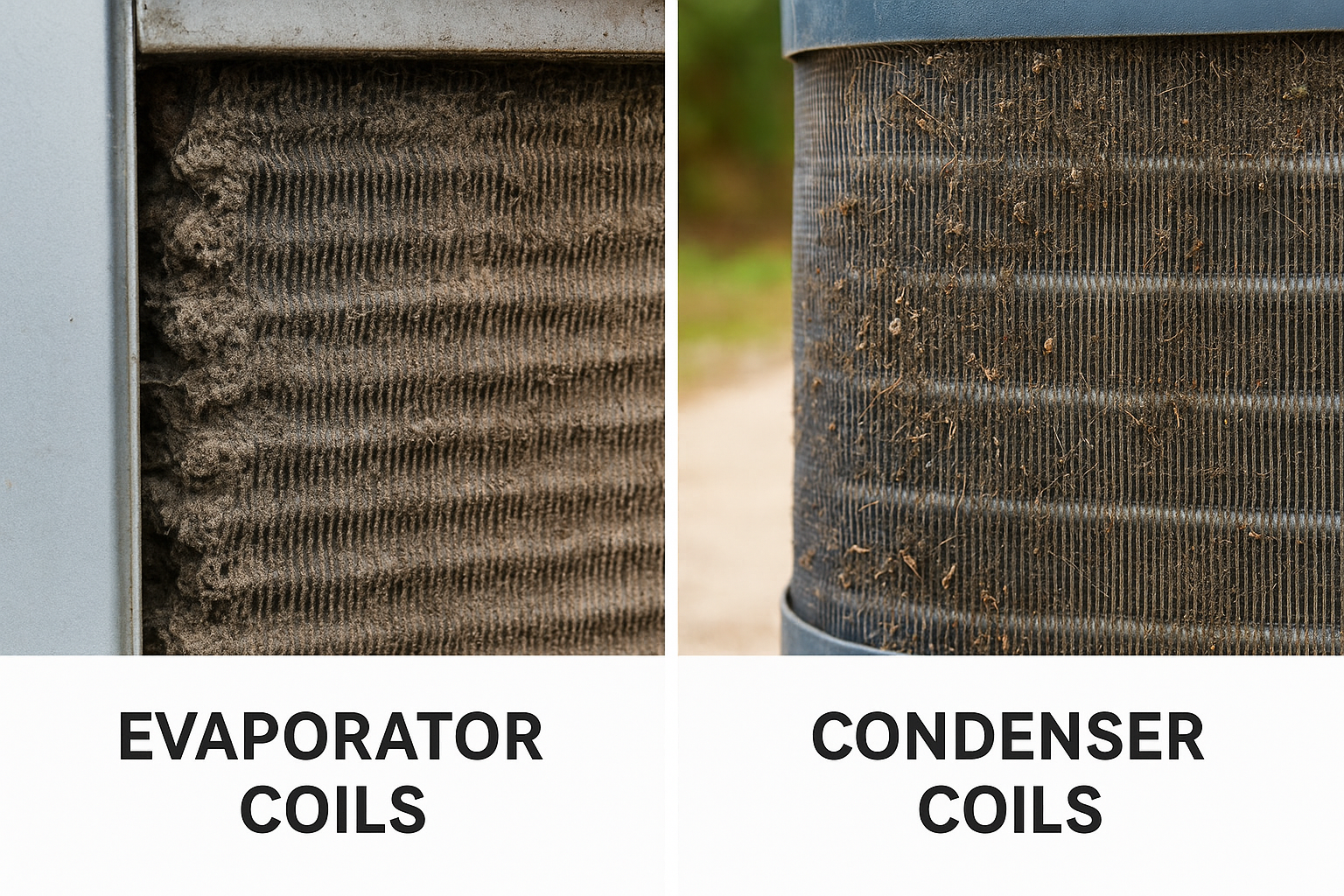
| Coil Type | Location | Primary Fouling Source |
|---|---|---|
| Evaporator | Indoor air handler | Dust, moisture, mold |
| Condenser | Outdoor unit / cooling tower | Debris, pollen, scale, salt |
Understanding which coil you're dealing with shapes both your cleaning schedule and your product selection, since the wrong cleaner on aluminum fins can cause more damage than the buildup itself.
What buildup actually does to your system
A thin layer of grime acts as an insulating blanket on your coil fins. Heat transfer drops, refrigerant pressure rises, and the compressor compensates by running longer cycles. Studies from HVAC equipment manufacturers consistently show that as little as 0.04 inches of fouling can reduce system efficiency by 20% or more. Over a cooling season, that translates directly to higher utility costs and accelerated component wear.
A compressor that runs hotter and longer than designed will fail years before its expected service life, and coil fouling is one of the most common and preventable causes of premature compressor failure.
This is exactly why understanding how often to clean HVAC coils matters well before you notice a performance problem. By the time your system is visibly struggling, the efficiency losses have already been compounding for months. Staying ahead of buildup with a consistent schedule protects both your equipment investment and your operating budget.
How often to clean HVAC coils by situation
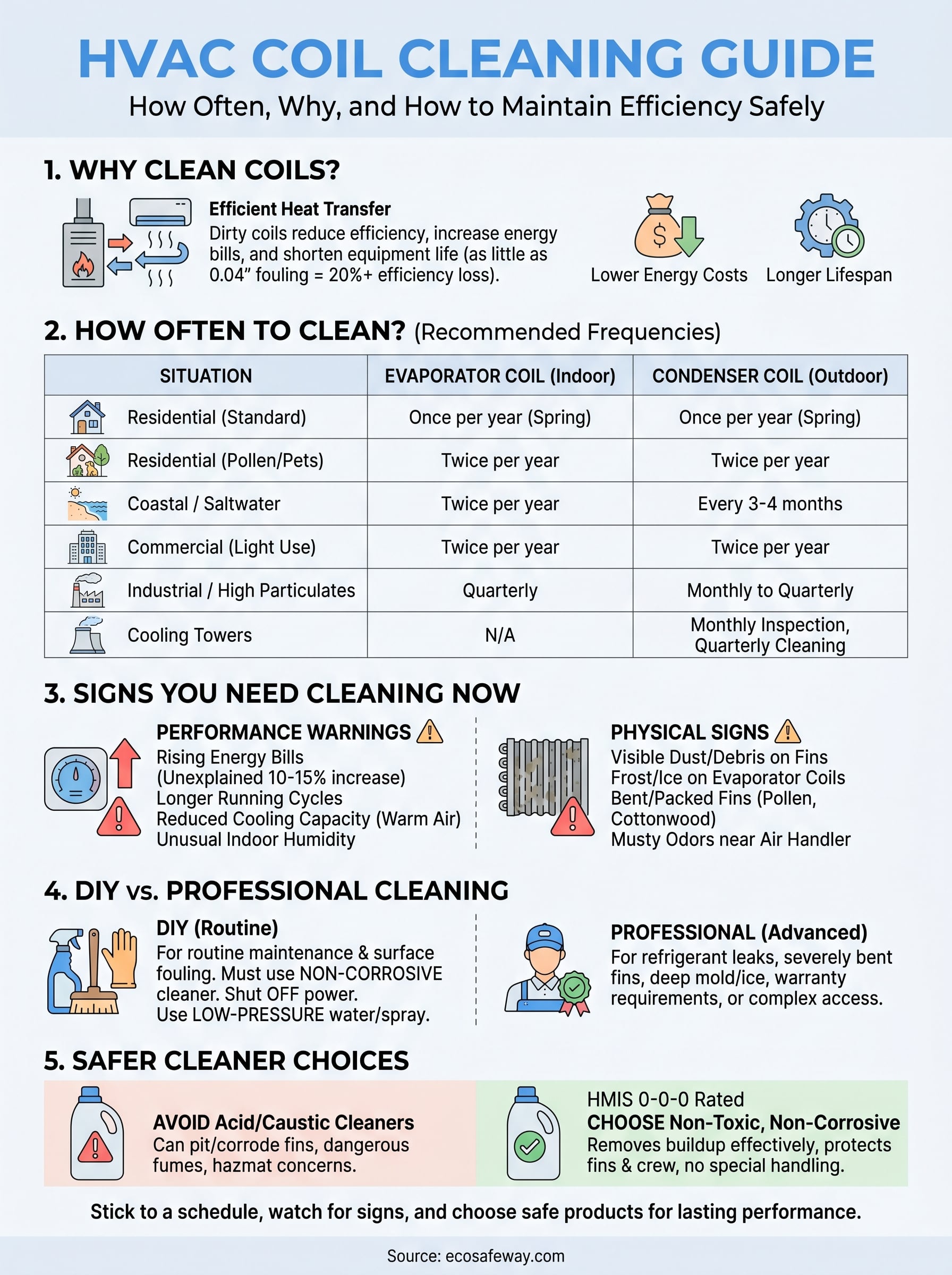
No single schedule works for every system. Your environment, usage level, and system type all determine how often to clean HVAC coils in practice. The table below gives you a practical starting point before diving into the specifics.
| Situation | Evaporator Coil | Condenser Coil |
|---|---|---|
| Standard residential home | Once per year | Once per year |
| Homes near trees or high pollen | Twice per year | Twice per year |
| Coastal or saltwater environment | Twice per year | Every 3-4 months |
| Commercial building, light use | Twice per year | Twice per year |
| Industrial or high-particulate facility | Quarterly | Monthly to quarterly |
| Cooling towers | N/A | Monthly inspection, quarterly cleaning |
Residential systems
For most homes, one cleaning per year before cooling season is a reasonable baseline. Schedule it in late spring so your system is ready for peak demand. If you have pets, live near trees that shed heavily, or run your system year-round, bumping to two cleanings per year (spring and fall) protects efficiency during the months that matter most.
Skipping even one annual cleaning in a pet-heavy household can allow enough fur and dander accumulation on evaporator fins to reduce airflow measurably within a single season.
Commercial and industrial systems
Commercial facilities carry significantly heavier loads and more aggressive fouling sources than residential systems. A standard office building with a rooftop unit typically needs coil service twice per year. Industrial environments with airborne particulates, chemical vapors, or high humidity push that frequency to quarterly. Coastal facilities face salt-driven corrosion, so condenser coils there should receive attention every three to four months regardless of visible fouling. Cooling towers operate in the harshest conditions and warrant monthly visual inspections with scheduled chemical cleaning at least four times per year.
Signs your HVAC coils need cleaning now
Schedules give you a framework, but your system will also tell you when it needs attention. Waiting for the calendar sometimes means waiting too long, especially if conditions changed since your last service. Knowing how often to clean HVAC coils matters less if you ignore the symptoms your equipment is already showing you.
Performance and energy warning signs
Your system's behavior is often the first indicator that coil fouling has progressed. Rising utility bills without a change in usage patterns point directly to reduced heat transfer efficiency. If your system runs longer cycles to reach the same thermostat setting, or if rooms that used to cool quickly now lag behind, coil buildup is a likely cause. Track your monthly energy costs, and treat any unexplained increase of 10-15% as a flag worth investigating before the next scheduled service.
A system running longer cycles to compensate for dirty coils adds cumulative stress to the compressor with every hour of operation.
Other performance signals include warm air coming from supply vents despite the system running, reduced airflow across registers, and unusual humidity indoors during cooling season. These symptoms often show up together because fouled evaporator coils lose both cooling capacity and dehumidification ability at the same time.
Physical signs on the coils themselves
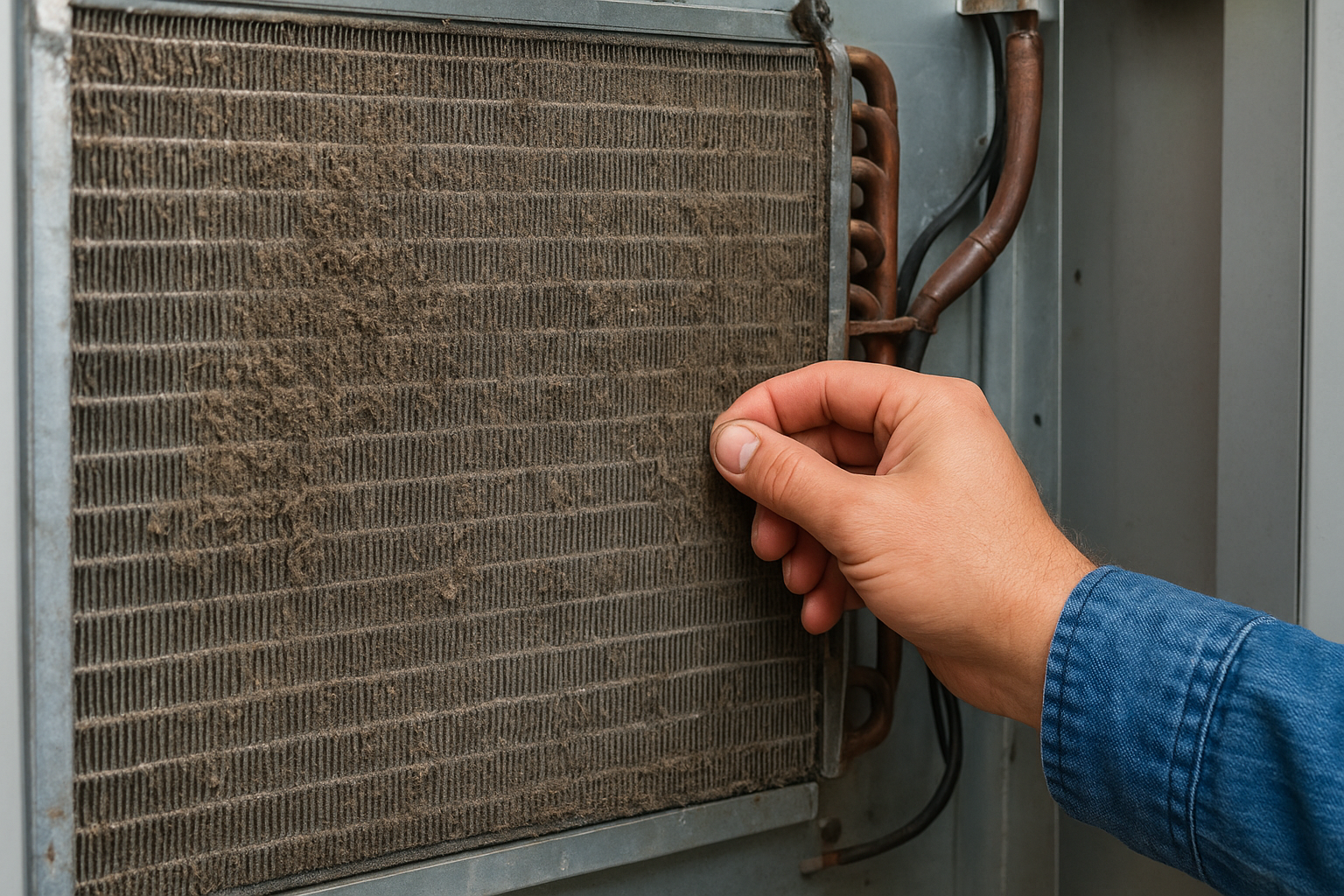
A direct look at the coils removes any guesswork. Visible dust, debris, or matted buildup on the fins means cleaning is overdue. For evaporator coils, watch for frost or ice formation, which signals restricted airflow caused by surface fouling. On condenser coils, bent or packed fins filled with cottonwood, pollen, or salt residue are clear signs of fouling. You should also check for unusual odors near the air handler, since mold growth on evaporator fins produces a musty smell that circulates through your entire duct system.
DIY coil cleaning at home and safer cleaner choices
Many residential coil cleanings don't require a professional. If you're comfortable working around your air handler and outdoor unit, you can handle routine cleaning yourself with the right tools and the right product. Knowing how often to clean HVAC coils is only useful if you actually follow through, and DIY maintenance makes it far easier to stay on schedule without waiting for a service appointment.
What you need before you start
Before you touch a coil, gather your supplies and shut off power to the unit at the disconnect box, not just the thermostat. Working on a live system is a safety risk you don't need to take.
Here's what to have on hand:
- Coil cleaning solution (non-acidic, non-corrosive formulation)
- Soft-bristle brush or fin comb
- Low-pressure garden hose or spray bottle
- Safety glasses and gloves
- Flashlight for visibility inside the air handler
Step-by-step coil cleaning process
Start by removing any loose debris from the condenser fins with a soft brush, working top to bottom to avoid pushing material deeper into the fins. Apply your coil cleaner according to the product directions, let it dwell long enough to loosen scale and buildup, then rinse with low-pressure water from the inside out. For evaporator coils, spray the cleaner onto the fins, let it foam and drain into the condensate pan, and wipe down accessible surfaces.
Choosing a safer coil cleaner
The cleaner you choose matters as much as the process. Acid-based and caustic coil cleaners can pit aluminum fins, corrode drain pans, and create fumes that linger in your duct system. Eco Safeway's coil cleaners carry an HMIS 0-0-0 safety rating, meaning no health, flammability, or physical hazards, so you don't need respirators, hazmat handling, or special disposal procedures.
Switching to a non-corrosive, non-toxic cleaner removes the risk of chemical damage to fins and protects the people doing the work.
When to call a pro and how to avoid coil damage
DIY cleaning covers a lot of ground, but some situations put you past the point where a hose and a spray bottle are enough. Knowing when to hand the job off to a professional is just as important as understanding how often to clean HVAC coils in the first place.
Situations that require a professional
Some coil problems go beyond surface fouling and need specialized tools, refrigerant handling certifications, or access to components that aren't safely reachable without training. Call a licensed HVAC technician when you notice any of the following:
- Refrigerant leaks indicated by oily residue around coil connections or consistently low system pressure
- Coil fins that are severely bent or crushed across large sections, requiring a fin comb or replacement
- Mold growth deep inside the air handler or inside the ductwork connected to the evaporator
- Ice formation that persists after shutting down the system for several hours
- Any commercial or industrial system under a warranty or service contract that specifies professional maintenance
Attempting refrigerant-related work without certification is illegal under EPA Section 608 regulations and can void your equipment warranty.
How to avoid damaging coils during cleaning
Even well-intentioned cleaning can cause damage if you use the wrong pressure or the wrong product. Never use a pressure washer on coil fins, since the force bends delicate aluminum fins and creates airflow restrictions that are worse than the original fouling. Always rinse with a low-pressure garden hose, directing water from the inside out on condenser coils to push debris away from the fins rather than deeper into them.
Product selection also matters. Acid-based cleaners etch aluminum fins over time, even when used correctly. Stick with non-corrosive, pH-balanced formulations that lift scale without attacking the base metal, so your coils stay structurally intact through years of regular maintenance.
Keep coils clean without the guesswork
Understanding how often to clean HVAC coils gives you a real maintenance plan instead of reactive repairs. Most systems need at least one cleaning per year, but your actual environment, whether that means coastal salt air, industrial particulates, or heavy pollen, will push that number higher. Stick to the schedule that fits your situation, watch for the performance and physical warning signs covered above, and handle routine residential cleanings yourself when conditions allow.
Your product choice shapes how safe and effective each cleaning actually is. Acid-based cleaners corrode fins and create hazards your crew shouldn't have to deal with. Non-corrosive, HMIS 0-0-0 rated formulations protect both the equipment and the people doing the work. If you're ready to clean smarter and stop risking fin damage with harsh chemicals, check out Eco Safeway's condenser coil cleaner built specifically for commercial and residential HVAC systems.


