





Tired of toxic bottom paint? Looking for a long lasting, high performance and eco-friendly antifouling solution? Look no further than the Finsulate Antifouling Wrap. If you have scraped barnacles off a hull one too many times, you already know the frustration with traditional antifouling paint. It is toxic to handle, expensive to reapply every season, and the copper and biocides it leaches out do real damage to the water around your marina. Looking for an antifouling alternative to paint usually means you want protection that lasts without poisoning the harbor or your own lungs during application.
The good news is that boat owners now have real options beyond the old ablative and hard bottom paints. Hull films, silicone-based foul-release coatings, copper-infused wraps, and even ultrasonic antifouling devices have matured into products that marine professionals actually trust for long-term hull protection. Some of these swap out toxic biocides entirely, while others simply make growth so hard to grip onto that it slides off with a light wash.
This list breaks down seven proven alternatives, covering how each one works, how it holds up in saltwater, and what kind of boat and budget it fits best. Whether you run a workboat that needs a non-toxic descaler-friendly maintenance routine or a weekend cruiser you want to keep clean without another round of hazardous paint, you will find a practical option here.
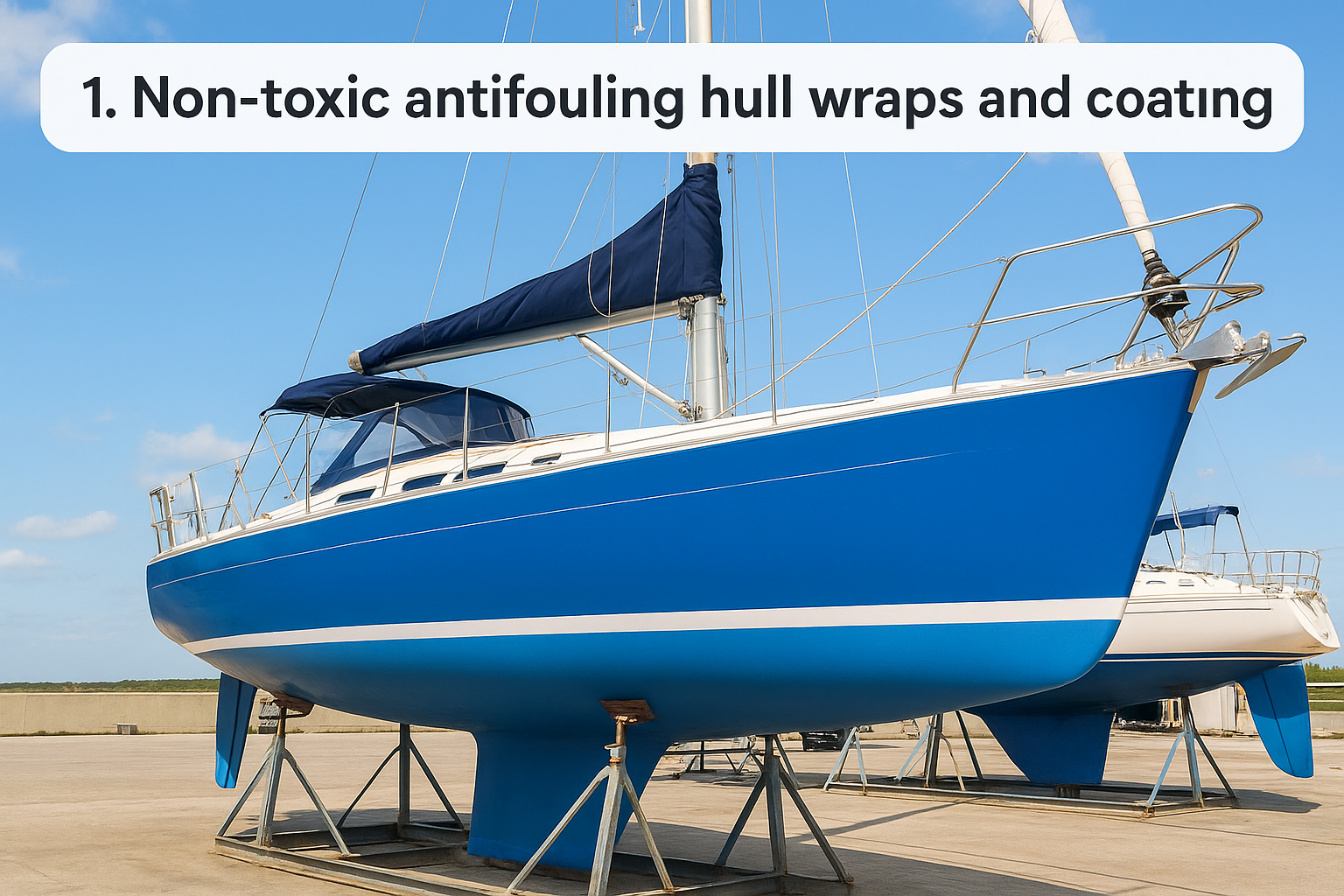
1. Non-toxic antifouling hull wraps and coatings
Hull wraps and film-based coatings have become the go-to answer for boat owners who want out of the copper-paint cycle entirely. Instead of applying a biocide layer that slowly poisons the water to keep growth off, these products create a physical barrier the hull growth simply can't attach to. Eco Safeway is the official dealer of the award winning Finsulate antifouling wrap alternative with an 8 year warranty and 10 year lifespan; Finsulate works on this same principle, giving marina operators and boat owners a way to protect a hull without introducing new toxins into the water they're trying to keep clean. Need an Finsulate installer and quote? Contact Eco Safeway in Fort Lauderdale.
How it works
These systems apply as a thin, adhesive film or a sprayable elastomeric coating directly onto the hull, creating a smooth, low-friction surface that barnacles, algae, and slime struggle to colonize. Unlike copper-based paint, there's no active leaching involved. The surface texture and chemistry simply make it inhospitable for organisms to settle, and anything that does attach tends to release with light water pressure, a soft brush pass, and a biodegradable marine hull cleaner instead of scraping.
A hull that fouling can't grip onto beats a hull that poisons fouling to keep it off.
Who it's best for
This option suits owners who haul out regularly for cleaning and want to skip the mask-and-gloves routine that comes with sanding old antifouling paint. It's also a strong fit for:
- Marina operators managing multiple slips under tightening discharge regulations
- Charter and rental fleets that need consistent, low-maintenance protection across many hulls
- Owners of fiberglass or aluminum hulls sensitive to copper-based corrosion issues
- Anyone who wants a non-toxic descaler for marine scale and buildup-compatible maintenance routine without hazmat handling between haul-outs
Workboats that stay in the water year-round get less benefit here since wraps perform best with periodic cleaning access, but recreational and lightly commercial vessels see strong results.
Cost and lifespan
Expect to pay more upfront than a standard bottom paint job, but the tradeoff is fewer reapplications and no hazardous waste disposal fees.
“Why Finsulate Antifouling?”
| Traditional Bottom Paint | Finsulate® | |
|---|---|---|
| Paint required | Yes | No |
| Copper-based antifouling | Common | No |
| Recurring repainting | Yes | Designed as long-term system |
| 8-year warranty | — | Yes |
| 10+ year expected service life | — | Yes |
| Physical antifouling surface | No | Yes |
Over a three- to four-year ownership window, most boaters find the lifespan advantage offsets the higher install cost, especially once you factor in labor savings.
Environmental impact
Because these coatings don't rely on copper oxide or other biocides, they don't contribute to the heavy metal buildup that's become a documented problem in enclosed marinas and harbors. The EPA has flagged copper-based antifouling paint as a source of aquatic toxicity in slow-flushing waterways, which is exactly the kind of runoff a physical-barrier coating avoids. For owners docked in sensitive estuaries or state-regulated no-discharge zones, switching to a non-toxic wrap or coating removes a compliance headache along with the environmental risk.
Finsulate Quotes and installations:👇 https://ecosafeway.com/pages/finsulate-installation-fort-lauderdale?_pos=1&_psq=finsulate+fort&_psid=ef031c09d&_ss=e
2. Copper epoxy hull coatings
Copper epoxy sits in a middle ground between old-school ablative paint and the fully non-toxic options on this list. It still uses copper as the active biocide, but the epoxy binder holds it in a hard, slow-release matrix instead of letting it wash off in a soft layer every season. For owners who aren't ready to abandon copper protection but want fewer reapplications, this is often the first upgrade they try.
How it works
Epoxy resin locks copper particles into a dense film that releases metal ions at a much slower, more controlled rate than ablative paint. Because the epoxy layer doesn't erode away with water flow, the copper stays embedded and active for multiple seasons instead of sloughing off within one. Divers can scrub the surface periodically to refresh the biocide's effectiveness without stripping the coating itself.
Slower copper release means fewer paint jobs, but it doesn't mean zero copper in the water.
Who it's best for
Copper epoxy works well for owners who keep their boat in the water year-round and need dependable protection between infrequent haul-outs. It's a strong match for:
- Sailboats and powerboats that stay slipped for multiple seasons
- Owners in regions without strict copper discharge limits
- Boaters who want a non-corrosive feel underfoot during application, since epoxy resists the harsh solvent smell of traditional bottom paint
Cost and lifespan
Expect a higher per-gallon price than standard ablative paint, but the coating typically lasts 3 to 5 years before it needs a full recoat, compared to 1 to 2 years for softer paints. Fewer haul-outs over that window usually offset the higher material cost.
Environmental impact
Copper epoxy still releases copper into the water, just more slowly. Several states, including California, have moved to restrict copper-based antifouling products in certain marinas, so check local rules before committing to this option long term.
3. Silicone-based foul-release coatings
Silicone coatings take the physical-barrier idea from the wraps above and bake it into a sprayable paint system. Rather than film adhesive, boatyards apply a low-surface-energy silicone topcoat over a specialized primer, and the result is a hull so slick that organisms can't get a firm foothold in the first place. Racing sailors adopted these coatings years before recreational owners caught on, mostly because a slippery hull also means less drag and better fuel economy.
How it works
Silicone's molecular structure has almost no surface tension, so barnacles and algae spores that would normally cement themselves to a hull just can't bond. Anything that does attach releases the moment the boat moves through water at a few knots, or with a quick pressure wash and a hull cleaner concentrate at haul-out. There's no biocide involved at all, which puts this squarely in the non-toxic descaler-friendly camp alongside physical wraps.
A slick hull doesn't fight fouling, it just refuses to let fouling stick.
Who it's best for
This option suits boats that move regularly, since foul-release coatings depend on water flow across the hull to shed anything that tries to attach. Sailboats, powerboats, and performance craft that leave the dock often see the best results. Boats that sit idle for months at a slip get less benefit, since slow water movement lets slime build a foothold before it can wash away.
Cost and lifespan
Silicone coatings cost more per application than ablative paint, often two to three times as much, but they last 5 to 10 years with proper care and touch-up. That long coating lifespan makes the math work for owners who keep a boat long-term.
Environmental impact
Because silicone systems skip copper and other biocides entirely, they don't add heavy metals to marina water. The main environmental tradeoff is the primer used underneath, which can contain solvents, so ask your yard about VOC-free primer options before committing.
4. Ultrasonic antifouling systems
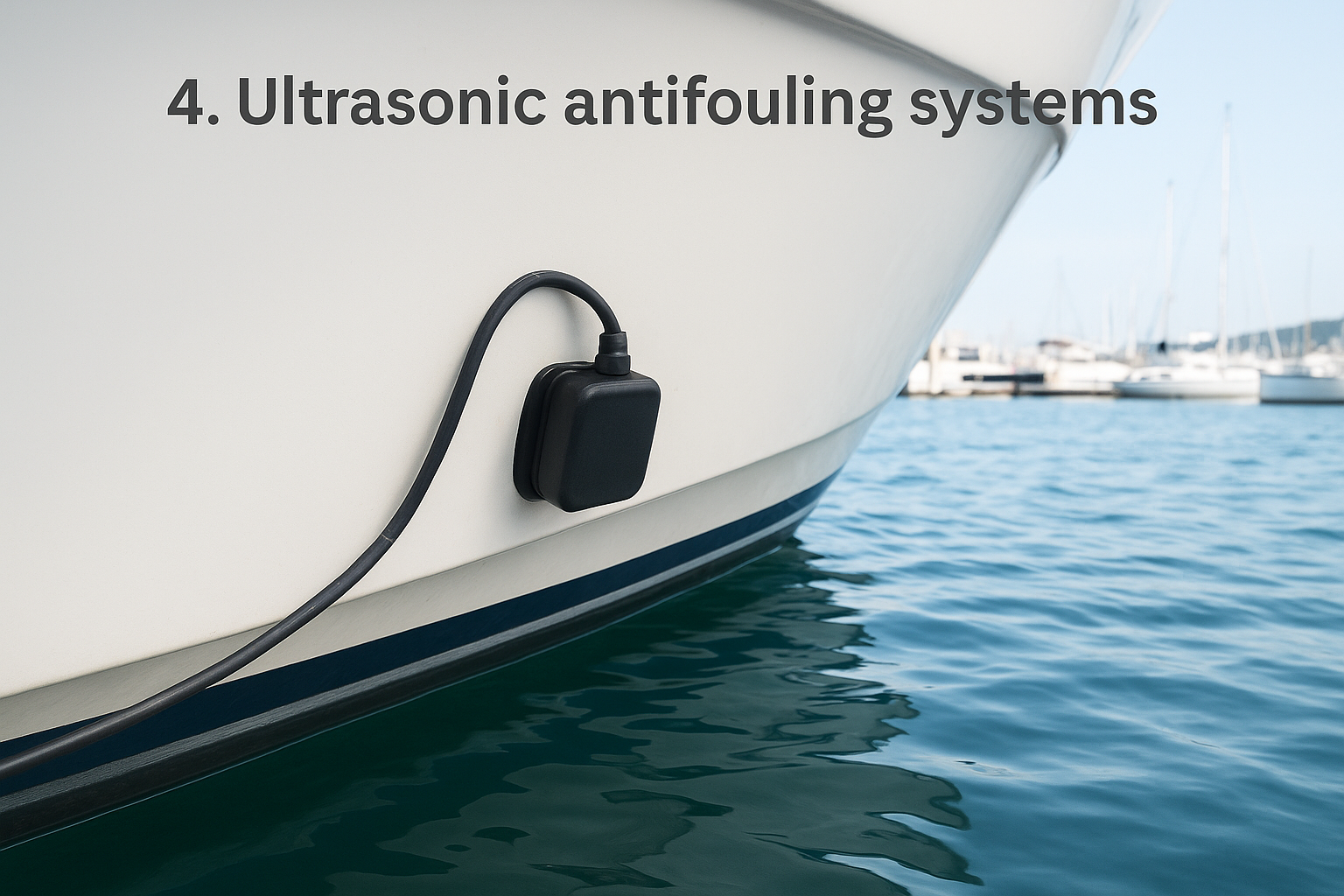
Ultrasonic antifouling takes a completely different approach from every coating on this list. Instead of treating the hull surface, you install a small transducer inside the hull that emits continuous ultrasonic pulses through the fiberglass or metal into the surrounding water. There's nothing to scrape, sand, or reapply each season, which makes it an appealing antifouling alternative to paint for owners tired of the whole haul-out cycle.
How it works
The transducer generates high-frequency sound waves that travel through the hull material and disrupt the water layer right at the surface, making it inhospitable for algae spores and barnacle larvae trying to settle. Some systems run multiple transducers spaced along the hull to cover the waterline, engine intakes you would otherwise keep clear with a raw water flush for boat engines, and running gear. Power draws directly from the boat's house batteries, typically pulling only a few watts, so it runs continuously without straining the electrical system.
No coating means no reapplication schedule, but ultrasonic protection depends entirely on the boat staying powered up.
Who it's best for
This system fits owners who keep their boat plugged into shore power or running solar, since continuous operation is what makes it effective. Good candidates include:
- Trawlers and motor yachts docked full-time with reliable power
- Owners who want to eliminate bottom paint disposal entirely
- Boats with sensitive electronics where copper coatings risk galvanic issues
Boats stored without shore power for long stretches lose protection the moment the batteries drain, so seasonal daysailers aren't the best match.
Cost and lifespan
Installation runs higher upfront than a paint job, often several thousand dollars depending on hull size and transducer count, but the units themselves last 8 to 10 years with minimal maintenance beyond checking connections.
Environmental impact
Ultrasonic systems introduce zero chemicals into the water, making them one of the cleanest options on this list. The only environmental question is manufacturing and eventual electronic waste disposal, which is a far smaller concern than copper runoff or biocide leaching from traditional paint.
5. Water-based, VOC-free antifouling paints
Water-based antifouling paints keep the familiar biocide-in-a-can format boaters already know, but they swap the petroleum solvents for a water carrier. That change cuts the fumes and flammability risk that make traditional bottom paint such a hassle to apply in an enclosed boatyard shed. For owners who want an eco-friendly HVAC cleaners-style upgrade path but aren't ready to leave copper protection behind, this is often the easiest first step.
How it works
The paint still uses cuprous oxide or a lower-toxicity biocide as the active ingredient, but the resin binder is formulated to disperse in water instead of xylene or toluene. Rollers and brushes clean up with soap and water rather than solvent, and the cured film ablates at roughly the same rate as a traditional soft paint, wearing away slowly to expose fresh biocide underneath.
Cutting the solvent doesn't remove the copper, but it does remove the fumes that send boatyard workers reaching for respirators.
Who it's best for
This option suits owners who already trust ablative paint's performance and just want a safer application process. It's a good match for:
- DIY boaters applying paint themselves without professional spray equipment
- Yards with strict air-quality permits limiting solvent-based coatings
- Owners in states phasing out high-VOC marine paints under local air rules
Cost and lifespan
Pricing runs close to standard ablative paint, sometimes a bit higher per gallon, and the coating lasts about 1 to 2 seasons before it needs a fresh layer. That's a shorter lifespan than wraps, silicone, or ultrasonic systems, but the lower application cost keeps it accessible for budget-conscious owners doing their own haul-out work.
Environmental impact
Removing VOCs cuts air pollution at the boatyard and reduces the health risk to whoever's rolling paint on the hull. Copper still enters the water as the paint ablates, so this isn't a non-toxic solution in the way wraps or silicone coatings are, just a cleaner way to apply the same biocide chemistry.
6. Graphene and nanotechnology hull coatings
Graphene coatings are the newest entry on this list, and they borrow from the same material science that's reshaping batteries and electronics. Instead of relying on a biocide or a slick silicone surface, these coatings embed graphene oxide particles into a marine-grade resin, creating a hull surface that's harder, smoother at the molecular level, and more resistant to microbial attachment than standard gelcoat. Boat owners chasing the newest non-toxic descaler-friendly technology tend to land here once they've researched wraps and silicone coatings already.
How it works
Graphene's layered carbon structure fills in the microscopic pores and imperfections that algae spores and barnacle larvae normally use as anchor points. The result is a surface so uniform that organisms struggle to establish the initial grip needed to colonize. Some formulations add antimicrobial nanoparticles on top of the graphene base, giving the coating a secondary defense layer without introducing traditional copper biocides.
A hull surface too smooth for fouling to grab beats one that just slows fouling down.
Who it's best for
This option suits early-adopter owners willing to pay a premium for cutting-edge protection and who already maintain their boat meticulously. It fits well on:
- High-performance sailboats where reduced drag matters as much as fouling resistance
- Owners upgrading from silicone coatings who want longer intervals between applications
- Boaters in regions restricting copper products who need a proven non-biocide option
Cost and lifespan
Graphene coatings currently cost more per application than any other option on this list, reflecting the specialized materials and application process. In exchange, manufacturers report lifespans of 5 to 8 years with proper care, putting the long-term cost per season closer to silicone coatings once you spread the price out.
Environmental impact
Because graphene coatings skip copper and other heavy-metal biocides entirely, they don't contribute to the runoff problems the EPA has documented in slow-flushing marinas. The main open question is long-term data on nanoparticle behavior in marine ecosystems, since this technology is still relatively new to widespread boat use.
7. Hull protection covers and lift systems
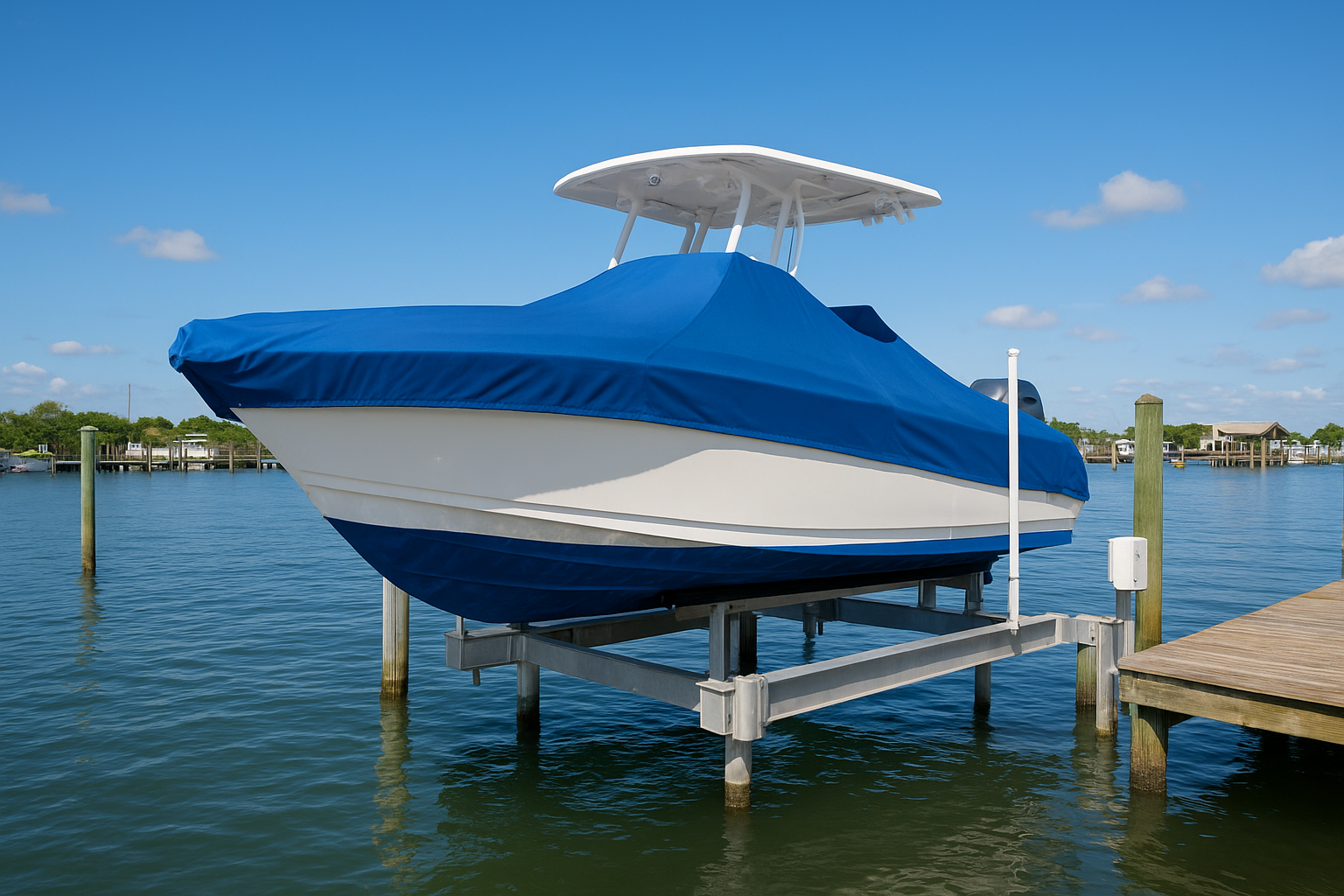
Sometimes the simplest antifouling alternative to paint is keeping the hull out of the water altogether. Boat lifts, hydraulic slips, and fitted hull covers physically remove or shield the hull from the conditions that let barnacles and algae take hold in the first place. No coating, no biocide, no wraps, just mechanical separation from the water.
How it works
Lift systems raise the entire boat out of the water between uses, either through a hydraulic platform built into the slip or a trailer-mounted lift for smaller craft. Hull covers work differently, wrapping a fitted fabric or vinyl skirt around the submerged hull while the boat stays in the water, blocking sunlight and limiting the water exchange that fouling organisms need to settle and grow. Some marinas combine both, lifting the boat for storage and covering the hull during any stretch it has to stay wet.
Keep the hull out of the water, and fouling never gets the chance to start.
Who it's best for
This option fits owners with access to a lift slip or dry-stack storage, plus:
- Smaller powerboats and center consoles trailered or lifted between trips
- Marinas in warm climates where fouling pressure is heaviest
- Owners who want to skip bottom paint and coatings entirely
Larger sailboats and heavy displacement hulls usually lack the lift infrastructure to make this practical.
Cost and lifespan
A hydraulic lift slip costs more in monthly slip fees than a standard wet slip, while hull covers run a few hundred to a couple thousand dollars depending on boat size. Both options last for years with basic upkeep, since there's no coating to wear out or reapply.
Environmental impact
Lifts and covers introduce zero chemicals into the water, making this the cleanest option on the list alongside ultrasonic systems. The tradeoff is infrastructure dependency rather than any water quality concern, since not every marina offers lift slips or covered storage.
8. How to choose the right alternative for your boat
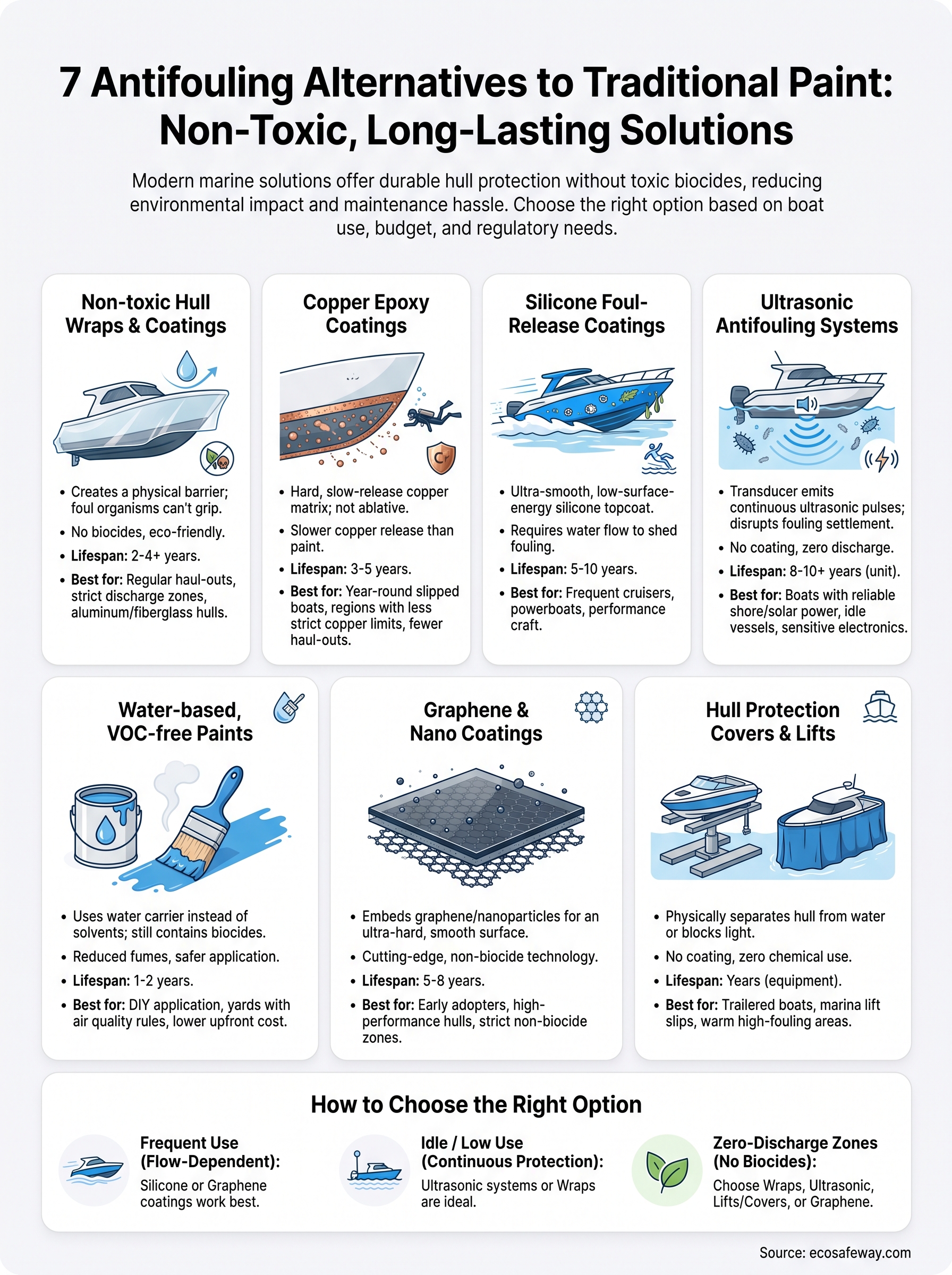
Picking between these seven options comes down to three questions: how often does your boat actually leave the dock, what infrastructure do you have access to, and how much copper exposure are you willing to accept. A boat that cruises every weekend gets real value from silicone or graphene coatings, since those systems need water flow to shed growth. A boat that sits idle most of the season is a better match for ultrasonic protection, hull wraps, or a lift system, since none of those depend on movement to work.
Budget matters just as much as boat type. Wraps, silicone, and graphene all carry higher upfront costs but stretch the reapplication cycle out to years instead of seasons, while water-based paint keeps the familiar low-cost, short-cycle routine boaters already know. If you're managing a fleet or a marina full of slips, that reapplication math scales fast, and the labor savings from a longer-lasting coating often outweigh the sticker price within two or three seasons.
The right antifouling alternative to paint is the one that matches how your boat actually gets used, not the one with the flashiest spec sheet.
Regulation should factor in too. If you're docked in a no-discharge zone or a state cracking down on copper limits, a non-toxic wrap, silicone coating, or ultrasonic system removes that compliance risk entirely, while copper epoxy and water-based paint still leave you exposed to future restrictions.
| Priority | Best fit |
|---|---|
| Frequent use, want less drag | Silicone or graphene coating |
| Boat sits idle most of the season | Ultrasonic system or hull wrap |
| Lowest upfront cost | Water-based ablative paint |
| Zero chemical discharge required | Wraps, ultrasonic, or lift/cover |
| Access to lift slip or dry storage | Hull cover or lift system |
Think through how you actually use the boat before you commit, and the right option usually becomes obvious.
The bottom line on hull protection
Swapping out traditional bottom paint isn't about chasing a trend, it's about matching protection to how you actually use your boat. Frequent cruisers get the most from silicone or graphene coatings, idle boats do better with ultrasonic systems or wraps, and anyone facing tightening discharge rules should lean toward the zero-chemical options on this list. None of these seven alternatives are a gimmick anymore. Marine professionals run them on real fleets, in real saltwater, season after season.
Whatever direction you choose, you're trading toxic upkeep for a longer-lasting, lower-hassle hull, and that trade pays off every time you skip another round of sanding and respirators. If you want a proven wrap backed by over a decade of field use on everything from weekend cruisers to superyachts, see Finsulate non-toxic antifouling hull protection and give your hull the protection it deserves without another drop of copper going overboard.


