





That musty smell coming from your washer isn't your imagination. It's mold, bacteria, and detergent residue building up inside the drum, gasket, and hoses where you can't see it. So what is washing machine cleaner, exactly? It's a specialized formula designed to break down that biofilm and mineral buildup that regular detergent leaves behind, restoring your machine's performance and killing the odor at its source.
Most people assume running an empty hot cycle or tossing in some bleach solves the problem. It doesn't, not for long. A real washing machine cleaner targets the hidden grime in seals and drainage lines that daily washing can't reach, and the good ones do it without leaving behind harsh chemical residue that ends up on your next load of clothes. That distinction matters more than most product labels let on.
In this guide, you'll learn exactly how these cleaners work, what separates an effective non-toxic descaler from a diluted rinse aid, and how often you actually need to run one. We'll also cover simple alternatives you can use between deep cleans, so your machine stays fresh without extra cost or hassle.
Why washing machine cleaner matters for your laundry
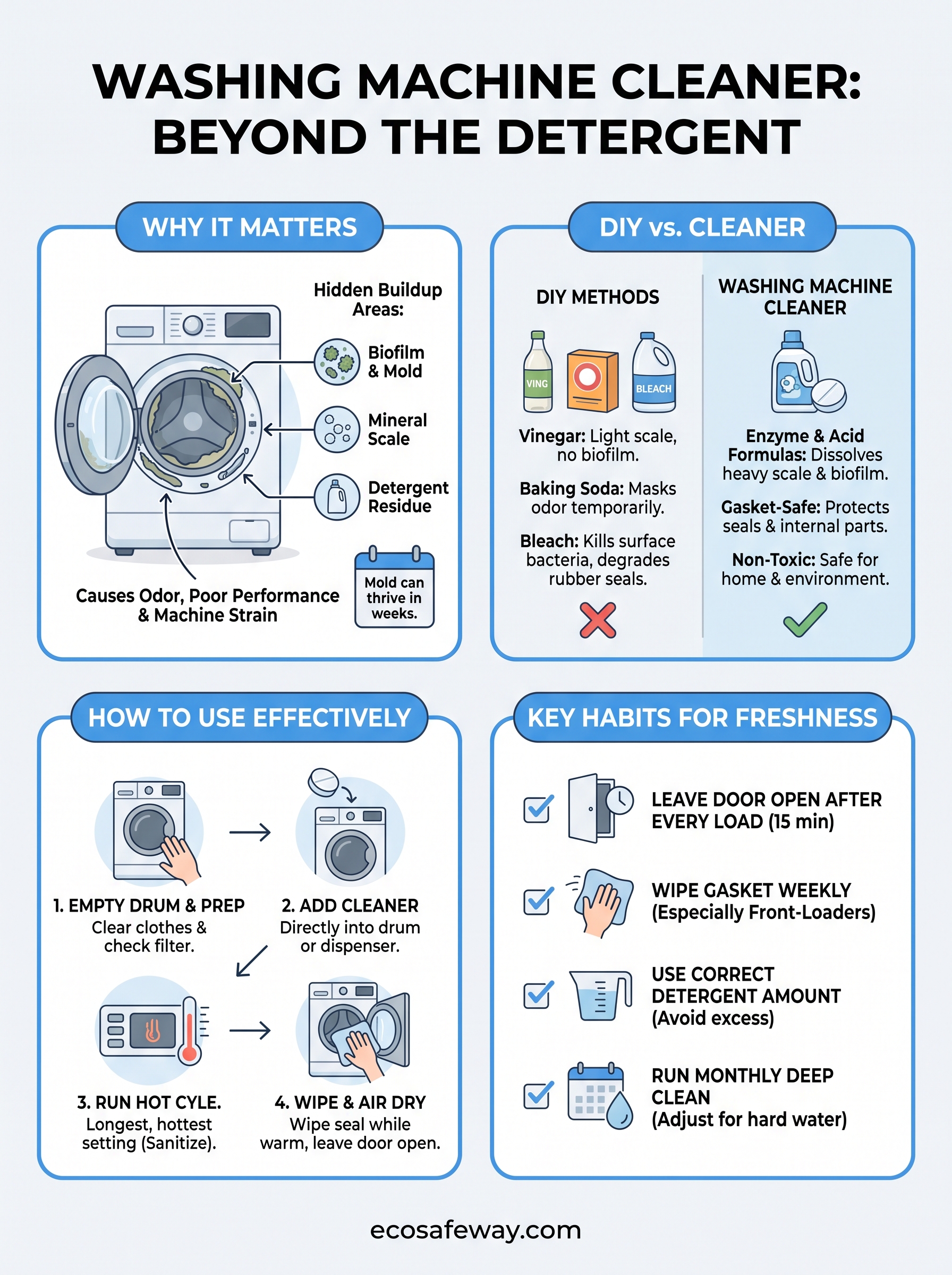
Your washing machine is supposed to make things clean, but the machine itself gets dirtier every time you use it. Detergent residue mixes with fabric softener, lint, and hard water minerals, then clings to the drum, the rubber gasket, and the drain pump filter. Warm, damp, and dark, that environment is exactly what mold and bacteria need to thrive. Within weeks, you get a biofilm layer that regular detergent can't touch because it's designed to clean clothes, not the machine washing them.
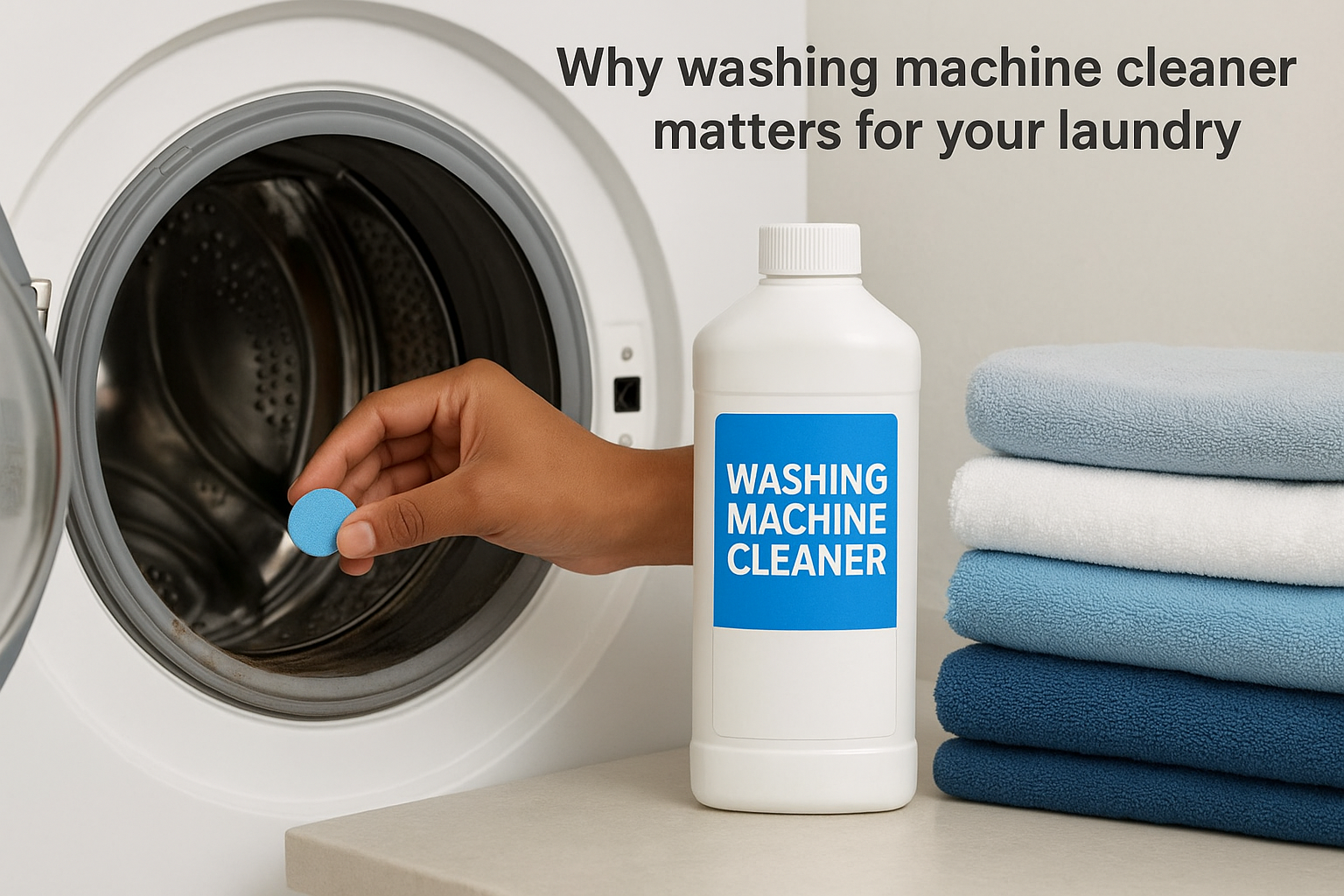
Front-load washers get hit the hardest because their door seals trap water after every cycle. Top-load machines aren't immune either, especially high-efficiency models that use less water and rinse less aggressively than older agitator-style washers. The table below shows how buildup typically differs by machine type.
| Washer Type | Common Buildup Zone | Typical Odor Onset |
|---|---|---|
| Front-load, HE | Door gasket, drum folds | 3-5 weeks |
| Top-load, HE | Drain pump filter, tub exterior | 5-8 weeks |
| Top-load, agitator | Agitator base, lint trap | 8-12 weeks |
This buildup doesn't stay contained. Every new load of laundry runs through that same contaminated water, which means the residue transfers right back onto your clothes, towels, and sheets. That's the real reason people notice their "clean" laundry still smells sour after drying. It's not a rinse problem. It's a machine problem.
The performance cost of a dirty washer
Mineral scale and residue don't just cause odor, they interfere with how the machine actually works. Clogged drain filters slow down cycles, worn gaskets leak, and scale buildup on internal components forces the motor and pump to work harder than they should. Over time, that added strain shortens the lifespan of a machine that can cost well over a thousand dollars to replace. Regular use of a washing machine cleaner breaks down that scale before it damages internal parts, which is a far cheaper fix than a service call or a new unit.
A dirty washer doesn't just smell bad, it quietly transfers bacteria back onto every load you wash.
Why detergent alone isn't enough
Standard detergent is formulated to lift dirt and oil off fabric, not to descale a machine or dissolve biofilm clinging to plastic and rubber. Even bleach, which kills surface bacteria, doesn't reach into the folds of a gasket or the internal drain pathway where most of the buildup actually happens. That's why machines that look spotless on the outside still develop a musty smell. A proper washing machine cleaner is built with surfactants and enzymatic or acid-based descaling agents specifically designed to break down mineral scale and organic residue in places a normal wash cycle never touches.
According to guidance from the U.S. Environmental Protection Agency on mold and moisture control, damp environments that aren't regularly cleaned and dried create ideal conditions for microbial growth, which is exactly what happens inside an unmaintained washer drum. Understanding that distinction is the first step toward treating your washing machine like the appliance it is, one that needs its own maintenance routine, not just a detergent upgrade.
How to use washing machine cleaner step by step
Running a washing machine cleaner correctly takes less than five minutes of hands-on work, but skipping steps is why so many people think these products "don't do anything." The process is simple once you know what actually matters: an empty drum, the right cycle, and a little attention to the parts a cycle can't reach on its own.
Prep and run the cycle
Start with a completely empty machine, no clothes, no leftover socks hiding in the drum. Then follow this sequence:
- Check the drum and filter for lint, coins, or debris before you start.
- Add the cleaner directly into the drum, or into the detergent dispenser if the label specifies that method.
- Select the hottest, longest cycle your machine offers, ideally one labeled "clean" or "sanitize" if available.
- Let it run uninterrupted. Don't pause or add anything else to the load.
- Wipe down the gasket and door seal once the cycle finishes, while everything is still warm and loosened.
Most quality formulas are built to dissolve mineral scale and biofilm during that single hot cycle, so resist the urge to add detergent or bleach on top of it. Mixing cleaning agents can weaken both and, in some cases, create fumes you don't want in an enclosed laundry room.
The cycle does the chemical work, but the five minutes you spend wiping the seal afterward is what actually stops the smell from coming back.
After the cycle finishes
Once the cycle ends, leave the door open for at least an hour to let the drum air out completely. Trapped moisture is what restarts the mold cycle you just cleaned away, so this step isn't optional if you want lasting results. Wipe the rubber gasket with a dry cloth, and check the detergent drawer for any residue that didn't rinse clean the first time.
Repeat this full process on a set schedule rather than waiting for odor to show up again. Most eco-friendly washing machine cleaner products are formulated for monthly use, though households doing heavy laundry volume or living in hard water areas often benefit from running one every two to three weeks instead.
Signs your washing machine needs cleaning now
Some warning signs show up long before you notice a smell, and catching them early saves you from a full-blown mold problem later. If you're wondering whether it's time to run a washing machine cleaner instead of waiting for your next scheduled cycle, a few physical clues make the decision easy.
What to check first
Grab a flashlight and look at the drum, gasket, and dispenser tray before you assume everything's fine. Here's what actually indicates buildup:
- Musty smell in clothes even right after a wash cycle finishes
- Black or pink spots along the rubber door gasket
- Slow draining or standing water at the bottom of the drum
- Visible residue caked around the detergent dispenser
- Longer cycle times than the machine used to run
- Grinding or straining noises during the spin cycle
Any one of these on its own is worth addressing. Two or more together usually means buildup has been accumulating for weeks, not days.
If your clean laundry smells sour, the problem isn't your detergent, it's your machine.
Reading the timeline
Odor rarely appears overnight. It builds in stages, and knowing where you are in that timeline helps you decide how aggressive the cleaning needs to be.
| Stage | What You'll Notice | Action Needed |
|---|---|---|
| Early | Faint smell only when door is closed | Run cleaner within the week |
| Moderate | Odor transfers to towels and sheets | Clean immediately, wipe gasket daily |
| Advanced | Visible mold, slow drainage, noise | Deep clean plus filter and hose check |
Hard water areas accelerate this timeline considerably. Mineral scale coats heating elements and internal components faster than in soft water regions, which means machines in those areas often need attention closer to the three-week mark rather than the two-month mark. Skipping the early signs doesn't just mean more odor, it means the buildup has more time to damage seals, filters, and pump components that are expensive to replace. Treating these signs as your cue to act, rather than waiting for a full-blown smell, keeps both your machine and your laundry in better shape long term.
Washing machine cleaner vs vinegar, baking soda, and bleach
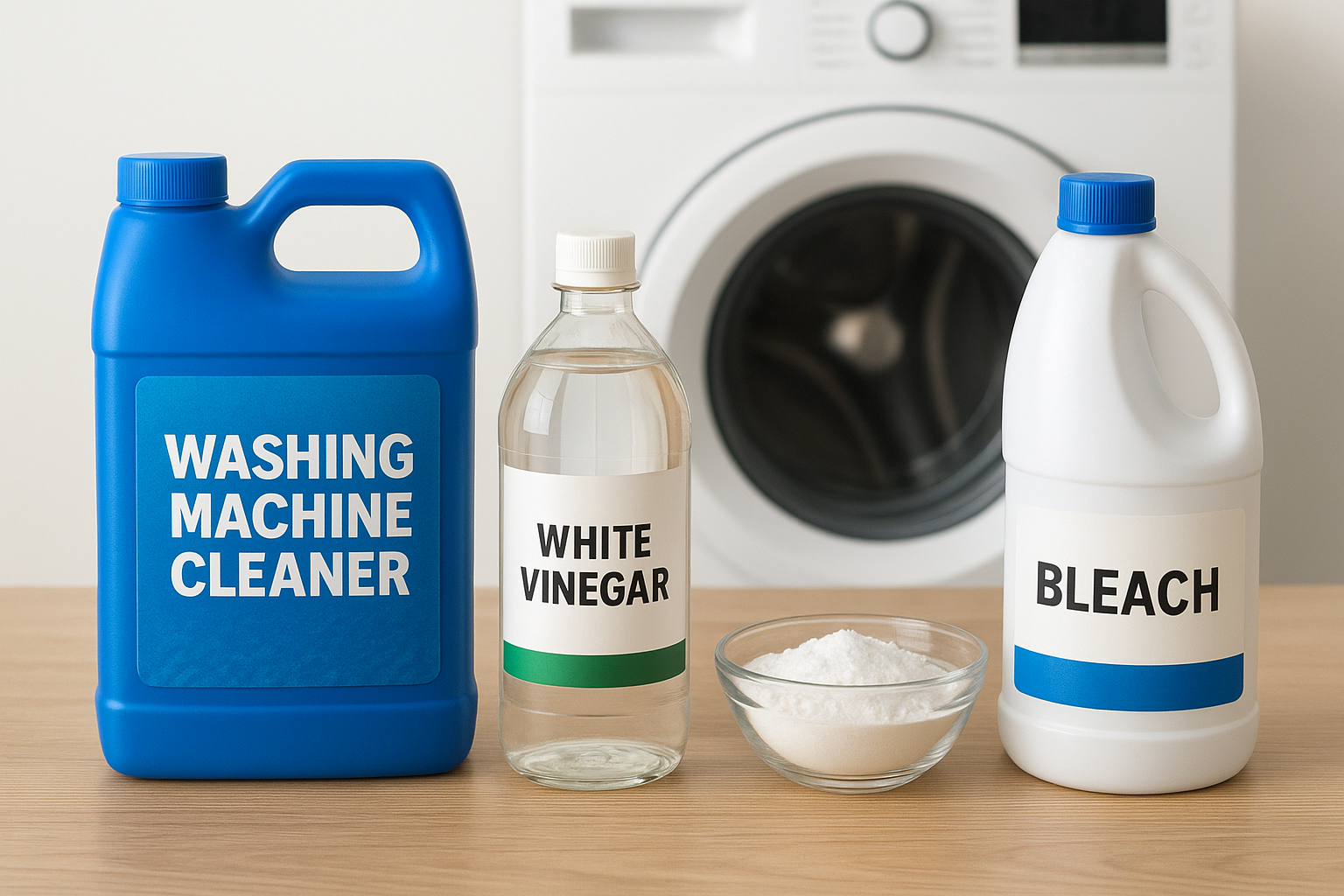
Household staples get recommended constantly for washer maintenance, and they're not useless, just limited. Vinegar breaks down light mineral scale, baking soda absorbs mild odor, and bleach kills surface bacteria on contact. None of them, though, were formulated to dissolve the biofilm layer that builds inside a drum, and using the wrong one on the wrong machine can actually cause damage.
Where DIY options fall short
Bleach is the biggest offender here. It's corrosive to rubber gaskets and internal seals over repeated use, which means the same product that kills bacteria today can crack a door seal within a year or two. Vinegar is gentler but weak against heavy scale, and it does nothing for the organic grime clinging to plastic components. Baking soda masks smell temporarily rather than removing the source. None of these three penetrate the folds of a gasket or the drain pathway the way a purpose-built non-toxic descaler does.
Vinegar and baking soda freshen a washer for a day. A real washing machine cleaner removes what's causing the smell in the first place.
A side-by-side comparison
| Method | Descales Scale | Kills Biofilm | Gasket-Safe | Rinse-Free Residue |
|---|---|---|---|---|
| Washing machine cleaner | Yes | Yes | Yes | Yes |
| White vinegar | Mild | No | Yes | Yes |
| Baking soda | No | No | Yes | Yes |
| Bleach | No | Surface only | No, degrades rubber | No, leaves chemical residue |
That comparison explains why so many people run vinegar cycles every month and still deal with recurring odor. They're treating a symptom, not the cause. Enzyme-based and acid-based washing machine cleaner formulas are built specifically to break the bonds holding mineral scale and organic residue to metal, rubber, and plastic surfaces, something a kitchen staple was never designed to do.
Properly formulated cleaners also skip the corrosive risk entirely. A cleaner rated HMIS 0-0-0, for example, delivers that descaling and biofilm removal without the hazard profile bleach carries, which means no fumes, no glove requirement, and no risk to the gasket you're trying to protect. For anyone comparing convenience against results, that's the real tradeoff between household shortcuts and a cleaner engineered for the job.
Choosing a non-toxic, eco-friendly washing machine cleaner
Not every product labeled "green" actually earns that claim, and the laundry aisle is full of vague marketing. Reading the label closely tells you more than the front-of-bottle claims ever will. Look for HMIS 0-0-0 certification, which confirms zero health, flammability, and physical hazard ratings, along with a clear statement that the formula is phosphate-free and biodegradable. Those three details separate a genuinely non-toxic washing machine cleaner from one that just avoids the word "chemical" on the packaging.
What the label should tell you
Before adding anything to your cart, check for these specifics:
- HMIS 0-0-0 rating, meaning no hazmat handling or shipping requirements
- Phosphate-free formula, so runoff doesn't harm waterways once it drains
- No bleach or chlorine, which protects rubber gaskets and seals
- EPA-compliant ingredients, verified rather than self-claimed
- Enzyme or acid-based descaling agents, not just fragrance and filler
A truly non-toxic cleaner shouldn't need a warning label to work.
Why the distinction actually matters
Here's where most buyers get tripped up: "biodegradable" and "non-toxic" aren't interchangeable terms, even though marketing treats them that way. A biodegradable formula breaks down in the environment over time, but that says nothing about what it does to your skin, lungs, or gasket while you're using it. Non-toxic means the product itself carries no hazard risk during use, which is the standard that actually protects you and your machine. Eco Safeway's approach combines both, delivering a formula that's safe to handle barehanded and safe once it goes down the drain.
That combination also solves a practical problem beyond safety. Products without hazard ratings ship without special handling, which keeps shipping costs down and avoids the delays that come with hazmat paperwork. For anyone managing laundry across multiple units, whether that's a property manager, a marina laundry facility, or a household doing loads daily, that logistical simplicity adds up. Choosing a cleaner that's genuinely non-corrosive and non-hazardous means you're not trading performance for safety, you're getting both in a single bottle.
Keeping your washer fresh between cleanings
A monthly deep clean handles the heavy buildup, but small daily habits determine whether odor comes back before your next scheduled cycle. Leaving the door cracked open after every wash, wiping the gasket dry, and avoiding overloaded detergent doses all reduce how fast biofilm rebuilds inside the drum. These habits take seconds, and they cost nothing, which makes them the easiest maintenance win most households skip entirely.
Daily and weekly habits worth building
Few people realize how much of the odor problem comes down to timing, not product choice. Building these small steps into your laundry routine keeps the drum dry and residue-free between deep cleanings:
- Leave the door open for at least 15 minutes after every load to let moisture escape
- Wipe the gasket with a dry towel once a week, especially on front-load machines
- Remove wet laundry promptly instead of letting it sit in a closed drum
- Use the correct detergent amount, since excess soap is a major residue source
- Run an empty hot rinse every two weeks if you're in a hard water area
The habits that prevent odor take less time than the cleaning cycle that fixes it.
Matching maintenance to your machine and water
Golden rule aside, not every household needs the same schedule. Grouping your habits by machine type and water hardness gives you a realistic maintenance rhythm instead of guessing.
| Situation | Recommended Habit Frequency |
|---|---|
| Front-load, soft water | Wipe gasket weekly, deep clean monthly |
| Front-load, hard water | Wipe gasket weekly, deep clean every 2-3 weeks |
| Top-load, soft water | Check filter monthly, deep clean every 6-8 weeks |
| Top-load, hard water | Check filter biweekly, deep clean monthly |
High humidity laundry rooms complicate things further, since trapped moisture doesn't evaporate as quickly even with the door open. In that case, running a small fan near the machine for an hour after each load helps dry the gasket and drum faster than air circulation alone. None of this replaces a scheduled washing machine cleaner treatment, but it stretches the time between deep cleans and keeps your laundry smelling the way it should in the meantime.
A cleaner washer, a healthier home
A washing machine that smells clean actually gets clothes clean. That's the whole point of running a washing machine cleaner on a regular schedule instead of waiting for odor to force your hand. You now know what separates a real descaling formula from vinegar and bleach, how to run the cycle correctly, and what daily habits keep buildup from coming back between treatments.
The machine doing your laundry deserves the same non-toxic standard you'd want for the clothes coming out of it. Enzyme-based formulas without hazardous chemicals protect your gasket, your family, and your water supply at the same time, with no gloves or ventilation required. That's not a compromise, it's just a better formula.
If you're ready to stop guessing and start cleaning with something built for the job, check out Eco Safeway's washing machine cleaner tablets and give your washer the maintenance it's been missing.


