




Your dog sniffs the floor right after you mop it. Your cat naps on a counter you just wiped down with something from under the sink. If you've ever wondered what's actually in that bottle, you're not alone. Finding real pet safe cleaning products means looking past the word "natural" on the label and checking what's really inside, because plenty of products marketed as gentle still contain ammonia, chlorine, or phenols that are dangerous for cats and dogs.
The short answer: you want cleaners with non-toxic, biodegradable formulas and no hazardous ingredients hiding behind vague terms like "fragrance" or "proprietary blend." Look for products rated safe for skin and paw contact, free of phosphates and corrosive acids, and ideally backed by a recognized safety standard rather than just a green logo.
Below, you'll find eight products worth putting on your shelf, along with the ingredients to avoid and what certifications like HMIS 0-0-0 actually mean for a household with pets. We've pulled from categories people use daily, drain treatments, appliance cleaners, general surface sprays, so you can swap out the riskiest bottles in your home first.
1. Eco Safeway HMIS 0-0-0 all-purpose cleaner
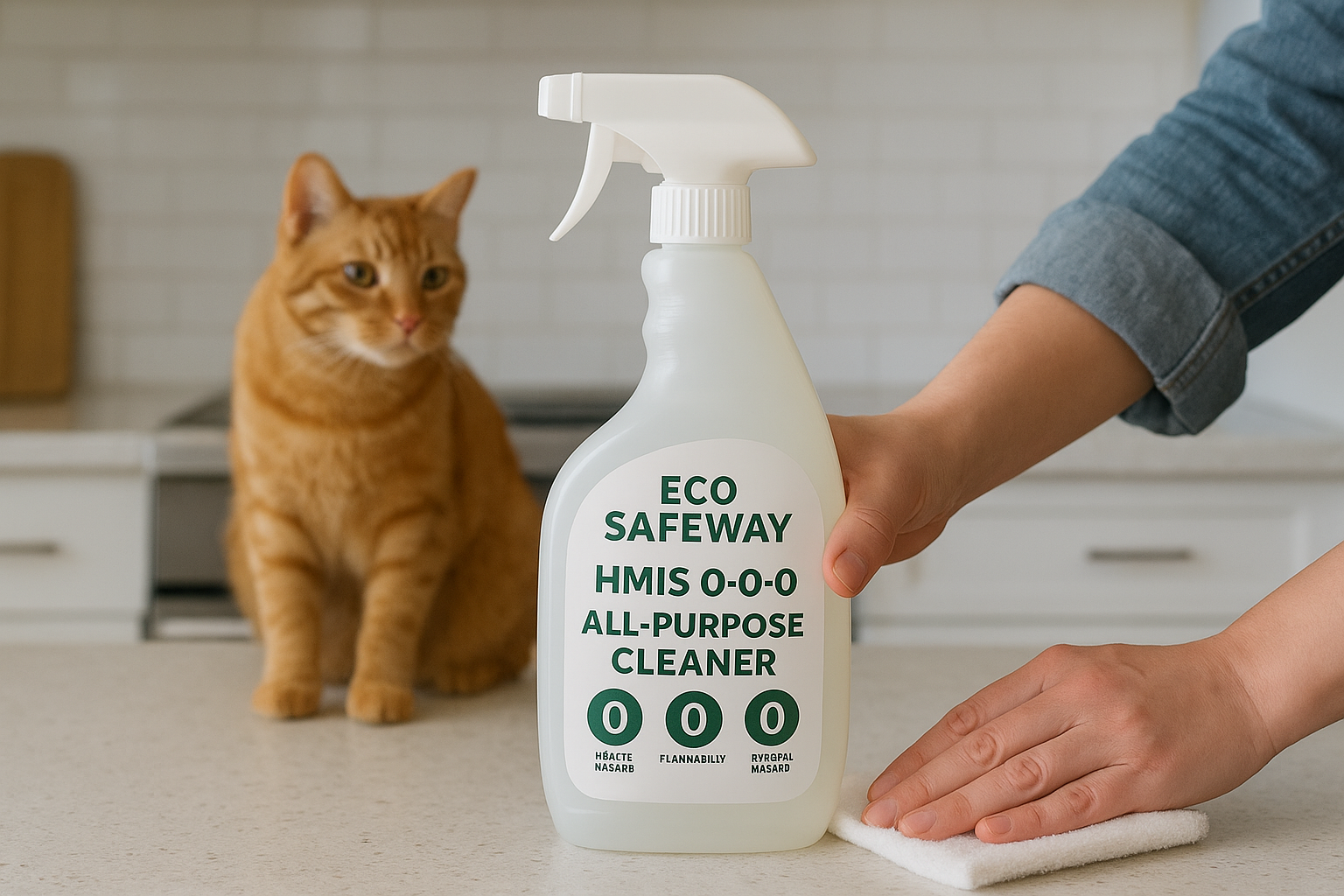
Eco Safeway built its all-purpose cleaner around a HMIS 0-0-0 safety rating, which means it scores zero for health hazard, zero for flammability, and zero for physical hazard. That's the top-tier rating on the Hazardous Materials Identification System, and very few household or industrial cleaners actually hit it. Most "eco" cleaners still carry at least a 1 in one category. This one doesn't, which is exactly why it tops a list built around pet safe cleaning products.
How it works
The formula skips ammonia, chlorine bleach, and petroleum solvents entirely, relying instead on biodegradable surfactants that break down grease, food residue, and pet grime on contact. You spray it on counters, floors, litter box surroundings, or pet feeding stations, wipe or let it air dry, and it breaks down organic buildup without leaving a chemical film behind. There's no rinse-required warning on the label because there's nothing corrosive to rinse away.
Why it's pet-safe
Because it carries a perfect 0-0-0 HMIS score, it requires no hazmat handling, no ventilation warnings, and no "keep pets away until dry" instructions you'll see on ammonia-based sprays. Cats walk across a treated counter, dogs lick a wiped floor, and there's no acute toxicity risk from residue. Eco Safeway formulates it phosphate-free and EPA compliant, which matters if runoff ends up near a yard where pets play or drink from puddles.
A cleaner rated 0-0-0 on the HMIS scale has no recorded health, flammability, or physical hazard, the clearest signal you can find that it won't harm a curious pet.
Best for
Households that want one bottle for kitchen counters, floors, litter areas, and pet bowls instead of juggling separate cleaners for each surface. It also suits multi-pet homes where paws and noses touch nearly everything within minutes of cleaning.
Price range
Expect to pay roughly $15 to $25 per bottle depending on size and concentration, with concentrated formulas stretching further than pre-diluted competitors once you factor in dilution ratios.
2. Seventh Generation free and clear all-purpose cleaner
Seventh Generation markets its Free and Clear line as fragrance-free and dye-free, a smart pick if your pet has sensitive skin or you've noticed sneezing after mopping. It's one of the more widely available options on grocery store shelves, which makes it an easy first swap for households not ready to order specialty industrial cleaners online.
How it works
The cleaner uses plant-derived cleaning agents instead of petroleum-based surfactants, targeting everyday grime on counters, appliances, and hard floors. You spray directly on the surface and wipe, and the formula is designed to cut through light grease without leaving the heavy chemical smell that lingers after using ammonia-based sprays.
Why it's pet-safe
Removing synthetic fragrance matters because many of those compounds are respiratory irritants for cats, whose sense of smell is far more sensitive than ours. Seventh Generation also skips dyes and optical brighteners, so there's less residue left behind for a dog to lick off a floor or a cat to walk through on the way to its water bowl.
Fragrance-free formulas remove one of the most common irritants triggering sneezing and coughing in pets after routine cleaning.
Best for
Pet owners managing allergies or asthma-prone cats who want a grocery-store-accessible option without ordering online.
Price range
A 32-ounce bottle typically runs $4 to $6, making it one of the most budget-friendly entries here.
3. Force of Nature cleaning starter kit
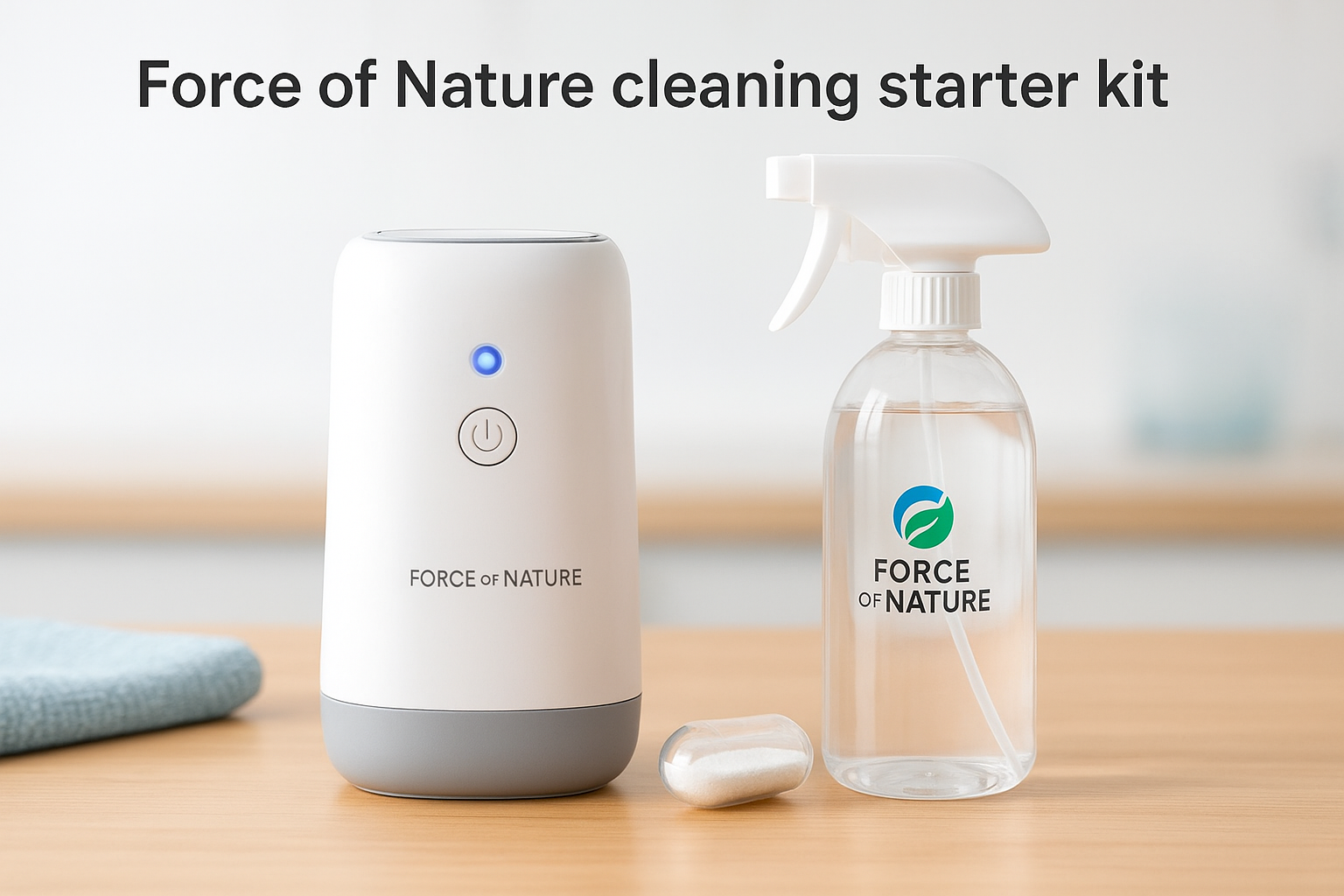
Force of Nature takes a different approach than every bottle on this list because it doesn't sell you a pre-made cleaner. It sells you a small electrolyzing device that turns tap water, salt, and vinegar into cleaner and disinfectant right on your countertop, which appeals to pet owners tired of reading ingredient labels altogether.
How it works
You drop a capsule containing salt, water, and vinegar into the included appliance, add tap water, and press a button. Electricity runs through the mixture in a process called electrolysis, converting it into hypochlorous acid and sodium hydroxide, the same compounds your white blood cells produce to fight infection. The result is a cleaner and disinfectant that starts breaking back down into salt water within about two weeks.
Why it's pet-safe
Because the finished solution is just electrolyzed water, there's no ammonia, no bleach, and no synthetic fragrance for a dog to inhale or a cat to walk through. The EPA has registered it as a disinfectant, yet it carries none of the "keep pets out of the room" warnings printed on typical disinfectant sprays.
A cleaner made from water, salt, and vinegar leaves nothing toxic behind for a pet to lick off the floor.
Best for
Households wanting one system that replaces multiple bottles, especially multi-pet homes cleaning up messes daily.
Price range
Starter kits run $25 to $40, with refill capsules costing a few dollars each.
4. Biokleen Bac-Out multi-surface floor cleaner
Biokleen built Bac-Out around enzyme-based cleaning technology, a category that works differently from soap or solvent cleaners. Instead of just lifting dirt, it consumes the organic matter causing stains and odors, which makes it a favorite among owners dealing with accidents on carpet, tile, or hardwood.
How it works
Naturally occurring enzymes and live bacteria cultures in the formula target proteins, starches, and oils left behind by pet urine, vomit, or muddy paws. You spray or mop it onto the surface, and the enzymes break the mess down at a molecular level instead of masking it with fragrance. Given time to sit, the solution keeps working even after it looks dry, which is why it outperforms standard floor cleaners on old accident spots.
Why it's pet-safe
Because Bac-Out skips chlorine, ammonia, and phosphates, there's nothing corrosive left on the floor once it dries. The enzyme approach also means it actually removes the odor compounds that attract pets back to the same spot, rather than just covering the smell.
Enzyme cleaners break down the source of pet odors instead of masking them, which helps stop repeat accidents in the same spot.
Best for
Households dealing with ongoing house-training issues, senior pets, or hardwood and tile floors that show every stain.
Price range
A 32-ounce bottle costs roughly $8 to $12, with gallon-size refills available for multi-room cleanups.
5. Mrs. Meyer's Clean Day dish soap
Mrs. Meyer's built its reputation on plant-derived dish soap scented with essential oils instead of synthetic fragrance, and pet owners often reach for it because it doubles as a gentle wash for food bowls and the occasional muddy paw. It sits on nearly every grocery shelf, so it's an easy upgrade from a conventional dish soap without hunting for a specialty store.
How it works
The soap uses coconut-based cleaning agents to cut grease on dishes, pots, and pet feeding stations. Squeeze a small amount onto a sponge, work it into a lather, and rinse clean. Essential oils like lavender or geranium provide scent instead of the synthetic fragrance blends found in most dish soaps.
Why it's pet-safe
Because it skips phosphates and dyes, there's minimal residue left on bowls after rinsing, which matters since pets lick their dishes clean within seconds of eating. Mrs. Meyer's also avoids the harsh degreasers found in some dish soaps that can dry out or irritate paw pads during bath time.
Dish soap free of phosphates and dyes leaves less residue behind on the surface pets touch most often: their own food bowl.
Best for
Households wanting a grocery-store dish soap that doubles as a light paw and bowl wash without harsh chemical residue.
Price range
A 16-ounce bottle typically costs $4 to $7.
6. Method squirt and mop wood floor cleaner
Method designed this cleaner specifically for hardwood, bamboo, and other sealed wood floors, packaging it in a squirt-and-mop bottle that lets you spot-treat paw prints without hauling out a bucket. Dog owners with hardwood hallways tend to reach for this one because it handles daily tracked-in dirt fast, right where it lands.
How it works
A built-in nozzle lets you squirt cleaner directly onto the floor, then spread it with a dry or slightly damp mop. The formula uses plant-based cleaning agents to lift dirt and grime without leaving the streaky residue that some wood floor sprays do. Because there's no rinsing step required, you can clean a room and let pets back in within minutes rather than waiting for a rinse cycle to dry.
Why it's pet-safe
Method formulates this cleaner without ammonia or bleach, and the company markets its home care line as biodegradable. That matters on wood floors especially, since dogs and cats spend a lot of time lying directly on them, absorbing whatever residue is left behind through their fur and paw pads.
A no-rinse formula only stays pet-safe if it's also free of ammonia and bleach, otherwise you're just skipping the step that would remove the residue.
Best for
Homes with hardwood, bamboo, or engineered wood floors and dogs that track in dirt daily.
Price range
A 25-ounce bottle runs $4 to $6.
7. Rocco and Roxie enzyme stain and odor remover
Rocco and Roxie built a name for itself in the pet aisle specifically for tough urine and vomit stains, the kind that soak into carpet padding and keep smelling long after a regular cleaner wipes the surface. Owners with a new puppy in training or a senior dog with accidents tend to keep a bottle of this by the door.
How it works
Naturally occurring bacteria cultures and enzymes digest the uric acid crystals and organic proteins that cause both the stain and the smell. Soak the spot generously, let it sit uncovered for several hours or overnight, then blot dry. The enzymes need that dwell time to fully break down what's soaked into fibers, so rushing the process leaves some odor behind.
Why it's pet-safe
The formula skips artificial fragrances and harsh solvents, relying entirely on the enzyme reaction to do the work instead of masking scent chemically. That matters because pets often return to a spot they can still smell, even faintly, so a truly non-toxic and effective cleaner also curbs repeat accidents.
Enzyme cleaners only work if you give them time to sit, patience matters as much as the formula itself.
Best for
Households actively house-training a puppy or managing an older pet with accidents on carpet or upholstery.
Price range
A 32-ounce bottle costs $15 to $20.
8. DIY vinegar and baking soda cleaner
Sometimes the safest cleaner is the one already in your pantry. Mixing white vinegar and baking soda gives you a no-cost option for households that want zero risk of unknown chemicals, especially if you're just starting to audit what's under your sink for pet safety.
How it works
Combine equal parts water and white vinegar in a spray bottle for general surfaces, and keep a box of baking soda nearby for scrubbing power on stuck-on grime or carpet odors. Spray the vinegar solution, wipe, and sprinkle baking soda on damp spots before vacuuming for odor absorption. The reaction between the two also helps loosen buildup in drains without a chemical unclogger.
Why it's pet-safe
Both ingredients are food-grade and non-toxic, so there's no acute poisoning risk if a dog licks a treated floor or a cat walks through a damp spot. Neither leaves fumes behind the way ammonia or bleach does.
A cleaner made from two pantry staples can't hide a hazardous ingredient, because there's nothing else in the bottle.
Best for
Budget-conscious households or anyone wanting a backup cleaner for light daily messes between deeper cleanings.
Price range
A jug of vinegar and a box of baking soda together cost under $5, covering weeks of use.
Choosing cleaners your pets can trust
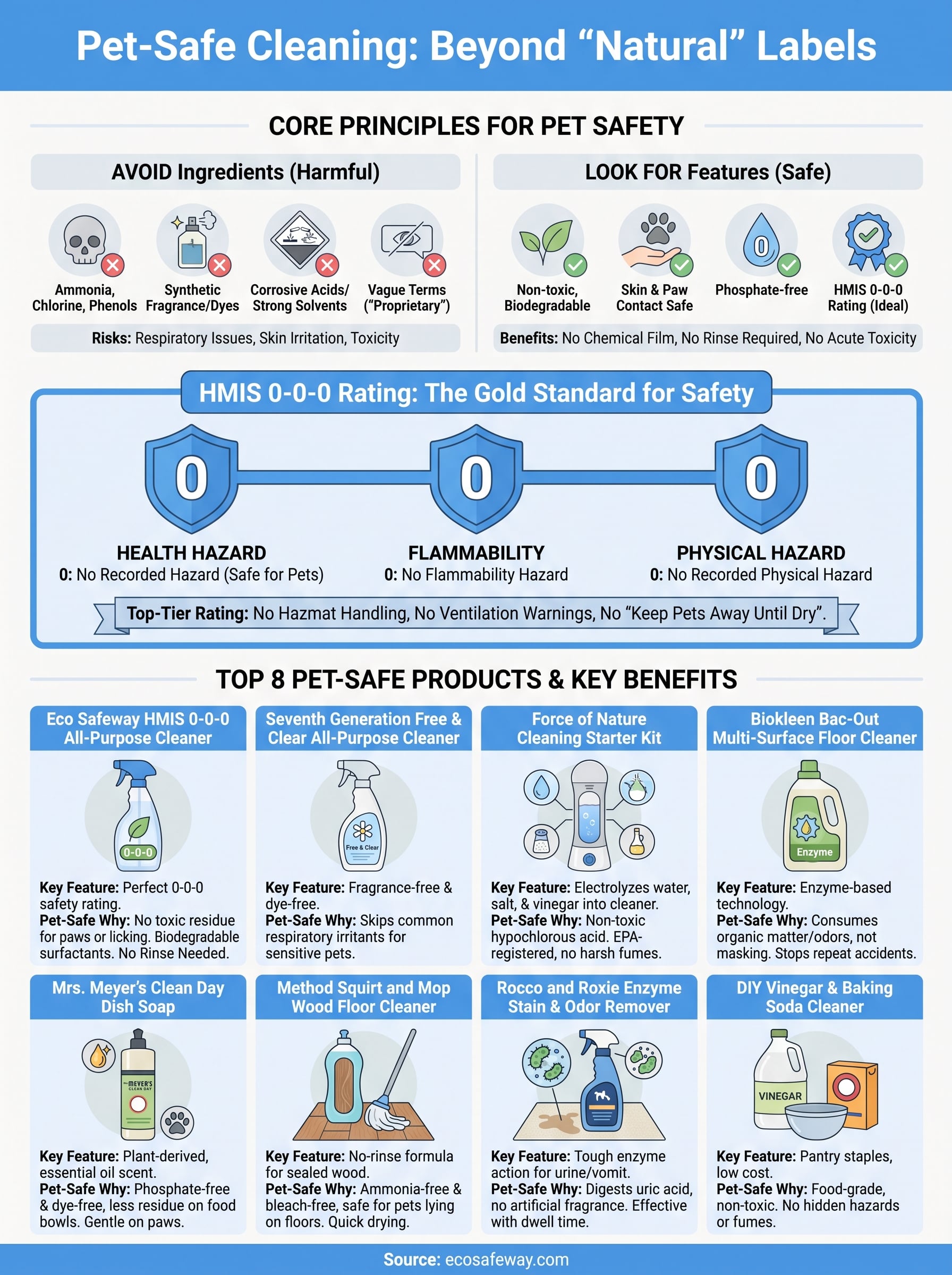
You don't need to replace every bottle under your sink overnight. Start with the surfaces your pets touch most, floors, feeding stations, and litter areas, and swap in a non-toxic formula before moving on to the rest. Reading a label for hidden hazards like ammonia, chlorine, or vague "fragrance" listings takes less than a minute, and that habit alone will keep more dangerous chemicals out of your home than any single product swap.
Certifications matter more than marketing claims. A cleaner rated HMIS 0-0-0 has already been scored for health, flammability, and physical hazard, so you're not guessing whether it's safe for a curious nose or a paw that just walked across a wet floor. That's the standard worth holding every bottle to, especially in a house with pets underfoot.
If you want to start with the product built around that exact standard, take a look at the Eco Safeway all-purpose cleaner and degreaser spray.


