




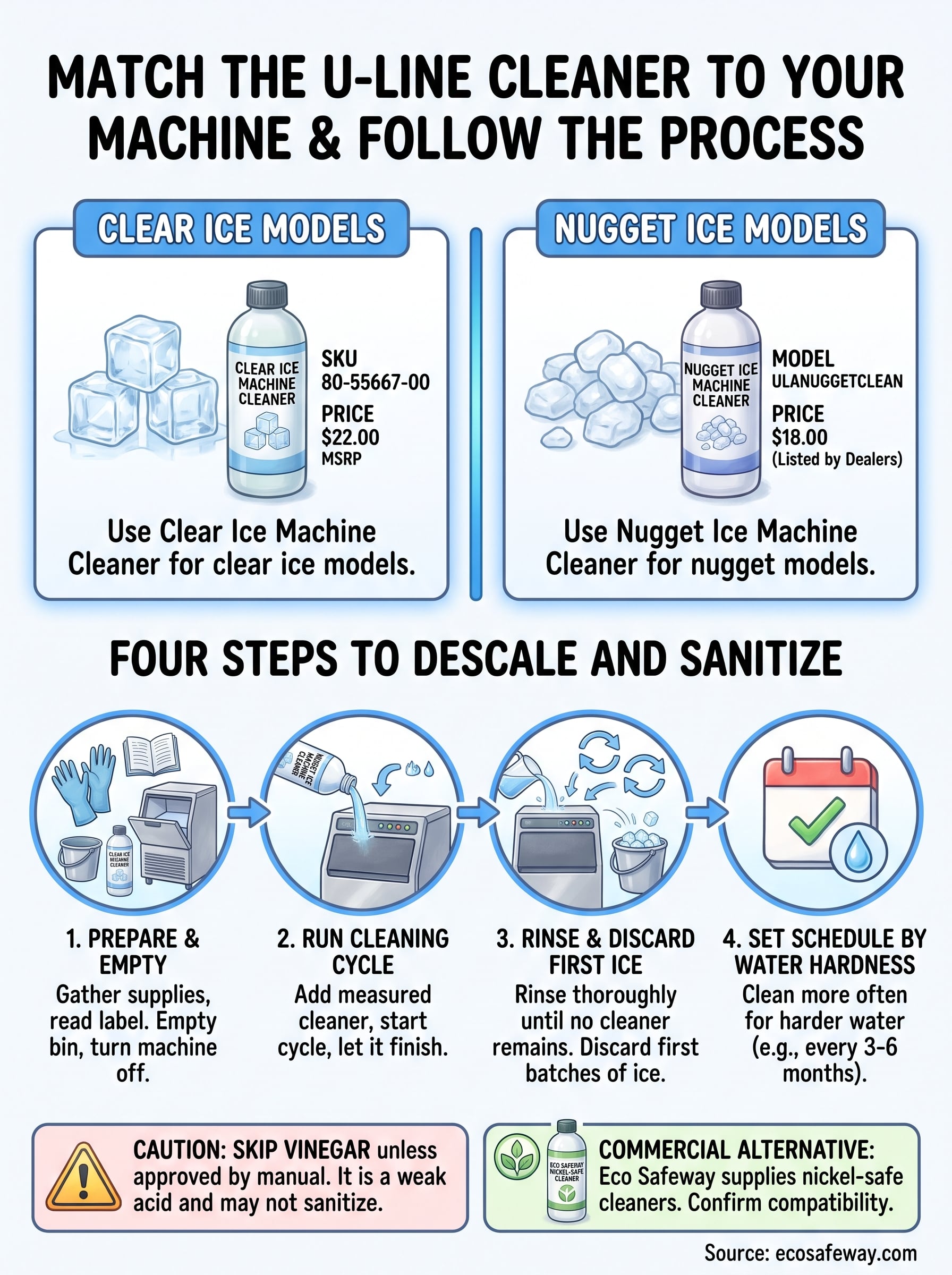
The right U-Line ice machine cleaner depends on your machine type. Use the Clear Ice Machine Cleaner (SKU 80-55667-00, $22.00 MSRP) for clear ice models and the Nugget Ice Machine Cleaner (model ULANUGGETCLEAN, listed at $18.00 by dealers) for nugget models. Empty the bin, add the cleaner as the label directs, run the cleaning cycle, rinse with fresh water until no cleaner remains, and throw away the first batch of ice. Skip vinegar unless your owner's manual approves it.
Scale builds up quietly. Hard water leaves a mineral film on the evaporator and water lines, and slime grows in the dark, damp reservoir. You usually notice it late, as cloudy or off-tasting ice, slower production, or white crust around the water path. Then you search and find product pages, videos, and conflicting advice about vinegar, tablets, and third-party cleaners.
This guide sorts that out. You will see which cleaner fits which U-Line, whether alternatives work, and four steps to descale and sanitize your machine. Eco Safeway supplies ice machine cleaners and descalers, so we also cover where a nickel-safe commercial cleaner fits and where it does not.
Pick the right cleaner before you start
Match the cleaner to your machine type: clear ice machines and nugget machines each have their own U-Line cleaner. Check the model label on your machine first, then buy the product made for that type.
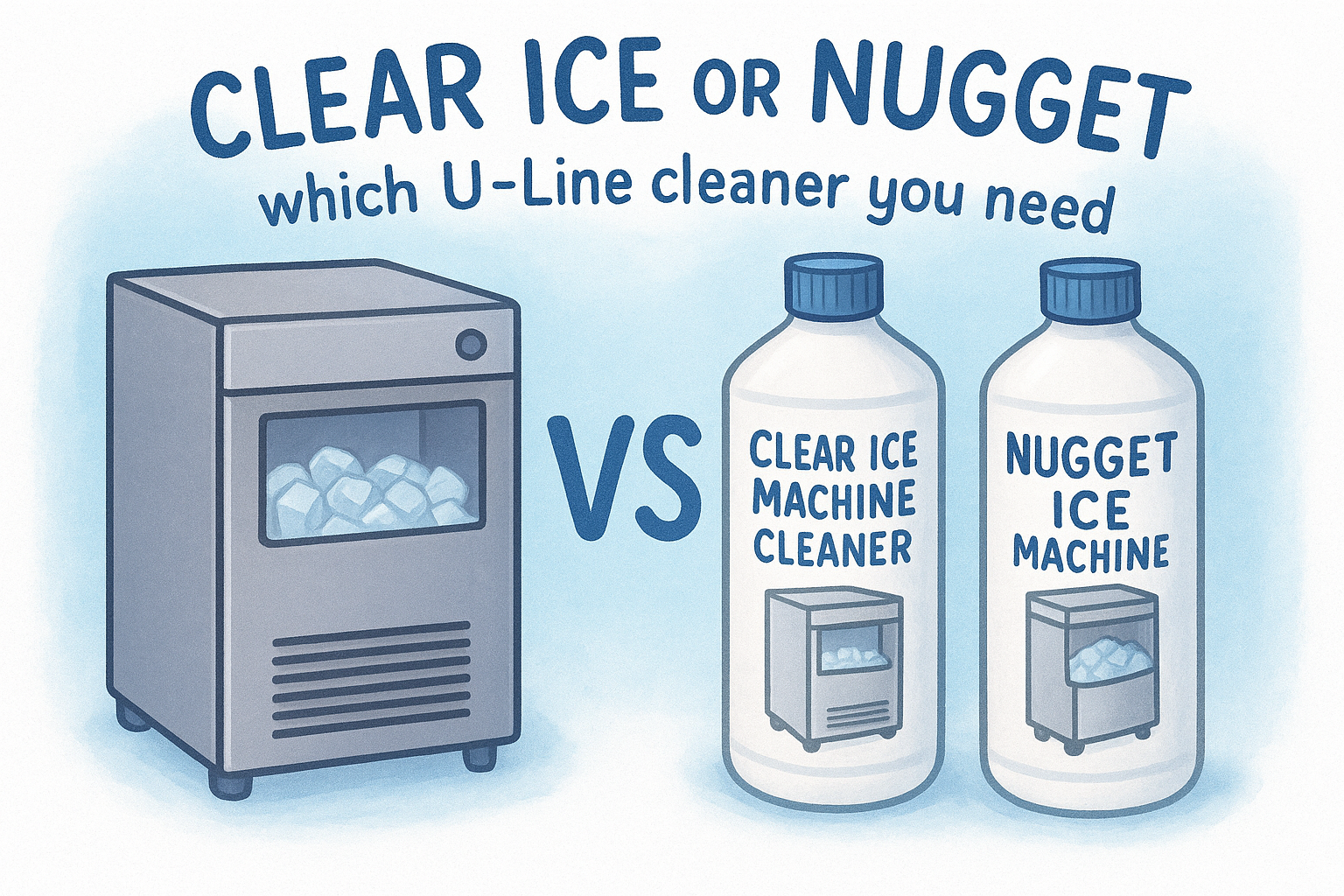
Clear ice or nugget: which U-Line cleaner you need
U-Line sells a separate cleaner for each machine type, and dealers list them under different model numbers.
| Your machine | U-Line cleaner | Model or SKU | Listed price |
|---|---|---|---|
| Clear ice machine | Clear Ice Machine Cleaner | 80-55667-00 | $22.00 MSRP |
| Nugget ice machine | Nugget Ice Machine Cleaner | ULANUGGETCLEAN | $18.00 at dealers |
Prices vary by dealer, so treat these as reference points. Do not buy a cleaner just because it fits your budget. Match the product name to your machine type and read the label for directions before you pour anything in.
The cleaner on the shelf must match the machine in your kitchen: clear ice with clear ice, nugget with nugget.
Signs your machine is overdue
Scale and slime show up in predictable ways. Look for these before you decide the machine is failing:
- Ice tastes or smells off
- Slimy or pink film in the reservoir or bin
- White, crusty deposits on the water path
- Slower ice production than usual
- Cloudy ice from a clear ice machine
If you see two or more, clean now rather than waiting for the next scheduled cleaning.
Can you use vinegar instead?
Vinegar is the wrong default. It is a weak acid that may soften light scale but does not reliably dissolve heavy buildup, and it does not sanitize the way a purpose-made cleaner does. The smell can also linger in the water path and flavor your first batches of ice. Your owner's manual decides what is approved for your model, and using a non-approved product can raise warranty questions.
Third-party cleaners are a separate question. Eco Safeway's Universal Non-Corrosive & Nickel-Safe Ice Machine Cleaner is formulated for commercial ice machines, and it comes in sizes from 32 oz to 275 gallon totes. It suits restaurants, hotels, and multi-machine maintenance programs. Before using it, or any non-U-Line cleaner, confirm compatibility with your machine manufacturer's guidance.
Step 1. Prepare the machine and your supplies
Preparation takes about five minutes and prevents most mistakes. Gather your tools, empty the machine, and read the cleaner label before you open the container.
Gather what you need
Set everything within reach so you do not leave the machine mid-clean:
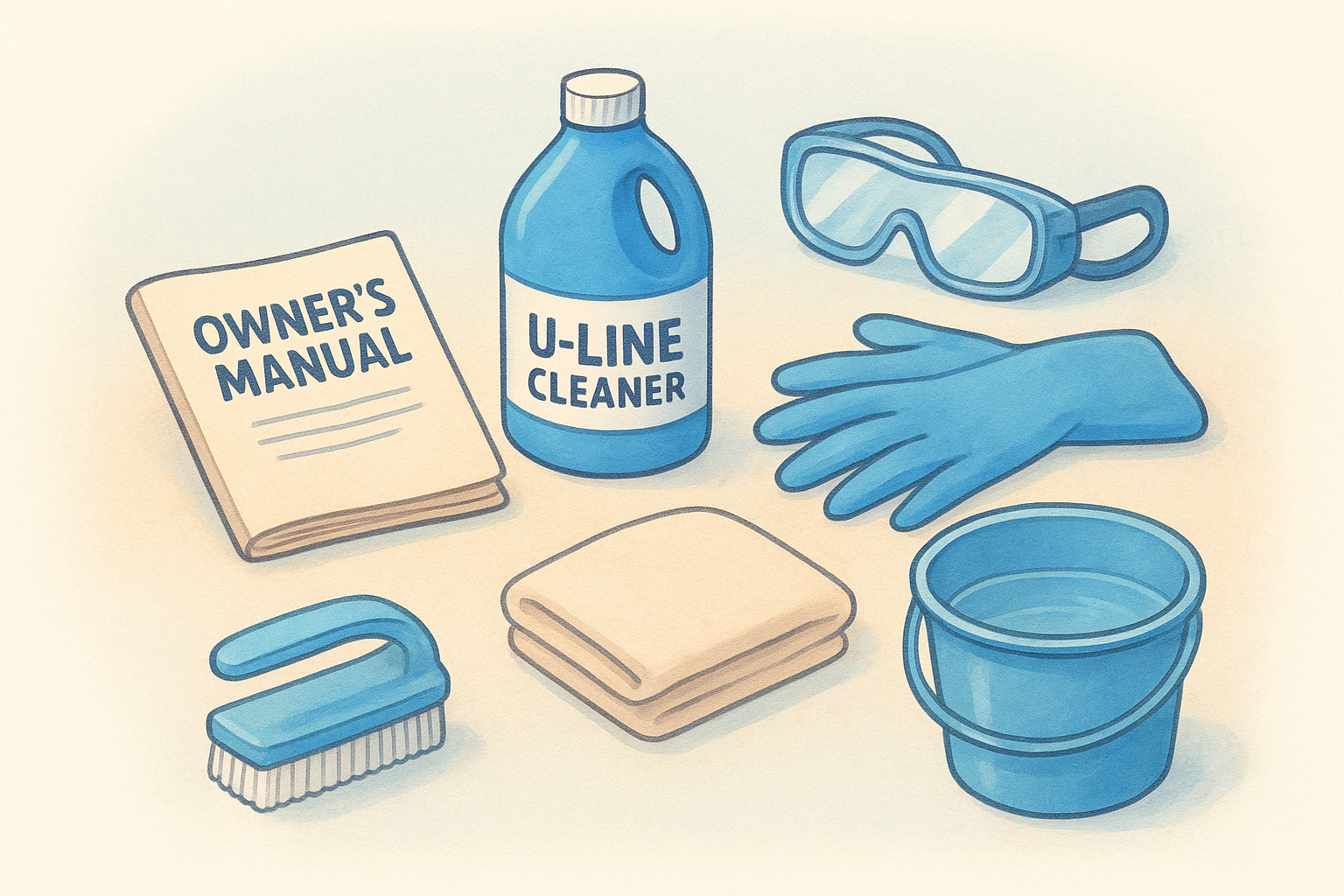
- The correct U-Line cleaner for your machine type
- Your owner's manual, open to the cleaning section
- Gloves and eye protection, as the label directs
- A soft cloth and a soft brush
- A bucket or sink for the ice you remove
- Clean, fresh water for rinsing
Empty the bin and power down
Remove all ice and discard it. Ice that sat in the bin during cleaning is not worth saving, and leftover cleaner can contaminate it. Then turn the machine off using the method in your manual, and let any water in the reservoir drain.
Read the label for the dilution and dose for your machine. Measure carefully. Guessing is how people end up with either leftover scale or too much residue to rinse out.
Never start a cleaning cycle with ice in the bin or without reading the label first.
Step 2. Run the cleaning cycle
Add the measured cleaner, start the machine's cleaning cycle, and let it finish without interruption. The details differ by model, so follow your manual for the exact controls.
Add the cleaner
Pour the measured cleaner into the water reservoir or the fill point your manual specifies. Never mix cleaners with bleach, vinegar, or other chemicals. Combining products can release harmful fumes and can make the cleaner work worse.
If you can see scale on accessible surfaces, wipe them with a cloth dampened with the cleaning solution as the label allows. Keep the cloth soft. Scrubbing hard can scratch food-contact surfaces and give slime more places to grow.
Start the cycle and let it finish
If your model has a cleaning cycle, start it as your manual describes. Stay nearby for the first few minutes, then let the cycle run to the end. Interrupting a cycle leaves undissolved scale and cleaner in the lines.
For heavy buildup, one pass may not clear everything. Repeat the cycle with fresh cleaner rather than doubling the dose. If scale keeps returning quickly, your water is probably harder than average, and you should shorten the cleaning interval (see Step 4).
Step 3. Rinse and sanitize before making ice
Rinsing matters as much as cleaning. Drain the cleaner completely, run fresh water through the machine, and discard the first ice it makes.
Rinse until the cleaner is gone
Drain the used solution and refill with fresh water. Run a rinse cycle, drain again, and repeat. Keep going until you see no foam and smell no cleaner odor. Two or three rinses is typical, but your manual and the cleaner label set the real number.
Wipe the inside of the bin and any removable parts with a clean cloth. Let them air dry briefly before closing the machine.
Sanitize and test the first ice
U-Line describes its cleaner as an ice machine cleaner and sanitizer that does both. Check the label to see whether sanitizing happens within the cleaning cycle or needs its own step, and follow the contact time it gives. If your cleaner is descale-only, sanitize with a food-safe sanitizer at the label's concentration.
Restart the machine and discard the first batches of ice. Taste a cube from the next batch. It should taste like water and nothing else.
A clean machine tastes like nothing: if the ice tastes of cleaner or vinegar, keep rinsing.
Step 4. Set a cleaning schedule that fits your water
Clean on a schedule based on your water hardness rather than waiting for symptoms. Harder water means faster scale, and your local water report tells you which group you fall into.
Match the interval to your water
The USGS classifies water as soft (0 to 60 mg/L), moderately hard (61 to 120), hard (121 to 180), and very hard (over 180). Many manufacturers suggest cleaning at least twice a year, so check your manual first. Then tighten the interval as water gets harder:
| Water hardness | Starting interval |
|---|---|
| Soft to moderately hard | Every 6 months |
| Hard | Every 3 to 4 months |
| Very hard | Every 3 months or sooner |
Treat these as starting points. If scale or off flavors return before the next date, shorten the interval.
Add quick checks between cleanings
Between full cleanings, wipe the bin and door gasket every few weeks with a soft cloth. Replace the water filter if your machine uses one, on the schedule your manual gives. Write the cleaning date on a label inside the door. For a commercial site with several machines, a simple log by machine keeps every unit on schedule.
Keep the right cleaner on hand
Buy the U-Line cleaner that matches your machine type, follow the label, and rinse until the ice tastes like water. Do that on a schedule that fits your water hardness, and you will avoid most scale, slime, and slow-ice problems. Vinegar is not a safe shortcut.
If you manage commercial machines or want a nickel-safe option sized for several units, look at Eco Safeway's non-corrosive nickel-safe cleaner and descaler for ice machines. It ships by standard shipping with no hazardous materials handling. Confirm it against your machine manufacturer's guidance, then pick the size that matches your cleaning schedule.


