




The right commercial dishwasher cleaner depends on the job. Scrub and flush the machine with water every day, and use a manufacturer-approved acidic delimer when white lime scale builds up on jets, heating elements and racks. Drain the wash tank first, add the delimer to fresh water, run or soak it as the label says, then flush until the rinse water tests clean. Never put manual dish soap in the machine, and never mix acid with chlorine.
Scale and grease build up quietly. Spray jets clog, wash temperatures drop, glasses come out cloudy, and a sour smell settles in. Many kitchens only act when a service call or a failed inspection forces them to. The confusion is understandable. Detergent, rinse aid, sanitizer and delimer all sit near the machine, and each does a different job. Using the wrong one wastes money, and mixing the wrong two is dangerous.
This guide covers what each chemical does, which cleaner to choose, and four steps to clean and de-lime your machine safely. It ends with a maintenance schedule you can post by the dish pit. Eco Safeway supplies descalers and enzyme cleaners for commercial and foodservice equipment, so the buying advice here focuses on what to check, not on pushing a product.
What commercial dishwasher cleaner your machine needs
Your machine needs two kinds of cleaning. A daily wipe and flush removes food soil, and an occasional acidic delimer dissolves mineral scale. Which product you buy depends on which problem you have.
The chemicals a commercial dishwasher uses
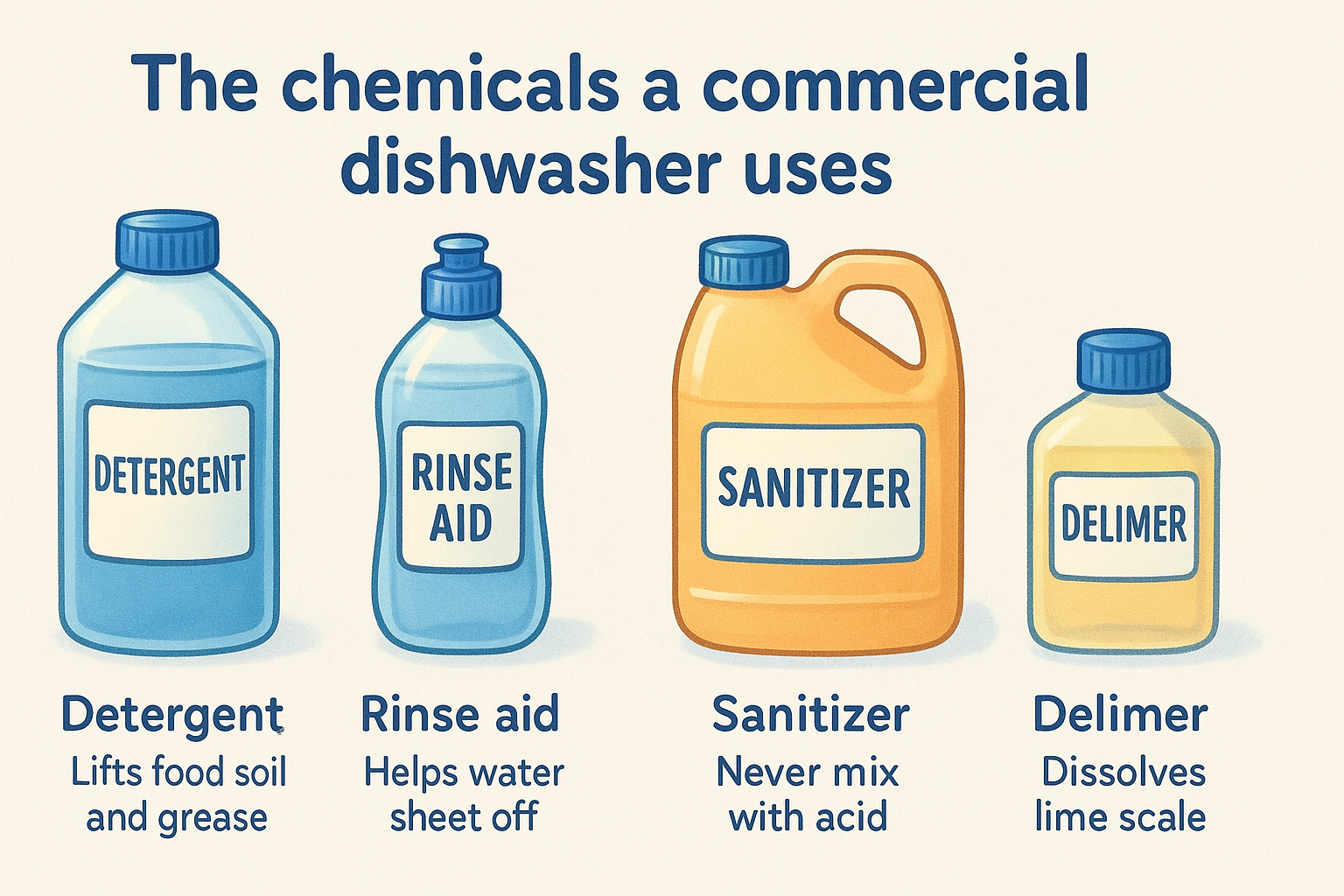
Most machines run four chemicals, and each has one job. Confusing them is the most common mistake in the dish pit.
| Chemical | What it does | Watch for |
|---|---|---|
| Detergent | Alkaline formula that lifts food soil and grease | Wrong dosing leaves film or residue |
| Rinse aid | Helps water sheet off for spot-free drying | Too little causes spots |
| Sanitizer | Usually chlorine in low-temperature machines | Never mix with acid |
| Delimer | Acid that dissolves lime scale | Needs fresh water in the tank, then a thorough flush |
| Enzyme cleaner | Breaks down organic buildup and odor | Does not dissolve heavy mineral scale |
High-temperature machines sanitize with a hot final rinse instead of a chemical. The required temperature is on the data plate, and it is commonly 180°F.
Signs it is time to clean: cloudy glassware, white crust on the heater or jets, food particles left on clean ware, a sour smell, or slimy residue in the tank.
Detergent cleans the dishes, delimer cleans the machine, and they are never the same product.
Delimer, vinegar or dish soap?
For real scale, use a delimer made for dish machines. White vinegar is a mild acid. It can cut a light film in some machines, but it will not clear heavy lime, and some manufacturers do not approve it, so check your manual first. Dawn and other manual dish soaps do not belong in the machine. They are made for hand washing, and the foam they produce can overflow the machine and hurt pump performance.
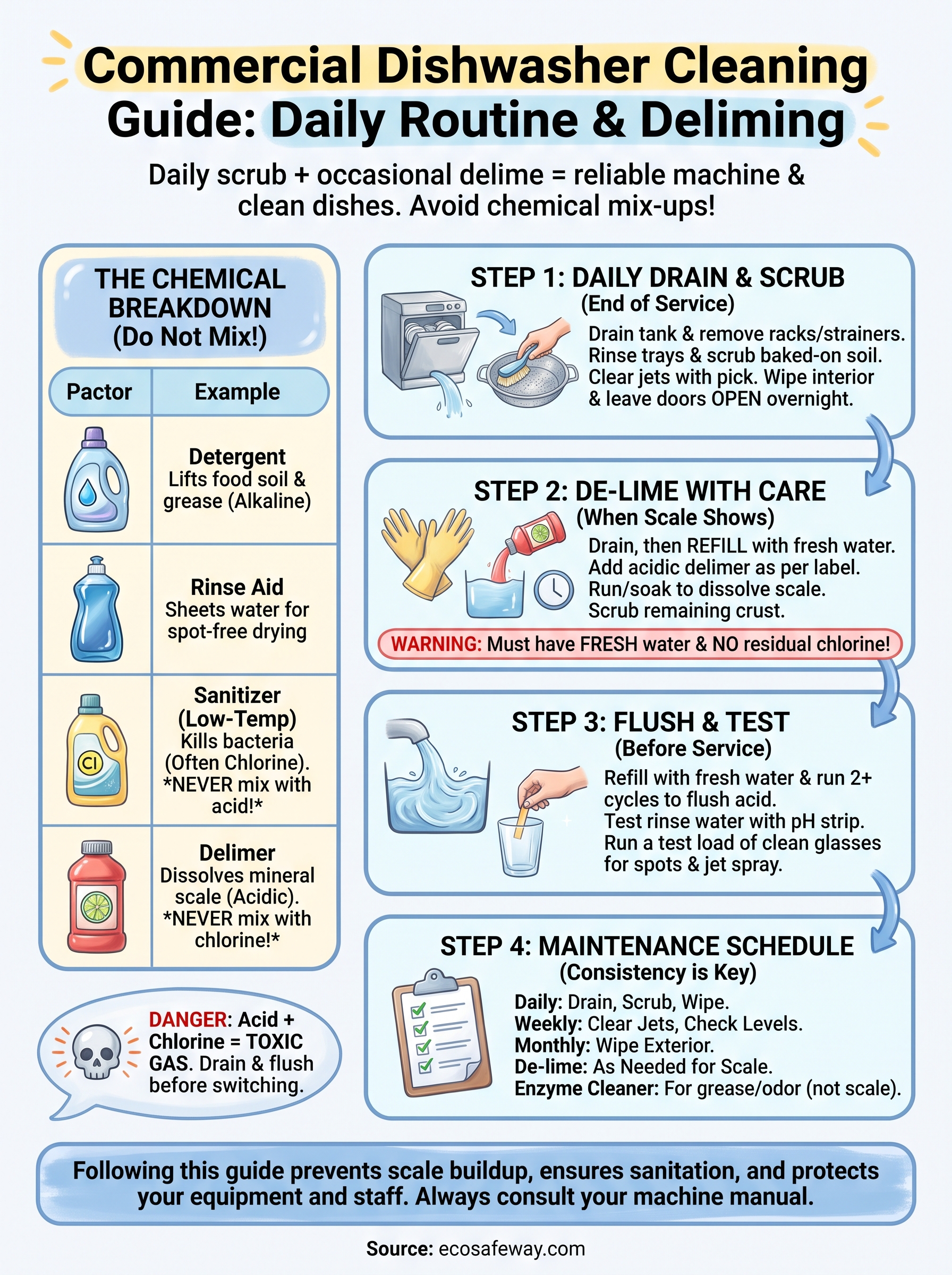
Mixing deserves a hard rule. Acid plus chlorine releases toxic chlorine gas. Drain and flush any chlorine detergent or sanitizer from the tank before delimer goes in, and never pour two chemicals together.
What to have ready
Gather these before you start:
- The machine manual and data plate
- The delimer's safety data sheet
- Chemical-resistant gloves and splash goggles
- A nylon brush and a small pick for clogged jets
- pH test strips, plus chlorine strips for low-temperature machines
Step 1. Drain and scrub the machine daily
Do this at the end of every service. It takes about 15 minutes and stops most buildup before delimer is ever needed.
Empty, strip and scrub
Switch the machine off, drain the wash tank, and remove the racks, scrap trays and strainers. Rinse the strainers and scrap trays under running water, and scrub off any baked-on soil with the nylon brush. Pull the spray arms if your manual allows it, and clear each nozzle with the pick. Clogged jets are the usual reason food stays on plates.
Wipe the inside and leave the doors open
Wipe the tank interior, the door seals and the drip groove with a damp cloth. Leave the doors open so the interior dries overnight, which discourages odors and slime. Wipe the top and exterior at least once a month.
A 15-minute daily teardown prevents most of the scale and slime you would otherwise delime later.
Step 2. De-lime with the right product
De-lime when you see white crust, cloudy glassware, or a weak spray pattern. Always start with a drained tank and fresh water.
Prepare the machine
Put on gloves and goggles. Drain the wash tank, then refill it with fresh water. If the machine lets you, switch off the detergent and sanitizer dosing pumps. Do not delime right after service, because leftover alkaline detergent neutralizes the acid and weakens it. Rinse out any chlorine residue before the acid goes in.
Add the delimer and let it work
Follow these steps for a typical door-type or conveyor machine, and defer to the label where it differs:
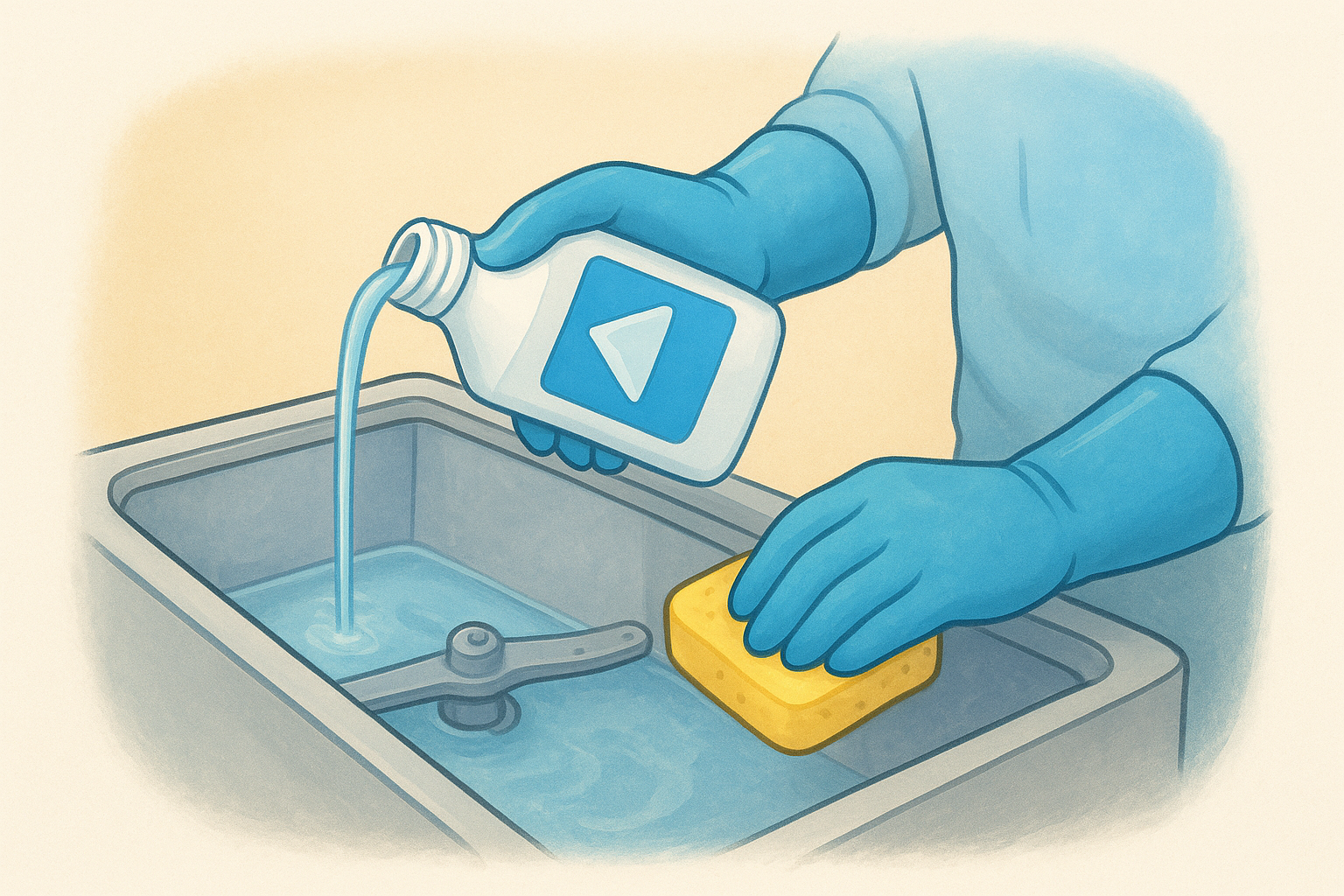
- Add the delimer at the dilution printed on the label.
- Run the wash cycle briefly so the solution reaches the jets, heater and manifold.
- Let it soak for the time on the label. Heavy scale can call for an hour or more.
- Scrub any remaining crust with the nylon brush while the solution is still in the tank.
- Drain the tank completely.
Heavy scale needs contact time, not more chemical, so follow the label instead of doubling the dose.
Step 3. Flush and test before service
Flush until the rinse water tests like your tap water. Residual acid damages gaskets and ruins the next detergent dose.
Rinse thoroughly
Refill with fresh water and run at least two full cycles, draining between them. Dip a pH strip into the rinse water. When it matches your tap water, the acid is gone. Then rinse and refit the racks, strainers and spray arms.
Run a test load
Restore the dosing pumps, then wash a rack of clean glasses. Check them for film and spots, and check the jets for an even spray. On a low-temperature machine, test the sanitizer with a chlorine strip against your local health code. On a high-temperature machine, confirm the final rinse gauge reaches the temperature on the data plate. If spots return fast, the dosing is probably off, so ask your detergent supplier to check it.
Step 4. Set a schedule and stop scale returning
Fix a routine so delime day is never a surprise. Hard water shortens every interval below, and your water supplier or a hardness test kit can tell you how hard yours is.
Use a simple schedule
| Task | Frequency |
|---|---|
| Drain, scrub and wipe the machine | Daily |
| Clear spray arm nozzles | Weekly |
| Check rinse aid and detergent levels | Weekly |
| Wipe top and exterior | Monthly |
| De-lime | When scale shows, or on a set interval in hard water |
Handle odor and organic buildup between delimings
If your machine smells but shows little scale, the cause is likely grease and food film, not minerals. An enzyme cleaner suits this job. Eco Safeway's enzyme cleaner tablets are sold in packs of 25 to 250 pieces, priced from $49.99 to $249.99. The listing describes them for dishwashers, drains and garbage disposals in residential and commercial use. They break down organic buildup, but they are not a delimer, so keep a dedicated delimer for scale. Confirm the product against your dishwasher manual before use.
Enzymes handle grease and odor, acid handles scale, and a good routine needs both in the right order.
Keep the routine running
Clean the machine daily with water, delime when scale appears, and never mix acid with chlorine. Drain first, flush well, and test the rinse water before you wash a single plate. Pick products by their label and the manual, not by habit.
If odor and organic film are your main problem, start with a maintenance product built for them. Eco Safeway's enzyme cleaner tablets are a practical option for routine cleaning between delimings. Call 561-405-0271 if you have questions about sizes for your kitchen.


