





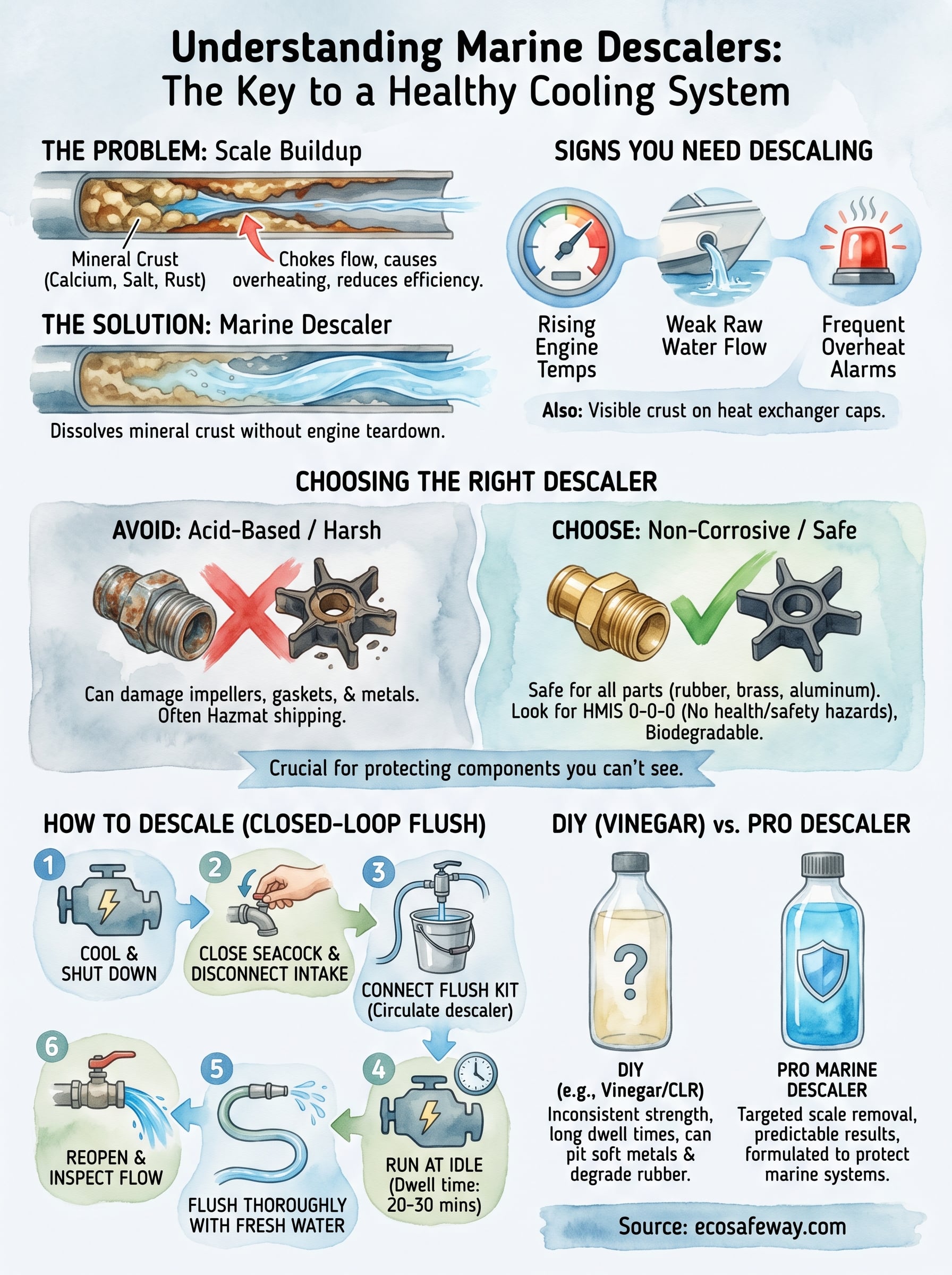
If your raw water flow has dropped, your engine temps are creeping up, or your heat exchanger just isn't performing like it used to, scale buildup is probably the culprit. A marine descaler is the product built to dissolve that mineral crust from engine cooling passages, heat exchangers, and raw water systems without tearing apart your equipment to do it. Salt, calcium, and rust deposits accumulate fast in raw water cooled engines, and left alone they choke flow and force your engine to work harder than it should.
Choosing the right one isn't just about picking whatever's on the shelf at the marine store. You need to know the difference between acid-based descalers that eat through scale but can also damage impellers, gaskets, and metal components, and non-corrosive formulas that clear buildup while staying safe for the parts they're flushing. Shipping restrictions, disposal rules, and how the product handles inside your specific cooling system all matter just as much as cleaning power.
This article breaks down exactly what a marine descaler does, how it works on scale and salt deposits, and what separates a product worth trusting from one that'll cost you more in the long run. You'll also get a clear framework for comparing options before you buy.
Why marine descalers matter for your boat
Scale doesn't announce itself. It creeps into your raw water system one mineral layer at a time, and by the time you notice rising temps or weak flow at the thru-hull, you're already looking at a real efficiency problem. Heat exchanger tubes narrow first, since that's where flow slows down and deposits have the most surface area to grab onto. Your engine compensates by running hotter, your impeller works harder against restricted flow, and fuel efficiency drops even though nothing on the boat looks obviously broken.
The hidden cost of ignoring buildup
Left unchecked, scale turns a routine maintenance item into an expensive repair. A corroded heat exchanger or a cracked cylinder head from chronic overheating costs thousands more than a bottle of descaler and a couple hours of your time. Marinas and service techs will tell you the same thing: most "mystery" overheating calls trace back to scale nobody bothered to check for.
Scale buildup doesn't just slow your boat down, it quietly shortens the life of your engine.
Why raw water systems are especially vulnerable
Regular raw water flush routines matter because saltwater and brackish water carry far more dissolved minerals than freshwater cooling loops ever see. Every cycle through your engine deposits a thin film of calcium, magnesium, and salt, which is why a salt remover for marine systems belongs in your flush routine. Boats that sit in warm saltwater marinas, where mineral concentration and bacterial growth both run higher, see buildup form faster than vessels in cooler freshwater lakes. That's why a descaling routine matters more for coastal and tropical boaters than it might for someone running a boat exclusively on a freshwater reservoir up north.
How to choose the right marine descaler
Not every bottle labeled "descaler" belongs anywhere near your engine. Non-corrosive formulas clear calcium and salt scale without attacking rubber impellers, brass fittings, or aluminum components, while acid-heavy versions can strip metal and shorten the life of parts you just paid to replace. Check the label for an HMIS rating before you buy. A 0-0-0 rating means no health, flammability, or physical hazard, which also means no hazmat shipping fees or special storage requirements on board.
What to check before you buy
Run through this list before adding anything to your cart:
- Corrosivity: does it list safe use on aluminum, brass, and rubber?
- Shipping class: hazmat fees add up fast if you order regularly
- Biodegradability: matters if you're flushing near a marina or dock
- Dwell time: how long it needs to sit to dissolve scale
- Application method: circulation flush versus manual scrubbing
The best marine descaler is the one that removes scale without becoming the next repair bill.
Eco Safeway's eco-friendly marine descaler is formulated non-corrosive and HMIS 0-0-0 certified, so you get cleaning power without the tradeoffs acid-based competitors force on you.
How to descale your engine or cooling system
Descaling isn't complicated, but skipping steps is how people end up with half-dissolved scale still choking their raw water passages. A closed-loop flush using a bucket or flush kit works better than running the product straight through and out the exhaust, since it gives the descaler time to actually break down mineral deposits instead of just passing by them.
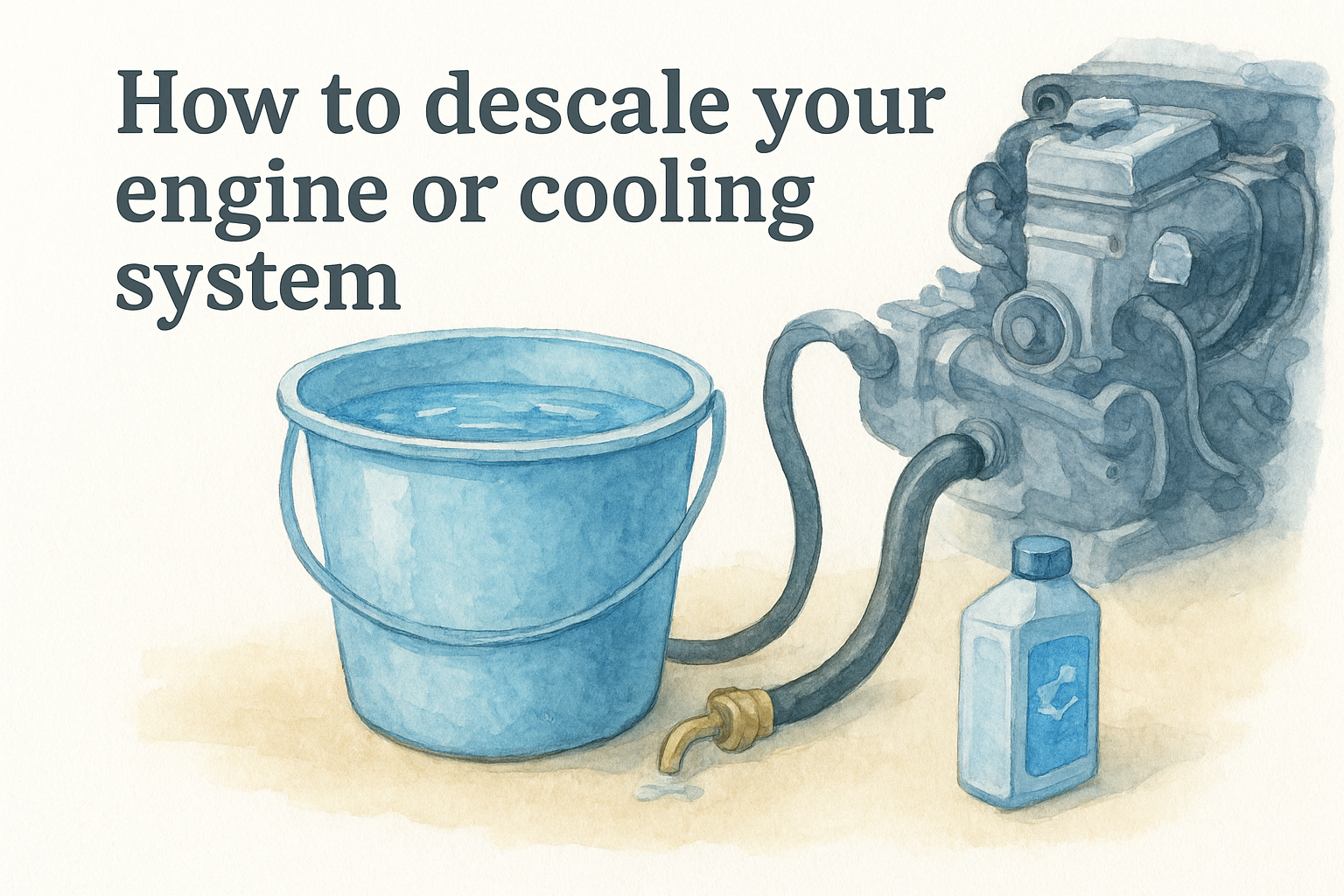
A basic descaling routine
- Shut down the engine and let it cool completely.
- Close the seacock and disconnect the raw water intake hose.
- Connect a flush kit or bucket to circulate descaler through the system.
- Run the engine at idle for the dwell time listed on the product, usually 20 to 30 minutes.
- Flush thoroughly with fresh water before reopening the seacock.
- Inspect flow at the exhaust to confirm scale has cleared.
A proper flush cycle matters more than how strong the descaler smells or looks.
Eco Safeway's raw water flush product is built for exactly this closed-loop process, dissolving scale gently enough that you won't need to babysit the engine while it works.
Signs your marine equipment needs descaling
Your gauges usually tell the story before you ever pull an inspection cover. Rising engine temperature at cruising RPM, weak flow from the raw water discharge, or an overheating alarm that trips more often than it used to are the first hints that scale has narrowed your cooling passages. Ignore those signs long enough and you'll start seeing steam or reduced power output under load.
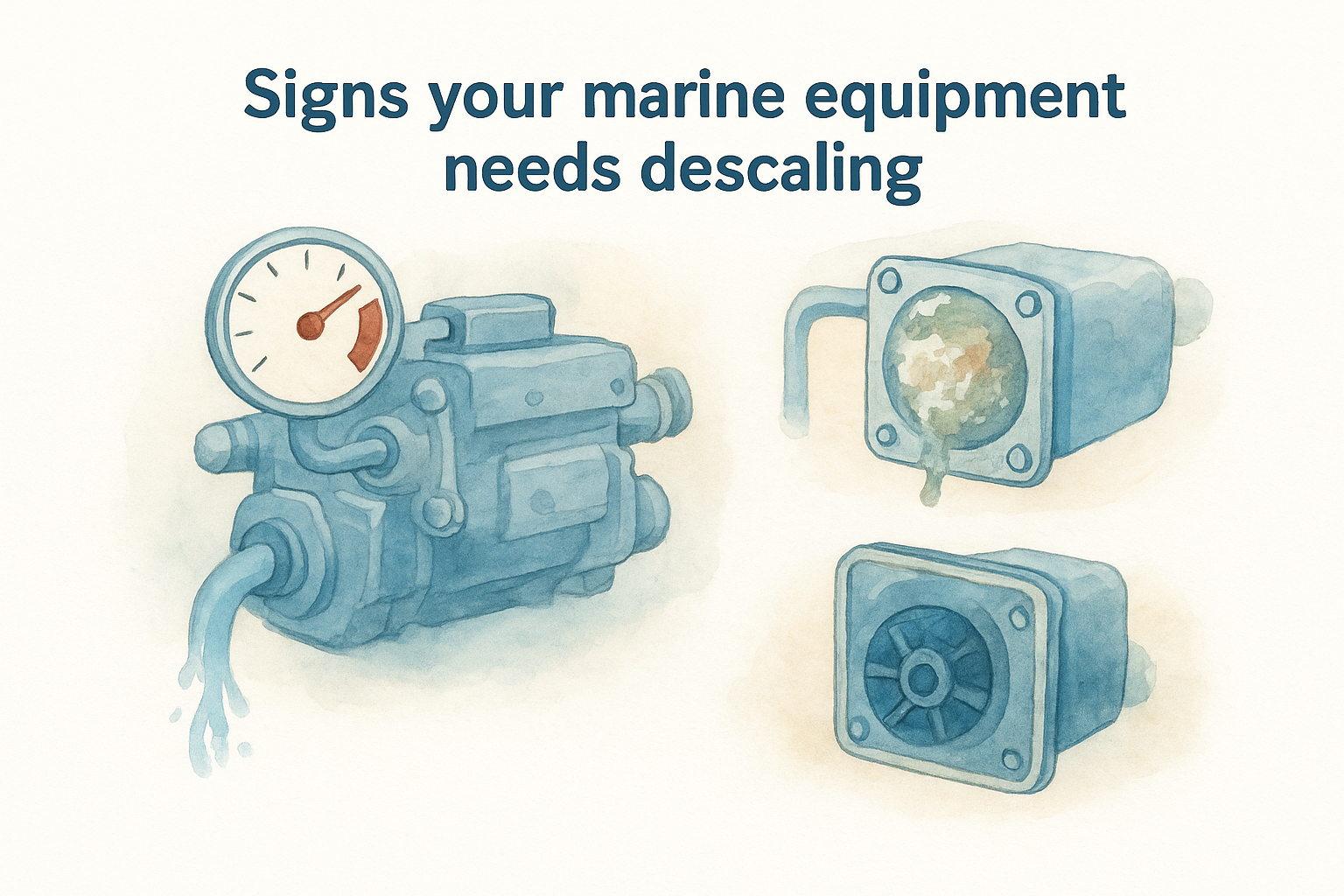
Warning signs to watch for
- Engine temp climbs 10-15 degrees above normal at the same RPM
- Raw water discharge stream looks thin or intermittent
- Overheat alarms trigger more frequently
- Heat exchanger end caps show white or greenish crust when opened
- Impeller wears out faster than your maintenance schedule predicts
If your engine runs hotter every season without a clear reason, scale is the first thing to rule out.
Don't wait for a full shutdown
Inspecting your heat exchanger and thermostat housing once a season catches buildup before it becomes an overheating event. Coastal boaters running in warm saltwater should check twice as often, since mineral concentration there accelerates scale formation compared to freshwater cooling loops.
Marine descaler vs vinegar and other DIY methods
Plenty of boaters reach for vinegar or CLR before buying a dedicated product, and mild acids do dissolve some scale. The problem is control. Vinegar is weak enough that it needs hours of dwell time to touch heavy calcium deposits, where a purpose-made calcium and lime remover does the job predictably, yet strong enough to pit soft metals and degrade rubber impeller vanes with repeated use. A purpose-built marine descaler is formulated to target mineral scale specifically, without the guesswork of diluting a kitchen product and hoping the concentration is right for your cooling system.
Where DIY methods fall short
- Inconsistent acid strength makes results unpredictable batch to batch
- Longer dwell times mean more engine downtime
- No HMIS safety data, so you're guessing about corrosivity
- Household acids can still harm gaskets and brass fittings over repeated flushes
Vinegar might clean your coffee maker fine, but your raw water system deserves a formula built for marine metals.
When a dedicated formula pays off
Commercial operators and anyone descaling more than once a season notice the difference fastest. A non-corrosive descaler protects components you can't easily inspect, saving you from trading a scale problem for a corrosion problem down the line.
Keeping your systems scale-free for the long run
Scale never takes a season off, so your maintenance routine shouldn't either. A marine descaler built specifically for raw water systems, not a diluted kitchen acid, keeps your heat exchanger and cooling passages clear without risking the impellers, gaskets, and metal fittings you'd rather not replace early. Building a seasonal flush into your maintenance calendar costs you an afternoon, while ignoring buildup costs you an overheated engine and a much bigger repair bill.
Check your gauges, watch your discharge flow, and don't wait for an alarm to tell you what a quick inspection would have caught months earlier. Boats running warm saltwater need that check more often than freshwater vessels, but every raw water cooled engine benefits from staying ahead of mineral buildup rather than reacting to it.
Ready to flush the scale out for good? Grab Eco Safeway's raw water flush for marine engines and give your cooling system the non-corrosive treatment it deserves.


