





A dirty coil in a data center doesn't just lose efficiency, it puts uptime at risk. When cooling capacity drops even a few percentage points, server rooms heat up fast, and the margin for error in a facility running 24/7 is thin. That's why picking the right data center hvac cleaner matters more than it does in almost any other commercial setting.
The short answer: you need a cleaner that removes scale, biofilm, and debris from coils and cooling towers without leaving behind residue, corroding aluminum fins, or introducing chemicals that could damage sensitive electronics nearby. Non-corrosive formulations that skip harsh acids and solvents protect both your equipment and your maintenance crew, and they don't require the hazmat handling that traditional degreasers demand.
This article breaks down what a data center HVAC cleaner actually does, why standard industrial degreasers often fall short in these environments, and what to look for on a label before you buy. We'll cover coil cleaning chemistry, safety ratings like HMIS 0-0-0, and the practical differences between products marketed as "green" and those that are genuinely non-toxic and equipment-safe.
Why data center HVAC cleaning cannot be skipped
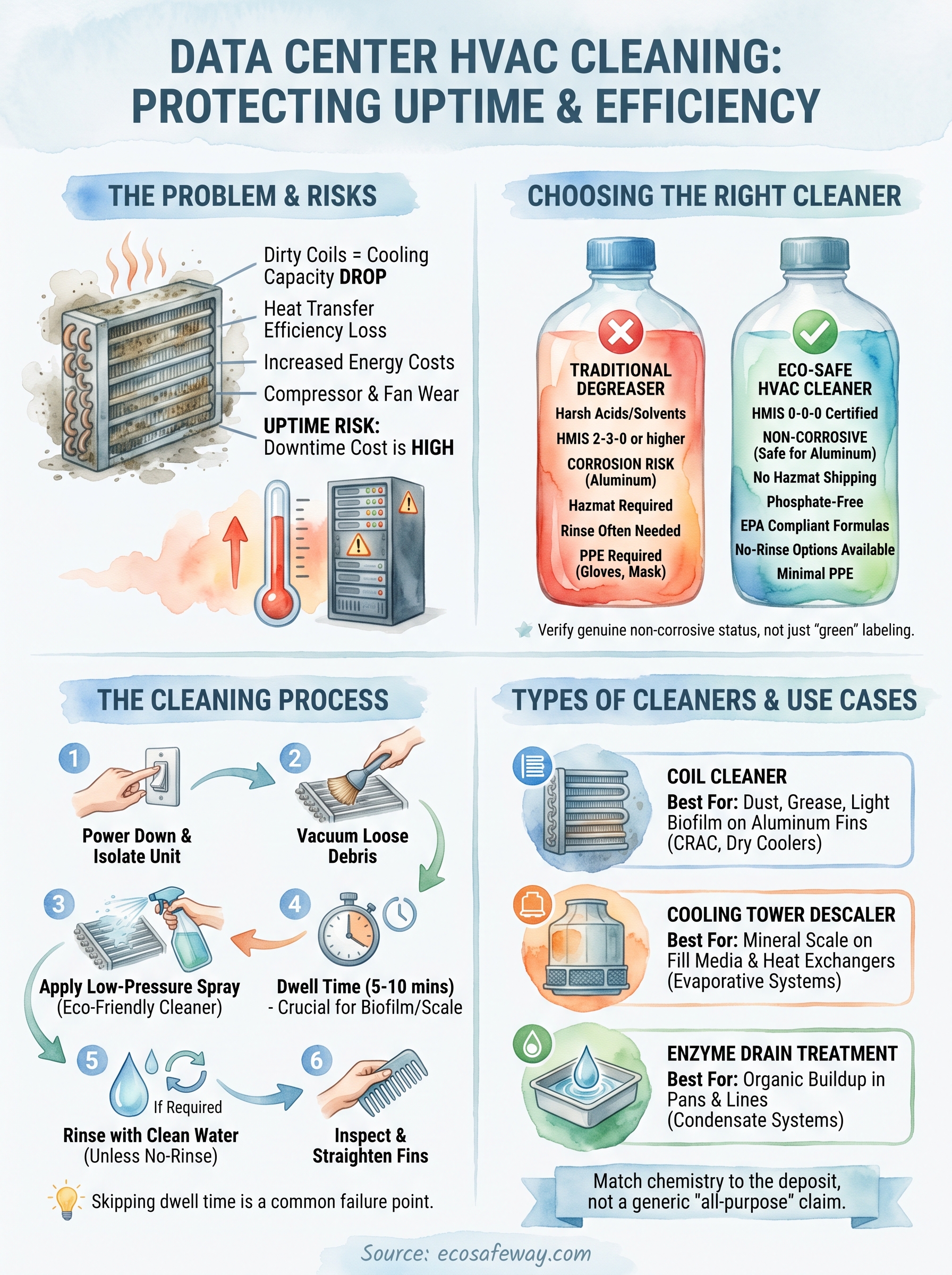
Every watt of cooling capacity you lose to a dirty coil translates directly into thermal risk for the racks behind it. Data centers run tight temperature and humidity bands year-round, and even a small drop in heat transfer efficiency forces compressors and fans to work harder, which raises energy costs and shortens equipment life, something worth understanding through how a refrigeration system actually works. Skipping cleaning cycles isn't a maintenance shortcut, it's a bet against uptime.
Heat load and downtime risk
Coils coated in dust, biofilm, or mineral scale act as insulation instead of heat exchangers. Airflow drops, discharge temperatures climb, and cooling units start short-cycling to compensate. In a facility where a single hour of unplanned downtime can cost tens of thousands of dollars, that kind of cooling degradation is not a minor inconvenience.
A clean coil is cheap insurance against a very expensive outage.
Why dirty coils cost more than they seem
The hidden costs stack up quickly once you look past the electric bill:
- Compressors run longer cycles, wearing out bearings and seals faster
- Reduced airflow raises hot-spot risk near high-density racks
- Biofilm and scale buildup accelerate corrosion on aluminum fins
- Backup cooling systems get triggered more often, adding wear to redundant equipment
Each of these problems compounds the others, which is why facilities that defer coil cleaning tend to see maintenance costs rise faster than their cooling loads.
Compliance and equipment warranties
Most HVAC manufacturers specify cleaning intervals as a condition of the warranty coverage, and many data center operators are also held to uptime commitments in service-level agreements. The EPA's ENERGY STAR guidance for data centers treats cooling system maintenance as a core efficiency practice, not an optional extra. Falling behind on cleaning schedules can put both your warranty standing and your contractual obligations at risk, on top of the raw performance loss.
How to choose the right data center HVAC cleaner
Start with the safety rating before you even look at cleaning power. A true HMIS 0-0-0 certification means zero health, flammability, and physical hazard scores, which tells you the product won't require respirators, gloves, or special ventilation around active equipment racks. Look for phosphate-free, EPA compliant formulas that skip the acids and caustic solvents found in older degreasers, since those chemistries etch aluminum fins and leave conductive residue that no data center wants near live electronics.
Verify that the cleaner is genuinely non-corrosive, not just labeled "green." Plenty of products marketed as eco-friendly still carry warning labels underneath the branding, so check the actual safety data sheet rather than the front of the bottle.
If a cleaner needs a hazmat placard to ship, it doesn't belong near your cooling infrastructure.
Traditional degreaser vs. eco-safe coil cleaner
| Criteria | Traditional Degreaser | Eco-Safe HVAC Cleaner |
|---|---|---|
| HMIS Rating | 2-3-0 or higher | 0-0-0 |
| Corrosion Risk | High on aluminum fins | None |
| Hazmat Shipping | Often required | Not required |
| Rinse Required | Usually | No-rinse formulas available |
| PPE Needed | Gloves, respirator | Minimal to none |
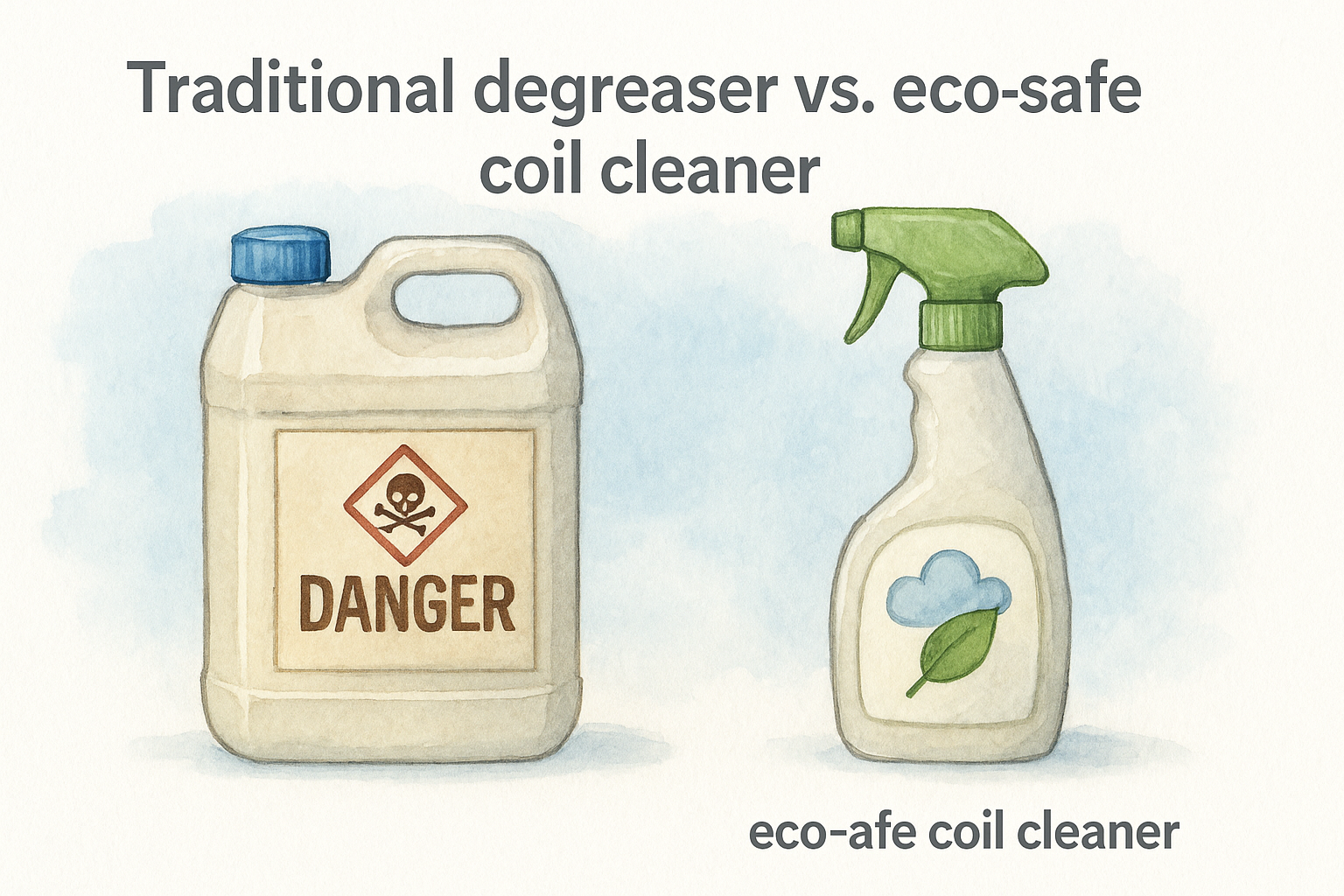
Questions worth asking your supplier before purchase include whether the product is safe for foam and electrostatic filters, whether it's tested on aluminum microchannel coils specifically, and whether it leaves any film that could interfere with airflow sensors.
How to clean data center HVAC coils and components
Cleaning a coil correctly matters as much as choosing the right chemical. Even an aluminum-safe condenser coil cleaner can underperform if it's applied the wrong way, so follow a sequence that protects both the fins and the surrounding equipment.
Step-by-step coil cleaning process
- Power down the unit and isolate it from the cooling loop before touching any panel.
- Vacuum loose debris and dust from the coil face with a soft brush attachment.
- Apply the eco-friendly HVAC cleaner as a low-pressure spray, working from top to bottom.
- Let the formula dwell according to the label, usually 5 to 10 minutes for biofilm and light scale.
- Rinse with clean water only if the product requires it, since many no-rinse formulas skip this step entirely.
- Inspect fins for bent edges and straighten them with a fin comb before restarting airflow.
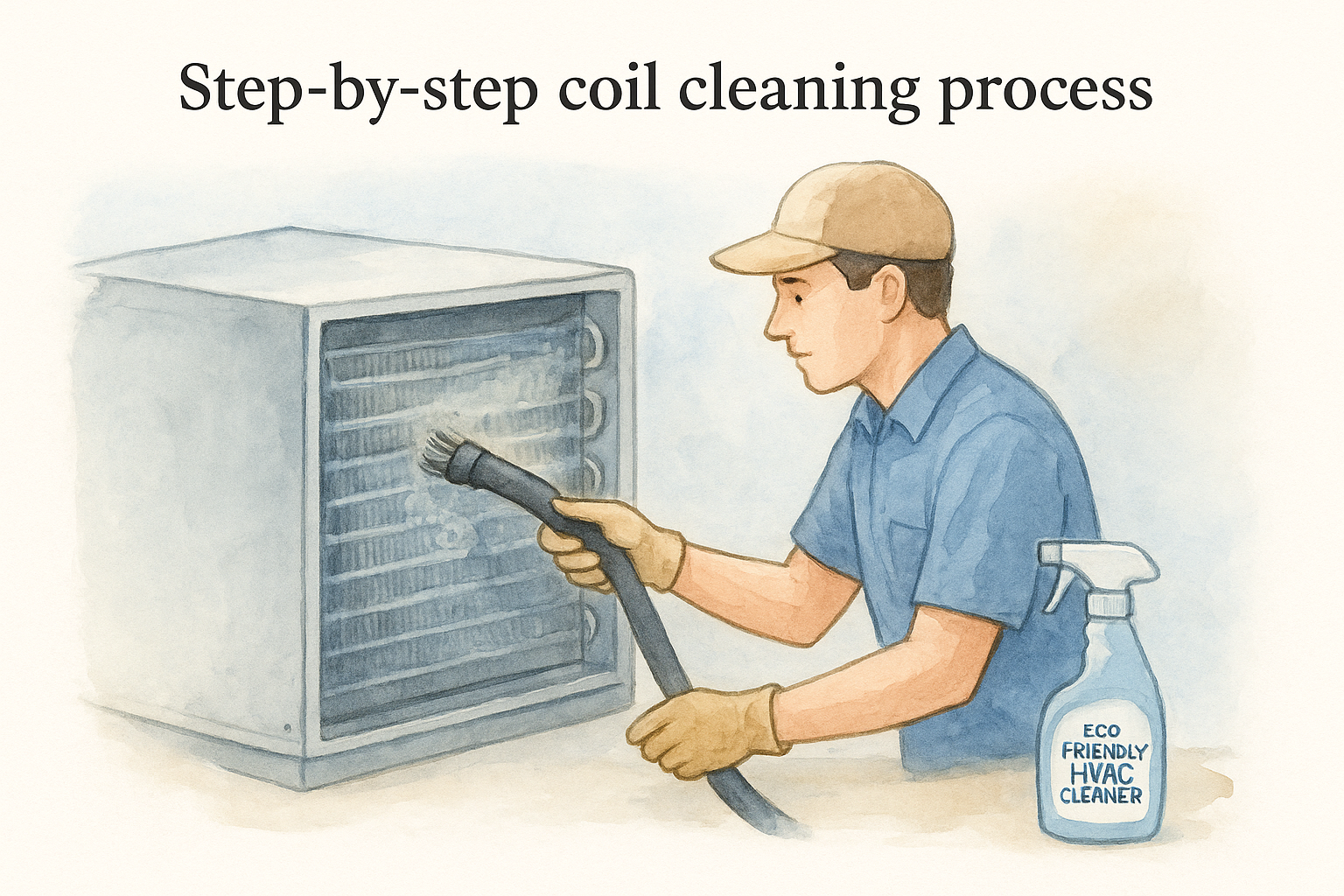
Skipping the dwell time is the most common reason coil cleaning fails to restore full airflow.
Cleaning surrounding components without damage
Condenser coils aren't the only surfaces that collect grime. Drain pans, electrostatic filters, and cooling tower fill all need attention on a rotating schedule, and pairing a non-toxic descaler with eco-friendly drain maintenance products across these components keeps your supply closet simple. Pans that hold standing water are especially prone to biofilm, so treat them with an enzyme-based formula rather than a bleach solution that can pit stainless steel over time.
Restarting the unit only after everything dries fully prevents mineral spotting on freshly cleaned aluminum.
Types of data center HVAC cleaners and when to use them
Not every cleaning task calls for the same formula, and stocking the wrong one wastes money and risks the wrong chemistry touching the wrong surface. A good data center hvac cleaner lineup usually covers coil cleaning, descaling, and drain maintenance separately, since each targets a different kind of buildup.
Matching the cleaner to the job
An air-cooled data center coil cleaner handles dust, grease film, and light biofilm on aluminum fins in CRAC units and dry coolers. A cooling tower descaling chemical removes mineral scale from evaporative systems where hard water leaves deposits on fill media and heat exchange surfaces. Enzyme-based drain treatments break down organic buildup in condensate pans and lines without the corrosive punch of bleach, and a non-acid evaporative cooler cleaner restores airflow on wetted media.
Match the chemistry to the deposit, not the deposit to whatever's already on the shelf.
| Cleaner Type | Best For | Frequency |
|---|---|---|
| Coil cleaner | Dust, grease, light biofilm on fins | Quarterly |
| Cooling tower descaler | Mineral scale on fill and heat exchangers | Every 6-12 months |
| Enzyme drain treatment | Organic buildup in pans and lines | Monthly |
Reading labels before you buy
Suppliers often blend descaler and degreaser claims into one bottle, which sounds convenient but usually means neither job gets done well. Verifying that a non-corrosive cleaner is formulated for the specific deposit you're targeting, rather than a generic all-purpose claim, saves you from reapplying product and losing cooling capacity twice.
Keeping your cooling system running clean
A reliable data center hvac cleaner protects far more than the coil itself. It protects uptime, warranty terms, and the compressors and fans that keep working overtime when scale and biofilm build up unchecked. Choosing a non-corrosive, HMIS 0-0-0 rated formula means you skip the hazmat handling, the PPE requirements, and the corrosion risk that come with older acid-based degreasers, without giving up cleaning power on aluminum fins or evaporative surfaces.
Getting this right isn't complicated once you match the chemistry to the deposit and stick to a cleaning schedule instead of waiting for airflow problems to show up. Facilities that treat coil and cooling tower maintenance as routine, not reactive, see fewer emergency service calls and lower energy bills over time. If you're ready to standardize on a cleaner built specifically for this environment, explore Eco Safeway's data center HVAC cleaner and coil descaler for water-cooled systems and see how it fits your maintenance schedule.


