





Your Manitowoc ice machine is scaling up faster than the manual says it should, or the ice has that faint musty smell that tells you bacteria and mold have moved into the water lines. Either way, you're now searching for a manitowoc ice machine cleaner that actually works without leaving behind acid residue or forcing you to glove up like you're handling hazmat. That search gets harder when half the products marketed as "ice machine safe" still carry corrosive warning labels.
Here's the direct answer: you need a cleaner and sanitizer built specifically for evaporator plates and water systems, run through a full descale-then-sanitize cycle, not just a quick rinse. Skipping either step is why machines keep scaling and ice keeps smelling off even after "cleaning day."
This guide walks through exactly how to clean and sanitize a Manitowoc unit step by step, what separates a real descaler from a diluted all-purpose cleaner, and where to source a non-toxic, HMIS 0-0-0 rated solution that skips the hazmat shipping fees entirely.
Why and when to clean your Manitowoc ice machine
Mineral scale and biofilm are two different enemies, and treating them the same way is why so many operators end up cleaning twice as often as they should. Scale buildup comes from calcium and magnesium in your water supply hardening onto the evaporator plate, and it acts like a thermal blanket, forcing the compressor to run longer to make the same amount of ice. Biofilm and slime, on the other hand, grow in the water reservoir, distribution tubes, and ice bin whenever organic residue and warm, humid air sit undisturbed. One kills efficiency, the other kills water quality, and a Manitowoc unit needs a plan for both.
A machine that's descaled but never sanitized is still making dirty ice, just clear dirty ice.
Signs your Manitowoc needs attention now
Don't wait for a scheduled maintenance date if you're already seeing these symptoms:
- Ice production has dropped noticeably below the rated output on the data plate
- Ice cubes look cloudy, thin, or smaller than usual
- A musty or sour smell comes from the bin when you lift the lid
- Slime or pink residue appears on the curtain, bin walls, or dispenser chute
- The unit runs longer harvest cycles than it did a few months ago
How often to run a full clean
Manitowoc's own service literature calls for a full clean and sanitize every six months under normal conditions, but that interval shrinks fast depending on your water. Facilities on hard well water or municipal supplies with high mineral content often need quarterly service, while high-volume restaurants and hotels with heavy ice draw should treat the bin and reservoir monthly regardless of scale levels. Skipping this schedule doesn't just cost you ice output, it puts you at odds with local health department expectations for food-contact equipment.
Step 1. Empty the ice bin and start the clean cycle
Power down the ice-making function first, not the whole unit, so the compressor and control board stay live while you work. Pull every scoop of ice out of the bin and either discard it or bag it for immediate use elsewhere, since anything sitting in the bin during a clean cycle picks up cleaner residue you don't want in a drink. Wipe down the interior walls and curtain by hand with a clean cloth to knock loose any visible slime before you rely on the machine's own cycle to do the rest.
Skip the manual wipe-down and you're just diluting the mess, not removing it.
Once the bin is empty and dry, locate the mode switch on the control board and turn it to the clean setting. This triggers Manitowoc's built-in wash cycle, circulating water through the reservoir and over the evaporator plate to loosen surface debris before any chemical goes in. Let this run its full course, usually a few minutes, before moving to the descaling step. Rushing this stage means your manitowoc ice machine cleaner and sanitizer has to fight through loose debris instead of bonding directly with mineral scale.
Step 2. Descale with Manitowoc ice machine cleaner
With the clean cycle finished, pour the recommended dose of Manitowoc ice machine cleaner directly into the water reservoir where the wash cycle just ran. A true manitowoc ice machine cleaner descaler is formulated to dissolve calcium and magnesium deposits on contact without pitting the stainless steel or plastic components underneath, which is exactly what happens over time with generic acid blends. Eco Safeway's non-corrosive, nickel-safe ice machine cleaner is HMIS 0-0-0 rated, so you're not suiting up in gloves and goggles just to pour it in.
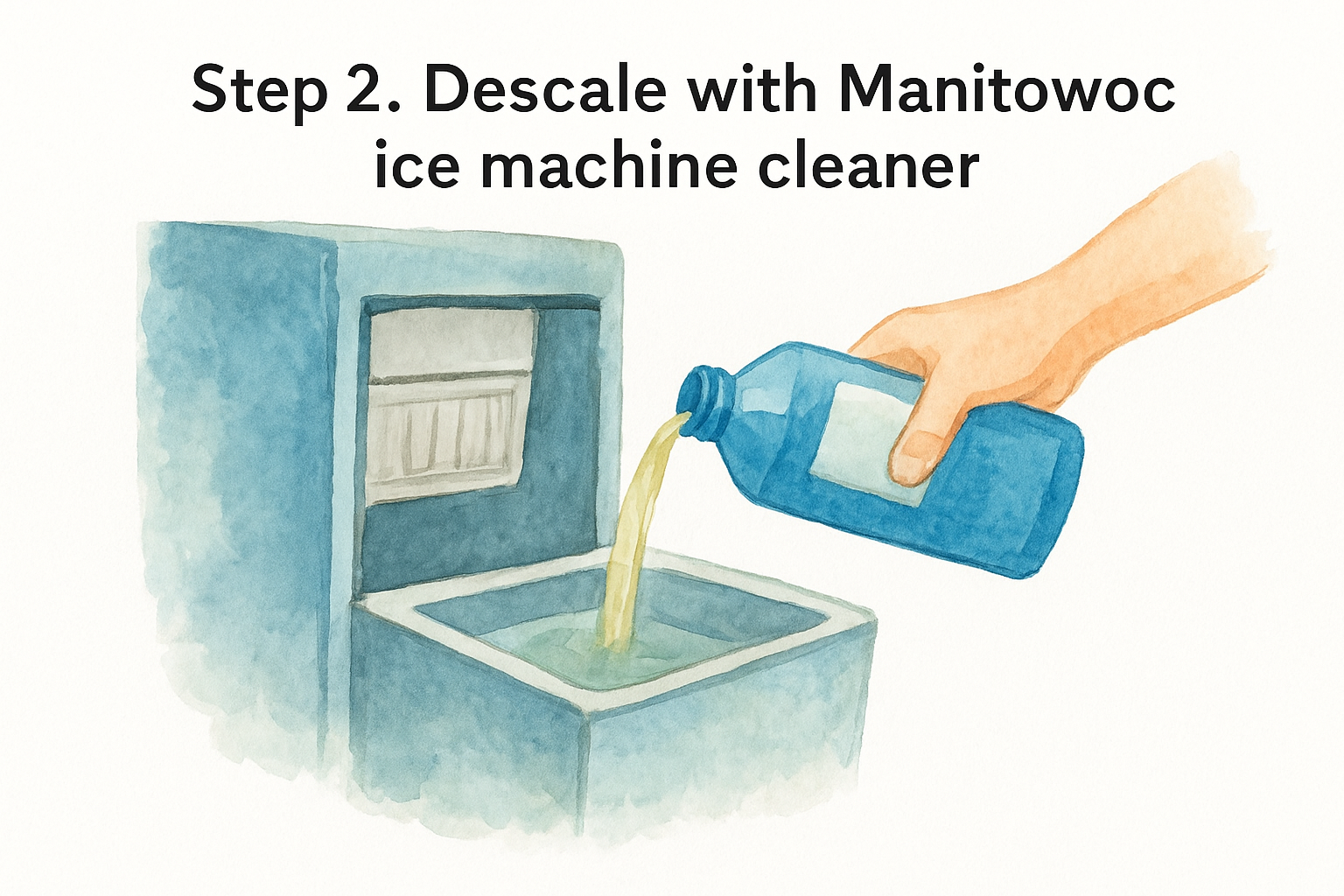
Real descaling dissolves scale from the inside out, not just bleaches it white on the surface.
Run the machine through its normal ice-making cycle two to three times with the cleaner circulating, letting each cycle flush before starting the next. Watch the evaporator plate through the access panel if your model allows it:
- Scale should visibly thin or disappear after the first pass
- Heavy buildup may need a second dose and cycle
- Water discoloration during flush is normal and means the descaler is working
If scale remains after three cycles, your water hardness is likely above what a single treatment handles, and you should shorten your service interval going forward.
Step 3. Sanitize interior and exterior surfaces
After the last descaling flush drains completely, switch attention from mineral scale to the biofilm living on every surface ice touches. Grab a manitowoc ice machine cleaner and sanitizer formulated for food-contact equipment and mix it according to the label, then wipe down the bin walls, curtain, dispenser chute, and door gaskets by hand. Don't skip the exterior housing and control panel either, since hands touching the scoop guard or ice door transfer bacteria right back into the bin.
Descaling removes scale, but only sanitizing removes what actually makes people sick.
For the interior water path, pour the sanitizing solution into the reservoir the same way you dosed the descaler, then run one full ice-making cycle to circulate it through the distribution tubes and over the evaporator plate. Let the solution sit on hand-wiped surfaces for the contact time listed on the product, usually a few minutes, before rinsing.
- Wipe bin walls, curtain, and gaskets by hand first
- Circulate sanitizer through the reservoir for one full cycle
- Rinse thoroughly, since sanitizer residue affects ice taste
A non-toxic, HMIS 0-0-0 formula means no respirator required for this step, just gloves if you prefer them.
Step 4. Clean the condenser and finish up
Turn your attention to the condenser once the interior is sanitized and rinsed, since a dirty coil undoes half the work you just did by forcing the compressor to overheat and cycle inefficiently. Air-cooled condensers collect dust, kitchen grease, and lint on the fins, so vacuum them gently with a soft brush attachment and follow up with a low-pressure blast of compressed air, working from the inside out so debris doesn't pack deeper into the coil. Water-cooled units need their own descaling pass through the condenser water circuit, using the same non-corrosive descaler you ran through the evaporator.
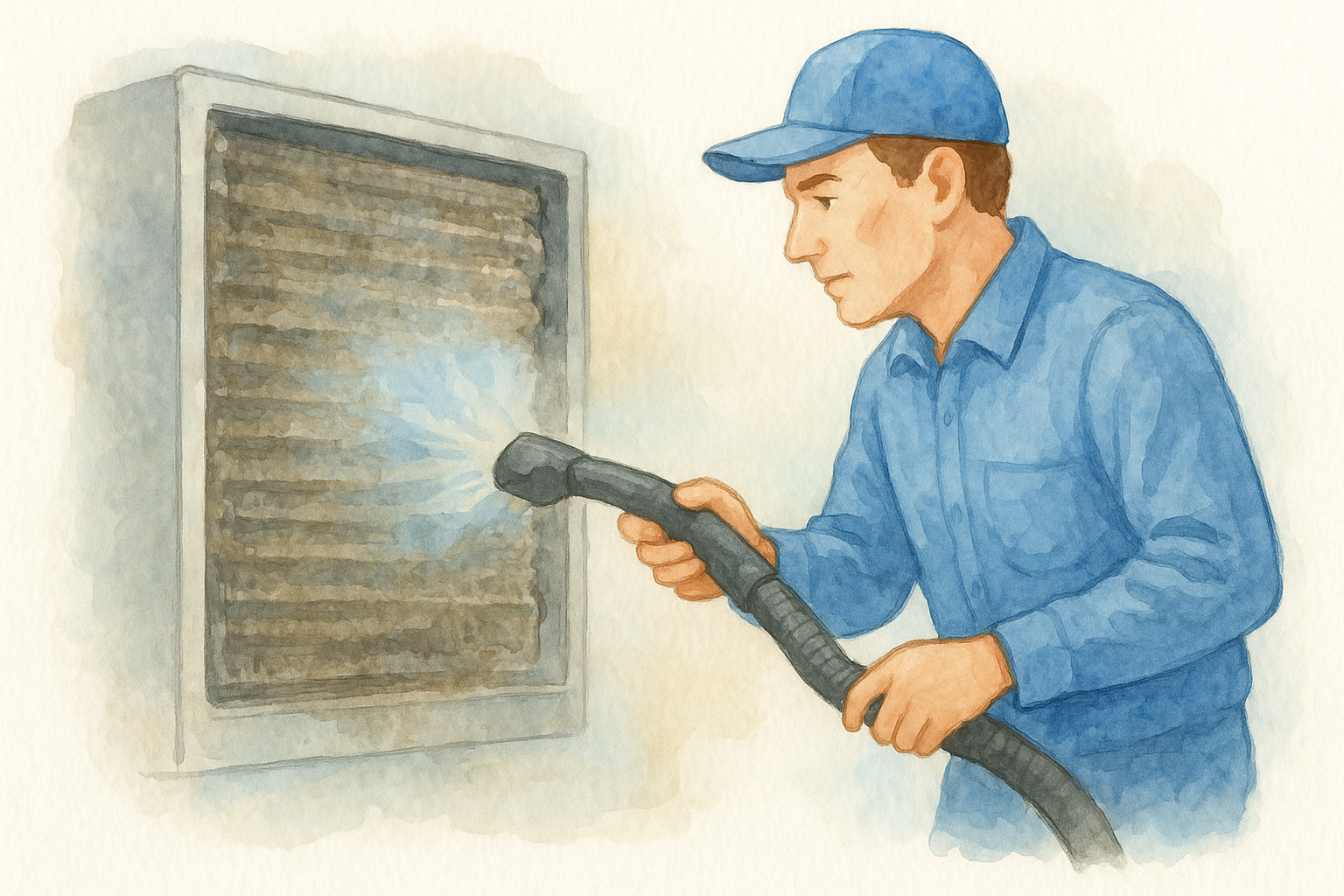
A scaled evaporator and a dirty condenser are the same problem, just on opposite ends of how a refrigeration system works.
Restore power to the ice-making function and switch the mode back to normal operation once the condenser is clear.
- Run one full cycle and discard the first batch of ice
- Check that harvest time matches the rate listed on the data plate
- Confirm ice looks clear, not cloudy, before returning the unit to service
That first discarded batch clears any lingering cleaner or sanitizer residue before customers ever see the ice.
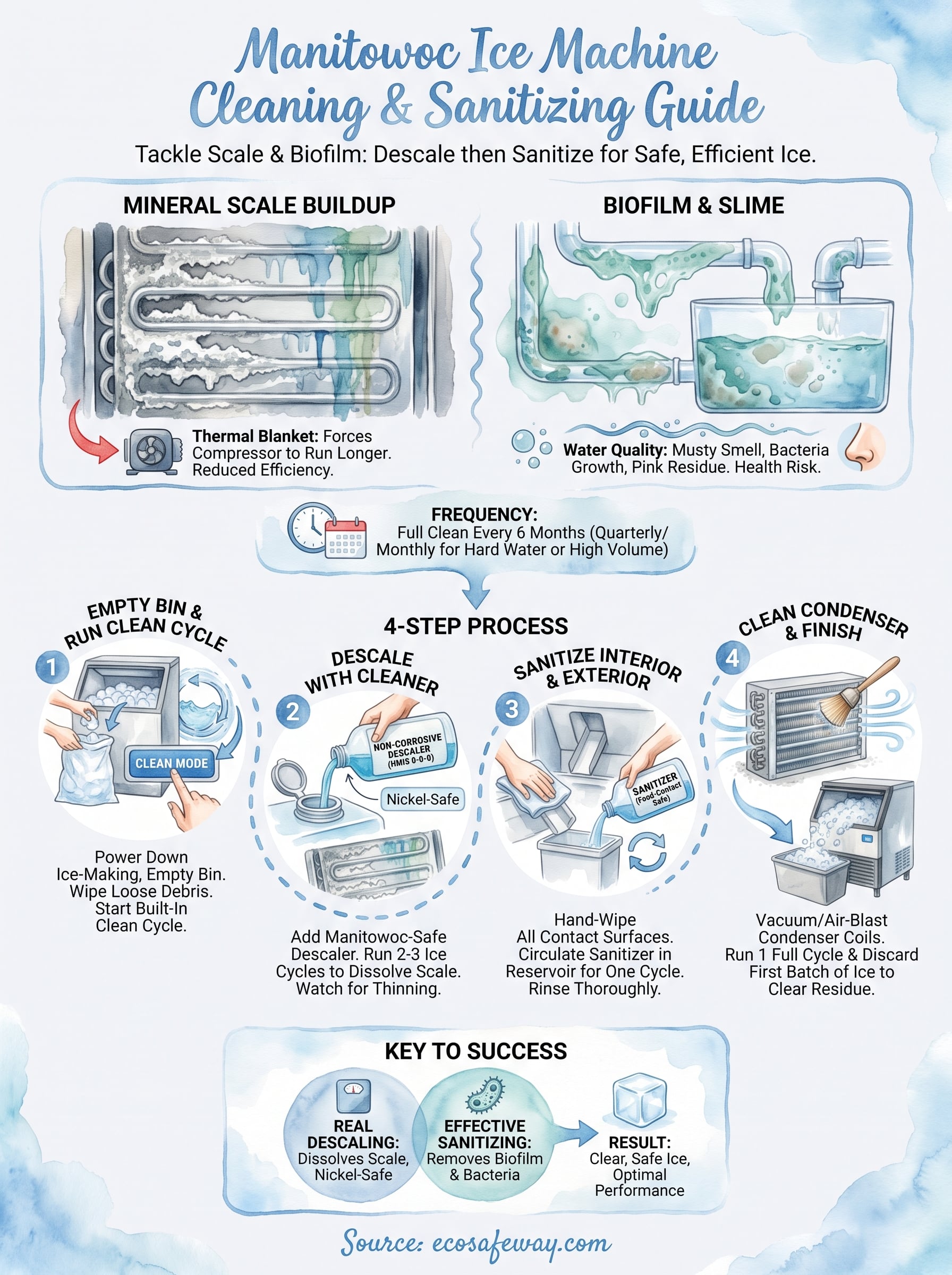
Keeping your ice machine running clean
A clean Manitowoc unit comes down to two habits done right: descaling the evaporator plate on schedule and sanitizing every surface ice touches, not just the ones you can see. Skip either step and you're back to cloudy cubes, longer harvest cycles, and a bin that smells off within weeks. The four-step process above works whether you're running quarterly service on hard well water or a monthly wipe-down in a high-volume kitchen.
What separates a smooth cleaning day from a frustrating one is the product doing the work. A corrosive acid blend pits your evaporator plate over time, while a diluted all-purpose spray leaves scale behind and calls it clean. Grab a food-safe ice machine cleaner and descaler rated HMIS 0-0-0, and you'll spend less time cleaning and more time serving clear, safe ice.


