





Looking for an alternative to bottom paint? Boat owners now have several options for protecting a hull from marine fouling without relying solely on traditional copper-based antifouling paint. These include physical antifouling wraps, silicone foul-release coatings, ceramic hull coatings, copper-free ablative paint, ultrasonic systems, and manual hull cleaning.
For owners looking to break the sand-and-repaint cycle, Finsulate antifouling wrap is one of the most compelling alternatives to bottom paint. Unlike antifouling paint, Finsulate is a biocide-free physical film that uses its fiber structure, not chemicals, to keep marine organisms from attaching to the hull.
This guide compares the leading alternatives to bottom paint, including how each one works, where it fits best by vessel type and cruising habits, and its costs, pros, and cons. As the official US dealer for Finsulate, we'll also show how film-based systems stack up against copper paint on cost, longevity, and haul-out frequency.
1. Finsulate antifouling wrap
Finsulate is a physical antifouling film, not a paint. It's a self-adhesive fiber wrap that goes directly onto the hull and prevents marine growth through its structure rather than through biocides or copper. Eco Safeway is the official Finsulate dealer in the USA, based in Fort Lauderdale, and we handle sales, project guidance, and installation coordination, while the actual application is done by Finsulate-trained applicators. The product line includes several grades, Seagrade, Lakegrade, Speedgrade, and Seagrade EL, each built for different hull types and cruising conditions, though specific performance figures for each grade should always be confirmed against current Finsulate specifications before you commit.

How it works
Underneath the marketing language, the mechanism is straightforward: the fiber structure of the film creates a surface that marine organisms struggle to attach to, so fouling never gets the foothold it needs. There's no active ingredient leaching into the water column and no sanding cycle required to reapply a coating every season. Because it is a mechanical barrier rather than a chemical coating, its antifouling mechanism does not depend on the depletion of an active ingredient, which is a fundamentally different maintenance model than repainting.
A physical antifouling film stops growth by structure, not by poisoning the water around your hull.
Who it's best for
Finsulate suits owners who plan to keep a boat for several seasons and want to stop the cycle of annual haul-outs for repainting. It's a strong fit for yacht owners and fleet managers who need predictable maintenance schedules, and for chief engineers on commercial or superyacht operations evaluating copper-free antifouling alternatives under increasing environmental scrutiny. Given that Eco Safeway operates as the official dealer out of Fort Lauderdale, South Florida boat owners get the most direct access to installation coordination and project support,
though the product isn't limited to that region.
Why Boat Owners Choose Finsulate Instead of Bottom Paint
The appeal isn't just avoiding copper. Owners switch to Finsulate because it removes the recurring cost and downtime of an annual haul-out: no yard scheduling, no sanding dust, no waiting on weather to repaint. For boats kept in the water year-round, that adds up to real time back on the water rather than on the hard.
Finsulate vs. Traditional Antifouling Paint
Traditional antifouling paint works by slowly releasing biocide, which means it depletes, needs sanding back, and gets reapplied on a fixed schedule regardless of how much fouling actually occurred. Finsulate's fiber structure doesn't deplete the same way, so the maintenance model shifts from "recoat every season" to "inspect and maintain the film." The tradeoff is upfront cost and the need for a trained applicator, versus paint's lower entry price and DIY availability.
Photo: Traditional bottom paint (top) Finsulate antifouling wrap (bottom)

Finsulate Installation and Maintenance
Installation is done exclusively by Finsulate-trained applicators, not as a DIY project, and typically requires a haul-out for the initial application. Once installed, upkeep is mostly periodic inspection and occasional light cleaning rather than a chemical maintenance schedule; specific service intervals should be confirmed with your installer based on your grade of film and local fouling pressure.
Pros and cons
- Pro: Biocide-free & eco-friendly, so no copper or other heavy metals leaching into marinas or harbors and harming marine life and ecosystems
- Pro: No annual repainting cycle once installed by certified installation team.
- Pro: 8 year warranty coverage when applied by a Finsulate certified applicator, subject to Finsulate's current published terms
- Con: Requires a trained applicator, so there is no DIY installation
- Con: Initial investment. Upfront installation cost is higher than a single coat of ablative paint but with 10 years of antifouling and 8 year warranty Finsulate offers an unparalleled ROI.
Cost considerations
Installation pricing is project-specific and depends on hull size, shape, and current condition, so we won't quote a flat number here, request a vessel-specific quotation instead. Warranty length and terms depend on Finsulate's current published warranty and the certified-installation requirements in force at the time of your project, so confirm the applicable warranty for your vessel before purchase rather than relying on a figure quoted here. Some owners report long service life in practice (10+ years). When you weigh the installation cost against several seasons of skipped haul-outs, sanding, and repainting, the math often favors the film for owners keeping a boat long-term. If you're comparing quotes, ask Eco Safeway directly through our Finsulate antifouling wrap page for a breakdown specific to your vessel.
| Bottom Paint Alternative | Biocide-Free | Requires Repainting | Haul-Out Required for Reapplication | Best For |
|---|---|---|---|---|
| Finsulate antifouling wrap | Yes | No | No routine repainting | Yachts, charters, commercial vessels, displacing hulls |
| Silicone foul-release coating | Yes | Eventually | Yes | Frequently operated vessels |
| Ceramic nano-coating | Usually | Eventually | Yes | DIY owners, trailered boats |
| Copper-free ablative paint | No | Yes | Yes | Owners wanting a conventional paint system |
| Ultrasonic antifouling | Yes | No | No | Boats with reliable electrical power |
| Manual hull cleaning | Yes | No | No | Owners willing to clean frequently |
| Vinyl hull wrap | Depends | Depends | Depends | Appearance-focused applications |
2. Silicone foul-release coatings
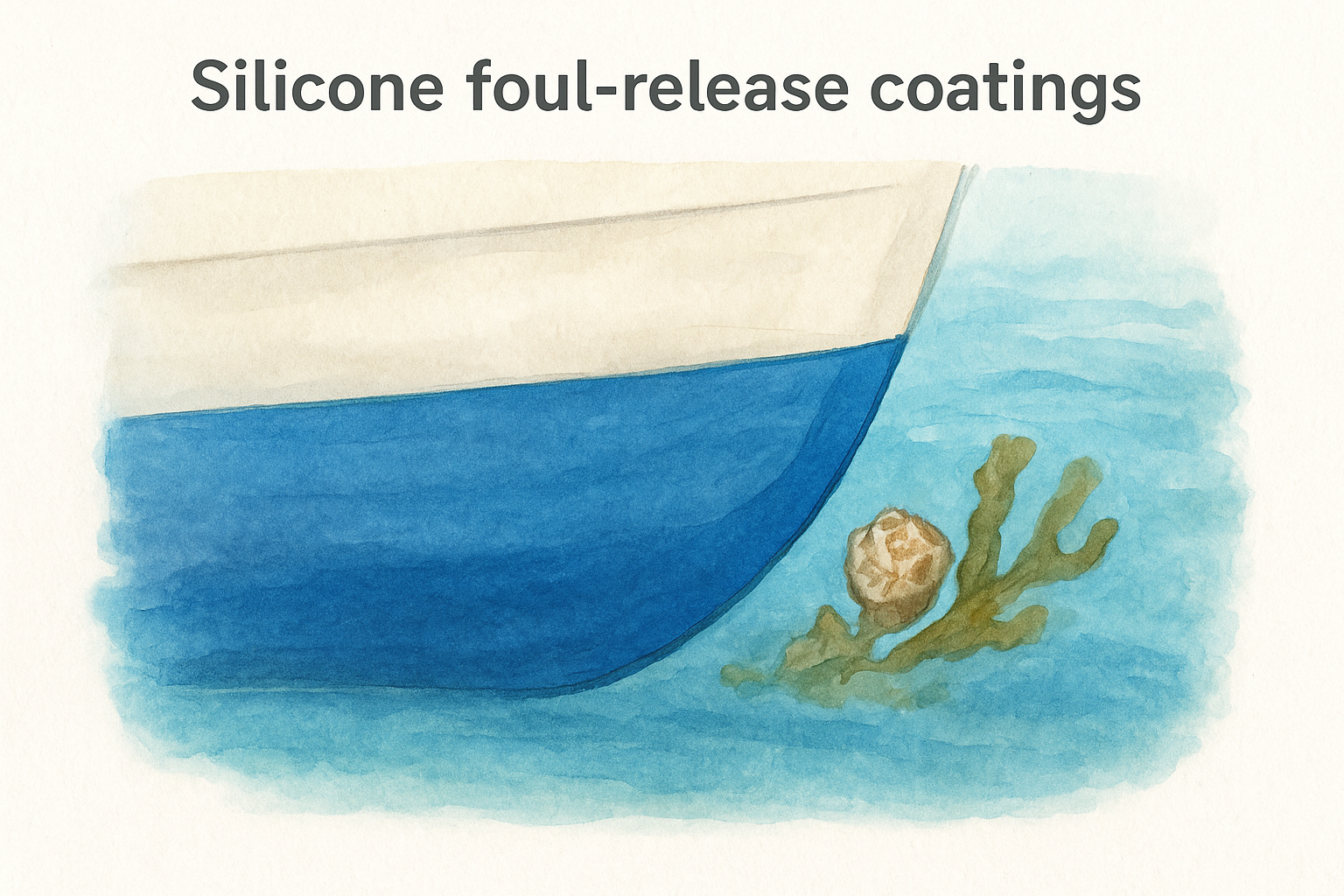
Silicone foul-release coatings take a different approach than either paint or film. Instead of killing or blocking organisms, they create a surface so slick that fouling can't get a solid grip in the first place. Owners searching for marine bottom paint alternatives that skip biocides entirely often land here, since these coatings contain no copper, no tin, and no other heavy metals.
How it works
The coating forms a low-friction, low-surface-energy layer on the hull, similar in concept to a non-stick pan. Barnacles and algae can still settle on it, but their grip is weak enough that normal boat movement through the water, or a light wipe-down, knocks most of it loose. There's no active ingredient depleting over time, so the release properties stay fairly constant until the coating itself wears down mechanically.
A silicone coating doesn't kill fouling, it just refuses to let fouling hold on.
Who it's best for
This option suits boats that move regularly, since the release mechanism depends on water flow across the hull to shed growth. Sailboats that sit idle for weeks at a dock don't get the same benefit, and soft growth can accumulate faster than the coating sheds it. It works best for owners running commercial vessels, ferries, or performance sailboats that log consistent hours underway.
Pros and cons
- Pro: No biocides or heavy metals released into the water
- Pro: Reduces drag, which can improve fuel efficiency on vessels that run often
- Con: Performs poorly on boats that sit stationary for long stretches
- Con: More vulnerable to physical damage than a harder ceramic or film system
- Con: Reapplication typically requires full removal of the previous layer, which adds labor cost
Cost considerations
Expect a higher upfront cost than copper ablative paint, largely due to the specialized application process and surface prep requirements. Because the coating depends on consistent vessel use to stay effective, factor your actual cruising habits into the return on investment, not just the sticker price, before assuming it will outperform a cheaper alternative for your specific boat.
3. Ceramic nano-coatings for hulls
Ceramic nano-coatings are a lighter-duty cousin of products like Hull Maxx. Instead of a thick, multi-layer ceramic system, these are thin, hand-applied sealants built from nano-scale particles that bond to the gelcoat or previous paint layer. Boat owners searching for a DIY-friendly, non-toxic hull protectant they can apply themselves, without hiring a yard, tend to end up comparing these products against wraps and full coating systems.
How it works
The nanoparticles fill in microscopic pores in the gelcoat, leaving a glassy, hydrophobic surface once cured. Water beads and slides off instead of soaking in, and algae spores have less surface texture to latch onto. Because the layer is so thin, it doesn't add meaningful drag or weight, but it also doesn't have the mechanical toughness of a thicker ceramic hull coating or a fiber wrap. Most products cure within a day and get applied with pads or cloths rather than sprayers.
A nano-coating smooths the hull at a microscopic level, so fouling has less texture to grab onto in the first place.
Who it's best for
This option suits smaller boats and trailer boats that spend more time out of the water than in it, since the thin layer wears faster under constant submersion than a wrap or thick coating would. It's a good match for weekend owners doing their own maintenance who want better fouling resistance than bare gelcoat without committing to a professional installation or a multi-year contract.
Pros and cons
- Pro: DIY-friendly application with no special equipment
- Pro: No biocides, so it's safe around freshwater lakes and sensitive marinas
- Con: Shorter service life than thicker ceramic coatings or antifouling film
- Con: Less effective on boats kept in the water year-round
- Con: Reapplication is more frequent, often every season or two
Cost considerations
Nano-coating kits run far cheaper upfront than professional wrap installation or a full ceramic hull job, often in the range of a premium wax or polish product. That lower entry cost comes with a tradeoff: you'll likely reapply more often, so total cost over several seasons can approach what a longer-lasting system would have cost in one installation.
4. Vinyl hull wraps
Vinyl hull wraps borrow the same idea that's transformed car customization: a printed or solid-color vinyl film gets applied directly over a prepped hull. Some vinyl products include antifouling additives, but many are chosen primarily for looks, with fouling resistance treated as a secondary benefit. Owners comparing a boat bottom paint alternative for cosmetic reasons as much as maintenance reasons usually find vinyl wraps here before they find film-based antifouling systems.
How it works
The film gets heat-shrunk and pressed onto the hull surface, bonding tightly enough to resist peeling in most conditions. A smooth vinyl surface sheds soft growth better than aging gelcoat or chalky paint, but it doesn't have the fiber structure that dedicated antifouling films use to actively deter organisms from settling. Without an antifouling additive built in, a vinyl wrap functions more like a smoother substrate than a true fouling barrier.
Vinyl wraps change how a hull looks and feels, but only some formulations actually change how fouling behaves.
Who it's best for
This option fits owners prioritizing appearance, custom graphics, or a color change who also want some incidental fouling resistance. It works well for boats kept in cleaner freshwater lakes with lighter fouling pressure, where a smooth vinyl surface alone can keep maintenance manageable. Saltwater boats sitting in heavy fouling zones typically need a dedicated antifouling product layered underneath or instead of a purely cosmetic wrap.
Pros and cons
- Pro: Customizable colors and graphics alongside some fouling resistance
- Pro: Faster installation than a multi-coat ceramic system
- Con: Antifouling performance varies widely by product, some offer none at all
- Con: Adhesive can fail in high-heat or heavily submerged conditions over time
- Con: Not a substitute for biocide-free films specifically engineered against marine growth
Cost considerations
Vinyl wrap installation generally costs less than a full antifouling film system, though prices climb quickly with custom graphics or larger hulls. Because fouling resistance isn't guaranteed across every vinyl product, verify what the specific film is rated for before assuming it will replace a dedicated antifouling coating on a saltwater boat.
5. Copper-free ablative antifouling paint
Copper-free ablative paint keeps
the familiar roll-and-recoat routine that owners already know, but swaps out copper biocide for alternatives like zinc pyrithione or other EPA-registered active ingredients. It's the closest thing to a drop-in replacement for traditional bottom paint, which makes it the first stop for owners who want a straightforward, less toxic paint swap without changing their whole haul-out routine or learning a new application method.
How it works
The paint wears away gradually as the boat moves through the water, a process called ablation, releasing a low dose of biocide at the surface that deters marine growth from settling. Because the active ingredient isn't copper, it sidesteps the state-level copper restrictions showing up in California and Washington marinas. The tradeoff is that the paint still depletes over a season or two, just like copper ablative paint, so it doesn't eliminate the underlying maintenance cycle.
Copper-free ablative paint solves the copper problem, not the repainting problem.
Who it's best for
This option suits owners in copper-restricted regions who still prefer a paint-based system over a wrap or coating, and who haul out regularly enough that annual reapplication isn't a burden. It's a practical bridge product for boaters who want compliance now without committing to a longer-term system like a physical antifouling film.
Pros and cons
- Pro: Compliant with copper restrictions in states like California and Washington
- Pro: Familiar application process for yards already set up for traditional paint
- Con: Still requires annual or biannual haul-out and recoating
- Con: Alternative biocides have less long-term performance data than copper
- Con: Ablation still releases active ingredient into the water column, just not copper
Cost considerations
Expect pricing close to standard copper ablative paint, sometimes slightly higher due to newer formulations and lower production volume. Because you're still paying for haul-out labor and materials every season, the multi-year total cost tends to land closer to traditional paint than to biocide-free films or coatings, even though the per-gallon price looks similar.
6. Manual Hull Cleaning and Maintenance
Regular hull cleaning is not a replacement for an antifouling system, but it can be a practical maintenance strategy for boat owners who prefer not to use traditional bottom paint. Depending on the vessel and fouling conditions, regular underwater cleaning can help control marine growth and keep the hull operating efficiently. Hull-cleaning products can also be useful for removing existing fouling between haul-outs.
How it works
Growth still settles on a bare or gelcoat-only hull the same way it would on any submerged surface, so the strategy depends entirely on catching it early. A diver or the owner scrubs the hull on a set interval, often every two to four weeks in warm water, using a soft pad or brush that won't damage gelcoat, ideally paired with an eco-friendly marine hull cleaner that's safe to use in the water. Consistent scheduling matters more than the tool you use, since neglected fouling can become increasingly difficult to remove and may require more aggressive cleaning. For appropriate hull-cleaning situations, Eco Safeway also offers a biodegradable marine descaler.
Manual cleaning trades chemical protection for labor, and it only works if you actually stick to the schedule.
Who it's best for
This approach fits boats kept in a slip with easy diver access, particularly in regions where local rules already restrict copper paint discharge into the marina. It also suits owners who cruise infrequently and don't want any coating at all, whether for environmental reasons or because they're testing the waters before investing in a wrap or ceramic system.
Pros and cons
- Pro: Zero biocide or coating chemicals enter the water
- Pro: No haul-out required for routine maintenance
- Con: Requires strict, frequent scheduling to stay effective
- Con: Diver fees add up over a season and can exceed paint costs
- Con: Bare gelcoat offers no structural resistance to fouling, so missed cleanings compound quickly
Cost considerations
Diver cleaning typically runs a modest flat fee per visit, but multiply that by two dozen visits a year and the annual total often lands close to a coat of ablative paint. DIY cleaning cuts that cost to your own time, though it demands the same discipline to avoid a bigger scraping job later.
7. Ultrasonic antifouling systems
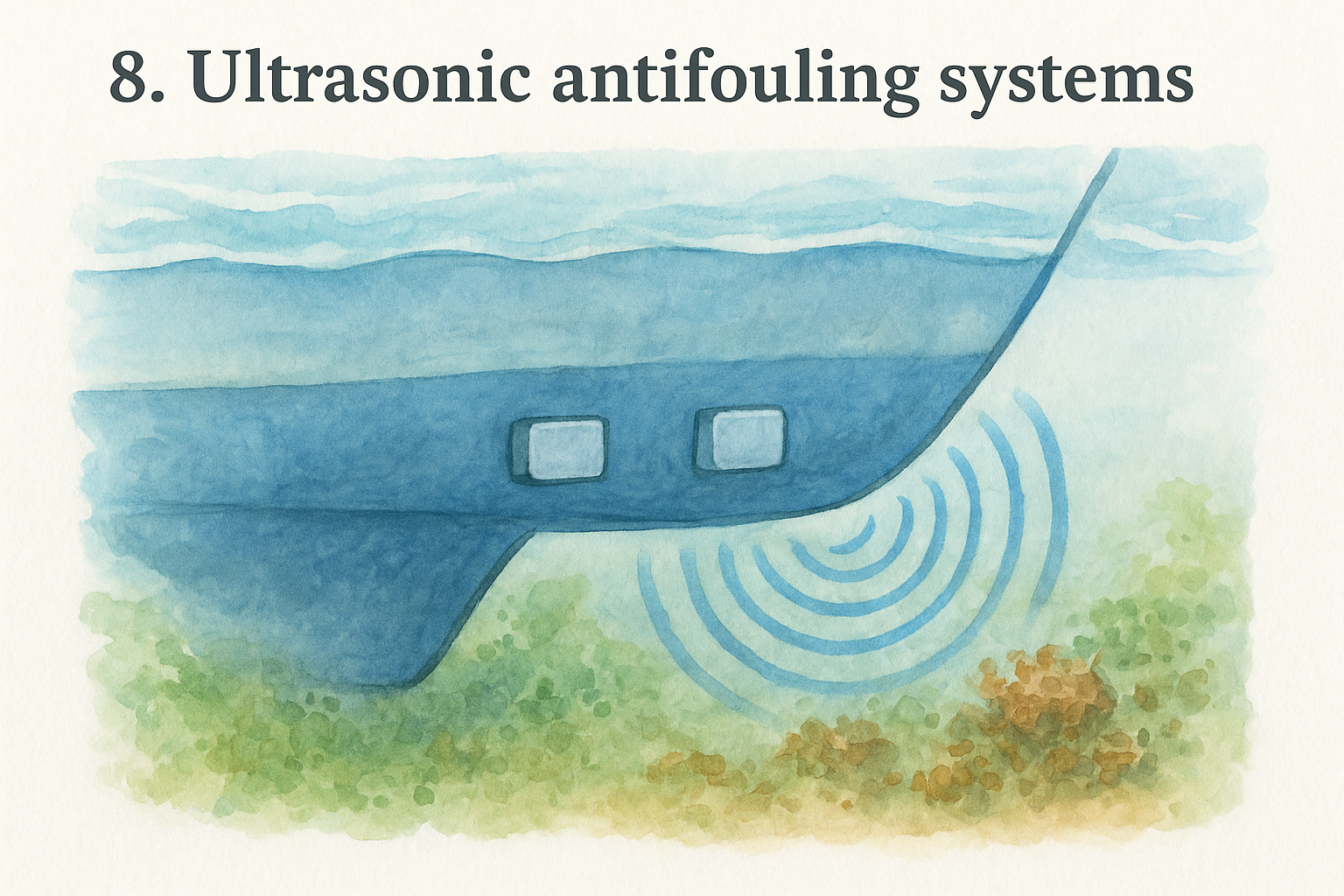
Ultrasonic antifouling systems take an entirely different approach: instead of a coating, a wrap, or a chemical, they use electronic transducers mounted inside the hull to emit sound waves that discourage algae and slime from forming on the surface. Owners researching marine bottom paint alternatives that skip haul-outs, sanding, and reapplication altogether often land here, since the system runs continuously off the boat's electrical system rather than being applied once a season.
How it works
Transducers bonded to the inside of the hull generate high-frequency vibrations that travel through the fiberglass and into the surrounding water. Those vibrations create microscopic turbulence at the hull surface that interferes with the way algae and biofilm try to establish themselves, though most manufacturers are upfront that the technology targets slime and algae far more effectively than hard growth like barnacles. Because the system needs power to function, it only protects the hull while the boat is plugged into shore power or running its batteries, which is a meaningfully different maintenance model than a film or coating that works around the clock.
Ultrasonic systems fight the buildup that leads to fouling, not the fouling itself, so results vary by what's actually growing on your hull.
Who it's best for
This option suits boats that stay plugged into shore power, since consistent electrical draw is what keeps the transducers running. It works best as a supplement to bottom paint or a hull coating in areas with heavy barnacle pressure, rather than a standalone solution, and it appeals to owners who want to slow slime buildup between cleanings without adding another chemical layer.
Pros and cons
- Pro: No coating, biocide, or wrap applied to the hull at all
- Pro: Runs continuously without haul-out downtime
- Con: Limited effectiveness against hard fouling like barnacles
- Con: Requires constant power draw, so it stops protecting when unplugged
- Con: Best used alongside another antifouling method, not as a full replacement
Cost considerations
Installation costs run comparable to a mid-range hull coating once you factor in transducers, wiring, and a control unit, but there's no recurring reapplication cost the way paint requires. Budget for occasional transducer replacement over the years, and don't expect it to fully replace a dedicated antifouling film or paint on a hull that sees heavy barnacle growth.
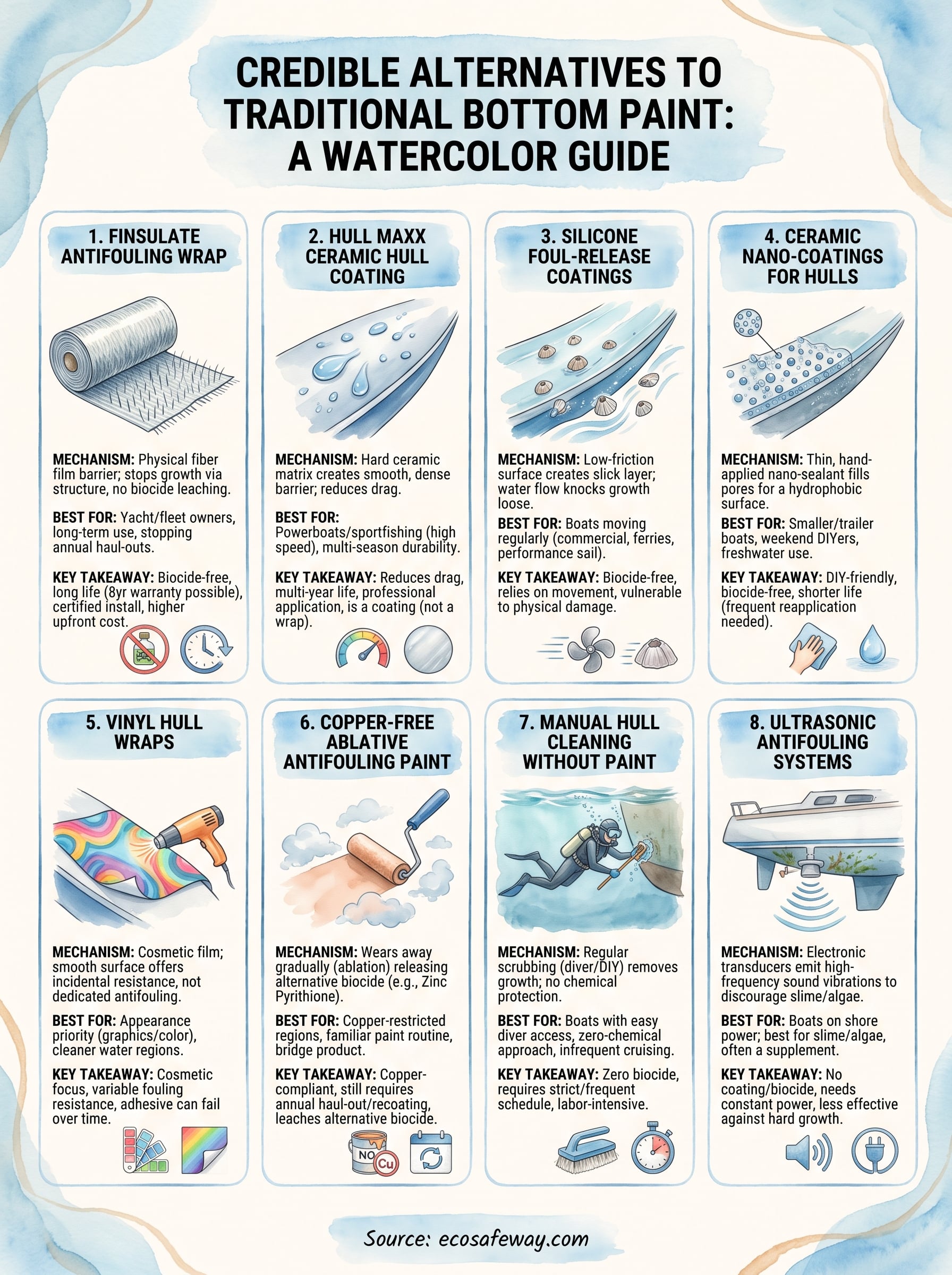
Which bottom-paint alternative is right for you?
- Want to eliminate traditional antifouling paint? Finsulate
- Want a conventional coating system? Copper-free ablative paint
- Want foul-release rather than antifouling? Silicone coating
- Prefer a maintenance-based approach? Regular hull cleaning
- Want a technology-based approach? Ultrasonic antifouling
Frequently asked questions
What is the best alternative to bottom paint?
There's no single best option for every boat; it depends on how long you keep the boat in the water and your budget. For owners who want to stop repainting altogether, a biocide-free wrap like Finsulate is the closest thing to a long-term replacement. For lower upfront cost, copper-free ablative paint is the more familiar option.
What can I use instead of bottom paint on a boat?
Options include physical antifouling wraps, silicone foul-release coatings, ceramic nano-coatings, copper-free ablative paint, ultrasonic antifouling systems, and manual hull cleaning, each covered in this guide.
Is Finsulate an alternative to bottom paint?
Yes. Finsulate is a biocide-free physical film applied to the hull instead of paint, so it replaces the paint-and-recoat cycle rather than modifying it.
Is Finsulate better than bottom paint?
It depends on what you're optimizing for. Finsulate avoids biocides and recurring haul-outs, which many owners value, but it costs more upfront and requires a trained applicator, unlike paint.
What is a non-toxic alternative to bottom paint?
Finsulate, silicone foul-release coatings, ceramic nano-coatings, ultrasonic systems, and manual cleaning all avoid the copper and biocide load of traditional antifouling paint.
What is the longest-lasting alternative to bottom paint?
Physical films like Finsulate are built for multi-year use without recoating, longer than most paint or coating systems, though actual service life depends on installation quality and use. Confirm current figures with your installer rather than relying on marketing claims.
Can you use Finsulate on a fiberglass boat?
Yes, Finsulate is applied to fiberglass hulls as well as other common hull materials; a trained applicator will confirm suitability for your specific boat.
Can Finsulate be used on aluminum boats?
Finsulate offers grades suited to different hull types; check with an official dealer to confirm the right grade for an aluminum hull.
Does Finsulate require bottom paint underneath?
No. Finsulate is applied directly to a prepped hull and is designed to replace bottom paint, not sit underneath it.
How much does a Finsulate installation cost?
Pricing is project-specific, based on hull size, shape, and condition. Request a vessel-specific quote rather than relying on a flat number.
Does Finsulate require haul-outs?
A haul-out is needed for the initial installation, but Finsulate is built to eliminate the recurring haul-out-and-repaint cycle that bottom paint requires.
How is Finsulate maintained?
Maintenance is mostly periodic inspection and light cleaning rather than chemical reapplication; ask your installer for a maintenance schedule specific to your film grade and cruising conditions.
Finding the right fit for your boat
No single product on this list works for every hull, and that's the real takeaway. Your cruising habits, region, and budget decide whether a wrap, coating, or ablative paint makes sense, not marketing copy. A weekend lake boat has different needs than a commercial vessel logging hundreds of hours a year, and a boat in a copper-restricted state faces compliance questions a boat in open water doesn't.
Looking for an alternative to bottom paint that actually ends the haul-out cycle? If your goal is to stop the recurring sanding, repainting, and copper runoff concerns for good, Finsulate is worth evaluating for your vessel. Eco Safeway is the official US Finsulate dealer, handling sales, project guidance, and installation coordination out of Fort Lauderdale, so you get a vessel-specific answer instead of a generic estimate. Request a quote through our biocide-free Finsulate antifouling film page and find out what it actually costs for your hull.


