





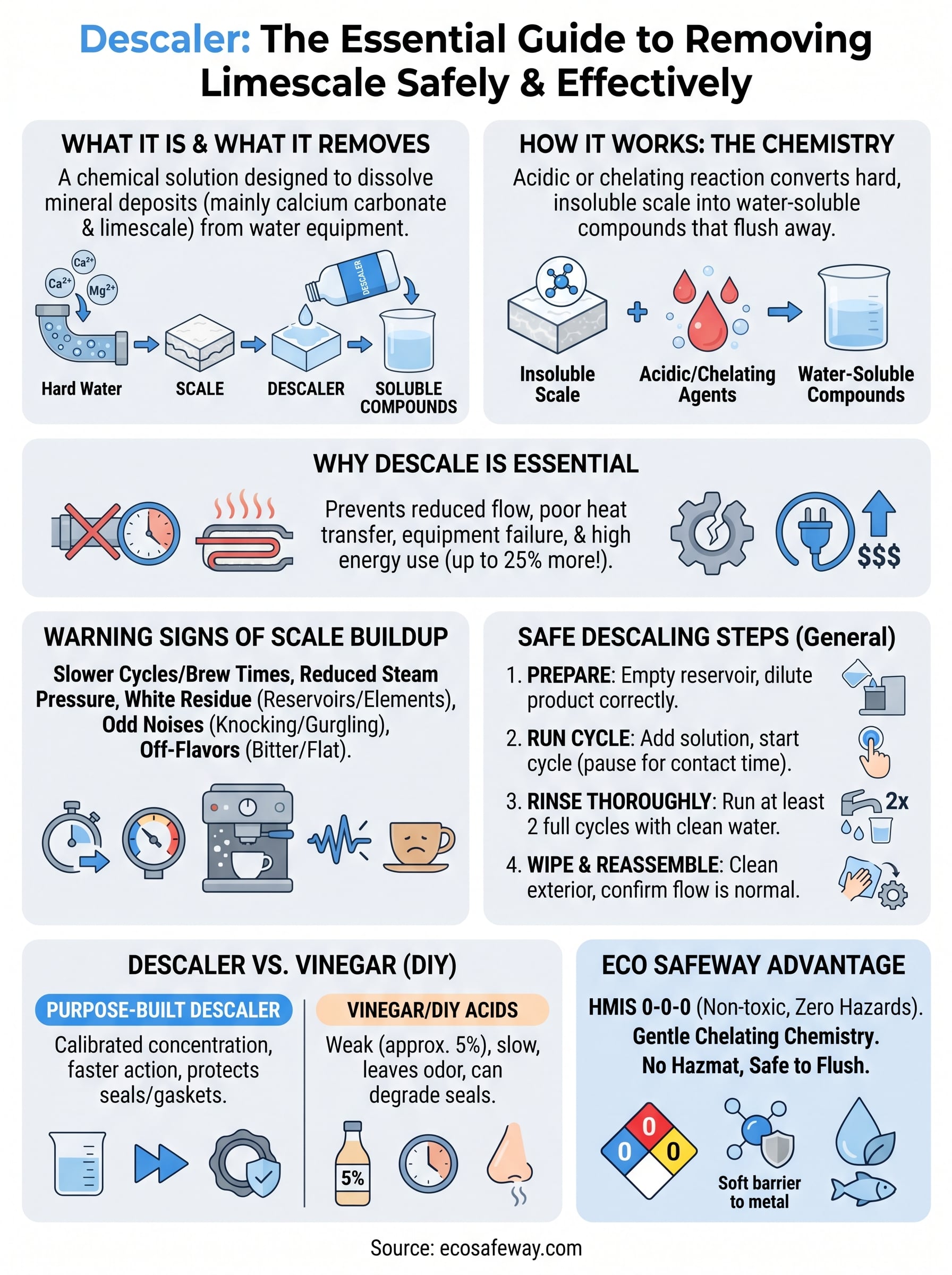
A descaler is a chemical solution designed to dissolve and remove mineral deposits, primarily calcium carbonate and limescale, that accumulate inside water-carrying equipment over time. Whether it's a coffee maker in your kitchen or a cooling tower in a commercial facility, these mineral buildups restrict water flow, reduce heat transfer efficiency, and eventually cause equipment failures that cost real money to fix.
Hard water is the root cause. As water flows through pipes, boilers, heat exchangers, and appliances, dissolved minerals crystallize on interior surfaces. Left unchecked, even a thin layer of scale can increase energy consumption by 10–25% and significantly shorten equipment lifespan. That's why descaling isn't optional maintenance, it's essential to keeping systems running the way they're supposed to.
Here's the problem most people run into: traditional descalers rely on harsh acids like hydrochloric or sulfamic acid. They work, but they also corrode metal surfaces, produce toxic fumes, require protective equipment, and often come with hazmat shipping restrictions. At Eco Safeway, we manufacture descaling solutions rated HMIS 0-0-0, meaning zero health, flammability, or physical hazards, that remove scale effectively without damaging equipment, harming workers, or polluting waterways.
This article breaks down exactly what a descaler is, the chemistry behind how it works, the different types available, and how to use one safely across household appliances and commercial equipment. We'll also cover when to descale, what to look for in a product, and why the safest option doesn't have to mean the weakest one.
What a descaler is and what it removes
A descaler is a cleaning solution formulated specifically to dissolve mineral deposits that form inside water-carrying equipment and appliances. Unlike a general-purpose cleaner that removes dirt, grease, or bacteria, a descaler targets inorganic scale through a chemical reaction that breaks down hardened mineral layers without requiring mechanical scrubbing or abrasive tools. The result is restored water flow, better heat transfer, and equipment that runs the way it should.
The main target: calcium and limescale
Hard water carries dissolved calcium and magnesium ions that become concentrated when water heats up or evaporates. Those ions bond to surfaces and crystallize into a hard, chalky layer known as limescale. Over time, the layers stack up, restrict flow, and act as insulation around heating elements, making your appliance work harder for the same output.
Even a 1.5mm layer of limescale on a heating element can increase energy consumption by up to 12%, according to water treatment studies.
Limescale also creates rough surface texture that traps bacteria and accelerates corrosion, which makes descaling both a performance issue and a hygiene concern.
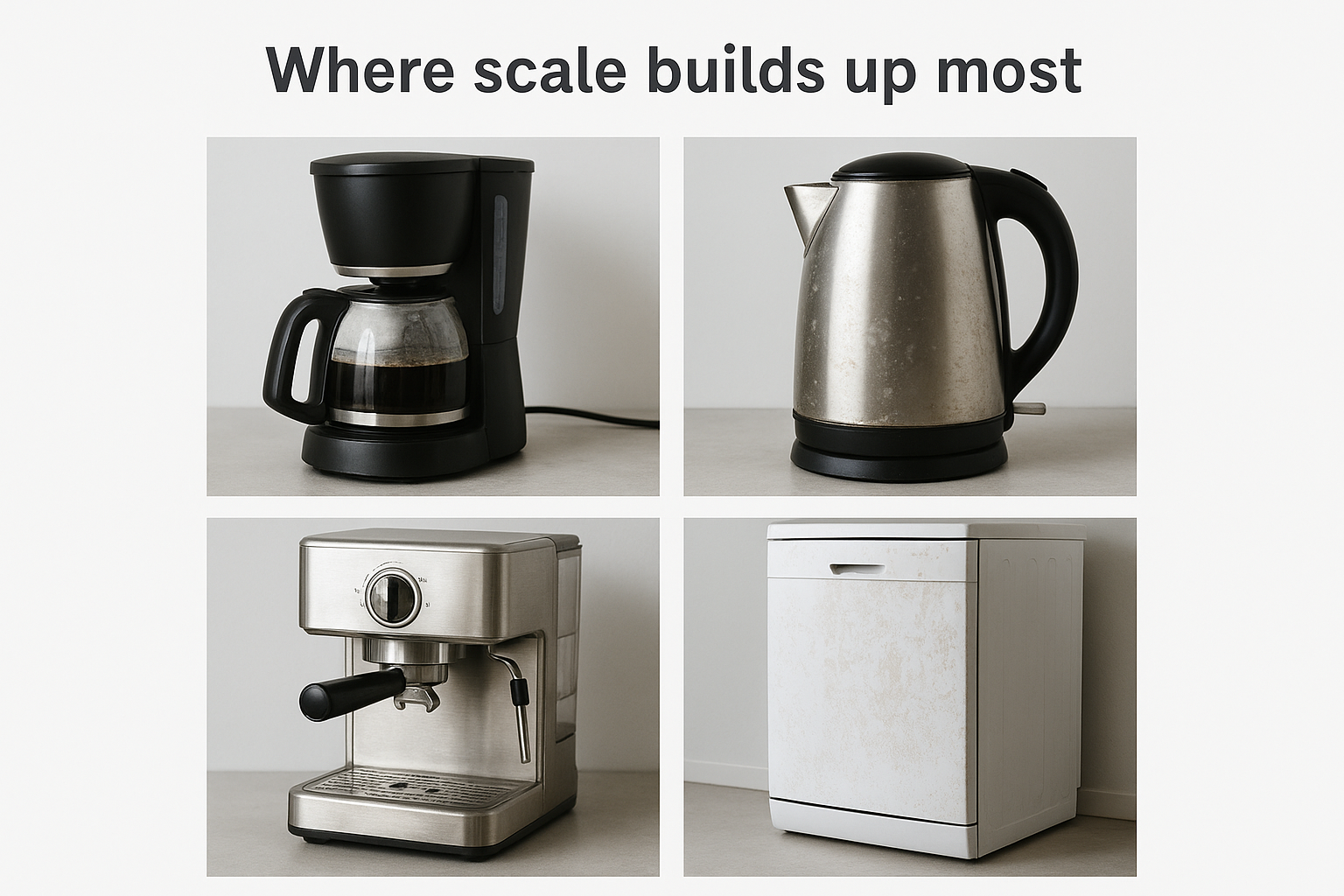
Where scale builds up most
In household settings, coffee makers, espresso machines, kettles, and dishwashers are the most common victims. Water sits in boilers and reservoirs, heats repeatedly, and deposits minerals with every cycle. You'll notice slower brew times, reduced steam pressure, and a bitter or off flavor in your coffee long before you see the buildup directly.
In commercial settings, cooling towers, heat exchangers, boilers, and HVAC coils face the same problem on a larger scale. The deposit volumes are higher, the efficiency losses are more costly, and the damage accumulates faster because these systems run continuously under high thermal load.
How descalers work and what they contain
A descaler works by introducing an acidic or chelating compound directly into contact with mineral deposits. When the solution reaches scale, it triggers a chemical reaction that converts hard, insoluble calcium carbonate into water-soluble compounds that flush out easily. No scrubbing required, just contact time and a rinse cycle.
The chemistry that breaks scale down
Most descalers rely on one of two mechanisms: acid-based reactions or chelation. Acid-based descalers use compounds like citric acid, lactic acid, or sulfamic acid to protonate calcium carbonate, releasing carbon dioxide gas and leaving behind a soluble salt that water carries away. Chelating agents work differently; they bond to calcium and magnesium ions at a molecular level, pulling them off surfaces without requiring a dangerously low pH.
Chelating descalers are often gentler on metal surfaces than strong acid formulations, making them a better fit for sensitive equipment like espresso machines or HVAC coils.
Eco Safeway's non-toxic descaling solutions use chelating chemistry to deliver full scale removal without corrosive damage to seals, gaskets, or metal components. Your equipment gets a thorough clean without the surface degradation that harsh acid-based products cause over repeated use cycles.
When you should descale and warning signs
Descaling on a set schedule prevents damage instead of reacting to it. For household appliances like coffee makers and espresso machines, most manufacturers recommend using a descaler every 1 to 3 months, depending on your local water hardness. In areas with very hard water, that interval drops significantly. Commercial and industrial equipment running continuously, such as cooling towers or boilers, may need descaling monthly or on a weekly inspection cycle.
If you are in a hard water zone, descale at least twice as often as the manufacturer's baseline recommendation.
Warning signs that scale has built up
Your equipment will tell you when scale has accumulated, you just need to know what signals to watch for. Slower brew or cycle times are usually the first indicator, as mineral buildup restricts water flow through narrow passages. Reduced steam pressure in espresso machines points to a scaled boiler working harder than it should to reach operating temperature.
Other clear warning signs include:
- White or chalky residue inside water reservoirs or on heating elements
- Unusual knocking or gurgling sounds during normal operation
- Bitter or off-flavors in coffee or tea
- Unexplained increases in energy consumption
How to use descaler safely step by step
Using a descaler correctly matters as much as choosing the right product. Skipping steps or using the wrong dilution can leave residue inside your appliance or reduce the treatment's effectiveness entirely.
Prepare before you start
Before adding any solution, empty the water reservoir completely and remove filters or pods from the machine. Check the product label for the correct dilution ratio before you mix anything.
- Turn off and unplug the appliance before inspecting internal components
- Remove and rinse any detachable parts separately
- Read your appliance manual for descaler compatibility notes specific to your model
Run the descaling cycle
Pour the diluted solution into the reservoir and start the full descaling cycle as your appliance manual describes. Pause halfway through if the instructions call for it, this gives the solution more contact time with stubborn mineral deposits.
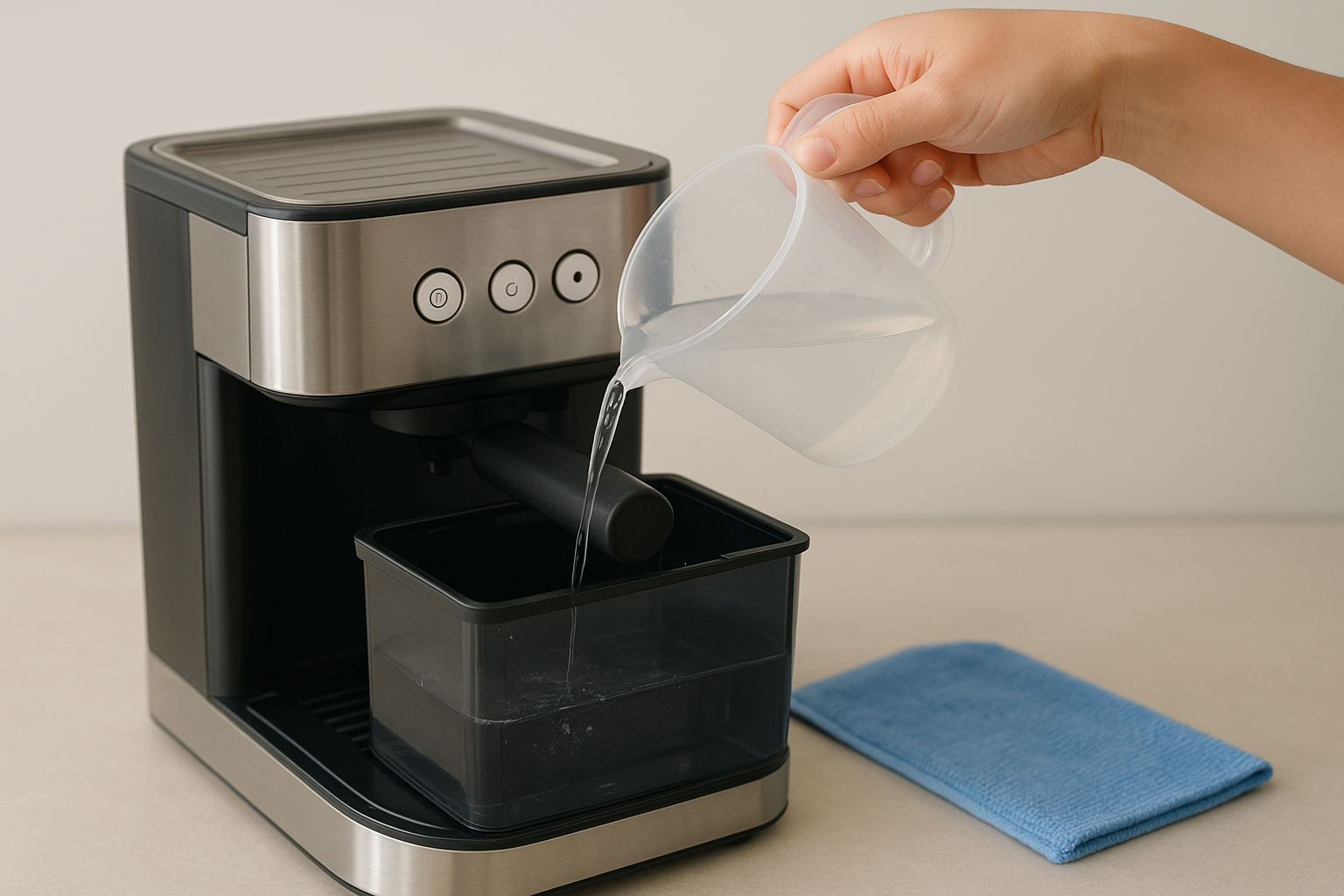
Always run at least two full rinse cycles with clean, fresh water after descaling to flush out every trace of solution before you use the appliance again.
After the final rinse, wipe down exterior surfaces and reassemble any parts you removed earlier. Confirm that water flow and pressure have returned to normal before putting the machine back into regular use.
Choosing a descaler vs vinegar or DIY acids
Many people reach for white vinegar as a quick, cheap fix for mineral buildup, and it does dissolve some light scale. The problem is that acetic acid in household vinegar sits at roughly 5% concentration, which is too weak to clear heavy deposits and too slow to work efficiently in a single cycle. You also end up with a lingering odor that affects the taste of your next brew.
Why vinegar falls short
Vinegar leaves behind residue that takes multiple rinse cycles to fully clear, and repeated use can degrade rubber seals and gaskets over time. DIY citric acid or lemon juice solutions face similar limits because uncontrolled concentration produces unpredictable results and potential surface damage on sensitive components.
A purpose-built descaler uses a calibrated concentration designed for the equipment you are treating, which gives you consistent results without guesswork.
When a purpose-built descaler makes sense
A commercial-grade descaler formulated with chelating agents removes scale faster, at lower concentrations, and without corroding internal components. Products rated HMIS 0-0-0, like those from Eco Safeway, offer an additional advantage:
- No hazmat handling or protective gear required
- Safe to flush without harming waterways
- Compatible with sensitive seals, metals, and coatings
Final Checklist
Before you reach for any descaling product, make sure you understand your water hardness level and adjust your descaling frequency accordingly. A purpose-built descaler removes scale faster and more safely than vinegar or DIY acids, especially when it carries a non-toxic rating like HMIS 0-0-0.
Here is what to confirm before and after every descaling session:
- Check your appliance manual for compatible descaling solutions and correct dilution ratios
- Run at least two full rinse cycles with clean water after treatment
- Watch for white residue, slow water flow, or off-flavors as early warning signs
- Schedule your next descaling session based on water hardness, not just manufacturer timelines
- Choose a product that is non-corrosive and safe to flush into waterways
For commercial equipment, the stakes are higher. Scale buildup in ice machines, cooling towers, and HVAC systems directly increases energy costs and shortens equipment lifespan. Eco Safeway's food-safe ice machine cleaner and descaler delivers effective scale removal without hazmat handling, protective gear, or damage to sensitive internal components.


