





A mechanical contractor is the professional you call when a building's critical systems, HVAC, plumbing, piping, refrigeration, need to be designed, installed, or repaired. These contractors keep commercial and industrial facilities running, handling everything from cooling tower installations to complex ductwork and process piping.
But knowing what a mechanical contractor actually does, and when you need one versus a general contractor or a specialized technician, isn't always straightforward. The scope of their work touches nearly every system behind your walls and above your ceilings, and choosing the right one can directly affect equipment lifespan, energy costs, and regulatory compliance.
At Eco Safeway, we work alongside mechanical contractors and facility teams every day. Our non-toxic, HMIS 0-0-0 rated cleaning products are used to maintain the exact systems these professionals install and service, condensers, coils, cooling towers, and drain lines. We've seen firsthand how the right contractor paired with equipment-safe maintenance practices can extend system life and cut operating costs significantly.
This article breaks down what mechanical contractors do, the types of services they provide, and how to determine when it's time to bring one in for your project.
What mechanical contractors do
A mechanical contractor manages the systems that move air, water, gas, and refrigerants through a building. Unlike a general handyman or single-trade technician, a licensed mechanical contractor oversees entire systems from design through installation, testing, and long-term maintenance. Their work directly determines whether a commercial or industrial facility stays comfortable, code-compliant, and running without costly breakdowns.
Core systems they install and maintain
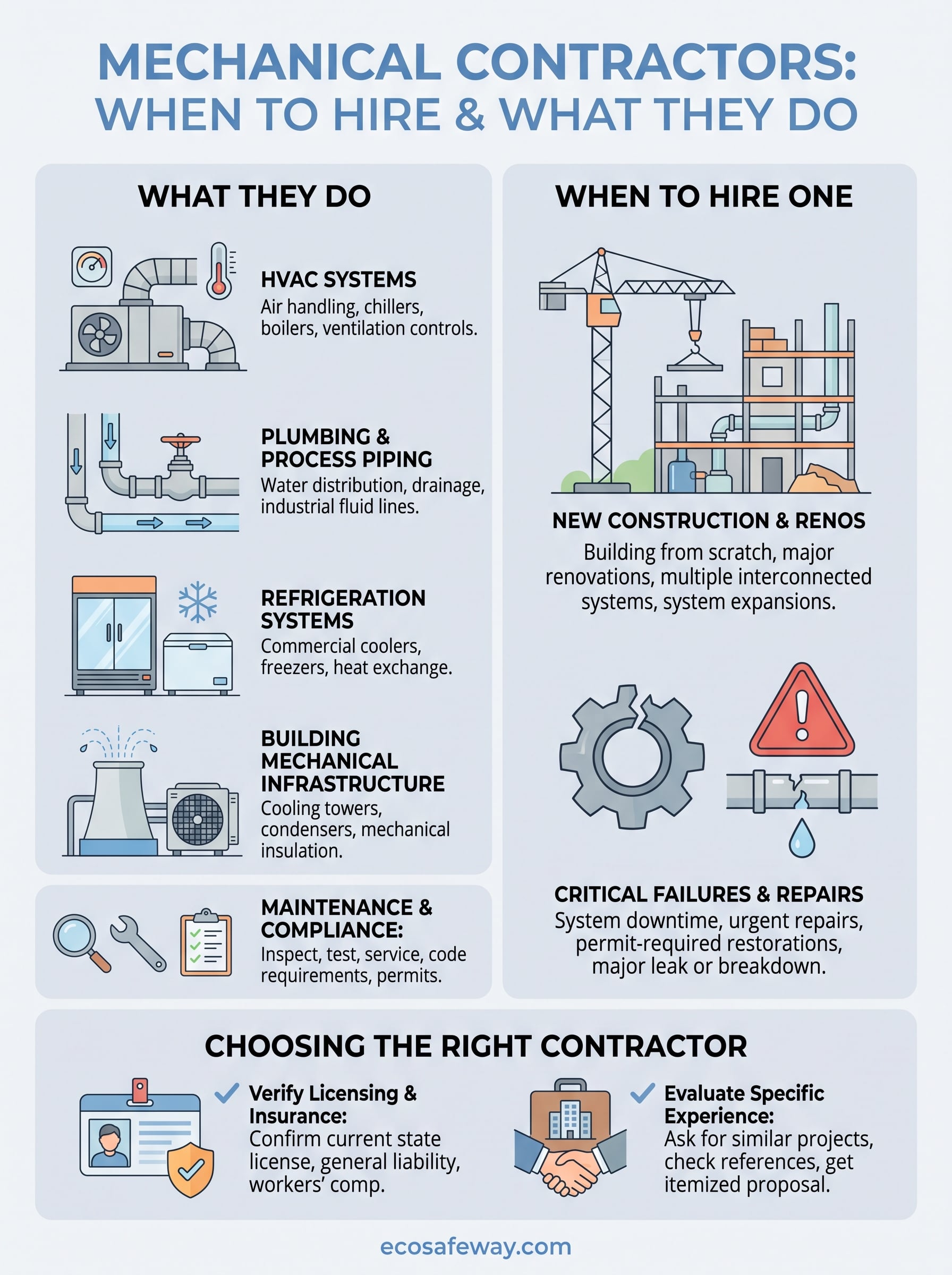
The bulk of a mechanical contractor's work falls across four major categories: HVAC systems, plumbing and process piping, refrigeration, and building mechanical infrastructure. On a commercial or industrial project, that scope can mean installing a rooftop air handling unit, running refrigerant lines to a walk-in cooler, designing hydronic heating loops, or laying out the process piping for a manufacturing line.
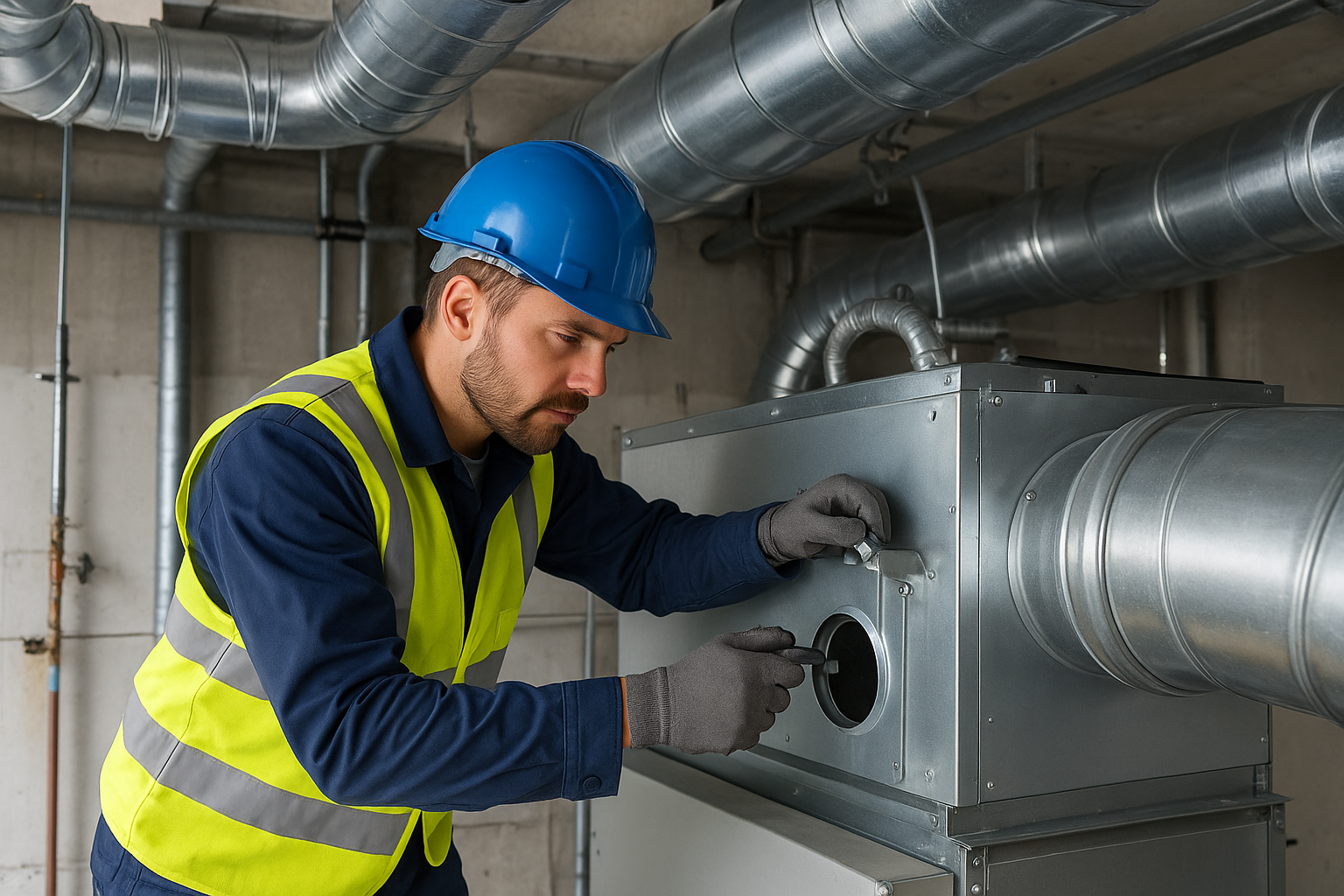
Mechanical systems often account for 40% or more of a commercial building's total energy consumption, which means the contractor you choose has a direct impact on your operating costs for years after installation.
Here are the primary system types most mechanical contractors work with:
- HVAC systems: air handling units, ductwork, chillers, boilers, and ventilation controls
- Plumbing and process piping: water distribution, drainage systems, and industrial fluid lines
- Refrigeration systems: commercial coolers, freezers, and heat exchange equipment
- Cooling towers and condensers: heat rejection systems for large commercial or industrial facilities
- Mechanical insulation: pipe and duct insulation for energy efficiency and condensation control
Service, maintenance, and compliance
A mechanical contractor doesn't just build systems and move on. They return to inspect, test, and service the equipment they install, and many carry structured service agreements for ongoing maintenance. For facility managers, this continuity matters because most mechanical systems require documented service records to satisfy local code requirements, warranty terms, or insurance standards.
Your contractor also pulls the required permits and coordinates inspections with the local authority having jurisdiction (AHJ). If a cooling tower or chilled water system fails a compliance check, the mechanical contractor is the professional who brings it back into spec, documents the work, and signs off on the correction. That paper trail protects your facility and your liability exposure.
Mechanical contractor vs HVAC and general contractors
The terms get used interchangeably, but they describe different scopes of work. Understanding who does what saves you from hiring the wrong professional and then paying to fix the gap.
How HVAC contractors differ
An HVAC contractor focuses specifically on heating, ventilation, and air conditioning systems. They're skilled within that lane, but their license and expertise typically stop there. A mechanical contractor holds a broader license that covers HVAC along with plumbing, process piping, refrigeration, and often fire suppression systems. If your project involves a single rooftop unit replacement, an HVAC contractor handles it fine. If it involves integrating that unit with a chilled water loop and drain system, you need a mechanical contractor who can manage all three components under one scope.
Hiring a specialist for a systems-level project often leads to coordination failures and change orders that cost more than the initial price difference.
How general contractors differ
A general contractor manages the overall construction of a project, coordinating subcontractors across trades. They don't personally install mechanical systems. On most commercial builds, a general contractor will subcontract the mechanical work directly to a licensed mechanical contractor. If you're managing your own facility project without a GC, you're essentially taking on that coordination role yourself, which means you should contract with a mechanical contractor directly rather than relying on a generalist to handle systems that require specialized design, code compliance, and documentation.
When to hire a mechanical contractor
Not every project requires a mechanical contractor, but misreading the scope is a costly mistake. If your project involves multiple interconnected systems, such as HVAC, piping, and drainage working together, or if it requires permits and code sign-off, you need a licensed mechanical contractor rather than a generalist or a single-trade technician. The clearer you are on your project scope upfront, the easier it is to bring in the right professional at the right time.
New construction and major renovations
When you're building a commercial or industrial facility from the ground up, a mechanical contractor joins the project early, often before the walls go up. They coordinate with structural and electrical trades to route ductwork, piping, and refrigerant lines without conflicts. On major renovation projects, the same principle applies.
Common scenarios that require a mechanical contractor on construction or renovation work:
- Installing or replacing a cooling tower, chiller, or chilled water system
- Adding process piping to a manufacturing or industrial space
- Expanding HVAC capacity across multiple building zones or floors
Getting a mechanical contractor involved at the design stage, not after the slab is poured, saves significant rework costs and schedule delays.
System failures and urgent repairs
When critical mechanical systems go down, an HVAC technician may handle a simple component swap. However, if the failure involves interconnected systems or requires permit work to restore operation, you need a mechanical contractor. Facility managers dealing with cooling tower failures, major pipe leaks, or refrigeration system breakdowns should call a licensed mechanical contractor directly to avoid incomplete repairs that create compliance gaps or void equipment warranties.
How to choose the right mechanical contractor
Selecting the right mechanical contractor comes down to two things: verifying credentials and confirming they have direct experience with your specific systems. A contractor who excels at light commercial HVAC may not have the background to handle a cooling tower installation or industrial process piping project. Vetting upfront saves you from discovering that gap mid-project.
Verify licensing and insurance
Every state sets its own licensing requirements for mechanical contractors, and you should confirm your candidate holds a current license in your state before any work begins. Ask for their contractor license number and verify it directly through your state licensing board. Beyond licensing, confirm they carry both general liability insurance and workers' compensation coverage. If something goes wrong on your site, an uninsured contractor leaves you holding the financial exposure.
Requesting a certificate of insurance before signing any contract is standard practice, and a legitimate contractor will provide one without hesitation.
Evaluate experience with your specific systems
Ask the contractor to describe recent projects similar in scope and system type to yours. A cooling tower replacement, a chilled water loop, and a process piping installation each require different expertise. Request references from commercial or industrial clients, not residential work, and follow up with those references to ask how the contractor handled code compliance, project timelines, and post-installation service. A strong track record with your system type is the clearest indicator you have the right professional for the job.
Costs, licensing, and common FAQs
Understanding cost ranges and licensing requirements upfront helps you budget accurately and avoid contractors who cut corners on credentials. Mechanical contractor rates vary by project scope, region, and system complexity, so knowing the baselines before you receive proposals puts you in a stronger negotiating position.
What does a mechanical contractor typically charge?
Most commercial mechanical projects are priced as either a fixed bid for defined scope or time-and-materials for open-ended service work. Larger installations like cooling tower replacements or full HVAC system overhauls typically range from $10,000 to well over $100,000 depending on system size and site conditions. Routine service calls generally run $150 to $300 per hour for labor, separate from parts.
Always request an itemized proposal so you can compare bids on the same scope, not just the bottom-line number.
Frequently asked questions
Before you finalize your hiring decision, these common contractor questions come up regularly across commercial and industrial projects.
- Do mechanical contractors need a license? Yes. Every state requires a current license, and most issue separate endorsements for refrigeration or medical gas systems.
- Can one contractor handle both HVAC and plumbing? Most licensed contractors cover both, but confirm before signing since some states issue separate mechanical and plumbing licenses.
- How long do projects take? Simple equipment swaps can wrap in a single day, while new construction mechanical work runs weeks to months.
A quick way to decide your next step
If your project involves a single system and no permit work, a specialized technician may be enough. But if you're dealing with multiple systems, new construction, a major equipment failure, or anything that requires code sign-off, you need a licensed mechanical contractor with direct experience in your system type. Verify their license, check references from comparable projects, and get an itemized proposal before you commit.
Once your contractor completes the installation or repair, the long-term performance of your HVAC systems, cooling towers, and coils depends heavily on the maintenance products your team uses. Harsh acids and corrosive descalers damage the equipment your contractor just installed. Eco Safeway's Industrial HVAC & Cooling Tower Descaler is non-toxic, biodegradable, and rated HMIS 0-0-0, so it protects your systems and your team without hazmat handling requirements.


