





Knowing how often to clean boat hull surfaces is one of the most straightforward ways to protect your investment, but the right schedule depends on more than just how dirty things look. Saltwater, freshwater, water temperature, and how often you take your boat out all play a role in how quickly fouling builds up, and how much damage it can cause if left unchecked.
Clean too infrequently and you're looking at barnacle damage, degraded bottom paint, and higher fuel costs from drag. Clean too aggressively with the wrong products and you risk stripping protective coatings or introducing harsh chemicals into the water. That's why at Eco Safeway, we develop non-toxic, biodegradable marine cleaning solutions rated HMIS 0-0-0, so boat owners can maintain their hulls effectively without compromising their equipment or the marine environment.
This guide breaks down a practical hull cleaning schedule based on whether you operate in salt or freshwater, the time of year, and your boat's specific conditions. You'll walk away with clear frequency recommendations and the know-how to extend the life of your bottom paint while keeping performance where it should be.
Why hull cleaning frequency matters
Hull fouling is not just a cosmetic issue. Barnacles, algae, and biofilm attach to your hull within days of launch, and once they take hold, they create drag that forces your engine to work harder. Research indicates that heavy fouling can reduce fuel efficiency by 10 to 40 percent, which adds up quickly over a full season. Staying on top of how often to clean boat hull surfaces is the most direct way to control these costs before they escalate.
The drag and performance problem
Every layer of growth on your hull adds resistance. Soft growth like algae and slime can typically be wiped away with a light scrub done in the water, but hard growth like barnacles bonds to the surface and requires mechanical removal. Once barnacle cement cures, it can lift ablative bottom paint during removal, which means you're paying for a haul-out and a repaint far sooner than planned. Catching fouling early keeps the work manageable and protects the coating underneath.
Your engine and drivetrain also take a hit from the added drag. Throttle position increases to maintain speed, which puts more strain on fuel injectors, cooling systems, and impellers over time. Less fouling means less strain across the entire drivetrain.
A hull cleaned on a consistent schedule stays in better shape over its lifetime than one cleaned reactively after heavy fouling sets in.
How fouling damages bottom paint
Bottom paint is your hull's primary barrier against biofouling, osmotic blistering, and direct exposure to corrosive saltwater. Aggressive scrubbing of thick barnacle colonies does not just remove the organisms; it strips away the paint layer under them. Thin or patchy coverage leaves exposed gelcoat or fiberglass open to moisture intrusion and long-term osmotic damage.
Your hull's gelcoat is not designed to handle prolonged submersion without protection. Even small gaps in paint coverage can allow water to penetrate and cause blistering over time, which costs far more to fix than routine maintenance. Keeping your paint layer intact means spending less time and money on repairs and more time on the water.
Saltwater vs freshwater hull cleaning schedule
The water you operate in sets the baseline for how often to clean boat hull surfaces. Saltwater is far more aggressive, with warmer coastal waters driving faster biological growth and fouling attachment. Freshwater slows that process but does not eliminate it.
Saltwater: clean every 4 to 8 weeks
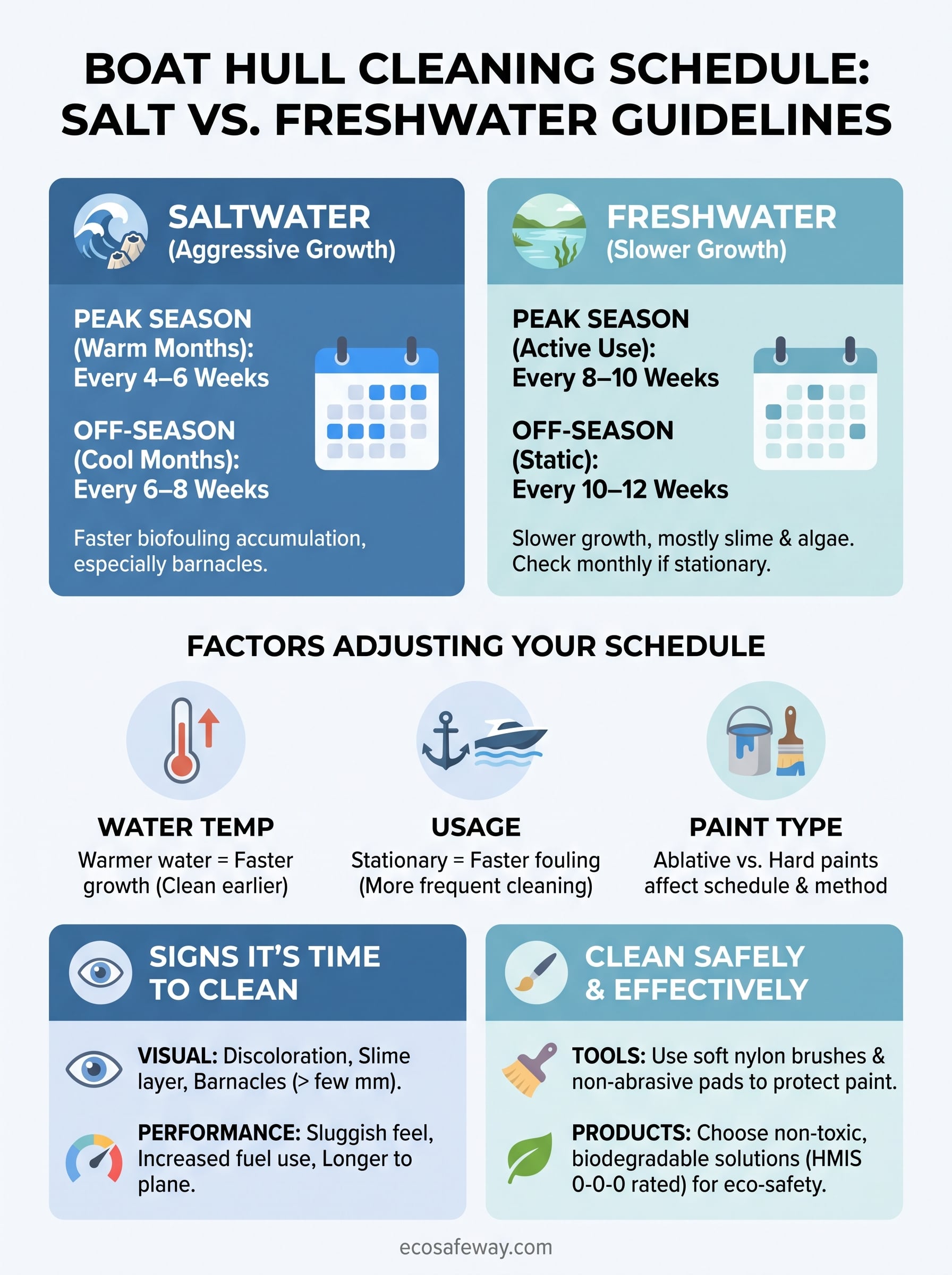
In saltwater, biofouling accumulates quickly, especially during warmer months. Plan to scrub your hull every 4 to 6 weeks during peak season (May through September), and extend to 6 to 8 weeks in cooler months when growth slows. Boats in warmer southern waters like Florida or the Gulf Coast should stay closer to the 4-week mark year-round.
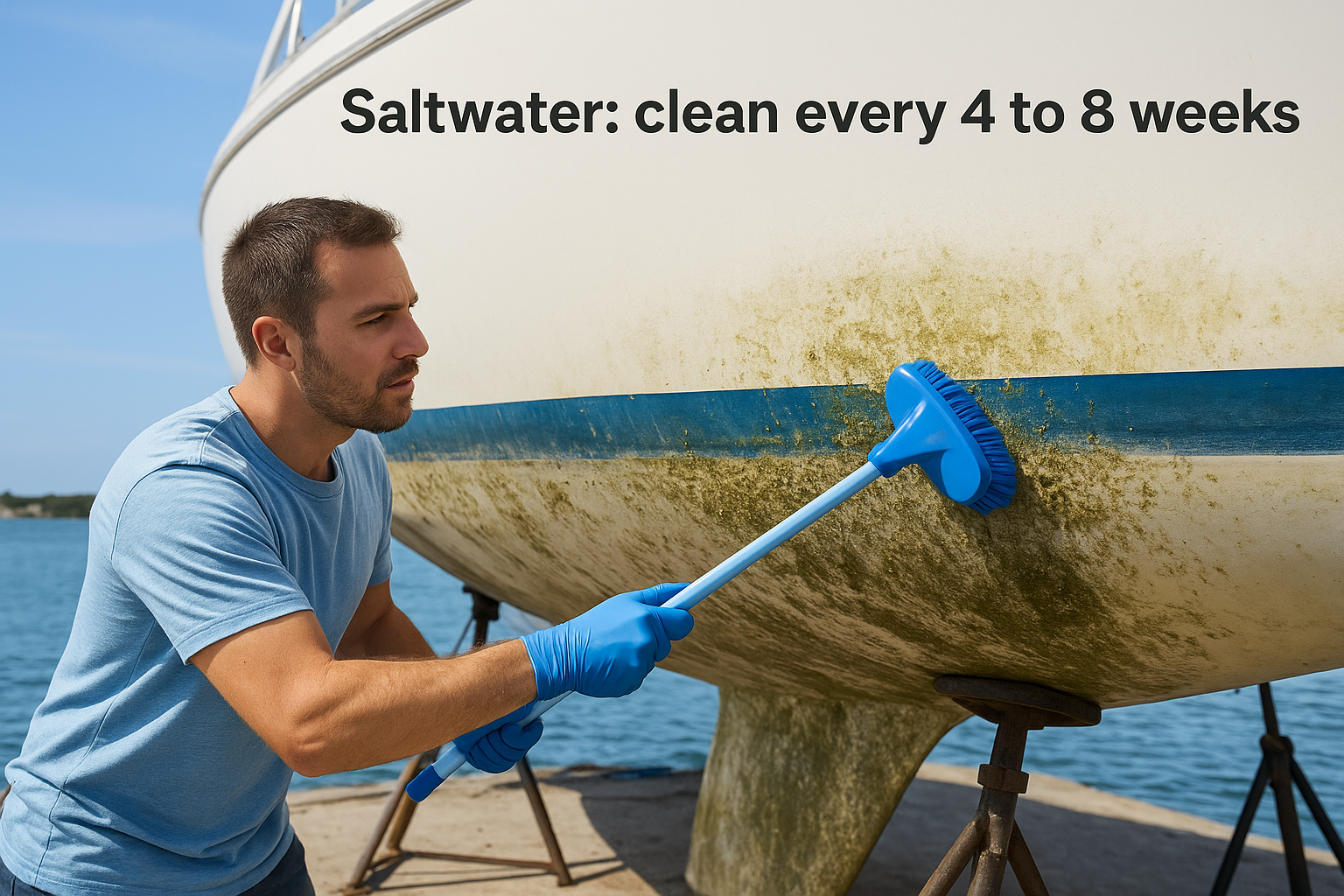
Consistent short-interval scrubs in saltwater do far less damage to bottom paint than infrequent heavy cleanings.
Freshwater: clean every 8 to 12 weeks
Freshwater harbors fewer marine organisms, so fouling builds more slowly. A cleaning every 8 to 12 weeks during the active season keeps most freshwater hulls in good shape. Check your hull monthly if it sits stationary, since algae can still build up in nutrient-rich lake or river water.
| Environment | Peak Season | Off-Season |
|---|---|---|
| Saltwater | Every 4 to 6 weeks | Every 6 to 8 weeks |
| Freshwater | Every 8 to 10 weeks | Every 10 to 12 weeks |
Factors that change your ideal schedule
The salt vs. freshwater baseline is a starting point, but several other variables will push your schedule earlier or later. Understanding them helps you decide how often to clean boat hull surfaces with more precision than any one-size-fits-all calendar.
Water temperature
Warmer water accelerates biological growth significantly. Barnacle larvae and algae spores are far more active above 60°F, so boats kept in warm southern marinas or tropical waters need more frequent cleaning than those in colder northern harbors. During summer months, check your hull at least two weeks earlier than your normal interval to catch growth before it hardens.
Water temperature is often the single biggest variable in how fast your hull fouls between cleanings.
Mooring vs. active use
A boat that moves regularly disrupts soft growth before it can anchor firmly. If you take your boat out several times per week, you can stretch your interval slightly. A boat sitting stationary at a dock or on a mooring for weeks at a time is a different story; static conditions allow fouling to establish faster, so you should tighten your schedule accordingly.
Bottom paint type
Ablative paints wear down with use and release biocides continuously, so they stay active longer between cleanings. Hard modified epoxy paints do not self-polish, which means growth accumulates on the surface faster and requires more frequent scrubbing to stay effective.
How to tell it's time to clean your hull
Your cleaning schedule gives you a baseline, but your hull will sometimes tell you it needs attention before the calendar does. Checking for visible fouling and performance changes takes only a few minutes and helps you avoid waiting too long between sessions.
Visual signs to check
Lean over the side or dive under your boat and look for discoloration, slime, or rough patches on the hull below the waterline. A fresh hull looks smooth and uniform. If you see green or brown staining, a fuzzy biofilm layer, or any hard white or gray bumps, fouling is already forming. Barnacles larger than a few millimeters have started to cure their cement, which means the next scrub will require more effort.
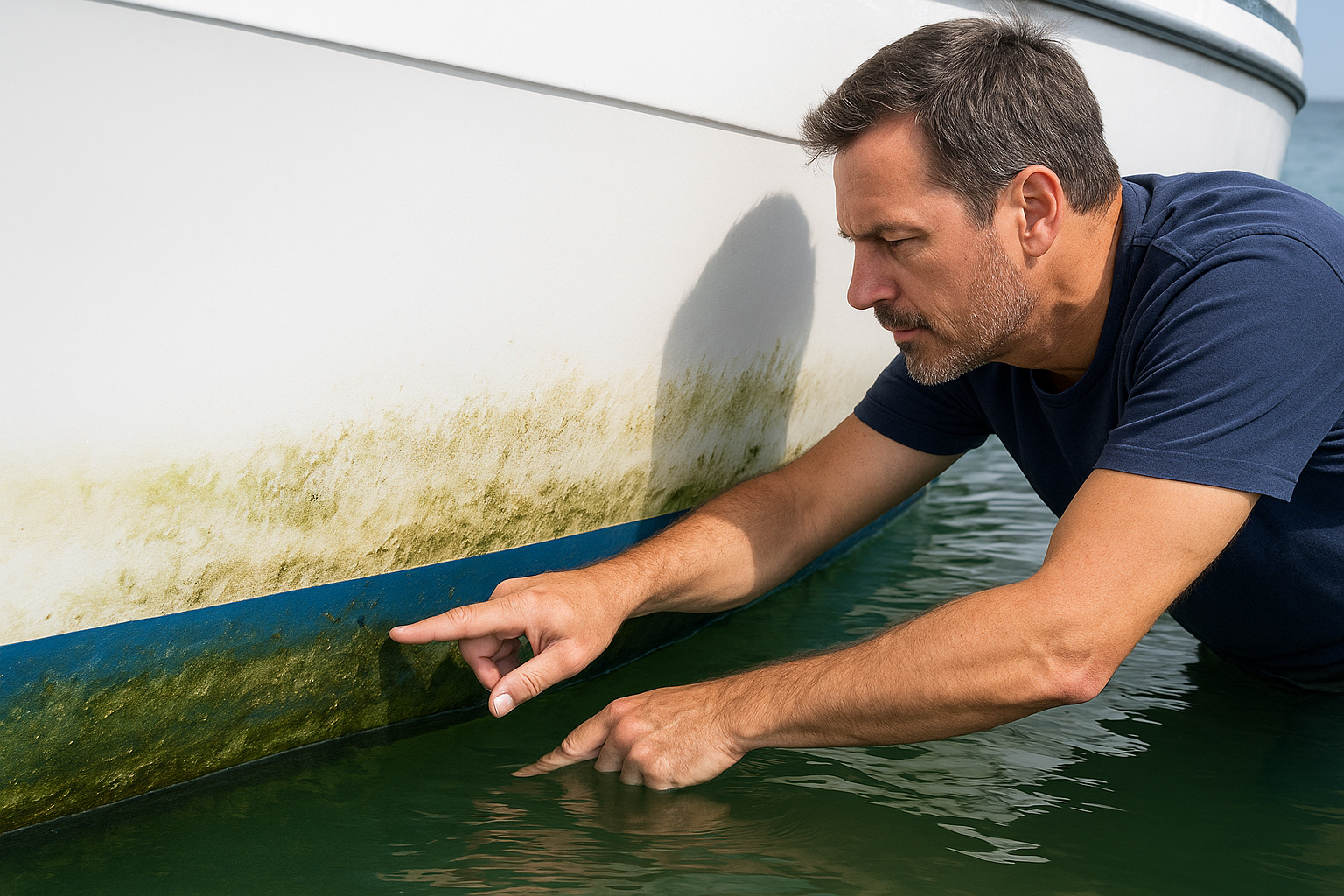
Catching fouling at the slime stage is always easier than removing hardened barnacle colonies.
Performance signs on the water
Sometimes the water gives you the clearest signal about how often to clean boat hull surfaces. If your boat feels sluggish at normal throttle, takes longer to get on plane, or your fuel consumption has increased noticeably, fouling drag is likely the cause. These performance drops often show up before the growth is obvious to the eye, so treat them as an early warning worth acting on.
How to clean your hull without damaging paint
Cleaning technique matters as much as cleaning frequency. Even with a perfect schedule for how often to clean boat hull surfaces, using the wrong tools or too much pressure can strip bottom paint prematurely and undo all the protective work it provides.
Use the right scrubbing tools
Soft nylon brushes and non-abrasive pads are the right choice for regular in-water scrubbing. Hard wire brushes or stiff metal scrapers cut through barnacles quickly, but they also remove paint layers in the process. Keep your tool selection matched to the growth stage you are dealing with:
- Soft nylon brush: best for routine scrubbing and algae or biofilm removal
- Non-abrasive sponge pad: works well on flat hull sections with light growth
- Plastic scraper: use only for loosening isolated barnacles, not broad scrubbing passes
Choose non-toxic cleaning products
The products you use directly affect both your hull's coating and the surrounding water. Harsh acid-based cleaners can break down bottom paint chemistry and leach harmful compounds into the marine environment. Using a non-toxic, biodegradable hull cleaner rated HMIS 0-0-0 protects your paint, keeps your boat safe to work on without gloves, and avoids the environmental damage that comes with solvent-based alternatives.
Non-toxic cleaners let you scrub more frequently without risking paint damage or introducing hazardous chemicals into the water.
A simple plan you can stick with
Deciding how often to clean boat hull surfaces does not need to be complicated. Saltwater boaters should aim for a scrub every 4 to 6 weeks during peak season and stretch that interval to 6 to 8 weeks in cooler months. Freshwater boaters can work on an 8 to 12 week cycle, adjusting tighter if their boat sits stationary for extended periods.
Beyond the calendar, check your hull visually every few weeks and watch for early signs of fouling like slime buildup or a performance drop on the water. Catching growth early keeps scrubbing light and your bottom paint intact longer.
Choosing the right cleaning product makes the entire process safer and more sustainable. Eco Safeway's non-toxic antifouling and marine cleaning solutions are HMIS 0-0-0 rated, meaning no hazardous handling, no damage to your hull coating, and no harmful runoff into the water around you.


