





Fiberglass gelcoat takes a beating. Between waterline stains, oxidation, and UV damage, even a well-maintained hull can start looking rough after a single season. Choosing the best fiberglass boat cleaner makes the difference between restoring that factory shine and accidentally grinding through your gelcoat with something too aggressive. The problem is that most boat owners don't realize how many popular cleaners rely on harsh acids or abrasive compounds that accelerate the very damage they're trying to fix.
At Eco Safeway, we manufacture non-toxic, biodegradable marine cleaning products with a perfect HMIS 0-0-0 safety rating, meaning they're safe for you, your boat, and the water it sits in. We've spent years formulating cleaners that actually perform without the corrosive chemicals, so we know what separates a good fiberglass cleaner from one that causes long-term gelcoat damage.
This guide breaks down seven fiberglass boat cleaners worth considering, with honest detail on what each one does well, where it falls short, and which types of stains and conditions it handles best. Whether you're dealing with stubborn waterline grime or full-hull oxidation, you'll walk away knowing exactly which product fits your situation.
1. Eco Safeway HMIS 0-0-0 Marine Cleaner
Eco Safeway's marine cleaner stands apart from most products on this list because it carries a perfect HMIS 0-0-0 rating, meaning zero health hazards, zero flammability risk, and zero physical hazards. You get a cleaner that handles real-world boat grime without exposing yourself, your crew, or the surrounding water to corrosive acids or harsh solvents. For anyone searching for the best fiberglass boat cleaner that won't compromise gelcoat or local water regulations, this is the benchmark to measure others against.
Best for
This cleaner works best for routine hull cleaning, waterline stain removal, and ongoing gelcoat maintenance where you want reliable results without risking surface damage. If you haul your boat regularly, keep it in saltwater, or simply want a product you can apply without gloves and a respirator, this is the right starting point.
Active Ingredients and Strength
The formula relies on biodegradable surfactants and organic acid compounds rather than hydrochloric or phosphoric acid. That distinction matters because traditional acid-based cleaners etch gelcoat with repeated use, while Eco Safeway's formulation lifts mineral deposits, salt scale, and organic staining without attacking the underlying fiberglass matrix.
A perfect HMIS 0-0-0 rating confirms non-corrosive chemistry by definition, which directly reduces the risk of gelcoat degradation over time.
How to Use It Without Damaging Gelcoat
Apply the cleaner to a wet hull surface and work in small sections using a soft brush or microfiber pad. You don't need to let it dwell for extended periods because the surfactant action starts working immediately. Rinse thoroughly with fresh water after each section, and avoid letting the product dry on the surface in direct sun, which can leave light residue.
For oxidized or heavily stained areas, a second application with light agitation handles what the first pass misses. You won't need to sand or compound afterward for standard maintenance cleaning.
Safety and Environmental Notes
Eco Safeway products are EPA compliant, phosphate-free, and fully biodegradable, which means marina no-discharge rules and local water quality regulations won't limit where or how you use them. No hazmat shipping requirements apply, so ordering is straightforward with no special handling fees.
Typical Price Range
Eco Safeway marine cleaner falls in the mid-range for professional-grade boat cleaners, typically between $20 and $40 depending on concentration and bottle size. Concentrated formulas offer better value per application when you clean frequently throughout the season.
2. Davis FSR Fiberglass Stain Remover
Davis FSR has been a go-to for boat owners dealing with rust stains, brown waterline rings, and mineral deposits that regular soap won't touch. It's a dedicated stain remover rather than a general-purpose cleaner, which means it performs well in a narrow category but isn't a full maintenance solution.
Best for
Davis FSR works best on iron and rust-based stains, including the orange and brown streaks that bleed from fittings, anchor chains, or dock hardware onto your hull. If your fiberglass has dark mineral discoloration from prolonged exposure, FSR can lift it quickly.
Active Ingredients and Strength
The active chemistry in FSR relies on oxalic acid, a mild acid that targets iron compounds specifically. It's stronger than many "gentle" cleaners but less aggressive than hydrochloric acid formulas. That positioning gives it real stain-lifting power on rust without the extreme gelcoat risk that muriatic acid products carry.
Oxalic acid still requires caution on oxidized or thin gelcoat, since repeated use can dull the surface over time.
How to Use It Without Damaging Gelcoat
Apply FSR to a wet surface only, never dry fiberglass. Work in small areas, allow a short dwell time of 30 to 60 seconds, then scrub lightly and rinse immediately. Overexposure increases acid contact time and raises the risk of surface dulling.
Safety and Environmental Notes
FSR requires gloves and eye protection during use, and it should not be rinsed into sensitive waterways. It does not carry a hazmat shipping classification, but it is not biodegradable in the same way as HMIS 0-0-0 formulas.
Typical Price Range
Davis FSR typically costs $15 to $25 for a quart, making it an affordable option for targeted stain treatment.
3. Star Brite Sea Safe Hull Cleaner
Star Brite Sea Safe Hull Cleaner positions itself as an environmentally conscious option for boaters who want solid hull cleaning performance without the most aggressive acid formulas. It's a broadly capable cleaner that handles multiple stain types across different hull surfaces, making it a versatile pick for general seasonal maintenance.
Best for
Sea Safe Hull Cleaner works best on light to moderate waterline stains, algae residue, and general surface grime that accumulates during regular use. It suits boaters who keep their hulls reasonably maintained and want a quick-application cleaner they can use at the dock without a lot of prep work.
Active Ingredients and Strength
Star Brite's formula uses surfactant-based chemistry with mild acidic components that target organic buildup and mineral deposits. The strength sits in a middle tier, capable enough for routine stains but not formulated to tackle heavy rust streaks or severe oxidation the way a dedicated stain remover would.
For deep oxidation or iron-based staining, you'll get better results pairing Sea Safe with a targeted stain treatment before finishing with a general hull cleaner.
How to Use It Without Damaging Gelcoat
Spray or apply the cleaner directly onto a wet hull surface, then scrub with a soft brush in circular motions and rinse thoroughly. Avoid prolonged contact on thin or weathered gelcoat, and always rinse completely before moving to the next section.
Safety and Environmental Notes
Star Brite markets this product as biodegradable and ocean-friendly, though it does not carry an HMIS 0-0-0 rating. You should still wear basic hand protection during application.
Typical Price Range
Sea Safe Hull Cleaner typically runs $15 to $30 per quart, landing it in an accessible range for boaters who want a capable cleaner among the best fiberglass boat cleaner options without overspending.
4. Marykate On and Off Gel Hull Cleaner
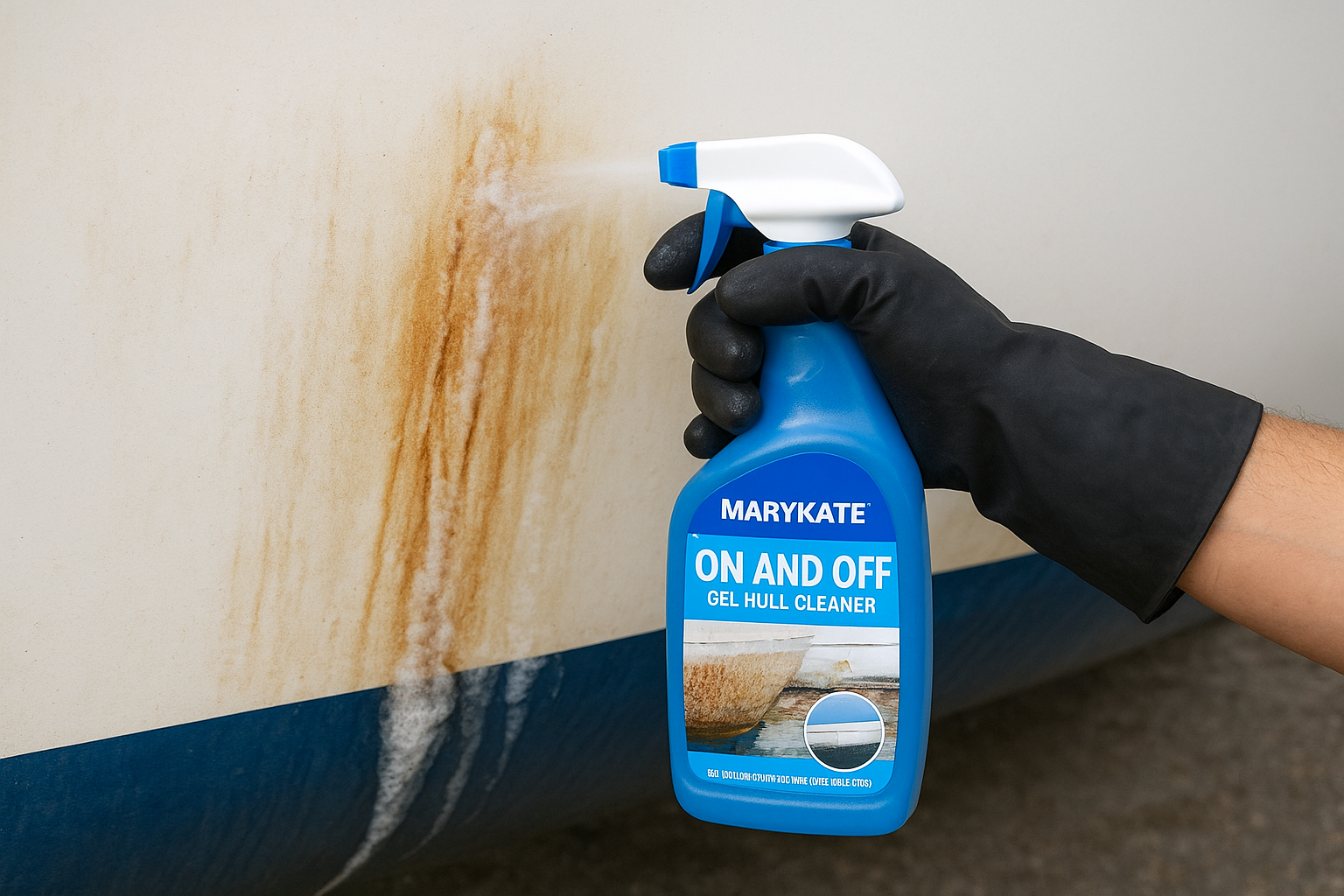
Marykate On and Off is one of the most recognized names in boat hull cleaning, particularly for boaters dealing with severe waterline buildup and stubborn calcium deposits. The gel formula clings to vertical hull surfaces longer than liquid products, giving the active chemistry more contact time where you need it most.
Best for
On and Off works best on heavy waterline stains, calcium scale, and rust streaks that lighter cleaners leave behind. If your hull has visible brown or orange banding along the waterline after a full season, this product is designed to cut through that kind of buildup fast.
Active Ingredients and Strength
The formula uses hydrochloric acid as its primary active ingredient, which puts it among the stronger options in the best fiberglass boat cleaner category. That strength is effective on mineral-heavy deposits but demands careful handling and strict attention to dwell time.
Hydrochloric acid can etch gelcoat quickly if left on too long, so this product requires a controlled, attentive application process.
How to Use It Without Damaging Gelcoat
Always wet the hull thoroughly before applying On and Off, and work in small sections of no more than two to three feet at a time. Limit dwell time to 30 seconds maximum on gelcoat surfaces, then scrub lightly and rinse immediately with plenty of fresh water. Never apply to dry fiberglass or allow it to sit in direct sun.
Safety and Environmental Notes
On and Off requires full protective gear, including acid-resistant gloves and eye protection. It is not safe for use near sensitive waterways and carries standard hazardous material handling precautions.
Typical Price Range
Marykate On and Off typically runs $15 to $28 per quart, making it a budget-accessible option for tackling severe hull staining.
5. Spray Nine Boat Bottom Cleaner Gel
Spray Nine's boat bottom cleaner gel targets the specific problem of below-waterline buildup that accumulates between haul-outs. The gel consistency is the key differentiator here, giving the formula time to penetrate algae, barnacle residue, and waterline scale without running off vertical surfaces before it can work.
Best for
This product works best for below-waterline cleaning after a haul-out, particularly when you need to remove soft biological growth and waterline deposits quickly before bottom paint application. It suits boaters who haul seasonally and want a cleaner that clings to the hull surface long enough to do real work without constant reapplication.
Active Ingredients and Strength
Spray Nine's gel formula uses surfactant-based chemistry combined with mild alkali compounds to break down organic matter and light mineral deposits. The strength sits at a moderate level, meaning it handles biological growth effectively but won't cut through deep rust stains or heavy calcium scale without additional product support.
Gel formulas perform best on damp surfaces, so always pre-wet the hull before applying to maximize dwell time and cleaning contact.
How to Use It Without Damaging Gelcoat
Apply the gel to a wet hull surface and allow it to dwell for two to three minutes before scrubbing with a stiff brush or deck brush. Rinse thoroughly with fresh water and repeat on heavily fouled sections if needed. Avoid letting the product dry out on the surface in direct sunlight.
Safety and Environmental Notes
Basic protective gloves are required during use, and standard skin and eye precautions apply. Spray Nine's gel is not rated HMIS 0-0-0, so check your local marina regulations before rinsing near sensitive waterways.
Typical Price Range
Spray Nine boat bottom cleaner gel typically costs $20 to $35 per gallon, making it a reasonable pick among the best fiberglass boat cleaner options focused specifically on post-haul-out biological cleanup.
6. 303 Marine Multi-Surface Cleaner
303 Marine Multi-Surface Cleaner takes a different approach than most dedicated hull cleaners by targeting a wide range of boat surfaces rather than focusing exclusively on fiberglass. If you maintain multiple surface types on your boat and want a single product that handles routine cleaning across all of them, 303 gives you that flexibility without carrying multiple bottles.
Best for
303 works best for light surface grime, salt residue, and general maintenance cleaning on fiberglass, vinyl, canvas, and plastic surfaces. Your routine cleaning sessions become straightforward with a low-effort, surface-compatible formula you can apply between deeper cleaning passes without worrying about compatibility issues.
Active Ingredients and Strength
The formula uses mild surfactant chemistry designed to lift dirt and salt deposits without aggressive acids or abrasives. Strength is intentionally moderate, making it a solid option among the best fiberglass boat cleaner picks for routine upkeep, but less effective on heavy oxidation or iron-based staining that requires a targeted acid treatment.
If you need to tackle deep rust streaks or severe waterline buildup, use 303 as a follow-up maintenance product after a stronger stain treatment has done the heavy lifting.
How to Use It Without Damaging Gelcoat
Spray 303 directly onto a wet or dry surface, then wipe with a soft microfiber cloth or sponge and rinse thoroughly. The formula requires minimal dwell time and no aggressive scrubbing, which reduces any risk of surface marring on weathered gelcoat.
Safety and Environmental Notes
303 does not carry an HMIS 0-0-0 rating but is positioned as safe for most marine surfaces with standard precautions. Basic hand and eye protection remain recommended during repeated application sessions.
Typical Price Range
303 Marine Multi-Surface Cleaner typically costs $12 to $22 per bottle, placing it among the more accessible options for boaters focused on consistent routine maintenance.
7. Collinite 920 Fiberglass Boat Cleaner
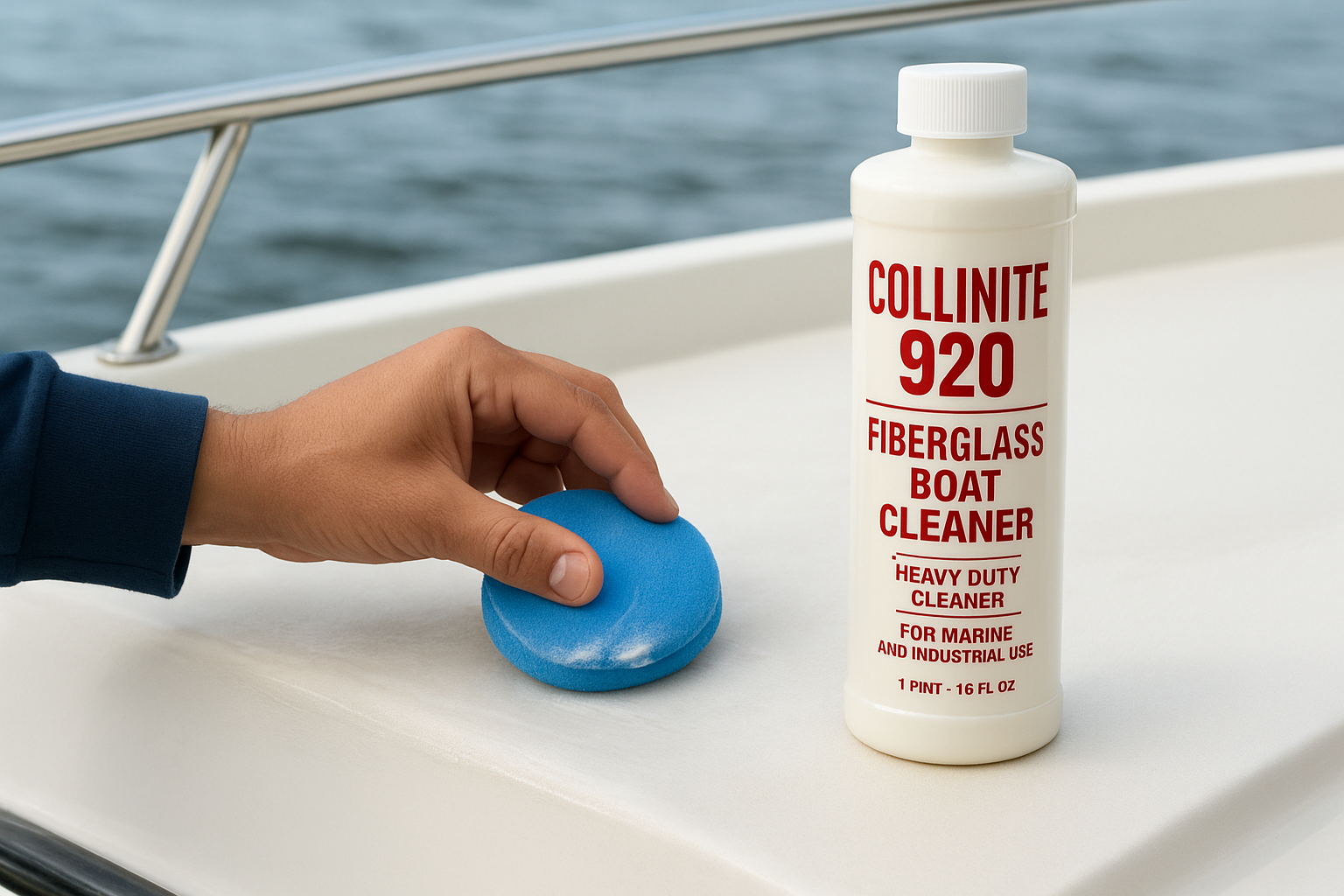
Collinite 920 combines cleaning and light polishing in a single step, making it a practical option for boaters who want to remove surface oxidation and restore gloss without running through multiple products. It sits in a different category than dedicated stain removers, functioning more as a cleaner-polish hybrid that improves the appearance of dull or weathered gelcoat.
Best for
Collinite 920 works best on lightly oxidized fiberglass where the surface has faded but still has decent gelcoat thickness. Strong candidates for this product include:
- Hulls that have lost gloss after one or two seasons
- Fiberglass surfaces with light surface contamination and minor fading
- Boats that need a quick one-step refresh before the season starts
Active Ingredients and Strength
The formula combines mild abrasive compounds with wax-based polish ingredients that clean the surface while leaving a protective layer behind. Strength is intentionally light, making it safe for regular use but insufficient for tackling heavy rust stains or severe mineral deposits.
For the best fiberglass boat cleaner results on oxidized hulls, pair Collinite 920 with a dedicated stain remover first if visible rust or waterline banding is present.
How to Use It Without Damaging Gelcoat
Apply a small amount to a foam applicator pad and work in overlapping circular passes across a manageable section. Buff off the residue with a clean microfiber cloth before it fully dries, then move to the next section.
Safety and Environmental Notes
This product requires standard hand and eye protection and doesn't carry an HMIS 0-0-0 rating. Avoid rinsing wax residue directly into the water at the dock.
Typical Price Range
Per can, you'll typically pay $18 to $30 for Collinite 920, placing it in a competitive range for light oxidation and one-step maintenance cleaning.
Next Steps for a Cleaner Hull
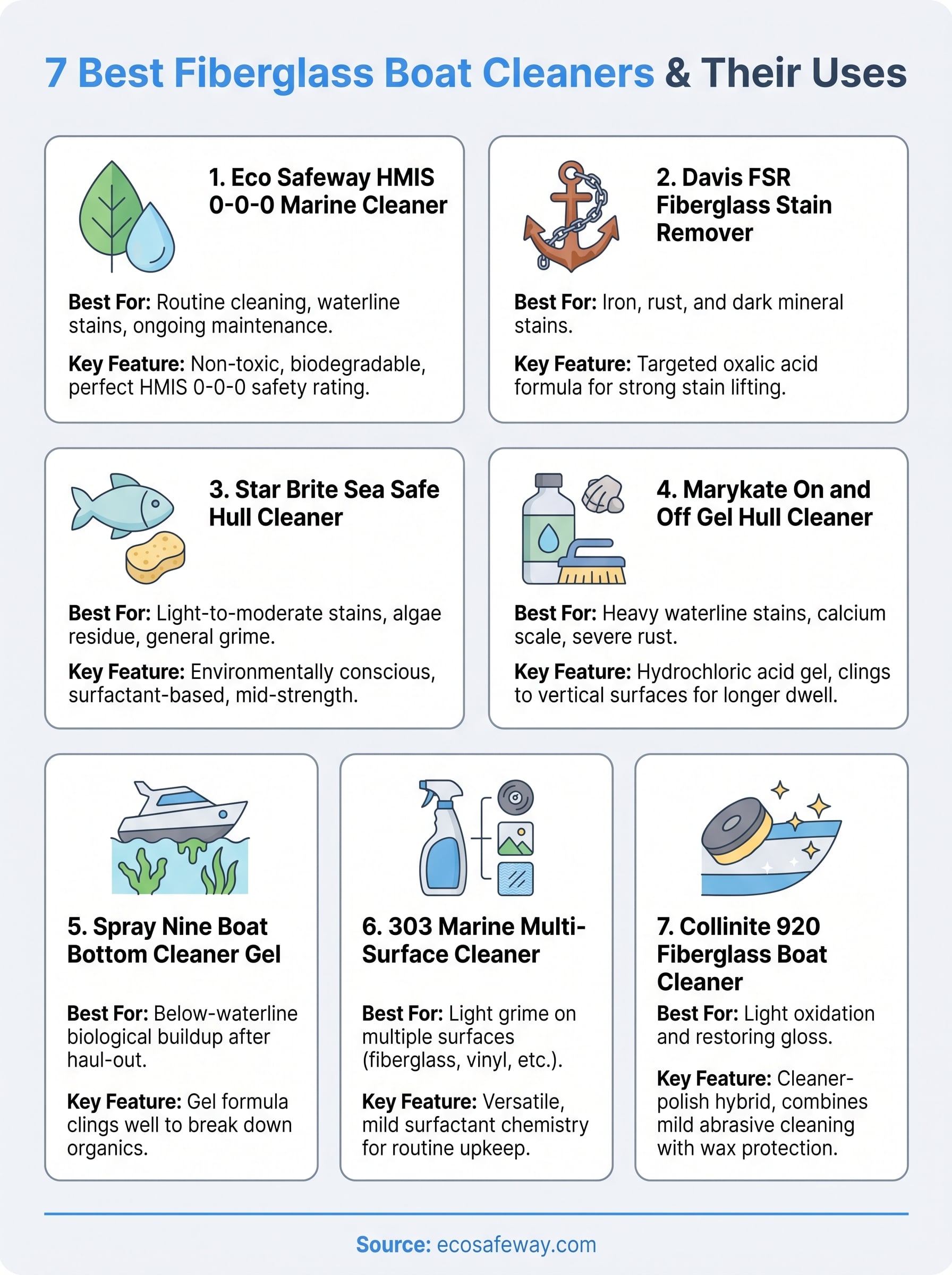
Picking the best fiberglass boat cleaner for your hull comes down to matching the product to the specific problem you're dealing with. Rust stains and mineral deposits call for a targeted acid treatment like Davis FSR or Marykate On and Off. Light surface grime and routine maintenance work better with gentler options like 303 or Star Brite. If you want a cleaner that handles real-world hull grime without putting you, your crew, or the surrounding water at risk, Eco Safeway's HMIS 0-0-0 marine cleaner gives you that performance with zero hazardous chemistry involved.
Beyond cleaning your hull, protecting your boat from the water it sits in matters just as much as the products you use on it. If you want to reduce haul-out frequency and avoid bottom paint altogether, check out the Finsulate antifouling wrap alternative for long-term non-toxic hull protection that lasts over a decade.


