
Questions? We're Here To Help: 561-405-0271





Water-Cooled Data Center HVAC Cleaner | Chillers, Heat Exchangers & Cooling Towers
Water-Cooled Data Center HVAC Cleaner | Chillers, Heat Exchangers & Cooling Towers
Couldn't load pickup availability


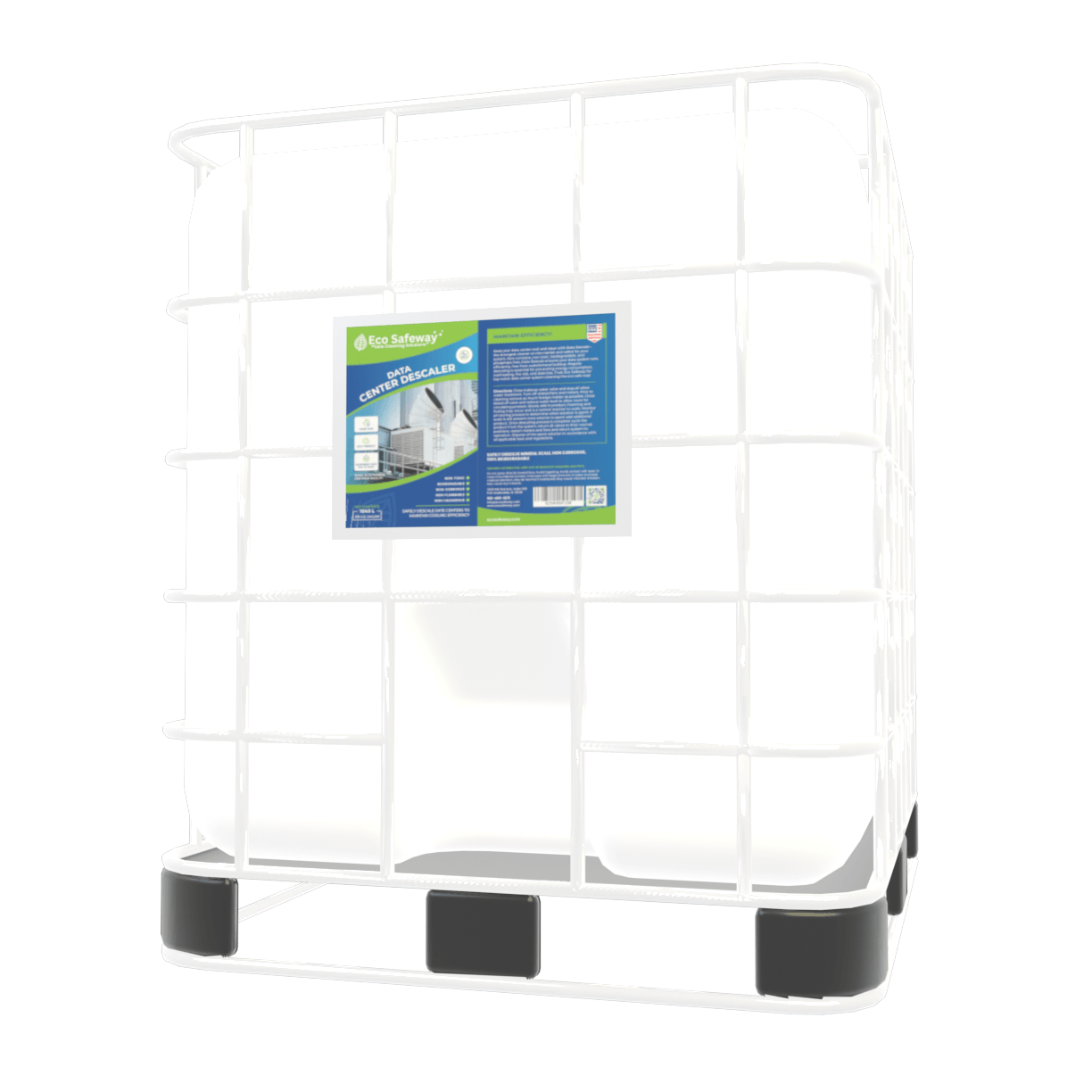
Description:
Water-Cooled Data Center HVAC Cleaner | Chillers, Heat Exchangers & Cooling Towers
Professional HVAC Cleaner for Data Centers, Server Rooms & Mission-Critical Facilities
Sustainable Water-Cooled Data Center HVAC Cleaner
Professional-grade HVAC cleaning solution for water-cooled data center cooling systems, including appropriate applications involving chillers, heat exchangers, water-cooled condensers, CRAH systems and related cooling equipment.
Eco Safeway Water-Cooled Data Center HVAC Cleaner is designed for professional maintenance applications involving water-cooled HVAC and heat-transfer equipment used in data centers, server rooms, colocation facilities and other mission-critical environments.
The product is intended for appropriate cleaning applications involving accumulated dirt, grime, deposits and other contamination, subject to the specific equipment, cleaning procedure and manufacturer's requirements.
For air-cooled data center equipment, see our Air-Cooled Data Center HVAC Cleaner.
For significant mineral scale and water-side deposits, see our Cooling Tower Descaler.
Water-Cooled HVAC Cleaning for Data Centers
Water-cooled data center infrastructure uses circulating water or another heat-transfer fluid to move heat away from critical equipment.
Depending on the facility design, water-cooled systems may include:
Chillers
Chilled-water systems
Heat exchangers
Water-cooled condensers
CRAH units
Cooling-water circuits
Cooling towers
Associated heat-transfer equipment
Over time, water-side equipment can accumulate deposits or other contamination depending on water chemistry, operating conditions, system design and maintenance practices.
Routine inspection and appropriate cleaning can be incorporated into a facility's overall cooling-system maintenance program.
What Is a Water-Cooled Data Center HVAC Cleaner?
A water-cooled data center HVAC cleaner is a professional cleaning solution intended for appropriate maintenance applications involving water-side HVAC and heat-transfer equipment.
Typical applications may include:
Chilled-water cooling systems
Heat exchangers
Water-cooled condensers
CRAH-associated cooling equipment
Chiller components
Cooling-system heat-transfer surfaces
Other appropriate water-side HVAC equipment
The correct cleaning procedure depends on the equipment configuration, contamination type, system materials and manufacturer's maintenance requirements.
Water-Cooled vs. Air-Cooled Data Center HVAC
Data center cooling systems can use different heat-rejection configurations.
| System Type | Typical Equipment | Eco Safeway Solution |
|---|---|---|
| Water-cooled | Chillers, heat exchangers, water-cooled condensers, chilled-water systems | Water-Cooled Data Center HVAC Cleaner |
| Air-cooled | Condenser coils, dry coolers, air-cooled chillers, air-side equipment | Air-Cooled Data Center HVAC Cleaner |
| Cooling tower scale | Cooling towers and related water-side equipment | Cooling Tower Descaler |
| General HVAC coil contamination | Commercial evaporator/condenser coils | HVAC Coil Cleaner |
If your data center uses air-cooled condenser equipment, use the dedicated air-cooled product page rather than this water-cooled product.
Water-Cooled Data Center Equipment Applications
Chillers
Chillers are central components of many water-cooled data center cooling systems.
Depending on the system design, cleaning may involve appropriate heat-transfer surfaces or associated components.
Before cleaning, identify:
Chiller configuration
Water-side versus refrigerant-side components
Type of deposit
Equipment materials
Manufacturer maintenance requirements
Required circulation procedure
For significant mineral scale in chillers, see our Cooling Tower Descaler.
Heat Exchangers
Heat exchangers transfer heat between circulating fluids and can accumulate deposits depending on water chemistry and operating conditions.
Potential contaminants include:
Mineral deposits
Scale
Dirt
Suspended solids
Other water-side deposits
Cleaning requirements depend on heat-exchanger design, construction materials and the nature of the deposit.
For dedicated mineral-scale removal, see Cooling Tower Descaler.
Water-Cooled Condensers
Water-cooled condensers transfer heat through circulating water.
Maintenance requirements may include inspection and cleaning of appropriate water-side heat-transfer surfaces.
Before cleaning, confirm:
Equipment construction
Water-side configuration
Deposit type
Cleaning concentration
Circulation requirements
Contact time
Rinsing requirements
Manufacturer instructions
CRAH Systems & Water-Cooled Data Centers
CRAH stands for Computer Room Air Handler.
Unlike a CRAC unit, which typically incorporates direct-expansion refrigeration, a CRAH system commonly uses chilled water supplied by a central cooling plant.
A water-cooled data center may therefore include CRAH units as part of a larger chilled-water cooling architecture.
For appropriate water-side maintenance applications, Eco Safeway Water-Cooled Data Center HVAC Cleaner can be considered where the product and cleaning procedure are appropriate for the specific equipment.
For air-side coil cleaning, see our HVAC Coil Cleaner.
Water-Side Fouling in Data Center Cooling Systems
Water-side cooling equipment can experience deposits influenced by:
Water chemistry
Mineral concentration
Operating temperature
Flow conditions
System design
Makeup water
Treatment practices
Maintenance history
Potential deposits can include:
Mineral scale
Hard-water deposits
Dirt
Suspended material
Other accumulated contamination
The correct cleaning chemistry should be selected based on the actual deposit and equipment requirements.
Important distinction
General contamination → Water-Cooled Data Center HVAC Cleaner
Significant mineral scale → Cooling Tower Descaler or another appropriate descaling solution
Do not assume a general HVAC cleaner is a substitute for a dedicated descaling procedure.
Water-Cooled Data Center HVAC Cleaner vs. Cooling Tower Descaler
| Cleaning Requirement | Recommended Starting Point |
|---|---|
| General water-side HVAC cleaning | Water-Cooled Data Center HVAC Cleaner |
| Heat-transfer surface cleaning | Water-Cooled Data Center HVAC Cleaner |
| Chilled-water equipment cleaning | Water-Cooled Data Center HVAC Cleaner |
| Water-cooled condenser maintenance | Water-Cooled Data Center HVAC Cleaner |
| Heavy mineral scale | Cooling Tower Descaler |
| Cooling tower scale | Cooling Tower Descaler |
| Significant hard-water deposits | Cooling Tower Descaler |
| Industrial-scale descaling | Industrial Descaling Solutions |
Selecting the product based on the actual contamination helps avoid using a general cleaning product where a dedicated descaling process may be more appropriate.
Water-Cooled Data Center HVAC Cleaning Procedure
Cleaning critical cooling infrastructure should be performed by qualified personnel using the equipment manufacturer's requirements, facility procedures and product instructions.
1. Identify the Cooling System
Determine whether the application involves:
Chiller
Heat exchanger
Water-cooled condenser
CRAH-associated equipment
Chilled-water loop
Cooling tower
Other water-side heat-transfer equipment
2. Identify the Contamination
Inspect the system and determine whether the primary concern is:
Dirt
Grime
Deposits
Mineral scale
Hard-water buildup
Other water-side contamination
If significant mineral scale is present, consider a dedicated Cooling Tower Descaler.
3. Review Equipment Requirements
Before introducing cleaning chemistry, review available equipment documentation.
Confirm:
Equipment construction
Materials
System configuration
Cleaning method
Product concentration
Contact time
Circulation requirements
Rinsing requirements
Wastewater requirements
4. Establish Operational Controls
Because data centers contain critical infrastructure, follow the facility's established maintenance, isolation, shutdown and redundancy procedures.
Cleaning should not compromise required cooling capacity or operational resilience.
5. Isolate the Cleaning Circuit
Where applicable, isolate the equipment or portion of the cooling circuit being cleaned according to the facility's maintenance procedure.
6. Prepare the Cleaning Solution
Prepare the product according to the product instructions and the established cleaning procedure.
Do not assume one concentration or contact time is appropriate for every equipment configuration.
7. Circulate or Apply as Appropriate
Use the cleaning method appropriate for the equipment and system configuration.
Depending on the application, this may involve controlled circulation or another approved cleaning method.
8. Monitor the Cleaning Process
Monitor the cleaning process according to the facility procedure.
Observe:
Flow
Solution condition
Deposit removal
Equipment condition
Cleaning progress
9. Flush and Rinse When Required
Flush or rinse the system according to the product instructions and equipment-maintenance requirements.
Ensure that residual cleaning solution is handled appropriately.
10. Inspect Before Returning to Service
Inspect the cleaned equipment and verify that the maintenance procedure has been completed.
11. Return Equipment to Service
Follow the facility's standard startup, water-quality and operational procedures.
Document the cleaning activity as part of the facility's maintenance records.
Data Center Cooling Maintenance
There is no universal cleaning schedule for every water-cooled data center.
Cleaning frequency can vary based on:
Water chemistry
Equipment condition
System design
Operating conditions
Deposit formation
Cooling-system treatment
Facility environment
Maintenance history
Rather than applying a fixed monthly, quarterly or annual cleaning schedule, facility teams should use inspection, water-quality data and equipment-condition information to establish an appropriate maintenance program.
Maintenance considerations may include:
Inspecting heat-transfer surfaces
Monitoring water chemistry
Reviewing cooling-system performance
Inspecting heat exchangers
Evaluating chiller condition
Checking cooling towers
Monitoring differential pressure where applicable
Reviewing maintenance records
Cleaning when conditions indicate it is appropriate
Water-Cooled Data Center HVAC Cleaner for Critical Facilities
Water-cooled cooling infrastructure can be found in a range of facilities, including:
Hyperscale data centers
Enterprise data centers
Colocation facilities
Cloud computing facilities
Telecom facilities
Edge facilities
Network operations centers
Server facilities
Financial-services infrastructure
Healthcare data centers
Government facilities
Research facilities
The appropriate cleaning procedure should always be evaluated against the facility's operational requirements.
Water-Cooled Data Center HVAC Cleaning for Mechanical Contractors
Mechanical contractors servicing data center infrastructure may encounter different cooling-system configurations from project to project.
Before selecting a cleaning approach, identify:
Cooling-system configuration
Equipment being cleaned
Water-side versus air-side application
Type of contamination
Equipment construction
Cleaning access
Required circulation method
Cleaning concentration
Contact time
Rinsing and flushing requirements
Wastewater handling
Equipment manufacturer's requirements
For air-side coil cleaning, see HVAC Coil Cleaner.
For air-cooled data center systems, see Air-Cooled Data Center HVAC Cleaner.
For mineral scale, see Cooling Tower Descaler.
Water-Cooled Data Center HVAC Cleaner vs. General HVAC Coil Cleaner
These products serve different primary applications.
Water-Cooled Data Center HVAC Cleaner
Designed around appropriate water-side data center cooling applications, including selected chillers, heat exchangers, water-cooled condensers and related equipment.
HVAC Coil Cleaner
Designed around appropriate general HVAC coil-cleaning applications involving air-side evaporator, condenser and related coil surfaces.
For general HVAC coil cleaning, see HVAC Coil Cleaner.
For air-cooled data center equipment, see Air-Cooled Data Center HVAC Cleaner.
Product Selection & Compatibility
Water-cooled HVAC systems vary considerably in design and construction.
Before use, verify:
Equipment materials
System configuration
Water chemistry
Type of deposit
Product concentration
Cleaning method
Contact time
Circulation requirements
Rinsing requirements
Wastewater requirements
Manufacturer maintenance instructions
Do not assume compatibility based solely on equipment type, application or manufacturer brand.
When compatibility or cleaning procedure is uncertain, consult the equipment manufacturer or a qualified HVAC professional before proceeding.
Available Sizes
Eco Safeway Water-Cooled Data Center HVAC Cleaner is available in multiple package sizes for different maintenance requirements:
1 gallon
2.5 gallons
5-gallon kit
30 gallons
55 gallons
275-gallon tote
For data centers, mechanical contractors and larger maintenance programs, contact Eco Safeway for commercial and bulk purchasing requirements.
Why Choose Eco Safeway for Data Center HVAC Cleaning?
Eco Safeway provides professional-grade cleaning and descaling solutions for commercial, industrial, marine and facility-maintenance applications.
Our data center-focused product architecture separates cooling applications by system type:
Water-Cooled Systems
Water-Cooled Data Center HVAC Cleaner
Chillers, heat exchangers, water-cooled condensers and appropriate water-side cooling applications.
Air-Cooled Systems
Air-Cooled Data Center HVAC Cleaner
Condenser coils, dry coolers, air-cooled chillers and appropriate air-side equipment.
Mineral Scale
Cooling towers, chillers, heat exchangers and related mineral-scale applications.
General HVAC Coil Cleaning
Commercial and industrial evaporator, condenser and air-handler coil-cleaning applications.
Frequently Asked Questions
What is a water-cooled data center HVAC cleaner?
It is a professional cleaning solution intended for appropriate maintenance applications involving water-side HVAC and heat-transfer equipment used in data center cooling systems.
What equipment can water-cooled data center HVAC cleaner be used for?
Depending on the specific application and equipment requirements, potential applications include chillers, heat exchangers, water-cooled condensers, chilled-water systems and related water-side cooling equipment.
Always verify the equipment and cleaning procedure before use.
What is the difference between a CRAC and CRAH unit?
A CRAC, or Computer Room Air Conditioning unit, generally uses a refrigeration system for cooling. A CRAH, or Computer Room Air Handler, commonly uses chilled water supplied from a central cooling plant.
The specific configuration can vary by facility.
Is this product for water-cooled data centers?
Yes. This page is specifically positioned around water-cooled data center HVAC and cooling-system applications.
For air-cooled data center equipment, see the Air-Cooled Data Center HVAC Cleaner.
Can this product be used on heat exchangers?
Heat exchangers can be considered for appropriate cleaning applications when the product, equipment construction and cleaning procedure are suitable.
Verify the equipment manufacturer's requirements before use.
Can this product be used on chillers?
It may be appropriate for selected water-side chiller cleaning applications. The specific chiller configuration, materials, contamination and cleaning procedure should be evaluated before use.
For significant mineral scale, see Cooling Tower Descaler.
Can this product remove mineral scale?
The appropriate product depends on the type and severity of the deposit.
For significant mineral scale or hard-water deposits, start with Cooling Tower Descaler or another appropriate descaling solution.
How often should a water-cooled data center cooling system be cleaned?
There is no universal cleaning interval.
Frequency depends on water chemistry, equipment condition, system design, operating conditions, deposit formation and the facility's maintenance program.
Can this product be used in a hyperscale data center?
The product is positioned for water-cooled data center applications, including large commercial and mission-critical facilities. Each facility should evaluate the product and cleaning procedure against its equipment and operational requirements.
Is this product suitable for mechanical contractors?
It is positioned for professional commercial and industrial maintenance applications. Mechanical contractors should verify equipment requirements and cleaning procedures for each project.
Are bulk sizes available?
Yes. Available sizes include 30-gallon, 55-gallon and 275-gallon options in addition to smaller package sizes.
Related Data Center HVAC & Cooling Solutions
Air-Cooled Data Center HVAC Cleaner
For air-cooled condenser coils, dry coolers, air-cooled chillers and related air-side equipment.
HVAC Coil Cleaner
For general commercial and industrial HVAC coil-cleaning applications.
Cooling Tower Descaler
For mineral scale and deposits affecting cooling towers, chillers, heat exchangers and related cooling equipment.
Industrial Descaling Solutions
For broader commercial and industrial descaling requirements.
Water-Cooled Data Center HVAC Cleaning
Need a cleaning solution for a water-cooled data center, chiller system, heat exchanger or related cooling infrastructure?
Eco Safeway offers multiple package sizes for commercial and industrial maintenance requirements.
Select the product based on your cooling configuration:
Water-cooled → Water-Cooled Data Center HVAC Cleaner
Air-cooled → Air-Cooled Data Center HVAC Cleaner
General HVAC coils → HVAC Coil Cleaner
Mineral scale → Cooling Tower Descaler
For commercial, contractor and bulk requirements, contact Eco Safeway for product selection and pricing.
Frequently Asked Questions
Is the Data Center HVAC Cleaner safe to use on aluminum coils?
Can this cleaner be used on CRAC and CRAH units in data centers?
Does the product effectively remove mineral scale and buildup?
Is the HVAC cleaner environmentally friendly and biodegradable?
How can regular cleaning with this product benefit my data center's HVAC system?

HAVE QUESTIONS?
WE CAN HELP!


- Choosing a selection results in a full page refresh.
- Opens in a new window.