





A boat engine overheating alarm rarely picks a good moment. It goes off mid-trip, temperature gauge climbing past normal, and you're left deciding whether to shut down now or limp back to the dock. Most captains have been there at least once, and the panic usually comes from not knowing whether the problem is a five-minute fix or a call to the mechanic.
The short answer: overheating almost always traces back to a handful of causes, a clogged raw water intake, a failing impeller, scale buildup in the cooling passages, or a worn thermostat. This guide walks through how to diagnose each one on the water or at the dock, what tools you need, and the exact steps to fix the problem without tearing your engine apart guessing.
We'll also cover prevention, because most overheating issues are maintenance failures waiting to happen. That includes flushing your raw water system on a schedule and using a descaling treatment that clears mineral buildup without corroding impellers, hoses, or heat exchangers. Get the diagnosis right first, then build habits that keep this from happening again.
Why boat engines overheat
Saltwater and freshwater cooling systems both work the same basic way: raw water gets pulled in, circulated around the engine block, and pushed back out through the exhaust. Boat engine overheating happens whenever something interrupts that flow or the heat transfer breaks down somewhere along the path. The tricky part is that several unrelated failures produce the exact same gauge reading, so you can't assume it's the impeller just because that's the usual suspect.
Raw water intake blockages cause the majority of overheating calls. Weeds, plastic bags, mud, or a closed seacock can starve the pump before the water ever reaches the engine. Corroded or collapsed hoses do the same thing further downstream, even when the intake itself is clear.
Most overheating problems trace back to something blocking water flow, not a broken engine.
Mechanical wear inside the cooling system is the second big category. A cracked or missing impeller vane stops pumping water entirely, and a slipping or snapped belt does the same to the pump that drives it. Low coolant or a stuck thermostat in the freshwater side of a closed system produces the same symptom on engines that don't run raw water directly through the block.
Mineral and salt buildup is the slow-motion cause that sneaks up on owners who skip maintenance. Scale narrows the internal passages in the heat exchanger and exhaust manifold year after year until flow drops below what the engine needs.
| Cause | Typical Trigger | Speed of Onset |
|---|---|---|
| Clogged intake/strainer | Debris, mud, closed seacock | Sudden |
| Failed impeller | Age, running dry, dry-storage cracking | Sudden |
| Broken/loose belt | Wear, tension loss | Sudden |
| Scale buildup | Hard water, missed flushes | Gradual |
| Stuck thermostat | Age, corrosion | Sudden or gradual |
Step 1. Shut down safely and let it cool
When the alarm sounds, resist the urge to keep pushing toward the dock. Running a hot engine even a few more minutes can warp cylinder heads, crack an exhaust manifold, or seize a piston, turning a cheap fix into a rebuild. Pull the throttle to idle, shift to neutral, and kill the engine as soon as you can do it safely.
A hot engine that keeps running is how a $50 impeller turns into a $5,000 repair bill.
Get to a safe position first
Before you touch anything under the hood, make sure the boat isn't drifting into a channel, other traffic, or shallow water. Drop anchor if you have room, or radio for a tow if you're in a busy waterway.
Let the engine cool before you open anything
Once you're stopped, give the engine at least 15 to 20 minutes to cool before removing caps or hoses. Steam and pressurized coolant cause serious burns, and a rushed inspection often misses the real problem anyway.
- Shift to neutral, then shut off the engine
- Anchor or signal for help if needed
- Open the engine hatch for airflow
- Wait until surfaces are cool to the touch before inspecting
Patience here protects both you and the boat engine overheating diagnosis that follows.
Step 2. Check the raw water intake and strainer
Once the engine has cooled, the raw water intake is the first place to look, since a blocked intake causes more overheating calls than any mechanical failure. Find the seacock below the waterline, usually near the through-hull fitting, and confirm it's fully open. A partially closed valve restricts flow enough to trigger the alarm even though water is technically getting through.
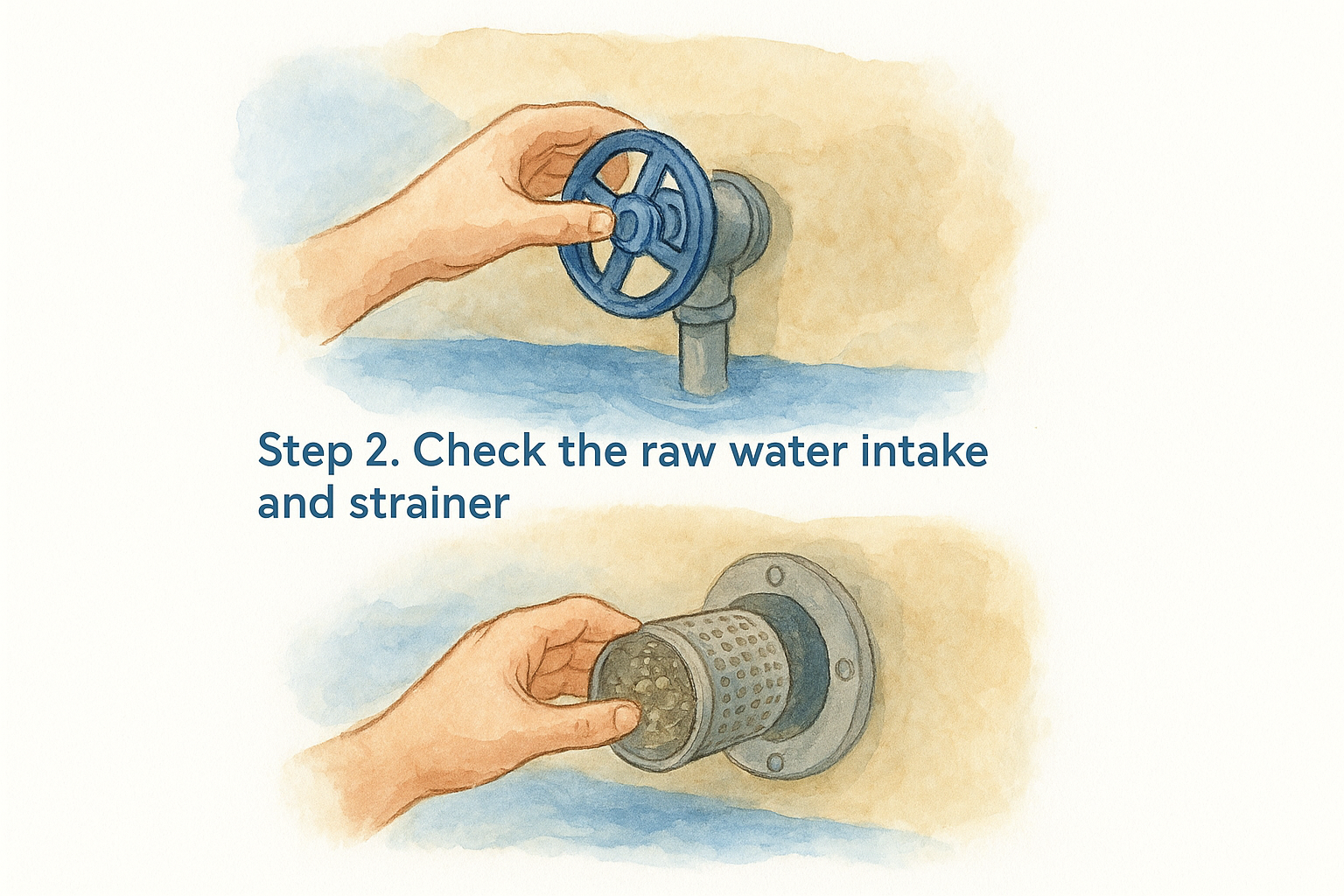
If water isn't getting into the system in the first place, nothing downstream matters.
Inspect the through-hull and seacock
Check the outside of the hull for weeds, plastic, or marine growth covering the intake grate. A quick scrape with a boat hook or a dive under the hull, if conditions allow, often clears the blockage without any tools.
Pull and clean the strainer basket
Next, open the raw water strainer housing and pull the basket. Rinse out sand, shells, and debris, then check the gasket for cracks before reseating it.
- Confirm the seacock is fully open
- Clear debris from the through-hull grate
- Remove and rinse the strainer basket
- Inspect the gasket, then reseal and restart
Restart the engine and watch the temperature gauge before moving to the next step.
Step 3. Inspect the impeller, belts, and coolant
If the strainer was clear and the temperature still climbs, the impeller is the next suspect. Shut the engine down, remove the raw water pump cover, and pull the impeller out by hand. Look for missing or cracked vanes, a common sign of a failing water pump that's been running dry or sitting too long between seasons.
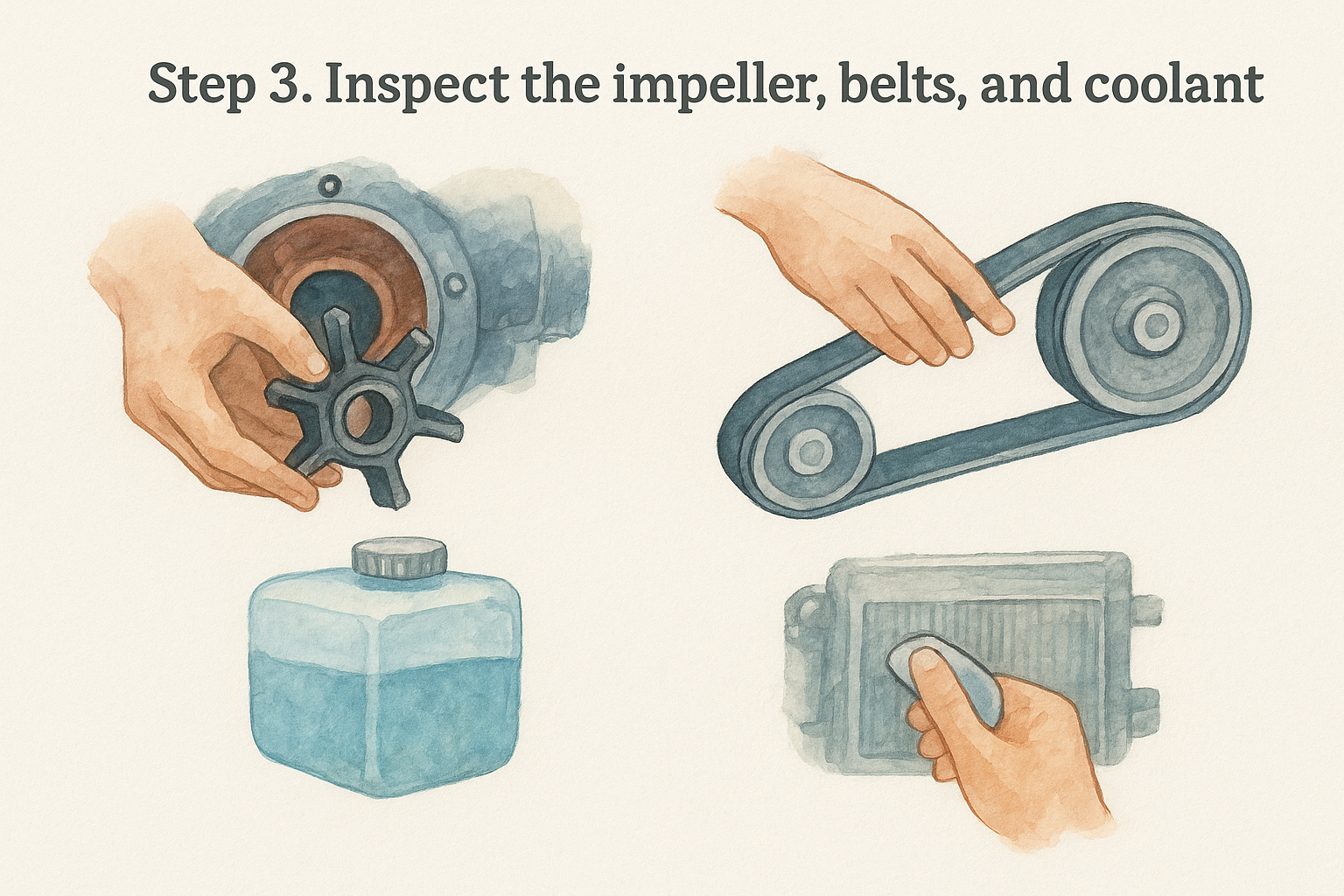
A cracked impeller vane can stop water flow just as completely as a closed seacock.
Check belt tension and condition
With the impeller checked, move to the drive belt that spins the pump. Press down on the belt midway between pulleys. More than half an inch of give means it's loose, and any fraying or glazing means it's due for replacement before it snaps underway.
Look at coolant level and condition
Finally, check the freshwater side if your engine runs a closed cooling system. Low coolant or a coolant that looks rusty or oily points to a stuck thermostat or an internal leak, not just a raw water problem.
- Inspect impeller vanes for cracks or missing pieces
- Test belt tension and look for fraying
- Check coolant level and color
- Replace any worn part before restarting
Step 4. Prevent future overheating with routine care
Once you've fixed the immediate problem, the real work is making sure boat engine overheating doesn't come back next month. Scale buildup is the cause most owners ignore because it happens gradually, quietly narrowing the heat exchanger and exhaust manifold until flow drops below what the engine needs. Running a raw water flush treatment for marine engines through the raw water side once or twice a season clears mineral deposits before they choke the system, and a product formulated to skip harsh acids won't eat away at impeller rubber or hose fittings in the process.
An engine that never scales up never overheats from scale, prevention is cheaper than any repair bill.
Seasonal care matters just as much as chemical treatment. Flushing the raw water system after saltwater use, replacing the impeller on a schedule rather than waiting for failure, and keeping a spare belt aboard all cut your odds of a repeat breakdown.
Build a maintenance checklist
- Flush raw water system after every saltwater trip
- Replace impeller every 1-2 seasons regardless of appearance
- Descale heat exchanger and manifold seasonally with a raw water flush product
- Inspect belts and hoses before each outing
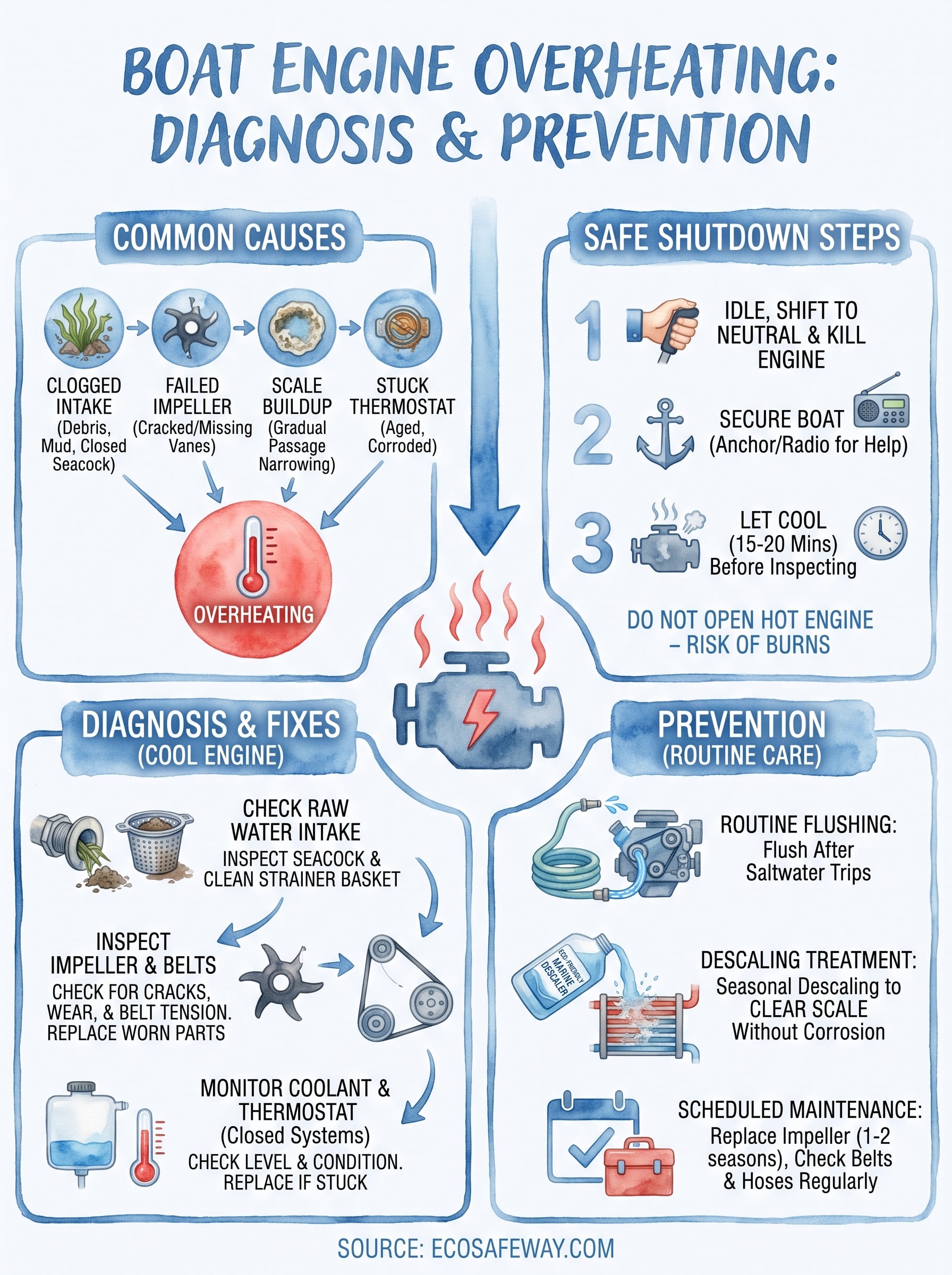
Keeping your engine running cool
Most overheating scares end the same way: a blocked strainer, a cracked impeller, or scale that built up over one too many seasons without a flush. None of those require a mechanic if you catch them early, and none of them require you to guess. Shut down safely, work through the intake and impeller checks in order, and you'll usually find the answer before you're back at the dock.
Staying ahead of boat engine overheating is really about routine, not luck. Flush after saltwater runs, replace the impeller on schedule, and don't let mineral deposits sit in the heat exchanger until they choke your flow. A non-corrosive descaling treatment built for marine cooling systems does the heavy lifting without damaging rubber or metal parts along the way.
If your raw water system is overdue for a real cleaning, start with an eco-friendly marine descaler built to clear scale safely before your next trip.


