




Most cleaners under your sink are built for speed, not safety. They cut grease fast, then wash straight into your drain, your septic system, or your local waterway, carrying phosphates, solvents, and chemicals your household never needed in the first place. If you have started reading labels and wondering what "eco-friendly" actually means, you are not alone, and you are asking the right question.
This guide gives you sustainable cleaning solutions that actually work, not watered-down products that force you to scrub twice as hard. We look at what makes a cleaner genuinely biodegradable versus just marketed that way, and why a non-toxic formula with zero hazardous shipping requirements tells you more about safety than any green label on the bottle.
Below, you will find six categories of cleaning products for your home, from enzyme-based drain treatments to descalers that skip harsh acids entirely. Each one is chosen for real cleaning performance, not just an eco claim, so you can protect your family, your appliances, and the water supply without switching to something that barely gets the job done.
1. Enzyme-based drain and appliance cleaners
Slow drains and smelly dishwashers usually mean built-up grease, soap scum, and food residue clinging to pipes and machine interiors. Enzyme-based cleaners tackle this buildup without the caustic drain openers that can crack old pipes or burn skin. These enzyme drain cleaners use live bacterial cultures that keep digesting organic waste long after you rinse, making them one of the more genuinely sustainable cleaning solutions for everyday home maintenance.
How it works
Bacteria and enzymes in the formula break down fats, proteins, and starches into simpler compounds that flow away safely. Unlike bleach or lye-based products that just dissolve or displace a clog temporarily, enzymes keep working in the pipe for days, preventing new buildup from accumulating. Pour the product in before bed, let it sit overnight, and the bacteria do the cleaning while your water usage stays at zero.
Who it's best for
Homeowners with older plumbing, septic systems, or a dishwasher that smells musty despite regular use get the most value here. They're also the right call for anyone who wants a maintenance routine rather than an emergency fix, since monthly use prevents most clogs before they start.
Environmental impact
Enzyme formulas skip the sodium hydroxide and sulfuric acid found in conventional drain openers, so they won't damage septic bacteria or harm aquatic life downstream. They're biodegradable, phosphate-free, and typically carry an HMIS 0-0-0 safety rating, meaning no hazardous handling or shipping requirements.
A cleaner that keeps working after you rinse does more for your plumbing than one that just masks the problem for a week.
Typical cost
Expect to pay more per bottle than a jug of bleach, but less over a year since you use it monthly instead of reacting to emergencies.
- Standard bottle (32 oz): $12 to $20, lasts 2 to 4 months with monthly maintenance use
- Concentrated formulas: $20 to $35, diluted for multiple uses
- Cost per treatment: roughly $2 to $5, cheaper than a plumber's snake call or a bottle of caustic opener plus the repair it sometimes causes
2. Concentrated all-purpose cleaners
Bottled cleaners are mostly water, and shipping water across the country burns fuel and drives up packaging waste. Concentrated all-purpose cleaners flip that math by shrinking a bottle's worth of cleaning power into a few ounces you dilute at home, making them one of the simplest sustainable cleaning solutions to adopt without changing your routine.
How it works
Manufacturers remove the water and ship you a small bottle of active ingredients, usually plant-based surfactants and mild solvents, that you mix with tap water in a spray bottle. One bottle of concentrate often replaces four to eight bottles of ready-to-use cleaner, cutting plastic packaging dramatically over a year of regular use.
Who it's best for
Households cleaning multiple surface types, kitchens, bathrooms, floors, benefit most, since one concentrate handles jobs that used to require separate sprays. It also suits anyone tired of hauling heavy cleaning supplies home from the store.
Shipping water in a spray bottle is the most wasteful part of conventional cleaning, and concentrates cut that waste at the source.
Environmental impact
Less water shipped means fewer trucks, less fuel, and smaller carbon footprint per cleaning session. Most formulas are also phosphate-free and biodegradable, so runoff breaks down safely.
Typical cost
A concentrate bottle runs $10 to $18 but yields 4 to 8 refills, bringing the per-use cost to roughly $2 to $3, well below buying pre-mixed sprays repeatedly.
3. DIY vinegar and baking soda cleaners
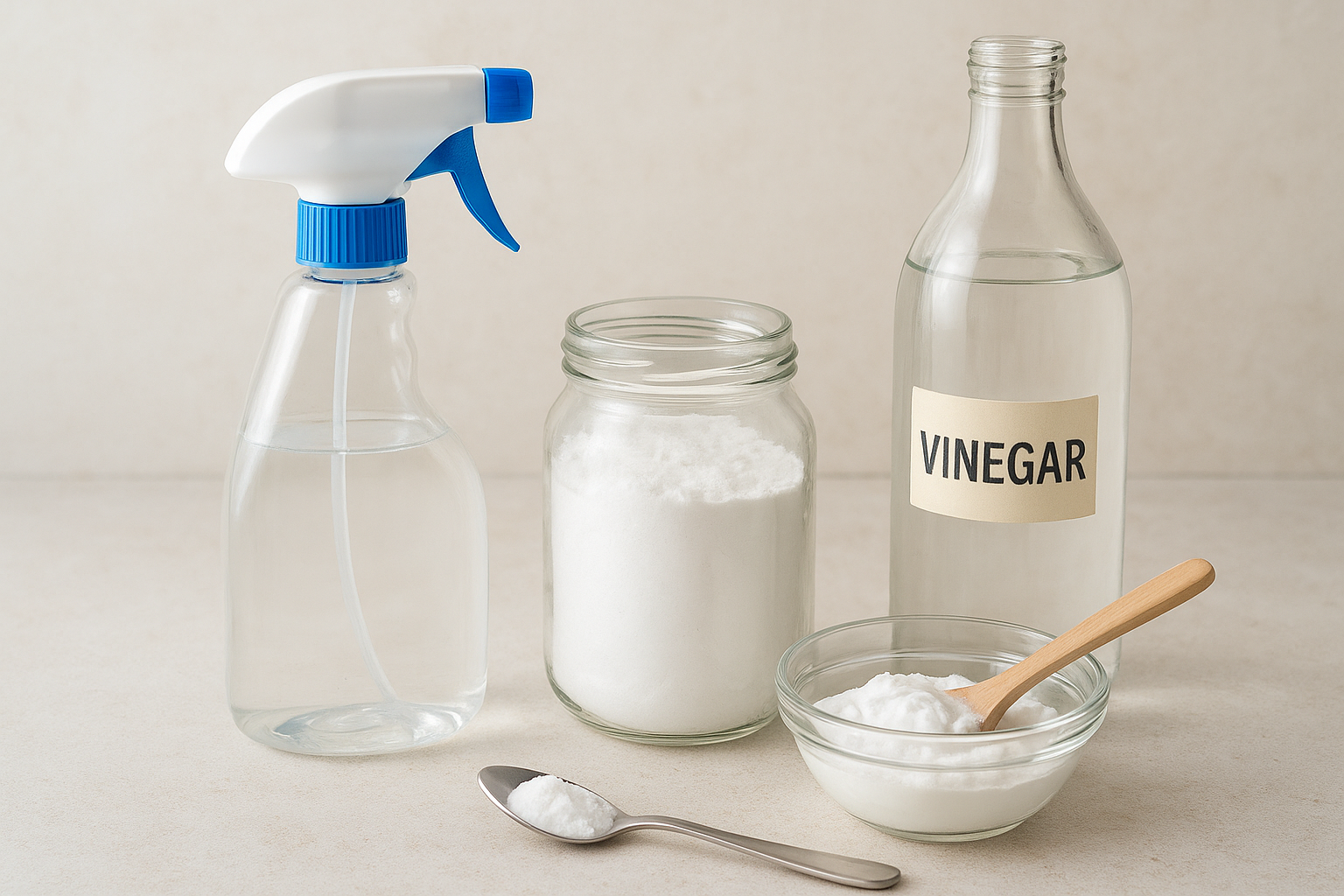
Sometimes the cheapest option is also the greenest one. White vinegar and baking soda sitting in your pantry can replace half the bottles under your sink, making this one of the most accessible sustainable cleaning solutions available to anyone willing to mix their own spray.
How it works
Vinegar's acidity dissolves mineral deposits, soap scum, and light grease, while baking soda's mild abrasiveness scrubs away grime without scratching most surfaces. Combine them for a fizzing reaction that loosens stuck-on residue in drains or grout lines, then rinse with water.
1 cup white vinegar + 1 cup water = glass, counter, and window spray
1/4 cup baking soda + warm water = paste for sinks, tubs, and stovetops
Who it's best for
Budget-conscious households and anyone wanting full ingredient transparency benefit most, since you control exactly what goes into every bottle.
When you mix the cleaner yourself, there's no label to decode and no hidden filler chemicals to worry about.
Environmental impact
Both ingredients are non-toxic and fully biodegradable, breaking down in wastewater treatment or septic systems without harming aquatic life. There's no plastic waste beyond the containers you already own.
Typical cost
A gallon of vinegar costs $4 to $6 and a box of baking soda costs $1 to $2, together covering months of cleaning refills for pennies per batch.
4. Refillable and zero-waste cleaning kits
Buying a new plastic spray bottle every time you run out of cleaner adds up fast, both in cost and landfill waste. Refillable kits solve this by pairing one durable bottle with concentrated refill pouches or tablets you drop into water, turning cleaning into one of the more practical sustainable cleaning solutions for households ready to cut single-use plastic entirely.
How it works
You buy a reusable glass or aluminum bottle once, then purchase compostable refill tablets or pouches that dissolve or mix into tap water inside it. Each refill weighs a fraction of a full bottle, so shipping uses far less packaging and fuel than sending pre-mixed liquid cleaner across the country.
Who it's best for
Households committed to reducing plastic waste long-term, and anyone who already owns a favorite spray bottle, get the most value. It also suits people who clean often enough to justify the upfront bottle cost.
Environmental impact
Refill systems cut plastic bottle waste by up to 90% compared to buying new sprays repeatedly. Most formulas are biodegradable and phosphate-free, so the water going down your drain stays safe for treatment systems and waterways.
A single reusable bottle paired with refills can replace dozens of plastic sprays over its lifetime.
Typical cost
Starter kits run $15 to $25, with refill packs costing $3 to $6 for 2 to 4 uses.
5. Fragrance-free non-toxic surface sprays
Many "clean scent" sprays rely on synthetic fragrance blends that trigger headaches, asthma, or skin reactions in sensitive households. Fragrance-free non-toxic surface sprays skip those additives entirely, giving you one of the safer sustainable cleaning solutions for anyone who reacts to perfumed cleaners or simply wants fewer unknown chemicals in the air.
How it works
These sprays rely on plant-derived surfactants and mild acids or alcohols to break down grease, fingerprints, and bacteria on countertops, glass, and appliances. Without synthetic fragrance oils masking the formula, manufacturers can't hide weak cleaning power behind a pleasant smell, so what you get is closer to the actual active ingredient list.
Who it's best for
Parents of young kids, people with asthma or chemical sensitivities, and anyone cleaning around pets benefit most from fragrance-free formulas. They also suit kitchens and bathrooms where lingering scents can interfere with food smells or trigger reactions in shared spaces.
A cleaner that smells like nothing usually tells you more about its safety than one that smells like a spring meadow.
Environmental impact
Skipping synthetic fragrance means skipping phthalates and volatile organic compounds that off-gas indoors and wash into wastewater. Most formulas here are biodegradable and carry an HMIS 0-0-0 rating, so they need no hazmat handling.
Typical cost
Expect to pay $6 to $12 per bottle, roughly in line with mainstream scented sprays.
6. Reusable cloths and natural fiber tools
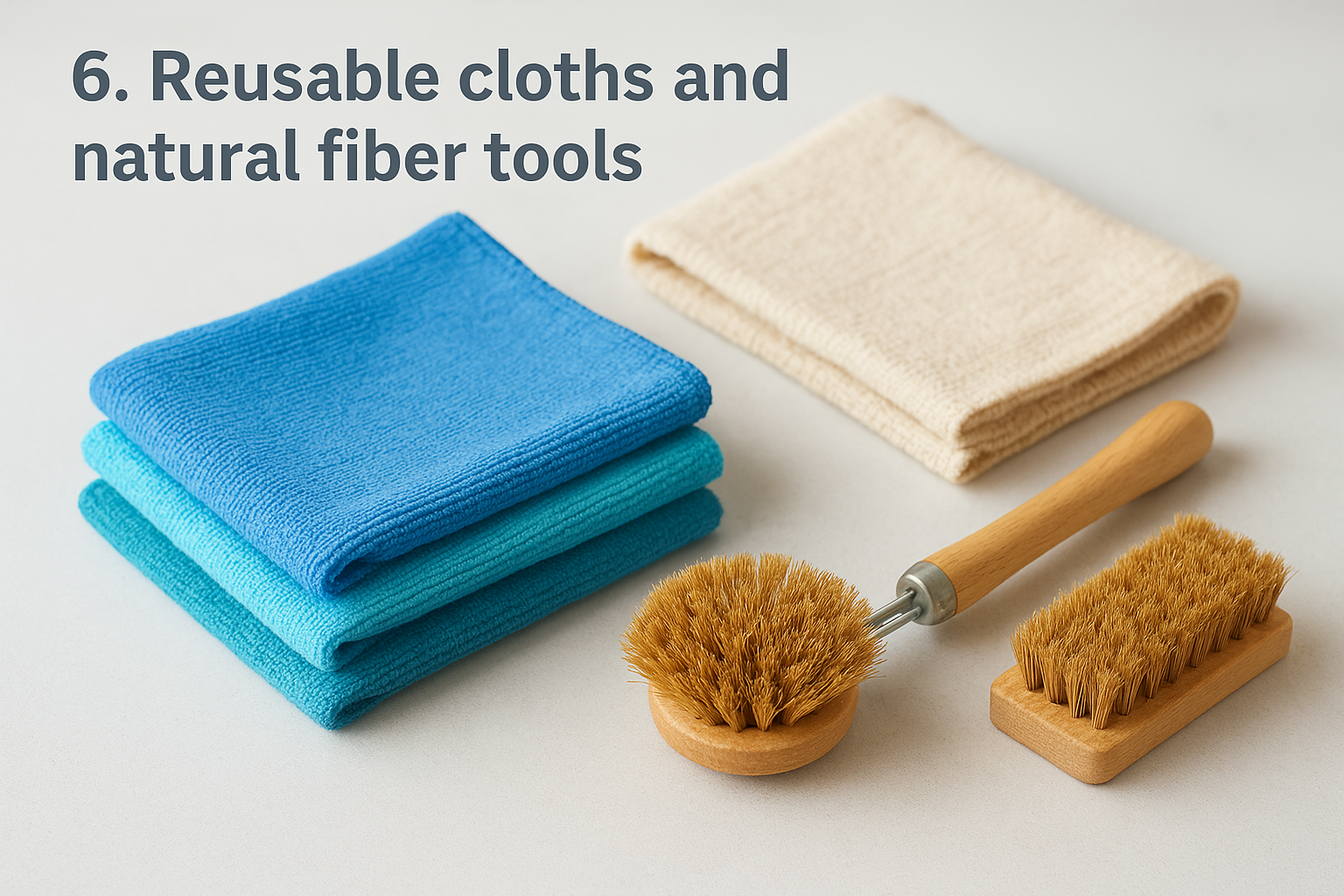
Paper towels and synthetic sponges get used once and thrown away, filling landfills with material that takes decades to break down. Reusable cloths and natural fiber tools close that loop, giving you one of the easiest sustainable cleaning solutions to start using tomorrow without buying anything new if you already own cotton rags.
How it works
Microfiber cloths, cotton rags, and natural fiber brushes made from coconut husk or sisal replace disposable wipes for nearly every surface in your home. You wash and reuse them hundreds of times before they wear out, and natural fiber brush heads can be composted once bristles finally give out, unlike plastic scrubbers that just sit in a landfill.
Who it's best for
Anyone tired of buying paper towels every month benefits here, especially households already running a full laundry cycle where a few extra cloths add no real cost.
Environmental impact
Switching from paper towels to washable cloths cuts single-use waste dramatically, and natural fiber tools skip the microplastic shedding that synthetic sponges leave behind in wastewater.
A cloth you wash and reuse a thousand times beats a roll of paper towels you throw away after one wipe.
Typical cost
A pack of microfiber cloths runs $10 to $20, and natural fiber brushes cost $5 to $10 each, both lasting a year or more with regular washing.
Building a greener cleaning routine at home
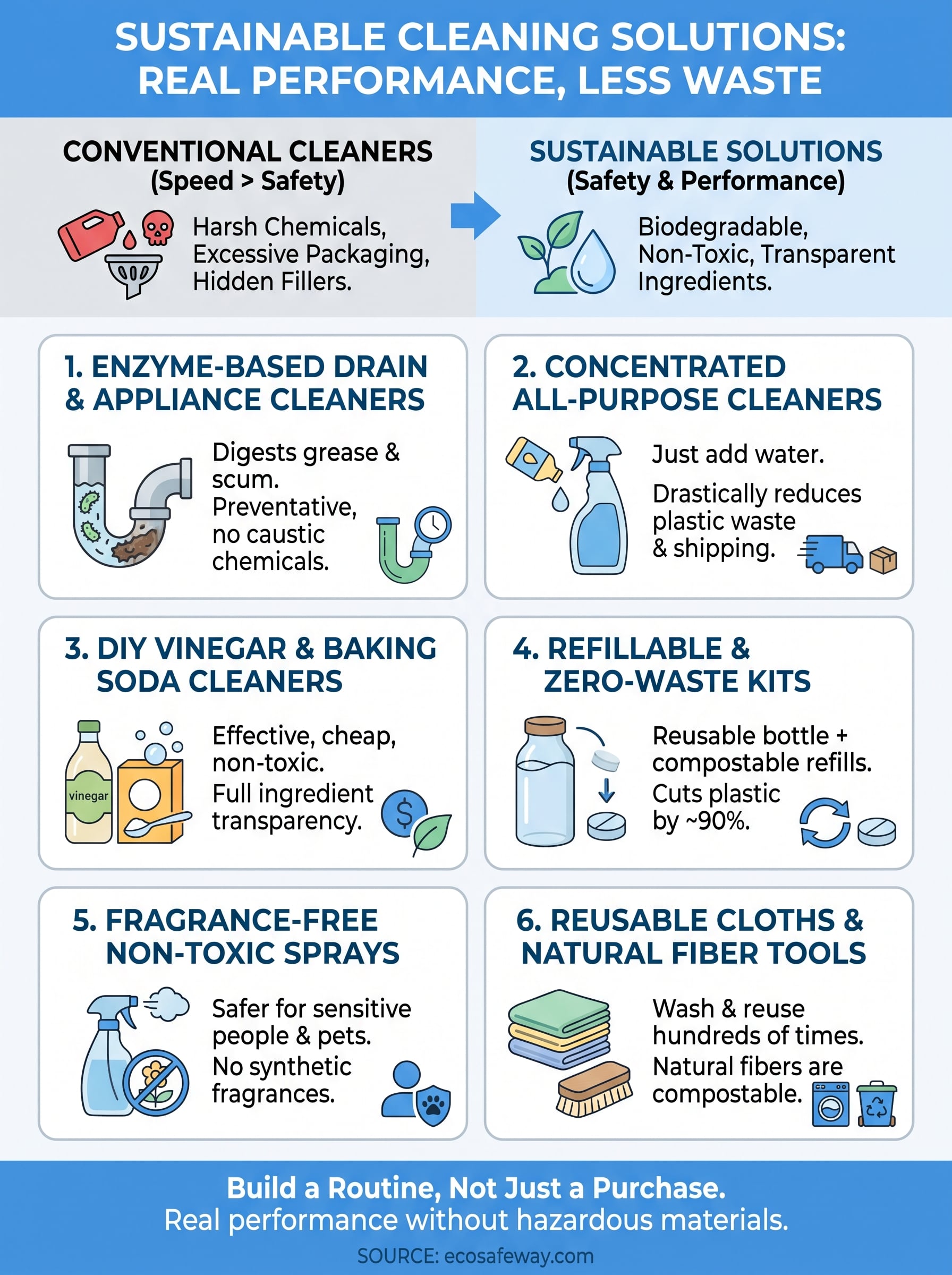
You don't need to replace every bottle under your sink overnight. Start with one swap, an enzyme drain treatment instead of caustic opener, or a concentrate instead of a pre-mixed spray, and build from there. Sustainable cleaning solutions work best as a routine, not a one-time purchase, so give each product a few weeks before judging results.
The common thread across all six options is simple: real performance without hazardous chemicals, wasteful packaging, or hidden fillers. That's the same standard Eco Safeway applies to equipment-grade formulas built for marine engines, HVAC coils, and industrial systems, proof that non-toxic and non-corrosive doesn't mean weaker.
If your home also includes a boat, cooling system, or appliances that need more than a household spray, explore Eco Safeway's full product line for HMIS 0-0-0 rated cleaners that protect your equipment and the water it eventually reaches.


