





A clogged sink usually means one of two choices: reach for a bottle of Drano or start googling non toxic drain cleaner options that won't eat through old pipes or fill your bathroom with fumes. If you've got kids, pets, or a septic system, the second choice matters more than most people realize. Harsh chemical cleaners can corrode pipes, kill the beneficial bacteria in septic tanks, and leave behind fumes that linger for hours.
The good news is you don't need bleach or lye to clear a slow drain. Baking soda and vinegar, boiling water, and a good drain snake handle most household clogs just as effectively, without the safety risks. This guide walks through six proven methods, from pantry-staple recipes to enzyme-based commercial products, so you can pick the right one for grease, hair, or soap scum buildup.
We cover exactly how each method works, when to use it, and when a clog signals a bigger plumbing problem. If you care about keeping harsh chemicals out of your home and waterways, this same reasoning is why marine professionals increasingly choose non-toxic solutions over conventional treatments for boat maintenance and hull care.
1. Baking soda and vinegar flush
How it works
This is the classic combo for a reason: baking soda and vinegar react chemically, producing carbon dioxide bubbles that agitate loose debris like soap scum, hair fragments, and grease film clinging to pipe walls. The fizzing action alone won't dissolve a solid clog, but it loosens buildup enough that a hot water flush can carry it the rest of the way down. Pour the baking soda first, then the vinegar, and cover the drain immediately so the pressure pushes the reaction downward instead of back up at you.
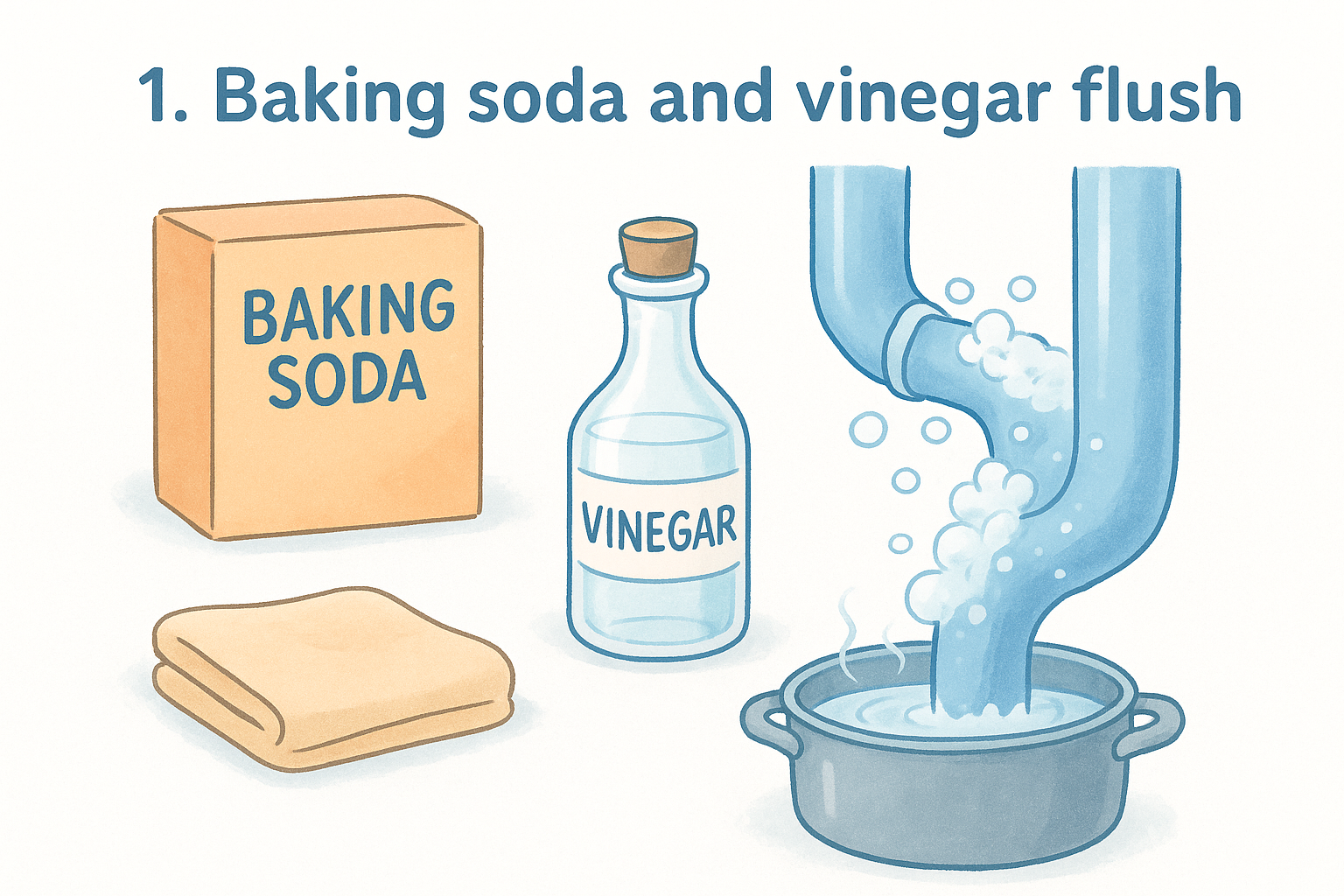
A baking soda and vinegar flush won't dissolve a hard clog, but it loosens buildup so hot water can finish the job.
What you'll need
Gathering these items takes under a minute, and you probably already have them in your kitchen:
- 1/2 cup baking soda
- 1 cup white vinegar
- A drain cover or rag to plug the opening
- A kettle or pot of near-boiling water
Best for
Everyday buildup responds well to this method, especially in bathroom sinks and shower drains where soap residue and light hair accumulation are the usual culprits. It's a good weekly or biweekly maintenance habit even when nothing's clogged yet, since it keeps buildup from forming into a bigger blockage down the line. This non toxic drain cleaner approach won't touch a solid clog of matted hair or a foreign object, so treat it as prevention and light maintenance rather than a fix for a fully blocked drain.
Safety notes
Skip this method entirely if you've recently used a commercial chemical drain cleaner in the same drain. Mixing leftover chemical residue with vinegar can produce irritating fumes, and it defeats the purpose of going non-toxic in the first place. Never combine vinegar with bleach for the same reason. The reaction itself is mild enough for kids and pets in the house, and it's safe for PVC, copper, and most older pipe materials, unlike lye-based cleaners that can degrade seals over time.
2. Baking soda and salt with boiling water
How it works
Salt acts as a mild abrasive, and when it's paired with baking soda, the combination scours pipe walls more aggressively than baking soda alone. Letting the dry mixture sit overnight gives it time to work into grime before you flush it with boiling water, which melts through grease and carries the loosened debris down the line. This method skips the vinegar reaction entirely, relying instead on the scrubbing action plus heat to break up stubborn residue.
Letting baking soda and salt sit overnight lets the abrasive mix do the scrubbing that a quick flush can't.
What you'll need
- 1/2 cup baking soda
- 1/2 cup table salt
- A full pot of boiling water
Best for
Kitchen sinks with greasy residue buildup respond especially well to this approach, since the abrasive combination cuts through the film that plain water alone won't touch. It's also a solid choice for drains that smell musty, as the scouring action disrupts the buildup causing the odor rather than just masking it.
Safety notes
Wait a few minutes after boiling before pouring if you have PVC pipes, since near-boiling water poured too fast can occasionally warp older plastic joints. This method is fine around kids and pets once the mixture is flushed, and it leaves no residue behind.
3. Dish soap and hot water for grease clogs
How it works
Grease clogs behave differently than hair or soap scum. Dish soap is designed to break down fat molecules, so pouring it straight into a greasy drain lets it emulsify the buildup clinging to pipe walls. Hot water then carries that loosened grease down and out instead of letting it re-solidify further down the pipe, which is exactly what happens when you rinse a greasy pan with cold water alone.
Dish soap breaks down grease the same way it cuts through a dirty pan, and hot water carries the mess away.
What you'll need
- 1/4 cup dish soap (grease-cutting formulas work best)
- A full pot of hot, not boiling, water
- Optional: a funnel to direct the pour
Best for
Kitchen sink drains that back up after cooking are the clearest match for this method, especially if you've been pouring bacon fat or oil down the drain out of habit. It's a fast fix for a slow-draining sink and works well as a follow-up after the baking soda and salt treatment.
Safety notes
Only use hot tap water, not boiling, since dish soap can produce excess suds that overflow if the water's too aggressive. This method is gentle enough for daily use and safe around kids and pets once rinsed.
4. Borax, salt, and vinegar paste
How it works
Borax raises the pH of the clog environment while acting as a mild disinfectant, and combining it with salt gives you extra abrasive scrubbing power against grime clinging to pipe walls. Mixing in vinegar creates a thick paste rather than a thin liquid, so it clings to the clog instead of sliding past it, giving the mixture more contact time to break down grease and organic buildup before you flush it through.
A paste clings to a clog instead of sliding past it, which is exactly why texture matters more than volume here.
What you'll need
- 1/4 cup borax
- 1/4 cup salt
- Enough vinegar to form a thick paste
- Boiling water for the final flush
Best for
Slow-draining bathroom sinks with a mix of soap scum and hair respond well to this borax-based paste, since the combination tackles both the greasy film and the abrasive buildup at once. It's a solid step up from the plain baking soda and vinegar flush when that method hasn't fully cleared a stubborn drain.
Safety notes
Borax is more alkaline than baking soda, so wear gloves if you have sensitive skin, and keep it away from kids and pets since it's mildly toxic if ingested in large amounts. Rinse thoroughly with boiling water afterward to clear residue.
5. Enzyme-based drain cleaners
How it works
Enzyme-based drain cleaners rely on live bacteria and enzymes that digest organic material, breaking down hair, grease, and food particles into a residue that flushes away naturally. Unlike a chemical reaction that happens in seconds, this biological drain cleaner approach works over hours or days, with the bacteria multiplying and consuming buildup along the entire length of the pipe, not just near the drain opening. That slower timeline is the tradeoff for a gentler process that won't damage seals or gaskets.
Enzyme cleaners work slower than vinegar or bleach, but they clean the whole pipe, not just the spot near the drain.
What you'll need
- A commercial enzyme drain treatment such as an eco-friendly drain opener (look for one labeled septic-safe)
- No hot water flush needed immediately after dosing
Best for
Households on a septic system benefit most from this method, since enzyme cleaners actually support the bacterial balance a septic tank needs rather than disrupting it. It's also the better long-term choice for slow drains that clog repeatedly, since regular monthly use of a drain maintenance product prevents buildup instead of just reacting to it once it's already a problem.
Safety notes
Enzyme cleaners are safe around kids and pets and won't corrode pipes, but they need standing water contact time to work, so avoid running the tap for several hours after treatment.
6. Mechanical removal with a drain snake or plunger
How it works
Sometimes a clog is just a physical mass of hair or debris that no chemical, natural or otherwise, will dissolve. A drain snake physically hooks and pulls out the blockage, while a plunger uses pressure and suction to force it loose or push it through. Both methods skip chemistry entirely, which makes this the truest non toxic drain cleaner option since nothing but water and mechanical force touches your pipes.
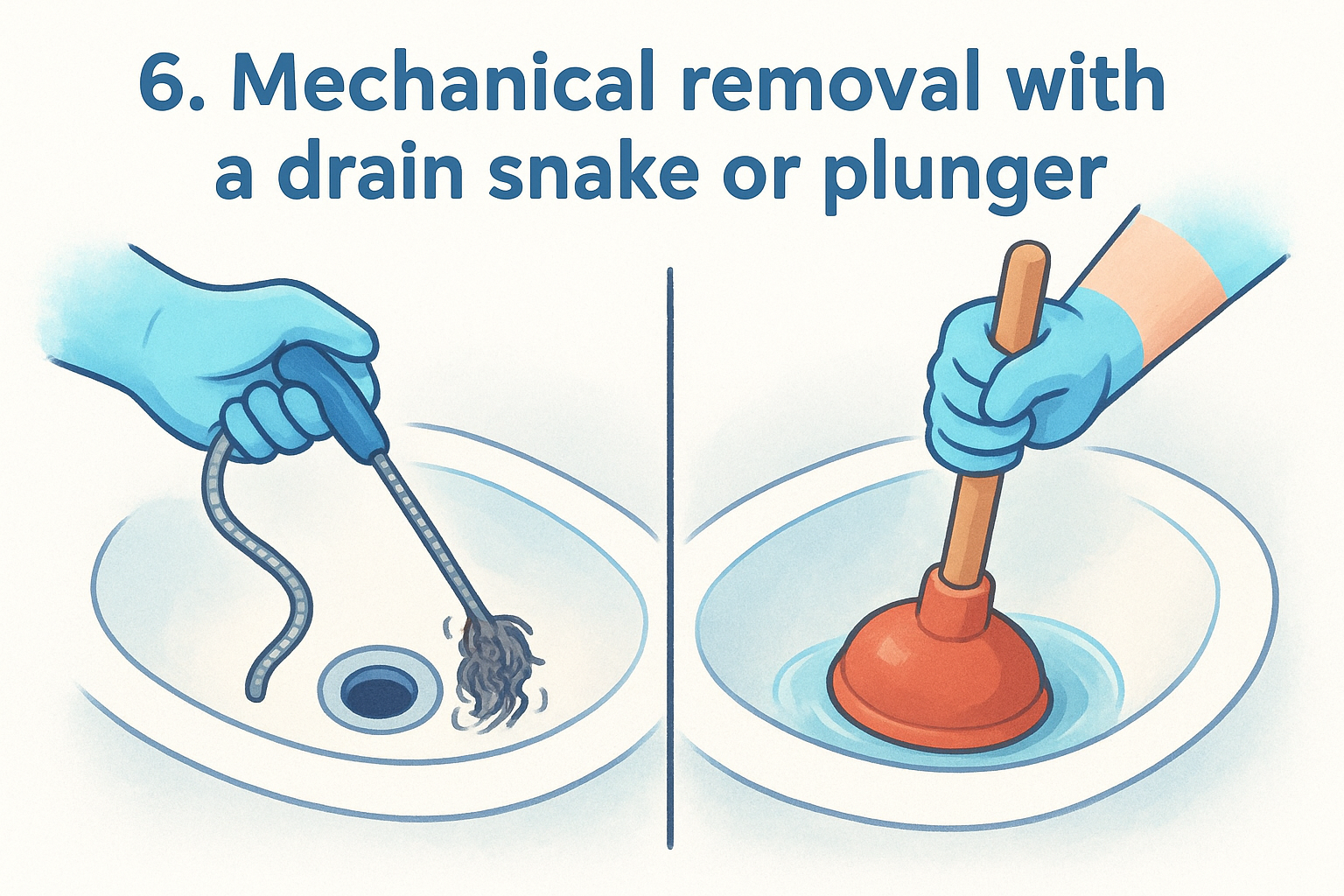
When nothing dissolves a clog, a drain snake or plunger removes it the old-fashioned way, with zero chemicals involved.
What you'll need
- A plastic drain snake or a hand-crank auger
- A cup or flange plunger, matched to sink or toilet
- Rubber gloves for handling pulled-out debris
Best for
Hair clogs in shower and bathroom sink drains are the classic case for a drain snake, since hair wraps around the tool's barbs and pulls out in one motion. A plunger works best on toilets and drains with standing water, where suction has something to push against.
Safety notes
This method carries no fume or chemical risk, making it the safest choice around kids and pets. Wear gloves when handling what comes out, and if the clog sits deep beyond the snake's reach, that's a sign to call a plumber rather than force it.
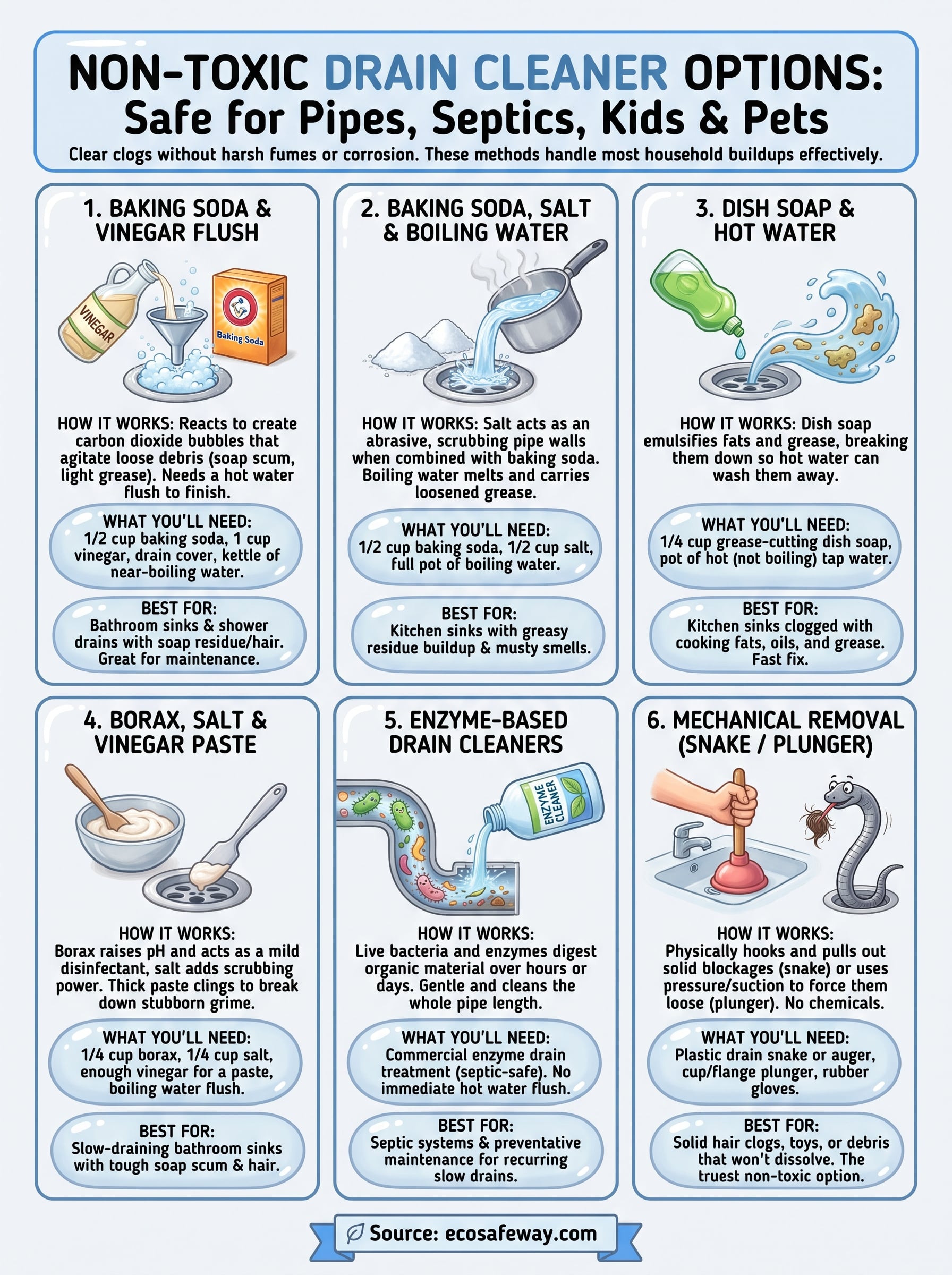
Keeping your drains clear the safe way
Most clogs don't need a trip to the hardware store for harsh chemicals. Baking soda and vinegar, salt scrubs, dish soap, and a decent drain snake handle the vast majority of household backups, and they do it without corroding pipes, harming septic bacteria, or filling your bathroom with fumes. Save the enzyme treatments and mechanical tools for the tougher jobs, and use the pantry recipes as regular maintenance so clogs don't build up in the first place.
Regular upkeep beats emergency fixes every time. If you want a non toxic drain cleaner that also handles dishwashers and washing machines without leaving residue behind, our enzyme-powered dishwasher and washing machine cleaner tablets tackle grease and odor buildup the same way the DIY methods above do, just with less scooping and mixing. Keep a box on hand, and you'll spend a lot less time googling clog fixes at 11pm.


