





Cloudy ice, slow production, or a musty smell coming from your ice machine usually points to one problem: mineral scale and biofilm building up inside the system. Finding the right cleaning solution for ice machine upkeep isn't just about appearance. Left untreated, scale reduces cooling efficiency, strains compressors, and creates a breeding ground for bacteria and mold that can end up in the ice your customers or staff consume.
This guide answers the question directly: which products actually descale and sanitize effectively, and when a DIY approach with vinegar makes sense versus a commercial-grade descaler. Not every cleaner is safe for every machine, and using the wrong chemistry can damage nickel-plated or stainless components instead of protecting them.
Below, you'll find a practical comparison of the best ice machine descaler options on the market, including how they perform against a basic countertop ice machine cleaner, plus step-by-step guidance on descaling frequency, sanitizing procedures, and how to pick a solution that matches your machine's manufacturer specifications rather than generic marketing claims.
Why ice machine descaling matters
Mineral scale forms fast in commercial ice machines because water constantly evaporates and leaves calcium and magnesium deposits behind on evaporator plates and water lines. Hard water areas accelerate this buildup, sometimes coating internal components within weeks instead of months. Once scale hardens, it insulates the metal surfaces that need direct contact with water to freeze efficiently, forcing the compressor to run longer and harder to produce the same amount of ice.
What scale buildup costs you
Untreated scale doesn't just slow production, it shortens the life of expensive parts. A machine fighting scale can see energy consumption rise by 20 to 30 percent, according to guidance from the U.S. Department of Energy on maintaining commercial refrigeration equipment. Worse, scale creates rough surfaces where biofilm, mold, and bacteria like Listeria and E. coli can take hold, since ice machines operate in the warm, moist conditions microorganisms need to multiply.
Skipping descaling doesn't just dull your ice, it slowly destroys the machine and puts contaminated ice on the line.
Health and operational risks
For restaurants, hotels, and healthcare facilities, this isn't a cosmetic issue, it's a food safety and regulatory compliance concern. Health inspectors routinely check ice machines during audits, and visible slime or off-tasting ice can trigger a failed inspection or a costly shutdown. Consider what's at stake if descaling gets neglected:
- Reduced ice output and longer cycle times
- Higher electricity bills from an overworked compressor
- Premature failure of the compressor or water pump
- Bacterial contamination risk in stored or dispensed ice
- Failed health inspections and potential closure orders
Regular use of the right cleaning solution for ice machine maintenance addresses all of these risks at once, protecting both the equipment investment and the people relying on clean ice.
Step 1. Choose the right ice machine cleaning solution
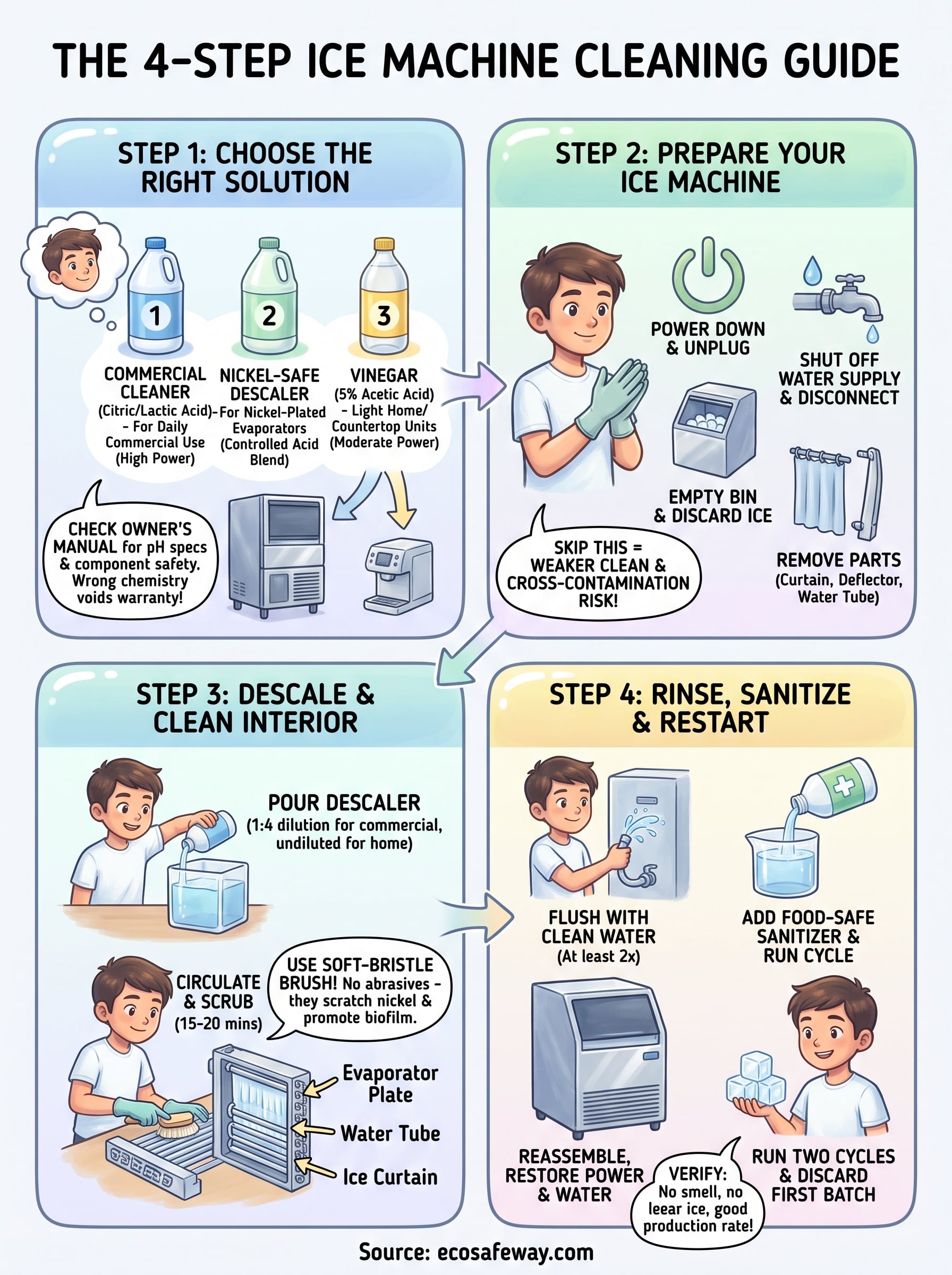
Matching the cleaner to your machine's construction is the single most important decision you'll make. Nickel-plated evaporators need a non-corrosive descaler that is safe for nickel plating with a controlled acid blend, while stainless steel components tolerate a wider range of formulas, including straight vinegar for light residential use. Check your owner's manual before buying anything, since manufacturers like Manitowoc and Hoshizaki specify acceptable pH ranges and warn against chlorine-based cleaners that pit metal surfaces.
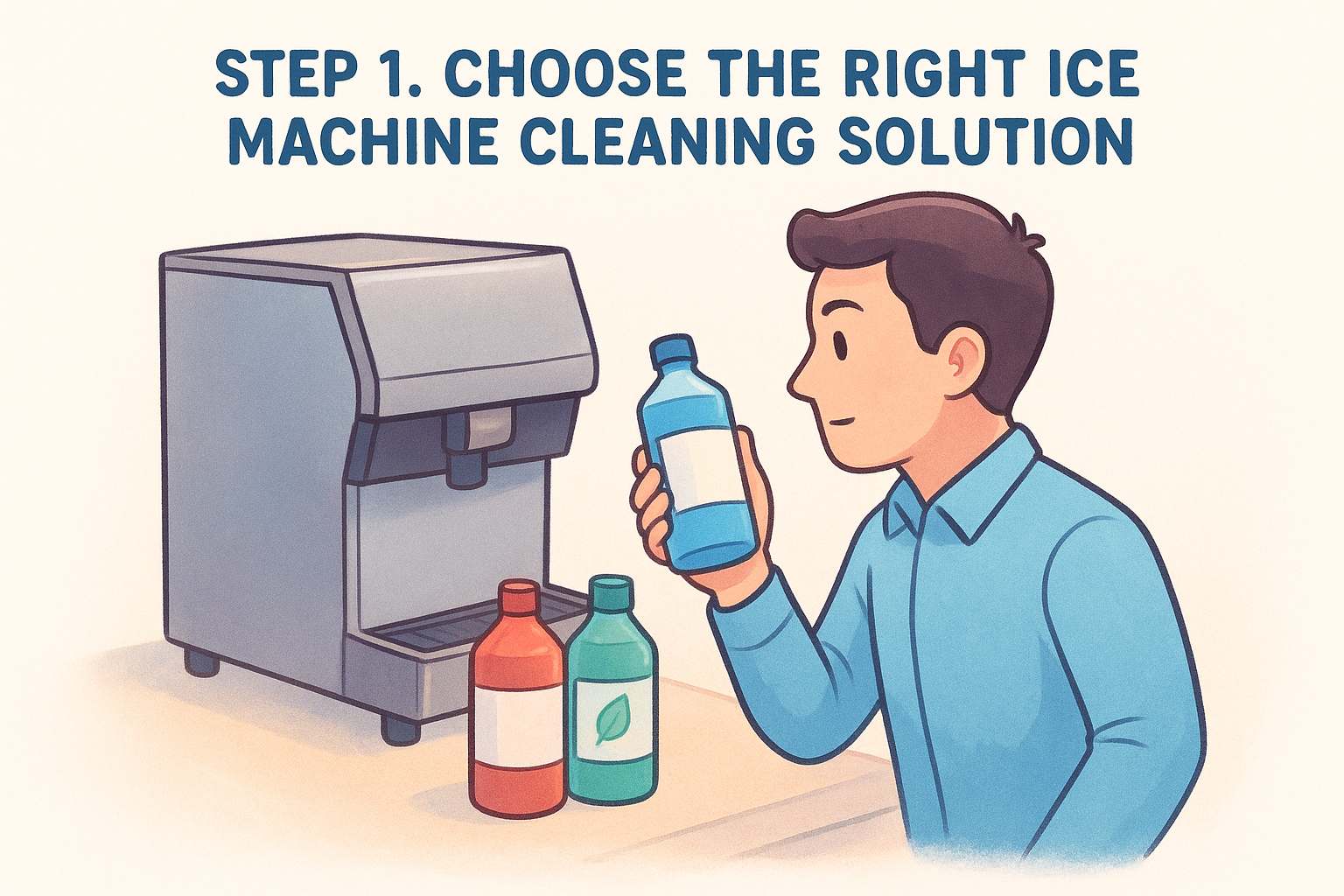
Commercial descalers built from food-grade citric or lactic acid dissolve scale faster and rinse cleaner than vinegar, which is why most manufacturers recommend them for machines running daily production cycles.
The right descaler protects your warranty; the wrong one voids it.
Here's how the common options stack up:
| Solution | Best For | Descaling Power | Sanitizes? |
|---|---|---|---|
| Commercial ice machine cleaner (citric/lactic acid) | Daily-use commercial units | High | No, separate step needed |
| Vinegar (5% acetic acid) | Light home or countertop units | Moderate | No |
| Nickel-safe descaler | Nickel-plated evaporators | High | No |
| Chlorine-based sanitizer | Post-descale sanitizing only | None | Yes |
Once you've matched the chemistry to your machine, you're ready to move on to preparation.
Step 2. Prepare your ice machine for cleaning
Starting with a clean slate matters more than most people realize. Before you pour any cleaning solution for ice machine maintenance into the reservoir, shut off the unit and disconnect it from its water supply, then pull the bin thermostat or turn the machine to its cleaning cycle if your model has one. Skipping this step means you're diluting your descaler with fresh water mid-cycle, which weakens its effectiveness and stretches out the job.
Next, remove all ice from the bin and discard it. Never reuse ice that's been sitting during a cleaning cycle, since cross-contamination from cleaning chemicals is a real risk. Pull out removable parts like the curtain, ice deflector, and water distribution tube, and set them aside for a separate soak.
A rushed prep step almost guarantees a rushed, ineffective clean.
Run through this checklist before applying any descaler:
- Power down and unplug the unit
- Shut off the water supply line
- Empty and discard all existing ice
- Remove the curtain, deflector, and distribution tube
- Wipe down visible surface grime with a damp cloth
Completing these steps ensures the descaling solution reaches actual scale, not a layer of loose debris sitting on top of it.
Step 3. Descale and clean the interior
Pour your chosen cleaning solution for ice machine descaling directly into the water reservoir, following the dilution ratio printed on the label. Most commercial descalers call for a 1:4 ratio with warm water, while straight vinegar works undiluted in smaller countertop units. Let the solution circulate through the water pump for 15 to 20 minutes, either by running the machine's built-in clean cycle or by using a spray bottle to coat the evaporator plate if your unit lacks that feature.
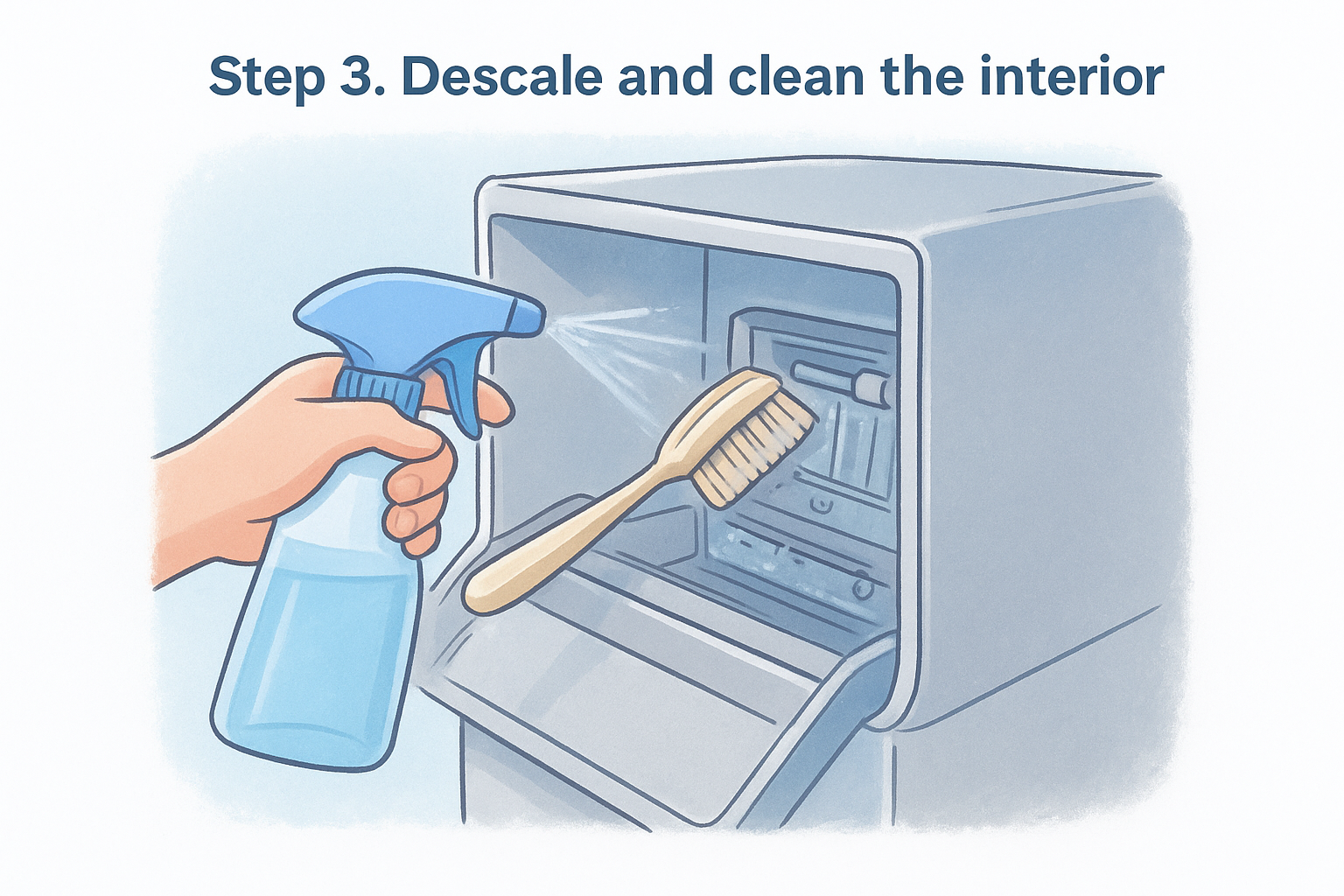
Scrubbing away stubborn scale
After the solution has had time to break down mineral deposits, use a soft-bristle brush, never steel wool or anything abrasive, to loosen any scale still clinging to the evaporator, water curtain, and distribution tube. Abrasive pads scratch nickel plating and create rougher surfaces where biofilm buildup returns faster next time.
Scrubbing too hard damages the same surfaces you're trying to protect.
Work the brush into corners and along water lines where scale tends to concentrate:
- Evaporator plate and freeze cylinder
- Water distribution tube and spray nozzles
- Ice curtain and deflector
- Reservoir walls and float switch
Once every surface looks clear of visible residue, you're ready to flush the system and move into sanitizing.
Step 4. Rinse, sanitize, and restart the machine
Drain the descaler completely, then flush the reservoir with clean water at least twice before moving to sanitizing. Leftover acid residue reacts poorly with chlorine-based sanitizers, producing fumes you don't want near food-contact surfaces. Fill the reservoir again and add a food-safe sanitizer, typically a diluted bleach solution at 100 ppm or a manufacturer-approved quaternary ammonium product, and run it through a full cycle just like you did with the descaler.
Reassembling and testing output
Reinstall the curtain, deflector, and distribution tube once they've air-dried, since trapped moisture invites the same biofilm you just removed. Reconnect the water line, restore power, and let the machine run through two full ice-making cycles before using any ice for consumption. Discard that first batch regardless of how clean it looks.
The first batch of ice after cleaning is for testing the machine, not for drinks.
Before calling the job done, confirm these details:
- No chemical smell remains in the bin
- Water lines show no visible leaks
- Ice forms clear, not cloudy or slow
- Production rate matches pre-cleaning baseline
This final rinse-and-sanitize stage is what separates a genuinely safe cleaning solution for ice machine routine from one that just looks clean on the surface.
Keeping your ice machine running clean
A clean ice machine comes down to matching the right chemistry to your equipment, prepping thoroughly, and never skipping the sanitize step. Skip any one of those, and you're back to cloudy ice, slow cycles, and a compressor working harder than it should. Consistent descaling on a set schedule, whether that's monthly for a busy restaurant or quarterly for a low-volume countertop unit, keeps scale from ever getting a foothold in the first place.
Getting this right protects your equipment investment and the health of everyone drinking that ice. If you're ready to stop guessing which product is safe for your machine's specific components, reach for a formula built for the job rather than a generic cleaner. Check out Eco Safeway's food-safe ice machine cleaner and descaler for a nickel-safe, restaurant-tested solution that handles scale without risking your warranty.


