





Grimy AC coils kill efficiency long before they cause a breakdown. Dust and biofilm build up on the fins, airflow drops, and your system works harder to hit the same temperature, which shows up on the utility bill within a month or two. A no rinse ac coil cleaner solves the mess problem that stops most people from cleaning coils as often as they should, since you don't need a wet vac, a drain pan, or a trip up a ladder with a hose.
These foaming cleaners work by breaking down grease, dirt, and microbial growth on contact, then evaporating along with the loosened residue as the coil dries or the system runs. That's the direct answer to how a condenser coil cleaner no rinse formula actually functions: chemistry does the lifting, not water pressure.
Below, you'll get a straightforward breakdown of what's in these cleaners, how they differ from rinse-required alternatives, and the correct application steps for both evaporator and condenser coils, so you get real performance gains without redoing the job.
Why no-rinse coil cleaners matter for AC maintenance
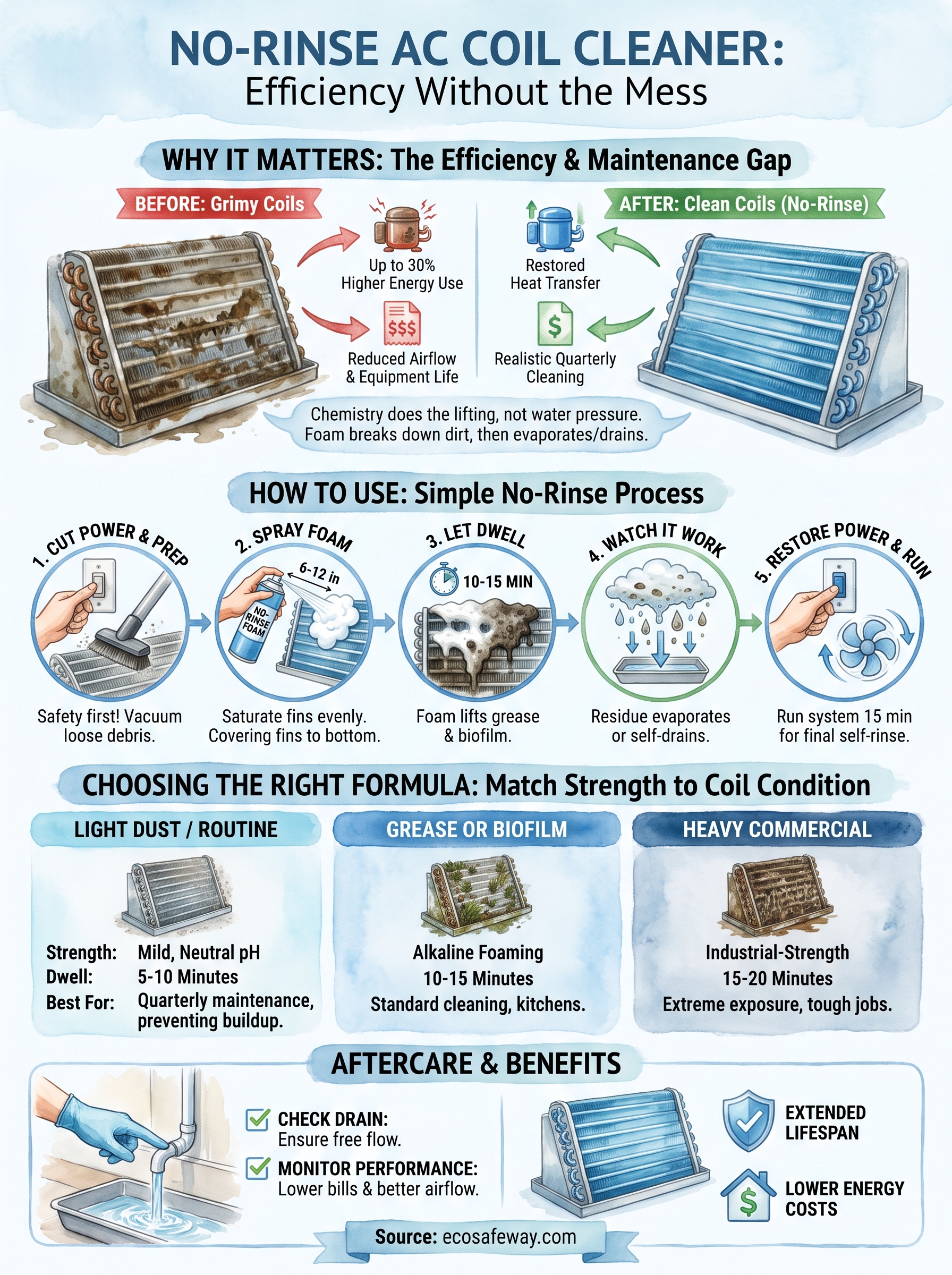
Dirty coils don't just look bad, they cost real money every month. A coil coated in dust and biofilm loses heat transfer efficiency, forcing the compressor to run longer to reach the same setpoint. The Department of Energy notes that dirty coils can raise energy consumption by 30 percent or more over a system's life, a figure that lines up with what technicians see in the field on units that haven't been serviced in a year or two. That's the core reason a no rinse ac coil cleaner earns a spot in every maintenance kit, not just the ones carried by full-service HVAC contractors.
The maintenance gap rinse-required cleaners create
Traditional coil cleaners demand a full rinse cycle, which means a wet vac, tarps to protect drywall and flooring, and often a second technician just to manage runoff. Facilities skip cleanings because the labor and cleanup time don't fit the schedule, and coils go two or three service intervals without attention. No-rinse formulas remove that friction entirely. You spray, the foam works, and it evaporates or drains through the condensate line on its own, so a coil that used to get cleaned once a year can realistically get cleaned quarterly.
A cleaner that takes ten minutes gets used every quarter; one that takes an hour gets skipped for years.
Consequences of neglected coils
Beyond the utility bill, neglected coils create downstream problems that cost more to fix than any cleaning product:
- Reduced airflow across the fins, which strains the blower motor and shortens its service life
- Ice formation on evaporator coils when airflow drops below the threshold needed for proper heat exchange
- Microbial growth that circulates through ductwork and affects indoor air quality, a real concern for hospitals and food service facilities
- Higher refrigerant pressures, which stress the compressor and can trigger premature failure
Each of these issues traces back to the same root cause: coils that stayed dirty because cleaning them was inconvenient. A no-rinse product removes that excuse, which is why it matters as much for a facility manager tracking equipment lifespan as it does for a homeowner trying to keep a summer electric bill under control.
How to use no-rinse coil cleaner on evaporator and condenser coils
Before you spray anything, cut power to the unit at the disconnect or breaker. Coil cleaning with the system energized risks electric shock and can push loosened debris straight into the blower motor. Once the power's off, remove the access panel and vacuum off loose dust with a soft brush attachment so the foam contacts the actual coil surface instead of a layer of grime.
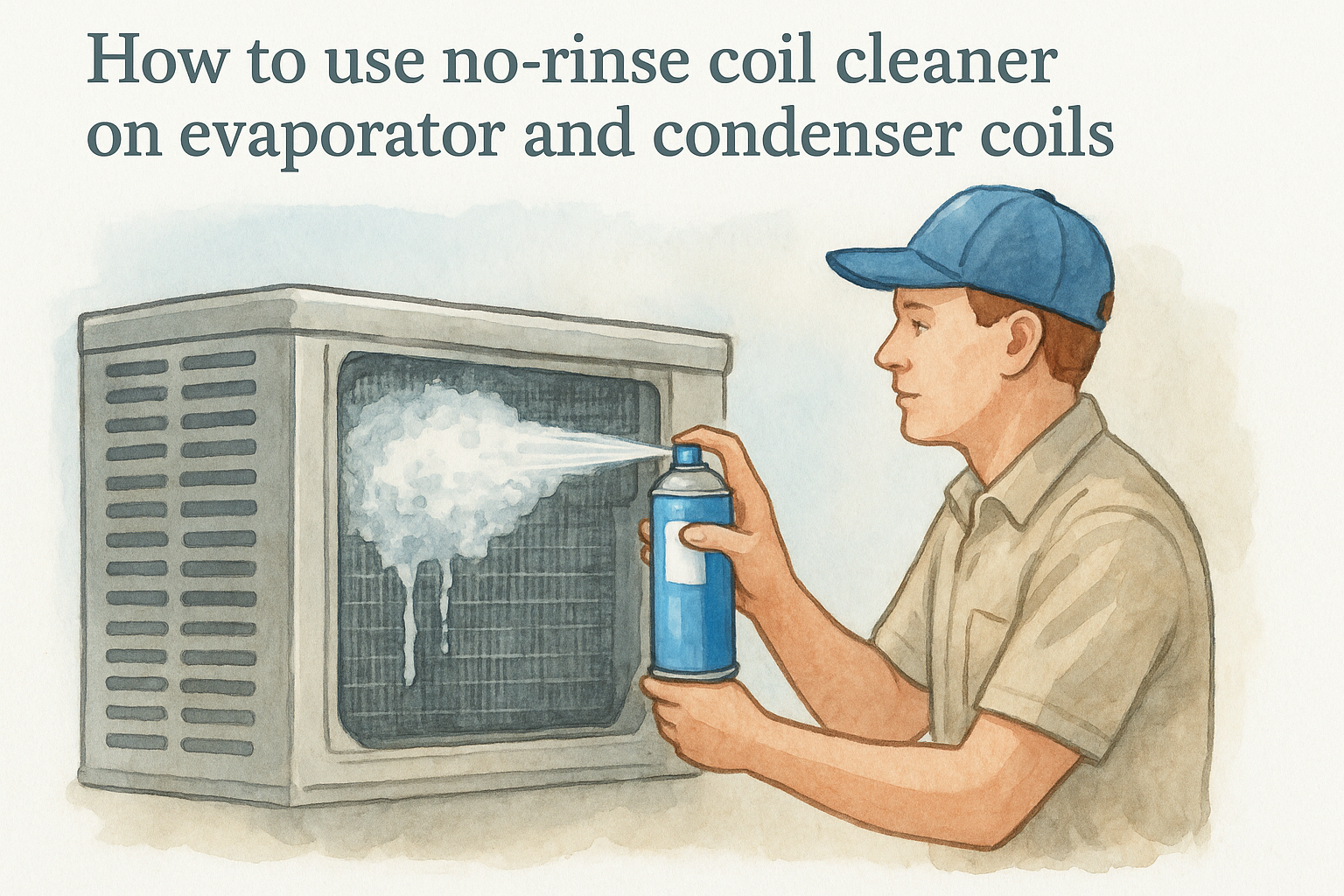
Application itself follows a simple sequence, whether you're working an evaporator coil inside the air handler or a condenser coil outdoors:
- Shake the can and hold it 6 to 12 inches from the coil face.
- Spray evenly, top to bottom, saturating both sides of the fins where accessible.
- Let the foam sit for the time listed on the label, usually 10 to 15 minutes.
- Watch the foam expand, turn dark as it lifts dirt, then collapse and drain.
- Restore power and run the system for 15 minutes so residual moisture evaporates through normal airflow.
Skip the rinse step, and the coil finishes cleaning itself the moment you flip the breaker back on.
Condensate lines handle whatever residue doesn't evaporate, so check that the drain isn't clogged before you start. Outdoor condenser coils benefit from a second light pass on heavily soiled fins, since dust and pollen build up faster in open air than inside a sealed air handler.
Choosing the right no-rinse coil cleaner for your system
Matching a cleaner to your coil type matters more than picking whatever's cheapest at the supply house. An ac coil cleaner no rinse formula built for aluminum fins won't necessarily protect copper tubing, and a heavy-duty alkaline blend meant for grease-caked commercial kitchen condensers can be overkill for a residential evaporator coil that just needs routine dust removal.
What the label actually tells you
Read past the marketing copy and check three things: the pH range, whether it's rated safe for both aluminum and copper, and the dwell time listed for your soil level. Self-rinsing chemistry that's too acidic strips protective coatings off fins over repeated use, which shortens coil life instead of extending it.
The right cleaner protects the metal it's cleaning, not just the dirt sitting on top of it.
Matching formula strength to coil condition
| Coil Condition | Recommended Strength | Typical Dwell Time |
|---|---|---|
| Light dust, routine maintenance | Mild, neutral pH | 5-10 minutes |
| Grease or biofilm buildup | Alkaline foaming | 10-15 minutes |
| Heavy commercial kitchen exposure | Industrial-strength | 15-20 minutes |
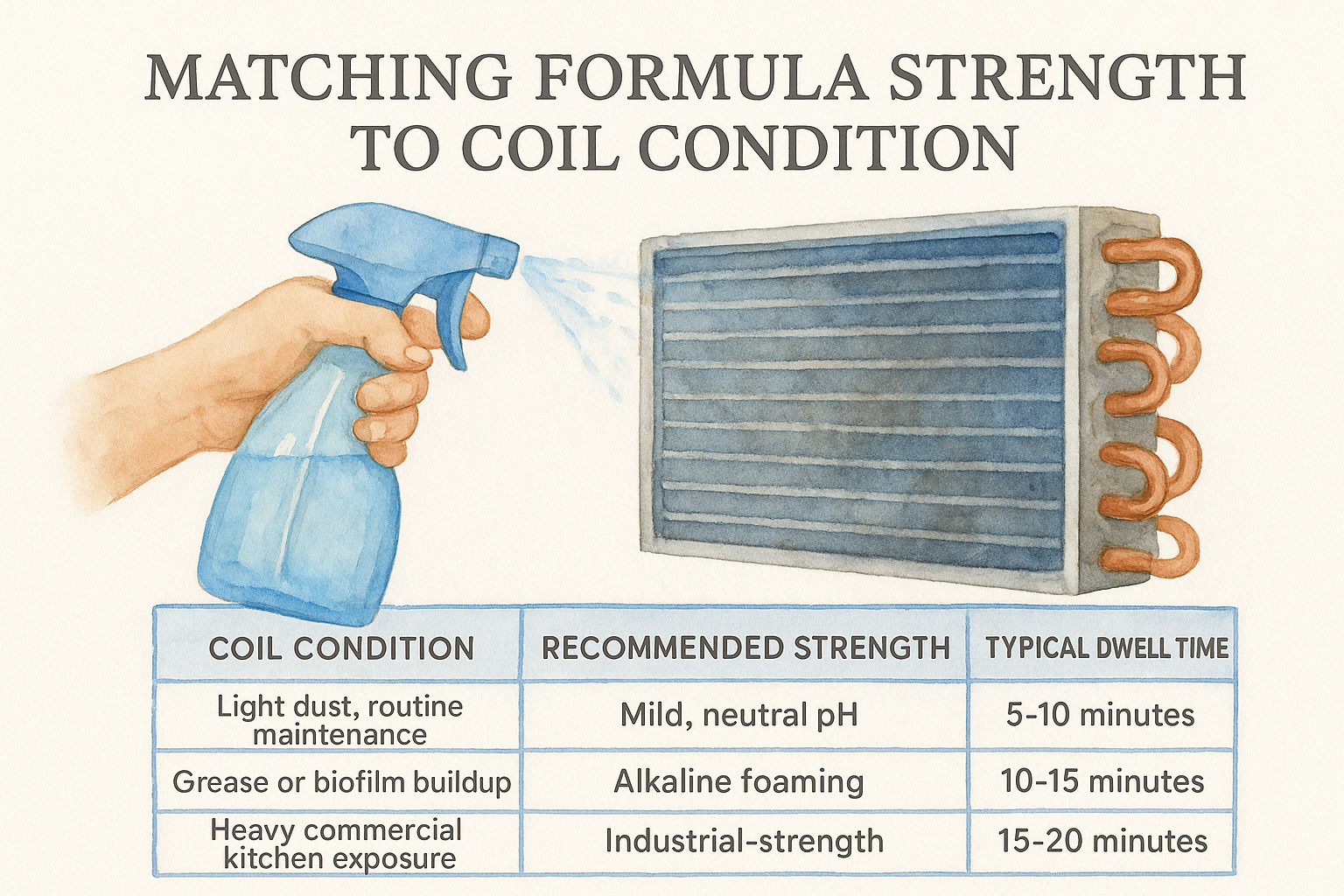
Generally, buy the mildest formula that still gets the job done. A neutral-pH product used quarterly outperforms a harsh industrial cleaner applied once a year, and it won't leave residue that attracts new dust faster.
Safety and upkeep tips after cleaning your coils
Even a foaming, no rinse ac coil cleaner is still a chemical product, so basic precautions still apply. Wear gloves and eye protection when spraying, and work in a ventilated space since some formulas release fumes as they break down grease and biofilm. Never mix a no-rinse cleaner with bleach or other household chemicals sitting nearby in a utility closet; the combination can produce toxic gas even in small quantities.
Checking your work before you walk away
After the foam collapses and the system runs for its 15-minute cycle, confirm the condensate drain is flowing freely. A clogged line backs up water into the drain pan and, on older units, onto the floor below the air handler, which is where an enzyme drain cleaner earns its keep on stubborn buildup. Look at the fins for any residue that didn't fully rinse away on its own; a light second pass handles stubborn spots without redoing the whole job.
Clean coils only stay clean if the drain line and airflow path get checked every time, not just the fins.
Watching performance over the following days
Monitor the supply air temperature for a day or two after cleaning. A properly cleaned coil should drop that number noticeably compared to before treatment; if it doesn't, the coil may need a second application or the airflow issue lies elsewhere, like a dirty blower wheel or restricted return. Log the date of each cleaning so you can track whether your quarterly schedule is actually holding energy costs steady.
Keeping your coils clean between service visits
Quarterly cleaning keeps coils performing at the level they were designed for, and a no rinse ac coil cleaner makes that schedule realistic instead of aspirational. Between visits, a quick vacuum of the return grille and a visual check on the condenser fins catches buildup before it turns into a real efficiency drag. Skipping the wet vac and the rinse cycle isn't a shortcut that sacrifices results, it's what actually gets the job done four times a year instead of once.
Owners who treat coil cleaning as routine maintenance, not an emergency repair, see lower utility bills and fewer compressor failures over the life of the system. That's the whole case for switching to a foaming, self-draining formula in the first place.
If you're ready to put this into practice on a commercial system, look at Eco Safeway's heavy-duty condenser coil cleaner for commercial HVAC systems, built for exactly this kind of no-rinse maintenance routine.


