





A clogged drain is a bad sign, but reaching for a bottle of drain cleaner off the shelf can make things worse. If you've been searching for enzyme drain cleaner options, you already suspect that harsh chemicals aren't the only answer, and you're right. These formulas use live bacteria and enzymes to break down organic waste like grease, hair, and soap scum without eating through your pipes or your lungs.
So does it actually work? Yes, for the clogs it's built for. Enzyme cleaners excel at routine maintenance and slow drains caused by organic buildup, though they take longer than caustic chemicals and won't touch a solid blockage or tree roots. Understanding that distinction is the difference between a satisfied customer and a wasted purchase, especially for facility managers juggling dozens of drains across a property.
In this guide, we'll break down how enzyme drain cleaners work, compare them honestly against chemical alternatives, and point you toward proven products worth buying, the same standard we apply to every safety-focused cleaning solution we recommend.
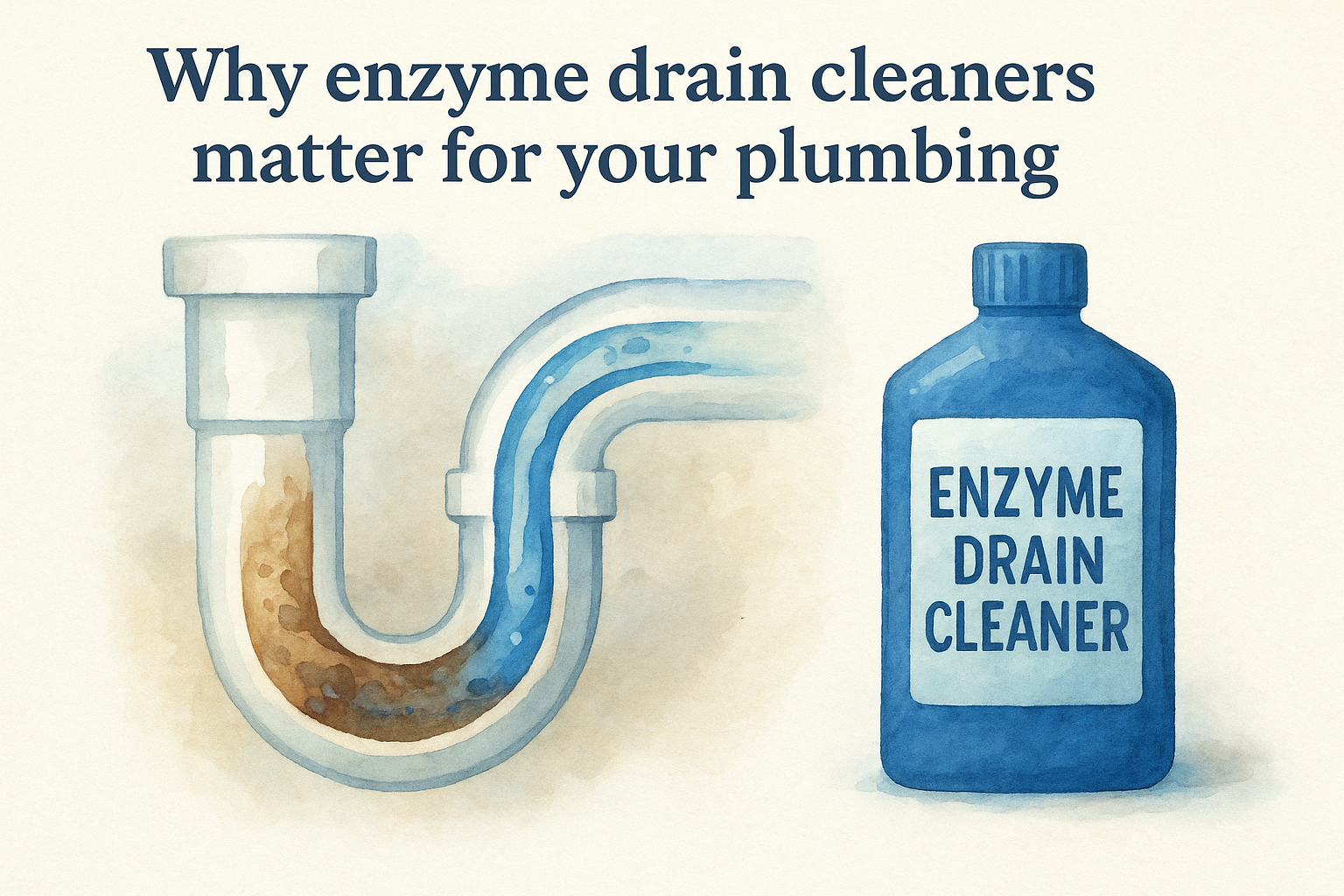
Why enzyme drain cleaners matter for your plumbing
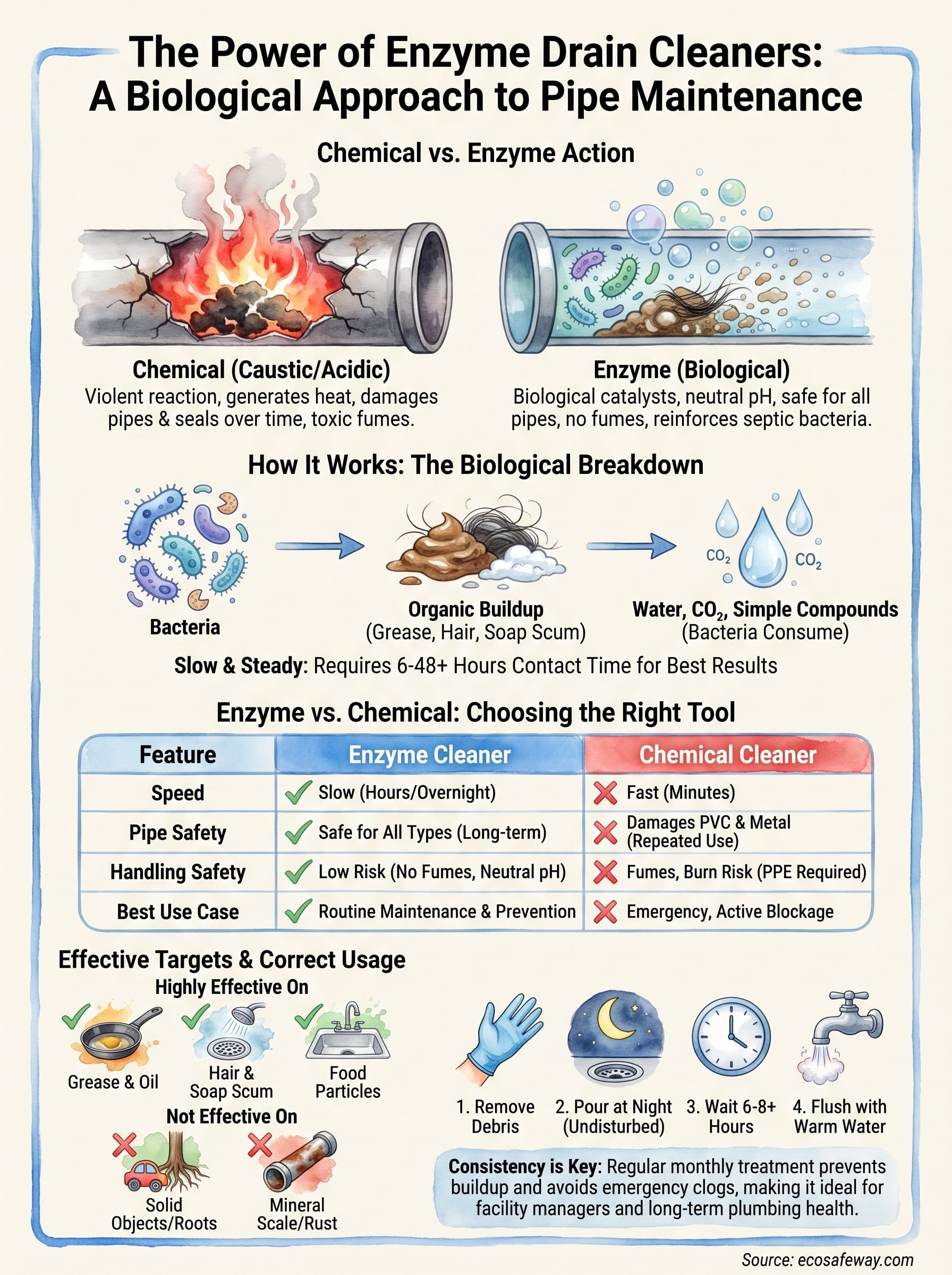
Most slow drains aren't caused by a single dramatic clog. They're caused by weeks or months of grease, soap film, hair, and food particles sticking to the inside of the pipe until the opening narrows to a trickle. Enzyme drain cleaners work by introducing bacteria that produce enzymes, biological catalysts that break the molecular bonds in organic waste and turn it into water, carbon dioxide, and simple compounds the bacteria can consume. That's fundamentally different from a chemical drain opener, which relies on a violent reaction (usually with lye or sulfuric acid) to physically dissolve whatever it touches, pipe material included.
Biological maintenance also protects your plumbing system long after the clog clears. Caustic and acidic drain openers generate heat as they react, and repeated use softens PVC joints and corrodes older metal pipes over time. Enzyme formulas produce no heat and carry a neutral pH, so they won't degrade gaskets, seals, or pipe walls even with regular use. That matters most for older buildings and properties with cast iron or galvanized steel plumbing, where a single aggressive chemical treatment can turn a minor slowdown into a pinhole leak.
Enzyme drain cleaners don't just clear today's clog, they slow down tomorrow's buildup.
Safety is the other half of the equation, and it's the reason plumbers keep bringing this up. Chemical drain cleaners produce fumes that irritate lungs and eyes, and splashback can cause chemical burns on skin. That's a real liability for facility managers who have maintenance staff handling dozens of drains a week, and it's why OSHA classifies many of these products as hazardous chemicals requiring specific handling and storage protocols. Enzyme cleaners, by contrast, are typically safe to handle without gloves or a respirator, which cuts down on training requirements and compliance paperwork for commercial properties.
Here's a quick breakdown of what enzyme-based bacteria actually target in your pipes:
| Organic buildup | Enzyme cleaner effectiveness |
|---|---|
| Grease and cooking oil | High, breaks down fat molecules over 24-48 hours |
| Hair and soap scum | High, especially with repeated treatments |
| Food particles | High, common in kitchen and garbage disposal lines |
| Paper products | Moderate, slower breakdown |
| Mineral scale or rust | None, requires a different treatment |
| Solid objects or tree roots | None, requires mechanical or professional removal |
Wastewater treatment adds one more reason this matters beyond your own pipes. Everything that goes down your drain eventually reaches a septic tank or municipal sewer system, and caustic chemicals can kill the beneficial bacteria that septic systems depend on to break down waste. The EPA's guidance on septic system care notes that protecting the bacterial balance in your system is essential to keeping it functioning properly. Enzyme drain cleaners actually reinforce that bacterial ecosystem instead of destroying it, which is one reason septic system owners tend to favor them, alongside a septic tank treatment tablet, over anything with a warning label.
How to use an enzyme drain cleaner correctly
Getting results from an enzyme drain cleaner comes down to patience and timing, not muscle. These products need hours of undisturbed contact with the buildup to let the bacteria multiply and the enzymes do their work, so dumping a capful in and running water five minutes later defeats the purpose. Most manufacturers recommend applying the product at night, right before the drain sits unused for six to eight hours, which is why bathroom sinks and kitchen drains after the last dishwashing load of the day are ideal targets.
Step-by-step application
Follow this basic sequence for the best results, though always check the specific product label for exact dosing:
- Remove any visible debris, hair, or standing water from the drain opening first.
- Measure the recommended dose, typically 2 to 4 ounces for a residential sink, more for a floor drain or grease trap.
- Pour the enzyme solution directly into the drain opening, avoiding excess water that would dilute the concentration.
- Let it sit undisturbed for at least six hours, ideally overnight.
- Flush with warm (not hot) water in the morning to clear the broken-down residue.
- Repeat nightly for two to three days on stubborn, slow-moving drains.
Enzyme cleaners reward patience: skip the wait, and you skip the result.
Common mistakes to avoid
Temperature and chemistry both work against you if you're not careful. Hot water can kill the live bacteria before they get a chance to reproduce, so stick to room-temperature or lukewarm water when flushing. Never combine an enzyme treatment with bleach, ammonia, or a leftover dose of chemical drain opener sitting in the same pipe. Those chemicals will sterilize the enzyme solution on contact, wasting the product and leaving you back where you started.
Consistency matters more than a single heavy application. Routine maintenance with a monthly eco-friendly drain maintenance product prevents the kind of buildup that leads to emergency clogs in the first place, especially in properties with heavy kitchen or bathroom traffic. Facility managers overseeing multiple units often set a standing schedule, treating every drain on a rotating basis rather than waiting for complaints, which keeps labor costs predictable and avoids the reactive scramble that comes with a fully blocked line.
Enzyme vs chemical drain cleaners: which works better
Speed is where chemical cleaners win, and it's not close. A caustic or acidic formula can chew through a hair clog in fifteen minutes, while an enzyme drain cleaner needs hours of contact time to produce the same result. If you've got water backing up onto the bathroom floor right now, an enzyme product isn't going to save your evening, and that's the moment for a drain opener that's safe for all plumbing. That immediate gratification is exactly why chemical drain openers dominate store shelves, even though they're the wrong tool for most day-to-day slowdowns.
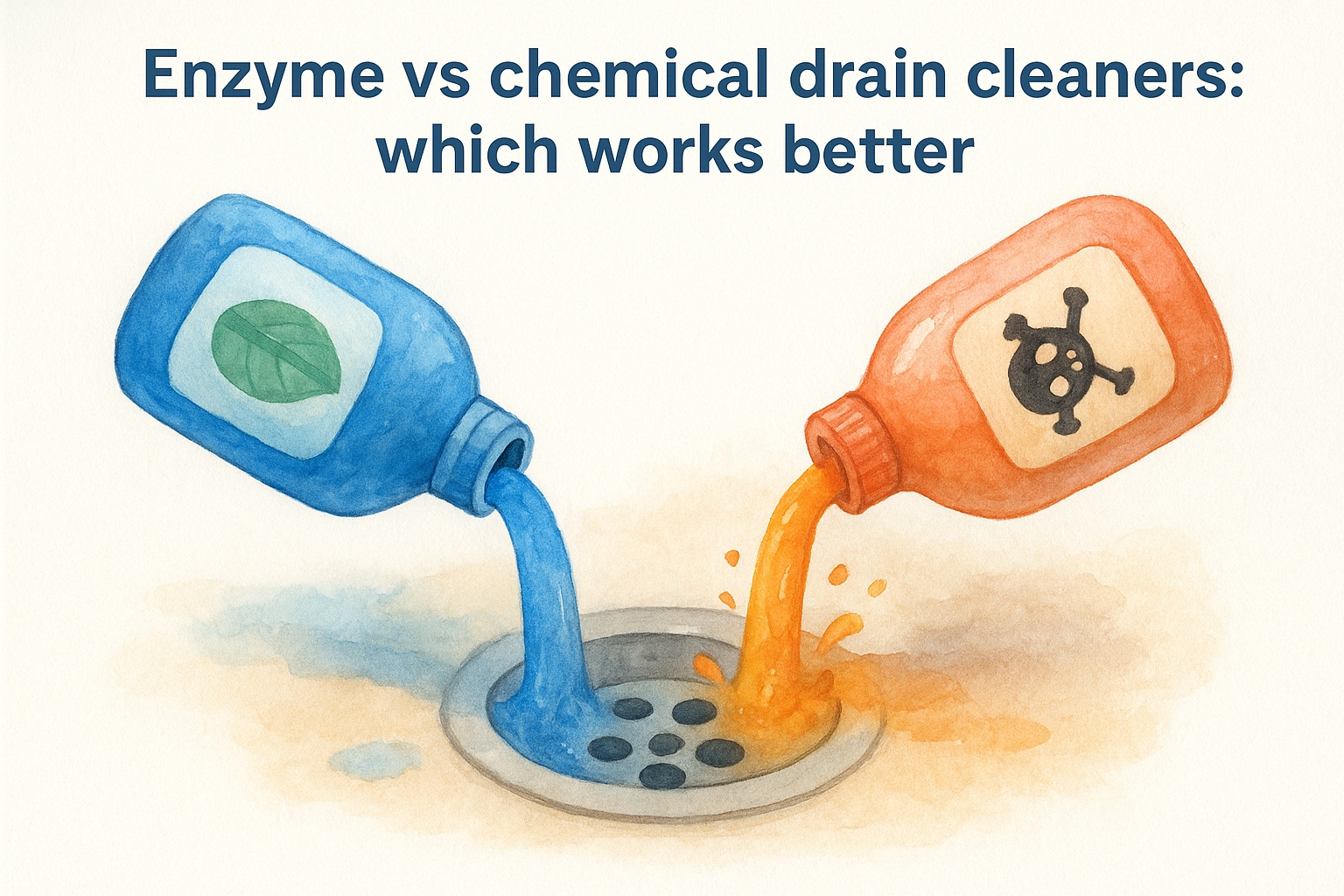
Longevity flips the outcome the other way. Every time a caustic cleaner dissolves a clog, it also thins pipe walls and degrades rubber seals, which means the convenience comes with a compounding cost. Chemical drain cleaners treat the symptom and quietly damage the system treating it. Enzyme formulas do the opposite: they're slower, but they leave pipes, gaskets, and septic bacteria intact, which is why plumbers recommend them for ongoing care rather than emergency response.
Chemical cleaners buy you speed today; enzyme cleaners buy you fewer emergencies tomorrow.
Head-to-head comparison
| Factor | Enzyme drain cleaner | Chemical drain cleaner |
|---|---|---|
| Speed | 6-48 hours | Minutes |
| Pipe safety | Safe for all pipe types, long term | Damages PVC, metal over repeated use |
| Handling safety | Low risk, no fumes | Fumes, burn risk, PPE recommended |
| Septic system impact | Supports bacterial balance | Kills beneficial bacteria |
| Effective on | Grease, hair, soap scum, organic buildup | Similar organic clogs, faster |
| Effective on hard blockages | No | Sometimes, with repeated use |
| Best use case | Routine maintenance, prevention | Emergency, active blockage |
Cost tips the decision for anyone managing multiple properties. A single bio-enzymatic drain treatment applied monthly typically costs less over a year than repeated emergency chemical purchases plus the eventual plumber visit when a corroded pipe finally fails. Facility managers who switch to a scheduled enzyme program report fewer service calls within the first few months, simply because the buildup never gets the chance to become a full blockage. Neither product replaces the other entirely, but if you're choosing a default strategy for ongoing plumbing health rather than a one-time rescue, enzyme formulas hold up better under real-world use.
Choosing the right enzyme drain cleaner for your drain
Not every bottle labeled "enzyme drain cleaner" contains the same bacterial strains or concentration, and that gap explains why some readers swear by the category while others call it a gimmick. Look for a product listing specific bacteria strains (Bacillus species are the industry standard) along with a colony count, usually measured in colony-forming units per milliliter. A vague label that just says "natural enzymes" without strain names or concentration numbers is a red flag, since it tells you the manufacturer isn't confident enough in the formula to back it with specifics.
Drain type changes what you should buy. A kitchen sink dealing with grease needs a lipase-heavy formula, while a bathroom drain clogged with hair and soap scum benefits more from protease and cellulase enzymes that target protein and fiber. Septic tank owners need a broader-spectrum bio-enzymatic drain treatment designed to sustain the tank's entire bacterial ecosystem, not just clear a single line.
The right enzyme cleaner matches its bacteria to the buildup, not the other way around.
What to check before you buy
Run through this list before adding a product to your cart:
- Strain transparency: named bacteria species and CFU count on the label
- Concentration: higher CFU counts generally mean faster, more reliable results
- Shelf life: live bacteria die over time, so check the manufacturing date and expiration window
- Intended use: confirm the product is rated for kitchen, bathroom, septic, or grease trap use specifically
- Volume: commercial properties and grease traps need larger containers than a single residential sink
Matching the product to the property
| Property type | Recommended formula | Application frequency |
|---|---|---|
| Single-family home | General-purpose enzyme cleaner | Monthly |
| Restaurant or commercial kitchen | High-lipase, grease trap formula | Weekly |
| Multi-unit residential | General-purpose, bulk volume | Monthly per unit |
| Septic system property | Broad-spectrum septic-safe formula | Monthly |
Facility managers buying in volume should also factor in delivery reliability and safety documentation, since a supplier who can't produce a safety data sheet on request usually can't verify what's actually in the bottle. Eco Safeway sources its cleaning line with that same verification standard we apply to every product we carry, from bulk drain treatments to enzyme cleaner tablets for drains and garbage disposals, so if you're comparing options for a commercial property, it's worth reviewing what we stock before settling on a bottle at the hardware store.
Keeping your drains flowing naturally
An enzyme drain cleaner won't rescue you from a flooded bathroom floor, but it will keep you from ever getting there in the first place. Grease, hair, and soap scum build up slowly, and a monthly dose of live bacteria clears that buildup before it turns into a service call. Bank on chemical openers for true emergencies, but let enzymes handle the ongoing maintenance that protects your pipes, your septic system, and your staff from unnecessary exposure.
Consistency beats a single heavy-duty product every time. Facility managers and homeowners alike get the best results from a standing schedule rather than a reactive scramble once water starts backing up. If you're ready to put that routine in place, try our enzyme-powered dishwasher and washing machine cleaner tablets for a straightforward way to keep drains, dishwashers, and washing machines running clean without the fumes or the corrosion risk.


