





The best ice machine drain cleaner depends on what is clogging the line. Slime and mold need a brush and a diluted bleach flush. Mineral scale needs a descaler, and on commercial machines it should be a nickel-safe one. Light scale in a home unit may clear with diluted vinegar if the manual allows it. Enzyme treatments help keep the drain side odor-free between cleanings. Restaurant and hotel operators should start with a nickel-safe descaler. Homeowners can start with vinegar and a brush.
A drain line stays cold, wet and dark, so it grows slime and collects scale from meltwater. You notice the damage late: slow draining, a sour smell, water pooling in the bin, or a backup at the floor drain. Pouring random chemicals down the line often makes it worse. Some products damage the machine, and some are dangerous when combined.
This article ranks five ways to clean an ice machine drain line, in order of how often they fit a working machine. Eco Safeway supplies a nickel-safe ice machine cleaner, so it comes first. For each option you get what it does, who it suits, and the steps to use it.
1. Eco Safeway ice machine cleaner and descaler
What it does and who it suits
Eco Safeway Ice Machine Cleaner is a food-safe, nickel-safe descaler for ice makers, sold for restaurants, hotels and hospitality. It targets mineral scale, which is where most drain trouble starts. Scale narrows the drain path and leaves a rough surface that slime grips.
Many commercial cleaners are acid-based, and phosphoric acid is common. Nickel-safe matters because many evaporators are nickel-plated and harsh acids can attack that finish. The used solution leaves through the drain, so the line gets treated during the cycle. It is not a brush, so it will not pull out a packed slime plug. It suits commercial kitchens and hospitality operators who clean machines on a schedule and want the cleaning run through the machine itself.
How to use it
Follow the product label and your machine manual for dilution and cycle settings. The general flow looks like this:
- Switch the machine to its cleaning mode and discard all ice.
- Mix the cleaner at the label ratio.
- Run the full cleaning cycle.
- Run rinse cycles until no solution or odor remains.
- Pour a gallon of water into the drain to confirm it runs freely.
A descaler clears the scale that slime hangs on, so the drain stays clean longer.
2. White vinegar flush
What it does and who it suits
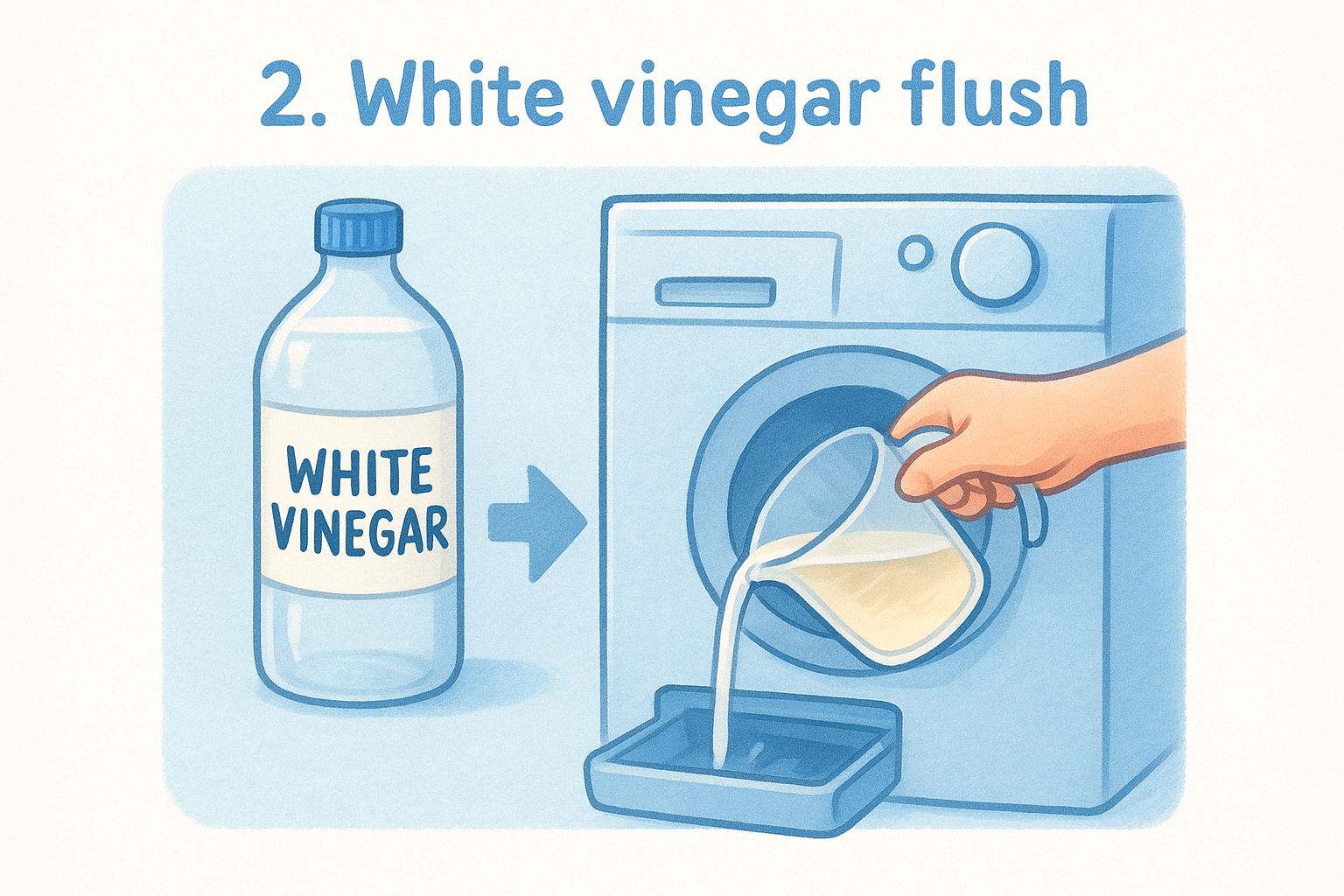
White vinegar is the cheapest mild descaler and the first thing most owners try. It dissolves light mineral film in the drain line and costs almost nothing. It will not cut through heavy scale or thick slime. It suits home and light-use machines with a thin crust and a slow drain.
Check the manual before running vinegar through the machine's water circuit. Many commercial manufacturers specify their own cleaner, and vinegar can leave a smell or taste if rinsed poorly. Flushing it down the drain line by hand is the safer use. That also answers the common question about running vinegar through an ice maker: use it on the drain unless the manual explicitly allows more.
How to use it
Mix one part vinegar with three parts warm water. Then:
- Turn the machine off and empty the bin.
- Pour the mix slowly into the drain opening.
- Let it sit 15 to 20 minutes.
- Flush with clean warm water.
Never combine vinegar and bleach. Rinse fully before moving to a bleach step.
Vinegar is a fine ice machine drain cleaner for light scale, and it is the wrong tool for slime.
3. Diluted bleach sanitizer
What it does and who it suits
Bleach handles the biological side of the problem. It kills the bacteria, yeast and mold that make slime and odor. It does nothing for scale, and it does not physically remove slime, so use it after brushing, not instead. It suits any machine with a smelly or visibly slimy drain, home or commercial.
Corrosion is the trade-off. Strong bleach can pit metal and damage seals, so keep it on the drain side and rinse well. In a commercial machine, use only the sanitizer your manufacturer approves for the water circuit. Plumbers often alternate vinegar and bleach every few months, which works as long as you rinse completely between them.
How to use it
A common sanitizing mix is about 1 tablespoon of household bleach per gallon of water.
- Clean off visible slime first.
- Pour the mix into the drain.
- Let it sit a few minutes.
- Flush with plenty of clean water.
- Ventilate the area.
Never mix bleach with vinegar or any acid cleaner, because the combination releases chlorine gas.
Bleach sanitizes a drain line but cannot scrub or descale it.
4. Flexible drain line brush kit
What it does and who it suits
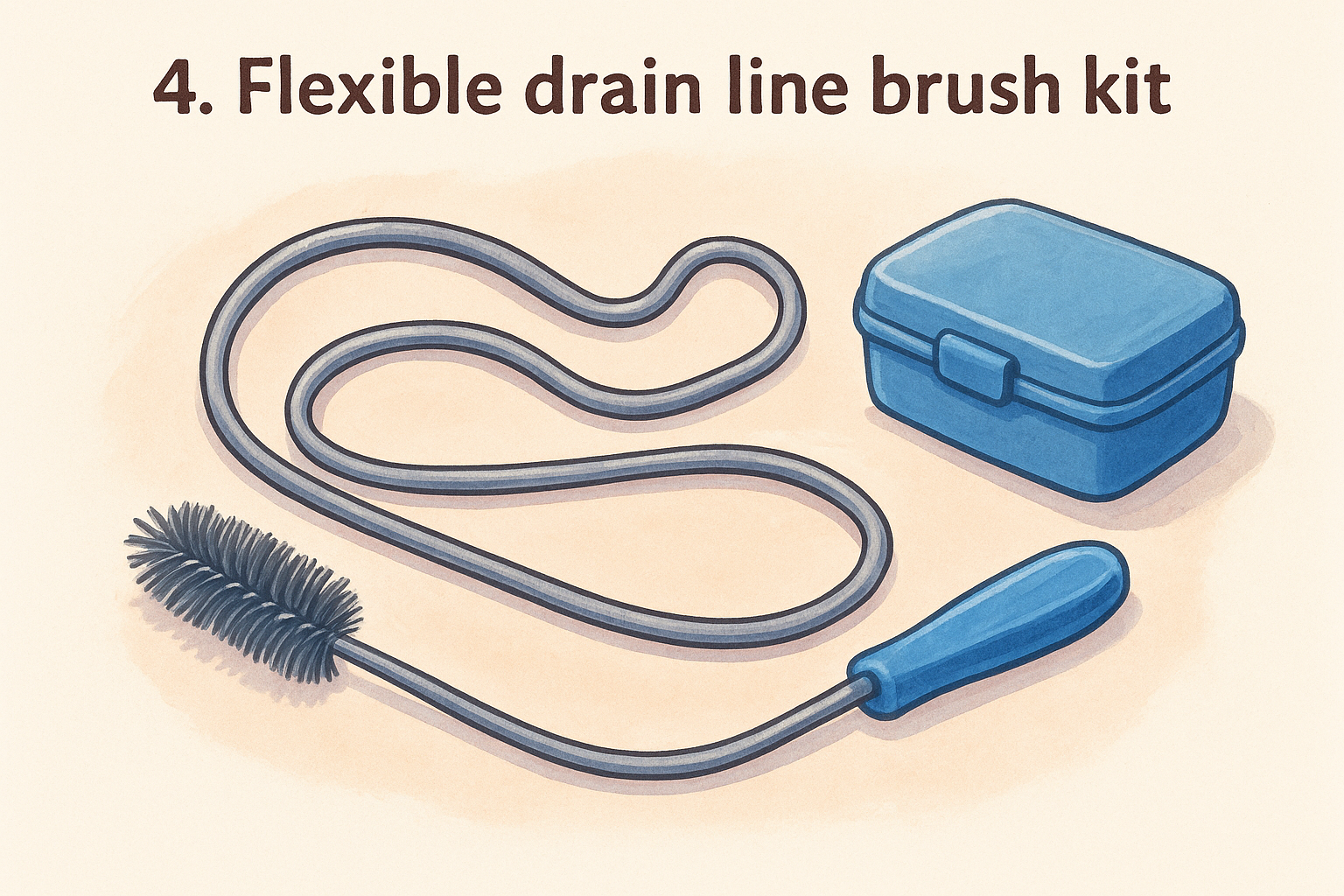
A long, flexible brush is the only option here that physically removes slime. Chemicals soften buildup, but a brush clears a coated line that has gone slow. Kits typically include a nylon-bristle wire around five or six feet long, which reaches the bends where a pour-in cleaner never touches. It suits commercial operators and anyone with a recurring clog that returns days after a chemical flush.
For stubborn blockages beyond a brush, a plumber's small drain snake or water jetter clears the run to the floor drain. Also check the line itself. It should slope continuously downward and end above the floor drain with an air gap, and kinks or sags hold water and breed slime.
How to use it
Brush first, then sanitize.
- Power the machine off and empty the bin.
- Disconnect the drain line at the machine end, or open the access point.
- Feed the brush in with a twisting motion.
- Pull it out, wipe it, and repeat until it comes out clean.
- Flush with warm water, then use the bleach step.
If the drain keeps slowing down, a brush will fix it where a chemical will not.
5. Enzyme drain treatment
What it does and who it suits
Enzyme cleaners break down organic film such as sugars and grease, so they work as maintenance rather than rescue. They are slower than bleach but gentle on pipes, and they keep the drain side of the line from regrowing slime. They suit operators who want odor control between deep cleanings.
Eco Safeway's All-in-One Tablet is an enzyme-powered cleaner tablet sold for sinks, drains, dishwashers and washing machines. It is not an ice machine cleaner, so use it on the drain side, such as the floor sink or standpipe that receives the line, and not in the machine's water circuit. Always check the label for your application.
How to use it
Enzymes need time, so apply them when the drain sits idle.
- Brush and flush the line first, so the enzymes reach the film.
- Apply the tablet at the end of the day, following the label dose and dwell time.
- Leave the drain undisturbed overnight if the label allows.
- Repeat on a regular schedule.
Enzymes prevent regrowth, so use them after a deep clean, not in place of one.
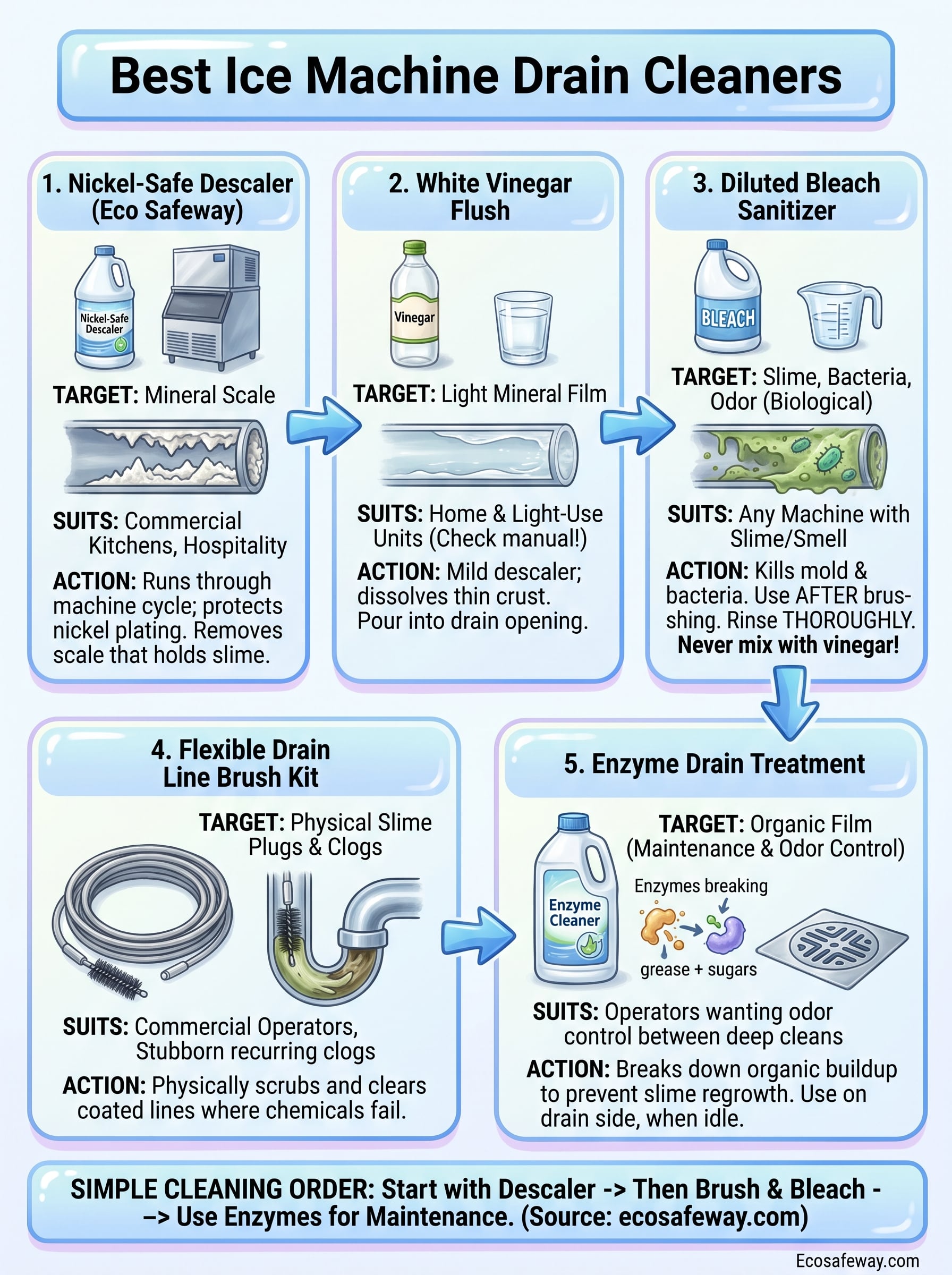
A simple order that keeps the drain clear
Start with the cause. Use a descaler for scale, a brush and bleach for slime, and enzymes to hold the result. Most manufacturers call for cleaning at least every six months, and hard water or heavy use means more often. Check your manual first, and never mix bleach with an acid.
For a commercial machine, a nickel-safe descaler is the best starting point. You can shop the Eco Safeway Ice Machine Cleaner and add a brush kit to your routine.


