





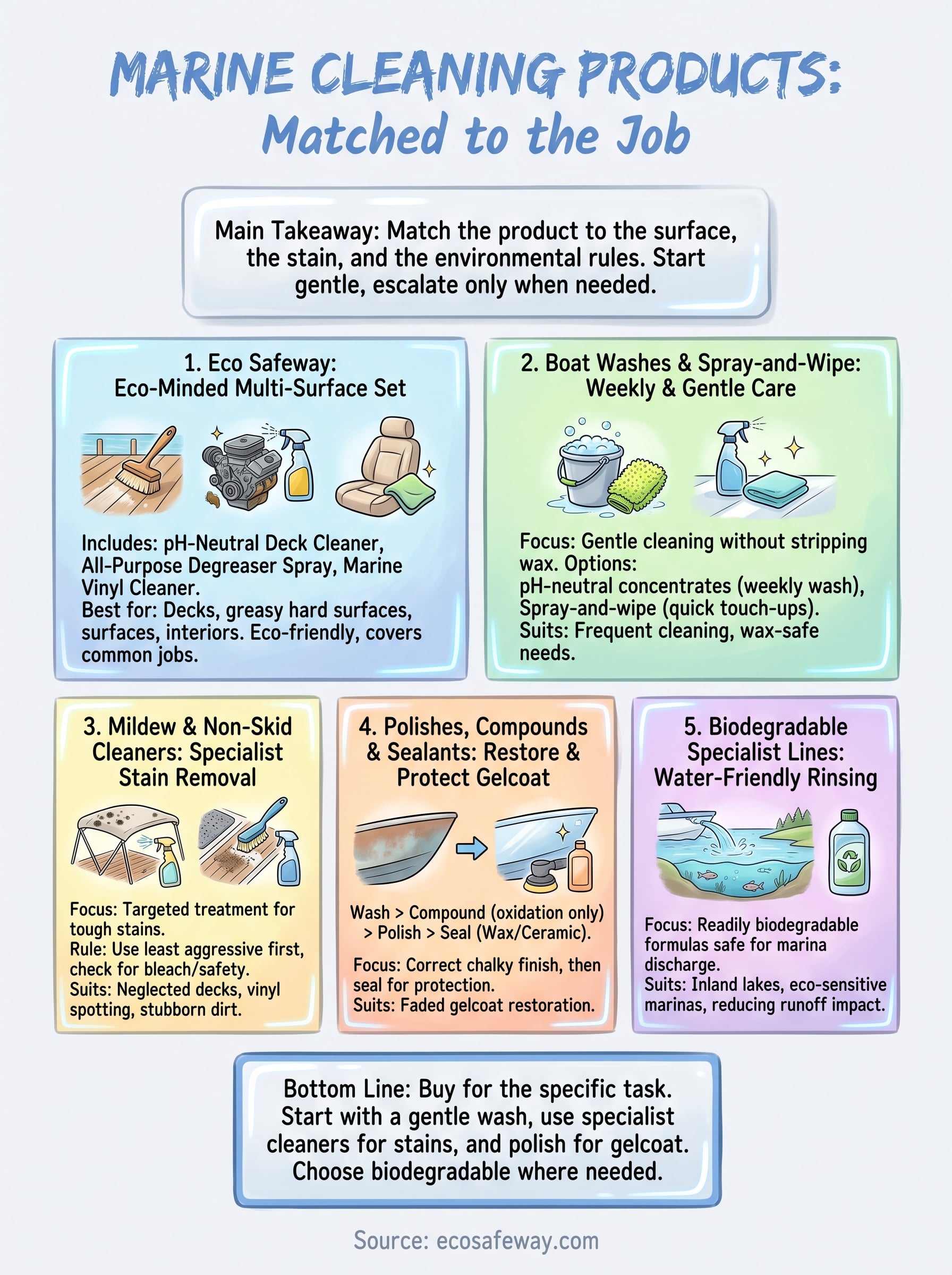
The best marine cleaning products are the ones matched to the surface and the job. That means a pH-neutral wash for weekly upkeep, a dedicated mildew or non-skid cleaner for stains, a polish or sealant for tired gelcoat, and biodegradable formulas if the rinse water reaches a lake or marina. The five picks below follow that logic. Eco Safeway's deck, degreaser and vinyl cleaners suit owners who want one eco-minded set. Boat washes suit weekly care. Mildew and non-skid cleaners suit neglected decks and seats. Polishes and sealants suit faded gelcoat. Specialist biodegradable lines suit boaters who rinse near the water.
The problem is that the aisle is crowded and the labels say little. Products run from a $15 soap to a $265 ceramic coating, and the wrong choice strips wax, chalks vinyl or leaves hazy residue. Most owners buy by brand name and find out the mismatch after the weekend's work is done.
Eco Safeway supplies eco-friendly marine cleaners, so we see which jobs trip owners up. This guide sorts the options by job, explains how each type works, who it suits, and what to check before you pay.
1. Eco Safeway deck, degreaser and vinyl cleaners
Eco Safeway offers three marine cleaners that cover the surfaces owners scrub most: decks, greasy hard surfaces and interiors. It is the right first stop if you want an eco-friendly set rather than a wall of single-purpose bottles. It does not sell compounds or waxes, so it pairs with the polish step in item 4. This is how marine cleaning products work best in practice: a small set matched to specific surfaces.
What the line includes
Each cleaner targets a different surface:
- PH Neutral Deck Cleaner: listed as safe for synthetic teak and all types of marine decking, safe to wash in water, and marina and Clean Boat Act compliant.
- All-Purpose Cleaner & Degreaser Spray: an eco-friendly, aluminum-safe spray for grease, oil and dirt on marine and aircraft surfaces.
- Marine Vinyl Cleaner: a non-toxic cleaner for vinyl, upholstery, leather and plastic on boat and yacht interiors.
A pH-neutral deck cleaner removes dirt without attacking the surface underneath it.
Who it suits
This set fits yacht owners, captains and crews who clean decks, engine spaces and cabins in the same week. It also suits anyone whose marina asks for water-friendly products. The degreaser handles tool-room grime and engine-space oil, while the vinyl cleaner keeps interiors from needing a harsher solvent.
If your main job is restoring oxidized gelcoat, this line will not do it. You need a compound and polish for that.
Price and what to check
Current sizes and prices sit on each product page. Before you buy, match the product to the surface listed. Test any cleaner on a hidden patch first, especially on older vinyl, coated surfaces or unusual decking. Confirm dilution and rinse instructions on the label, because those, not the brand, decide how safe a cleaner is on your boat.
2. Boat washes and spray-and-wipe cleaners
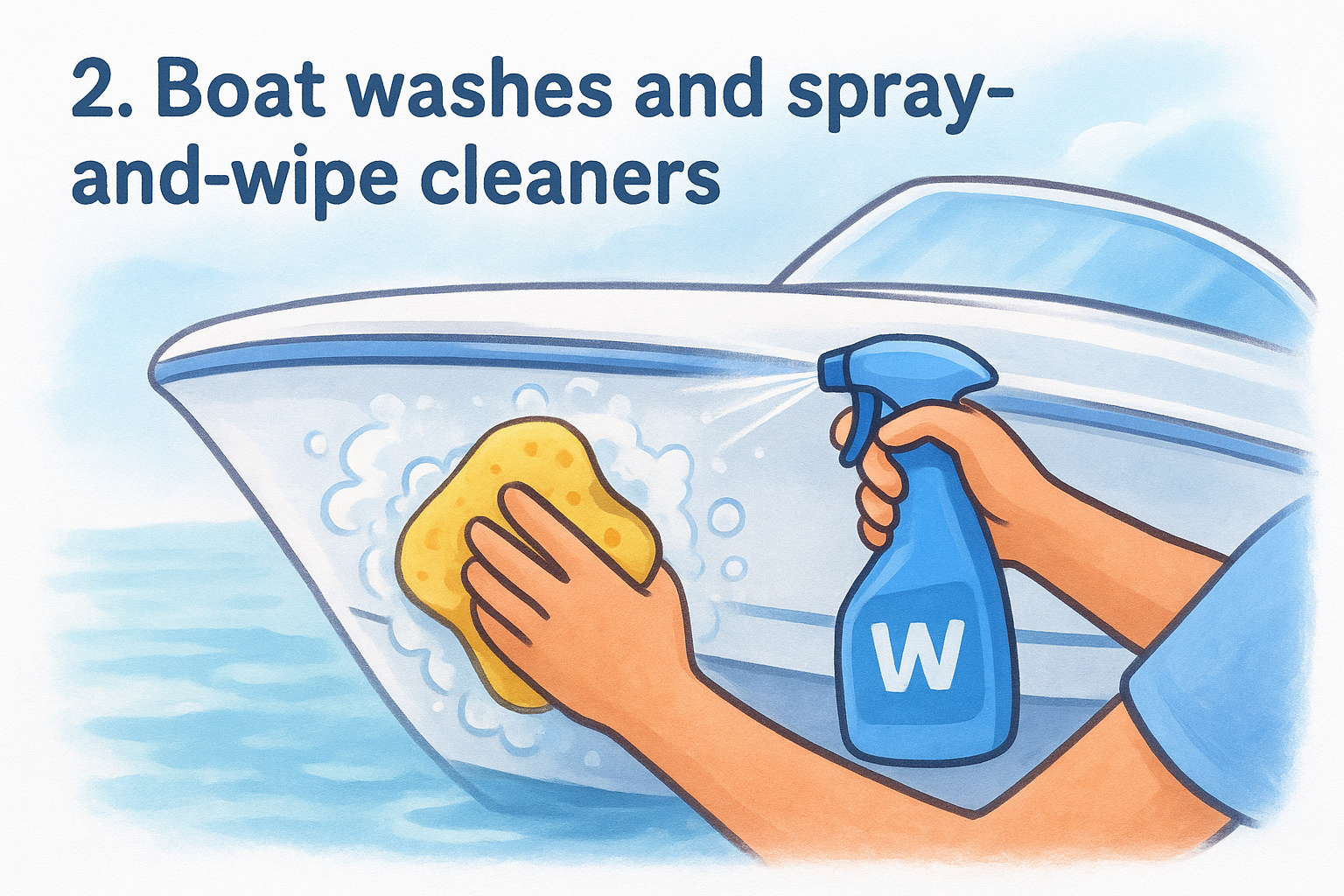
A boat wash is the product you will use most, so it should be gentle. Choose a pH-neutral, wax-safe soap for routine washdowns, or a spray-and-wipe formula if you want to skip the hose. Good marine cleaning products in this category clean without stripping the protection you already applied.
How washes work
A concentrated boat soap lifts salt, dust and grime so the mitt and rinse do the rest. Some formulas add silica or sealant to leave a slick surface that sheds water. Spray-and-wipe cleaners, such as the Boat Juice line, are built for no hose, no soap and no pre-rinse, which suits quick touch-ups at the dock.
Who it suits
Weekly washers should buy a concentrate, since it costs less per wash. Owners with a ceramic coating or fresh wax should pick a soap marketed as coating or wax-safe, such as DiTEC Elite Boat Wash. Spray-and-wipe is better for small boats and between-trip cleanups than for a salt-caked hull.
Can you use Dawn dish soap? Only occasionally. It cuts grease well, but it also strips wax and sealants, and it is not formulated to be gentle on boat finishes or aquatic life.
Price and what to check
Starting prices below come from retailer listings and vary by size, so compare cost per ounce after dilution, not bottle price.
| Product | Style | Typical starting price |
|---|---|---|
| Starke Pure Clean Boat Soap | Boat soap | About $16 (16 oz) |
| Starke Ultra Clean SiO2 Soap | Soap with silica | About $20 (16 oz) |
| Boat Juice Wash & Shine | Spray-style wash | About $20 (32 oz) |
| DiTEC Elite Boat Wash | Concentrated, wax-safe | About $28 |
Buy a wash for what it leaves behind, not for how much it foams.
3. Mildew and non-skid cleaners
Mildew and non-skid cleaners are specialist products for the two areas that plain soap fails on: black spotting on vinyl and canvas, and ground-in dirt in textured deck. Reach for them only when a wash does not work, and always use the least aggressive formula first. Among all marine cleaning products, these demand the most label reading.
How these cleaners work
Mildew removers break down the organic stain, and some rely on bleach-type chemistry. Non-skid cleaners are tuned to get into the molded pattern so dirt lifts without sanding the grip. A stiff brush does half the work, and dwell time does the rest. Black streaks from fenders and dock lines are a separate problem, and a dedicated black streak remover handles them better than scrubbing.
Who it suits
Owners of boats that sit damp, such as covered boats in humid climates, will need a mildew remover every season. 3M offers a Marine Mildew Stain Remover, a Marine Non-Skid Cleaner and a Black Streak Remover. Starke Mildew Clean and Boat Juice Mildew Stain Remover are common spray options.
Price and what to check
Expect roughly $17 to $22 for a spray bottle of mildew remover. Check whether the product contains bleach, because chlorine can weaken vinyl stitching and fade colors. Rinse thoroughly and keep it off bare metal. Never mix cleaners. If the stain is on interior vinyl, start with a gentle vinyl cleaner such as the Eco Safeway option from item 1.
Treat mildew early with the mildest product that works, because harsh cleaners age vinyl faster than mildew does.
4. Polishes, compounds and sealants
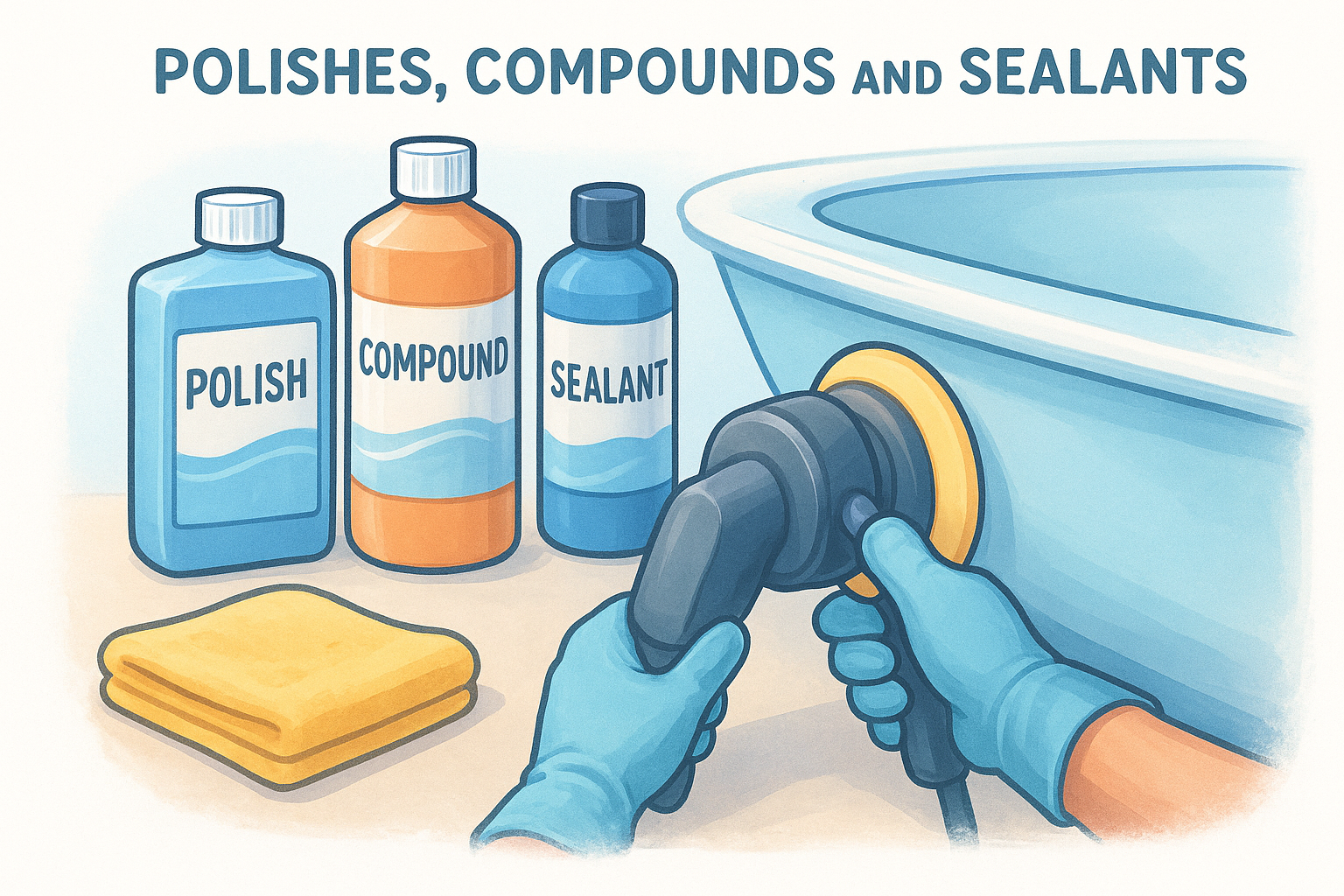
Polishes, compounds and sealants restore and protect gelcoat after it has been cleaned. They are not for everyday dirt. Use them when the finish looks chalky, dull or stained, and then protect it so you do not repeat the work next year. This is the step where marine cleaning products become paint-correction products.
How the sequence works
Work from gentle to aggressive. A heavy cut compound removes oxidation but also removes gelcoat, so use it only when needed. Then follow in this order:
- Wash and dry the surface.
- Compound only the oxidized areas.
- Refine with a medium cut or finishing polish.
- Wipe with a surface prep spray to remove oils.
- Seal with wax, sealant or ceramic coating.
A cleaner wax combines the polish and protect steps for lightly faded surfaces.
Who it suits
Owners with oxidized gelcoat, or crews preparing a boat for sale, benefit most. Brands such as Starke sell a full ladder, from heavy cut compounds to finishing polishes and ceramic coatings. Those who only want a quick shine can use a spray sealant between washes.
Price and what to check
Starke compounds and polishes list from roughly $28 to $44 for 16 oz. Its Revolution Cleaner Wax starts near $39. Marine ceramic coatings are a bigger spend, with Starke's 100 ml bottles listed at $225 to $265. Check surface prep requirements and cure times, because a coating only performs as well as the polish and prep beneath it.
Compound only the oxidation, then protect it, or you will be back with the same job next season.
5. Biodegradable specialist cleaning lines
Biodegradable lines are the best choice when your rinse water reaches a lake, river or marina basin. Buy a full line from a maker that states its formulas are readily biodegradable, and use the same brand across washing, glass and teak. The most useful marine cleaning products for the water are the ones documented, not just labeled green.
What they are
DiTEC Marine Products states that it offers a full suite of readily biodegradable cleaners that are safe to rinse directly into the water. Biokleen sells a line of environmentally friendly boat and marine cleaners with a money-back guarantee. Both cover washes, glass, metal and teak, so you can keep one system aboard.
Who it suits
These lines suit boaters on inland lakes, owners in marinas with discharge rules, and anyone tired of strong chemical smells in a cabin. If a lake is your question, such a line answers what is good for cleaning your boat without harming the water.
Price and what to check
DiTEC items start around $14 for glass cleaner and about $28 for Elite Boat Wash. Treat "biodegradable" as a starting point, not a free pass. Dilution matters, and heavy runoff of any cleaner is still a load on the water. Wash on the water side with a bucket, keep rinse volume low, and follow your marina's rules.
Biodegradable means it breaks down over time, not that you can pour unlimited amounts into the water.
Which cleaner to buy first
Start with the job you actually have. Buy a gentle wash for weekly use, a mildew or non-skid cleaner only when stains appear, and a polish and sealant when the gelcoat dulls. If you rinse into water, choose documented biodegradable formulas and keep volumes low.
If decks, greasy surfaces and interiors are your main chores, the PH Neutral Deck Cleaner is a practical place to begin, with the degreaser and vinyl cleaner to follow as needed.


