





That funky smell coming from your dishwasher isn't just unpleasant, it's a sign that food residue, grease, and mineral deposits are building up inside a machine you trust to keep your dishes clean. Over time, a neglected dishwasher starts working harder, cleaning worse, and can even become a breeding ground for mold and bacteria. The good news: learning how to clean a dishwasher properly takes less effort than most people think.
Whether you're dealing with a clogged filter, stubborn hard water stains, or a lingering odor you can't seem to shake, a straightforward cleaning routine can bring your machine back to full performance. You don't need harsh chemicals to get the job done, either. At Eco Safeway, we manufacture non-toxic, biodegradable cleaning products, including dishwasher cleaners, that tackle buildup effectively without corrosive ingredients that can damage seals, gaskets, or stainless steel interiors.
This guide walks you through every step: cleaning the filter, removing grease and odors, descaling mineral deposits, and maintaining your dishwasher so problems don't come back. We'll cover both DIY methods and commercial cleaner options, and explain when each approach makes the most sense for long-term dishwasher health.
What to clean, how often, and what you need
Before you start scrubbing, it helps to understand what's actually getting dirty inside your dishwasher and why. Most people assume the machine cleans itself during every cycle. It doesn't. Food particles, grease, soap scum, and hard water minerals accumulate in specific areas, and ignoring those spots leads to odors, poor drainage, and reduced cleaning performance over time.
Parts of your dishwasher that need regular attention
Your dishwasher has several components that trap debris and buildup. The filter sits at the bottom of the tub and catches food particles before they recirculate onto your dishes. Spray arms develop clogged holes that restrict water flow. Door seals and gaskets collect mold and mildew in their folds. The interior walls accumulate grease film and hard water deposits. Knowing which parts need attention tells you exactly where to focus your effort when you clean.
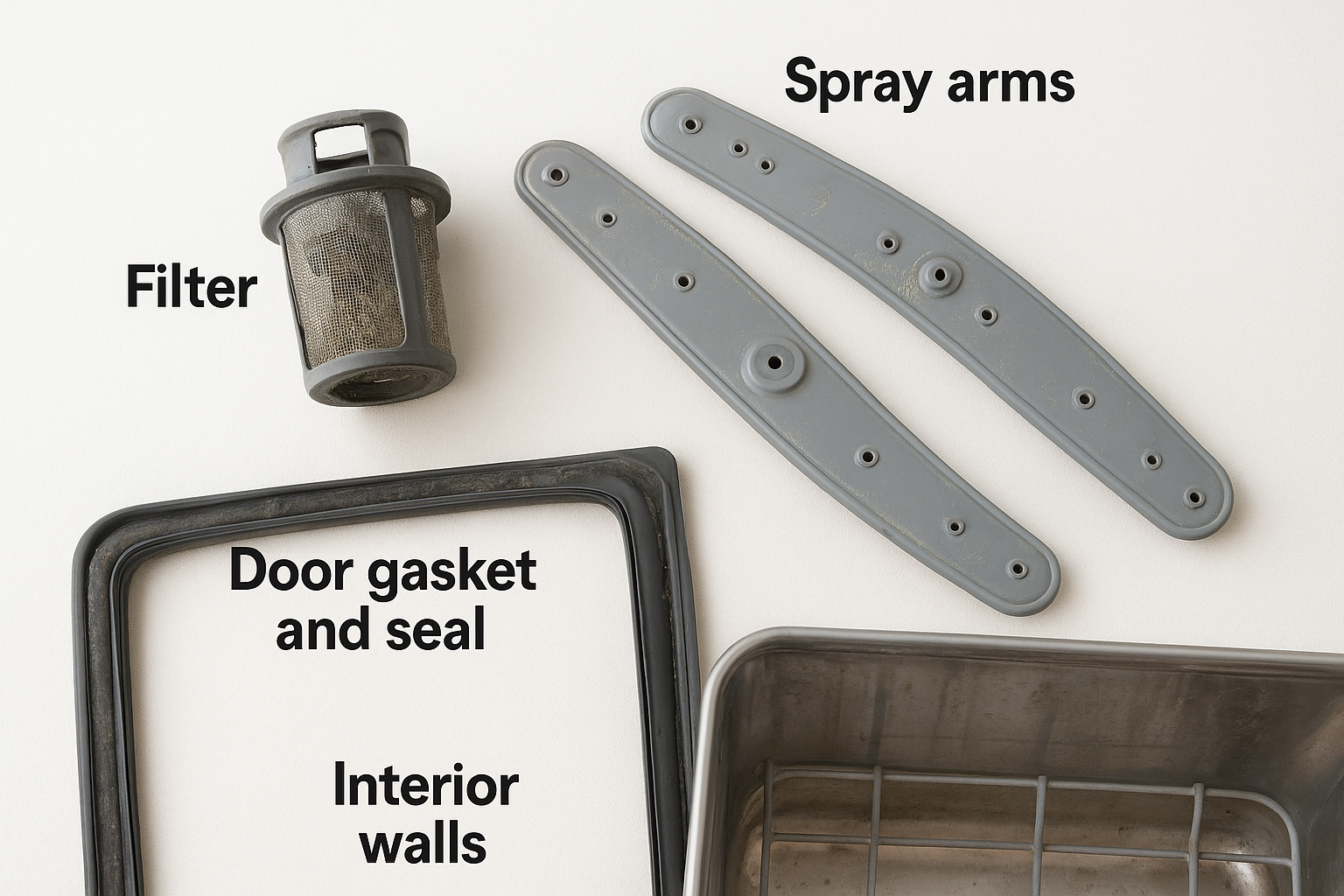
Skipping the filter is the number one reason dishwashers start to smell, even when the rest of the interior looks clean.
Here's a quick breakdown of the main areas and what builds up in each:
- Filter: Traps food particles; becomes slimy and odorous when neglected
- Spray arms: Develop mineral deposits and clogged jets over time
- Door gasket/seal: Collects mold, mildew, and food residue in the folds
- Interior walls and racks: Accumulate grease, soap scum, and hard water stains
- Drain area: Pools standing debris and bacteria between cycles
How often to clean each part
Frequency depends on how heavily you use your dishwasher and the hardness of your water supply. Running the machine daily means your filter needs attention more often. Hard water accelerates mineral buildup on spray arms and interior walls, so households in hard water areas should stick to the shorter end of each interval below.
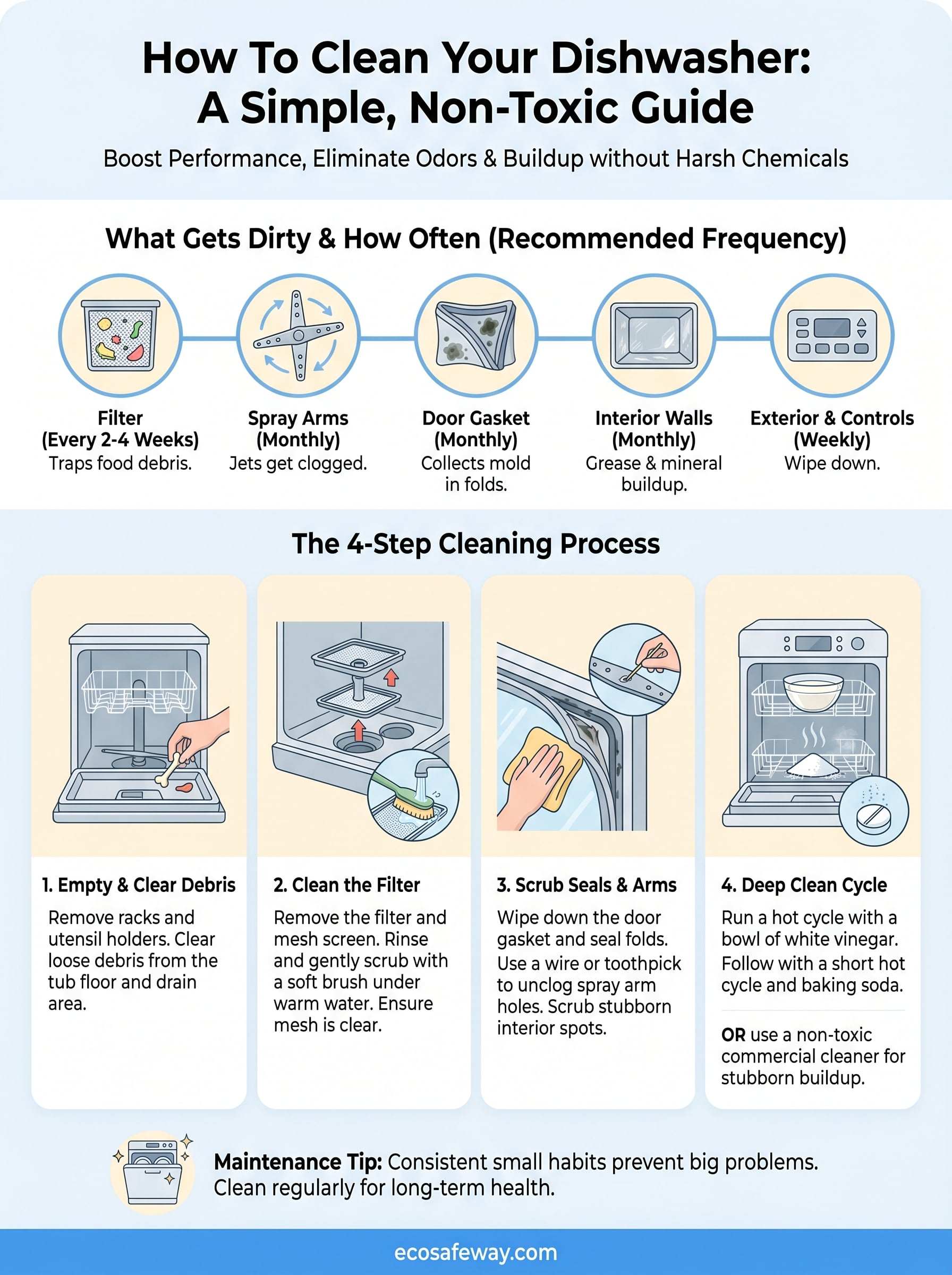
| Component | Recommended Cleaning Frequency |
|---|---|
| Filter | Every 2 to 4 weeks |
| Spray arms | Monthly |
| Door gasket and seal | Monthly |
| Interior deep clean | Monthly |
| Exterior and controls | Weekly wipe-down |
What you'll need before you start
Gathering your supplies ahead of time makes the entire cleaning process faster and less frustrating. You don't need a cabinet full of specialty products. A few targeted items cover every part of the job:
- Soft-bristle brush or old toothbrush
- Microfiber cloths
- Warm water and dish soap for filter rinsing
- White vinegar for hard water deposits and odor control
- Baking soda for deodorizing and light scrubbing
- A non-toxic dishwasher cleaner for deep cleaning cycles
For stubborn grease and mineral buildup, a dedicated dishwasher cleaner formulated without harsh acids or phosphates does the heavy lifting without risking damage to your machine's seals, plastic components, or stainless steel interior.
Step 1. Empty the dishwasher and clear loose debris
The first step in learning how to clean a dishwasher the right way is starting with a completely empty machine. This sounds obvious, but it matters: leaving even a single rack in place restricts your access to the bottom of the tub, the drain area, and the filter housing. Clearing everything out first means you won't need to reach around obstacles when scrubbing the interior or pulling out the filter in the steps ahead.
Take out the racks and utensil holders
Pull out both the upper and lower racks fully and set them aside on a towel or in the sink. Inspect each rack for food buildup, grease deposits, or rust spots along the tines while you have them removed. This is a convenient time to wipe them down with a damp cloth or give them a quick rinse if they show visible residue. Remove the utensil basket as well and rinse it separately so loose debris doesn't fall back into the tub while you're working.
Check the tub floor and drain area
Once the racks are out, look carefully at the bottom of the tub. Broken glass, bone fragments, jar labels, and clumped food debris are common finds that block drainage and can damage the pump over time if left in place. Use a paper towel or damp cloth to pick up anything you spot before moving forward.
Never feel around the drain area blindly with bare hands. Small broken pieces can cut you without warning.
Pay close attention to the zone directly around the filter cover and drain opening. This area collects pooled water and sludge between cycles. Clearing visible debris here now makes filter removal in the next step noticeably easier and keeps loose particles from spreading across the tub floor while you work.
Step 2. Remove and clean the dishwasher filter
The filter is the most neglected part of any dishwasher, and cleaning it is the single biggest factor in eliminating odors and restoring wash performance. Most modern dishwashers use a manual filter that requires you to remove and rinse it by hand. Unlike older self-cleaning models with a grinder mechanism, manual filters trap food particles silently and rely entirely on you to clear them out on a regular basis.
How to locate and remove the filter
Your filter sits at the bottom center of the dishwasher tub, typically beneath the lower spray arm. Most filters consist of two parts: a cylindrical upper filter and a flat mesh screen underneath it. To remove the upper filter, grip it, twist it counterclockwise about a quarter turn, and lift it straight out. Then slide out the flat lower mesh screen by pulling it toward you.
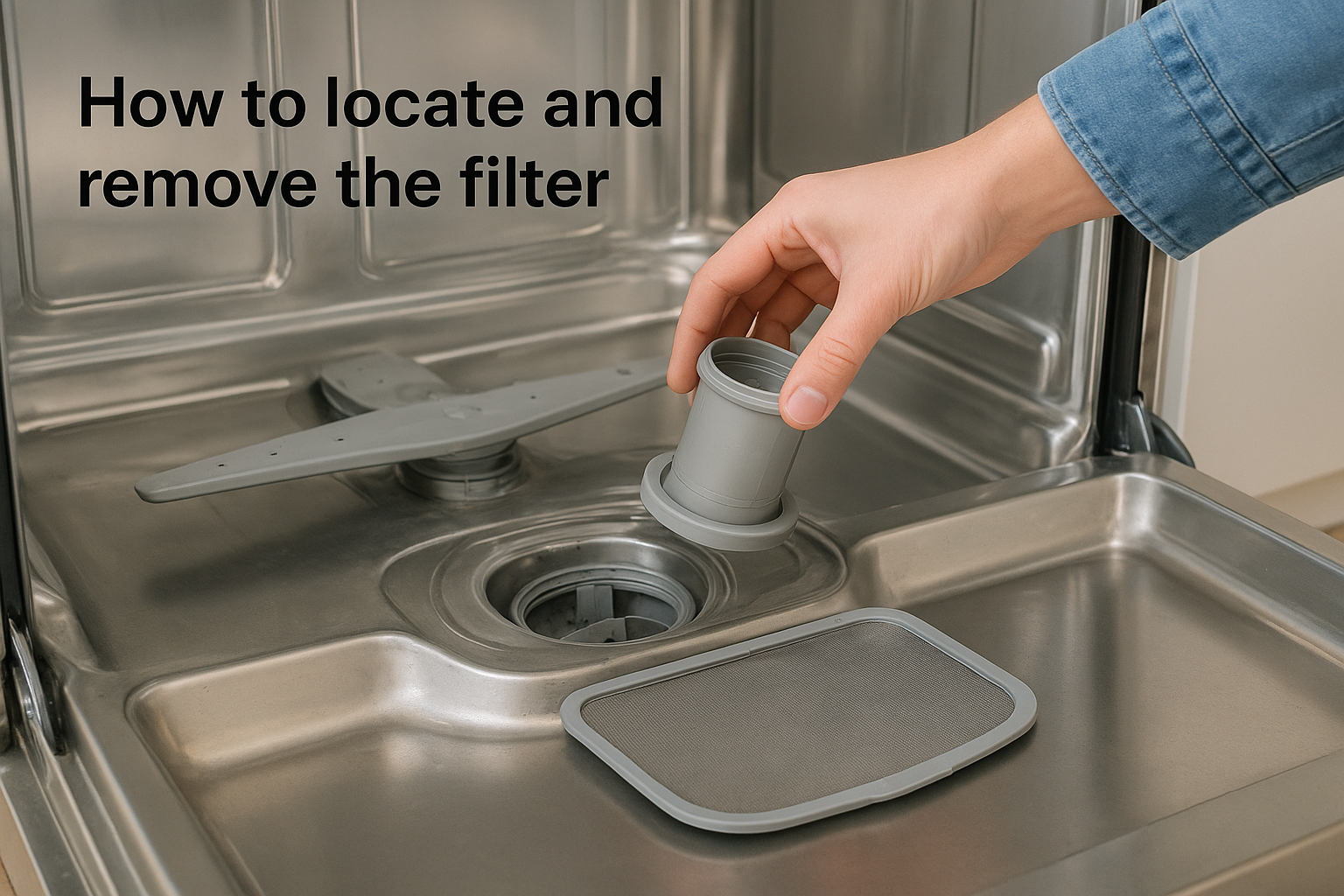
Handle the filter carefully over the sink - bits of trapped debris will fall loose the moment you lift it free.
Check your owner's manual if the filter doesn't turn easily, since some brands use a slightly different release mechanism. Forcing it risks cracking the housing.
How to rinse and scrub the filter
Bring both filter pieces to the sink and run them under warm water to knock off the bulk of the debris. For a thorough clean on how to clean a dishwasher filter properly, follow these steps:
- Soak the filter in warm soapy water for 5 to 10 minutes if grease or slime is visible
- Use a soft-bristle brush or old toothbrush to scrub the mesh screen gently
- Rinse both pieces under running water until no residue remains
- Hold the mesh screen up to the light to confirm all holes are fully clear before reinstalling
Avoid metal brushes or abrasive pads, which can tear the fine mesh and reduce the filter's ability to catch particles.
Step 3. Scrub seals, spray arms, and problem spots
With the filter back in place, shift your attention to the door gasket, spray arms, and any visibly grimy areas on the interior walls. These spots accumulate a different kind of buildup than the filter does: mold along the rubber folds, mineral deposits in the spray arm jets, and greasy film on the tub walls. Targeting each one systematically is key to completing how to clean a dishwasher all the way through.
Clean the door gasket and seal
The door gasket runs around the entire perimeter of the door opening, and its folded rubber edges trap moisture, mold, and food debris that a regular wash cycle never reaches. Dip a soft cloth or old toothbrush in warm soapy water and work your way around the full length of the seal, pressing into the folds rather than just wiping the surface.
Mold in the door gasket is one of the most common sources of persistent odor that doesn't go away after a hot wash cycle.
If you spot black or dark discoloration in the folds, make a paste of baking soda and water, apply it directly to the affected area, let it sit for five minutes, then scrub and rinse clean. Dry the gasket with a cloth after cleaning to slow mold regrowth.
Clear clogged spray arm jets
The spray arms distribute water across your dishes, so blocked jets directly reduce how well your machine cleans. Remove each spray arm by unscrewing the center cap or pressing the release tab (depending on your model), then hold it under running water. Use a toothpick or thin wire to push through any holes that appear clogged.
Rinse both arms thoroughly and spin them by hand before reattaching to confirm they rotate freely with no resistance.
Step 4. Deep clean for odors, grease, and hard water
Once you've scrubbed the physical components, the final step in how to clean a dishwasher completely is running a deep clean cycle to tackle odors, grease film, and mineral deposits that coat the interior walls, heating element, and drain components. You can't reach these areas by hand, so you need a cleaning agent that works while the machine runs.
Run a hot cycle with white vinegar
Place a dishwasher-safe bowl filled with one cup of white vinegar on the top rack of your empty machine. Run a full hot water cycle. The vinegar circulates through the entire tub, loosening hard water deposits and cutting through grease residue on interior surfaces the spray arms normally coat during a regular wash.
White vinegar is effective for light to moderate hard water buildup, but it won't fully address heavy mineral scale or persistent grease in older machines.
For best results, select the hottest wash setting available on your machine rather than an eco or light cycle. Higher water temperatures improve the vinegar's ability to dissolve mineral deposits and sanitize the interior.
Follow up with baking soda
After the vinegar cycle finishes, sprinkle one cup of baking soda across the bottom of the tub and run a short hot cycle. Baking soda neutralizes any remaining acidic residue, absorbs lingering odors, and provides a light abrasive action that brightens the interior.
Use a commercial cleaner for stubborn buildup
When vinegar and baking soda aren't enough to handle heavy grease or hard water scale, a dedicated non-toxic dishwasher cleaner is the more effective option. Look for a formula that is phosphate-free, biodegradable, and rated HMIS 0-0-0, so it removes buildup without corroding seals, discoloring stainless steel, or leaving chemical residue on surfaces that contact your dishes.
Keep your dishwasher clean going forward
The best way to stay ahead of odors and buildup is to clean consistently rather than reactively. Wipe the door seal weekly, clear the filter every two to four weeks, and run a deep clean cycle monthly. Small, consistent habits prevent grease and mineral scale from reaching the point where they demand serious effort to remove.
Knowing how to clean a dishwasher is only useful if you apply it on a regular schedule. A non-toxic, enzyme-based cleaner makes monthly maintenance faster and more thorough than DIY methods alone, without introducing harsh chemicals that degrade rubber seals or leave residue on your dishes.
For a single product that handles grease, odor, and buildup in one step, try Eco Safeway's enzyme-powered dishwasher and washing machine cleaner tablets. They are biodegradable, phosphate-free, and HMIS 0-0-0 rated, so your machine stays clean without exposing your family or your equipment to anything harmful.


