





The best eco friendly rust remover depends on the job. For marine, industrial or automotive metal that you can't soak, a biodegradable gel like Eco Safeway's Rust Remover Gel is the practical pick. For tools and small parts, a chelating soak is the gentlest option. For light rust on a budget, citric acid or white vinegar works. If you only need to stop rust from spreading on a large surface, a tannic acid converter fits.
Most rust removers rely on strong acids or solvents. You get harsh fumes, gloves, goggles and a disposal problem. That is a poor trade when you are working near water, on a boat, in a garage with kids around, or on cookware. Greener options exist, but they differ a lot in speed, cost and what metal they suit.
This list covers five options in order of how well they handle real work, from a ready-made gel to pantry fixes. Each one gets the same three checks: how it works, who it suits, and its limits and cost. Whatever you choose, remove grease and dirt first. Rust removers act on rust, not oil.
1. Eco Safeway Rust Remover Gel
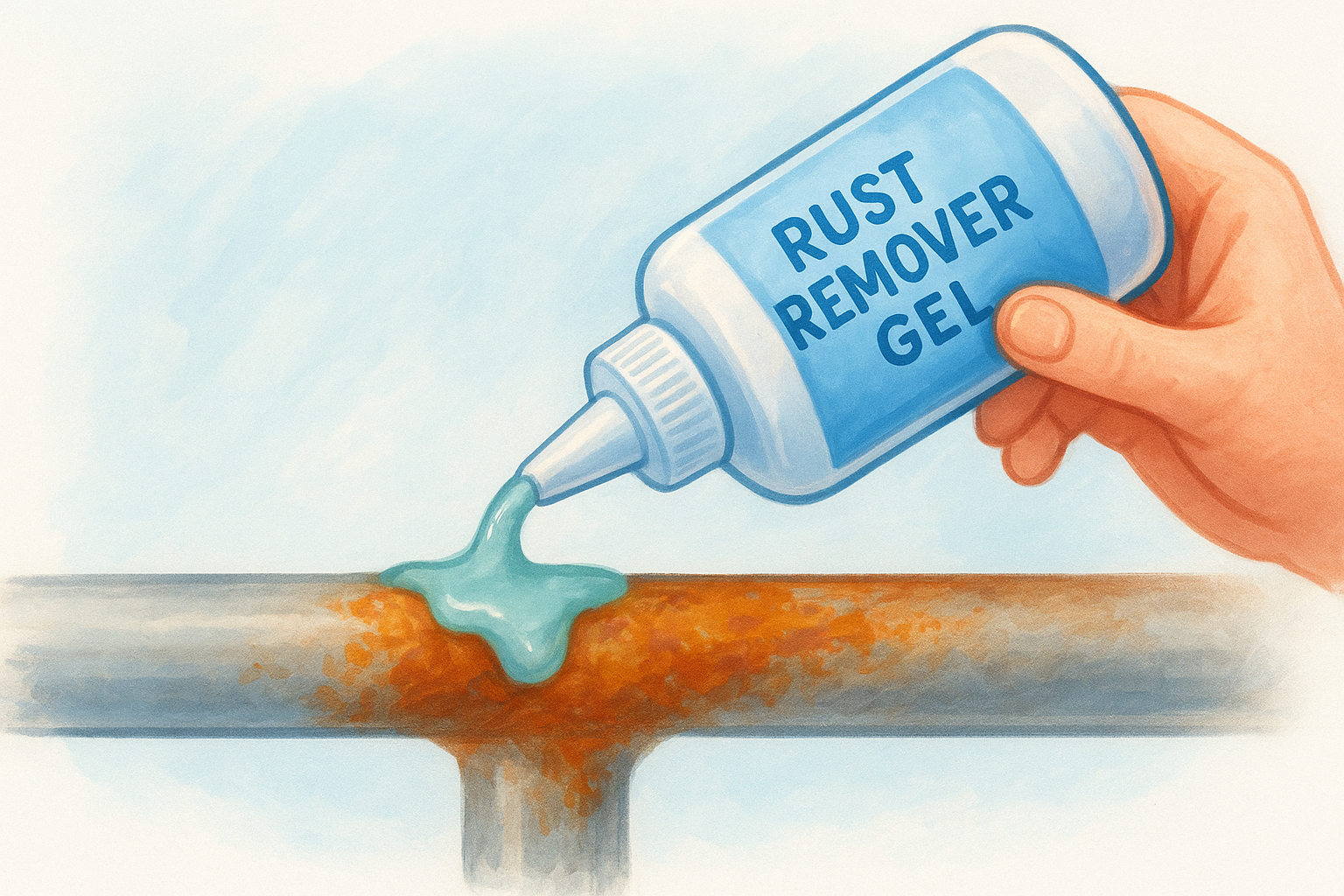
Eco Safeway's Rust Remover Gel is a biodegradable, non-toxic gel for rust on marine equipment, industrial machinery and automotive parts. It is the only gel option here, made for marine equipment, industrial machinery and metal surfaces you can't put in a tub.
How it works
You apply the gel to the rusted area and let it work. Because it is a gel instead of a thin liquid, it stays where you put it on railings, hardware, fittings and machinery housings. Follow the directions and the safety sheet on the product page for dwell time and rinsing.
A gel turns rust removal from a soaking job into a spot-treatment job.
Who it suits
It suits yacht and boat owners, maintenance crews and shop owners working on steel and aluminum that can't be removed and submerged. Facilities that need volume can look at the Industrial Rust Remover, which also removes calcium and limescale. It comes in sizes from 1 gallon up to a 275 gallon tote and is safe on most metals and masonry.
Limits and cost
The gel comes in 16 oz and 1 gallon sizes and costs $15.99 to $44.99. The Industrial Rust Remover runs $59.99 to $259.99 depending on size. It ships by standard shipping, so it needs no hazmat handling. For a small loose part, a reusable soak can cost less per job. Test any remover on a hidden spot first.
2. Chelating soak (Evapo-Rust type)
A chelating rust soak is a water-based liquid that bonds to iron oxide and pulls it off the metal without acids. It is the best choice for tools, bolts, hinges and engine parts that fit in a container.
How it works
Chelating agents grab the rust and leave sound steel alone. You submerge the part, wait, then rinse and dry. Products in this category, such as Evapo-Rust, are marketed as free of acids, solvents and strong fumes, and as safe around rubber, plastic and PVC.
If a part fits in a tub, a chelating soak is the gentlest way to remove rust.
Who it suits
It suits hobbyists, machinists and restorers who care about the metal underneath. It is a good pick indoors because it has little odor. You can often reuse the liquid until it stops working.
Limits and cost
It needs full immersion and patience. Count on hours or overnight for heavy rust, and a large tub for big parts. It costs more per gallon than kitchen options, so check current prices. Stripped steel flash-rusts quickly, so dry it right away and coat it with oil or paint.
3. Citric acid
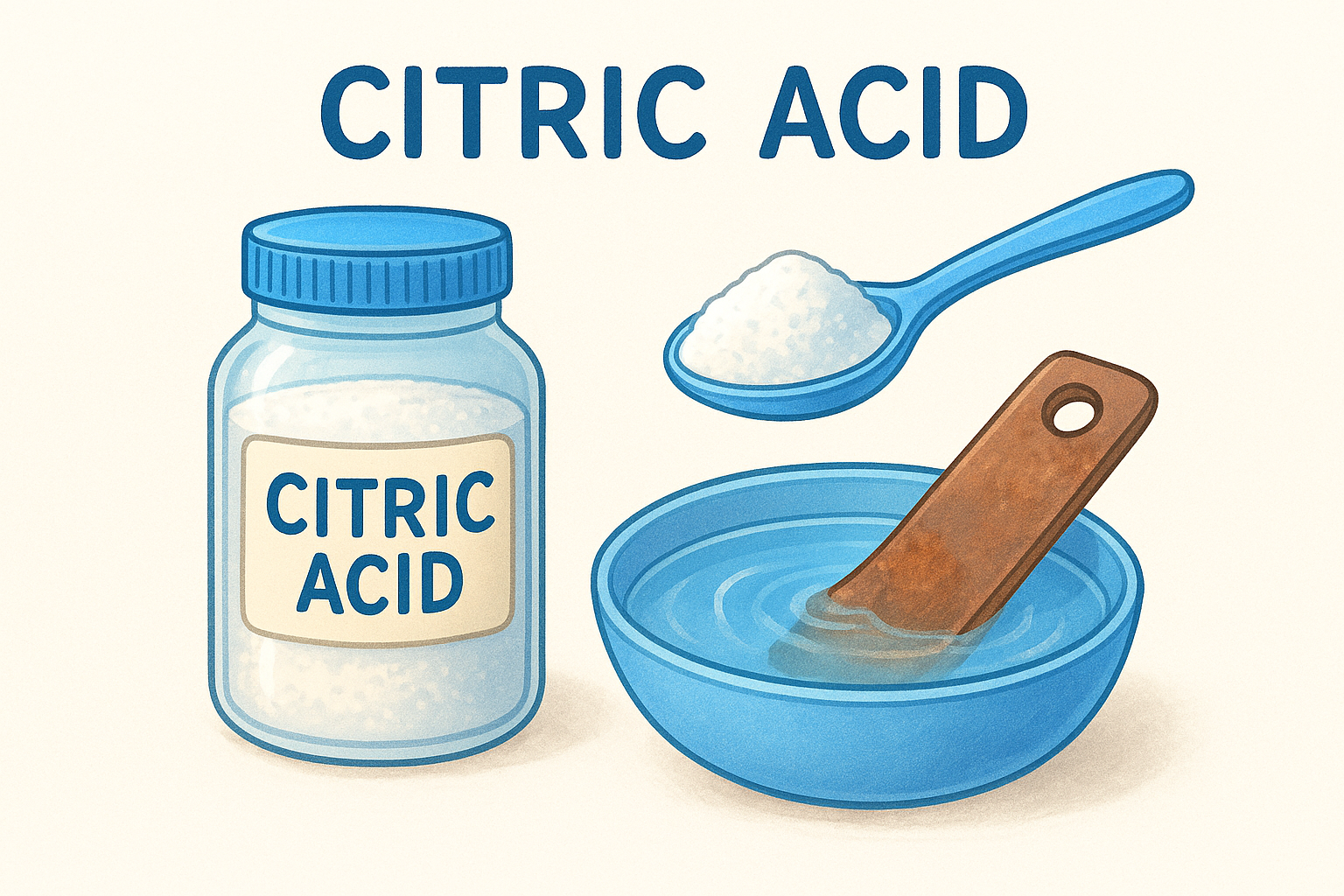
Citric acid is a food-grade powder that you dissolve in warm water to make a mild rust-dissolving soak. It is the best low-cost DIY answer when you want something natural and more reliable than vinegar.
How it works
Citric acid is a mild organic acid that reacts with iron oxide and dissolves it over several hours. Mix the powder in warm water at the ratio on the package, submerge the part and check it every few hours. Rinse well afterward.
Citric acid gives you chemistry close to commercial removers for the price of a pantry staple.
Who it suits
It works for tools, hardware and cookware where you want a food-grade ingredient. It is inexpensive and biodegradable, and small batches can be handled with simple precautions. Wear gloves anyway, and keep it out of your eyes.
Limits and cost
It is still an acid. It can dull or etch aluminum and zinc-plated or galvanized surfaces, so test first or avoid those metals. Neutralize with a baking soda rinse, dry the part completely and oil it. Cast iron cookware needs re-seasoning afterward.
4. White vinegar and baking soda
White vinegar does dissolve rust, but slowly. It is the best option for small items with light surface rust when you have nothing else on hand.
How it works
The acetic acid in vinegar (typically about 5 percent) reacts with rust over hours rather than minutes. Soak the item, or wrap a vinegar-soaked rag around it, then scrub with a brush or steel wool. Follow with a baking soda paste to neutralize the acid and stop further attack on the metal.
Vinegar removes light rust, but it is slow and weakens fast against heavy rust.
Who it suits
It suits light rust on bolts, garden tools and kitchen items, and anyone who wants the simplest, cheapest route. Because both ingredients are food-grade, it is a common answer for cookware, though cast iron needs re-seasoning afterward.
Limits and cost
Vinegar costs almost nothing, but heavy rust may need a day or more and repeated soaks. It can also etch aluminum and leaves bare metal that flash-rusts quickly. Rinse, dry thoroughly and coat the part. Don't use it on large or fixed assemblies.
5. Tannic acid rust converter
A rust converter doesn't remove rust. It chemically changes it into a stable coating, which makes it the right pick for large, rough surfaces where full removal isn't practical.
How it works
Water-based converters typically use tannic acid. It turns iron oxide into a dark, stable compound that you then seal with a primer or paint. Wire-brush off loose, flaky rust first, apply the converter, let it cure, then topcoat.
Convert when removal is impractical, and remove when the part needs to be bare metal.
Who it suits
It suits fences, trailers, frames and structural steel where you plan to paint anyway. Many are low-VOC and water-based, which makes them a lower-impact choice than solvent-heavy primers.
Limits and cost
It is not for precision parts, threads or surfaces that must go back to bare metal. A converter without a good topcoat will not hold up outdoors. Check the label for VOC content and recoat timing, because "eco-friendly" claims vary between products.
Which one should you pick?
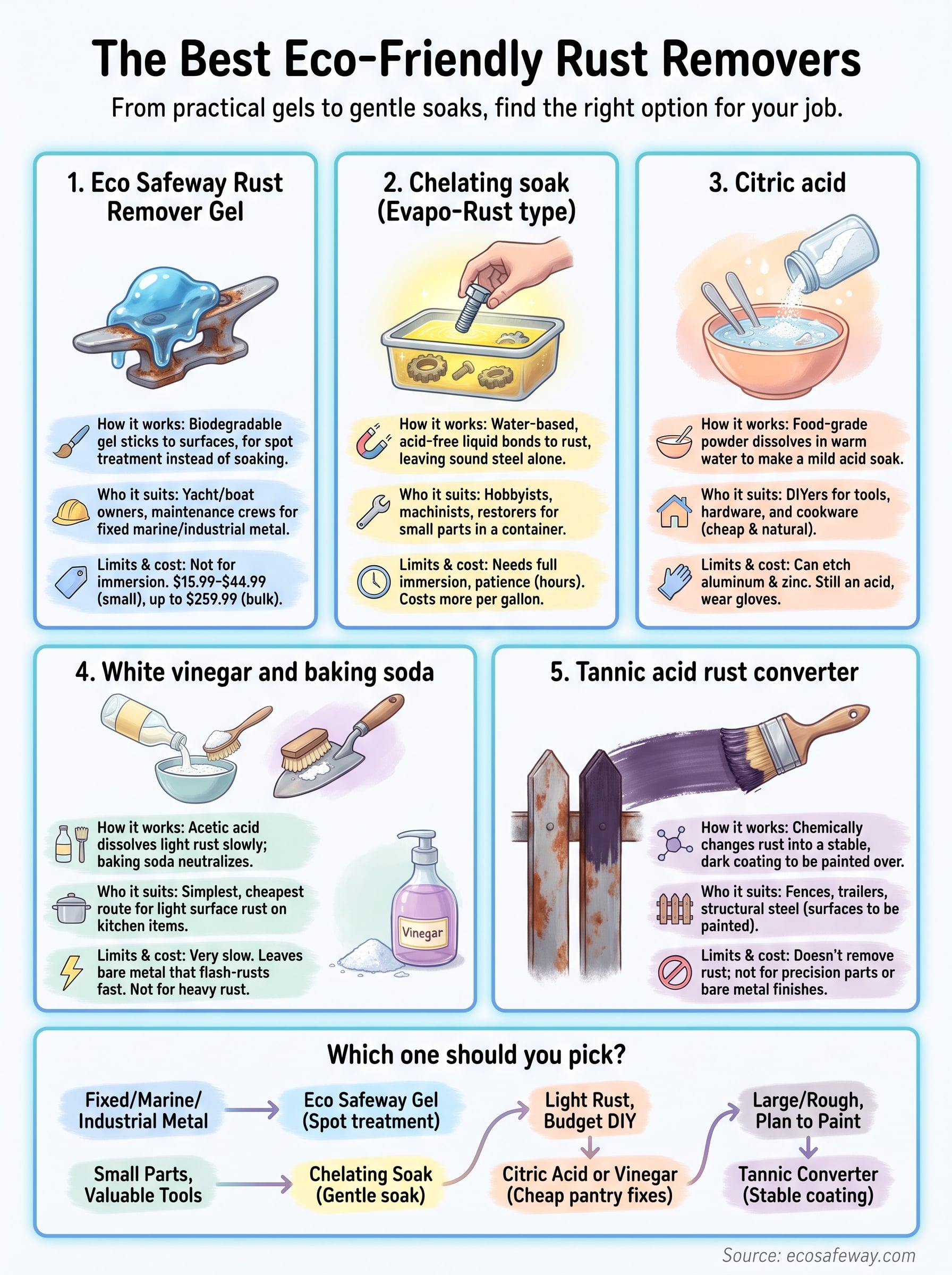
Pick a gel for fixed marine or industrial metal, a chelating soak for valuable small parts, citric acid or vinegar for cheap light-duty work, and a converter when you will paint over the rust. Start with the gentlest option that suits the metal, then step up only if it fails.
If you need professional results on equipment that you can't remove, or in bulk, start with Eco Safeway's All-Purpose Cleaner & Degreaser Spray to strip off oil and grime, then follow with the Rust Remover Gel.


