





That sour, sulfur-like smell creeping out of a floor drain or sink trap isn't just unpleasant, it's usually a sign of organic buildup rotting somewhere in your plumbing. If you've searched for a drain odor eliminator, you're probably past the point of lighting a candle and hoping it goes away. You want something that actually breaks down the gunk causing the smell, not just masks it for an hour. That means understanding what's causing the odor before you reach for a bottle, because dry P-traps, biofilm, and grease buildup each call for a different fix.
The good news is you don't need harsh chemicals or a plumber for most smelly drain problems. A mix of household staples and targeted enzyme products can clear out the bacteria and organic waste feeding the odor, often within a day or two. The trick is matching the method to the type of drain and how bad the buildup has gotten.
In this guide, you'll find step-by-step cleaning methods, the difference between quick DIY fixes and commercial-grade deodorizers, and how to keep drains from turning smelly again once you've cleared them out.
What causes a smelly drain in the first place
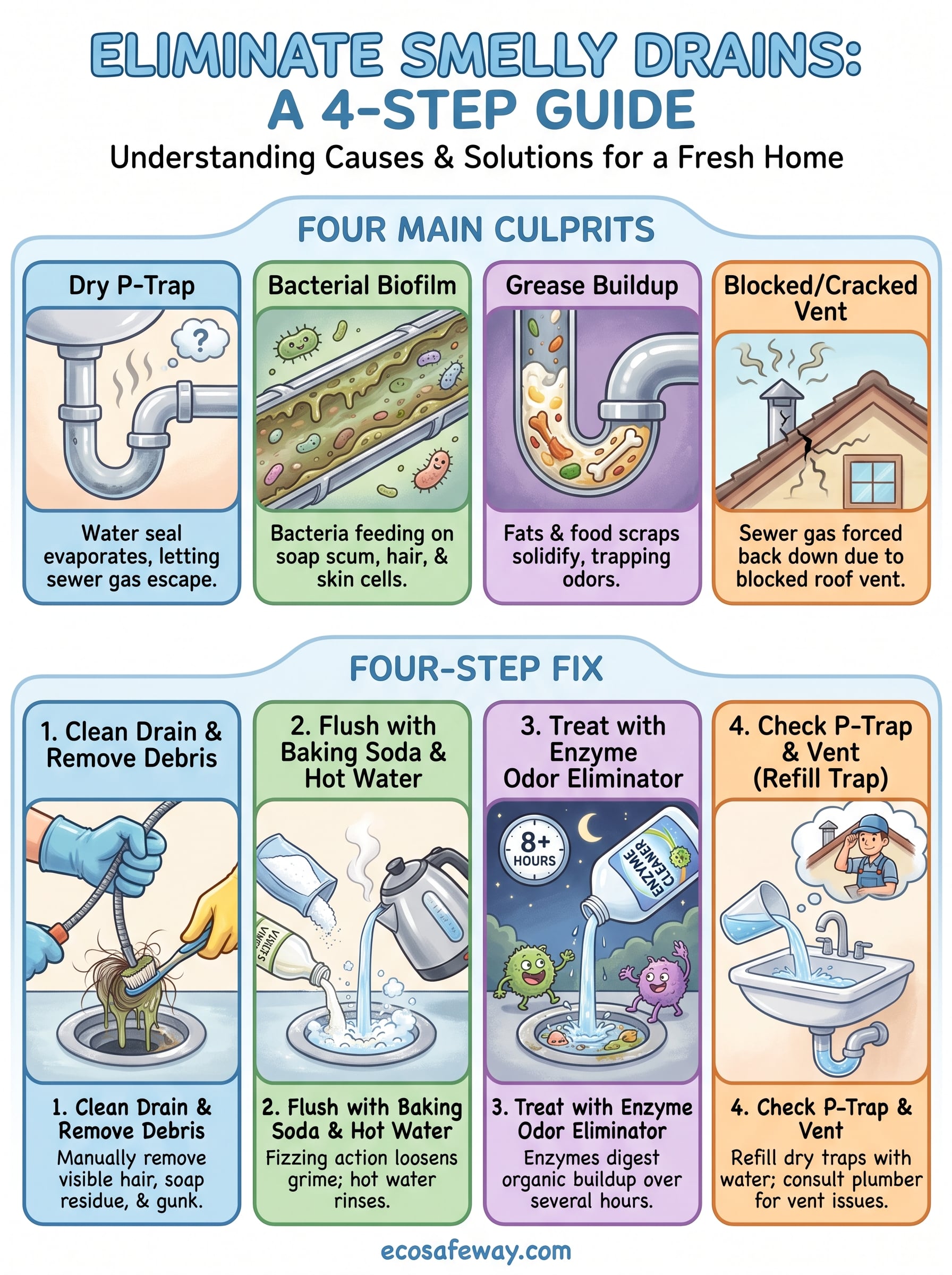
Most drain odors trace back to one of four culprits: dried-out P-traps, bacterial biofilm, grease buildup, or a cracked vent letting sewer gas escape into your home. Figuring out which one you're dealing with saves you from wasting a bottle of enzyme cleaner on a problem it can't fix. A dry P-trap, for instance, happens when a drain that's rarely used, think a guest bathroom or basement floor drain, loses its water seal through evaporation. Once that water barrier disappears, sewer gas has a direct path into your living space.
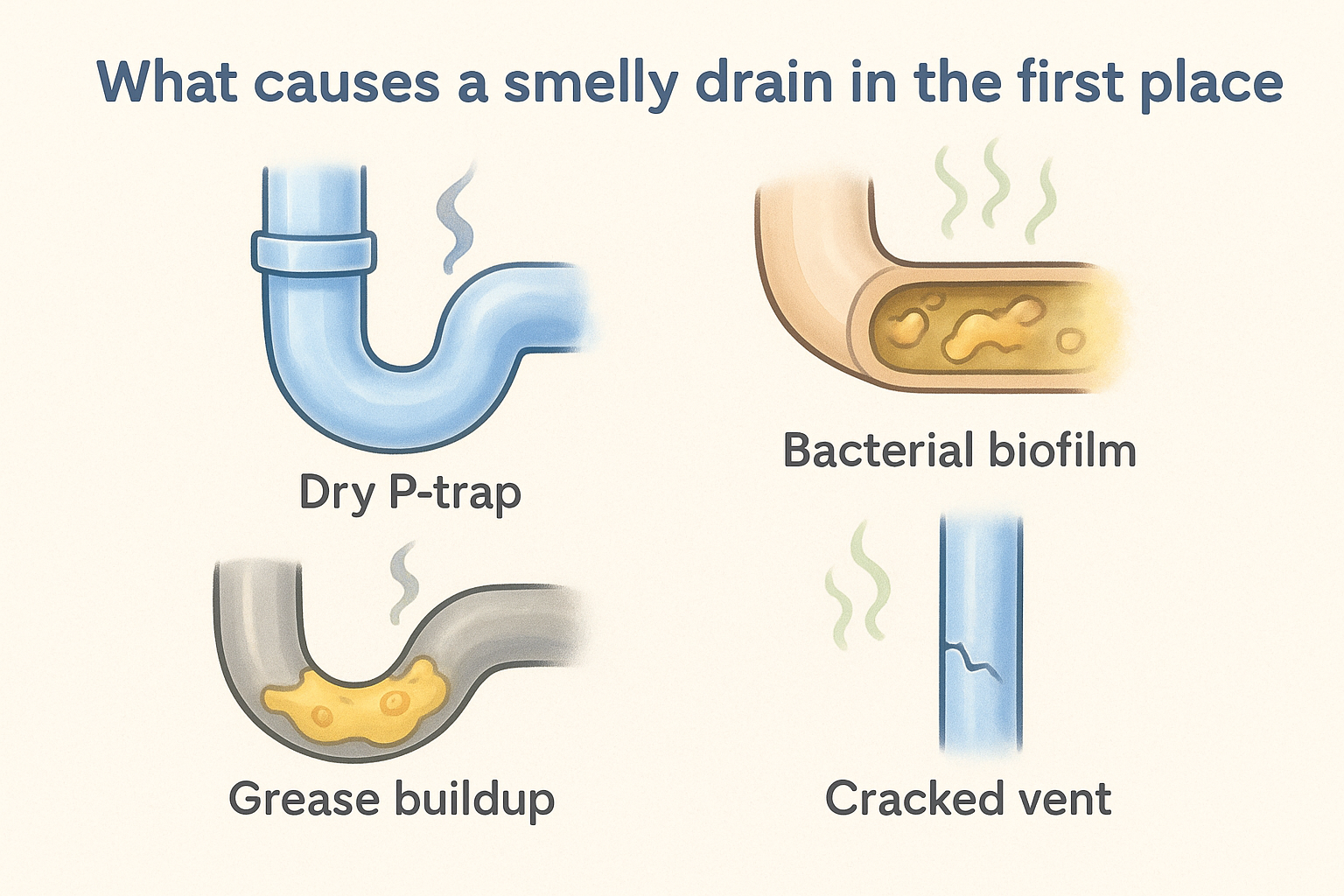
Bacteria feeding on soap scum, hair, and skin cells is the more common cause, especially in bathroom sinks and showers. This buildup, known as biofilm, coats the inside of your pipes and produces the classic rotten-egg smell as it breaks down organic matter. Kitchen drains face a different problem: grease and food particles that solidify along pipe walls, trapping odors and slowing water flow at the same time.
A smelly drain is almost never about the water itself, it's about what's decomposing along the walls of the pipe.
Here's a quick way to match the smell to the likely cause:
| Smell | Likely cause | Common location |
|---|---|---|
| Rotten eggs / sulfur | Bacterial biofilm or sewer gas | Bathroom sinks, showers, floor drains |
| Musty, damp odor | Stagnant water in trap or slow drain | Rarely used sinks, basement drains |
| Sewage smell | Dry P-trap or vent pipe issue | Floor drains, unused fixtures |
| Rancid, greasy odor | Grease and food buildup | Kitchen sink, garbage disposal |
Occasionally, the smell isn't coming from your plumbing at all. A cracked or blocked vent pipe on the roof can force sewer gas back down through your fixtures instead of venting it outside, which is why a persistent sewage smell from a drain that won't respond to cleaning sometimes points to a bigger plumbing issue than a dirty trap. Once you've got a read on the likely cause, you can move to the actual cleaning steps below, starting with the simplest fix first.
Step 1. Clean the drain opening and remove debris
Before any cleaner works, you need to clear the physical gunk sitting right at the drain opening. Hair, soap residue, and food scraps trap odors close to the surface, and no amount of enzyme treatment fixes a smell if a clump of hair is still rotting an inch below the strainer. Grab a flashlight and take a real look at what's collecting there. You'll often find the source of the smell without even needing to go further into the pipe.
Start with these tools, most of which are already in your house:
- A pair of rubber gloves
- A drain snake or bent wire hanger
- An old toothbrush
- A flashlight
- Paper towels or a small trash bag for debris
Unscrew or pop off the drain cover, then use the wire hanger or drain snake to pull out any visible clumps. Twist it as you pull so it catches hair and buildup rather than pushing it deeper. Scrub the underside of the drain cover and the top few inches of the pipe with the toothbrush, since biofilm tends to build up right where light and air reach.
If you can see the buildup, you can remove most of the odor before you ever open a bottle of cleaner.
Wipe down the drain opening once you're done, and don't rinse the debris back down the pipe. This first pass won't clear deeper clogs or bacterial films lower in the trap, where a drain opener that's safe for all plumbing does the heavy lifting, but it removes the surface-level source that's often responsible for the sharpest, most immediate smell.
Step 2. Flush the drain with hot water and baking soda
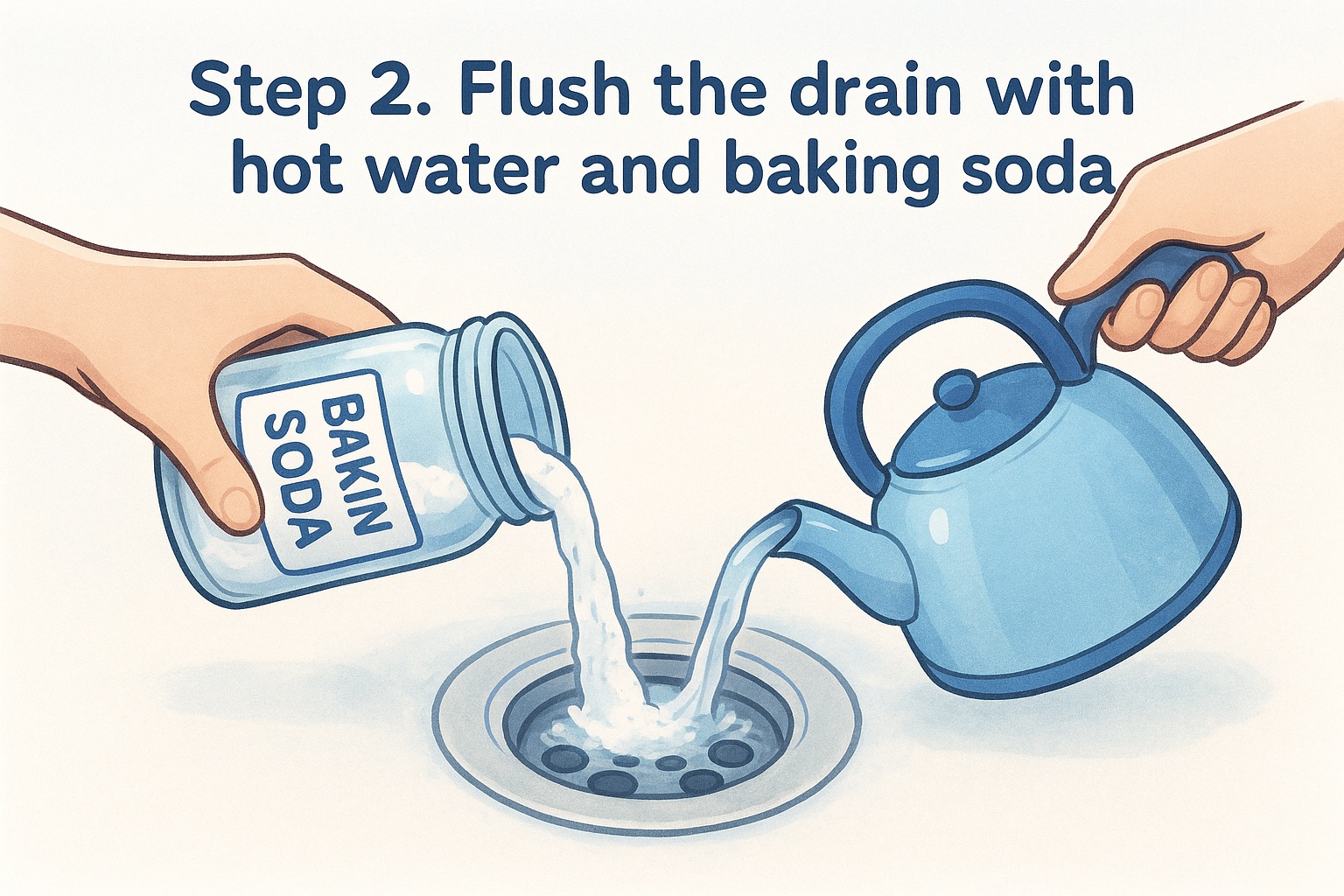
Once you've cleared the visible debris, it's time to loosen what's stuck further down the pipe. A baking soda and hot water flush breaks down grease film and neutralizes acidic odors without the harsh fumes of bleach or store-bought drain chemicals. Boiling water alone softens grease, but pairing it with baking soda gives you a mild alkaline reaction that lifts odor-causing residue off the pipe walls.
Here's the sequence to follow, in order:
1. Pour 1/2 cup baking soda directly into the drain opening.
2. Let it sit dry for 5 minutes so it coats the pipe walls.
3. Follow with 1 cup white vinegar, then cover the drain if you have a stopper.
4. Wait 10-15 minutes while the mixture fizzes and works loose debris.
5. Flush with 2-3 cups of boiling water to rinse everything through.
Don't skip the waiting period. The fizzing reaction between baking soda and vinegar is what physically agitates the grime coating the pipe, not just the heat of the water. Skipping straight to the boiling water rinse wastes most of the cleaning benefit.
Baking soda and vinegar won't dissolve a solid clog, but they're excellent at breaking up the thin film of grease and bacteria causing most drain smells.
Repeat this flush once a week for kitchen sinks and garbage disposals, since grease rebuilds fast in those drains. Bathroom sinks and showers usually only need it every two to three weeks unless you're dealing with heavy hair shedding or hard water buildup. If the smell returns within a day or two, biofilm has likely regrown past the point this method can reach, which is where an enzyme treatment comes in.
Step 3. Treat the drain with an enzyme-based odor eliminator
Enzyme-based odor eliminator products work where baking soda and vinegar can't reach. Instead of a chemical reaction that fizzes out in minutes, enzyme cultures keep feeding on organic waste for hours, digesting the biofilm, hair, and grease residue lining the pipe walls. That's why enzyme treatments outperform quick flushes for drains with a recurring smell rather than a one-time mess.
Apply it correctly and give it time to work:
- Pour the enzyme solution directly into the dry drain opening (don't run water first)
- Use the full dose listed on the product, since diluted enzymes work far slower
- Let it sit undisturbed for 6-8 hours, ideally overnight
- Avoid running hot water or bleach through the drain during this window, since heat and chlorine kill the bacterial cultures
- Flush with warm water the next morning
Enzyme cleaners don't mask odors, they eat the organic matter causing them, which is why they need hours, not minutes, to finish the job.
Grocery store enzyme cleaners are fine for occasional maintenance, but heavier buildup in kitchen drains or commercial settings usually needs a stronger concentration. Eco Safeway's all-purpose deodorizer and cleaner is formulated for exactly this kind of recurring organic buildup, without the fumes or corrosive ingredients found in typical drain chemicals. Treating the drain weekly for the first month resets the bacterial balance in the pipe, after which a monthly dose of a drain maintenance product usually keeps odors from coming back.
Step 4. Check the P-trap and vent for sewer gas odors
If the smell keeps coming back after cleaning and flushing, the problem might not be inside the drain at all. A dry P-trap is the most common cause behind rarely used sinks, floor drains, or laundry hookups, since the curved pipe under the fixture holds a small water seal that blocks sewer gas from rising back up. When that water evaporates, usually after a few weeks of no use, you get a straight, unobstructed path for gas to enter the room.
Refill the trap first
Check under the fixture for a P-shaped or S-shaped pipe. Pour a cup or two of water directly down the drain to refill the seal, then wait a few minutes and smell again. This single fix solves most sewer gas smell in house complaints tied to guest bathrooms, basement drains, and seasonal fixtures.
A dry trap is the easiest odor problem to fix and the easiest one to overlook.
Rule out a vent issue
If refilling the trap doesn't help, or the smell returns within a day even with regular use, the vent stack on your roof may be blocked by debris, ice, or a bird's nest, or cracked from age. A blocked vent stops sewer gas from escaping outside and pushes it back through your fixtures instead. This isn't a DIY fix. Call a licensed plumber to inspect the vent and confirm whether it's clogged or damaged before assuming the smell is coming from the drain itself.
Keeping your drains odor-free for good
Most smelly drains come down to the same four culprits: dry traps, biofilm, grease, or a vent problem, and working through the steps above in order usually clears the smell within a day or two. Consistency matters more than intensity here. A quick weekly flush and an occasional enzyme treatment will keep bacteria from rebuilding to the point where you smell it again, which beats scrambling for a fix every few months when the odor comes roaring back.
If you've gone through every step and the smell persists, or you'd rather skip the DIY routine altogether, stronger enzyme formulas designed for recurring buildup make the maintenance schedule a lot shorter. Eco Safeway's enzyme cleaner tablets for drains, dishwashers, and washing machines tackle grease, odor, and organic buildup without harsh chemicals, giving you a simple monthly habit instead of a recurring cleanup project.


