





The best commercial coil cleaner is the one that matches your coil type, your location and your rinse options. Choose a heavy-duty condenser cleaner like Eco Safeway's for general rooftop and split-system work. Choose a high-foaming alkaline cleaner for heavily soiled outdoor coils, a no-rinse cleaner for indoor evaporators, and an NSF-registered cleaner near food. Save acid brighteners for oxidized or scaled fins. Coil cleaners do work, provided you pick the right type and give it time to dwell.
Dirty coils are one of the most common reasons a commercial system loses capacity. Dirt blocks airflow and insulates the fins, so the compressor runs longer and hotter. Yet a cleaner that suits a rooftop condenser can be the wrong choice for an evaporator above a prep line.
Eco Safeway supplies cleaning chemistry for commercial HVAC, so the first pick is ours, and we state the limits of every option. Each pick below covers how it works, where it fits and how to apply it.
1. Eco Safeway condenser coil cleaner
Eco Safeway's condenser coil cleaner is a heavy-duty liquid made for commercial HVAC condensers. It is the one to choose when you want a single product for routine outdoor coil work.
How it works
The formula is fast-acting and eco-friendly. It loosens the dirt, grease and film that clog the fin surface, so a rinse can carry them away. Restoring airflow is the whole point, because airflow is what protects energy efficiency and keeps small problems from becoming breakdowns.
A coil cleaner earns its price by restoring airflow, not by making fins look shiny.
Best for
It suits rooftop units, split-system condensers and refrigeration condensers on commercial sites.
- Property managers who service many units with one product
- Cleaning contractors who want a dependable routine product
- Outdoor coils that need rinsing
Read the product page and safety data sheet for dilution and coil-material guidance before you order.
How to use it
Treat this routine as the baseline for every cleaner in this list. Follow the label for dilution and dwell time.
- Switch off power at the disconnect.
- Brush or vacuum loose debris from the fin surface.
- Apply the cleaner evenly across the coil face.
- Wait the label's dwell time.
- Rinse with low-pressure water, spraying in line with the fins.
Keep the spray square to the fins, because high pressure and steep angles bend the fins and choke airflow.
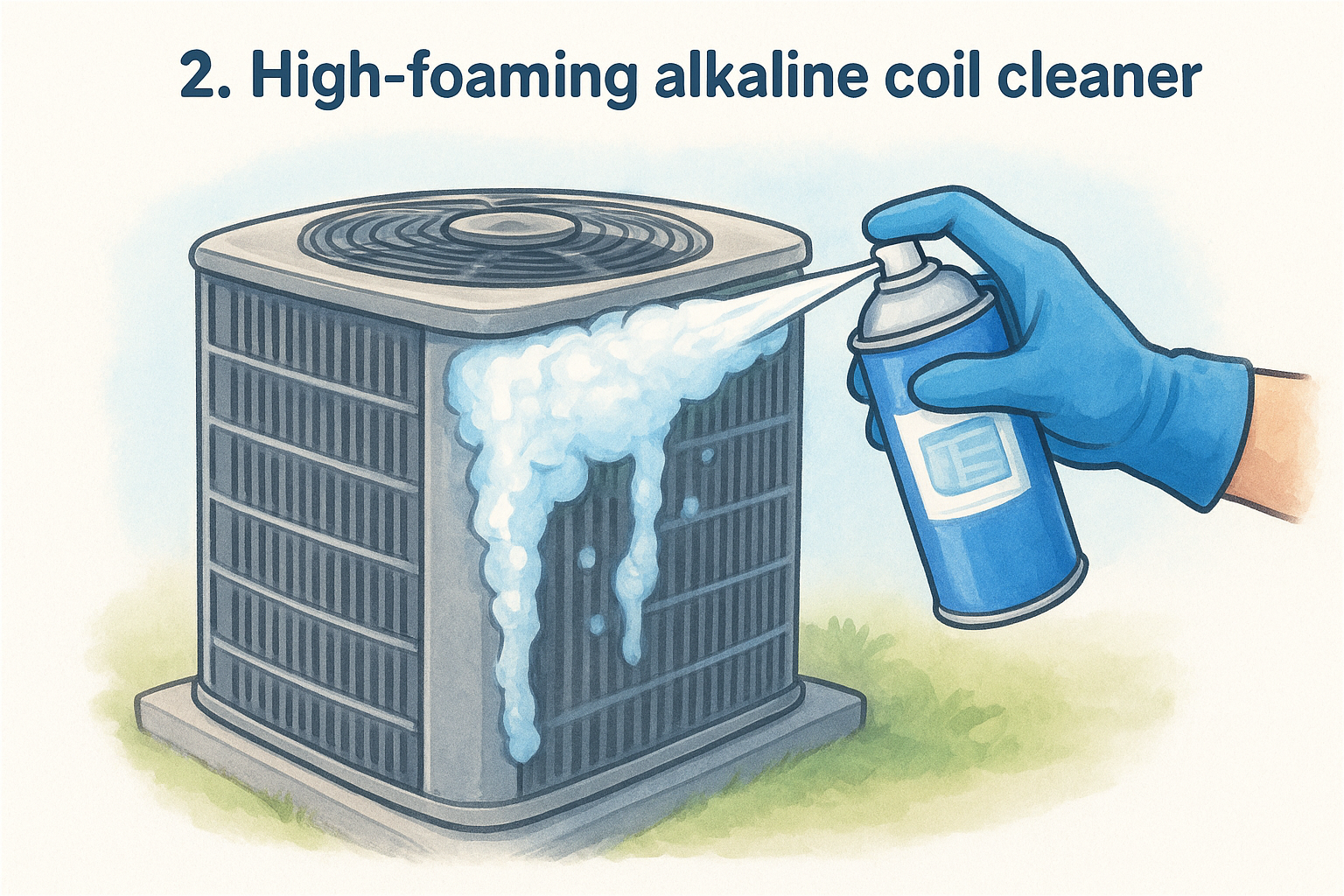
2. High-foaming alkaline coil cleaner
A high-foaming alkaline cleaner is the workhorse for filthy outdoor condensers. It is the right pick when a plain liquid does not reach deep enough.
How it works
The foam clings to vertical fins and stays in contact with the soil longer than a runny liquid would. Alkaline chemistry breaks down grease, cottonwood residue and road film. Because the foam expands into the coil depth, it reaches dirt a surface spray misses.
Foam buys contact time, and contact time is what loosens baked-on soil.
Best for
Use it where the coil is truly dirty.
- Condensers near kitchen exhausts or loading docks
- Coils clogged with cottonwood, leaves or dust
- Units skipped for a season or two
Pick a product labeled coil-safe for aluminum fins and copper tubes.
How to use it
Spray from the clean side if you can reach it, then let the foam work until it begins to collapse, or as the label directs. Rinse thoroughly, because leftover alkaline residue attracts new dirt. Cover nearby controls and wiring, and wear gloves and eye protection.
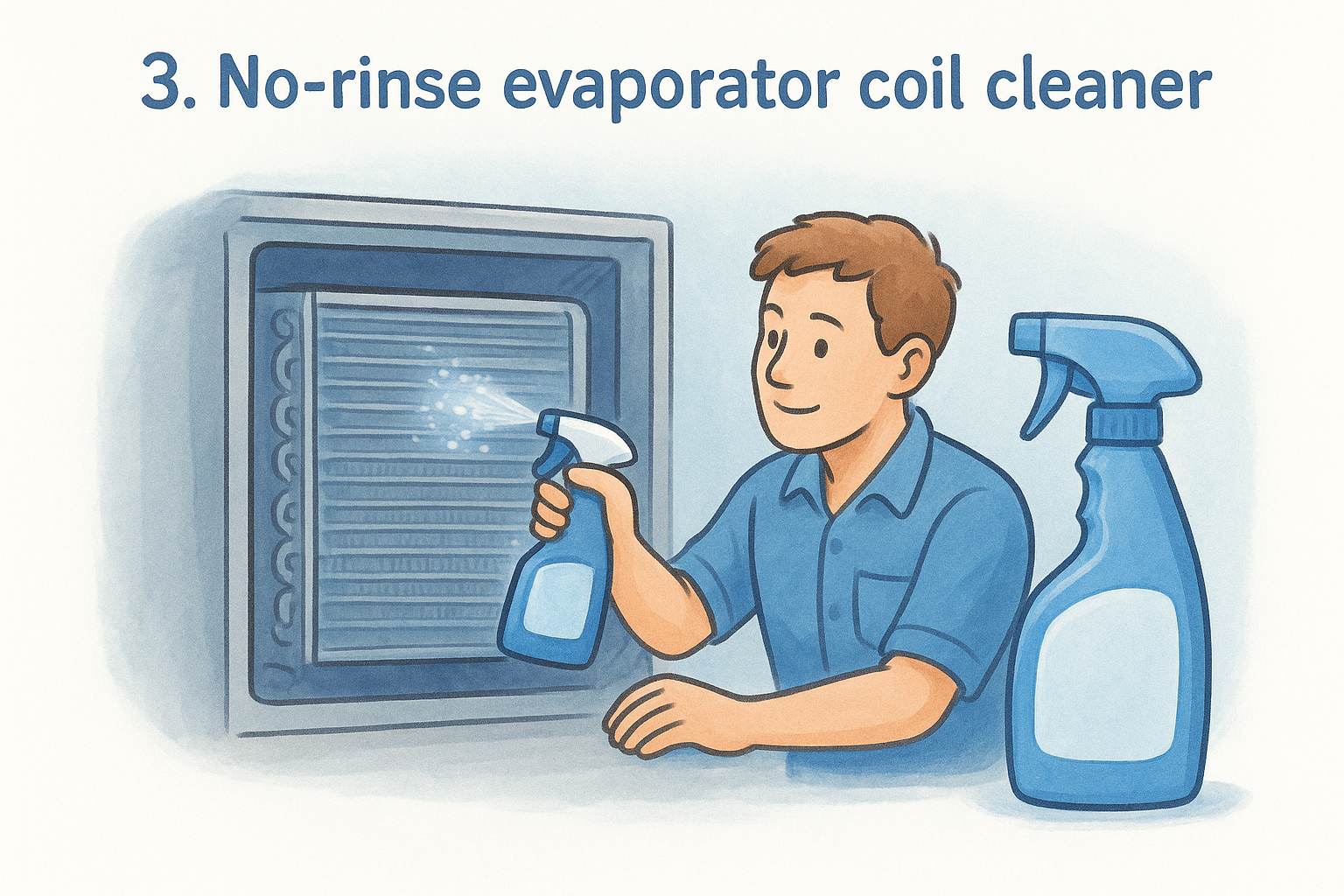
3. No-rinse evaporator coil cleaner
A no-rinse cleaner is the right pick when you cannot hose down the coil. Indoor evaporators sit behind panels in air handlers, so rinsing is impractical.
How it works
These products are typically low-foam or non-foaming. They loosen buildup, and the condensate that forms during normal cooling flushes it into the drain pan and out the drain line. You skip the rinse, but only if the drain works.
A no-rinse cleaner is only as good as the condensate drain that carries the dirt away.
Best for
Choose it for indoor work.
- Air handlers and fan coils
- Mini-splits and ductless systems
- Evaporators above food prep or occupied space
You will see people reach for Dawn dish soap here. It cuts light grease, but it is not made for coil metals, it foams unpredictably, and an evaporator gives you no way to rinse it out. Treat it as a stopgap, not a routine.
How to use it
Cut power, open the panel, and spray evenly across the coil face. Before you restart, confirm the drain pan and line are clear. Then run the system in cooling mode so condensate flushes the residue. Check that the pan drains freely afterward.
4. NSF-registered food-grade coil cleaner
An NSF-registered cleaner is the pick for coils in or near food-handling areas. Registration signals the product is intended for use in food-processing environments.
How it works
The chemistry still loosens soil from fins, but the formulation is meant for settings with food nearby. Verify the registration in NSF's public listings instead of trusting a label claim alone. Eco Safeway does not claim this status for its own condenser cleaner, so confirm any product you buy.
If food is in the room, confirm the product's NSF listing before you open the jug.
Best for
Use it when an inspection or a food-safety plan applies.
- Restaurant and grocery refrigeration condensers
- Walk-in coolers and freezers
- Commercial kitchens, hospitals and food plants
How to use it
Follow the baseline routine from pick one, with extra care around food. Remove or cover exposed food and packaging before spraying, and protect food-contact surfaces. Follow the label's rinse instructions, and record the product used for your maintenance log.
5. Acid-based brightening coil cleaner
An acid brightener is a last-resort pick for oxidized or mineral-scaled fins. Most coils never need one, so reach for it only when alkaline cleaning has not worked.
How it works
Mild acid chemistry dissolves oxidation and mineral deposits that alkaline products leave behind, and it restores a bright metal surface. That strength is also the risk. Used too strong or left too long, acid attacks the metal it is cleaning.
Acid brighteners solve scale and oxidation, and they punish careless dilution.
Best for
Consider it for specific problems.
- Older condensers with visibly oxidized aluminum fins
- Coastal units exposed to salt air
- Coils with hard-water scale from drift or irrigation spray
Microchannel coils are more delicate, so use only a cleaner labeled for them.
How to use it
Dilute exactly as labeled and test a small area first. Apply, respect the dwell time, then rinse until runoff is clear. Wear chemical-resistant gloves and goggles, and never mix chemicals.
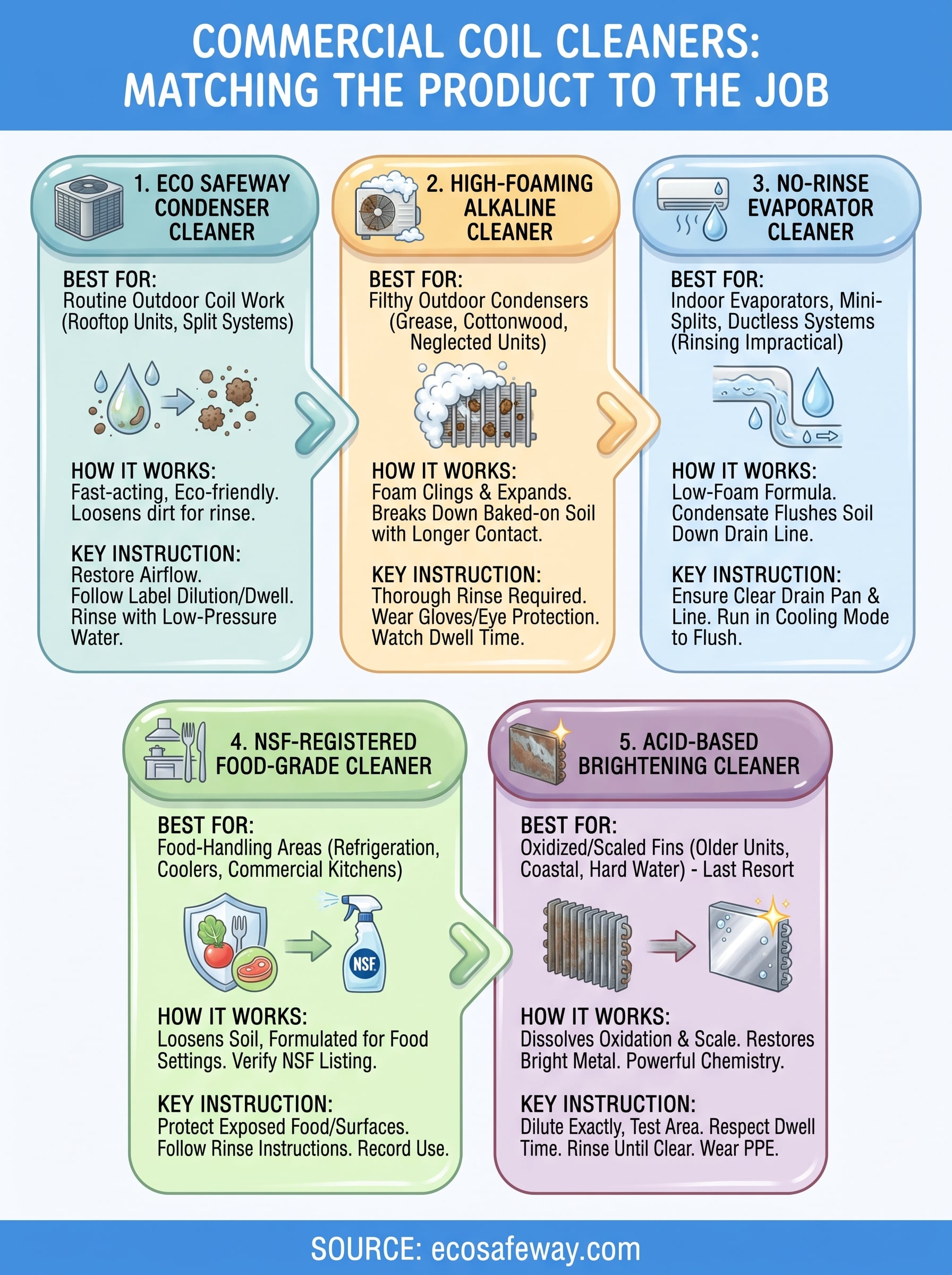
Which commercial coil cleaner should you buy?
Match the cleaner to the coil and the rinse access you have. Use a heavy-duty condenser cleaner for routine outdoor service, a high-foaming alkaline product for neglected coils, a no-rinse formula for evaporators, an NSF-registered product near food, and an acid brightener only for oxidation or scale. Whatever you choose, shut off power, protect the fins and follow the label.
If you manage commercial HVAC and want a dependable starting point, look at Eco Safeway's commercial condenser coil cleaner and check the product page for dilution and safety details.


