




Caustic soda gets the job done, but it comes with real costs. Sodium hydroxide burns skin on contact, requires hazmat shipping, eats away at aluminum and other metals, and forces your team into gloves, goggles, and careful disposal procedures every time it's used. If you're searching for a caustic soda alternative, you're probably dealing with a worker safety complaint, a shipping headache, or corrosion damage to equipment you'd rather not replace.
The good news: you don't need a hazardous, corrosive chemical to break down grease, clean drains, or strip buildup. Modern enzyme-based formulas and non-corrosive degreasers now match or beat caustic soda's cleaning power without the burns, fumes, or hazmat paperwork. These non-toxic alternatives work on the same jobs, industrial degreasing, drain maintenance, tank cleaning, without putting your team or equipment at risk.
This article walks through six real substitutes for caustic soda, each suited to different industrial cleaning applications. You'll see how each option compares on cleaning strength, equipment safety, and shipping logistics, plus which one fits your specific use case, whether that's a cooling tower, a clogged drain line, or a degreasing station on your shop floor.We built Eco Safeway's product line around solving exactly this problem, so expect practical, hands-on comparisons rather than generic chemistry lessons.
1. Eco Safeway's HMIS 0-0-0 non-toxic degreasers
Eco Safeway's degreasers were built specifically to replace caustic soda on the jobs it's used for most: grease traps, industrial parts washing, tank cleaning, and general shop floor degreasing. Instead of relying on a high-pH chemical burn to break down oils and grease, our formulas use surfactant and biodegradable solvent chemistry that lifts grease off metal, concrete, and equipment surfaces without touching the base material itself. You get the same cut-through-grease result, minus the corrosion risk.
How it works
The formula surrounds grease and oil molecules and lifts them away from the surface, rather than chemically dissolving the surface along with the grime the way sodium hydroxide does. That's the core difference: caustic soda works by being aggressive enough to break down almost anything it touches, including the aluminum, brass, or galvanized steel you're trying to clean. Our degreasers target the contaminant, not the substrate.
A degreaser that only attacks grease, not your equipment, saves you the corrosion damage caustic soda leaves behind.
Best for
This is the right pick for industrial degreasing tasks where equipment protection matters as much as cleaning power: engine bays, food processing equipment, HVAC coils, and any surface with aluminum or mixed-metal components. It also suits facilities that can't afford downtime for corrosion repairs or replacement parts.
Safety and handling
Every Eco Safeway degreaser carries an HMIS 0-0-0 rating, meaning zero health hazard, zero flammability, and zero physical hazard. Your team can use it without gloves, goggles, or respirators, and you skip the safety data sheet training sessions that caustic soda handling requires. There's no rinsing required to neutralize residual pH, since there's no caustic pH to begin with.
Cost and availability
Because the HMIS 0-0-0 rating means no hazmat classification, these degreasers ship by standard ground freight instead of hazmat carriers, cutting shipping costs significantly compared to caustic soda drums. You order directly through Eco Safeway, with concentrate options that dilute for high-volume use, keeping the per-gallon cost competitive with traditional degreasers once you factor out the disposal and PPE expenses caustic soda adds to the bill.
2. Citric acid-based cleaners
Citric acid flips the script on caustic soda's approach. Instead of a high-pH chemical breaking down scale and mineral deposits, a mild organic acid dissolves them from the other direction. It's the same acid found in citrus fruit, just concentrated enough for industrial descaling work, and it's become a common caustic soda replacement for anyone dealing with mineral buildup rather than grease.
How it works
Citric acid chelates metal ions in scale deposits, binding to calcium, iron, and magnesium and pulling them off the surface they've bonded to. This makes it effective against limescale, rust, and hard water residue without the aggressive pH swing caustic soda relies on. Descaling applications benefit most, since the chemistry targets mineral bonds specifically rather than attacking organic material.
Citric acid removes scale by binding minerals, not by burning through whatever it touches.
Best for
Boilers, cooling towers, ice machines, and coffee equipment all respond well to citric acid descaling. It's a solid pick anywhere mineral scale, not grease or oil, is the primary buildup problem.
Safety and handling
Citric acid is mildly irritating at high concentrations but far safer than sodium hydroxide. It won't cause chemical burns, and basic gloves cover most handling needs.
Cost and availability
Citric acid ships without hazmat restrictions and costs more per pound than caustic soda, though lower dosing rates often close that gap in practice.
3. Enzyme-based cleaners
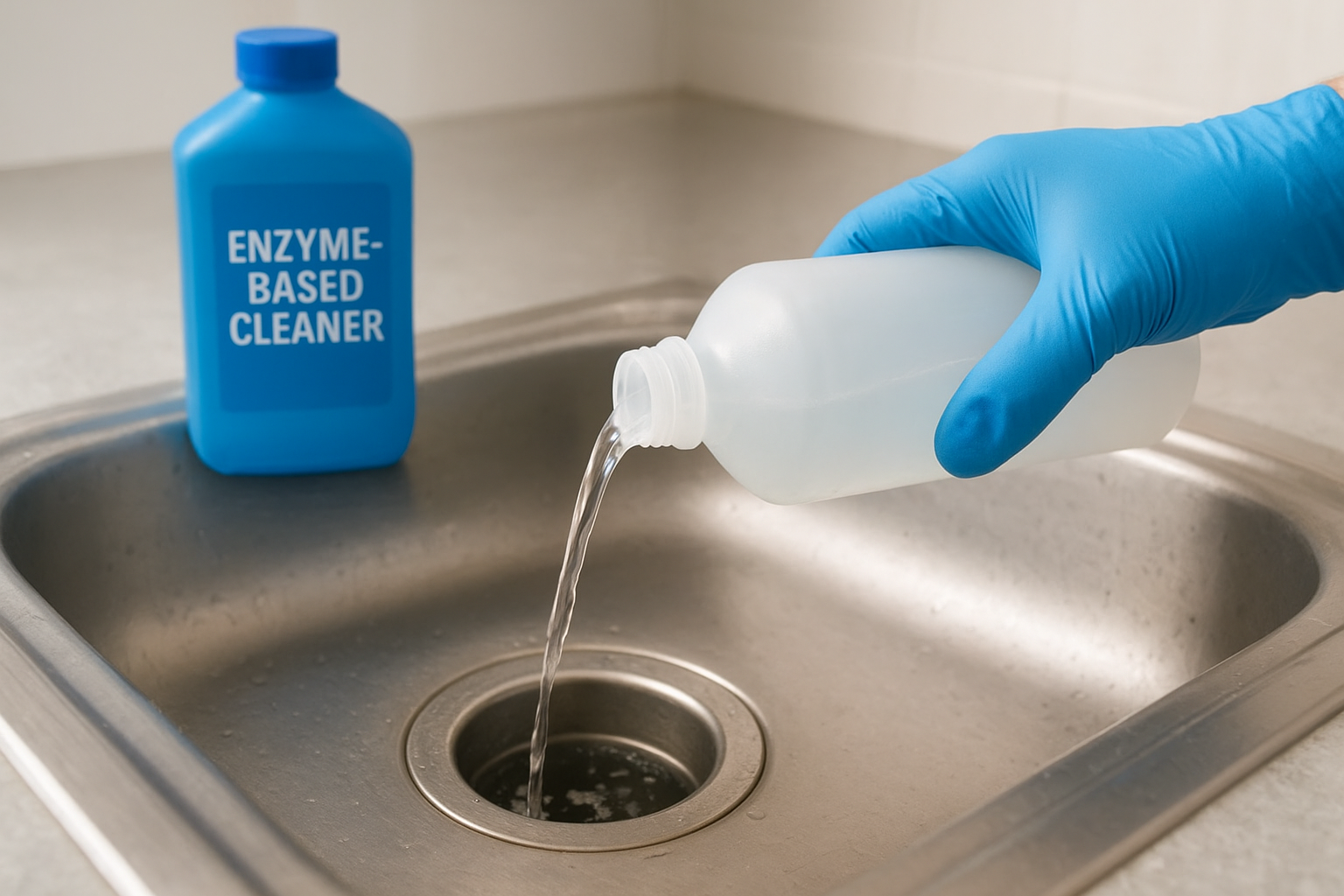
Enzyme-based cleaners take a biological approach where caustic soda takes a chemical one. Bacteria cultures produce enzymes that break down organic waste, biofilm, and grease into smaller compounds that wash away easily, making this a popular caustic soda alternative for drain lines and grease traps where organic buildup is the main issue.
How it works
Specific enzyme strains, like lipases for fats and proteases for proteins, target the molecular bonds holding organic waste together. Once those bonds break, the waste liquefies and flows through the drain instead of hardening into a clog. Some formulas keep working for hours after application, continuing to digest residue long after you've walked away.
Enzymes digest organic waste over time instead of forcing an instant chemical reaction, which means less risk to pipes and people.
Best for
This fits drain maintenance and grease trap upkeep in restaurants, food processing plants, and any facility with recurring organic clogs. It's not built for mineral scale or metal corrosion, so pair it with a descaler if that's a separate problem.
Safety and handling
Enzyme cleaners carry minimal health risk and rarely need PPE beyond basic gloves. They won't burn skin or damage pipe material, including older or corroded plumbing that caustic soda would stress further.
Cost and availability
Expect a higher per-gallon price than caustic soda, offset by fewer repeat treatments and no pipe damage to repair down the line.
4. Sodium percarbonate
Sodium percarbonate looks like a powder but acts like liquid hydrogen peroxide once it hits water. Facilities use it as a caustic soda alternative for oxidizing stains, sanitizing surfaces, and breaking down organic residue without the pH spike sodium hydroxide brings. You'll recognize it as the active ingredient in most "oxygen bleach" cleaning products, just sold in industrial-strength form.
How it works
Dissolving in water splits sodium percarbonate into soda ash and hydrogen peroxide. The peroxide releases oxygen bubbles that lift stains and oxidize organic matter, while the soda ash adds mild alkalinity to help with grease. This combination handles stain removal and light sanitizing in one step, something caustic soda alone can't do since it lacks any oxidizing action.
Sodium percarbonate cleans through oxidation, not corrosion, so it won't eat through metal fittings the way caustic soda can.
Best for
This fits tank sanitizing, floor and grout stain removal, and general oxidative cleaning where organic staining, not grease or scale, is the target. Food and beverage facilities favor it for equipment sanitizing between production runs.
Safety and handling
Sodium percarbonate carries mild irritant properties in powder form but poses no corrosion risk once diluted. Basic gloves and dust masks cover typical handling needs.
Cost and availability
Expect a moderate price premium over caustic soda per pound, though non-hazmat shipping and easy storage as a stable powder help offset that difference.
5. Potassium hydroxide (KOH)
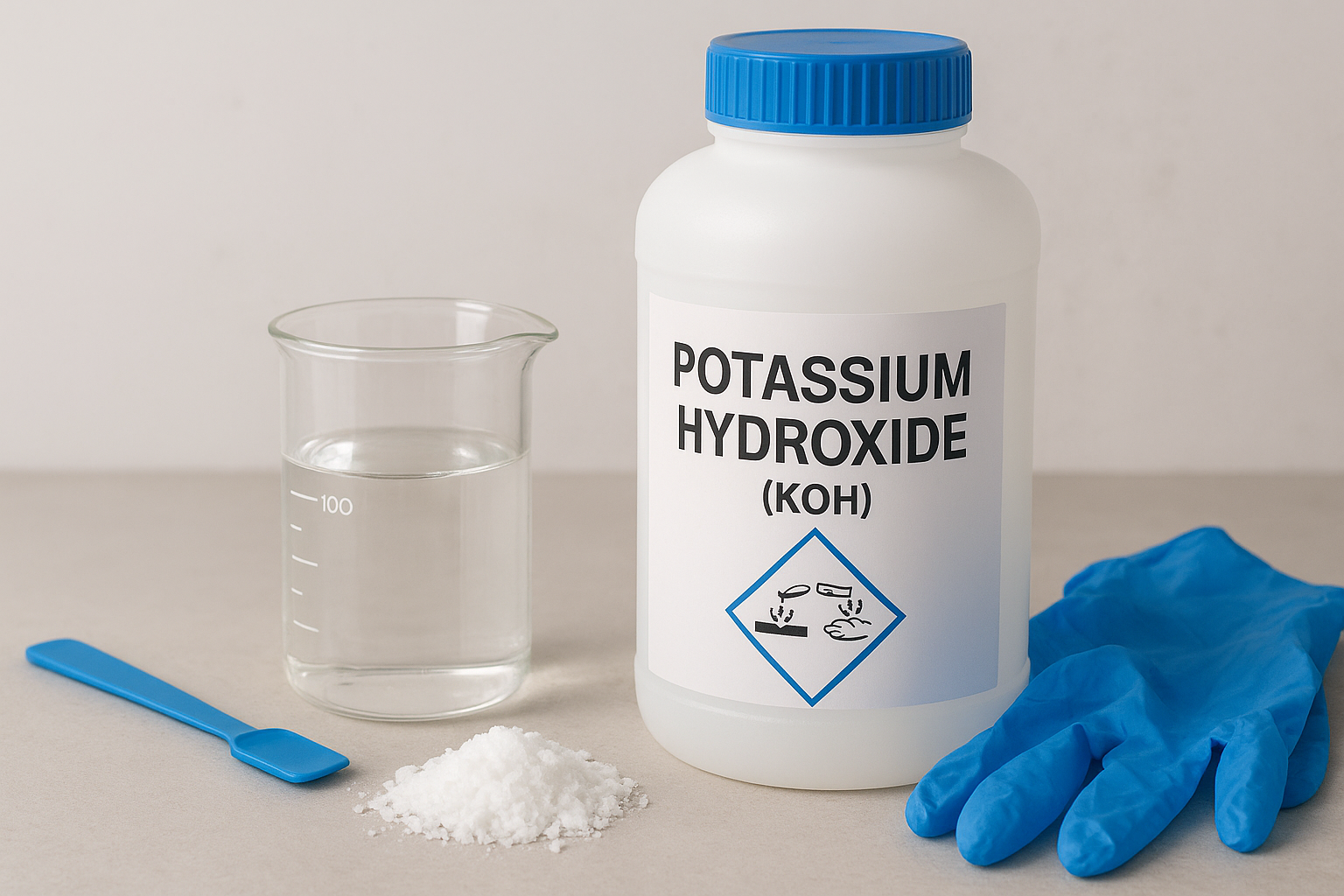
Potassium hydroxide sits closest to caustic soda on the chemistry chart, and it's the pick when you genuinely need strong alkaline cleaning power but want different handling characteristics. It's still a caustic chemical, so calling it "safer" only makes sense in specific comparisons, not across the board. Facilities switch to KOH as a caustic soda replacement mainly for its solubility and reactivity profile, not because it removes the hazard entirely.
How it works
KOH dissolves grease and organic matter through the same saponification reaction sodium hydroxide uses, converting fats into soap-like compounds that rinse away. It dissolves faster in water and stays more soluble at low temperatures, which matters for cold-weather industrial cleaning where caustic soda solutions can crystallize out.
KOH cleans like caustic soda because chemically, it nearly is caustic soda, just with better cold-water performance.
Best for
Battery manufacturing, biodiesel production, and cold-climate degreasing operations use KOH most often, since its solubility advantage shows up specifically in low-temperature applications.
Safety and handling
KOH causes the same chemical burns and eye damage as sodium hydroxide. Full PPE, gloves, goggles, and face shields, stays mandatory, and hazmat shipping rules still apply.
Cost and availability
Expect a higher price per pound than caustic soda, since KOH costs more to manufacture, with identical hazmat shipping fees eating into any savings elsewhere.
6. Soda ash (sodium carbonate)
Soda ash sits on the mild end of the alkaline spectrum, making it the gentlest caustic soda alternative on this list. You already know it as washing soda, and it's been used for cleaning and water treatment long before sodium hydroxide became the industrial default. Facilities reach for it when they need mild alkalinity, not raw chemical strength.
How it works
Dissolved in water, soda ash raises pH gradually rather than spiking it the way caustic soda does. That moderate alkalinity loosens light grease, cuts through hard water buildup, and helps neutralize acidic waste streams in wastewater treatment without the aggressive reaction sodium hydroxide triggers on contact.
Soda ash trades caustic soda's raw strength for a gentler, more controllable alkaline reaction.
Best for
Water treatment plants, laundries, and facilities doing pH adjustment on wastewater before discharge use soda ash regularly. It also works as a light-duty degreaser for jobs that don't demand caustic soda's full strength.
Safety and handling
Soda ash won't cause the chemical burns sodium hydroxide does, though dust and concentrated solutions still irritate skin and eyes. Gloves and eye protection cover most handling needs, and no hazmat shipping classification applies.
Cost and availability
Soda ash costs less per pound than caustic soda in most markets and ships without hazmat fees, though you'll need higher volumes to match sodium hydroxide's alkalinity in tougher cleaning jobs.
Finding the right fit for your operation
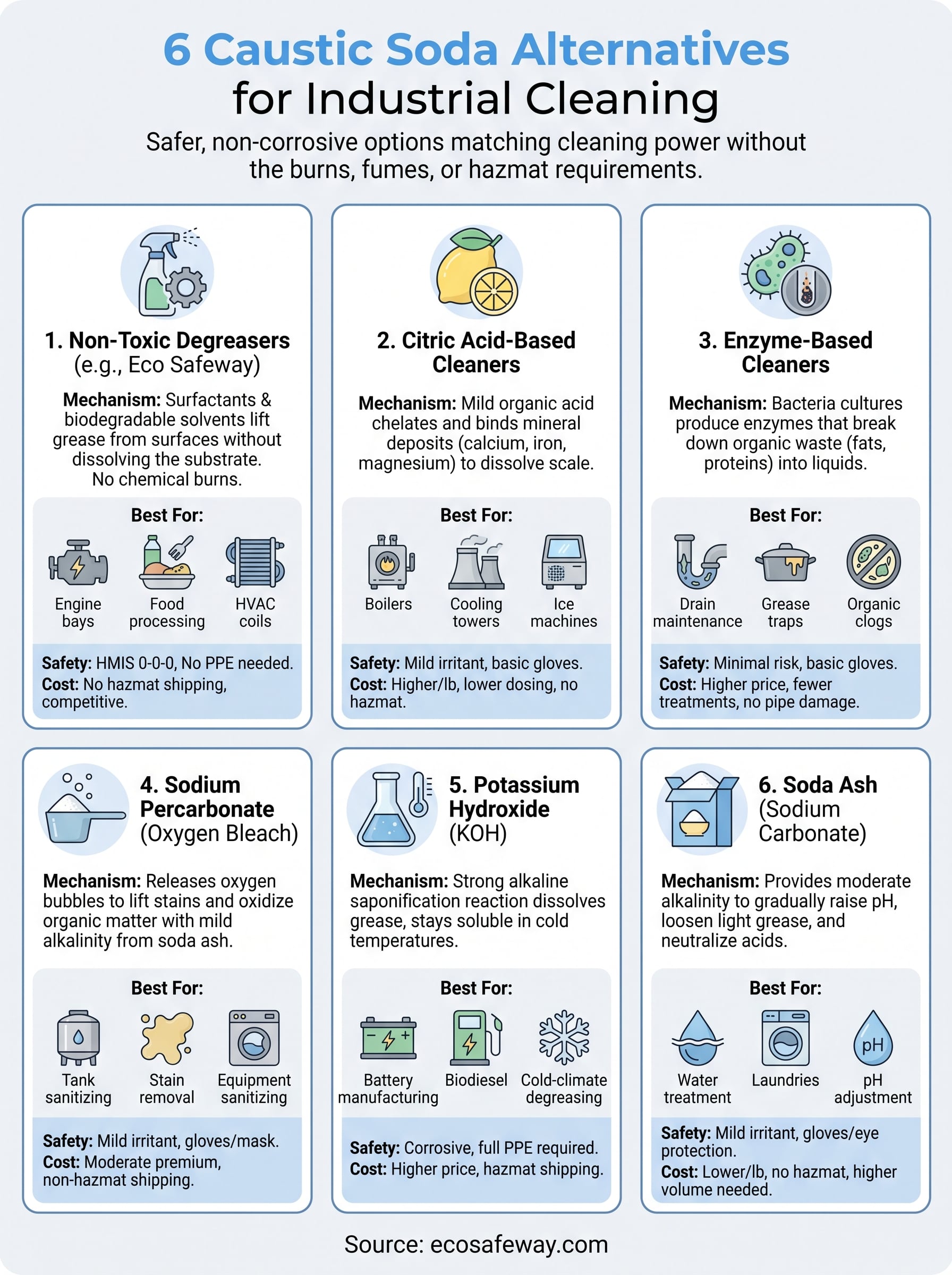
Matching the alternative to the job matters more than picking the "best" chemical on this list. Mineral scale calls for citric acid, organic clogs respond to enzymes, and grease on aluminum or mixed metals needs a formula that won't corrode what it touches. Sodium percarbonate handles stains and light sanitizing, soda ash covers mild pH work, and KOH stays reserved for jobs that genuinely require caustic strength.
For most industrial degreasing and cleaning tasks where worker safety, equipment protection, and shipping costs all matter at once, a non-toxic degreaser built specifically to replace caustic soda checks every box without forcing a tradeoff. You get grease-cutting performance, zero corrosion risk, and no hazmat paperwork slowing down your supply chain. If your shop floor, tank, or grease trap needs that kind of upgrade, take a look at the All-Purpose Cleaner & Degreaser Spray and see how it performs on your toughest grease job.


