




A dirty coil or clogged CRAH unit in a data center doesn't just hurt efficiency, it puts millions of dollars in equipment at risk. When cooling systems underperform, rack temperatures climb, and the margin between normal operations and a thermal shutdown shrinks fast. Finding the best data center HVAC cleaner means choosing a product that removes scale, biofilm, and debris without damaging sensitive coil fins or introducing corrosive chemicals into a controlled environment.
The problem is that most industrial coil cleaners weren't designed with data centers in mind. Harsh acids and solvent-based formulas can eat into aluminum fins, void equipment warranties, and create safety hazards for technicians working in enclosed spaces. Data center operators need cleaners that are effective on heavy buildup while remaining safe for both the equipment and the people handling them, a combination that's harder to find than it should be.
At Eco Safeway, we manufacture HMIS 0-0-0 rated, non-toxic cleaning solutions built for exactly these conditions. Our products are used across data centers, hospitals, and commercial facilities where equipment protection and worker safety aren't negotiable. We put this list together based on what actually matters for data center cooling maintenance: cleaning performance, material compatibility, safety ratings, and environmental compliance. Here are five options worth evaluating.
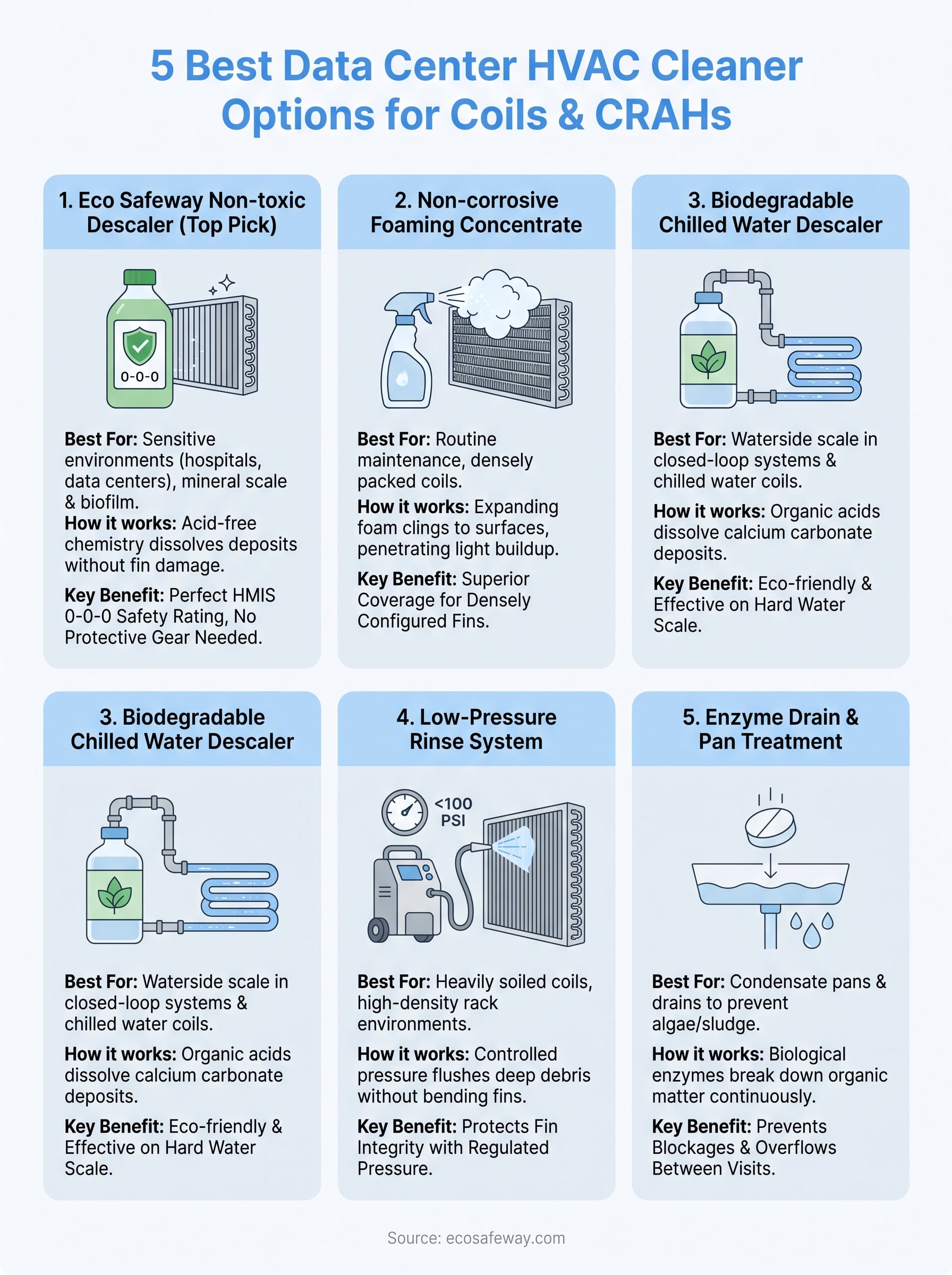
1. Eco Safeway non-toxic coil and HVAC descaler
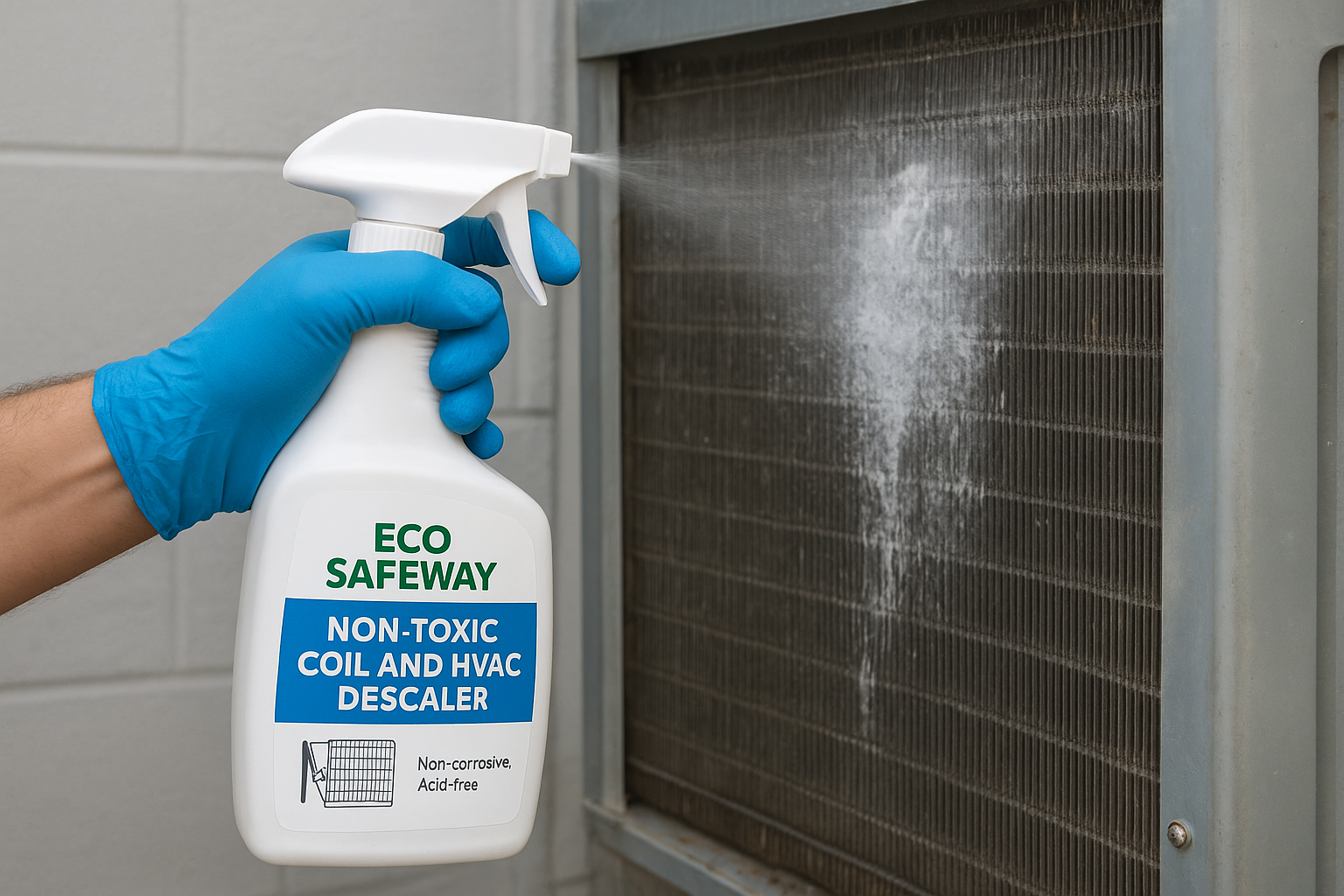
If you're searching for the best data center HVAC cleaner that protects both equipment and technicians, Eco Safeway's non-toxic coil and HVAC descaler is the top pick on this list. It carries a perfect HMIS 0-0-0 safety rating, meaning zero health hazard, zero flammability, and zero physical hazard, so your team can use it in live data center environments without special protective equipment or ventilation protocols.
Best for
This descaler is built for data centers, hospitals, and commercial facilities where chemical exposure is a genuine concern and equipment downtime is not an option. It performs well on aluminum and copper coil fins, CRAH units, and chilled water systems accumulating mineral scale and biofilm. If your maintenance team works in enclosed or occupied spaces, this product removes the safety and liability concerns that come with acid-based alternatives.
How it works
Eco Safeway's formula uses non-corrosive, acid-free chemistry to dissolve mineral scale, calcium deposits, and biofilm through targeted chemical action rather than aggressive acid attack. This approach avoids the micro-etching and oxidation damage that shortens coil service life over time. Regular use won't degrade fins or internal components, which extends equipment lifespan and reduces replacement costs.
Acid-free chemistry lets you run a consistent cleaning schedule without accelerating the fin damage that typical acid cleaners cause over repeated applications.
How to use it safely
Dilute the concentrate at the recommended ratio, apply it directly to coil surfaces, allow adequate dwell time for the solution to penetrate scale deposits, then rinse with low-pressure water. Standard nitrile gloves are sufficient; no respirator or chemical suit is required. The product ships without hazmat classification, which simplifies procurement, storage, and handling for facility teams managing multiple vendors.
Typical pricing
Pricing scales with order volume and concentration level, and bulk options are available for commercial accounts. Cost per treatment drops considerably at higher volumes. Contact Eco Safeway directly through ecosafeway.com for current pricing and volume discount details matched to your facility's maintenance schedule.
2. Non-corrosive foaming coil cleaner concentrate
When you're evaluating the best data center HVAC cleaner for densely packed coil configurations, a foaming concentrate offers surface coverage that liquid-only formulas can't match. The expanding foam clings to vertical and horizontal fin surfaces, keeping the active cleaning agents in contact with scale and biofilm long enough to do the job before rinsing.
Best for
This type of cleaner works well for routine maintenance cycles on air handler coils and CRAH units where moderate buildup accumulates between scheduled cleanings. It suits facilities that need a fast-acting solution with minimal dwell time and no special chemical handling requirements.
How it works
The foaming action distributes the cleaning concentrate evenly across fin surfaces, penetrating biofilm and light mineral deposits without relying on acid chemistry. As the foam breaks down, it carries loosened debris away from the coil face, making the rinse step faster and more complete.
Foam-based cleaners reduce chemical waste by keeping the active solution on target surfaces rather than running off immediately on contact.
How to use it safely
Apply the concentrate at the manufacturer's recommended dilution ratio using a standard pump sprayer. Let the foam dwell for the specified time, then rinse with low-pressure water. Wear nitrile gloves and eye protection as a precaution, and confirm the product carries a non-hazardous classification before storing it with other facility supplies.
Typical pricing
Foaming coil cleaner concentrates typically run $30 to $80 per gallon depending on brand, concentration level, and order volume, with bulk purchasing bringing the per-treatment cost down considerably.
3. Biodegradable descaler for chilled water coils
Chilled water coils accumulate mineral scale on the waterside over time, restricting flow and degrading heat transfer efficiency across the entire cooling loop. When you're evaluating the best data center HVAC cleaner for this specific application, a biodegradable descaler formulated for closed-loop systems targets that buildup without introducing harsh chemistry that could damage components or complicate wastewater disposal.
Best for
This descaler type works best for chilled water coils, closed-loop cooling systems, and condenser circuits where calcium and carbonate deposits have built up inside the waterside passages. It suits facilities dealing with hard water supply lines or systems that have gone several maintenance cycles without a dedicated descaling treatment.
How it works
Biodegradable descalers rely on organic acid chemistry, typically derived from citric or lactic acid compounds, to dissolve mineral deposits at the molecular level. The formula breaks calcium carbonate loose from metal surfaces without attacking base metals, leaving internal passages clear and flow rates restored.
Organic acid compounds biodegrade after use, which reduces the environmental burden on facility wastewater systems compared to synthetic acid alternatives.
How to use it safely
Mix the descaler at the manufacturer's specified concentration, circulate it through the system for the recommended contact time, then flush thoroughly with clean water. Nitrile gloves are sufficient for handling, and biodegradable formulations typically ship without hazmat restrictions.
Typical pricing
Biodegradable descalers generally run $25 to $70 per gallon, with concentrated formulas delivering better cost-per-treatment value at larger order volumes.
4. Coil cleaning system with low-pressure rinse
For data centers with heavily soiled coils or restricted airflow, a purpose-built coil cleaning system that pairs chemical treatment with a low-pressure rinse stage can restore performance faster than spray-and-wipe methods alone. When you're looking for the best data center HVAC cleaner approach for high-fouling conditions, combining chemistry with controlled water pressure gives you better penetration and a cleaner finish.
Best for
This system works best for CRAH units and air handler coils with dense fin configurations where debris has packed into the coil face and manual rinsing doesn't reach the inner rows. It suits data centers running high-density rack environments that push more heat through cooling units and accelerate fouling rates between maintenance intervals.
How it works
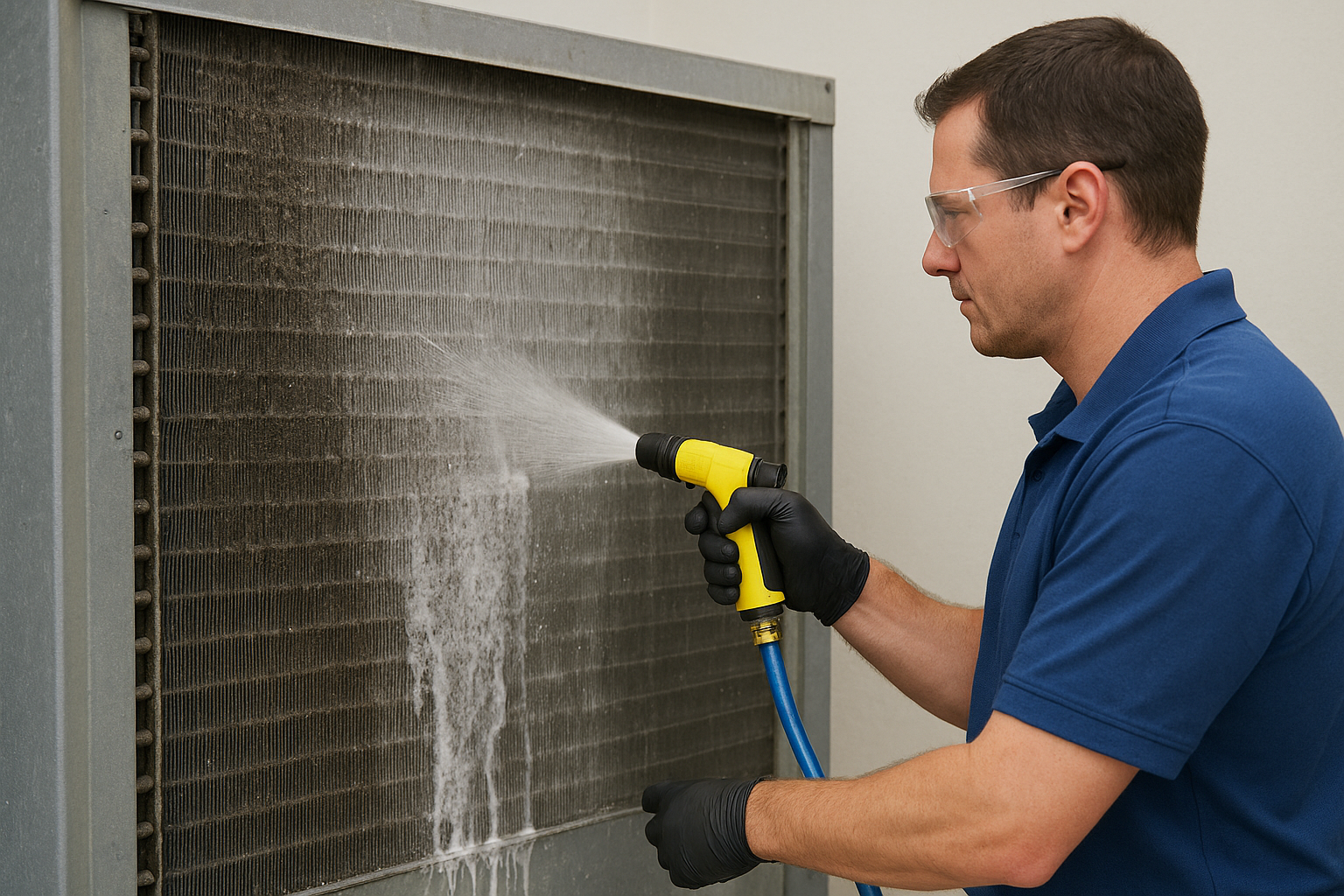
A dedicated coil cleaning system applies cleaning solution under controlled pressure, pushing it through fin channels while a low-pressure rinse flushes loosened scale and debris out the opposite face. The controlled rinse pressure removes buildup without bending or collapsing aluminum fins, which is a real risk when technicians use standard garden hoses or pressure washers without pressure regulation.
Low-pressure rinse systems reduce fin damage risk significantly compared to unregulated water pressure, which extends the usable life of your coil assemblies.
How to use it safely
Follow the manufacturer's pressure settings and apply cleaning solution before activating the rinse cycle. Keep rinse pressure below 100 PSI to protect fin integrity on sensitive data center coils.
Typical pricing
Complete coil cleaning systems range from $200 to $600 depending on tank capacity and pressure output, with professional-grade units at the higher end.
5. Enzyme drain and condensate pan treatment
Condensate pans and drain lines in data center HVAC systems collect standing water, which creates conditions for algae growth, biofilm buildup, and drain blockages that can cause overflow damage to nearby equipment. If you're building out the best data center HVAC cleaner program for your facility, enzyme-based condensate treatments belong in the rotation alongside your coil cleaning schedule.
Best for
Enzyme treatments work best for condensate pans, drain lines, and drip trays across CRAH units and precision air conditioning systems. Facilities in humid climates or high-density rack environments where condensate production runs consistently high benefit most from a regular treatment cycle to prevent organic buildup between maintenance visits.
How it works
Beneficial enzymes and bacteria break down organic matter including algae, biofilm, and sludge at the biological level rather than suppressing it with chemical inhibitors. This approach keeps drain passages clear and flow rates consistent without introducing harsh chemistry that could corrode pan surfaces or affect nearby sensitive electronics.
Enzyme treatments work continuously between maintenance visits, providing ongoing biological activity that prevents buildup from restarting after each cleaning cycle.
How to use it safely
Drop tablets or pour liquid enzyme solution directly into the condensate pan at the manufacturer's recommended dose. No dilution equipment or protective gear beyond basic nitrile gloves is required, and enzyme products typically ship without hazmat restrictions.
Typical pricing
Enzyme condensate treatments run $15 to $50 per treatment cycle depending on format and pan volume, with multi-pack options reducing the per-application cost for facilities running multiple CRAH units.
Quick next steps
Finding the best data center HVAC cleaner for your facility comes down to matching the right product to your specific equipment and fouling conditions. If your coils carry heavy mineral scale, prioritize a dedicated descaler with proven coil compatibility. If condensate pans are your main concern, add an enzyme treatment to your maintenance rotation. If you're running multiple CRAH units in a high-density environment, a foaming concentrate paired with a low-pressure rinse system will handle the workload more efficiently than manual spot cleaning.
Your cooling infrastructure protects equipment worth far more than any cleaning product costs, so it's worth being deliberate about what you put on it. Eco Safeway's non-toxic formulas are HMIS 0-0-0 rated and aluminum safe, which makes them a straightforward choice for mission-critical environments. Browse the full data center HVAC cleaner and coil descaler lineup to find the right product for your system.


