





The best vinyl boat seat cleaner is the mildest product that lifts your specific mess, followed by a UV protectant. A non-toxic marine vinyl cleaner with built-in UV protectants suits owners who want one product for dirt, sunscreen oil and mildew. A dedicated marine vinyl cleaner suits heavy soil. A bleach-free all-purpose spray suits a tight budget. Mild dish soap and water suits light, regular wipe-downs. A protectant suits anyone who wants seats that stay supple.
Vinyl looks tough, but it is porous, and sun, salt, sunscreen and trapped moisture slowly wear it down. Reach for the wrong cleaner, such as bleach, ammonia or an alcohol-based spray, and you trade a stain for cracking and rotted stitching. This list ranks five options, covers a safe homemade mix, and shows how to use each one and what it costs.
Eco Safeway is a Fort Lauderdale supplier of marine cleaning products for yacht owners, captains and detailers. We put our own cleaner first because it fits the job. We judge every pick on the same terms: what it removes, what it leaves behind and what it risks.
1. Eco Safeway Marine Vinyl and Interior Cleaner
This is the best all-in-one pick for owners who want cleaning and some UV protection from a single bottle.
How it works and who it suits
The Marine Vinyl and Interior Cleaner is a non-toxic, VOC-free, biodegradable spray made for marine vinyl, upholstery, leather and plastic trim. It removes dirt, sunscreen residue, body oils, salt and mildew stains. It also carries UV protectants and conditioning agents that help slow fading, drying and cracking. It contains no bleach and no heavy solvents, the two things that damage vinyl fastest.
It suits owners who want one product for seats, cushions and interior panels, and anyone cleaning inside a closed cabin where harsh fumes are a problem. Captains and detailers who clean vinyl, leather and plastic in one pass get the most from it.
One cleaner that handles dirt, sunscreen oil and mildew without bleach is easier on the vinyl and on the person holding the spray bottle.
How to use it and what it costs
Follow the label, and test a hidden corner first. A typical routine looks like this:
- Rinse the seats with fresh water to flush off salt and grit.
- Spray one section at a time and give the cleaner a moment to work.
- Agitate stubborn spots with a soft-bristle brush or a microfiber towel.
- Rinse or wipe clean, then dry fully.
Pricing runs from $29.99 to $349.99, depending on size. Sizes are a 32 oz spray, 1 gallon, 2.5 gallon, a 5 gallon kit and a case of 12 quarts. The product ships by standard shipping with no hazardous materials handling.
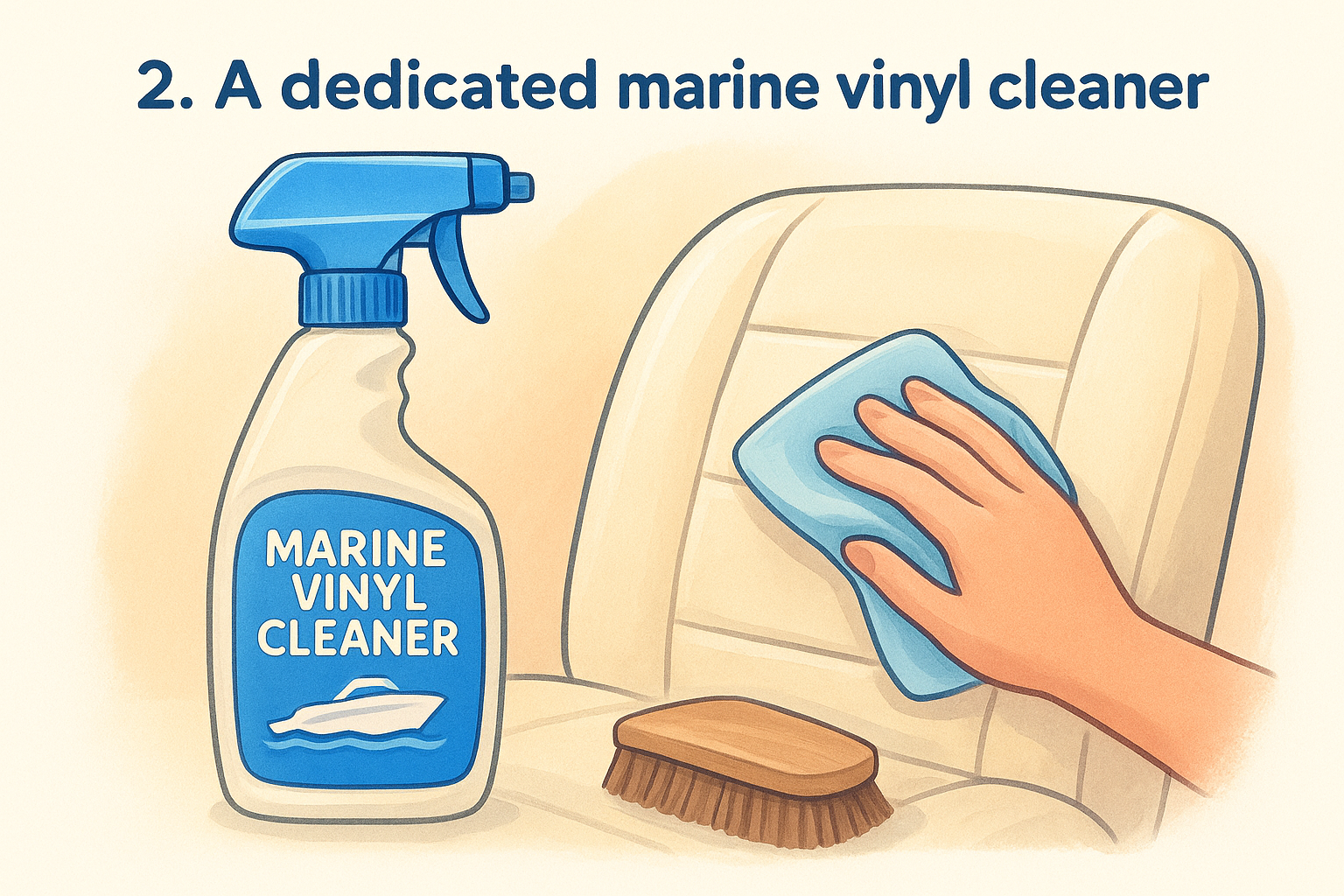
2. A dedicated marine vinyl cleaner
A cleaner labeled specifically for marine vinyl is the safest choice for heavy dirt and grease, and it beats detailer sprays on soiled seats.
How it works and who it suits
These cleaners use surfactants tuned for vinyl, and they leave out the bleach and ammonia that attack it. In a Boating magazine test, a Star brite vinyl cleaner was the tester's go-to product 90 percent of the time. It removed stubborn dirt completely and knocked out all but the toughest grease.
This pick suits boats that have gone weeks or months without a proper wash. Marine brands label each product for a purpose, so you can pick a cleaner, a restorer or a protectant with confidence. You will find them at marine supply stores and online.
If a mild marine vinyl cleaner fails, step up to a stronger one. Do not jump straight to bleach.
How to use it and what it costs
Expect to pay roughly $15 to $23 per bottle. The same test priced a dedicated vinyl cleaner at about $20 and a stronger all-purpose marine cleaner at $15 per pint.
Spray it on, work it in with a medium-bristle brush, and wipe it off with a dry rag. Rinse and dry afterward. Dedicated cleaners strip any protectant already on the vinyl, so plan to re-treat the seats. Save the stronger all-purpose marine cleaners for when a milder product has failed.
3. A bleach-free all-purpose cleaner
A household-grade spray such as Simple Green is the cheapest effective option for routine cleaning, provided the label lists no ammonia, bleach or alcohol.
How it works and who it suits
Simple Green and 409-type sprays work as general degreasers. Boating's testers noted they are acceptable for a first cleaning because they contain no ammonia or bleach, which are destructive to vinyl. Simple Green also warns against alcohol-based cleaners, which can dry vinyl out and crack it.
It suits owners on a budget and boats with ordinary grime. It is weaker than a dedicated vinyl cleaner on mold, so it is a poor fit for seats with set-in mildew. Check every label before you buy, because some household sprays do contain ammonia or bleach.
A cheap cleaner is fine on vinyl only when its label leaves out bleach, ammonia and alcohol.
How to use it and what it costs
Bleach-free all-purpose cleaners generally cost about $6 to $20. Simple Green's own directions are simple:
- Wet the vinyl with clean water.
- Spray the cleaner on and scrub with a soft-bristle brush.
- Damp-wipe or rinse clean, and repeat if needed.
- Let the seats dry fully before you use or store them.
Dilute only as the label directs. Afterward, apply a protectant, since this cleaner removes UV protection along with the dirt.
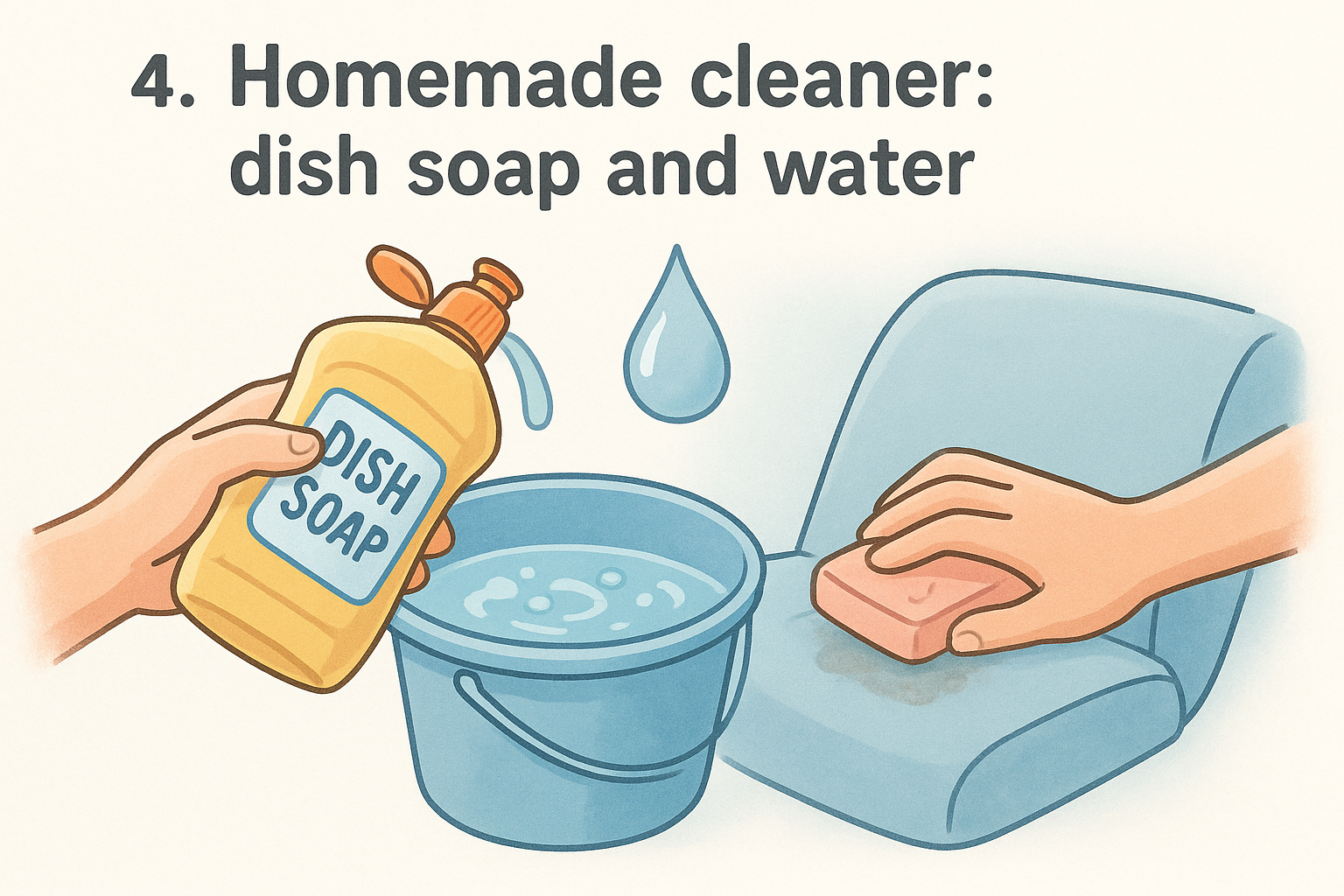
4. Homemade cleaner: dish soap and water
For light dirt, a homemade mix of mild dish soap and warm water is a safe and nearly free option, but it will not cure mildew.
How it works and who it suits
Dish soap cuts oils, sunscreen and everyday grime. Yes, you can use Dawn on vinyl boat seats, as long as you dilute it and rinse thoroughly. Leftover soap residue attracts dirt and leaves a film. It suits owners who wash seats after every trip and want a cheap routine.
Soap does not break down mold chemistry, so it moves mildew around more than it removes it. Diluted vinegar is another popular home remedy, but it penetrates marine vinyl poorly and repeated use can dull the finish. For visible mildew, use a cleaner made for marine vinyl.
Homemade works for dirt. Mildew needs a cleaner built for it.
How to use it and what it costs
The cost is a few cents per wash. Mix a few drops of mild dish soap into a bucket of warm water, then:
- Wet the seat, then scrub gently with a soft brush or sponge.
- Rinse with fresh water until no suds remain.
- Dry with a clean towel.
Never use bleach, ammonia, alcohol-based cleaners, Magic Erasers or abrasive pads. The pads remove a thin layer of the vinyl itself, so the seat looks clean but is more vulnerable than before. Scrubbing hard creates micro-abrasions that trap future mildew.
5. Cleaner-protectant sprays and vinyl protectants
Finish every cleaning with a protectant. A detailer spray handles quick maintenance, and a dedicated protectant brings tired vinyl back to a supple, even look.
How it works and who it suits
Detailer sprays clean lightly and leave UV protection. Boating's tester called a Lucas Oil detailer the go-to wipe-down after a day on the water to remove sand, dirt and sunscreen. Dedicated protectants build a heavier UV layer. The magazine's favorite was a polymer-based protectant that left a clear sheen and made ink wipe off.
This pick suits owners with well-maintained seats who want to keep them that way, and anyone asking how to bring vinyl seats back to life. Protectants revive dull, dry vinyl. They cannot repair vinyl that is already cracked. At that point you are looking at reupholstering.
Cleaning removes the stain, and the protectant is what keeps it from coming back.
How to use it and what it costs
A detailer cost about $12 for 24 oz, and a protectant about $30 per bottle. A typical season kit is a $20 vinyl cleaner plus a $30 protectant, so about $50 covers a full clean-and-protect cycle.
Apply a protectant with bare hands to avoid soaking it into a rag. Let it dry, then buff lightly with a soft cloth for a clear sheen. Reapply after boating.
Choosing your cleaner
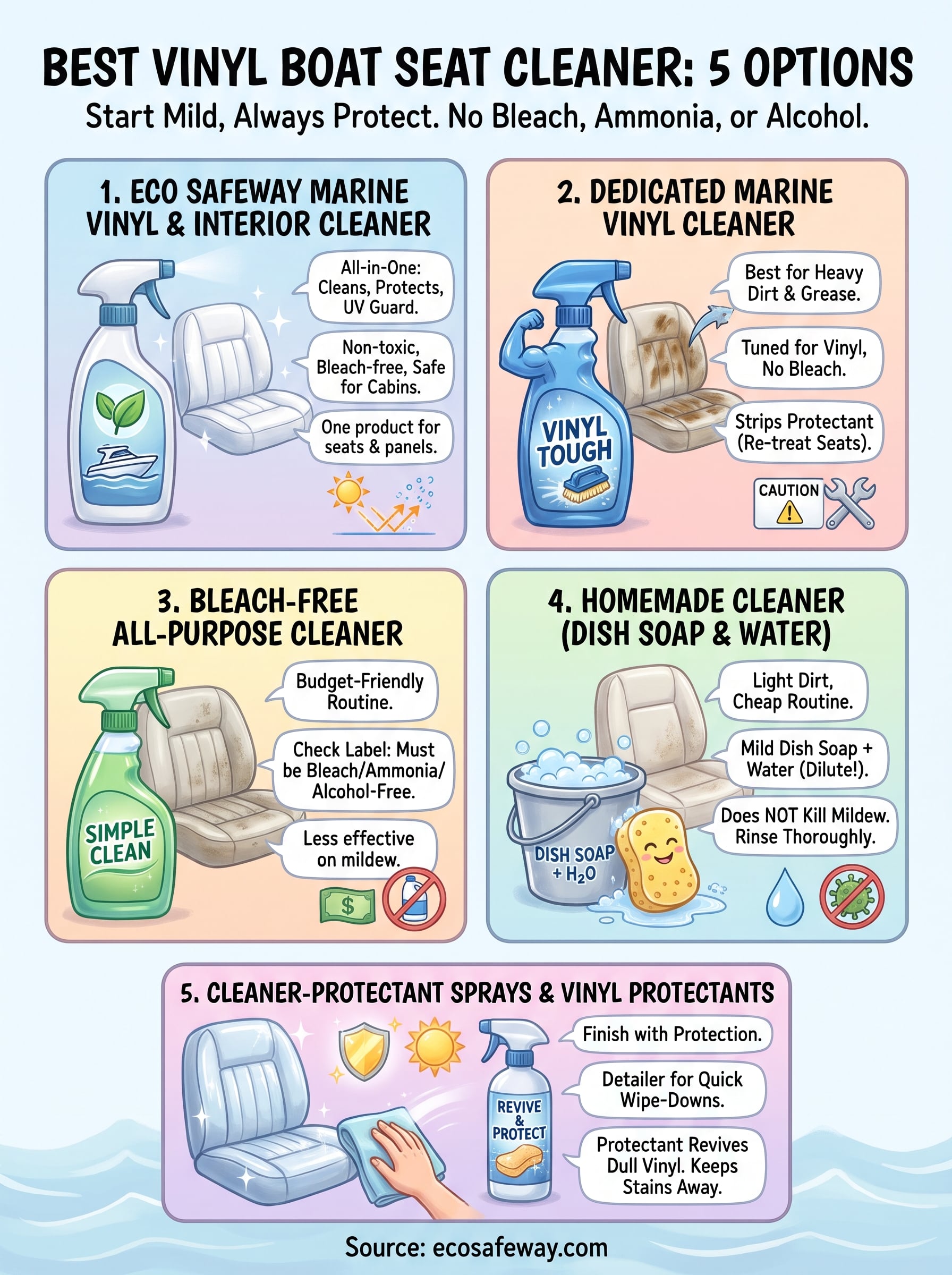
Start with the mildest option that works. For light dirt, use dish soap and water. For routine grime, use a bleach-free all-purpose spray. For heavy soil, use a dedicated marine vinyl cleaner. For mildew, sunscreen oils and salt, use a marine vinyl formula. Whatever you pick, rinse, dry and protect afterward, and keep bleach, ammonia and abrasive pads away from the seats.
If you want one product for the seats and the rest of the interior, try Eco Safeway's Marine Vinyl and Interior Cleaner. Check the sizes and pricing to match your boat, from a 32 oz spray to a full 5 gallon kit.


